


Resources
From peer-reviewed research to accessible policy briefs, explore the scholarship that’s shaping debates and driving change.

141 Results

What Work Does Generative AI Do? (opens in a new tab)
Working Papers SEP 8, 2026
We measure how workers use genAI for their jobs in a nationally representative survey linking genAI adoption to detailed occupations and tasks. Our data provide the first task-level genAI adoption…
By: Alexander Bick (opens in a new tab), Adam Blandin (opens in a new tab), David Deming (opens in a new tab), Tyler Schumacher (opens in a new tab)
The Terms and Conditions of Generative AI (opens in a new tab)
Working Papers AUG 20, 2026
Generative AI raises pressing questions for myriad doctrinal areas. Policymakers and scholars have responded rapidly, devoting substantial attention to these difficult legal and policy questions. But, as a practical matter,…
By: John M. Newman, Andres Sawicki (opens in a new tab)

In Conversation with Costa Samaras (opens in a new tab)
In Conversation JUN 2, 2026
Equitable Growth in Conversation is a recurring series where we talk with economists and other academics to help us better understand whether and how economic inequality affects economic growth and…
By: Shayna Strom (opens in a new tab)
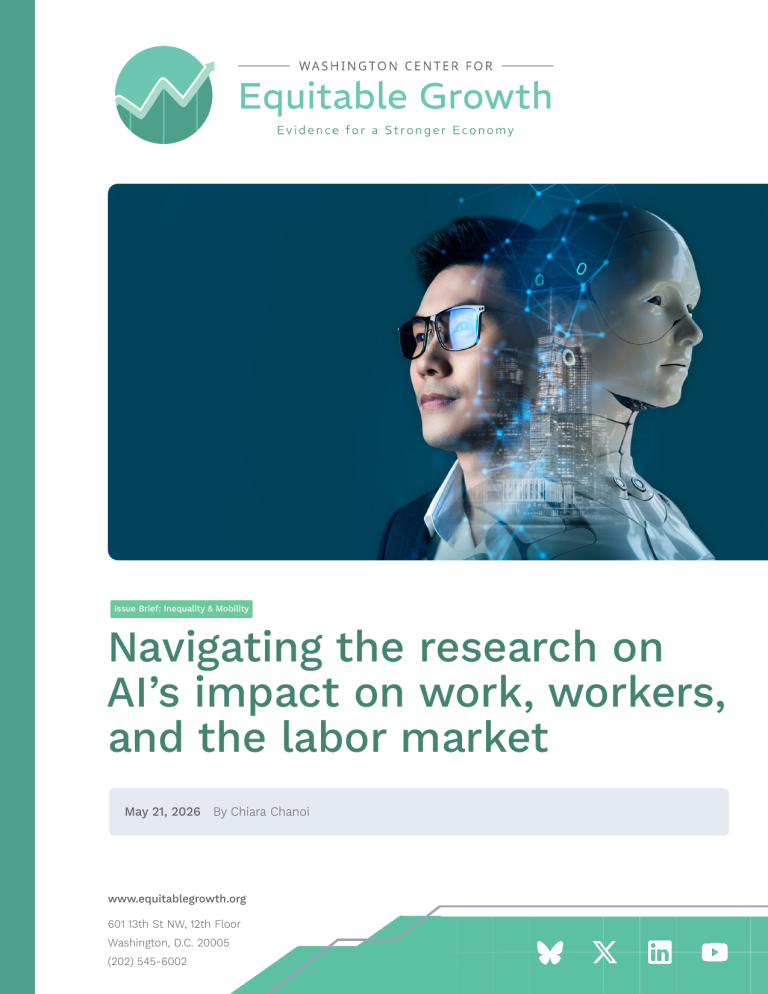
Navigating the research on the impacts of AI on work, workers, and the labor market (opens in a new tab)
Research Databases MAY 21, 2026
Artificial intelligence will have a largely unpredictable but potentially profound effect on the labor market. Individuals have speculated how AI will affect the workforce since its earliest developments. But public…
By: Chiara Chanoi (opens in a new tab)
Barriers to Benefits: Unemployment Insurance Take-Up and Labor Market Effects (opens in a new tab)
Working Papers MAY 19, 2026
Unemployment insurance (UI) take-up is relatively low in the United States. We implement a large-scale field experiment among 50,000 likely unemployed individuals to study the causes and labor supply implications…
By: Casey McQuillan (opens in a new tab), Brendan Moore (opens in a new tab)
AI exposure by U.S. occupations and work tasks and the effect on wages (opens in a new tab)
Working Papers OCT 23, 2025
This analysis of labor market AI exposure builds on previous work from the Pew Research Center and the AI firm Anthropic as well as Equitable Growth’s own job quality series,…
By: Chiara Chanoi (opens in a new tab), Chris Bangert-Drowns
The Benefits of Unemployment Insurance For Marginally Attached Workers (opens in a new tab)
Working Papers OCT 21, 2025
Existing research consistently finds that UI benefits delay job finding with limited effects on job quality, but focuses on changes in unemployment insurance (UI) generosity while holding fixed access to…
By: Casey McQuillan (opens in a new tab), Brendan Moore (opens in a new tab)
Extracting O*NET Features from the NLx Corpus to Build Public Use Aggregate Labor Market Data (opens in a new tab)
Working Papers OCT 1, 2025
Data from online job postings are difficult to access and are not built in a standard or transparent manner. Data included in the standard taxonomy and occupational information database (O*NET)…
By: Stephen Meisenbacher (opens in a new tab), Svetlozar Nestorov (opens in a new tab), Peter Norlander (opens in a new tab)
Fitting the Bill? The First Federal Paid Leave Mandate (opens in a new tab)
Working Papers SEP 23, 2025
We find that the first federal paid leave mandate in the US, enacted under the Families First Coronavirus Response Act, increased paid leave taking by nearly 200% for eligible workers,…
By: Tanya Byker (opens in a new tab), Elena Patel (opens in a new tab), Kristin Smith (opens in a new tab)
How are Municipal-Level Fair Workweek Laws Playing Out on the Ground? Experiences of Food Service and Retail Workers in Three Cities (opens in a new tab)
Working Papers JUL 24, 2025
An updated version of this paper was posted on December 09, 2025. The first municipal-level law regulating employers’ scheduling practices was enacted in SanFrancisco in 2015. A decade later, ten…
By: Susan J. Lambert, Julia R. Henly, Hyojin Cho (opens in a new tab), Resha Swanson-Varner (opens in a new tab), Yuxi He (opens in a new tab)

Request for Proposals: The economic effects of the Inflation Reduction Act (opens in a new tab)
RFPs APR 2, 2025
By: Equitable Growth (opens in a new tab)
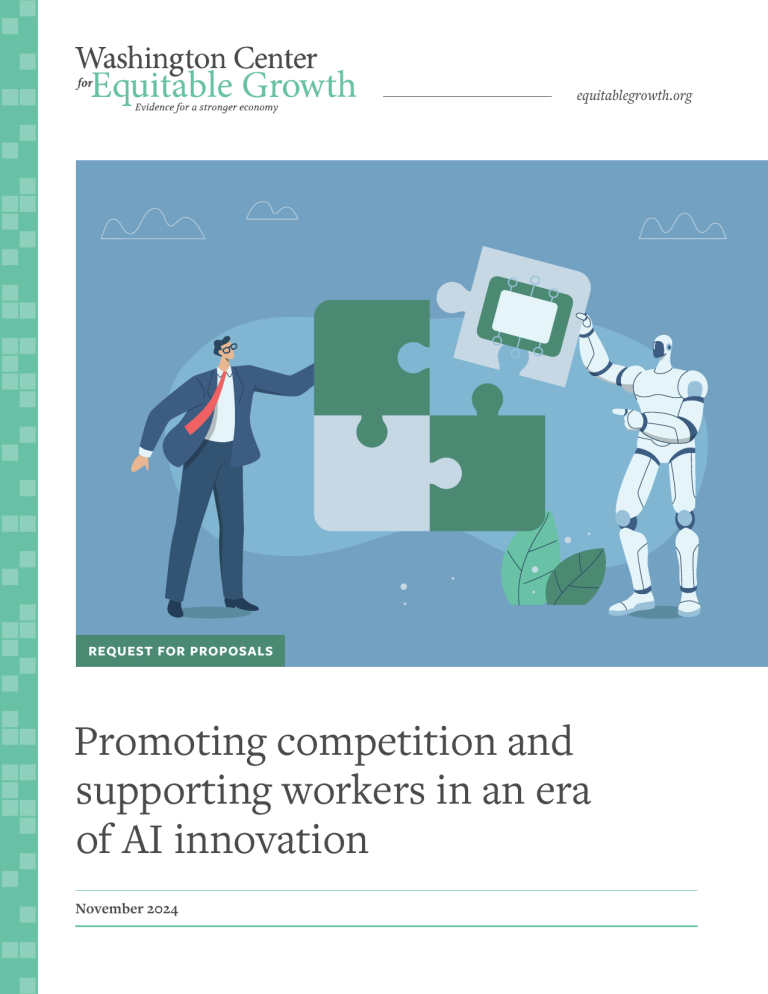
Request for Proposals: Promoting competition and supporting workers in an era of AI innovation (opens in a new tab)
RFPs NOV 20, 2024
By: Equitable Growth (opens in a new tab)

Request for proposals: Research grants for early career scholars (opens in a new tab)
RFPs OCT 30, 2024
By: Equitable Growth (opens in a new tab)
Bonus Question: How Does Flexible Incentive Pay Affect Wage Rigidity? (opens in a new tab)
Working Papers JUL 17, 2024
We introduce dynamic incentive contracts into a model of inflation and unemployment dynamics. Our main result is that wage cyclicality from incentives neither affects the slope of the Phillips curve…
By: Meghana Gaur (opens in a new tab), John Grigsby (opens in a new tab), Jonathon Hazell (opens in a new tab), Abdoulaye Ndiaye (opens in a new tab)

Request for Proposals: How effective was the fiscal response to the COVID-19 recession for workers? (opens in a new tab)
RFPs MAR 18, 2024
By: Equitable Growth (opens in a new tab)
Request for proposals: Research grants for early career scholars (opens in a new tab)
RFPs NOV 30, 2023
By: Equitable Growth (opens in a new tab)
The Effect of Means-Tested Transfers on Work: Evidence from Quasi-Randomly Assigned SNAP Caseworkers (opens in a new tab)
Working Papers NOV 13, 2023
We provide a comprehensive evaluation of the dynamic labor supply effects of the Supplemental Nutrition Assistance Program (SNAP) for a representative population using novel administrative data and an examiner design.…
By: Jason Cook (opens in a new tab), Chloe N. East
Minimum wage effects and monopsony explanations (opens in a new tab)
Working Papers OCT 16, 2023
This working paper was updated on March 5, 2024 with a new version and an additional author. We present the first causal analysis of a seven-year run-up of minimum wages…
By: Justin Wiltshire (opens in a new tab), Carl McPherson (opens in a new tab), Michael Reich (opens in a new tab), Denis Sosinskiy (opens in a new tab)
How to Fund Unemployment Insurance with Informality and False Claims: Evidence from Senegal (opens in a new tab)
Working Papers OCT 5, 2023
This paper studies the welfare effects of unemployment insurance (UI) in low-income countries characterized by high levels of informality, weak enforcement of UI claims, and job search frictions. We assess…
By: Abdoulaye Ndiaye (opens in a new tab), Kyle Herkenhoff (opens in a new tab), Abdoulaye Cissé (opens in a new tab), Alessandro Dell’Acqua (opens in a new tab), Ahmadou A. Mbaye
Resilience in Collective Bargaining (opens in a new tab)
Working Papers SEP 27, 2023
A central finding of the theoretical literature on bargaining is that parties’ attitudes towards delay influence bargaining outcomes. However, the ability to endure delays, resilience, is often private information and…
By: Carlos F. Avenancio-León, Alessio Piccolo (opens in a new tab), Roberto Pinto (opens in a new tab)
Racial Inequality in the U.S. Unemployment Insurance System (opens in a new tab)
Working Papers JUL 19, 2023
The decentralized US unemployment insurance (UI) system lets states decide on key rules. Decentralization could help states efficiently adapt to local economic conditions, but it could also generate racial inequality.…
By: Daphné Skandalis (opens in a new tab), Ioana Marinescu (opens in a new tab), Maxim Massenkoff (opens in a new tab)
On Algorithmic Wage Discrimination (opens in a new tab)
Working Papers JUL 12, 2023
Recent technological developments related to the extraction and processing of data have given rise to widespread concerns about a reduction of privacy in the workplace. For a growing number of…
By: Veena Dubal (opens in a new tab)

In Conversation with Daron Acemoglu (opens in a new tab)
In Conversation MAY 8, 2023
Equitable Growth in Conversation is a recurring series where we talk with economists and other academics to help us better understand whether and how economic inequality affects economic growth and…
By: Kathryn Zickuhr (opens in a new tab)
Fitting the Bill? The First Federal Paid Leave Mandate (opens in a new tab)
Working Papers MAY 4, 2023
We find that the first federal paid leave mandate in the US, enacted under the Families First Coronavirus Response Act, increased paid leave taking by nearly 200% for eligible workers,…
By: Tanya Byker (opens in a new tab), Elena Patel (opens in a new tab), Kristin Smith (opens in a new tab)
The Impact of Paid Family Leave on Families with Health Shocks (opens in a new tab)
Working Papers MAR 6, 2023
This paper analyzes the impact of paid family leave (PFL) policies in California, New Jersey, and New York on the labor market and mental health outcomes of individuals whose spouses…
By: Courtney Coile, Maya Rossin-Slater (opens in a new tab), Amanda Su (opens in a new tab)
New Evidence on Employee Noncompete, No Poach, and No Hire Agreements in the Franchise Sector (opens in a new tab)
Working Papers FEB 23, 2023
This paper presents new evidence about the prevalence, source, scope, content, and variety of anti-competitive behavior in the labor market. Drawing from a text corpus of 17,785 franchise disclosure filings,…
By: Peter Norlander (opens in a new tab)
Power and Dignity in the Low-Wage Labor Market: Theory and Evidence from Wal-Mart Workers (opens in a new tab)
Working Papers DEC 14, 2022
We measure workers’ preferences for wages and non-wage amenities at America’s largest employer, Walmart, using targeted survey experiments. We find that workers have an economically significant willingness to pay for…
By: Arindrajit Dube (opens in a new tab), Suresh Naidu (opens in a new tab), Adam D. Reich

In Conversation with Lenore Palladino (opens in a new tab)
In Conversation NOV 16, 2022
Equitable Growth in Conversation is a recurring series where we talk with economists and other academics to help us better understand whether and how economic inequality affects economic growth and…
By: Kate Bahn (opens in a new tab)
Global Trends in Income Inequality and Income Dynamics: New Insights from GRID (opens in a new tab)
Working Papers NOV 7, 2022
The Global Repository of Income Dynamics (GRID) is a new open-access, crosscountry database that contains a wide range of micro statistics on income inequality, dynamics, and mobility. It has four…
By: Fatih Guvenen (opens in a new tab), Luigi Pistaferri (opens in a new tab), Giovanni L. Violante
Families First Coronavirus Response Act: Effect on Paid Leave Taking During the Early Pandemic (opens in a new tab)
Working Papers NOV 3, 2022
We study the effect of access to Emergency Paid Sick and Family Leave on leave-taking behavior during the early months of the pandemic. We compare monthly paid absence from January…
By: Tanya Byker (opens in a new tab), Elena Patel (opens in a new tab), Kristin Smith (opens in a new tab)
Understanding Disparities in Unemployment Insurance Recipiency (opens in a new tab)
Working Papers JUL 13, 2022
Using data from before and during the Covid-19 pandemic, we show that the expansion of benefits under the CARES Act only modestly increased self-reported UI recipiency among UI eligible workers,…
By: Eliza Forsythe (opens in a new tab), Hesong Yang (opens in a new tab)

In Conversation with Lee Badgett (opens in a new tab)
In Conversation JUN 23, 2022
Equitable Growth in Conversation is a recurring series where we talk with economists and other academics to help us better understand whether and how economic inequality affects economic growth and…
By: Kate Bahn (opens in a new tab)
Black Lives: The High Cost of Segregation (opens in a new tab)
Working Papers MAY 9, 2022
Exploiting the arrangement of railroad tracks in northern cities, we explore the extent to which segregation impacts homicide victimization by race. Our results reveal a robust positive relationship between segregation…
By: Robynn Cox (opens in a new tab), Jamein Cunningham (opens in a new tab), Alberto Ortega (opens in a new tab), Kenneth D. Whaley (opens in a new tab)

In Conversation with Cecilia Conrad (opens in a new tab)
In Conversation APR 26, 2022
Equitable Growth in Conversation is a recurring series where we talk with economists and other academics to help us better understand whether and how economic inequality affects economic growth and…
By: Kate Bahn (opens in a new tab)
Compensation for Unstable and Unpredictable Work Schedules: Evidence from the National Longitudinal Survey of Youth 1997 Cohort (opens in a new tab)
Working Papers APR 15, 2022
Prior research shows unpredictable and unstable work schedules are associated with negative health, family, and economic outcomes. But little research has examined what, if anything, workers gain from such schedule…
By: Peter J. Fugiel (opens in a new tab)
Why is Workplace Sexual Harassment Underreported? The Value of Outside Options Amid the Threat of Retaliation (opens in a new tab)
Working Papers FEB 10, 2022
Why is workplace sexual harassment chronically underreported? We hypothesize that employers coerce victims into silence through the threat of a retaliatory firing. To test this, we estimate how two external…
By: Gordon B. Dahl (opens in a new tab), Matthew Knepper (opens in a new tab)
Anticipation and Consumption (opens in a new tab)
Working Papers FEB 9, 2022
Cash transfer payments are an increasingly widespread policy tool in developed and developing countries, used for both short-term and long-term objectives. We study the design of these policies by examining…
By: Neil Thakral (opens in a new tab), Linh T. Tô
Money Matters: Consumption Volatility Across the Income Distribution (opens in a new tab)
Working Papers FEB 3, 2022
Using the Consumer Expenditure Survey, we document the level and volatility of quarterly consumption across the socioeconomic distribution. While the measurement of well-being is focused on income, the secular and…
By: Jonathan Fisher (opens in a new tab), Bradley L. Hardy
Walmart Supercenters and Monopsony Power: How a Large, Low-Wage Employer Impacts Local Labor Markets (opens in a new tab)
Working Papers JAN 28, 2022
This paper considers the extent and impact of monopsony power exercised by Walmart Supercenters. I focus on Walmart as it has long been the largest private-sector employer in the U.S.,…
By: Justin Wiltshire (opens in a new tab)
Support for Paid Family Leave among Small Employers Increases during the COVID-19 Pandemic (opens in a new tab)
Working Papers JAN 14, 2022
The United States is one of the few countries that does not guarantee paid family leave (PFL) to workers. Proposals for PFL legislation are often met with opposition from employer…
By: Ann P. Bartel, Maya Rossin-Slater (opens in a new tab), Christopher J. Ruhm, Meredith Slopen (opens in a new tab), Jane Waldfogel (opens in a new tab)

In Conversation with Jonathan Fisher (opens in a new tab)
In Conversation DEC 16, 2021
Equitable Growth in Conversation is a recurring series where we talk with economists and other academics to help us better understand whether and how economic inequality affects economic growth and…
By: Kate Bahn (opens in a new tab), Jonathan Fisher (opens in a new tab)
Beyond Health: Non-Health Risk and the Value of Disability Insurance (opens in a new tab)
Working Papers NOV 22, 2021
The public debate over disability insurance has centered on concerns about individuals without severe health conditions receiving benefits. We go beyond health risk alone to quantify the overall insurance value…
By: Manasi Deshpande (opens in a new tab), Lee M. Lockwood (opens in a new tab)
Wage Posting or Wage Bargaining? A Test Using Dual Jobholders (opens in a new tab)
Working Papers NOV 16, 2021
This paper examines the behavior of dual jobholders to test a simple model of wage bargaining and wage posting. We estimate the sensitivity of wages and separation rates to wage…
By: Marta Lachowska (opens in a new tab), Alexandre Mas (opens in a new tab), Raffaele Saggio (opens in a new tab), Stephen Woodbury (opens in a new tab)

In Conversation with Erica Groshen (opens in a new tab)
In Conversation OCT 25, 2021
Equitable Growth in Conversation is a recurring series where we talk with economists and other academics to help us better understand whether and how economic inequality affects economic growth and…
By: Austin Clemens (opens in a new tab)
Do US Firms Have an Incentive to Comply with the FLSA and the NLRA? (opens in a new tab)
Working Papers SEP 23, 2021
To what extent do US firms have an incentive to comply with the Fair Labor Standards Act (FLSA) and the National Labor Relations Act (NLRA)? I examine this question through…
By: Anna Stansbury (opens in a new tab)
Diverse Policy Committees Can Reach Underrepresented Groups (opens in a new tab)
Working Papers SEP 16, 2021
In a randomized control trial that varies the salience of female and minority representation on the Federal Reserve’s monetary policy committee, the FOMC, we test whether diversity affects how Fed…
By: Francesco D’Acunto (opens in a new tab), Andreas Fuster (opens in a new tab), Michael Weber (opens in a new tab)
How Exceptional is American Job Quality? Decent- and Poverty-Pay Rates by Age, Gender, and Education in the U.S., U.K., Canada, Australia, and France* (opens in a new tab)
Working Papers SEP 3, 2021
Social protection for working-age American adults is almost entirely conditional on employment, which makes earnings a particularly important dimension of job quality for workers. This paper employs new indicators (Howell,…
By: David R. Howell
Low Pay in Rich Countries: Institutions, Bargaining Power, and Earnings Inequality in the U.S., U.K., Canada, Australia and France (opens in a new tab)
Working Papers SEP 3, 2021
This paper was revised December 2021. The canonical explanation for four decades of American wage stagnation and rising inequality has been that competitive market forces, driven by new computer-driven production…
By: David R. Howell
Does Paid Sick Leave Affect Job Turnover? (opens in a new tab)
Working Papers AUG 31, 2021
An updated version of this paper was uploaded on May 17, 2022. This paper examines the impact of Seattle’s 2012 paid sick leave law on job turnover using unique administrative…
By: Hilary Wething (opens in a new tab)
Bring the Households Back In: The Effect of Poverty on the Mobility of Low-Wage Workers to Better Wages (opens in a new tab)
Working Papers AUG 26, 2021
Although eighty percent of low-wage workers are not in poverty, low-wage work and poverty are often conflated. I distinguish the two and investigate how household conditions affect workers’ mobility out…
By: Michael A. Schultz (opens in a new tab)

In Conversation with Michelle Meagher (opens in a new tab)
In Conversation AUG 11, 2021
Equitable Growth in Conversation is a recurring series where we talk with economists and other academics to help us better understand whether and how economic inequality affects economic growth and…
By: Michael Kades (opens in a new tab)
Temperature, workplace safety, and labor market inequality (opens in a new tab)
Working Papers JUL 19, 2021
Using data covering the universe of injury claims from the nation’s largest worker’s compensation system (2001-2018), we explore the relationship between temperature and workplace safety and its implications for labor…
By: R. Jisung Park (opens in a new tab), Nora Pankratz (opens in a new tab), A. Patrick Behrer (opens in a new tab)
Tax Refund Uncertainty: Evidence and Welfare Implications (opens in a new tab)
Working Papers APR 8, 2021
Transfers paid through annual tax refunds are a large but uncertain source of income for poor households. We document that low-income tax-filers have substantial subjective uncertainty about these refunds. We…
By: Sydnee Caldwell (opens in a new tab), Scott Nelson (opens in a new tab), Daniel Waldinger (opens in a new tab)
Caregiving in a Pandemic: COVID-19 and the Well-being of Family Caregivers 55+ in the U.S. (opens in a new tab)
Working Papers APR 7, 2021
Little is known about the effects of COVID-19 on family caregivers in the US. Using data from a national sample of 2,485 US adults aged ≥55, we aimed to describe…
By: Yulya Truskinovsky (opens in a new tab), Jessica Finlay (opens in a new tab), Lindsay Kobayashi (opens in a new tab)

In Conversation with Jake Rosenfeld (opens in a new tab)
In Conversation MAR 22, 2021
Equitable Growth in Conversation is a recurring series where we talk with economists and other academics to help us better understand whether and how economic inequality affects economic growth and…
By: Kate Bahn (opens in a new tab)
Consolidated Advantage: New Organizational Dynamics of Wage Inequality (opens in a new tab)
Working Papers MAR 9, 2021
The two main sources of inequality in the US labor market—occupation and workplace—have increasingly consolidated. Workers benefiting from employment at a high-paying workplace are increasingly those who already benefit from…
By: Nathan Wilmers (opens in a new tab), Clem Aeppli (opens in a new tab)
Labor Non-Compete Agreements: Tool for Economic Efficiency, or Means to Extract Value from Workers? (opens in a new tab)
Working Papers JAN 28, 2021
A number of theoretical arguments have been offered in favor of non-compete provisions in labor agreements. While there has been considerable empirical research on the effects of those provisions, there…
By: David J. Balan
Employer Concentration and Outside Options (opens in a new tab)
Working Papers JAN 26, 2021
An updated version of this working paper was uploaded on March 8, 2022. We study the effect of within-occupation employer concentration and outside-occupation job options on wages in the US,…
By: Gregor Schubert (opens in a new tab), Anna Stansbury (opens in a new tab), Bledi Taska (opens in a new tab)
Impact of the COVID-19 Crisis on Family Dynamics in Economically Vulnerable Households (opens in a new tab)
Working Papers DEC 14, 2020
The COVID-19 crisis and its reverberations resulted in levels of economic distress unprecedented since the 1930s. But COVID was a seismic social shock even for families that lost no income,…
By: Ariel Kalil (opens in a new tab), Susan Mayer (opens in a new tab), Rohen Shah (opens in a new tab)
The Intergenerational Transmission of Employers and the Earnings of Young Workers (opens in a new tab)
Working Papers NOV 5, 2020
This paper investigates how the earnings of young workers are affected by the intergenerational transmission of employers, which refers to individuals working for the same employer as a parent. My…
By: Matthew Staiger (opens in a new tab)
The Effect of Political Power on Labor Market Inequality: Evidence from the 1965 Voting Rights Act (opens in a new tab)
Working Papers OCT 16, 2020
A central concern for racial and ethnic minorities is having an equal opportunity to advance group interests via the political process. There remains limited empirical evidence, however, whether democratic policies…
By: Abhay Aneja (opens in a new tab), Carlos Fernando Avenancio-León (opens in a new tab)

In Conversation with Alexander Hertel-Fernandez (opens in a new tab)
In Conversation OCT 6, 2020
Equitable Growth in Conversation is a recurring series where we talk with economists and other academics to help us better understand whether and how economic inequality affects economic growth and…
By: Alix Gould-Werth (opens in a new tab)
Do Unemployment Insurance Benefits Improve Match Quality? Evidence from Recent U.S. Recessions (opens in a new tab)
Working Papers SEP 29, 2020
Unemployment insurance benefit extensions lengthened the duration of unemployment spells during the Great Recession and previous recessions. In this paper, we present new evidence for the U.S. on the impact…
By: Ammar Farooq (opens in a new tab), Adriana Kugler (opens in a new tab), Umberto Muratori (opens in a new tab)
The Impact of COVID-19 on the U.S. Child Care Market: Evidence from Stay-at-Home Orders (opens in a new tab)
Working Papers JUL 16, 2020
Stay-at-home orders (SAHOs) have been implemented in most U.S. states to mitigate the spread of COVID-19. This paper quantifies the short-run impact of these containment policies on search behavior and…
By: Umair Ali (opens in a new tab), Chris M. Herbst (opens in a new tab), Christos A. Makridis
Discrimination and Monopsony Power (opens in a new tab)
Working Papers JUL 13, 2020
Wage inequalities between identical workers of different race, ethnicity, and gender are a persistent feature of labor markets. However, most labor market models either ignore important empirical evidence or focus…
By: Mark Stelzner (opens in a new tab), Kate Bahn (opens in a new tab)
Worker earnings, service quality, and firm profitability: Evidence from nursing homes and minimum wage reforms (opens in a new tab)
Working Papers JUN 4, 2020
This paper examines whether higher wages paid to low-income workers affects the quality of services they provide to consumers. To answer this question, I combine wage variation for direct care…
By: Krista Ruffini (opens in a new tab)
Redistribution with Performance Pay (opens in a new tab)
Working Papers MAY 6, 2020
This working paper was updated from the April 2020 version to the May 2020 version on May 27. Half of the jobs in the U.S. feature pay-for-performance. We study nonlinear…
By: Pawel Doligalski (opens in a new tab), Abdoulaye Ndiaye (opens in a new tab), Nicolas Werquin (opens in a new tab)
The Matching Multiplier and the Amplification of Recessions (opens in a new tab)
Working Papers APR 8, 2020
This paper shows that the unequal incidence of recessions in the labor market amplifies aggregate shocks. I define the Matching Multiplier as the increase in the output multiplier stemming from…
By: Christina Patterson (opens in a new tab)
An SEIR Infectious Disease Model with Testing and Conditional Quarantine (opens in a new tab)
Working Papers APR 7, 2020
We extend the baseline Susceptible-Exposed-Infectious-Recovered (SEIR) infectious disease epidemiology model to understand the role of testing and case-dependent quarantine. Our model nests the SEIR model. During a period of asymptomatic…
By: David Berger (opens in a new tab), Kyle Herkenhoff (opens in a new tab), Simon Mongey (opens in a new tab)
Reducing maternal labor market detachment: A role for paid family leave (opens in a new tab)
Working Papers MAR 12, 2020
Nearly 30% of working women leave the labor force when they have a child. Ac-cess to paid family leave may allow some women to take temporary leave rather than quitting,…
By: Kelly Jones (opens in a new tab), Britni Wilcher (opens in a new tab)

In Conversation with Adia Harvey Wingfield (opens in a new tab)
In Conversation FEB 25, 2020
“Equitable Growth in Conversation” is a recurring series where we talk with economists and other academics to help us better understand whether and how economic inequality affects economic growth and…
By: Kate Bahn (opens in a new tab)
Unequally Insecure: Rising Black/White Disparities in Job Displacement, 1981-2017 (opens in a new tab)
Working Papers FEB 13, 2020
Social scientists have documented vast racial disparities in labor market outcomes such as hiring and firing decisions, compensation, and opportunities for occupational advancement. Yet little is known about the racial…
By: Elizabeth Wrigley-Field (opens in a new tab), Nathan Seltzer (opens in a new tab)
Monopsony in Labor Markets: A Meta-Analysis (opens in a new tab)
Working Papers FEB 5, 2020
When jobs offered by different employers are not perfect substitutes, employers gain wage-setting power; the extent of this power can be captured by the elasticity of labor supply to the…
By: Anna Sokolova (opens in a new tab), Todd Sorensen (opens in a new tab)
Minimum Wages and Racial Inequality (opens in a new tab)
Working Papers JAN 14, 2020
The earnings difference between white and black workers fell dramatically in the United States in the late 1960s and early 1970s. This paper shows that the extension of the minimum…
By: Ellora Derenoncourt (opens in a new tab), Claire Montialoux (opens in a new tab)
Targeted Debt Relief and the Origins of Financial Distress: Experimental Evidence from Distressed Credit Card Borrowers (opens in a new tab)
Working Papers DEC 4, 2019
We study the drivers of financial distress using a large-scale field experiment that offered randomly selected borrowers a combination of (i) immediate payment reductions to target short-run liquidity constraints and…
By: Will Dobbie (opens in a new tab), Jae Song (opens in a new tab)
Did Timing Matter? Life Cycle Differences in Effects of Exposure to the Great Recession (opens in a new tab)
Working Papers NOV 19, 2019
Exposure to a recession can have persistent, negative consequences, but does the severity of those consequences depend on when in the life cycle a person is exposed? I estimate the…
By: Kevin Rinz (opens in a new tab)
The Long-Term Effects of California’s 2004 Paid Family Leave Act on Women’s Careers: Evidence from U.S. Tax Data (opens in a new tab)
Working Papers NOV 6, 2019
This paper uses IRS tax data to evaluate the short- and long-term effects of California’s 2004 Paid Family Leave Act (PFLA) on women’s careers. Our research design exploits the increased…
By: Martha Bailey (opens in a new tab), Tanya Byker (opens in a new tab), Elena Patel (opens in a new tab), Shanthi Ramnath (opens in a new tab)
Do Teacher Strikes Make Parents Pro- or Anti-Labor? The Effects of Labor Unrest on Mass Attitudes (opens in a new tab)
Working Papers OCT 29, 2019
Strikes are a central tool of organized labor, yet existing research has focused on the economic consequences of strikes, rather than their political effects. We examine how labor actions by…
By: Alexander Hertel-Fernandez (opens in a new tab), Suresh Naidu (opens in a new tab), Adam Reich (opens in a new tab)
Who Cares if Parents have Unpredictable Work Schedules?: The Association between Just-in-Time Work Schedules and Child Care Arrangements (opens in a new tab)
Working Papers OCT 16, 2019
Working parents must arrange some type of care for their young children when they are away at work. For parents with unstable and unpredictable work schedules, the logistics of arranging…
By: Kristen Harknett (opens in a new tab), Daniel Schneider (opens in a new tab), Sigrid Luhr (opens in a new tab)
Hard Times: Routine Schedule Unpredictability and Material Hardship among Service Sector Workers (opens in a new tab)
Working Papers OCT 16, 2019
American policy-makers have long focused on work as a key means to reduce poverty. And yet work has become increasingly precarious and polarized. This precarity is manifest in low wages,…
By: Daniel Schneider (opens in a new tab), Kristen Harknett (opens in a new tab)
Uncertain Time: Precarious Schedules and Job Turnover in the U.S. Service Sector (opens in a new tab)
Working Papers OCT 16, 2019
Existing research on the service sector in the United States documents the macro-level fundamental causes of precarious work, often with a focus on economic outcomes such as wages and fringe…
By: Joshua Choper (opens in a new tab), Daniel Schneider (opens in a new tab), Kristen Harknett (opens in a new tab)
What Explains Race/Ethnic Inequality in Job Quality in the Service Sector? (opens in a new tab)
Working Papers OCT 16, 2019
White workers experience significant advantages in the labor market both in hiring and in compensation compared to their non-white peers. Human capital differences and occupational segregation are commonly offered as…
By: Adam Storer (opens in a new tab), Daniel Schneider (opens in a new tab), Kristen Harknett (opens in a new tab)
Parental Exposure to Routine Work Schedule Uncertainty and Child Behavior (opens in a new tab)
Working Papers OCT 16, 2019
Parents working in the service sector often face unpredictable work schedules and children exposed to such parental schedules could suffer negative consequences. This paper takes advantage of novel survey data…
By: Daniel Schneider (opens in a new tab), Kristen Harknett (opens in a new tab)
From Decent to Lousy Jobs: New Evidence on the Decline in American Job Quality, 1979-2017 (opens in a new tab)
Working Papers AUG 30, 2019
A defining feature of the post-1970s American economy has been unshared growth, strikingly illustrated by the absolute decline in average incomes for the bottom 50 percent of working-age adults. This…
By: David R. Howell
How U.S. Workers Think About Workplace Democracy: The Structure of Individual Worker Preferences for Labor Representation (opens in a new tab)
Working Papers AUG 28, 2019
Although never as powerful as in other advanced democracies, unions remain incredibly important economic and political organizations in the United States. Yet we know little about the structure of workers’…
By: Alexander Hertel-Fernandez (opens in a new tab), William Kimball (opens in a new tab), Thomas Kochan (opens in a new tab)
Imperfect competition, compensating differentials and rent sharing in the U.S. labor market (opens in a new tab)
Working Papers JUL 18, 2019
The primary goal of our paper is to quantify the importance of imperfect competition in the U.S. labor market by estimating the size of rents earned by American firms and…
By: Thibaut Lamadon (opens in a new tab), Magne Mogstad (opens in a new tab), Bradley Setzler (opens in a new tab)
When Dad Can Stay Home: Fathers’ Workplace Flexibility and Maternal Health (opens in a new tab)
Working Papers JUN 14, 2019
While workplace flexibility is perceived to be a key determinant of maternal labor supply, less is known about fathers’ demand for flexibility or about intra-household spillover effects of flexibility initiatives.…
By: Petra Persson (opens in a new tab), Maya Rossin-Slater (opens in a new tab)
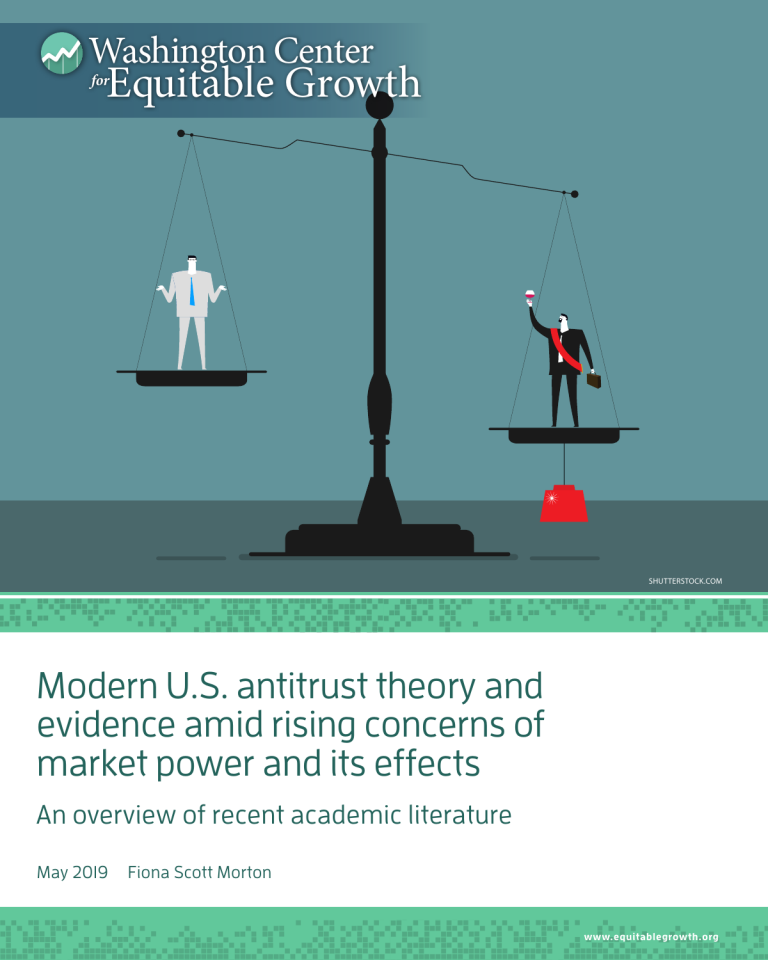
Modern U.S. antitrust theory and evidence amid rising concerns of market power and its effects (opens in a new tab)
Research Databases MAY 29, 2019
The decline in antitrust enforcement in the United States has been a project of conservatives for decades. Since the 1970s, the range of conduct that would be condemned by courts…
By: Fiona M. Scott Morton (opens in a new tab)
Production and learning in teams (opens in a new tab)
Working Papers MAR 5, 2019
The e ffect of coworkers on the learning and the productivity of an individual is measured combining theory and data. The theory is a frictional equilibrium model of the labor…
By: Kyle Herkenhoff (opens in a new tab), Jeremy Lise (opens in a new tab), Guido Menzio (opens in a new tab), Gordon Phillips (opens in a new tab)
Monopsony power and guest worker programs (opens in a new tab)
Working Papers FEB 28, 2019
Guest workers on visas in the United States may be unable to quit bad employers due to barriers to mobility and a lack of labor market competition. Using H-1B, H-2A,…
By: Eric M. Gibbons (opens in a new tab), Allie Greenman (opens in a new tab), Peter Norlander (opens in a new tab), Todd Sørensen (opens in a new tab)
Employer consolidation and wages: Evidence from hospitals (opens in a new tab)
Working Papers FEB 26, 2019
We test whether wage growth slows following employer consolidation by examining a decade of hospital mergers. To isolate the effects of changes in concentration due to mergers, we estimate difference-in-differences…
By: Elena Prager (opens in a new tab), Matt Schmitt (opens in a new tab)
Who’s afraid of sunlight? Explaining opposition to transparency in economic development (opens in a new tab)
Working Papers FEB 4, 2019
Why do some firms oppose transparency of government programs? In this paper we explore legal challenges to public records requests for deal-specific, company-specific participation in a state economic development incentive…
By: Nathan M. Jensen, Calvin Thrall (opens in a new tab)
Economic change and the social safety net: Are rural Americans still behind? (opens in a new tab)
Working Papers FEB 1, 2019
This aim of this paper is to assess the economic status of rural people five decades after The People Left Behind, with a particular focus on how changes in employment,…
By: James P. Ziliak
How does market power affect wages? Monopsony and collective action in an institutional context (opens in a new tab)
Working Papers DEC 20, 2018
To better understand the theoretical implications of new empirical findings which show that firms have monopsony power, we construct a monopsony-wage-model that integrates strategic interaction between workers and employers in…
By: Mark Stelzner (opens in a new tab), Mark Paul (opens in a new tab)
Who profits from patents? Rent-sharing at innovative firms (opens in a new tab)
Working Papers DEC 18, 2018
This paper analyzes how patent-induced shocks to labor productivity propagate into worker compensation using a new linkage of US patent applications to US business and worker tax records. We infer…
By: Patrick Kline (opens in a new tab), Neviana Petkova (opens in a new tab), Heidi Williams (opens in a new tab), Owen Zidar (opens in a new tab)
Control without responsibility: The legal creation of franchising 1960-1980 (opens in a new tab)
Working Papers DEC 13, 2018
While the first business organizations to reach large size in the late nineteenth-century did so through the route of vertical integration—formal ownership of assets and direct employment of workers—mid-twentieth-century franchising…
By: Brian Callaci (opens in a new tab)

In Conversation with Hilary Hoynes (opens in a new tab)
In Conversation NOV 14, 2018
Equitable Growth’s Executive Director and Chief Economist Heather Boushey talks with Hilary Hoynes, an economist and Haas Distinguished Chair in Economic Disparities at the Richard and Rhoda Goldman School of…
By: Heather Boushey (opens in a new tab)

In Conversation with Herbert Hovenkamp and Ioana Marinescu (opens in a new tab)
In Conversation OCT 11, 2018
“Equitable Growth in Conversation” is a recurring series where we talk with economists and other academics to help us better understand whether and how economic inequality affects economic growth and…
By: Michael Kades (opens in a new tab), Kate Bahn (opens in a new tab)
Consequences of Routine Work Schedule Instability for Worker Health and Wellbeing (opens in a new tab)
Working Papers SEP 26, 2018
The American labor market is increasingly unequal, characterized by extraordinary returns to work at the top of the market but rising precarity and instability at the bottom of the market.…
By: Daniel Schneider (opens in a new tab), Kristen Harknett (opens in a new tab)
Antitrust Remedies for Labor Market Power (opens in a new tab)
Working Papers SEP 25, 2018
Recent research indicates that labor market power has contributed to wage inequality and economic stagnation. Although the antitrust laws prohibit firms from restricting competition in labor markets like in product…
By: Suresh Naidu (opens in a new tab), Eric A. Posner (opens in a new tab), E. Glen Weyl (opens in a new tab)
Returns in the labor market: A nuanced view of penalties at the intersection of race and gender (opens in a new tab)
Working Papers AUG 7, 2018
There have been decades of research on wage gaps for groups based on their socially salient identities such as race and gender, but little empirical investigation on the effects of…
By: Mark Paul (opens in a new tab), Khaing Zaw (opens in a new tab), Darrick Hamilton (opens in a new tab), William Darity Jr. (opens in a new tab)
Anticompetitive mergers in labor markets (opens in a new tab)
Working Papers JUN 20, 2018
Mergers of competitors are conventionally challenged under the federal antitrust laws when they threaten to lessen competition in some product or service market in which the merging firms sell. Mergers…
By: Ioana Marinescu (opens in a new tab), Herbert Hovenkamp (opens in a new tab)
The distributional effects of minimum wages: Evidence from linked survey and administrative data (opens in a new tab)
Working Papers MAY 15, 2018
States and localities are increasingly experimenting with higher minimum wages in response to rising income inequality and stagnant economic mobility, but commonly used public datasets offer limited opportunities to evaluate…
By: Kevin Rinz (opens in a new tab), John Voorheis (opens in a new tab)
New technologies and the labor market (opens in a new tab)
Working Papers MAY 1, 2018
Using newspaper job ad text from 1960 to 2000, we measure job tasks and the adoption of individual information and communication technologies (ICTs). Most new technologies are associated with an…
By: Enghin Atalay (opens in a new tab), Phai Phongthiengtham (opens in a new tab), Sebastian Sotelo (opens in a new tab), Daniel Tannenbaum (opens in a new tab)
Motherhood penalties in the U.S., 1986-2014 (opens in a new tab)
Working Papers MAR 13, 2018
Download File 0313018-WP-motherhood-penalties Read the full PDF in your browser Previous research has found that mothers earn less than childless women; this parenthood effect helps explain gender inequality as well.…
By: Eunjung Jee (opens in a new tab), Joya Misra (opens in a new tab), Marta Murray-Close (opens in a new tab)
Inequality and aggregate demand (opens in a new tab)
Working Papers FEB 19, 2018
Download File 02192018-WP-inequality-aggregate-demand Read the full PDF in your browser We explore the transmission mechanism of income inequality to output. In the short run, higher inequality reduces output because marginal…
By: Adrien Auclert (opens in a new tab), Matthew Rognlie (opens in a new tab)
Sources of displaced workers’ long-term earnings losses (opens in a new tab)
Working Papers FEB 1, 2018
We estimate the magnitudes of lost earnings, reduced work hours, and lower wage rates of workers displaced during the Great Recession using linked employer-employee panel data. We find that displaced…
By: Marta Lachowska (opens in a new tab), Alexandre Mas (opens in a new tab), Stephen A. Woodbury
The evolving U.S. occupational structure (opens in a new tab)
Working Papers DEC 5, 2017
Download File 12052017-WP-evolving-occupational-structure Read the full PDF in your browser Using the text from help wanted ads, we construct a new data set of occupational task content from 1960 to…
By: Enghin Atalay (opens in a new tab), Phai Phongthiengtham (opens in a new tab), Sebastian Sotelo (opens in a new tab), Daniel Tannenbaum (opens in a new tab)
The productivity slowdown and the declining labor share: A neoclassical exploration (opens in a new tab)
Working Papers OCT 17, 2017
Download File 10172017-WP-slowdown-labor-share Read the full PDF in your browser We explore the possibility that a global productivity slowdown is responsible for the widespread decline in the labor share of…
By: Gene M. Grossman (opens in a new tab), Elhanan Helpman (opens in a new tab), Ezra Oberfield (opens in a new tab), Thomas Sampson (opens in a new tab)
What explains the rising share of U.S. men in registered nursing? (opens in a new tab)
Working Papers OCT 3, 2017
Download File 10032017-WP-rising-share-men-nursing Read the full PDF in your browser This paper documents four decades of increasing participation in registered nursing among US men and explores reasons for this change.…
By: Elizabeth Munnich (opens in a new tab), Abigail Wozniak (opens in a new tab)
Employment hysteresis from the great recession (opens in a new tab)
Working Papers SEP 26, 2017
Download File 09262017-WP-employment-hysteresis-great-recession Read the full PDF in your browser This paper uses U.S. local areas as a laboratory to test whether the Great Recession depressed 2015 employment. In full-population…
By: Danny Yagan (opens in a new tab)

In conversation with Robert Solow (opens in a new tab)
In Conversation JUL 20, 2017
“Equitable Growth in Conversation” is a recurring series where we talk with economists and other social scientists to help us better understand whether and how economic inequality affects economic growth…
By: Heather Boushey (opens in a new tab)
“Them old guys… they knew what to do”: Examining the impact of industry collapse on two tribal reservations (opens in a new tab)
Working Papers JUL 11, 2017
Download File 07112017-WP-industry-collapse-tribal-reservations Read the full PDF in your browser Previous studies of the impact of industry decline on individuals focus on cities; however little is known about the impact…
By: Blythe George (opens in a new tab)

In Conversation with David Weil (opens in a new tab)
In Conversation JUN 22, 2017
“Equitable Growth in Conversation” is a recurring series where we talk with economists and other social scientists to help us better understand whether and how economic inequality affects economic growth…
By: Heather Boushey (opens in a new tab)
The U-shape of over-education? Human capital dynamics & occupational mobility over the life cycle (opens in a new tab)
Working Papers MAY 23, 2017
Download File 05232017-WP-u-shape-of-over-education Read the full PDF in your browser This paper analyzes the relationship between age and the skill requirements of jobs performed by workers. I document that the…
By: Ammar Farooq (opens in a new tab)
Scraping by: Income and program participation after the loss of extended unemployment benefits (opens in a new tab)
Working Papers APR 25, 2017
Download File 04252017-WP-income-after-loss-of-extended-unemployment-benefits Read the full PDF in your browser Many Unemployment Insurance (UI) recipients do not find new jobs before exhausting their benefits, even when benefits are extended during…
By: Jesse Rothstein (opens in a new tab), Robert G. Valletta (opens in a new tab)
Consumer spending during unemployment: Positive and normative implications (opens in a new tab)
Working Papers APR 25, 2017
Download File 04252017-WP-consumer-spending-during-unemployment Read the full PDF in your browser We study the spending of unemployment insurance (UI) recipients using de-identified data from nearly 200,000 bank accounts. Spending on nondurables…
By: Peter Ganong (opens in a new tab), Pascal Noel (opens in a new tab)
Minimum wages and the distribution of family incomes (opens in a new tab)
Working Papers MAR 28, 2017
A new version of this working paper was uploaded on Nov. 16, 2018. There is robust evidence that higher minimum wages increase family incomes at the bottom of the distribution.…
By: Arindrajit Dube (opens in a new tab)
The wages of care: Bargaining power, earnings and inequality (opens in a new tab)
Working Papers FEB 14, 2017
Download File 021417-WP-the-wages-of-care Read the full PDF in your browser The uneven bargaining power of both firms and workers may be contributing to increased earnings inequality in the U.S. Econometric…
By: Nancy Folbre (opens in a new tab), Kristin Smith (opens in a new tab)
Valuing alternative work arrangements (opens in a new tab)
Working Papers JAN 24, 2017
Download File 012417-WP-valuing-alternative-work-arrangements Read the full PDF in your browser We use a field experiment to study how workers value alternative work arrangements. During the application process to staff a…
By: Alexandre Mas (opens in a new tab), Amanda Pallais (opens in a new tab)


Your Direct Line to Cutting Edge Research
Be the first to know about our latest events, research releases, and expert insights. Get exclusive updates delivered right to your inbox and never miss an opportunity to engage with our community.