


Issue Areas
The Washington Center for Equitable Growth is engaged in an array of issues to advance evidence-based ideas and policies that promote strong, stable, and broad-based economic growth.

151 Results

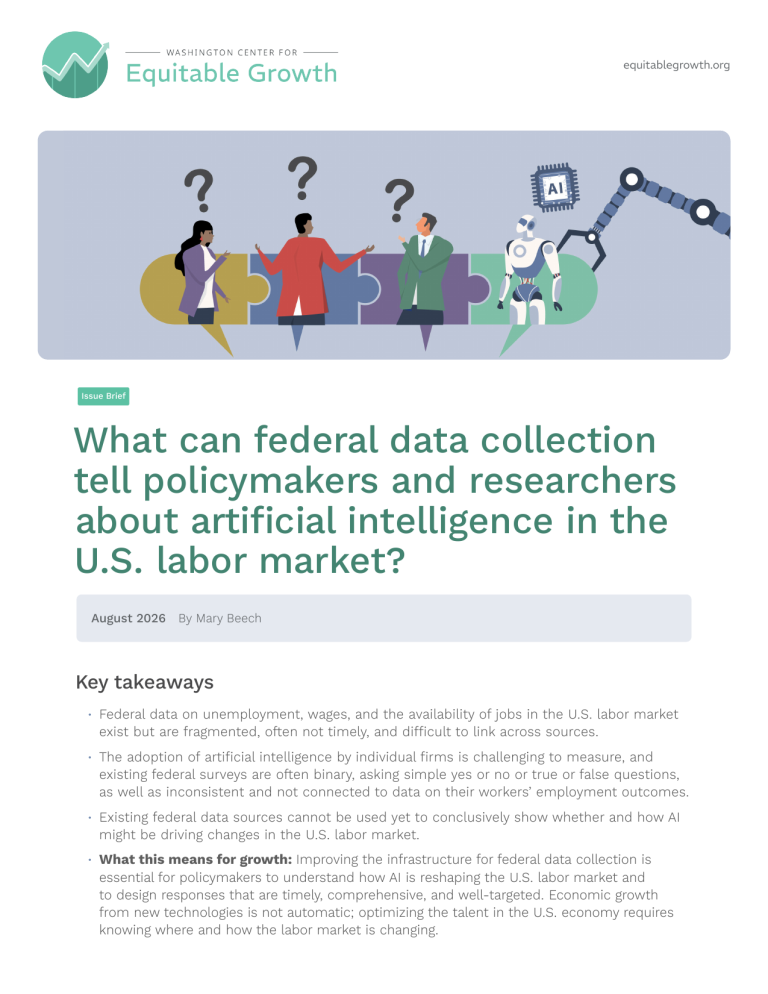
What can federal data collection tell policymakers and researchers about artificial intelligence in the U.S. labor market? (opens in a new tab)
Issue Briefs Aug 24, 2026
It is impossible to perfectly predict how artificial intelligence will affect the U.S. labor market. Policymakers and researchers are grappling with important questions around this topic, including what new opportunities…

What is the relationship between inflation, interest rates, and economic growth, and what does it mean for the new Federal Reserve chair? (opens in a new tab)
Issue Briefs May 18, 2026
Since regaining the Oval Office in early 2025, President Donald Trump has repeatedly called for lower interest rates and severely criticized former Federal Reserve Board Chair Jerome Powell’s cautious approach…

Federal policymakers can ensure Trump accounts do not exacerbate inequality in the United States (opens in a new tab)
Issue Briefs Apr 14, 2026
In July 2025, Congress passed a federal budget bill (Public Law 119-21, also commonly known as the One Big Beautiful Bill Act) that, among other things, established a new type…

Why federal food assistance became politically polarizing—and what to do about it (opens in a new tab)
Issue Briefs Feb 2, 2026
On January 31, 1964, President Lyndon B. Johnson requested that Congress pass federal legislation to make the Food Stamp Program permanent. Up to that point, the program had operated as…

How artificial intelligence uncouples hard work from fair wages through ‘surveillance pay’ practices—and how to fix it (opens in a new tab)
Issue Briefs Aug 21, 2025
Correction: Freddie Mac and Udemy contacted the Washington Center for Equitable Growth on March 18, 2026 and April 2, 2026, respectively, to say they no longer had business relationships with…

Tariffs impact U.S. industries differently, with manufacturing the most exposed (opens in a new tab)
Issue Briefs Jul 29, 2025
Estimates in this brief were generated July 21, before the announcement of trade deals with Japan and the European Union. All data and code used in the Equitable Growth tariff…

Slow wage growth is the key to understanding U.S. inequality in the 21st century (opens in a new tab)
Issue Briefs Jul 8, 2025
The Washington Center for Equitable Growth today launched the U.S. Inequality Tracker, which tracks income and wealth inequality in the United States and highlights how particular components of income and…

Why do some jobs pay better than others? Think about what workers do. (opens in a new tab)
Issue Briefs May 6, 2025
Most U.S. labor market data characterize jobs by describing the categories of industry and occupation to which the jobs belong. But to understand why some types of jobs tend to…

Advancing economic research on the Inflation Reduction Act: Q&A with Heather Boushey (opens in a new tab)
Issue Briefs Apr 23, 2025
The Inflation Reduction Act of 2022 is the most significant economic and clean energy jobs program the United States has ever initiated. To improve overall understanding of whether the new…
The qualified small business stock exclusion overwhelmingly benefits the wealthy and should be reformed in 2025 (opens in a new tab)
Issue Briefs Apr 1, 2025
This year’s debate over the expiring personal income and estate tax provisions of the 2017 Tax Cuts and Jobs Act provides an opportunity for reforming the qualified small business stock…

Benchmarking the U.S. economy that President Donald Trump is set to inherit (opens in a new tab)
Issue Briefs Jan 16, 2025
When President Donald Trump takes the presidential oath of office again on January 20, he will be inheriting a very different economy, with a very different outlook, than the one…

Accelerating research can help fill the AI knowledge gaps for U.S. policymakers (opens in a new tab)
Issue Briefs Dec 17, 2024
It is hard for policymakers to ignore today’s “AI arms race” and the public debate on the economic and social significance of generative artificial intelligence. The discourse is fueled in…
Hospital consolidation and rising health care prices lead to job losses for U.S. workers (opens in a new tab)
Issue Briefs Jul 25, 2024
The majority of working-age adults in the United States have health insurance via their employers. Theory and a growing body of research suggest that when the cost of workers’ benefits…
2017 tax cut for pass-through business owners exacerbated inequality and failed to deliver economic benefits (opens in a new tab)
Issue Briefs May 1, 2024
Among the many regressive and ineffective elements of the Trump administration’s Tax Cuts and Jobs Act of 2017, one provision stands out as the most convoluted, unfair, and ripe for…

Combating market power through a graduated U.S. corporate income tax (opens in a new tab)
Issue Briefs Apr 15, 2024
Editor’s note: This version has been updated from the original publication on April 15, 2024. The update corrects a prior underestimate of the revenue potential from graduated corporate tax rates…

Matching competition policy in the U.S. healthcare industry to address a new generation of challenges in provider markets (opens in a new tab)
Issue Briefs Mar 20, 2024
Antitrust policy in the U.S. healthcare sector is perennially 10 years behind the industry. But at the start of the Biden administration in early 2021, there was hope for a…

Closing the billionaire borrowing loophole would strengthen the progressivity of the U.S. tax code (opens in a new tab)
Issue Briefs Feb 5, 2024
The vast majority of Americans are concerned that some wealthy people don’t pay their “fair share” of federal taxes. They’re right to be bothered: Loopholes in the U.S. tax code…
New research doesn’t overturn consensus on rising U.S. income inequality (opens in a new tab)
Issue Briefs Jan 10, 2024
New research from Gerald Auten at the U.S. Treasury Department and David Splinter at the U.S. Congress’ Joint Committee on Taxation makes the counter-to-conventional-wisdom claim that U.S. income inequality has…
The role of private equity in the U.S. economy, and whether and how favorable tax policies for the sector need to be reformed (opens in a new tab)
Issue Briefs Sep 14, 2023
The increasing impact of private equity firms upon large swaths of the U.S. economy in recent decades is drawing more attention to the tax treatment of these firms as they…

The economic costs of gun violence in the United States (opens in a new tab)
Issue Briefs Jul 18, 2023
When it comes to understanding the costs of gun violence in the United States, many people rightfully focus on the human cost. People who are slain or take their own…
Equitable Growth delivers economist sign-on letter and comment letter to the White House Office of Information and Regulatory Affairs on its Proposed Revisions to Circular A-4, Regulatory Analysis (opens in a new tab)
Issue Briefs Jun 20, 2023
This post has been updated to reflect that Equitable Growth’s economist sign-on letter, not our comment letter, was submitted to regulations.gov due to an administrative submission error. The Washington Center…
Money for nothing: The Qualified Small Business Stock capital gains exclusion is a giveaway to wealthy investors, startup founders, and their employees (opens in a new tab)
Issue Briefs Jun 8, 2023
The Qualified Small Business Stock exclusion, enshrined in Section 1202 of the Internal Revenue Code, permits early-stage venture capital firms and angel investors in high-tech startups, those startups’ founders, and…
New IRS report examines free tax filing option to reduce the cost and complexity for U.S. taxpayers (opens in a new tab)
Issue Briefs Jun 1, 2023
Filing a tax return with the Internal Revenue Service is one of the most common interactions Americans have with the federal government. Unfortunately, this process is often time-consuming and complex.…
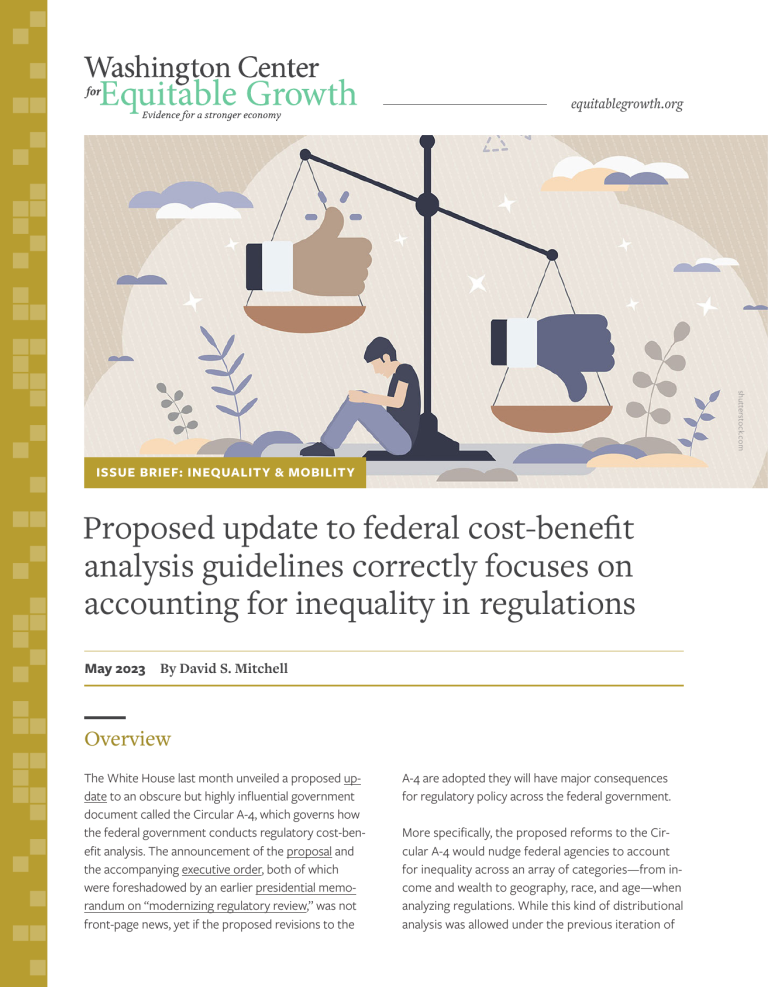
Proposed update to federal cost-benefit analysis guidelines correctly focuses on accounting for inequality in regulations (opens in a new tab)
Issue Briefs May 23, 2023
The White House last month unveiled a proposed update to an obscure but highly influential government document called the Circular A-4, which governs how the federal government conducts regulatory cost-benefit…

Maybe some Earth Day soon, we’ll know what nature is worth (opens in a new tab)
Issue Briefs Apr 24, 2023
This past January, the Biden administration unveiled its “National Strategy to Develop Statistics for Environmental-Economic Decisions,” an effort to bring the health and sustainability of natural resources in the United…

Ahead of new U.S. jobs data releases, here’s what employment growth and job switching mean for wage disparities in the U.S. labor market (opens in a new tab)
Issue Briefs Mar 7, 2023
Later this week, the U.S. Bureau of Labor Statistics will release data on February 2023 job growth through its Employment Situation Summary. It will also release information on job openings,…

Data infrastructure and tribal sovereignty can help break down barriers for Native Americans to build wealth (opens in a new tab)
Issue Briefs Mar 2, 2023
For centuries, Indigenous communities in the United States have faced devastating poverty. American Indians and Alaska Natives today experience the highest rate of poverty, at 25 percent, of any major…

How the Infrastructure Investment and Jobs Act of 2021 is promoting sustainable U.S. economic growth and mitigating climate change (opens in a new tab)
Issue Briefs Nov 18, 2022
In an issue brief earlier this year, Equitable Growth discussed how the Infrastructure Investment and Jobs Act of 2021 rests on sound economic principles and analyzed the ways that its…

Latino workers are often segregated into bad jobs, but a strong U.S. labor movement can boost job quality and U.S. economic growth (opens in a new tab)
Issue Briefs Oct 13, 2022
Latino workers represent a large and growing share of the U.S. workforce. But even with the highest employment rates in the United States, Latinos face a number of barriers to…
How corporate governance strategies hurt worker power in the United States (opens in a new tab)
Issue Briefs Sep 6, 2022
Researchers studying the decades-long rise in earnings inequality and wage stagnation in the United States point to a number of reasons why the country’s income divide grew over the past…
Why the Infrastructure Investment and Jobs Act is good economics (opens in a new tab)
Issue Briefs Jun 30, 2022
President Joe Biden, in November 2021, signed the Infrastructure Investment and Jobs Act into law, providing $1.2 trillion in new government investments to create millions of jobs, increase U.S. economic…

New U.S. Census Bureau data show significant economic disparities among the LGBTQ+ community (opens in a new tab)
Issue Briefs Jun 29, 2022
The evidence across academic and research disciplines overwhelmingly indicates that disaggregated data help build a more detailed narrative about the varying economic experiences of the U.S. population. While great strides…
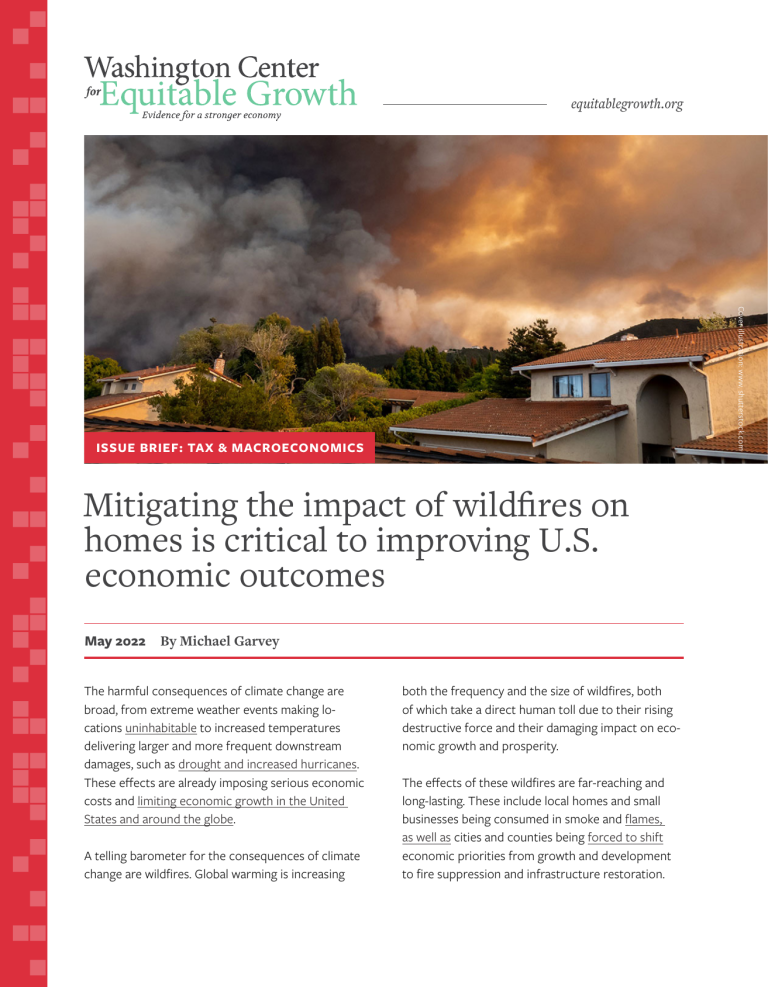
Mitigating the impact of wildfires on homes is critical to improving U.S. economic outcomes (opens in a new tab)
Issue Briefs May 10, 2022
The harmful consequences of climate change are broad, from extreme weather events making locations uninhabitable to increased temperatures delivering larger and more frequent downstream damages, such as drought and increased…
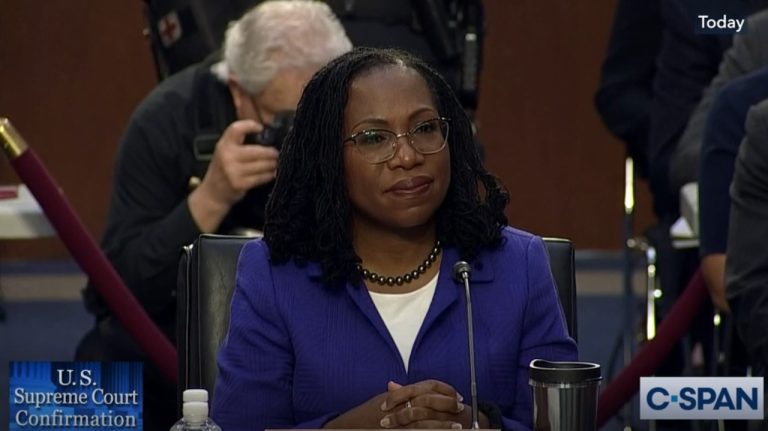
Justice Ketanji Brown Jackson will bring new perspectives on mass incarceration to U.S. Supreme Court jurisprudence (opens in a new tab)
Issue Briefs Apr 7, 2022
Justice Ketanji Brown Jackson made history today after the U.S. Senate confirmed her nomination to the U.S. Supreme Court by a vote of 53 to 47. The Senate vote sealed…
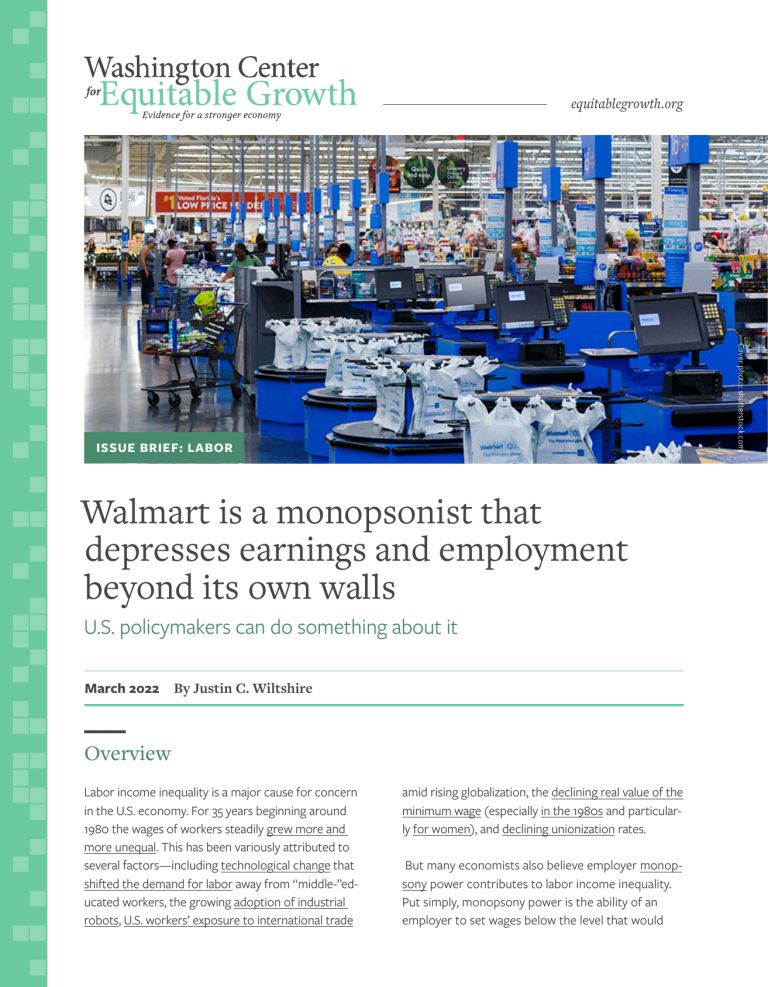
Walmart is a monopsonist that depresses earnings and employment beyond its own walls, but U.S. policymakers can do something about it (opens in a new tab)
Issue Briefs Mar 29, 2022
Labor income inequality is a major cause for concern in the U.S. economy. For 35 years beginning around 1980 the wages of workers steadily grew more and more unequal. This…
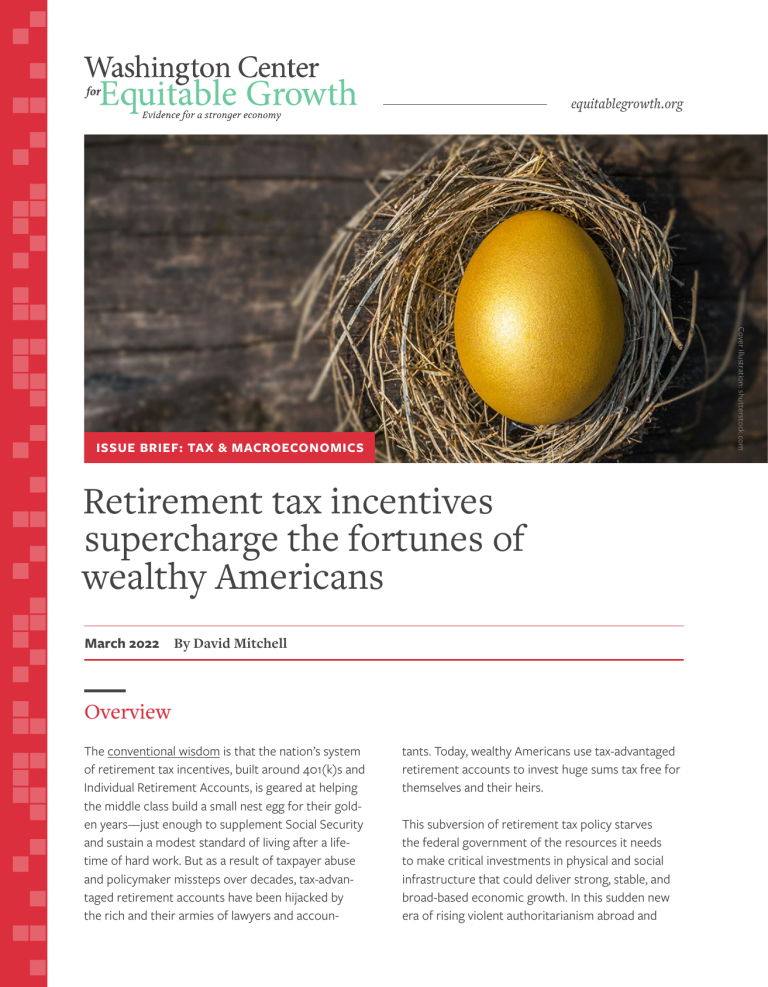
Retirement tax incentives supercharge the fortunes of wealthy Americans (opens in a new tab)
Issue Briefs Mar 17, 2022
The conventional wisdom is that the nation’s system of retirement tax incentives, built around 401(k)s and Individual Retirement Accounts, is geared at helping the middle class build a small nest…

Revisiting timely research that explores U.S. intersectional wage gaps amid Women’s History Month (opens in a new tab)
Issue Briefs Mar 8, 2022
The U.S. labor market faced one of the most severe challenges in recent history with the onset of the coronavirus pandemic in March 2020. In the 2 years since then,…
Stratification economics: What it is and how it advances our understanding of inequality (opens in a new tab)
Issue Briefs Feb 28, 2022
Different manifestations of inequality are among the most persistent features of the U.S. economy, yet mainstream economics traditionally explains disparities between groups solely as they relate to differences in either…
More frequent disaggregated data on U.S. income inequality would improve economic research and inform policymaking (opens in a new tab)
Issue Briefs Feb 24, 2022
Once a year, since March 2020, the U.S. Department of Commerce’s Bureau of Economic Analysis releases its data series on the distribution of growth in personal income with updated annual…

Getting cash transfer payments to recipients faster boosts household spending and stimulates the economy (opens in a new tab)
Issue Briefs Feb 9, 2022
Cash transfer programs are a widespread economic policy tool often used to stimulate spending or encourage savings among consumers. The United States most notably uses direct cash payments as part…

Consumption volatility across the U.S. income distribution is highest among low-income workers and their families (opens in a new tab)
Issue Briefs Feb 3, 2022
Rising income inequality and more unstable earnings in the United States today results in more precarious lives for low-income U.S. workers and their families. This earnings and income instability leads…
How new job search technologies are affecting the U.S. labor market (opens in a new tab)
Issue Briefs Feb 2, 2022
As more and more job-seekers in the United States went online to look for work in the late 1990s and early 2000s, several scholars wrote about the potential of the…

The U.S. economy is in its fourth decade of rising inequality amid the need for more accurate data on its consequences (opens in a new tab)
Issue Briefs Jan 27, 2022
Economic inequality in the United States continued to rise over the first two decades of the 21st century, according to new data from the U.S. Bureau of Economic Analysis—a trend…
Paid sick time and paid family and medical leave support workers in different ways and are both good for the broader U.S. economy (opens in a new tab)
Issue Briefs Jan 25, 2022
Workers often need paid time away from their jobs, whether they are experiencing a short-term flu, undergoing a surgery and recovery that will last a few weeks, caring for an…
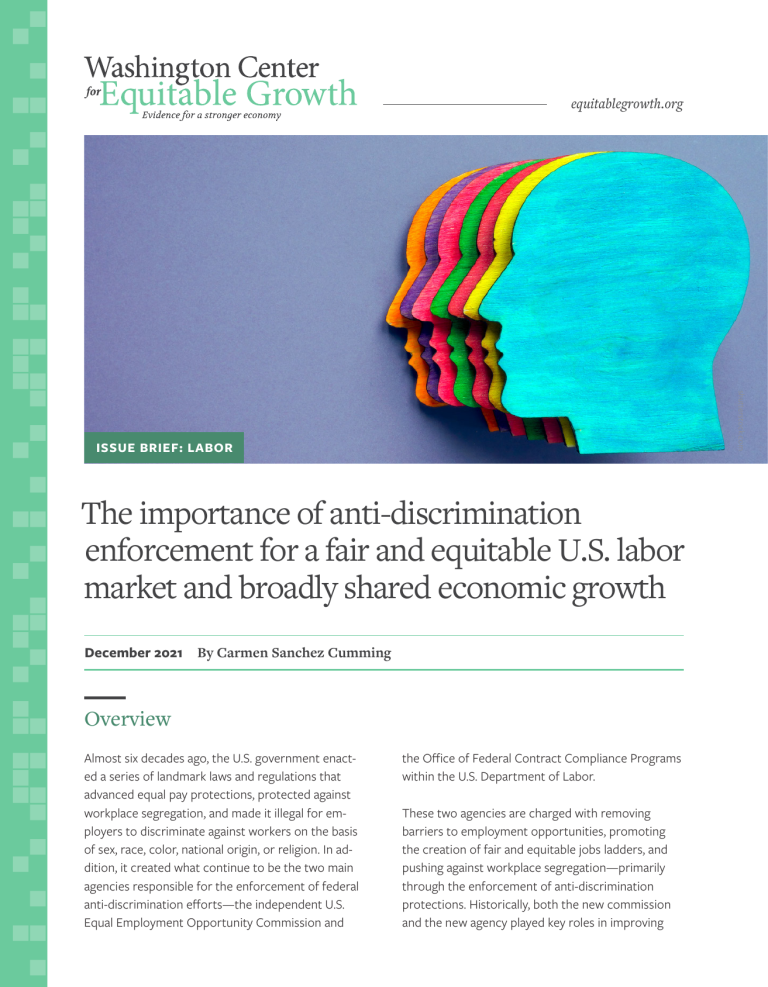
The importance of anti-discrimination enforcement for a fair and equitable U.S. labor market and broadly shared economic growth (opens in a new tab)
Issue Briefs Dec 21, 2021
Almost six decades ago, the U.S. government enacted a series of landmark laws and regulations that advanced equal pay protections, protected against workplace segregation, and made it illegal for employers…

Exploring the impact of automation and new technologies on the future of U.S. workers and their families (opens in a new tab)
Issue Briefs Dec 17, 2021
As technological advances seemingly reshape every aspect of how U.S. workers and their families live and work, a persistent question in research and policy discussions is how these advances will…

The economic evidence behind 10 policies in the Build Back Better Act (opens in a new tab)
Issue Briefs Nov 24, 2021
The U.S. House of Representatives late last week passed a key plank of President Joe Biden’s economic agenda, the Build Back Better Act. Coming on the heels of the president…
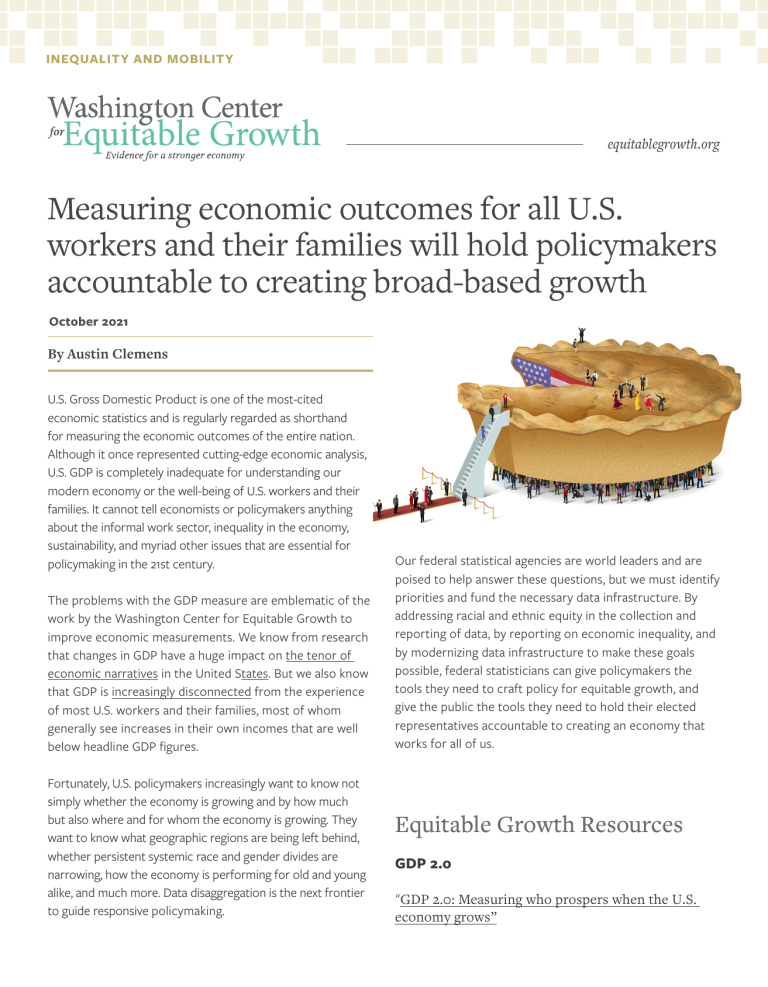
Measuring economic outcomes for all U.S. workers and their families will hold policymakers accountable to creating broad-based growth (opens in a new tab)
Issue Briefs Oct 7, 2021
U.S. Gross Domestic Product is one of the most-cited economic statistics and is regularly regarded as shorthand for measuring the economic outcomes of the entire nation. Although it once represented…
A cost-benefit analysis of The American Families Plan’s proposed investment in a nationwide public preschool program (opens in a new tab)
Issue Briefs Sep 22, 2021
President Joe Biden asked the U.S. Congress to consider investing $200 billion over 10 years in “a national partnership with states to offer free, high-quality, accessible, and inclusive preschool to…
Factsheet: What the research says about the economics of income support programs (opens in a new tab)
Issue Briefs Sep 16, 2021
Sufficient income is one of the most important components of a stable and healthy household budget. Income support programs help ensure that U.S. households have the income they need to…
Weak income support infrastructure harms U.S. workers and their families and constrains economic growth (opens in a new tab)
Issue Briefs Aug 5, 2021
The coronavirus public health emergency and resulting economic recession brought into stark relief the engrained problems with the system of income support for U.S. workers and their families. People in…

Policymakers should ensure that the U.S. labor market recovery lasts by boosting workers’ bargaining power and strengthening social infrastructure (opens in a new tab)
Issue Briefs Jul 12, 2021
Many U.S. labor market indicators suggest that the United States is on its way toward a strong recovery. Over the past few months, hopeful signs are starting to emerge that…
The relationship between taxation and U.S. economic growth (opens in a new tab)
Issue Briefs Jun 30, 2021
The relationship between taxation and economic growth is hotly debated in economics. Free market economic ideology is based on the premise that constraining “the market” through policies such as increased…
The economic benefits of equal opportunity in the United States by ending racial, ethnic, and gender disparities (opens in a new tab)
Issue Briefs Jun 29, 2021
Racial, ethnic, and gender disparities across the U.S. economy are a personal tragedy for the millions of individuals who suffer from the emotional, psychological, and social consequences. These disparities also…
The intersectional wage divides faced by Asian American, Native Hawaiian, and Pacific Islander women in the United States (opens in a new tab)
Issue Briefs May 28, 2021
Like other women of color, Asian American, Native Hawaiian, and Pacific Islander women run up against structural barriers that hurt their U.S. labor market outcomes, including disadvantages that are the…
The sources and size of tax evasion in the United States (opens in a new tab)
Issue Briefs May 14, 2021
Tens of millions of Americans will duly pay the taxes they owe and file for their refunds by Tax Day in 2021, which was delayed until May 17. Meanwhile, some…
The rising financialization of the U.S. economy harms workers and their families, threatening a strong recovery (opens in a new tab)
Issue Briefs May 11, 2021
If you are an analyst following Wall Street, things are looking pretty bright these days. The S&P 500—an index of 500 major publicly traded companies in the United States and…
The consequences of job displacement for U.S. workers (opens in a new tab)
Issue Briefs May 5, 2021
More than a year into the coronavirus recession, unemployment in the United States remains high, and there are 8.4 million fewer jobs than prior to the pandemic. As the U.S.…

Measuring what matters: Zeroing in on Latina women to address persistent low Hispanic homeownership rates in the United States (opens in a new tab)
Issue Briefs Apr 19, 2021
A new report released today by UnidosUS highlights one of the reasons for the wealth divide between Hispanic* households and other households in the United States: low homeownership rates among…
The latest economic research demonstrates why concerns about federal budget deficits and U.S. debt levels are overblown (opens in a new tab)
Issue Briefs Apr 1, 2021
A growing number of economists are reconsidering long-held views about the appropriate level of public borrowing and the consequences of federal budget deficits and debt on U.S. economic growth and…

New Great Recession data suggest Congress should go big to spur a broad-based, sustained U.S. economic recovery (opens in a new tab)
Issue Briefs Mar 4, 2021
As federal policymakers debate President Joe Biden’s proposed $1.9 trillion American Rescue Plan, critics now argue that it will “overshoot,” meaning it would boost economic activity beyond the desired level.…
Employer concentration suppresses wages for several million U.S. workers: antitrust and labor market regulators should respond (opens in a new tab)
Issue Briefs Jan 26, 2021
Introductory economics textbooks often feature perfectly competitive labor markets, where a large number of identical firms compete to hire identical workers, and switching jobs, hiring and firing workers, and creating…

Improving U.S. labor standards and the quality of jobs to reduce the costs of employee turnover to U.S. companies (opens in a new tab)
Issue Briefs Dec 21, 2020
Implementing policies that improve job quality in the United States could come with a direct cost, such as the cost to a U.S. company from raising wages or providing more…

How to bring down the price of drugs such as the novel coronavirus therapy remdesivir (opens in a new tab)
Issue Briefs Nov 20, 2020
The extraordinary ongoing effort to find treatments to cure, ameliorate symptoms of, and vaccinate against the novel coronavirus and COVID-19, the disease caused by the virus, is a reminder of…
Why minimum wages are a critical tool for achieving racial justice in the U.S. labor market (opens in a new tab)
Issue Briefs Oct 29, 2020
The minimum wage is one of the primary tools for raising the wages of low-income workers. This was the case at its inception in some states in the early 20th…
Addressing long-term U.S. unemployment requires confronting the stigma against the unemployed amid the coronavirus recession (opens in a new tab)
Issue Briefs Oct 22, 2020
Six months into a pandemic that is keeping many businesses closed across the United States, and with close to 1 million new unemployment claims continuing to be added each week,…
The rising number of U.S. households with burdensome student debt calls for a federal response (opens in a new tab)
Issue Briefs Oct 21, 2020
Today, about 43 million adults in the United States collectively hold $1.5 trillion in federal student loan debt and an additional $119 billion in private student loans not backed by…
Voting rights equal economic progress: The Voting Rights Act and U.S. economic inequality (opens in a new tab)
Issue Briefs Oct 16, 2020
The civil rights movement, from its mid-20th century growth and successes to its current manifestations, has had a dual focus of eliminating political and social discrimination and bettering the economic…
Can policymakers reverse the unequal decline in middle-age U.S. homeownership rates? (opens in a new tab)
Issue Briefs Oct 13, 2020
Homeownership in the United States has long functioned as a wealth equalizer, allowing middle-class families to build wealth while they pay for their housing costs. Because houses have generally appreciated…
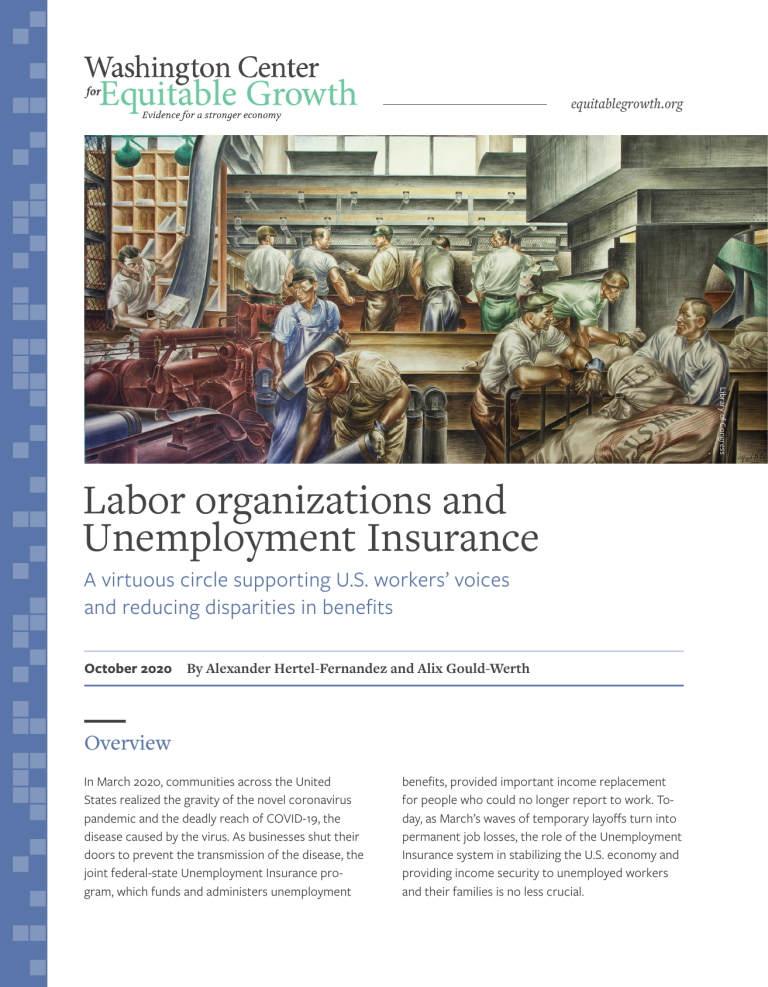
Labor organizations and Unemployment Insurance: A virtuous circle supporting U.S. workers’ voices and reducing disparities in benefits (opens in a new tab)
Issue Briefs Oct 9, 2020
In March 2020, communities across the United States realized the gravity of the novel coronavirus pandemic and the deadly reach of COVID-19, the disease caused by the virus. As businesses…
Policy prescriptions for the flawed and unequal retirement savings systems that perpetuate U.S. economic inequality (opens in a new tab)
Issue Briefs Oct 7, 2020
Outside of homeownership, retirement savings are the most important way middle-class workers and their families build wealth in the United States. But this second pillar of wealth creation is woefully…
New wealth data show that the economic expansion after the Great Recession was a wealthless recovery for many U.S. households (opens in a new tab)
Issue Briefs Oct 5, 2020
The Federal Reserve’s 2019 Survey of Consumer Finances, or SCF, released last week, shows that the wealth of many U.S. households never recovered from the shock of the Great Recession…
Structural racism and the coronavirus recession highlight why more and better U.S. data need to be widely disaggregated by race and ethnicity (opens in a new tab)
Issue Briefs Sep 24, 2020
The enduring legacy of structural racism in the United States is not news to the multihued communities of color across our nation. And in these Black, Latinx, Native American, Asian…
Main Street’s workers, families, and small businesses are now suffering as Wall Street prospers from policies to fight the coronavirus recession (opens in a new tab)
Issue Briefs Sep 17, 2020
In San Antonio, 10,000 cars lined up to get bags of groceries from a local food bank, waiting hours in the heat for help. In New Orleans, advocates chained themselves…
Taxing wealth and investment income in the United States (opens in a new tab)
Issue Briefs Aug 25, 2020
The federal income tax does a poor job of taxing income derived from wealth. The root cause of this problem is that the tax code allows taxpayers to defer (without…

Disaggregated data on Asian Americans, Native Hawaiians, and Pacific Islanders is crucial amid the coronavirus pandemic (opens in a new tab)
Issue Briefs Aug 20, 2020
The novel coronavirus pandemic and the recession it caused lay bare the clear links between racial and ethnic economic inequities, structural racism, and the outsized harm of these crises on…
Building worker power in the United States (opens in a new tab)
Issue Briefs Aug 20, 2020
Wages have stagnated for most U.S. workers over the past 40 years while the labor market institutions that promote worker power have faltered in a pro-business and anti-worker policy environment.…

Improving automatic stabilizers to combat U.S. economic recessions (opens in a new tab)
Issue Briefs Aug 19, 2020
The new coronavirus pandemic and the recession it caused show that the typical set of economic policies used to fight recessions in the United States should be designed to automatically…

Restoring the federal estate tax is a proven way to raise revenue and address wealth inequality (opens in a new tab)
Issue Briefs Aug 14, 2020
Wealth inequality in the United States is rising more steeply to the already very rich, even more than the well-known rise in income inequality. The wealthiest 1 percent of families…
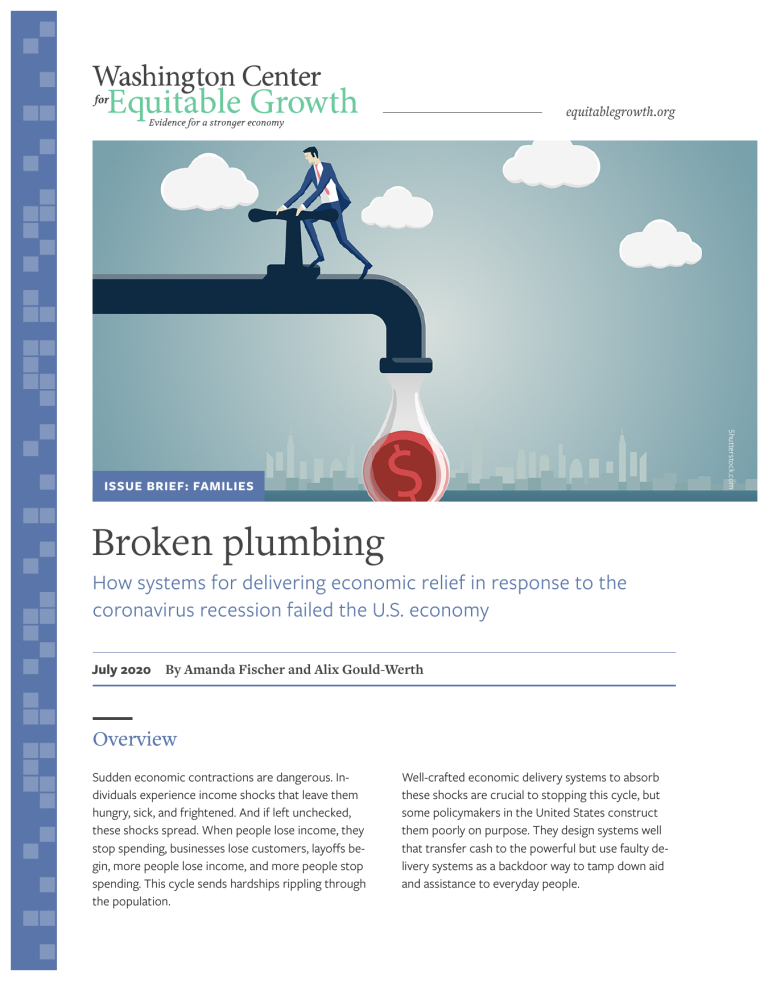
Broken plumbing: How systems for delivering economic relief in response to the coronavirus recession failed the U.S. economy (opens in a new tab)
Issue Briefs Jul 29, 2020
Sudden economic contractions are dangerous. Individuals experience income shocks that leave them hungry, sick, and frightened. And if left unchecked, these shocks spread. When people lose income, they stop spending,…
A generational perspective on recent U.S. homeownership divergence by income and race (opens in a new tab)
Issue Briefs Jul 27, 2020
Between the end of 2012 and the end of 2019, the Federal Reserve Board estimates that the total value of U.S. owner-occupied housing increased nearly 60 percent, from $18.5 trillion…
A college degree is not the solution to U.S. wage inequality (opens in a new tab)
Issue Briefs Jul 20, 2020
Relatively stagnant or declining wages for the vast majority of U.S. workers became a feature of the U.S. economy after the 1970s, along with a shift to “lousy” and low-wage…
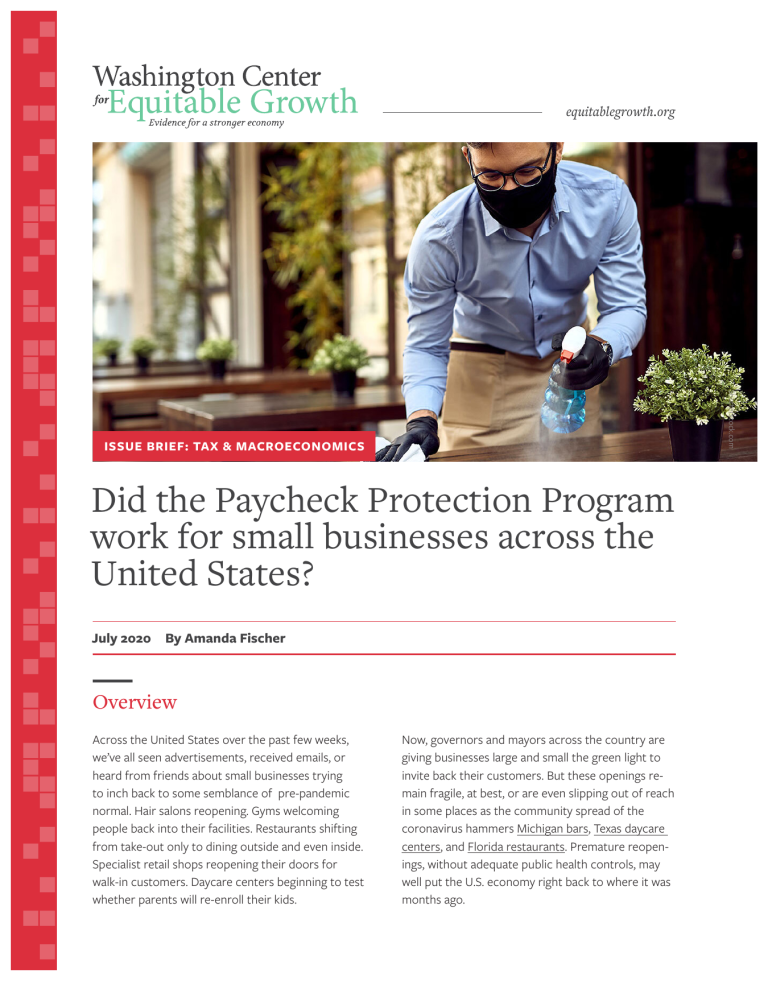
Did the Paycheck Protection Program work for small businesses across the United States? (opens in a new tab)
Issue Briefs Jul 15, 2020
Across the United States over the past few weeks, we’ve all seen advertisements, received emails, or heard from friends about small businesses trying to inch back to some semblance of…
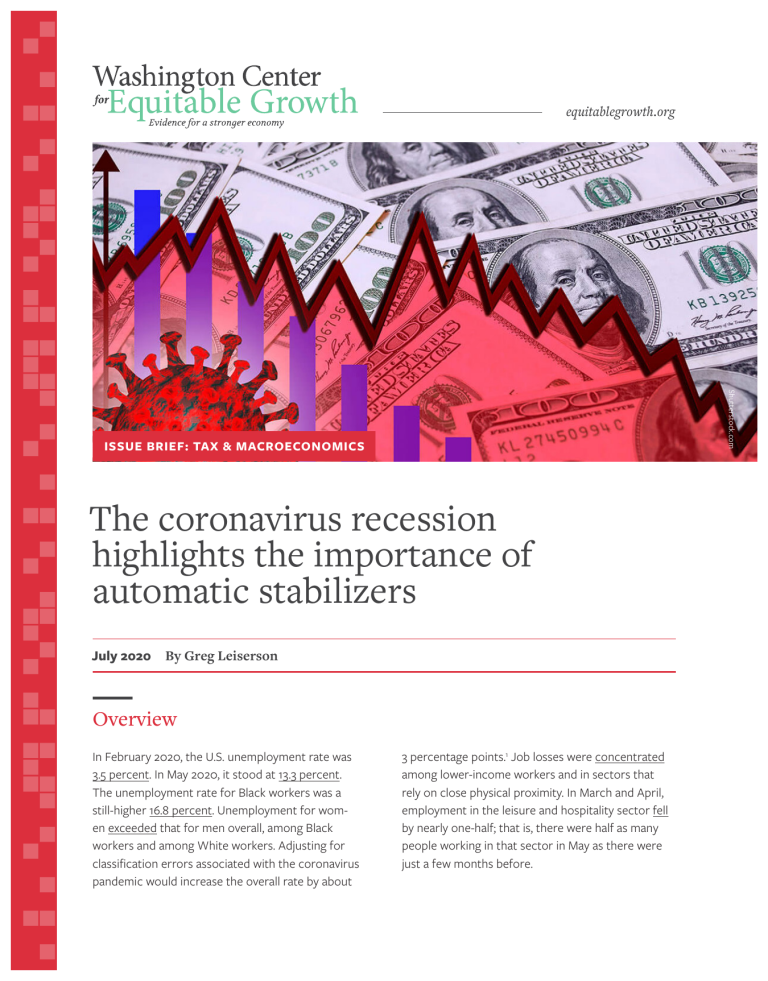
The coronavirus recession highlights the importance of automatic stabilizers (opens in a new tab)
Issue Briefs Jun 30, 2020
In February 2020, the U.S. unemployment rate was 3.5 percent. In May 2020, it stood at 13.3 percent. The unemployment rate for Black workers was a still-higher 16.8 percent. Unemployment…
Moving from Federal Pandemic Unemployment Compensation to a job losers’ stimulus program amid the coronavirus recession (opens in a new tab)
Issue Briefs Jun 5, 2020
The coronavirus recession is shattering businesses and dramatically increasing unemployment, which hit 14.7 percent in April 2020, the highest level since 1948. So far, the federal government has delivered a…

Better workplace conditions for long-term eldercare staff are key to promoting resident safety amid the coronavirus pandemic (opens in a new tab)
Issue Briefs Jun 4, 2020
Residents and workers in long-term residential eldercare settings account for more than 40 percent of all the deaths in the United States due to COVID-19, the disease spread by the…
Policy options for building resilient U.S. medical supply networks (opens in a new tab)
Issue Briefs May 29, 2020
U.S. policymakers in Congress across the political spectrum, from Sen. Marco Rubio (R-FL) to Rep. Elissa Slotkin (D-MI) to Sen. Bernie Sanders (I-VT), all agree that the United States is…
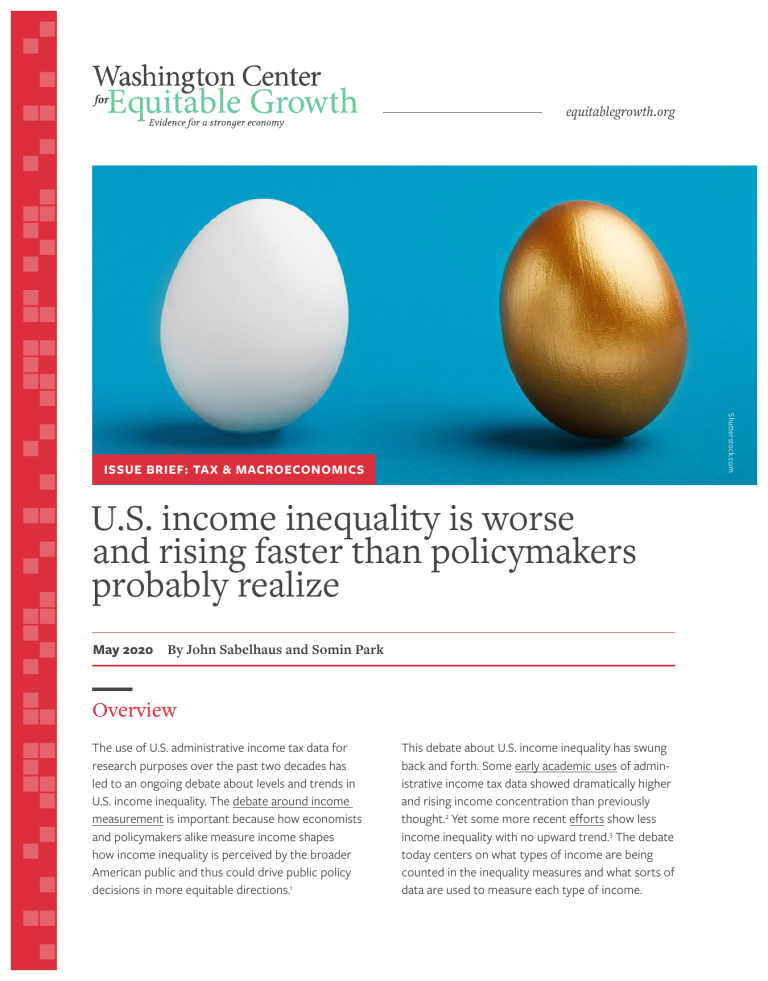
U.S. income inequality is worse and rising faster than policymakers probably realize (opens in a new tab)
Issue Briefs May 27, 2020
The use of U.S. administrative income tax data for research purposes over the past two decades has led to an ongoing debate about levels and trends in U.S. income inequality.…
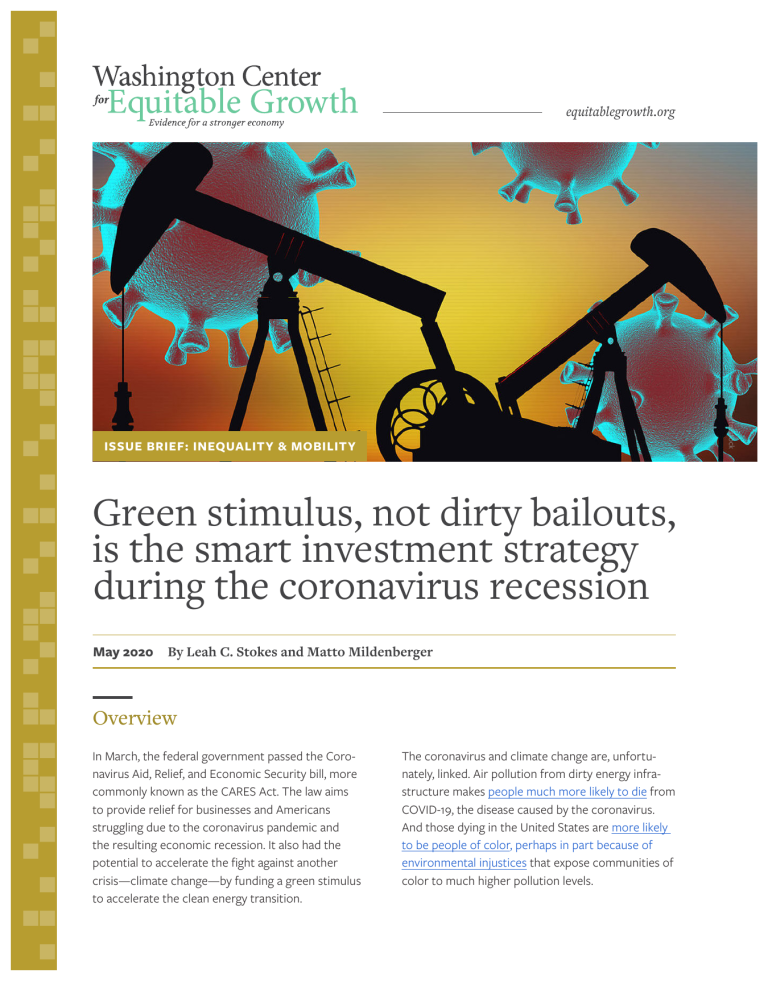
Green stimulus, not dirty bailouts, is the smart investment strategy during the coronavirus recession (opens in a new tab)
Issue Briefs May 18, 2020
In March, the federal government passed the Coronavirus Aid, Relief, and Economic Security bill, more commonly known as the CARES Act. The law aims to provide relief for businesses and…
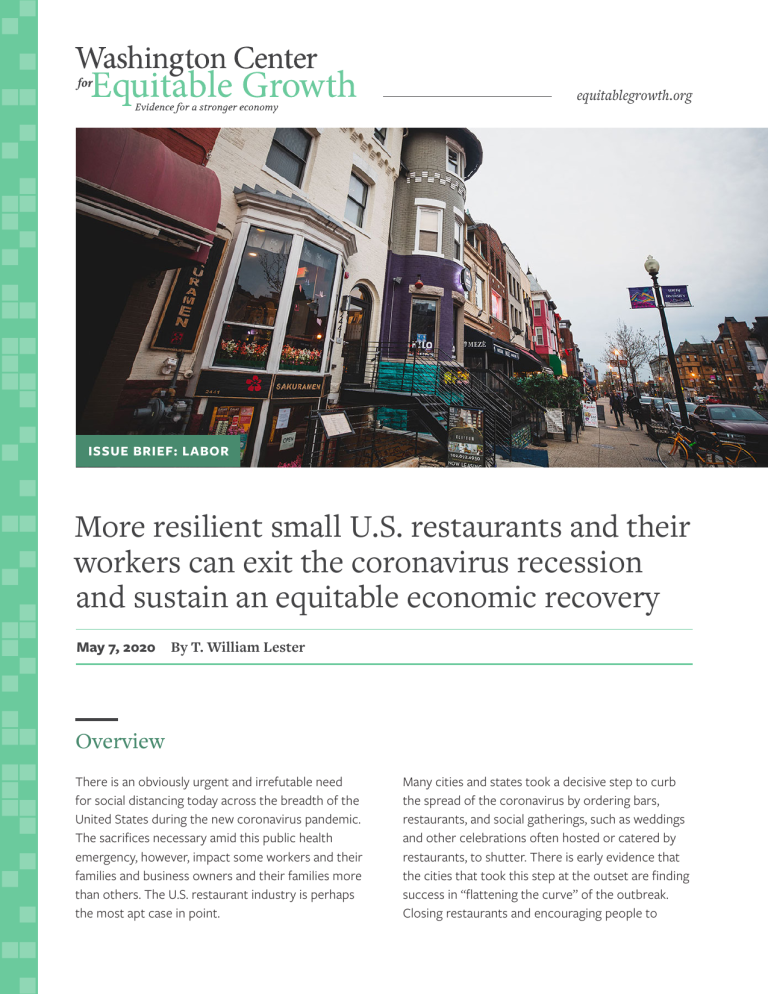
More resilient small U.S. restaurants and their workers can exit the coronavirus recession and sustain an equitable economic recovery (opens in a new tab)
Issue Briefs May 7, 2020
There is an obviously urgent and irrefutable need for social distancing today across the breadth of the United States during the new coronavirus pandemic. The sacrifices necessary amid this public…
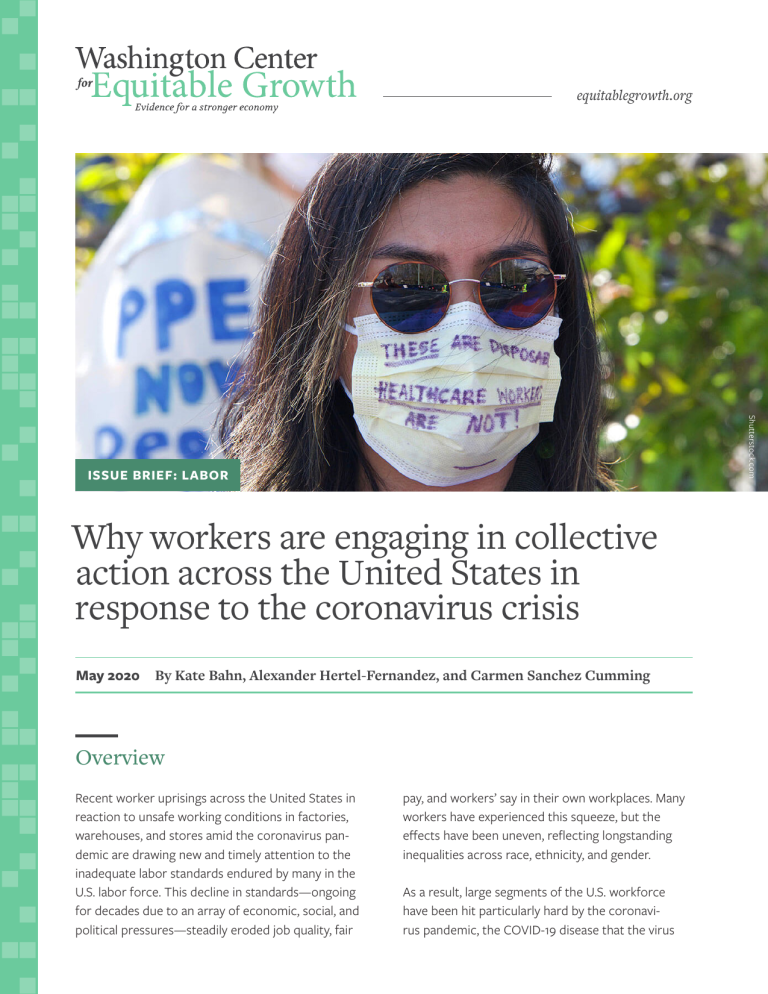
Why workers are engaging in collective action across the United States in response to the coronavirus crisis (opens in a new tab)
Issue Briefs May 1, 2020
Recent worker uprisings across the United States in reaction to unsafe working conditions in factories, warehouses, and stores amid the coronavirus pandemic are drawing new and timely attention to the…

Fool Me Once: Investing in Unemployment Insurance systems to avoid the mistakes of the Great Recession during COVID-19 (opens in a new tab)
Issue Briefs Apr 30, 2020
Thousands of laid-off workers in Massachusetts unable to access the state’s Unemployment Insurance website. Kentucky, North Carolina, and Ohio experiencing full system outages. Nevada Unemployment Insurance applicants stuck at busy…
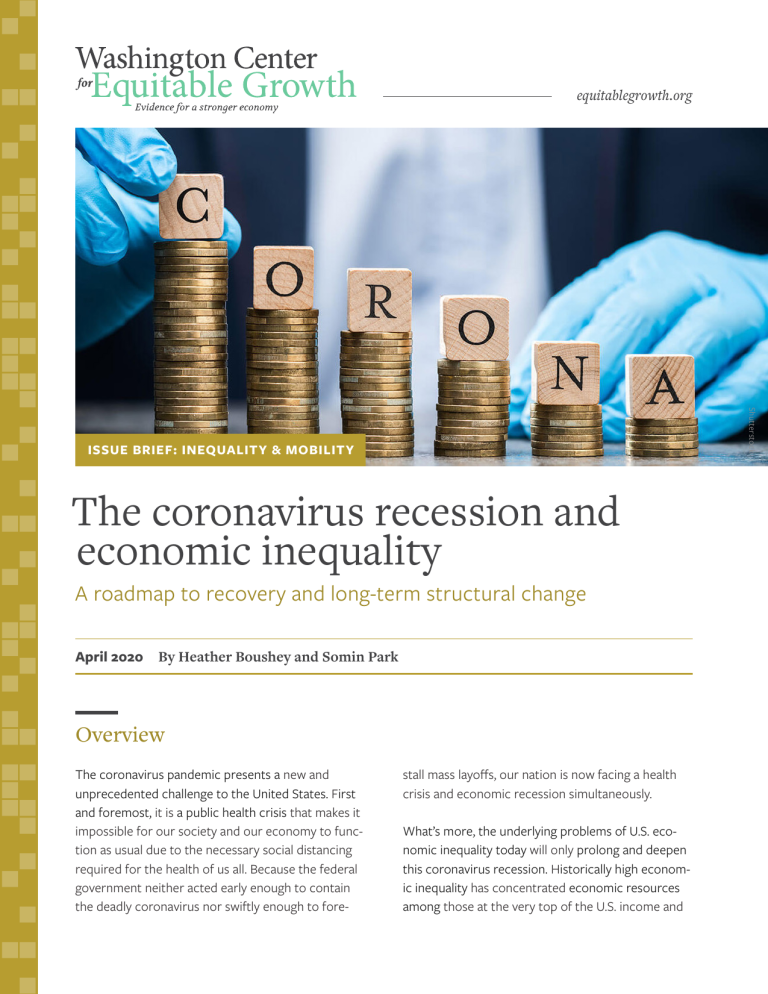
The coronavirus recession and economic inequality: A roadmap to recovery and long-term structural change (opens in a new tab)
Issue Briefs Apr 16, 2020
This post reflects our organization’s overall guiding policy principles for confronting the coronavirus recession and its relationship to U.S. economic inequality as detailed on April 16. These principles still hold…
Rescuing small businesses to fight the coronavirus recession and prevent further economic inequality in the United States (opens in a new tab)
Issue Briefs Apr 14, 2020
The U.S. Congress last month mobilized trillions of dollars in the Coronavirus Aid, Relief and Economic Security Act to help workers and businesses survive while mandatory COVID-19 public health measures…
The most exposed workers in the coronavirus recession are also key consumers: Making sure they get help is key to fighting the recession (opens in a new tab)
Issue Briefs Apr 8, 2020
The United States is currently facing the fastest economic downturn in its history, which, without strong action, could also become one of the most severe that it has ever seen.…
U.S. Census Day 2020: The history and the challenges amid the coronavirus recession (opens in a new tab)
Issue Briefs Apr 1, 2020
April Fool’s Day usually marks a day filled with well-planned pranks and practical jokes, but this year’s April 1 commemorates a very special occasion: the 2020 Census Day. Census Day…

Research shows paid leave is needed to protect families, workers, and businesses during the coronavirus recession and beyond (opens in a new tab)
Issue Briefs Mar 25, 2020
The challenge for U.S. workers of balancing family and job responsibilities amid the coronavirus recession without access to paid family and medical leave is, alas, a familiar story even before…
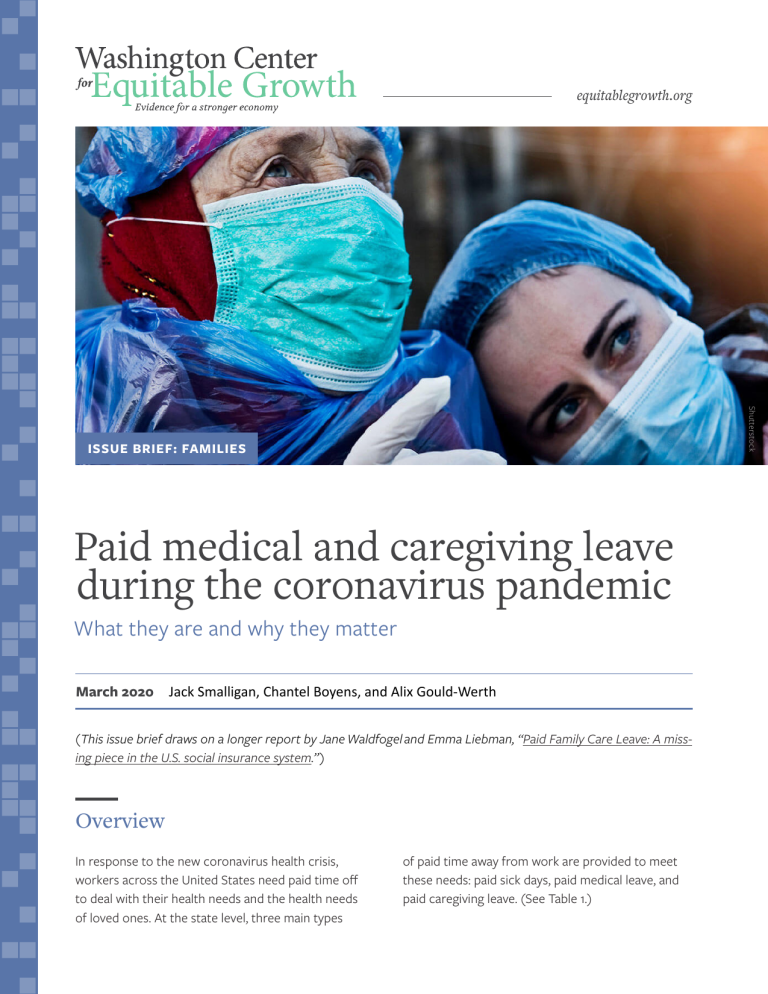
Paid medical and caregiving leave during the coronavirus pandemic: What they are and why they matter (opens in a new tab)
Issue Briefs Mar 25, 2020
(This issue brief draws on a longer report by Jane Waldfogel and Emma Liebman, “Paid Family Care Leave: A missing piece in the U.S. social insurance system.”) Overview In response…
Taxing wealth by taxing investment income: An introduction to mark-to-market taxation (opens in a new tab)
Issue Briefs Sep 11, 2019
The sharp increase in U.S. wealth inequality in recent decades has spurred interest in increasing taxes on wealth. This issue brief introduces mark-to-market taxation, one approach to raising taxes on…
How U.S. companies harm workers by making them independent contractors (opens in a new tab)
Issue Briefs Jul 31, 2019
Being classified as either an employee or an independent contractor can determine whether workers in the United States have access to reliable pay, benefits, and protection from discrimination. Intense fights…

The implications of U.S. gender and racial disparities in income and wealth inequality at each stage of the innovation process (opens in a new tab)
Issue Briefs Jul 24, 2019
Since the 1960s, both women and underrepresented minorities in the United States have obtained an increasing share of bachelor’s degrees and other advanced degrees in fields most associated with invention—the…
How market power has increased U.S. inequality (opens in a new tab)
Issue Briefs May 3, 2019
A growing body of research has found that the market power of the United States’ largest companies has grown significantly since the 1980s. Due to increased market power, firms are…
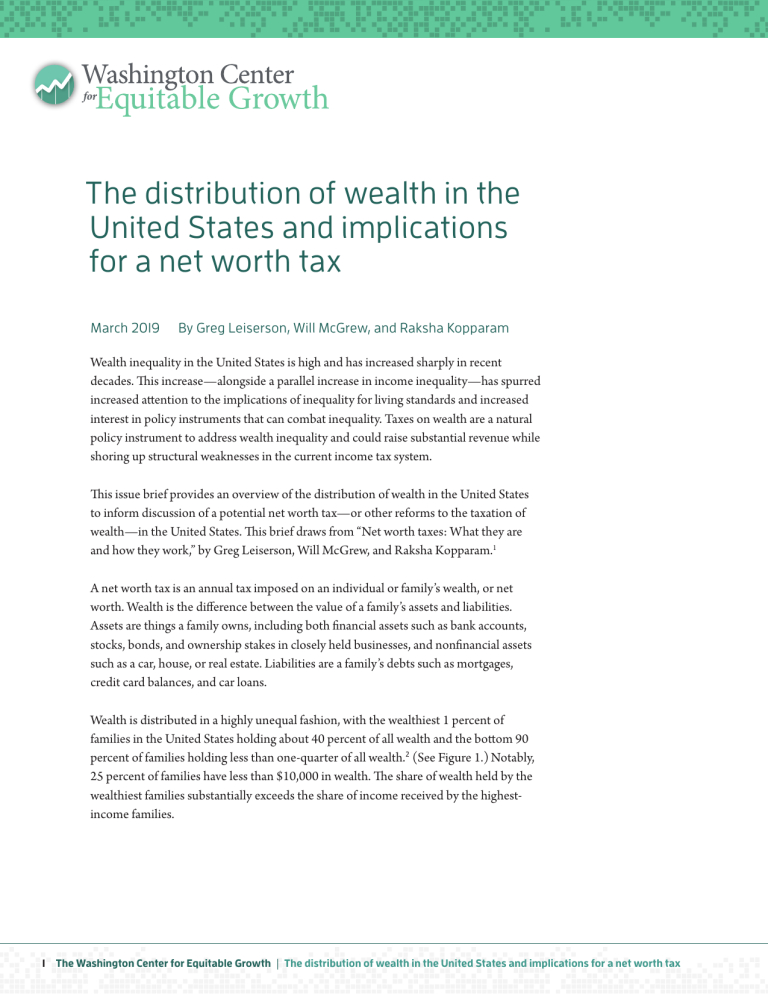
The distribution of wealth in the United States and implications for a net worth tax (opens in a new tab)
Issue Briefs Mar 21, 2019
Wealth inequality in the United States is high and has increased sharply in recent decades. This increase—alongside a parallel increase in income inequality—has spurred increased attention to the implications of…

Equitable Growth’s history of focusing on women’s role in the economy: A review (opens in a new tab)
Issue Briefs Mar 19, 2019
One of the ways that the Washington Center for Equitable Growth is recognizing Women’s History Month is to bring to attention some of the work we’ve published over the past…
Paid family and medical leave in the United States: A data agenda for practitioners (opens in a new tab)
Issue Briefs Mar 7, 2019
The United States is an outlier among developed nations for its lack of a national paid family and medical leave program. New parents across our nation struggle to balance the…
Wealth taxation: An introduction to net worth taxes and how one might work in the United States (opens in a new tab)
Issue Briefs Jan 23, 2019
Increasing wealth inequality has spurred calls for the adoption of a federal net worth tax in the United States. This brief provides an introduction to net worth taxes, also referred…
A framework for economic analysis of tax regulations (opens in a new tab)
Issue Briefs Dec 20, 2018
In April 2018, the U.S. Treasury and the Office of Management and Budget (OMB) agreed to a new process under which OMB would review tax regulations prior to their release.…
The intersectional wage gaps faced by Latina women in the United States (opens in a new tab)
Issue Briefs Nov 1, 2018
Today is Latina Equal Pay Day, the day in 2018 when Hispanic women in the United States have to work to earn as much as white men in the United…
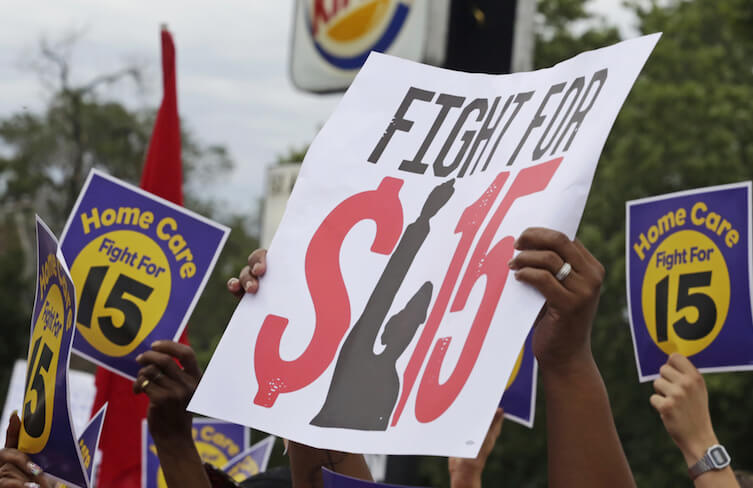
The latest research on the efficacy of raising the minimum wage above $10 in six U.S. cities (opens in a new tab)
Issue Briefs Sep 6, 2018
New research shows recent minimum wage increases in six cities raised workers’ wages without producing job losses. A group of Equitable Growth grantees and economists at the Center for Wage…
How workplace segregation fosters wage discrimination for African American women (opens in a new tab)
Issue Briefs Aug 28, 2018
Earlier this month, Equitable Growth released a working paper on the wage gap faced by African American women to coincide with Black Women’s Equal Pay Day, the date in 2018…

Respiratory health disparities in the United States and their economic repercussions (opens in a new tab)
Issue Briefs Jul 12, 2018
Chronic respiratory diseases such as asthma, lung diseases, and pulmonary hypertension are now the third-leading cause of death in the United States, killing more than 150,000 people a year. While…
Modernizing U.S. work scheduling standards for 21st century families (opens in a new tab)
Issue Briefs Jun 25, 2018
It is difficult to address both work and other life obligations in jobs that require long hours, as well as part-time jobs, especially as the rise of unpredictable and nonstandard…
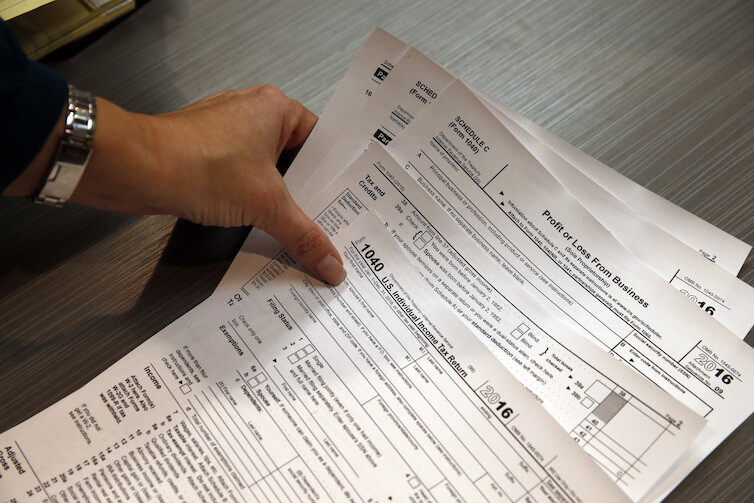
U.S. tax policy for equitable growth (opens in a new tab)
Issue Briefs Jun 14, 2018
Tax policy is an important tool for improving economic performance and ensuring that the benefits of economic growth are broadly shared. Taxes support the living standards of the American public…
What are the macroeconomic policy tools to counter secular stagnation in the United States? (opens in a new tab)
Issue Briefs Jun 12, 2018
The U.S. economy seems quite healthy these days. Overall economic growth, as measured by the Gross Domestic Product, has been growing at close to a 3 percent inflation-adjusted pace over…
Issue Brief: Household insecurity matters for U.S. macroeconomic stability (opens in a new tab)
Issue Briefs May 16, 2018
Households are economically insecure when they’re unable to plan for expenses, save or invest for their future economic security, and pay down debts. Household insecurity in the United States can…
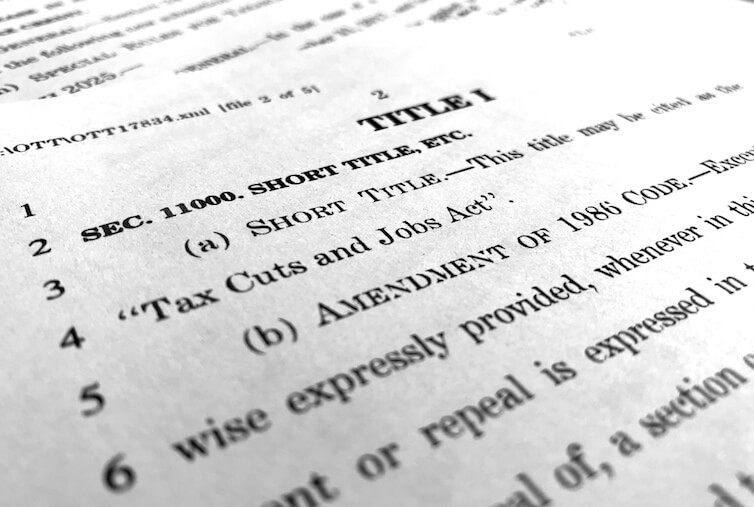
Assessing the economic effects of the Tax Cuts and Jobs Act (opens in a new tab)
Issue Briefs Apr 17, 2018
The legislative process leading to the enactment of the Tax Cuts and Jobs Act this past December was short and contentious. Proponents of the legislation made their case largely based…
Work requirements for U.S. public assistance programs don’t work (opens in a new tab)
Issue Briefs Apr 12, 2018
Work requirements for low-income Americans are back on the table in Congress and within the Trump administration. This is the case despite evidence-based research that shows work requirements are ill-conceived…
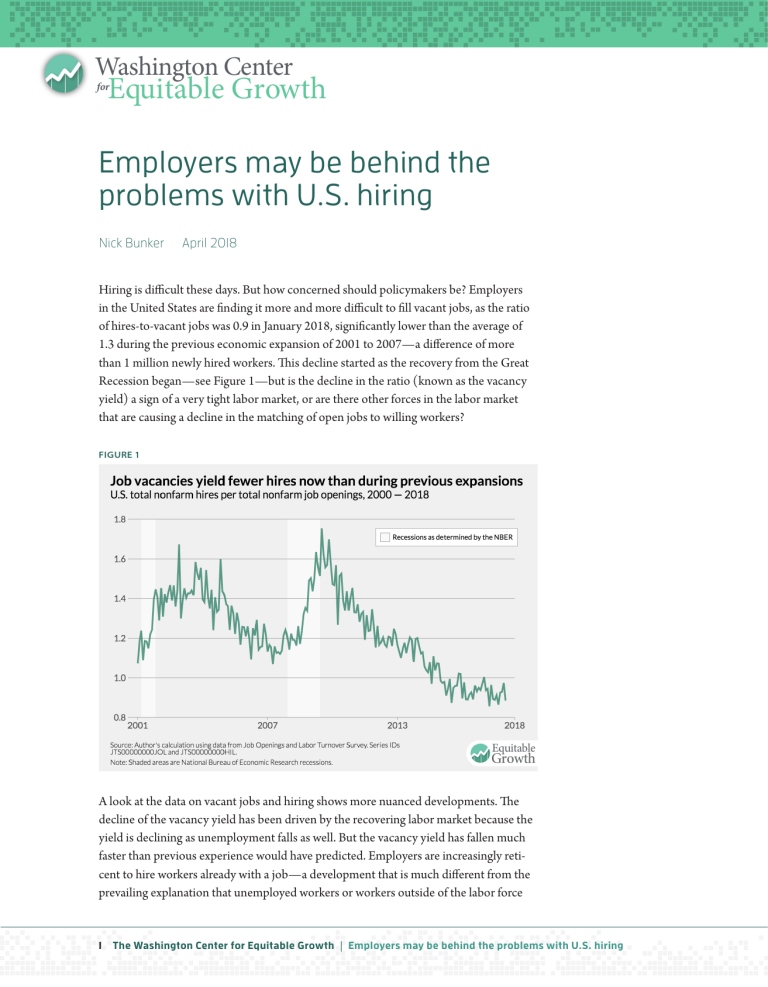
Issue brief: Employers may be behind the problems with U.S. hiring (opens in a new tab)
Issue Briefs Apr 12, 2018
Hiring is difficult these days. But how concerned should policymakers be? Employers in the United States are finding it more and more difficult to fill vacant jobs, as the ratio…
Tax Reform and Equitable Growth (opens in a new tab)
Issue Briefs Oct 19, 2017
As members of Congress consider tax reform, their focus should be the living standards of American families, particularly middle-class families and families striving to reach the middle class. This page…
Just how tight is the U.S. labor market? (opens in a new tab)
Issue Briefs Oct 12, 2017
Is the U.S. unemployment rate as low as it can go? After years of a very weak labor market, during which many jobless workers gave up trying to find employment…
Why is the federal business-level tax rate on capital so low? (opens in a new tab)
Issue Briefs Oct 5, 2017
The “Unified Framework for Fixing Our Broken Tax Code” recently released by the Trump administration and congressional Republicans proposes sharp reductions in the corporate tax rate (from 35 percent to…
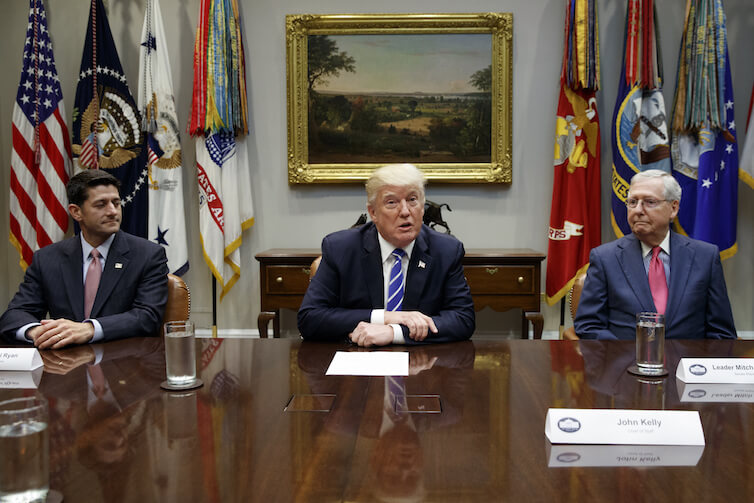
U.S. tax cuts for the rich won’t deliver gains for everyone (opens in a new tab)
Issue Briefs Sep 21, 2017
Distribution tables—estimates of who wins and who loses from changes in tax law—are central to any debate about tax reform. Such analyses frequently show the plans put forward by Republican…
Issue brief: If U.S. tax reform delivers equitable growth, a distribution table will show it (opens in a new tab)
Issue Briefs Sep 21, 2017
Distribution tables—estimates of who wins and who loses from changes in tax law—are central to any debate about tax reform. Such analyses frequently show the plans put forward by Republican…
Issue brief: What is the federal business-level tax on capital in the United States? (opens in a new tab)
Issue Briefs Sep 14, 2017
As Congress turns its attention to tax reform, dramatic reductions in the top statutory tax rates on business income are sure to be among the most important and most contentious…
Issue brief: Alleviating financial distress and its economic consequences in the United States (opens in a new tab)
Issue Briefs Aug 15, 2017
Debt-stressed workers and consumers contribute more to U.S. economic growth when offered delayed but long-term debt write-downs instead of short-term debt relief Overview Financial distress is extraordinarily common in the…
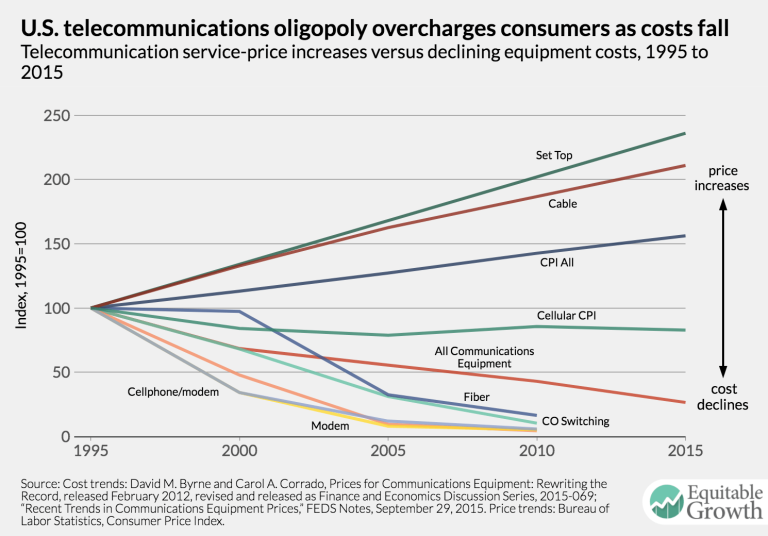
Issue Brief: A communications oligopoly on steroids (opens in a new tab)
Issue Briefs Jul 31, 2017
In a new paper for the Washington Center for Equitable Growth, “A communications oligopoly on steroids: Why antitrust enforcement and regulatory oversight in digital communications matter,” antitrust experts Gene Kimmelman…




































Your Source for the Latest Insights
Get updates on our latest research, event announcements, and policy insights delivered straight to your inbox. Stay connected with the leading voices on equitable growth.