


Resources
From peer-reviewed research to accessible policy briefs, explore the scholarship that’s shaping debates and driving change.

1,008 Results


What happens to U.S. workers without access to Unemployment Insurance amid economic downturns or disruptions related to AI? (opens in a new tab)
Essays SEP 2, 2026
The adoption of artificial intelligence in the workplace has led to predictions of U.S. labor market disruptions. In response, policymakers have increased attention on the fitness of the nation’s social…
By: Megan Rivera (opens in a new tab)

Economic research shows immigration is good for U.S. workers, the economy, and affordability (opens in a new tab)
Essays AUG 31, 2026
When President Donald Trump returned to the White House in 2025, mass deportations and immigration restrictions were renewed as one of the political priorities of his second administration. Since then,…
By: Christopher Bangert-Drowns (opens in a new tab)

New research shows how U.S. homeownership and the accumulation of housing wealth are linked to political participation (opens in a new tab)
Essays AUG 14, 2026
Persistent affordability pressures have driven up housing costs for millions of U.S. families in recent years. Home prices remain near record highs relative to incomes, mortgage rates and associated costs…
By: Carlos Fernando Avenancio-Leon (opens in a new tab)

Defining extreme wealth is more complicated than it looks (opens in a new tab)
Videos AUG 13, 2026
Facing high levels of income and wealth inequality and shrinking tax revenues, U.S. policymakers are showing increased interest in proposals to tax the richest households. Yet determining which households fall into that category is complex and changes based…
By: Equitable Growth (opens in a new tab)

Estimating AI exposure is useful for research but cannot yet tell policymakers the whole story of AI’s impact on the labor market (opens in a new tab)
Essays AUG 7, 2026
Artificial intelligence has the potential to substantially change the nature and availability of work. To effectively manage the transitions this technology might bring to the U.S. economy, policymakers need information…
By: Chiara Chanoi (opens in a new tab)

Streamlining applications to social programs unlocks more support for the U.S. families who need it most (opens in a new tab)
Essays JUL 7, 2026
Millions of low-income families in the United States tap into multiple social programs to help them meet their needs. A single household, for example, might rely on the Supplemental Nutrition…
By: Neil Cholli (opens in a new tab), Derek Wu (opens in a new tab)

The One Big Beautiful Bill Act, one year later: Parsing the evidence on the law’s consequences so far (opens in a new tab)
Blog JUN 30, 2026
The One Big Beautiful Bill Act signed into law one year ago on July 4, 2025, shifted trillions of dollars in income from working-class families to corporations and very wealthy…
By: Lily Roberts (opens in a new tab)

Personal Income in the United States nudges up in May but is down 0.76 percent in the past 6 months (opens in a new tab)
Essays JUN 25, 2026
According to today’s release of Personal Income estimates from the U.S. Bureau of Economic Analysis, U.S. household incomes have fallen 0.76 percent in the past 6 months, with month-to-month declines…
By: Austin Clemens (opens in a new tab)

U.S. income data for 2024 shows the top 10 percent accrued the highest share of income since 2000 (opens in a new tab)
Essays JUN 25, 2026
Today, Equitable Growth updated the U.S. Inequality Tracker through 2024 following the release of new data last week by the U.S. Bureau of Economic Analysis. The data show that the…
By: Austin Clemens (opens in a new tab)

Factsheet: Defining top U.S. income and wealth thresholds for tax policy (opens in a new tab)
Factsheets MAY 27, 2026
Federal and state policymakers in the United States, responding to high levels of income and wealth inequality and shrinking tax revenues, are increasingly interested in proposals to tax households with…
By: Austin Clemens (opens in a new tab)
Defining top wealth and income thresholds for U.S. tax policy design and analysis (opens in a new tab)
Reports MAY 27, 2026
Wealth and income inequality are an ongoing area of interest for policymakers. In particular, the rise of the richest of the rich—not just the top 1 percent, but also the…
By: Austin Clemens (opens in a new tab)

What is the relationship between inflation, interest rates, and economic growth, and what does it mean for the new Federal Reserve chair? (opens in a new tab)
Issue Briefs MAY 18, 2026
Since regaining the Oval Office in early 2025, President Donald Trump has repeatedly called for lower interest rates and severely criticized former Federal Reserve Board Chair Jerome Powell’s cautious approach…
By: Jacob Robbins (opens in a new tab)

The U.S. public is angry about economic conditions, and the middle class is losing ground. Are these trends connected? (opens in a new tab)
Essays MAY 14, 2026
A random sample of recent headlines likely would yield two fairly common stories about the U.S. economy. One is that the public is angry about the economy and the other…
By: Michael Linden (opens in a new tab)

Research shows unions dampen support for right-wing populism and help workers navigate technological transitions (opens in a new tab)
Essays MAY 1, 2026
On May 1, much of the world—though not the United States—celebrates International Workers Day to honor the social and economic contributions of workers and labor unions. The May Day holiday began in large part to mark…
By: Christopher Bangert-Drowns (opens in a new tab)

Why the Iran war is bad for U.S. economic growth (opens in a new tab)
Essays APR 23, 2026
The growth trajectory of the U.S. economy is highly dependent on its connections to the outside world through trade and investments, as well as foreign policy and geopolitical developments. That…
By: Christopher Bangert-Drowns (opens in a new tab)

Research on climate change’s impact on U.S. workers underscores the benefits of workplace heat standards (opens in a new tab)
Essays APR 22, 2026
This year’s Earth Day follows a record-breaking heat wave across much of the East Coast, which followed a record-breaking heat wave that took hold in much of the West and…
By: Equitable Growth (opens in a new tab)

Federal policymakers can ensure Trump accounts do not exacerbate inequality in the United States (opens in a new tab)
Issue Briefs APR 14, 2026
In July 2025, Congress passed a federal budget bill (Public Law 119-21, also commonly known as the One Big Beautiful Bill Act) that, among other things, established a new type…
By: Megan Rivera (opens in a new tab)

Research-based perspectives on the connection between economic policy and rising support for authoritarian populism (opens in a new tab)
Essays MAR 19, 2026
In 2025, the Washington Center for Equitable Growth began to explore the evidence behind a link between the effects of economic policies and global support for authoritarian populist candidates for…
By: Melissa Grober-Morrow (opens in a new tab)
Lessons from past trade adjustment policies to support displaced workers in the era of artificial intelligence (opens in a new tab)
Reports MAR 11, 2026
More than 60 years ago, U.S. policymakers, economists, and labor leaders alike agreed that the potential for new economic forces to strengthen U.S. prosperity and security was just over the…
By: Jacob Leibenluft (opens in a new tab)

Factsheet: Using asset limits in public benefit programs (opens in a new tab)
Factsheets MAR 10, 2026
A household’s assets, or its overall wealth, are the resources required to ensure its family members can weather the financial disruption when unexpected expenses emerge. Yet many U.S. households do…
By: Megan Rivera (opens in a new tab)

The state of the U.S. economy one year into the second Trump administration (opens in a new tab)
Essays FEB 23, 2026
President Donald Trump will soon give his annual State of the Union speech before Congress, one year into his second term in the White House. Ahead of his remarks, now…
By: Michael Linden (opens in a new tab)

Can remote work attenuate mothers’ mobility constraints in the U.S. labor force? (opens in a new tab)
Essays FEB 12, 2026
Women’s labor force participation increased dramatically over the course of the 20th century in the United States. Indeed, the labor force participation rate of women between the ages of 25…
By: Ilaria D’Angelis (opens in a new tab), Keren Horn (opens in a new tab)

Analyzing recent U.S. economic policies using Equitable Growth’s Inequality Tracker (opens in a new tab)
Essays JAN 22, 2026
The Washington Center for Equitable Growth’s Inequality Tracker is a data visualization tool designed to help policymakers and economic analysts examine and analyze U.S. income and wealth inequality in the…
By: Austin Clemens (opens in a new tab)
ASSA 2026 Round-up: Day 3 (opens in a new tab)
Blog JAN 6, 2026
Yesterday was the third and final day of the 2026 annual meeting of the Allied Social Science Associations, which is organized by the American Economic Association. The 3-day conference, held…
By: Equitable Growth (opens in a new tab)
ASSA 2026 Round-up: Day 2 (opens in a new tab)
Blog JAN 5, 2026
Yesterday was the second day of the 2026 annual meeting of the Allied Social Science Associations, which is organized by the American Economic Association. The 3-day conference, held in Philadelphia…
By: Equitable Growth (opens in a new tab)
ASSA 2026 Round-up: Day 1 (opens in a new tab)
Blog JAN 4, 2026
Yesterday was the first day of the 2026 annual meeting of the Allied Social Science Associations, which is organized by the American Economic Association. The 3-day conference, held in Philadelphia…
By: Equitable Growth (opens in a new tab)

Equitable Growth event highlights the path forward to rebuild the U.S. administrative state (opens in a new tab)
Videos DEC 17, 2025
Microsoft Copilot helped draft this column. The Washington Center for Equitable Growth recently convened scholars, practitioners, and advocates for an Equitable Growth Presents event, titled “Reimagining the Federal Government: Building…
By: Equitable Growth (opens in a new tab)

U.S. social insurance programs support workers and economic growth (opens in a new tab)
Essays DEC 2, 2025
Since coming to power in early 2025, Republican majorities in Congress have shifted resources away from the nation’s social insurance programs, most notably to offset the cost of H.R. 1,…
By: Megan Rivera (opens in a new tab)

Equitable Growth hosts Econ 101 virtual event on how U.S. social insurance programs boost economic mobility (opens in a new tab)
Essays DEC 1, 2025
Microsoft Copilot helped draft this event recap. The Washington Center for Equitable Growth recently hosted its latest Econ 101 briefing aimed at providing in-depth evidence for policymakers on how U.S.…
By: Equitable Growth (opens in a new tab)
Uncertainty created by ever-changing tariff policies harms U.S. economic growth (opens in a new tab)
Essays NOV 20, 2025
The approaches to international trade taken by the first and now second Trump administrations have been an endless jumble of tariff negotiations and ever-changing policies. Since 2018, duties have been…
By: Nirupama Rao (opens in a new tab)

In Conversation with Sabeel Rahman (opens in a new tab)
In Conversation NOV 18, 2025
Equitable Growth in Conversation is a recurring series where we talk with economists and other academics to help us better understand whether and how economic inequality affects economic growth and…
By: Shayna Strom (opens in a new tab)
Distributional weighting in benefit-cost analysis is practical and effective at assessing government rulemaking without bias against low-income individuals (opens in a new tab)
Reports NOV 13, 2025
Distributional weighting in benefit-cost analysis is a tool for overcoming bias against lower-income individuals in economists’ measurements of the net benefit of government policies that affect populations at different levels…
By: Daniel Acland (opens in a new tab)

Tariff costs impact industries with mostly White, male, and noncitizen workers (opens in a new tab)
Essays NOV 4, 2025
The U.S. economy is flying blind, with most economic-data publications paused indefinitely due to the shutdown of the federal government amid a general U.S. labor market slowdown and just as…
By: Christopher Bangert-Drowns (opens in a new tab)

Workplace exposure to artificial intelligence is higher among U.S. workers with higher wages, depending on how AI is used (opens in a new tab)
Essays OCT 23, 2025
Recent advances using artificial intelligence in workplaces, particularly large language models such as Claude.ai and ChatGPT, are increasingly disrupting the U.S. labor market. The cognitive power of AI has the…
By: Chiara Chanoi (opens in a new tab), Christopher Bangert-Drowns (opens in a new tab)

Equitable Growth supports scholars studying the economics of the energy transition (opens in a new tab)
Essays OCT 22, 2025
The Washington Center for Equitable Growth today announced a new cohort of grantees. These nine scholars will study how the design and implementation of federal policy influences how businesses and…
By: Equitable Growth (opens in a new tab)

Rethinking U.S. economic mobility to study change within a generation (opens in a new tab)
Essays OCT 9, 2025
When most people think about intergenerational mobility, they often assume it unfolds gradually over long periods of time. Historical patterns have reinforced this perception, shaping a widespread belief that meaningful…
By: Raven Shaw (opens in a new tab)

The status of U.S. labor market data amid the government shutdown (opens in a new tab)
Essays OCT 3, 2025
The federal government ground to a halt earlier this week as Congress was unable to reach a bipartisan agreement on continuing funding after annual appropriations ran out at the end…
By: Christopher Bangert-Drowns (opens in a new tab), Michael Linden (opens in a new tab)

Federal data is under attack, but data users can work together to preserve and democratize it (opens in a new tab)
Essays OCT 1, 2025
Staffing shortages, political interference, and a federal government shutdown are all disrupting the routine operations of the nonpartisan federal statistical agencies that reliably gather facts and publish data about the…
By: Peter Norlander (opens in a new tab)

In Conversation with Omari Swinton (opens in a new tab)
In Conversation SEP 24, 2025
Equitable Growth in Conversation is a recurring series where we talk with economists and other academics to help us better understand whether and how economic inequality affects economic growth and…
By: Sanjay Supan (opens in a new tab)

Equitable Growth announces funding for research on the impact of AI on U.S. workers and competition (opens in a new tab)
Essays SEP 18, 2025
The Washington Center for Equitable Growth today announced a new cohort of grantees studying how artificial intelligence and new technology can support workers and promote competition across the U.S. economy.…
By: Equitable Growth (opens in a new tab)

Populist voters feel a sense of loss that is reshaping democracies around the world (opens in a new tab)
Essays SEP 11, 2025
Across Europe, populist parties—once relegated to the political fringe—are now mainstays of national politics. Some are even winning power in the Netherlands, Sweden, Italy, Austria, and beyond. Whether left-wing or…
By: Justin Gest (opens in a new tab)

Threats to social status and support for far-right political parties (opens in a new tab)
Essays SEP 11, 2025
Once on the political fringes, far-right parties have become established actors in many democracies. The European Parliament election in 2024, for example, resulted in far-right parties receiving more than 20…
By: Tarik Abou-Chadi (opens in a new tab)

A place-based economic development strategy to foster rural U.S. prosperity (opens in a new tab)
Essays SEP 11, 2025
Whether one lives in a city of 2 million people or a town of 2,000, we all want to live in healthy and thriving communities, to have the chance to…
By: Gbenga Ajilore (opens in a new tab)

How U.S. tax policies have fueled right-wing populism (opens in a new tab)
Essays SEP 11, 2025
Among the many factors fueling support for right-wing populism in the United States is federal tax policies. The nation’s tax system confuses, frustrates, and angers many citizens in ways that…
By: Andrea Louise Campbell (opens in a new tab)
To restore democracy, end shareholder primacy at U.S. corporations and on Wall Street (opens in a new tab)
Essays SEP 11, 2025
Workers in the United States have no say over business decisions made in their workplaces by corporate America. Unions, of course, are important for workers’ ability to exercise power over…
By: Lenore Palladino (opens in a new tab)

Equitable Growth awards funding to early career scholars studying the effects of economic inequality (opens in a new tab)
Essays AUG 20, 2025
The Washington Center for Equitable Growth announced today that it has awarded funding to seven scholars seeking to better understand the effects of economic inequality in the United States and…
By: Equitable Growth (opens in a new tab)

What is austerity, and how does it affect the broader U.S. economy? (opens in a new tab)
Reports AUG 12, 2025
With the passage into law of the Republican budget reconciliation bill last month and the recent work of the Department of Government Efficiency under Elon Musk, austerity is once again…
By: Ernie Tedeschi (opens in a new tab), Kevin Rinz (opens in a new tab)

Accounting for capital gains in income significantly increases U.S. inequality (opens in a new tab)
Blog JUL 15, 2025
The Washington Center for Equitable Growth’s recently launched U.S. Inequality Tracker uses data from the U.S. Bureau of Economic Analysis to show how income and wealth inequality have evolved in…
By: Austin Clemens (opens in a new tab)

The 10 worst policies for equitable economic growth in the 2025 budget reconciliation law (opens in a new tab)
Essays JUL 14, 2025
The 2025 budget reconciliation law that was enacted earlier this month is a sprawling piece of legislation, touching almost every corner of the federal budget and the U.S. economy. It…
By: David S. Mitchell (opens in a new tab)

Republican reconciliation bill’s cuts to social programs will damage some congressional districts’ local economies (opens in a new tab)
Essays JUL 11, 2025
In a recent working paper, Equitable Growth grantee Robert Manduca of the University of Michigan, Ann Arbor demonstrates that government transfers make sizable contributions to local economies in much of…
By: Chiara Chanoi (opens in a new tab)

Slow wage growth is the key to understanding U.S. inequality in the 21st century (opens in a new tab)
Issue Briefs JUL 8, 2025
The Washington Center for Equitable Growth today launched the U.S. Inequality Tracker, which tracks income and wealth inequality in the United States and highlights how particular components of income and…
By: Austin Clemens (opens in a new tab)

Americans informed about the distributional effects of Republicans’ tax and budget bill overwhelmingly oppose it (opens in a new tab)
Essays JUL 3, 2025
Republicans in the U.S. Senate recently passed a version of the One Big Beautiful Bill Act, championed by President Donald Trump. The House of Representatives passed an earlier version of…
By: Jacob Hacker (opens in a new tab), Patrick Sullivan (opens in a new tab)

Congressional Republicans’ budget bill is the most regressive in at least 40 years (opens in a new tab)
Essays JUN 25, 2025
The U.S. Congress is in the midst of debating a budget bill that would make massive changes to U.S. tax and spending policy over the course of the next decade…
By: Jacob Hacker (opens in a new tab), Patrick Sullivan (opens in a new tab)

Medicaid and SNAP cuts in congressional Republicans’ budget bill will negatively impact local economies (opens in a new tab)
Essays JUN 24, 2025
The budget reconciliation bill recently passed by the U.S. House of Representatives proposes to make large cuts to Medicaid, the Supplemental Nutrition Assistance Program, and other social programs to pay…
By: Robert Manduca (opens in a new tab)

Factsheet: U.S. economic mobility and policies to increase upward mobility (opens in a new tab)
Factsheets JUN 17, 2025
The United States often has been touted as a land of opportunity, where hard work leads to success and children do better than their parents. But increasingly, these notions of…
By: Shira Markoff (opens in a new tab), Melissa Grober-Morrow (opens in a new tab)

The hidden trade-offs of nonwage job amenities for U.S. workers (opens in a new tab)
Essays JUN 10, 2025
When workers choose jobs with predictable schedules, safer conditions, or greater autonomy, they are often paying a price: lower wages. In some cases, these hidden trade-offs are considerable. Indeed, my…
By: Alex Bell (opens in a new tab)

U.S. labor market data reveal that different job characteristics contribute to the gender wage gap (opens in a new tab)
Essays JUN 5, 2025
In 2003, women in the United States earned on average approximately 80 percent as much as U.S. men did per hour. By 2024, the gender pay gap had grown to…
By: Chiara Chanoi (opens in a new tab)

Equitable Growth event brings together scholars and the policy community to discuss the rise of right-wing populism and the future of economic policy (opens in a new tab)
Videos MAY 29, 2025
This article was drafted with assistance from Perplexity AI. The Washington Center for Equitable Growth in mid-May hosted an event on “The rise of populism and the future of economic…
By: Equitable Growth (opens in a new tab)

The political implications of bad jobs and the decline of unions (opens in a new tab)
Blog MAY 13, 2025
Bad jobs have become a distinctive feature of the U.S. economy over the past few decades. Globally, a lack of adequate demand, or what economists call “secular stagnation,” has meant…
By: Adam Dean (opens in a new tab), Jamie McCallum (opens in a new tab)

Federal and state governments can help solve the employment problems of people in distressed places to spur equitable growth (opens in a new tab)
Blog MAY 13, 2025
Places in the United States differ greatly in their residents’ access to jobs, including access to good jobs. In economically distressed places, these job problems can be addressed by creating…
By: Timothy Bartik (opens in a new tab)

More accurately measuring economic sentiment will help build a U.S. economy—and democracy—that works for all (opens in a new tab)
Blog MAY 13, 2025
When politicians and members of the media discuss the state of “the economy” in the United States, they often use a small handful of data points. Of all the indicators…
By: Jonathan Cohen (opens in a new tab), Katherine Cramer (opens in a new tab)

Understanding the role of immigration and economic factors in boosting support for far-right political parties (opens in a new tab)
Blog MAY 13, 2025
Far-right and right-wing populist political parties differ in many respects, but nearly all share one common thread: strong opposition to immigration. These parties often push for stricter border controls and,…
By: Sirus H. Dehdari (opens in a new tab)

America’s job-quality crisis and how to revive workers’ pay, dignity, job advancement, and economic well-being (opens in a new tab)
Blog MAY 13, 2025
The poor quality of jobs in the United States is a slow-burning crisis that has been underway for many decades and has eroded many workers’ quality of life. Too many…
By: Erin Kelly (opens in a new tab)

How the China trade shock impacted U.S. manufacturing workers and labor markets, and the consequences for U.S. politics (opens in a new tab)
Blog MAY 13, 2025
In the early 2000s, manufacturing-intensive communities in the United States entered a period of economic upheaval that would reshape their labor markets over the next two decades. China’s dramatic rise…
By: David Autor (opens in a new tab), David Dorn (opens in a new tab), Gordon Hanson (opens in a new tab)

Housing insecurity and U.S. economic policies: Lessons from tenant organizing (opens in a new tab)
Blog MAY 13, 2025
The destructive force of authoritarian power has become a prominent feature of U.S. political life. In just the first few months of 2025, we’ve seen unprecedented moves to use the…
By: Jamila Michener (opens in a new tab)

Countering right-wing populism: Identifying its cultural roots and charting a path forward (opens in a new tab)
Blog MAY 13, 2025
Donald Trump’s victory in the 2024 U.S. presidential election set off an animated debate among Democrats over what went wrong with their policymaking, messaging, and campaigning. Specifically, Democrats puzzled over…
By: Yotam Margalit (opens in a new tab)

How the economic and political geography of the United States fuels right-wing populism—and what the Democratic Party can do about it (opens in a new tab)
Blog MAY 13, 2025
In wealthy nations around the world, the rise of the knowledge economy has increased political and economic divides that fuel right-wing populism. These divides generally have a strong geographic dimension,…
By: Jacob Hacker (opens in a new tab), Paul Pierson (opens in a new tab)

Tariffs pose real risks to the U.S. labor market (opens in a new tab)
Blog MAY 12, 2025
Uncertainty around trade policy makes it difficult to discuss the current state of the U.S. labor market. Businesses, workers, and policymakers at all levels make decisions based on both what…
By: Kevin Rinz (opens in a new tab)

Testimony by Michael Linden before the House Budget Committee (opens in a new tab)
Blog MAY 8, 2025
Chairman Arrington, Ranking Member Boyle, members of this committee, thank you for the opportunity to be here. Today, I’d like to make three main points. First, the main culprit responsible…
By: Michael Linden (opens in a new tab)

Why do some jobs pay better than others? Think about what workers do. (opens in a new tab)
Issue Briefs MAY 6, 2025
Most U.S. labor market data characterize jobs by describing the categories of industry and occupation to which the jobs belong. But to understand why some types of jobs tend to…
By: Kevin Rinz (opens in a new tab), Chiara Chanoi (opens in a new tab), Christopher Bangert-Drowns (opens in a new tab)

Designing economic policy that strengthens U.S. democracy and incorporates people’s lived experiences (opens in a new tab)
Videos APR 30, 2025
Around the globe, people are increasingly dissatisfied with the state of democratic capitalism. In the United States and other rich democracies, economic policy has too often in recent decades produced…
By: Alexander Hertel-Fernandez (opens in a new tab), Shayna Strom (opens in a new tab)

Advancing economic research on the Inflation Reduction Act: Q&A with Heather Boushey (opens in a new tab)
Issue Briefs APR 23, 2025
The Inflation Reduction Act of 2022 is the most significant economic and clean energy jobs program the United States has ever initiated. To improve overall understanding of whether the new…
By: Equitable Growth (opens in a new tab)

Improving economic outcomes for single mothers and their children across the United States (opens in a new tab)
Blog APR 16, 2025
Single-mother households are becoming more and more common in the United States. Over the past 50 years, the number of children raised by single mothers has more than doubled. It…
By: Megan Rivera (opens in a new tab)
The qualified small business stock exclusion overwhelmingly benefits the wealthy and should be reformed in 2025 (opens in a new tab)
Issue Briefs APR 1, 2025
This year’s debate over the expiring personal income and estate tax provisions of the 2017 Tax Cuts and Jobs Act provides an opportunity for reforming the qualified small business stock…
By: Jean Ross (opens in a new tab)

What makes a job ‘good’? How U.S. labor market data can provide insight to improve workers’ economic conditions (opens in a new tab)
Blog MAR 26, 2025
Since the Great Recession of 2007–2009, a great deal of U.S. economic policymaking has been dedicated to creating jobs. The tools used to do so vary widely, from awarding grants…
By: Kevin Rinz (opens in a new tab), Chiara Chanoi (opens in a new tab)

The U.S. House of Representatives’ budget resolution threatens social infrastructure programs, putting families’ well-being at risk (opens in a new tab)
Blog MAR 10, 2025
In late February, the U.S. House of Representatives passed a budget resolution that calls for $4.5 trillion in tax cuts and $2 trillion in federal spending cuts. This resolution provides…
By: Priyanka Anand (opens in a new tab), Robert Moffitt (opens in a new tab)
As the U.S. labor market stabilizes, is nominal wage growth now too hot? (opens in a new tab)
Blog FEB 13, 2025
After the tumultuous swings of the early COVID-19 pandemic period and years of normalization since then, economic data from the past several months suggest that the U.S. labor market may…
By: Kevin Rinz (opens in a new tab)

Benchmarking the U.S. economy that President Donald Trump is set to inherit (opens in a new tab)
Issue Briefs JAN 16, 2025
When President Donald Trump takes the presidential oath of office again on January 20, he will be inheriting a very different economy, with a very different outlook, than the one…
By: Ernie Tedeschi (opens in a new tab)

Pro-growth tax reform in 2025 would boost the U.S. economy for years to come (opens in a new tab)
Videos JAN 15, 2025
In the aftermath of the presidential election in 2024, it’s clear that many Americans feel like the U.S. economy is not working for them. Even though policymakers on both sides…
By: Shayna Strom (opens in a new tab)

ASSA 2025 Round-up: Day 3 (opens in a new tab)
Blog JAN 6, 2025
Yesterday was the third and final day of the 2025 annual meeting of the Allied Social Science Associations, which is organized by the American Economic Association. The 3-day conference, held…
By: Equitable Growth (opens in a new tab)

ASSA 2025 Round-up: Day 2 (opens in a new tab)
Blog JAN 5, 2025
Yesterday was the second day of the 2025 annual meeting of the Allied Social Science Associations, which is organized by the American Economic Association. The 3-day conference, held in San…
By: Equitable Growth (opens in a new tab)

ASSA 2025 Round-up: Day 1 (opens in a new tab)
Blog JAN 4, 2025
Yesterday was the first day of the 2025 annual meeting of the Allied Social Science Associations, which is organized by the American Economic Association. The 3-day conference, held in San…
By: Equitable Growth (opens in a new tab)

Accelerating research can help fill the AI knowledge gaps for U.S. policymakers (opens in a new tab)
Issue Briefs DEC 17, 2024
It is hard for policymakers to ignore today’s “AI arms race” and the public debate on the economic and social significance of generative artificial intelligence. The discourse is fueled in…
By: Rohini Kosoglu (opens in a new tab), Christian Edlagan (opens in a new tab)

Recent research shows how paid leave impacts women’s employment and financial security in the United States (opens in a new tab)
Blog DEC 13, 2024
During the first several months of the COVID-19 pandemic, the federal government ensured that all U.S. workers had access to at least 2 weeks of paid sick leave and up…
By: Shira Markoff (opens in a new tab)

In Conversation with Fenaba Addo (opens in a new tab)
In Conversation DEC 12, 2024
Equitable Growth in Conversation is a recurring series where we talk with economists and other academics to help us better understand whether and how economic inequality affects economic growth and…
By: Shira Markoff (opens in a new tab)

New research highlights the impact of COVID-era unconditional cash benefits for U.S. workers and families (opens in a new tab)
Blog DEC 10, 2024
The breadth of the economic impact of the COVID-19 pandemic ushered in sweeping, albeit temporary, changes to income support programs and tax policies in the United States. These changes include…
By: Shira Markoff (opens in a new tab)

The U.S. labor market keeps beating projections (opens in a new tab)
Blog NOV 5, 2024
No single economic indicator fully describes the state of the U.S. labor market. Yet a range of commonly used measures, from the unemployment rate and the prime-age employment-population ratio to…
By: Kevin Rinz (opens in a new tab)
Allowing the 2017 estate tax changes to expire will reduce U.S. inequality and promote economic growth and opportunity (opens in a new tab)
Reports OCT 9, 2024
The 2017 Tax Cuts and Jobs Act made deep cuts to the personal income, estate, and corporate income taxes that were costly and heavily skewed toward the very wealthy. The…
By: Jean Ross (opens in a new tab)

Equitable Growth renews collective bargaining agreement with Nonprofit Professional Employees Union (opens in a new tab)
Blog OCT 7, 2024
The Washington Center for Equitable Growth has renewed its 3-year collective bargaining agreement with the Nonprofit Professional Employees Union IFPTE Local 70. The agreement, which was signed on August 23,…
By: Equitable Growth (opens in a new tab)

New data show significant changes in racial and class mobility gaps in the United States (opens in a new tab)
Blog SEP 19, 2024
Past research shows that differences in intergenerational mobility between Black and White Americans have persisted since the 1880s. Current racial economic mobility gaps are rooted in historical discriminatory policies, such…
By: Shira Markoff (opens in a new tab)

In Conversation with Mishaela Durán (opens in a new tab)
In Conversation SEP 12, 2024
Equitable Growth in Conversation is a recurring series where we talk with economists and other academics to help us better understand whether and how economic inequality affects economic growth and…
By: Shira Markoff (opens in a new tab)
Early career scholars to receive Equitable Growth funding to study economic inequality (opens in a new tab)
Blog AUG 28, 2024
The Washington Center for Equitable Growth today announced a new slate of grantees. These 10 scholars responded to a Request for Proposals specifically targeted at those early in their careers…
By: Equitable Growth (opens in a new tab)

Equitable Growth invests in new research to better understand the effects of the fiscal response to the COVID-19 recession (opens in a new tab)
Blog AUG 28, 2024
The Washington Center for Equitable Growth today announced a new cohort of grantees in response to a Request for Proposals on the effectiveness of the fiscal response to the COVID-19…
By: Equitable Growth (opens in a new tab)

New labor market data suggest that U.S. wage growth may be cooling too much (opens in a new tab)
Blog AUG 6, 2024
After increasing rapidly over the course of 2021, nominal wage growth (before accounting for inflation) in the United States has been trending down consistently across measures since early- to mid-2022.…
By: Kevin Rinz (opens in a new tab)

New federal heat standard will protect U.S. workers from the ill effects of high temperatures amid intensifying climate change (opens in a new tab)
Blog AUG 1, 2024
U.S. workers are more vulnerable than ever to the ill effects of high and rising temperatures as the world continues to shatter heat records this year. Climate-related deaths and injuries…
By: Equitable Growth (opens in a new tab)

New federal heat standard offers novel distributional analysis to determine which workers benefit and how (opens in a new tab)
Blog JUL 16, 2024
The U.S. Department of Labor recently released a much-anticipated proposed rule that promises to protect workers from on-the-job injuries and deaths that result from toiling in the heat. The timing…
By: David S. Mitchell (opens in a new tab)

The new Labor Department overtime rule is a win for workers—and good policy, too (opens in a new tab)
Blog JUL 8, 2024
On July 1, the first step of the U.S. Department of Labor’s new overtime rule went into effect, meaning about 1 million salaried, white-collar workers currently exempt from overtime began…
By: Janelle Jones (opens in a new tab), Rajesh Nayak (opens in a new tab)

In Conversation with Natalie Foster (opens in a new tab)
In Conversation JUL 2, 2024
Equitable Growth in Conversation is a recurring series where we talk with economists and other academics to help us better understand whether and how economic inequality affects economic growth and…
By: Michael Linden (opens in a new tab)

On Juneteenth: New research demonstrates how economic mobility is restricted for Black Americans (opens in a new tab)
Blog JUN 18, 2024
On June 19, 1865, emancipation was officially declared in the state of Texas, more than two full years after the Emancipation Proclamation and more than two full months after the…
By: Shaun Harrison (opens in a new tab)

Equitable Growth’s new Nonresident Scholars have a long history of rigorous economic research (opens in a new tab)
Videos JUN 11, 2024
The Washington Center for Equitable Growth today launched our new Nonresident Scholars program. This is our latest way of connecting academics to policymakers to ensure public policy debates are grounded…
By: Equitable Growth (opens in a new tab)

In Conversation with Miles Corak (opens in a new tab)
In Conversation JUN 6, 2024
Equitable Growth in Conversation is a recurring series where we talk with economists and other academics to help us better understand whether and how economic inequality affects economic growth and…
By: Austin Clemens (opens in a new tab)

A researcher’s guide to identifying policy-relevant research questions for the federal government (opens in a new tab)
Essays MAY 30, 2024
Social science researchers play an important role in the policymaking process. Researchers help policymakers at all levels of government to understand key trends and issues in the U.S. economy and…
By: Alexander Hertel-Fernandez (opens in a new tab)

Equitable Growth receives funding to advance women’s power, gender equality, and care economy (opens in a new tab)
Blog MAY 28, 2024
Melinda French Gates’ Pivotal funds organization as part of $1 billion global commitment The Washington Center for Equitable Growth announced today that it has received funding from Pivotal as part…
By: Equitable Growth (opens in a new tab)

Research on Tap event highlights the impact of AI, climate change, and racial inequality on the U.S. economy (opens in a new tab)
Videos MAY 23, 2024
The Washington Center for Equitable Growth on May 21 hosted its marquee event, “Research on Tap: Three Forces Shaping the 2024 Economy,” at the National Union Building in Washington, DC.…
By: Equitable Growth (opens in a new tab)

What is going on with wage growth in the United States? (opens in a new tab)
Blog MAY 16, 2024
Fast wage growth is a key feature of a strong labor market. U.S. workers, and low-wage workers in particular, experienced exceptional wage growth over the past couple of years, which…
By: Kevin Rinz (opens in a new tab)

Equitable Growth Insights: Synthesizing economic mobility research (opens in a new tab)
Research Databases MAY 15, 2024
Equitable Growth’s Insights newsletter on U.S. economic mobility is a quarterly newsletter that synthesizes research from academia, journalism, and the nonprofit sector. Each edition seeks to distill insights from research…

Equitable Growth delivers letter on proposed IRS rule to expand data sharing with the U.S. Department of Commerce (opens in a new tab)
Blog MAY 15, 2024
On April 29, the Washington Center for Equitable Growth delivered a comment letter responding to a proposed rule from the Internal Revenue Service that would expand the amount of administrative…
By: Equitable Growth (opens in a new tab)

U.S. workers, generative AI, and the future of work (opens in a new tab)
Blog MAY 9, 2024
The launch of ChatGPT in November 2022 captured the world’s attention and illustrated the potential of generative Artificial Intelligence to instantly perform tasks long considered quintessentially “human.” Already, the technology…
By: Molly Kinder (opens in a new tab)

Structural changes in the U.S. economy highlight anew the gray areas of continued racial bias and discrimination in American workplaces (opens in a new tab)
Blog MAY 8, 2024
Four years after George Floyd was murdered in Minneapolis by three city police officers and the Black Lives Matter movement led large-scale protests across the country, workplaces across the U.S.…
By: Adia Harvey Wingfield (opens in a new tab)
Measuring psychological burdens in access to U.S. social programs (opens in a new tab)
Reports MAY 6, 2024
Lessons from new research on the Supplemental Nutrition Assistance Program Policymakers are increasingly paying attention to administrative burdens—those “frictions that people face in their encounters with public services.” In 2022,…
By: Alexander Hertel-Fernandez (opens in a new tab)

New workplace surveillance bill would protect U.S. workers and address new technological risks (opens in a new tab)
Blog MAY 2, 2024
Across the U.S. economy, the risks posed by unchecked automated surveillance and management technologies are widespread—and growing. These technologies can sometimes be beneficial for workers, customers, and businesses alike. For…
By: Alexander Hertel-Fernandez (opens in a new tab)
New recommendations for an integrated system of U.S. inequality statistics chart a bold path forward (opens in a new tab)
Blog APR 23, 2024
A new report from the National Academy of Science’s Committee on National Statistics is packed with recommendations for building an integrated system of national statistics that can provide accurate and…
By: Austin Clemens (opens in a new tab)

An Unemployment Insurance modernization bill now before the U.S. Senate is a much-needed step in the right direction (opens in a new tab)
Blog APR 9, 2024
The nearly 90-year-old federal-state Unemployment Insurance program provides much-needed relief to unemployed workers who lose their jobs through no fault of their own and helps to stabilize the U.S. economy…
By: Alexander Hertel-Fernandez (opens in a new tab)
Enhanced Child Tax Credit helped U.S. families afford life-enhancing necessities and cope with inflation (opens in a new tab)
Blog APR 2, 2024
Amid ongoing congressional debate over expanding the Child Tax Credit for U.S. families, it’s important to understand why the fears about the expansion of that tax credit in 2021 were…
By: David S. Mitchell (opens in a new tab)
U.S. economic mobility trends and outcomes (opens in a new tab)
Reports MAR 29, 2024
A research update Fast facts Critical to the promise of the American dream is the expectation of intergenerational mobility. Invoked in ubiquitous phrases such as “pulling oneself up by the…
By: Hiba Haroon (opens in a new tab), Shaun Harrison (opens in a new tab)

In Conversation with Sasha Killewald (opens in a new tab)
In Conversation MAR 27, 2024
Equitable Growth in Conversation is a recurring series where we talk with economists and other academics to help us better understand whether and how economic inequality affects economic growth and…
By: Austin Clemens (opens in a new tab)

Equitable Growth hosts State of the Union press briefing with leading U.S. economists (opens in a new tab)
Blog MAR 7, 2024
The Washington Center for Equitable Growth last week hosted an online press briefing in prelude to tonight’s State of the Union address to the U.S. Congress by President Joe Biden.…
By: Equitable Growth (opens in a new tab)

The state of the U.S. labor market 4 years after the start of the COVID-19 recession (opens in a new tab)
Blog MAR 5, 2024
Over the past 4 years, the U.S. economy—in particular the U.S. labor market—weathered some incredible shocks and fluctuations. From the COVID-19 pandemic and supply chain breakdowns to global energy shocks…
By: Michael Linden (opens in a new tab)

Ahead of President Biden’s State of the Union address, the U.S. economy is strong (opens in a new tab)
Blog FEB 21, 2024
On March 7, President Joe Biden will deliver the 2024 State of the Union address to the U.S. Congress and the American public, in which he will tout his economic…
By: Austin Clemens (opens in a new tab)

Equitable Growth’s recent ‘Econ 101’ assessed the state of the U.S. economy and recovery for Capitol Hill staff (opens in a new tab)
Blog FEB 13, 2024
The Washington Center for Equitable Growth hosted a briefing last week—part of a series we call “Econ 101”—presenting insight on the state of the U.S. economy and how the current…
By: Equitable Growth (opens in a new tab)
New Circular A-4 offers opportunities for researchers interested in disaggregating the costs and benefits of U.S. regulations (opens in a new tab)
Blog FEB 1, 2024
This column is adapted from remarks I made at the Allied Social Sciences Associations 2024 annual meeting, held earlier this year in San Antonio, Texas, as part of a panel…
By: David S. Mitchell (opens in a new tab)

In Conversation with Timothy Smeeding (opens in a new tab)
In Conversation JAN 16, 2024
Equitable Growth in Conversation is a recurring series where we talk with economists and other academics to help us better understand whether and how economic inequality affects economic growth and…
By: Jonathan Fisher (opens in a new tab)

Statement on the passing of Nobel laureate Robert Solow (opens in a new tab)
Blog JAN 11, 2024
A founding member of the Washington Center for Equitable Growth’s Steering Committee, Solow was also a longtime partner and advisor to the organization Robert Solow, the Nobel laureate and longtime…
By: Equitable Growth (opens in a new tab)
New research doesn’t overturn consensus on rising U.S. income inequality (opens in a new tab)
Issue Briefs JAN 10, 2024
New research from Gerald Auten at the U.S. Treasury Department and David Splinter at the U.S. Congress’ Joint Committee on Taxation makes the counter-to-conventional-wisdom claim that U.S. income inequality has…
By: Austin Clemens (opens in a new tab)
ASSA 2024 Round-up: Day 3 (opens in a new tab)
Blog JAN 8, 2024
Yesterday was the third and final day of the 2024 annual meeting of the Allied Social Science Associations, which is organized by the American Economic Association. The 3-day conference, held…
By: Equitable Growth (opens in a new tab)
ASSA 2024 Round-up: Day 2 (opens in a new tab)
Blog JAN 7, 2024
Yesterday was the second day of the 2024 annual meeting of the Allied Social Science Associations, which is organized by the American Economic Association. The 3-day conference, held in person…
By: Equitable Growth (opens in a new tab)

ASSA 2024 Round-up: Day 1 (opens in a new tab)
Blog JAN 6, 2024
Yesterday was the first day of the 2024 annual meeting of the Allied Social Science Associations, which is organized by the American Economic Association. The 3-day conference, held in person…
By: Equitable Growth (opens in a new tab)

Equitable Growth announces new Steering Committee members to guide grantmaking and shape research priorities (opens in a new tab)
Videos DEC 7, 2023
The Washington Center for Equitable Growth today announced five new members of its Steering Committee. Daron Acemoglu of the Massachusetts Institute of Technology, Trevon Logan of The Ohio State University,…
By: Equitable Growth (opens in a new tab)

Sameera Fazili and Mary Beth Maxwell join Equitable Growth’s Board of Directors (opens in a new tab)
Blog NOV 15, 2023
The Washington Center for Equitable Growth today announced the addition of two new members to its board of directors: Sameera Fazili, former deputy assistant to the president and deputy director…
By: Equitable Growth (opens in a new tab)
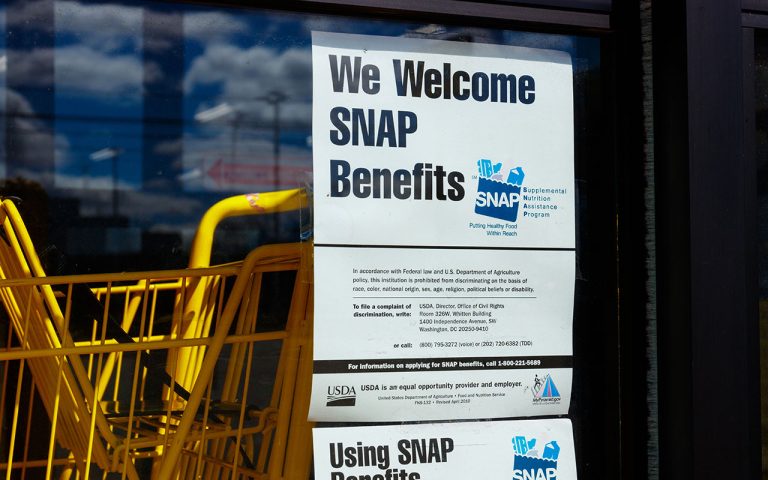
New evidence suggests that receiving benefits from the Supplemental Nutrition Assistance Program facilitates work in the long run (opens in a new tab)
Blog NOV 13, 2023
One of today’s most heated debates around U.S. income support programs is about work requirements. From the removal of work requirements through the 2021 enhancements to the Child Tax Credit…
By: Alix Gould-Werth (opens in a new tab)

What the minimum wage can tell us about the future of the U.S. child care system (opens in a new tab)
Blog NOV 1, 2023
The U.S. child care market is plagued by a math problem. Families in the United States are stretched thin, dedicating substantial portions of their household budgets to child care expenses.…
By: Sam Abbott (opens in a new tab)
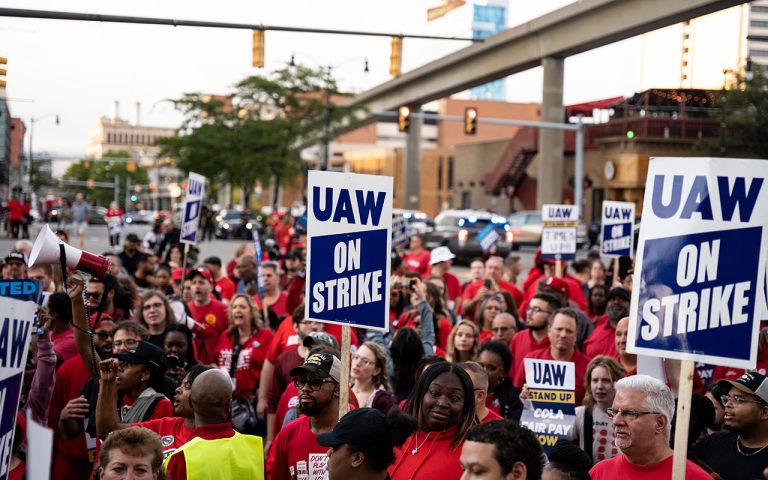
What recent research says about the benefits of labor strikes and growing worker power for broader U.S. economic growth (opens in a new tab)
Blog OCT 25, 2023
Labor organizing and strikes are experiencing a resurgence in the United States. Before this year’s bevy of labor actions—including Hollywood strikes, autoworker walk-outs, healthcare labor stoppages, and more—2022 and 2021…
By: Equitable Growth (opens in a new tab)
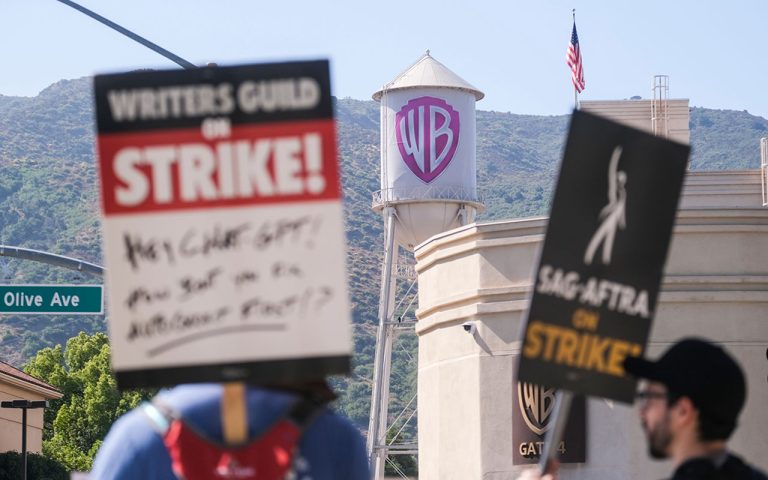
Strong unions push firms to reduce riskier debt, lowering risks of unemployment for U.S. workers (opens in a new tab)
Blog SEP 27, 2023
Unionization efforts and labor organizing are increasingly ubiquitous in the United States. Indeed, July 2023 was one of the busiest months for strikes in 30 years, following two years of…
By: Carlos Fernando Avenancio-Leon (opens in a new tab), Alessio Piccolo (opens in a new tab), Roberto Pinto (opens in a new tab)
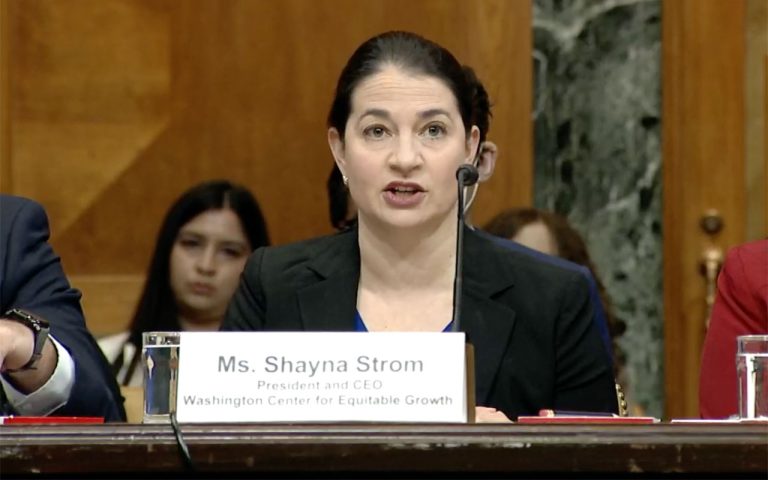
Testimony by Shayna Strom before the Senate Budget Committee (opens in a new tab)
Blog SEP 20, 2023
Chairman Whitehouse, Ranking Member Grassley, and members of the committee, thank you for the opportunity to testify today. I am the President and CEO of the Washington Center for Equitable…
By: Shayna Strom (opens in a new tab)

Equitable Growth announces new round of grantmaking exploring the connection between policy and economic growth (opens in a new tab)
Blog AUG 31, 2023
The Washington Center for Equitable Growth today announced its 2023 cohort of grantees, an impressive group of researchers from across academic disciplines who are studying how inequality affects economic growth…
By: Equitable Growth (opens in a new tab)

Latino homeownership: Confronting home appraisal bias to create a more equitable and more sustainable U.S. economic trajectory (opens in a new tab)
Blog AUG 10, 2023
Homeownership is part of the American Dream and a pathway to build wealth for many people in the United States. Homeownership allows families to plant roots, build equity, and secure…
By: Sam Kenney (opens in a new tab)
The effects of the expanded Child Tax Credit on low-income families in the United States (opens in a new tab)
Blog AUG 2, 2023
Childhood poverty is a stubborn problem in the United States. About 11 million U.S. children lived in poverty prior to the COVID-19 pandemic, accounting for nearly one-third of the impoverished…
By: Jesus Torres (opens in a new tab)

Short-term effects of the expanded Child Tax Credit on U.S. labor force participation amid the COVID-19 pandemic (opens in a new tab)
Blog JUL 26, 2023
There is a common politicized thread to arguments against expanding the federal antipoverty Child Tax Credit program permanently and to the justifications that a majority of the U.S. Supreme Court…
By: Sullivan Anderson (opens in a new tab)
New research shows that differences in state Unemployment Insurance rules cause inequity and inefficiency (opens in a new tab)
Blog JUL 19, 2023
The Unemployment Insurance system in the United States aims to provide temporary and partial wage replacement for workers who become unemployed through no fault of their own. In helping unemployed…
By: Daphné Skandalis (opens in a new tab), Ioana Marinescu (opens in a new tab), Maxim Massenkoff (opens in a new tab)

The economic costs of gun violence in the United States (opens in a new tab)
Issue Briefs JUL 18, 2023
When it comes to understanding the costs of gun violence in the United States, many people rightfully focus on the human cost. People who are slain or take their own…
By: Andre Gobbo (opens in a new tab)

Algorithmic wage discrimination requires policy solutions that enforce predictability and the U.S. spirit of equal pay for equal work (opens in a new tab)
Blog JUL 12, 2023
U.S. consumers generally believe that gig workers who labor for companies such as Uber Technologies Inc. and Lyft Inc. are free to set their own hours and thus able to…
By: Veena Dubal (opens in a new tab)

GDP 2.0: Measuring who prospers when the U.S. economy grows (opens in a new tab)
Blog JUL 11, 2023
This post was updated on July 11, 2023. Gross Domestic Product, or GDP, is the constant go-to economic indicator that news anchors and U.S. Members of Congress alike love to…
By: Austin Clemens (opens in a new tab)

Equitable Growth’s Jobs Day Graphs: June 2023 Report Edition (opens in a new tab)
Blog JUL 7, 2023
On July 7th, the U.S. Bureau of Labor Statistics released new data on the U.S. labor market during the month of June. Below are five graphs compiled by Equitable Growth…
By: Austin Clemens (opens in a new tab), Carmen Sanchez Cumming (opens in a new tab)

JOLTS Day Graphs: May 2023 Edition (opens in a new tab)
Blog JUL 6, 2023
Every month the U.S. Bureau of Labor Statistics releases data on hiring, firing, and other labor market flows from the Job Openings and Labor Turnover Survey, better known as JOLTS.…
By: Carmen Sanchez Cumming (opens in a new tab), Austin Clemens (opens in a new tab)

Ahead of the June Jobs Day report, here is what the past three months of employment data say about the health of the U.S. labor market (opens in a new tab)
Blog JUL 6, 2023
The U.S. economy is now flush with many more jobs than prior to the onset of the COVID-19 recession in early 2020, and employment growth in the country continues to…
By: Carmen Sanchez Cumming (opens in a new tab)

Industrial policies will be more effective at supporting good jobs and a stronger U.S. economy where there is institutional support for worker power (opens in a new tab)
Reports JUL 6, 2023
Fast facts Interest in industrial policies as tools to address the climate crisis, reach national security goals, and boost domestic economic growth and innovation is surging, with more and more…
By: Carmen Sanchez Cumming (opens in a new tab)

LGBTQ+ Black Pride: More than a celebration (opens in a new tab)
Blog JUN 22, 2023
This column is the fifth in our series of pieces by guest authors examining systemic racial, ethnic, and gender inequities in the U.S. economy and in access to government social…
By: Earl D. Fowlkes. Jr. (opens in a new tab)
Equitable Growth delivers economist sign-on letter and comment letter to the White House Office of Information and Regulatory Affairs on its Proposed Revisions to Circular A-4, Regulatory Analysis (opens in a new tab)
Issue Briefs JUN 20, 2023
This post has been updated to reflect that Equitable Growth’s economist sign-on letter, not our comment letter, was submitted to regulations.gov due to an administrative submission error. The Washington Center…
By: Equitable Growth (opens in a new tab)

Paid sick leave means dads can spend more time caring for loved ones and less time worrying about missing work (opens in a new tab)
Blog JUN 15, 2023
The economic story of the United States in the post-WWII era is arguably the dramatic surge in women’s labor force participation. The increases in hours worked and income generated by…
By: Sam Abbott (opens in a new tab)

Wealth as a driver of income and consumption mobility in the United States (opens in a new tab)
Blog JUN 7, 2023
When most Americans think about how economic well-being transfers from parents to children, they will likely think about income, consumption, and wealth. After all, parents’ ability to provide for and…
By: Jonathan Fisher (opens in a new tab), David Johnson (opens in a new tab)
Equitable Growth’s Jobs Day Graphs: May 2023 Report Edition (opens in a new tab)
Blog JUN 2, 2023
On June 2nd, the U.S. Bureau of Labor Statistics released new data on the U.S. labor market during the month of May. Below are five graphs compiled by Equitable Growth…
By: Austin Clemens (opens in a new tab), Carmen Sanchez Cumming (opens in a new tab)
New IRS report examines free tax filing option to reduce the cost and complexity for U.S. taxpayers (opens in a new tab)
Issue Briefs JUN 1, 2023
Filing a tax return with the Internal Revenue Service is one of the most common interactions Americans have with the federal government. Unfortunately, this process is often time-consuming and complex.…
By: Andre Gobbo (opens in a new tab)
JOLTS Day Graphs: April 2023 Edition (opens in a new tab)
Blog MAY 31, 2023
Every month the U.S. Bureau of Labor Statistics releases data on hiring, firing, and other labor market flows from the Job Openings and Labor Turnover Survey, better known as JOLTS.…
By: Carmen Sanchez Cumming (opens in a new tab), Austin Clemens (opens in a new tab)

Food assistance can disrupt intergenerational poverty in the United States, promoting racial economic equity (opens in a new tab)
Blog MAY 30, 2023
The post-COVID-19 economy is a strange beast. Unemployment rates are at historic lows, but inflation—despite some cooling—remains high. Many parents continue to struggle with child care and their children’s schooling,…
By: Christopher Wimer (opens in a new tab), Zachary Parolin (opens in a new tab), Ronald Mincy (opens in a new tab), Benjamin Glasner (opens in a new tab)
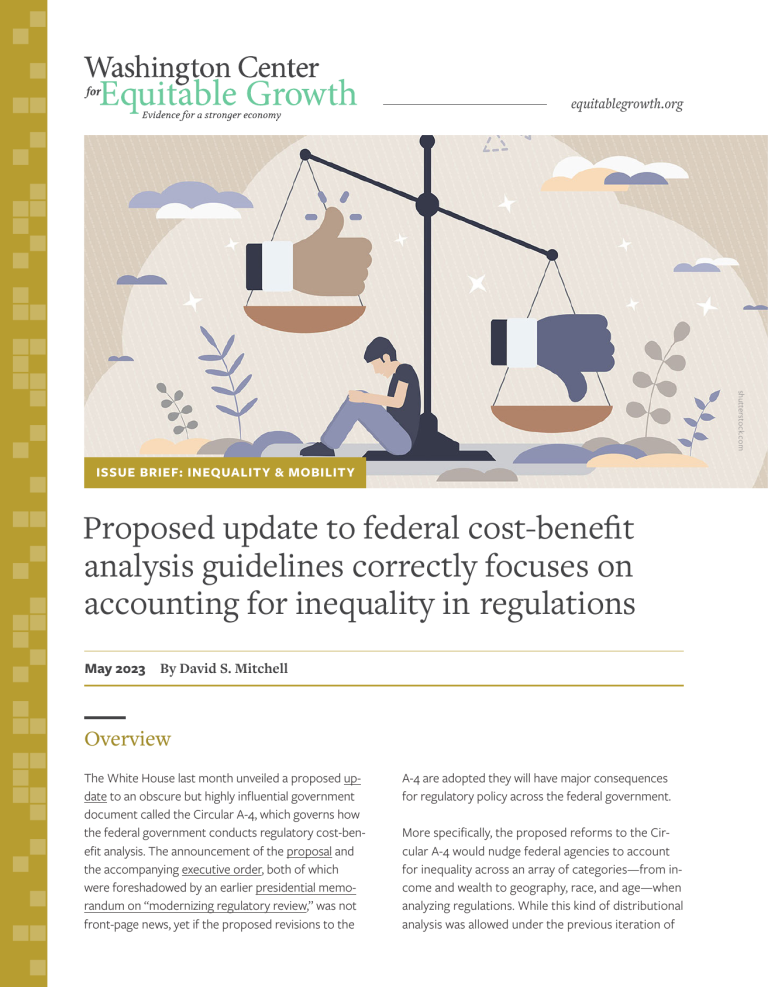
Proposed update to federal cost-benefit analysis guidelines correctly focuses on accounting for inequality in regulations (opens in a new tab)
Issue Briefs MAY 23, 2023
The White House last month unveiled a proposed update to an obscure but highly influential government document called the Circular A-4, which governs how the federal government conducts regulatory cost-benefit…
By: David S. Mitchell (opens in a new tab)

The rise of industrial policy means data synchronization is more critical than ever (opens in a new tab)
Blog MAY 12, 2023
Industrial policy is the hot new trend in D.C. policymaking circles, a Biden administration promise to radically transform the economy that is pouring federal dollars into green energy, infrastructure, and…
By: Austin Clemens (opens in a new tab)

Equitable Growth grantee Gabriel Zucman awarded the 2023 John Bates Clark Medal (opens in a new tab)
Blog MAY 9, 2023
Earlier this month, associate professor of public policy and economics Gabriel Zucman at the University of California, Berkeley—and a Washington Center for Equitable Growth 2018 grantee—won the 2023 John Bates…
By: Equitable Growth (opens in a new tab)

In Conversation with Daron Acemoglu (opens in a new tab)
In Conversation MAY 8, 2023
Equitable Growth in Conversation is a recurring series where we talk with economists and other academics to help us better understand whether and how economic inequality affects economic growth and…
By: Kathryn Zickuhr (opens in a new tab)
Equitable Growth’s Jobs Day Graphs: April 2023 Report Edition (opens in a new tab)
Blog MAY 5, 2023
On May 5, the U.S. Bureau of Labor Statistics released new data on the U.S. labor market during the month of April. Below are five graphs compiled by Equitable Growth…
By: Raksha Kopparam (opens in a new tab), Kathryn Zickuhr (opens in a new tab)
JOLTS Day Graphs: March 2023 Edition (opens in a new tab)
Blog MAY 2, 2023
Every month the U.S. Bureau of Labor Statistics releases data on hiring, firing, and other labor market flows from the Job Openings and Labor Turnover Survey, better known as JOLTS.…
By: Raksha Kopparam (opens in a new tab), Kathryn Zickuhr (opens in a new tab)

How government reliance on fines and fees harms communities across the United States (opens in a new tab)
Videos APR 25, 2023
This column is the fourth in a series by guest authors examining systemic racial, ethnic, and gender inequities in the U.S. economy and in access to government social infrastructure and…
By: Antonya Jeffrey (opens in a new tab)

Maybe some Earth Day soon, we’ll know what nature is worth (opens in a new tab)
Issue Briefs APR 24, 2023
This past January, the Biden administration unveiled its “National Strategy to Develop Statistics for Environmental-Economic Decisions,” an effort to bring the health and sustainability of natural resources in the United…
By: Austin Clemens (opens in a new tab)

Police in public schools harm students, leading to far-reaching socioeconomic inequalities alongside less safe schools (opens in a new tab)
Blog APR 19, 2023
This column is the third in a series by guest authors examining systemic racial, ethnic, and gender inequities in the U.S. economy and in access to government social infrastructure and…
By: Tyler Whittenberg (opens in a new tab), Jessica Alcantara (opens in a new tab)
Equitable Growth’s Jobs Day Graphs: March 2023 Report Edition (opens in a new tab)
Blog APR 7, 2023
On April 7, the U.S. Bureau of Labor Statistics released new data on the U.S. labor market during the month of March. Below are five graphs compiled by Equitable Growth…
By: Kathryn Zickuhr (opens in a new tab), Carmen Sanchez Cumming (opens in a new tab)
JOLTS Day Graphs: February 2023 Edition (opens in a new tab)
Blog APR 4, 2023
Every month the U.S. Bureau of Labor Statistics releases data on hiring, firing, and other labor market flows from the Job Openings and Labor Turnover Survey, better known as JOLTS.…
By: Kathryn Zickuhr (opens in a new tab), Carmen Sanchez Cumming (opens in a new tab)

Summary of Equitable Growth’s March ‘Econ 101’ briefing on inflation for Capitol Hill staffers (opens in a new tab)
Blog MAR 23, 2023
The Washington Center for Equitable Growth hosted a briefing earlier this month—part of a series we call “Econ 101”—presenting the key points on inflation to congressional staffers in both the…
By: Equitable Growth (opens in a new tab)

Executive actions to modernize federal data collection and improve measurements of U.S. economic inequality (opens in a new tab)
Blog MAR 22, 2023
Relevant federal agencies U.S. Census Bureau U.S. Bureau of Economic Analysis, U.S. Department of Commerce U.S. Bureau of Labor Statistics, U.S. Department of Labor Relevant federal laws Internal Revenue Code…
By: Equitable Growth (opens in a new tab)
Equitable Growth’s Jobs Day Graphs: February 2023 Report Edition (opens in a new tab)
Blog MAR 10, 2023
On March 10, the U.S. Bureau of Labor Statistics released new data on the U.S. labor market during the month of February. Below are five graphs compiled by Equitable Growth…
By: Kathryn Zickuhr (opens in a new tab), Carmen Sanchez Cumming (opens in a new tab)
JOLTS Day Graphs: January 2023 Edition (opens in a new tab)
Blog MAR 8, 2023
Every month the U.S. Bureau of Labor Statistics releases data on hiring, firing, and other labor market flows from the Job Openings and Labor Turnover Survey, better known as JOLTS.…
By: Kathryn Zickuhr (opens in a new tab), Carmen Sanchez Cumming (opens in a new tab)

Ahead of new U.S. jobs data releases, here’s what employment growth and job switching mean for wage disparities in the U.S. labor market (opens in a new tab)
Issue Briefs MAR 7, 2023
Later this week, the U.S. Bureau of Labor Statistics will release data on February 2023 job growth through its Employment Situation Summary. It will also release information on job openings,…
By: Carmen Sanchez Cumming (opens in a new tab)

Access to paid family leave improves U.S. women’s labor market outcomes following a spouse’s health shock (opens in a new tab)
Blog MAR 6, 2023
Women now make up almost half of the U.S. labor force, according to the U.S. Department of Labor, and families are increasingly reliant on women’s earnings. Despite their growing labor…
By: Courtney C. Coile (opens in a new tab), Maya Rossin-Slater (opens in a new tab), Amanda Su (opens in a new tab)

Data infrastructure and tribal sovereignty can help break down barriers for Native Americans to build wealth (opens in a new tab)
Issue Briefs MAR 2, 2023
For centuries, Indigenous communities in the United States have faced devastating poverty. American Indians and Alaska Natives today experience the highest rate of poverty, at 25 percent, of any major…
By: Raksha Kopparam (opens in a new tab)

Examining the history of the U.S. racial wealth divide shows stagnating progress on closing these disparities (opens in a new tab)
Blog FEB 24, 2023
A central part of Black History Month is highlighting the accomplishments and contributions of Black Americans to U.S. society, culture, and the economy, often in the face of incredible barriers.…
By: Kreg Steven Brown (opens in a new tab)

Beauty products for women of color and femme-identifying people of color perpetuate U.S. health and other socioeconomic inequalities (opens in a new tab)
Videos FEB 16, 2023
This column is the second in a series by guest authors examining systemic racial, ethnic, and gender inequities in the U.S. economy and in access to government social infrastructure and…
By: Beaumont Taylor Morton (opens in a new tab)

Climate policy has potential to spur economic growth and ensure a competitive U.S. economy (opens in a new tab)
Blog FEB 9, 2023
Addressing climate change is a crucial—and sizeable—economic task. Ensuring equity in every dimension of climate mitigation and adaptation is critical to redressing ongoing harms and environmental injustices. Tracking the implementation…
By: Equitable Growth (opens in a new tab)
Equitable Growth’s Jobs Day Graphs: January 2023 Report Edition (opens in a new tab)
Blog FEB 3, 2023
On February 3, the U.S. Bureau of Labor Statistics released new data on the U.S. labor market during the month of January. Below are five graphs compiled by Equitable Growth…
By: Kathryn Zickuhr (opens in a new tab), Austin Clemens (opens in a new tab)
JOLTS Day Graphs: December 2022 Edition (opens in a new tab)
Blog FEB 1, 2023
Every month the U.S. Bureau of Labor Statistics releases data on hiring, firing, and other labor market flows from the Job Openings and Labor Turnover Survey, better known as JOLTS.…
By: Kathryn Zickuhr (opens in a new tab), Carmen Sanchez Cumming (opens in a new tab)

A future-oriented approach to wealth offers new possibilities for wealth creation in the United States (opens in a new tab)
Blog JAN 19, 2023
Wealth inequality in the United States has grown significantly over the past five decades, with the overall share of wealth becoming more concentrated among the highest-income families. A lot of…
By: Equitable Growth (opens in a new tab)

U.S. income and wealth inequality are no longer increasing, but a return to the equitable levels of the mid-20th century isn’t likely anytime soon (opens in a new tab)
Blog JAN 17, 2023
Five or 6 years ago, economists and pundits frequently debated whether the incomes of low- and middle-class households in the United States were stagnating. I wrote about it, and I…
By: Austin Clemens (opens in a new tab)

Equitable Growth announces Shayna Strom as new president and CEO (opens in a new tab)
Blog JAN 10, 2023
The Washington Center for Equitable Growth Board of Directors today announced that Shayna Strom has been named its new president and CEO. Strom had been serving as the organization’s interim…
By: Equitable Growth (opens in a new tab)

ASSA 2023 Round-up: Day 3 (opens in a new tab)
Blog JAN 9, 2023
Yesterday was the third and final day of the 2023 annual meeting of the Allied Social Science Associations, which is organized by the American Economic Association. The 3-day conference, held…
By: Equitable Growth (opens in a new tab)

ASSA 2023 Round-up: Day 2 (opens in a new tab)
Blog JAN 8, 2023
Yesterday was the second day of the 2023 annual meeting of the Allied Social Science Associations, which is organized by the American Economic Association. The 3-day conference, held in person…
By: Equitable Growth (opens in a new tab)

ASSA 2023 Round-up: Day 1 (opens in a new tab)
Blog JAN 7, 2023
Yesterday was the first day of the 2023 annual meeting of the Allied Social Science Associations, which is organized by the American Economic Association. The 3-day conference, held in person…
By: Equitable Growth (opens in a new tab)
Equitable Growth’s Jobs Day Graphs: December 2022 Report Edition (opens in a new tab)
Blog JAN 6, 2023
On January 6 the U.S. Bureau of Labor Statistics released new data on the U.S. labor market during the month of December. Below are five graphs compiled by Equitable Growth…
By: Kathryn Zickuhr (opens in a new tab), Austin Clemens (opens in a new tab)

Diversity in Economics video series uplifts diverse voices and research in economics and social sciences (opens in a new tab)
Videos JAN 5, 2023
A key priority of the Washington Center for Equitable Growth is supporting researchers from underrepresented backgrounds and at various points along their career ladders, contributing to the broader effort to…
By: Maria Monroe (opens in a new tab)
JOLTS Day Graphs: November 2022 Edition (opens in a new tab)
Blog JAN 4, 2023
Every month the U.S. Bureau of Labor Statistics releases data on hiring, firing, and other labor market flows from the Job Openings and Labor Turnover Survey, better known as JOLTS.…
By: Kathryn Zickuhr (opens in a new tab), Carmen Sanchez Cumming (opens in a new tab)

The importance of understanding how job quality affects U.S. workers and the entire economy, and how to boost access to good jobs (opens in a new tab)
Blog DEC 22, 2022
Even during economic expansions and periods of robust employment growth, millions of workers in the United States face economic insecurity and precarious working conditions. Low pay, safety hazards, lack of…
By: Equitable Growth (opens in a new tab)

A missed opportunity to expand the Child Tax Credit will affect U.S. families and the broader economy now and for years to come (opens in a new tab)
Blog DEC 21, 2022
Earlier this week, the U.S. Congress released its proposed omnibus bill that funds the federal government through September 2023 and makes various other reforms to the nation’s retirement system, antitrust…
By: Equitable Growth (opens in a new tab)

New digital tools demonstrate the promise of measuring well-being in the United States (opens in a new tab)
Blog DEC 21, 2022
This summer, the Washington Center for Equitable Growth partnered with New America, the Justice, Health & Democracy Impact Initiative at Harvard University, and the U.S. Departments of Commerce and the…
By: Elizabeth Garlow (opens in a new tab), Austin Clemens (opens in a new tab), Anthony Guidotti (opens in a new tab)

How the new Global Repository of Income Dynamics database sheds light on income inequality and economic mobility (opens in a new tab)
Blog DEC 15, 2022
Economists have long known that a rigorous understanding of inequality is only possible with high-quality data. To this end, developments in economic models since the 1970s have helped advance our…
By: Equitable Growth (opens in a new tab)

Why workplace dignity is valuable to U.S. workers, employers, and the broader economy (opens in a new tab)
Blog DEC 14, 2022
The role of employment in the lives of many U.S. workers and their families is more than just a way to provide for oneself and one’s loved ones. Jobs are…
By: Kate Bahn (opens in a new tab)
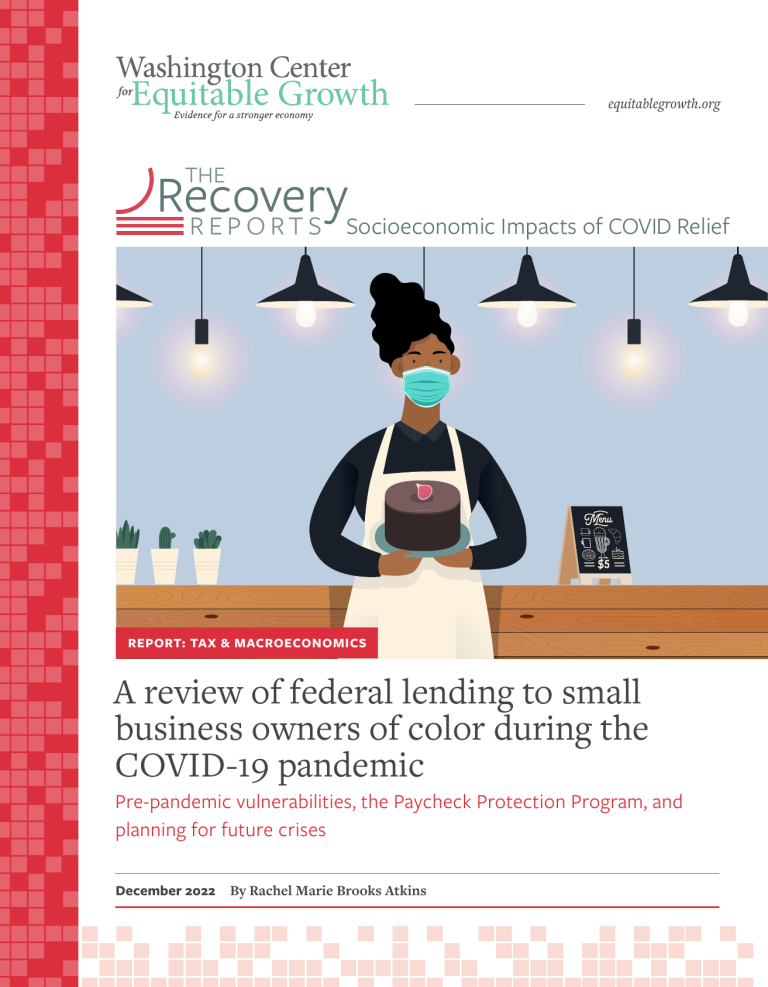
A review of federal lending to small business owners of color during the COVID-19 pandemic (opens in a new tab)
Reports DEC 13, 2022
The COVID-19 pandemic that began in early 2020 hammered small businesses across the globe. The number of active businesses declined precipitously, supply chain interruptions reduced business operations, and global trade…
By: Rachel Marie Brooks Atkins (opens in a new tab)
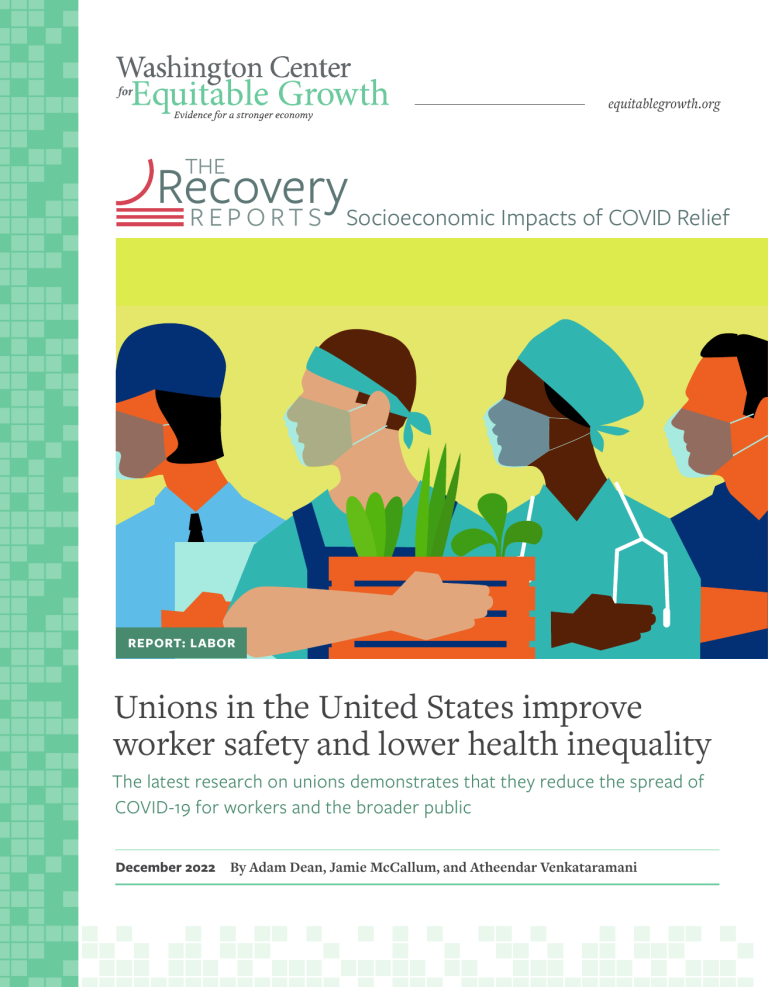
Unions in the United States improve worker safety and lower health inequality (opens in a new tab)
Reports DEC 13, 2022
Ros Reggans was overjoyed when she learned that her employer, a Chicago-area nursing home chain, had received more than $12 million in COVID-19 relief funds through the 2020 Coronavirus Aid,…
By: Adam Dean (opens in a new tab), Jamie McCallum (opens in a new tab), Atheendar Venkataramani (opens in a new tab)

The economic impact of housing insecurity in the United States (opens in a new tab)
Videos DEC 8, 2022
This column is the first in a series by guest authors examining systemic racial, ethnic, and gender inequities in the U.S. economy and in access to government social infrastructure and…
By: Shailly Gupta Barnes (opens in a new tab)

Equitable Growth works to expand its network of scholars researching inequality and growth at two fall academic conferences (opens in a new tab)
Blog DEC 6, 2022
Since its founding in 2013, the Washington Center for Equitable Growth has supported scholars across disciplines and along the career ladder who are studying the effects of inequality on economic…
By: Equitable Growth (opens in a new tab)
Equitable Growth’s Jobs Day Graphs: November 2022 Report Edition (opens in a new tab)
Blog DEC 2, 2022
On December 2 the U.S. Bureau of Labor Statistics released new data on the U.S. labor market during the month of November. Below are five graphs compiled by Equitable Growth…
By: Kathryn Zickuhr (opens in a new tab), Carmen Sanchez Cumming (opens in a new tab)

Ahead of the November jobs report, here’s what recent disaggregated data say about the state of the U.S. labor market and economic growth (opens in a new tab)
Blog NOV 30, 2022
Ahead of the release of November’s Employment Situation Summary on December 2, an examination of the past few months of U.S. Bureau of Labor Statistics employment data shows some signs…
By: Carmen Sanchez Cumming (opens in a new tab), Kate Bahn (opens in a new tab), Kathryn Zickuhr (opens in a new tab)
JOLTS Day Graphs: October 2022 Edition (opens in a new tab)
Blog NOV 30, 2022
Every month the U.S. Bureau of Labor Statistics releases data on hiring, firing, and other labor market flows from the Job Openings and Labor Turnover Survey, better known as JOLTS.…
By: Kathryn Zickuhr (opens in a new tab), Carmen Sanchez Cumming (opens in a new tab)

Advancing research and evidence on child care and U.S. economic growth (opens in a new tab)
Blog NOV 10, 2022
Research shows that accessible and affordable child care is both a lifeline for working families and a driver of growth across the entire U.S. economy. A functioning child care market…
By: Equitable Growth (opens in a new tab)

Including immigrants in the U.S. tax system is fiscally responsible and can boost economic growth by lifting the well-being of their families (opens in a new tab)
Blog NOV 10, 2022
The recently enacted Inflation Reduction Act boasts the potential for more noncitizen immigrant workers and entrepreneurs to pay into the U.S. tax system, improving the federal government’s tax collection. What’s…
By: Shayak Sarkar (opens in a new tab)

Green jobs are good for U.S. workers and the U.S. economy (opens in a new tab)
Blog NOV 8, 2022
Earlier this year, the U.S. Congress passed and President Joe Biden signed into law one of the most consequential climate bills in U.S. history. The Inflation Reduction Act allocates $369…
By: Equitable Growth (opens in a new tab)

Enacting a minimum wage for tipped workers is on the ballot in two U.S. cities. Here’s what the research says (opens in a new tab)
Blog NOV 4, 2022
In most cities and states across the United States, servers and other so-called front-of-house staff in the restaurant industry earn a subminimum wage for tipped workers. Whether and how this…
By: Kate Bahn (opens in a new tab)
Equitable Growth’s Jobs Day Graphs: October 2022 Report Edition (opens in a new tab)
Blog NOV 4, 2022
On November 4, the U.S. Bureau of Labor Statistics released new data on the U.S. labor market during the month of October. Below are five graphs compiled by Equitable Growth…
By: Carmen Sanchez Cumming (opens in a new tab), Kate Bahn (opens in a new tab)
JOLTS Day Graphs: September 2022 Edition (opens in a new tab)
Blog NOV 1, 2022
Every month the U.S. Bureau of Labor Statistics releases data on hiring, firing, and other labor market flows from the Job Openings and Labor Turnover Survey, better known as JOLTS.…
By: Kathryn Zickuhr (opens in a new tab), Carmen Sanchez Cumming (opens in a new tab)

What federal statistical agencies can do to improve survey response rates among Hispanic communities in the United States (opens in a new tab)
Blog OCT 14, 2022
Between 2010 and 2020, the Hispanic American population grew 23 percent, making it one of the fastest-growing communities in the United States. According to the 2020 decennial census, Hispanic Americans…
By: Raksha Kopparam (opens in a new tab)

Latino workers are often segregated into bad jobs, but a strong U.S. labor movement can boost job quality and U.S. economic growth (opens in a new tab)
Issue Briefs OCT 13, 2022
Latino workers represent a large and growing share of the U.S. workforce. But even with the highest employment rates in the United States, Latinos face a number of barriers to…
By: Carmen Sanchez Cumming (opens in a new tab)
Equitable Growth’s Jobs Day Graphs: September 2022 Report Edition (opens in a new tab)
Blog OCT 7, 2022
On October 7, the U.S. Bureau of Labor Statistics released new data on the U.S. labor market during the month of September. Below are five graphs compiled by Equitable Growth…
By: Kathryn Zickuhr (opens in a new tab), Carmen Sanchez Cumming (opens in a new tab)

Equitable Growth announces two Dissertation Scholars for 2022–23 academic year (opens in a new tab)
Blog OCT 6, 2022
The Washington Center for Equitable Growth each year offers funding and mentorship opportunities to two pre-doctoral students through our Dissertation Scholars program. This program, whose application coincides with Equitable Growth’s…
By: Equitable Growth (opens in a new tab)

Equitable Growth provides comments to the U.S. Bureau of Economic Analysis on its new distributing personal income report (opens in a new tab)
Blog OCT 5, 2022
In December 2021, the U.S. Bureau of Economic Analysis released a report that studied the feasibility of releasing its distributing personal income product on a quarterly basis. This feasibility study…
By: Equitable Growth (opens in a new tab)
JOLTS Day Graphs: August 2022 Edition (opens in a new tab)
Blog OCT 4, 2022
Every month the U.S. Bureau of Labor Statistics releases data on hiring, firing, and other labor market flows from the Job Openings and Labor Turnover Survey, better known as JOLTS.…
By: Kathryn Zickuhr (opens in a new tab), Carmen Sanchez Cumming (opens in a new tab)

Budget analyses of U.S. income support programs must incorporate long-term benefits for children (opens in a new tab)
Blog SEP 22, 2022
When any piece of legislation is considered by the U.S. Congress, it typically goes through a budget analysis to establish its impact on the federal government’s bottom line. These analyses,…
By: Anna Aizer (opens in a new tab), Hilary Hoynes (opens in a new tab), Adriana Lleras-Muney (opens in a new tab)

Better data collection can help lift the LGBTQ+ community out of economic hardship in the United States (opens in a new tab)
Videos SEP 15, 2022
Over the past 2-plus years amid the COVID-19 pandemic, widespread evidence has underscored the reality that various communities and demographic groups in the United States experience socioeconomic hardships differently. Numerous…
By: Raksha Kopparam (opens in a new tab)

New research shows that 1 in 4 adults in the United States suffers from transportation insecurity (opens in a new tab)
Blog SEP 14, 2022
Access to transportation is crucial to ensuring that people can meet their basic needs and participate in society and the economy. It goes without saying that if people can’t get…
By: Alix Gould-Werth (opens in a new tab)
Equitable Growth names Shayna Strom as interim president and CEO (opens in a new tab)
Blog SEP 8, 2022
The Washington Center for Equitable Growth today announced that Shayna Strom has been named its interim president and CEO. Strom comes to the organization with decades of experience bridging nonprofits,…
By: Equitable Growth (opens in a new tab)

Measuring spending inequality in the United States in real time (opens in a new tab)
Blog SEP 8, 2022
The onset of the COVID-19 pandemic and the resulting recession in 2020, followed by a swift U.S. economic recovery, offer lessons today about why real-time data are so crucial to…
By: Loujaina Abdelwahed (opens in a new tab), Jacob Robbins (opens in a new tab), Cole Campbell (opens in a new tab), Shogher Ohannessian (opens in a new tab), Todd Czurylo (opens in a new tab)

New research suggests that social circles affect upward mobility among U.S. children and young adults (opens in a new tab)
Blog SEP 7, 2022
In recent weeks, students across the United States headed back to school to continue their educations. From Kindergarten through high school and into college, these students are gaining valuable human…
By: Kreg Steven Brown (opens in a new tab)
How corporate governance strategies hurt worker power in the United States (opens in a new tab)
Issue Briefs SEP 6, 2022
Researchers studying the decades-long rise in earnings inequality and wage stagnation in the United States point to a number of reasons why the country’s income divide grew over the past…
By: Kate Bahn (opens in a new tab), Carmen Sanchez Cumming (opens in a new tab)
Equitable Growth’s Jobs Day Graphs: August 2022 Report Edition (opens in a new tab)
Blog SEP 2, 2022
On September 2, the U.S. Bureau of Labor Statistics released new data on the U.S. labor market during the month of August. Below are five graphs compiled by Equitable Growth…
By: Kathryn Zickuhr (opens in a new tab), Raksha Kopparam (opens in a new tab)

Ahead of September’s jobs report, here is what the past 3 months of labor market data reveal about the health of the U.S. labor market (opens in a new tab)
Blog AUG 31, 2022
Over the past few months, the U.S. labor market continued its strong recovery from the initial shock delivered by the COVID-19 crisis, reaching pre-pandemic levels of nonfarm payrolls in July.…
By: Carmen Sanchez Cumming (opens in a new tab), Kathryn Zickuhr (opens in a new tab), Kate Bahn (opens in a new tab)
JOLTS Day Graphs: July 2022 Edition (opens in a new tab)
Blog AUG 30, 2022
Every month the U.S. Bureau of Labor Statistics releases data on hiring, firing, and other labor market flows from the Job Openings and Labor Turnover Survey, better known as JOLTS.…
By: Kate Bahn (opens in a new tab), Carmen Sanchez Cumming (opens in a new tab)

Equitable Growth’s 2022 grantees will study the drivers and effects of U.S. economic inequality (opens in a new tab)
Blog AUG 30, 2022
The Washington Center for Equitable Growth today announced its slate of 2022 grantees. More than $1 million in funding will be dispersed to 42 scholars from economics and other social…
By: Equitable Growth (opens in a new tab)

Why the Inflation Reduction Act is key to strong, broad-based U.S. economic growth (opens in a new tab)
Blog AUG 16, 2022
The Inflation Reduction Act spells good news for the U.S. economy. The newly signed legislation makes historic investments to combat climate change, lower healthcare costs, and crack down on tax…
By: David S. Mitchell (opens in a new tab)

American Sociological Association 2022 conference highlights inequities among vulnerable U.S. populations (opens in a new tab)
Blog AUG 12, 2022
The American Sociological Association held its 117th Annual Meeting from August 5–9, 2022 in Los Angeles, California. This event gathers sociologists and those involved in the scientific study of society…
By: Equitable Growth (opens in a new tab)
Factsheet: Is the U.S. economy in a recession, and how does recession dating work? (opens in a new tab)
Factsheets AUG 10, 2022
As inflationary pressure continues to cause higher prices for U.S. families, policymakers and economists alike continue to debate whether the United States is entering—or already entered, or will soon enter—a…
By: Equitable Growth (opens in a new tab)

The economic evidence behind the Inflation Reduction Act and why it will boost strong, broad-based economic growth (opens in a new tab)
Blog AUG 5, 2022
The Inflation Reduction Act spells good news for the U.S. economy. The proposed legislation now before the U.S. Senate would make historic investments to combat climate change, lower healthcare costs,…
By: David S. Mitchell (opens in a new tab)
Equitable Growth’s Jobs Day Graphs: July 2022 Report Edition (opens in a new tab)
Blog AUG 5, 2022
On August 5, the U.S. Bureau of Labor Statistics released new data on the U.S. labor market during the month of July. Below are five graphs compiled by Equitable Growth…
By: Kathryn Zickuhr (opens in a new tab), Carmen Sanchez Cumming (opens in a new tab)

The inequitable consequences of ‘heat islands’ within the metropolitan areas of the United States and what to do about it (opens in a new tab)
Blog AUG 3, 2022
Environmental science finds that so-called heat islands occur when urbanized areas experience much higher temperatures than neighboring outlying areas within major metropolitan areas. In and around U.S. cities, more affluent…
By: Michael Garvey (opens in a new tab)
JOLTS Day Graphs: June 2022 Edition (opens in a new tab)
Blog AUG 2, 2022
Every month the U.S. Bureau of Labor Statistics releases data on hiring, firing, and other labor market flows from the Job Openings and Labor Turnover Survey, better known as JOLTS.…
By: Kathryn Zickuhr (opens in a new tab), Carmen Sanchez Cumming (opens in a new tab)

NBER Summer Institute 2022 Round-up: Week 3 (opens in a new tab)
Blog AUG 1, 2022
On July 11, the National Bureau of Economic Research kicked off its summer institute, an annual 3-week conference featuring discussions and paper presentations on various topics in economics, including environmental…
By: Equitable Growth (opens in a new tab)

Taxing the rich: The effect of tax reform and the COVID-19 pandemic on tax flight among U.S. millionaires (opens in a new tab)
Blog JUL 28, 2022
Taxing the rich is one of the central policy debates in this time of rising inequality. Elite taxation can change the distribution of income in society, support equitable growth, and…
By: Cristobal Young (opens in a new tab), Ithai Lurie (opens in a new tab)

NBER Summer Institute 2022 Round-up: Week 2 (opens in a new tab)
Blog JUL 26, 2022
On July 11, the National Bureau of Economic Research kicked off its summer institute, an annual 3-week conference featuring discussions and paper presentations on various topics in economics, including disaggregating…
By: Equitable Growth (opens in a new tab)

Equitable Growth welcomes R. Jisung Park as a visiting scholar to examine economic impacts of climate change (opens in a new tab)
Videos JUL 25, 2022
Wildfires are blazing across Europe and temperatures are soaring around the world, exemplifying new extremes that are set to become normal as a result of climate change. But the effects…
By: Equitable Growth (opens in a new tab)

New working paper examines the evolution of economic thought on the impact of technological change in the labor market (opens in a new tab)
Blog JUL 19, 2022
How have automation and digital technologies contributed to wage inequality in recent decades? It may seem like a straightforward question, but it is one that has been difficult for economists…
By: Kathryn Zickuhr (opens in a new tab)

NBER Summer Institute 2022 Round-up: Week 1 (opens in a new tab)
Blog JUL 18, 2022
On July 11, the National Bureau of Economic Research kicked off its summer institute, an annual 3-week conference featuring discussions and paper presentations on various topics in economics, including monopsony…
By: Equitable Growth (opens in a new tab)

COVID-19 recession and ensuing economic recovery reveals why Unemployment Insurance fails to reach marginalized U.S. workers (opens in a new tab)
Blog JUL 13, 2022
Policymakers at the state and federal levels of government in the United States who are steeped in the nation’s Unemployment Insurance system are well aware that many unemployed workers fail…
By: Eliza Forsythe (opens in a new tab)
Equitable Growth’s Jobs Day Graphs: June 2022 Report Edition (opens in a new tab)
Blog JUL 8, 2022
On July 8, the U.S. Bureau of Labor Statistics released new data on the U.S. labor market during the month of June. Below are five graphs compiled by Equitable Growth…
By: Kathryn Zickuhr (opens in a new tab), Carmen Sanchez Cumming (opens in a new tab)

Canada is the first country to release subannual statistics on the distribution of income. Here’s how it was done. (opens in a new tab)
Blog JUL 7, 2022
Statistics Canada, the umbrella agency for national statistics in Canada, is the first statistical agency in the world to release subannual data on how economic growth is distributed among rich…
By: Austin Clemens (opens in a new tab)
JOLTS Day Graphs: May 2022 Edition (opens in a new tab)
Blog JUL 6, 2022
Every month the U.S. Bureau of Labor Statistics releases data on hiring, firing, and other labor market flows from the Job Openings and Labor Turnover Survey, better known as JOLTS.…
By: Kate Bahn (opens in a new tab), Carmen Sanchez Cumming (opens in a new tab)
Why the Infrastructure Investment and Jobs Act is good economics (opens in a new tab)
Issue Briefs JUN 30, 2022
President Joe Biden, in November 2021, signed the Infrastructure Investment and Jobs Act into law, providing $1.2 trillion in new government investments to create millions of jobs, increase U.S. economic…
By: Michelle Holder (opens in a new tab), Shaun Harrison (opens in a new tab)

New U.S. Census Bureau data show significant economic disparities among the LGBTQ+ community (opens in a new tab)
Issue Briefs JUN 29, 2022
The evidence across academic and research disciplines overwhelmingly indicates that disaggregated data help build a more detailed narrative about the varying economic experiences of the U.S. population. While great strides…
By: Raksha Kopparam (opens in a new tab)
Factsheet: What the research says about the economic impacts of reproductive care (opens in a new tab)
Factsheets JUN 27, 2022
Before the U.S. Supreme Court ruling on June 24 in Dobbs v. Jackson Women’s Health Organization, more than five decades of liberating access to contraception and abortion care had demonstrable…
By: Kate Bahn (opens in a new tab), Emilie Openchowski (opens in a new tab)

In Conversation with Lee Badgett (opens in a new tab)
In Conversation JUN 23, 2022
Equitable Growth in Conversation is a recurring series where we talk with economists and other academics to help us better understand whether and how economic inequality affects economic growth and…
By: Kate Bahn (opens in a new tab)

This year’s Juneteenth is a celebration of emancipation and a reminder that pervasive wealth inequality persists for most African Americans (opens in a new tab)
Blog JUN 17, 2022
Following nationwide protests across the United States in 2020 against police brutality, the push for federal recognition of Juneteenth gained momentum, with the U.S. Congress enacting legislation in the summer…
By: Shanteal Lake (opens in a new tab)

LERA 2022 participants focus on boosting worker power and uplifting marginalized voices in the U.S. workplace (opens in a new tab)
Blog JUN 9, 2022
The Labor and Employment Relations Association recently held its 74th annual conference, gathering hundreds of presenters and attendees virtually from across industries, and including participants from labor, management, government, advocacy,…
By: Equitable Growth (opens in a new tab)

May jobs report: Young workers are entering a uniquely evolving U.S. labor market (opens in a new tab)
Blog JUN 3, 2022
The recovery in the U.S. labor market continued in May, with 390,000 jobs added and the unemployment rate holding steady at nearly its pre-pandemic level at 3.6 percent, according to…
By: Kate Bahn (opens in a new tab), Kathryn Zickuhr (opens in a new tab)
Equitable Growth’s Jobs Day Graphs: May 2022 Report Edition (opens in a new tab)
Blog JUN 3, 2022
On June 3, the U.S. Bureau of Labor Statistics released new data on the U.S. labor market during the month of May. Below are five graphs compiled by Equitable Growth…
By: Kathryn Zickuhr (opens in a new tab), Raksha Kopparam (opens in a new tab)
JOLTS Day Graphs: April 2022 Edition (opens in a new tab)
Blog JUN 1, 2022
Every month the U.S. Bureau of Labor Statistics releases data on hiring, firing, and other labor market flows from the Job Openings and Labor Turnover Survey, better known as JOLTS.…
By: Kathryn Zickuhr (opens in a new tab), Raksha Kopparam (opens in a new tab)

Is there a skilled labor shortage? The economic evidence on skills gap and labor shortage concerns (opens in a new tab)
Blog MAY 31, 2022
Claims of a “skills gap” or “labor shortage” in the United States are often cited during times of high unemployment as the reason why workers are unable to find jobs…
By: Kathryn Zickuhr (opens in a new tab)

The impact of different inflationary pressures due to income inequality and racial disparities in the United States today (opens in a new tab)
Videos MAY 26, 2022
The Federal Reserve Bank of Minneapolis recently hosted a conference, “Unequal Inflation Impacts,” at which an illuminating set of presentations and additional research sources explored “the ways inflation puts different…
By: Jonathan Fisher (opens in a new tab)

Developing a research agenda on racial and gender equity in the pandemic-era U.S. labor market (opens in a new tab)
Blog MAY 24, 2022
This summation of a joint roundtable discussion was written in partnership with The Century Foundation. Now, more than 2 years after the start of the COVID-19 pandemic in the United…
By: Sam Abbott (opens in a new tab), Kate Bahn (opens in a new tab), Julie Kashen (opens in a new tab)
Three observations from the kick-off of a new consensus study by the National Academy of Sciences on measuring U.S. economic inequality (opens in a new tab)
Blog MAY 19, 2022
A new National Academy of Sciences panel convened publicly for the first time this week to discuss how statistical agencies should unify and improve the measurement of inequality in income,…
By: Austin Clemens (opens in a new tab)

Equitable Growth to welcome visiting scholars as part of two American Economic Association summer programs (opens in a new tab)
Blog MAY 16, 2022
The Washington Center for Equitable Growth is excited to welcome three scholars and students who will join the organization this summer through programs offered by the American Economic Association. As…
By: Equitable Growth (opens in a new tab)
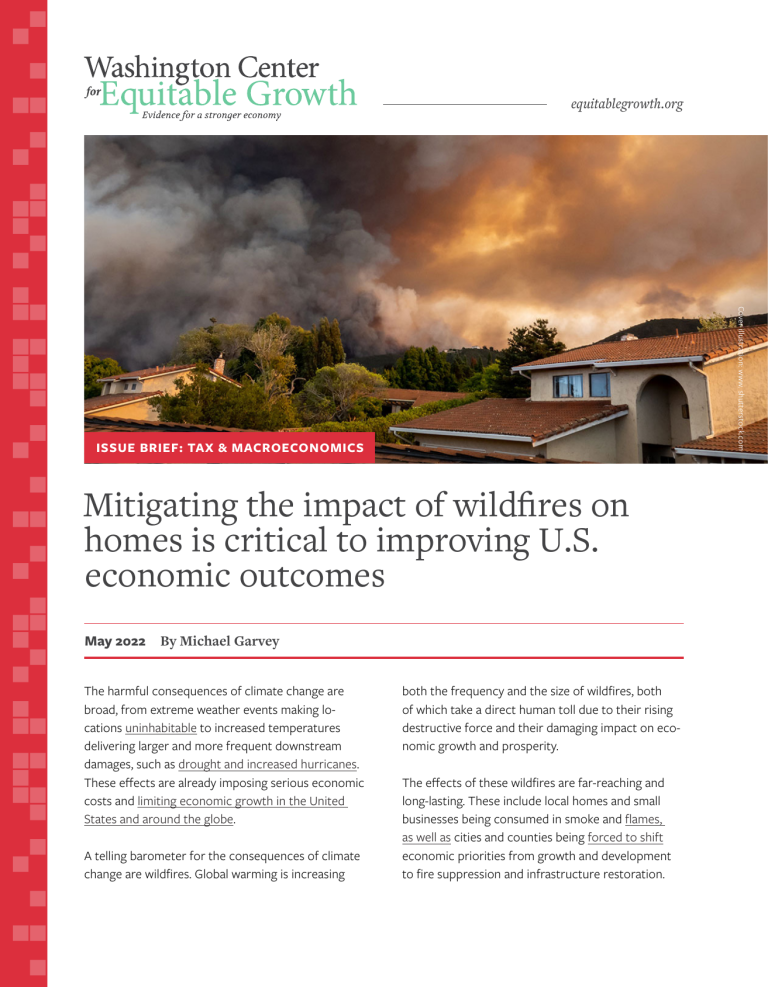
Mitigating the impact of wildfires on homes is critical to improving U.S. economic outcomes (opens in a new tab)
Issue Briefs MAY 10, 2022
The harmful consequences of climate change are broad, from extreme weather events making locations uninhabitable to increased temperatures delivering larger and more frequent downstream damages, such as drought and increased…
By: Michael Garvey (opens in a new tab)

New research documents the high cost of residential racial segregation in Northern cities of the United States (opens in a new tab)
Blog MAY 9, 2022
The violent effects of systemic racial segregation are ever-present in U.S. cities today, especially in the big Northern cities that were destinations for Black Americans fleeing racial oppression and violence…
By: Jamein Cunningham (opens in a new tab), Alberto Ortega (opens in a new tab), Robynn Cox (opens in a new tab), Kenneth D. Whaley (opens in a new tab)

Jobs report: Amid continued job gains, Asian American, Native Hawaiian, and Pacific Islander workers experience the U.S. labor market in different and often hidden ways (opens in a new tab)
Blog MAY 6, 2022
Between mid-March and mid-April, the U.S. economy added a strong 428,000 jobs, making it the 12th consecutive month in which employment growth surpasses 400,000 jobs. In addition, according to the…
By: Carmen Sanchez Cumming (opens in a new tab), Kathryn Zickuhr (opens in a new tab)
Equitable Growth’s Jobs Day Graphs: April 2022 Report Edition (opens in a new tab)
Blog MAY 6, 2022
On May 6, the U.S. Bureau of Labor Statistics released new data on the U.S. labor market during the month of April. Below are five graphs compiled by Equitable Growth…
By: Kathryn Zickuhr (opens in a new tab), Carmen Sanchez Cumming (opens in a new tab)
JOLTS Day Graphs: March 2022 Edition (opens in a new tab)
Blog MAY 3, 2022
Every month the U.S. Bureau of Labor Statistics releases data on hiring, firing, and other labor market flows from the Job Openings and Labor Turnover Survey, better known as JOLTS.…
By: Kathryn Zickuhr (opens in a new tab), Carmen Sanchez Cumming (opens in a new tab)
Testimony by Michelle Holder before the Joint Economic Committee on robust government investments (opens in a new tab)
Blog APR 27, 2022
Thank you, Chair Beyer, Ranking Member Lee, Vice Chair Heinrich, and members of the Joint Economic Committee, for inviting me to speak today. It’s an honor to be here virtually.…
By: Michelle Holder (opens in a new tab)

In Conversation with Cecilia Conrad (opens in a new tab)
In Conversation APR 26, 2022
Equitable Growth in Conversation is a recurring series where we talk with economists and other academics to help us better understand whether and how economic inequality affects economic growth and…
By: Kate Bahn (opens in a new tab)
Justice Ketanji Brown Jackson will bring new perspectives on mass incarceration to U.S. Supreme Court jurisprudence (opens in a new tab)
Issue Briefs APR 7, 2022
Justice Ketanji Brown Jackson made history today after the U.S. Senate confirmed her nomination to the U.S. Supreme Court by a vote of 53 to 47. The Senate vote sealed…
By: Shanteal Lake (opens in a new tab)

Jobs report: U.S. employment data shows continuing strong job gains, with employment in the warehousing and transportation industry well-above pre-pandemic levels (opens in a new tab)
Blog APR 1, 2022
The U.S. economy experienced another month of strong employment gains between mid-February and mid-March, adding 431,000 new jobs. According to the most recent Employment Situation Summary released this morning by…
By: Carmen Sanchez Cumming (opens in a new tab), Kathryn Zickuhr (opens in a new tab)
Equitable Growth’s Jobs Day Graphs: March 2022 Report Edition (opens in a new tab)
Blog APR 1, 2022
On April 1, the U.S. Bureau of Labor Statistics released new data on the U.S. labor market during the month of March. Below are five graphs compiled by Equitable Growth…
By: Kathryn Zickuhr (opens in a new tab), Carmen Sanchez Cumming (opens in a new tab)

Association for Public Policy Analysis and Management conference spotlights the value of diversity in U.S. policy analysis and research (opens in a new tab)
Blog MAR 31, 2022
Earlier this week, the Association for Public Policy Analysis and Management held its 2021 fall conference in Austin, Texas. The event, which was rescheduled late last year due to the…
By: Equitable Growth (opens in a new tab)

The 2022 Midwest Economic Association annual meeting features key sessions on labor market monopsony (opens in a new tab)
Videos MAR 30, 2022
The Midwest Economic Association held its 86th annual meeting this past weekend, featuring six important sessions on labor market monopsony that the Washington Center for Equitable Growth co-organized as part…
By: Equitable Growth (opens in a new tab)
JOLTS Day Graphs: February 2022 Edition (opens in a new tab)
Blog MAR 29, 2022
Every month the U.S. Bureau of Labor Statistics releases data on hiring, firing, and other labor market flows from the Job Openings and Labor Turnover Survey, better known as JOLTS.…
By: Kathryn Zickuhr (opens in a new tab), Carmen Sanchez Cumming (opens in a new tab)
Retirement tax incentives supercharge the fortunes of wealthy Americans (opens in a new tab)
Issue Briefs MAR 17, 2022
The conventional wisdom is that the nation’s system of retirement tax incentives, built around 401(k)s and Individual Retirement Accounts, is geared at helping the middle class build a small nest…
By: David S. Mitchell (opens in a new tab)

The American Rescue Plan helped U.S. families amid the coronavirus pandemic and provides a roadmap for policymakers today (opens in a new tab)
Blog MAR 11, 2022
When the coronavirus pandemic began to spread across the United States in March 2020 its impact was immediate and severe. The U.S. unemployment rate skyrocketed from a 50-year low of…
By: Michelle Holder (opens in a new tab)
JOLTS Day Graphs: January 2022 Edition (opens in a new tab)
Blog MAR 9, 2022
Every month the U.S. Bureau of Labor Statistics releases data on hiring, firing, and other labor market flows from the Job Openings and Labor Turnover Survey, better known as JOLTS.…
By: Kathryn Zickuhr (opens in a new tab), Carmen Sanchez Cumming (opens in a new tab)

Revisiting timely research that explores U.S. intersectional wage gaps amid Women’s History Month (opens in a new tab)
Issue Briefs MAR 8, 2022
The U.S. labor market faced one of the most severe challenges in recent history with the onset of the coronavirus pandemic in March 2020. In the 2 years since then,…
By: Equitable Growth (opens in a new tab)
Equitable Growth’s Jobs Day Graphs: February 2022 Report Edition (opens in a new tab)
Blog MAR 4, 2022
On March 4, the U.S. Bureau of Labor Statistics released new data on the U.S. labor market during the month of February. Below are five graphs compiled by Equitable Growth…
By: Kathryn Zickuhr (opens in a new tab), Carmen Sanchez Cumming (opens in a new tab)

The Economic State of the Union in 2022, presented in 11 charts, and what policymakers can do to make the recovery more equitable and resilient (opens in a new tab)
Blog MAR 1, 2022
Today, President Joe Biden will give his State of the Union Address, approximately 1 year into his administration and 2 years after COVID-19 struck the United States. The coronavirus recession…
By: Carmen Sanchez Cumming (opens in a new tab), Raksha Kopparam (opens in a new tab), Maryam Janani-Flores (opens in a new tab)
Stratification economics: What it is and how it advances our understanding of inequality (opens in a new tab)
Issue Briefs FEB 28, 2022
Different manifestations of inequality are among the most persistent features of the U.S. economy, yet mainstream economics traditionally explains disparities between groups solely as they relate to differences in either…
By: Kate Bahn (opens in a new tab), Carmen Sanchez Cumming (opens in a new tab)
More frequent disaggregated data on U.S. income inequality would improve economic research and inform policymaking (opens in a new tab)
Issue Briefs FEB 24, 2022
Once a year, since March 2020, the U.S. Department of Commerce’s Bureau of Economic Analysis releases its data series on the distribution of growth in personal income with updated annual…
By: Austin Clemens (opens in a new tab)

How Black activists spurred the U.S. government to expand school meal programs, addressing child hunger and boosting future productivity (opens in a new tab)
Blog FEB 22, 2022
Every school day, millions of students at public and private, nonprofit schools across the United States enjoy free or low-cost meals supported by the National School Lunch Program and School…
By: Shaun Harrison (opens in a new tab), Shanteal Lake (opens in a new tab), Sam Abbott (opens in a new tab)

Is moving to a new place key to upward mobility for U.S. workers and their families? (opens in a new tab)
Blog FEB 14, 2022
U.S. history is rife with examples of groups and individuals upending their lives and migrating in search of better economic opportunities for themselves, their families, and their descendants. This process…
By: Ellora Derenoncourt (opens in a new tab)

African American men and the U.S. labor market during recessions and economic recoveries (opens in a new tab)
Blog FEB 11, 2022
In my 2017 book, African American Men and the Labor Market During The Great Recession, I provided a multidimensional background on the disproportionate impact experienced by African American male workers…
By: Michelle Holder (opens in a new tab)
Getting cash transfer payments to recipients faster boosts household spending and stimulates the economy (opens in a new tab)
Issue Briefs FEB 9, 2022
Cash transfer programs are a widespread economic policy tool often used to stimulate spending or encourage savings among consumers. The United States most notably uses direct cash payments as part…
By: Neil Thakral (opens in a new tab), Linh Tô (opens in a new tab)

January Jobs report: U.S. employment growth surpasses expectations, but it is essential to boost job quality in manufacturing (opens in a new tab)
Blog FEB 4, 2022
The U.S. economy added 467,000 jobs between mid-December and mid-January, according to the most recent Employment Situation Summary by the Bureau of Labor Statistics. Even with COVID-19 cases reaching an…
By: Kathryn Zickuhr (opens in a new tab), Carmen Sanchez Cumming (opens in a new tab)
Equitable Growth’s Jobs Day Graphs: January 2022 Report Edition (opens in a new tab)
Blog FEB 4, 2022
On February 4, the U.S. Bureau of Labor Statistics released new data on the U.S. labor market during the month of January. Below are five graphs compiled by Equitable Growth…
By: Kate Bahn (opens in a new tab), Carmen Sanchez Cumming (opens in a new tab)

Consumption volatility across the U.S. income distribution is highest among low-income workers and their families (opens in a new tab)
Issue Briefs FEB 3, 2022
Rising income inequality and more unstable earnings in the United States today results in more precarious lives for low-income U.S. workers and their families. This earnings and income instability leads…
By: Jonathan Fisher (opens in a new tab), Bradley Hardy (opens in a new tab)
How new job search technologies are affecting the U.S. labor market (opens in a new tab)
Issue Briefs FEB 2, 2022
As more and more job-seekers in the United States went online to look for work in the late 1990s and early 2000s, several scholars wrote about the potential of the…
By: Carmen Sanchez Cumming (opens in a new tab), Kate Bahn (opens in a new tab), Kathryn Zickuhr (opens in a new tab)
JOLTS Day Graphs: December 2021 Edition (opens in a new tab)
Blog FEB 1, 2022
Every month the U.S. Bureau of Labor Statistics releases data on hiring, firing, and other labor market flows from the Job Openings and Labor Turnover Survey, better known as JOLTS.…
By: Kathryn Zickuhr (opens in a new tab), Carmen Sanchez Cumming (opens in a new tab)

Six charts that explain how inequality in the United States changed over the past 20 years (opens in a new tab)
Blog FEB 1, 2022
The U.S. Bureau of Economic Analysis, in late 2021, updated its data series on income inequality in the United States. This update adds data for 2019 and extends the data…
By: Austin Clemens (opens in a new tab)

The U.S. economy is in its fourth decade of rising inequality amid the need for more accurate data on its consequences (opens in a new tab)
Issue Briefs JAN 27, 2022
Economic inequality in the United States continued to rise over the first two decades of the 21st century, according to new data from the U.S. Bureau of Economic Analysis—a trend…
By: Austin Clemens (opens in a new tab)

Equitable Growth’s new efforts to foster more diversity in grantmaking and new pathways for scholars in the economics profession (opens in a new tab)
Blog JAN 19, 2022
The Washington Center for Equitable Growth is increasing its efforts and resources to help tackle the enduring challenges to diversify the economics profession, as well as expanding and strengthening the…
By: Christian Edlagan (opens in a new tab)

Understanding how U.S. workers can benefit from workplace automation and artificial intelligence (opens in a new tab)
Blog JAN 18, 2022
The daily economic news cycle is awash with stories these days about the threat of automation and artificial intelligence to the future of work for hundreds of millions of U.S.…
By: Byron Auguste (opens in a new tab)

Jobs Report: U.S. employment growth slowed in December, with the leisure and hospitality industry far from recovered (opens in a new tab)
Blog JAN 7, 2022
U.S. employment growth was much weaker than most estimates expected in December, according to the latest Employment Situation Summary by the U.S. Bureau of Labor Statistics. Data collected the first…
By: Kathryn Zickuhr (opens in a new tab), Carmen Sanchez Cumming (opens in a new tab)
Equitable Growth’s Jobs Day Graphs: December 2021 Report Edition (opens in a new tab)
Blog JAN 7, 2022
On January 7, the U.S. Bureau of Labor Statistics released new data on the U.S. labor market during the month of December. Below are five graphs compiled by Equitable Growth…
By: Kathryn Zickuhr (opens in a new tab), Carmen Sanchez Cumming (opens in a new tab)
JOLTS Day Graphs: November 2021 Edition (opens in a new tab)
Blog JAN 4, 2022
Every month the U.S. Bureau of Labor Statistics releases data on hiring, firing, and other labor market flows from the Job Openings and Labor Turnover Survey, better known as JOLTS.…
By: Kathryn Zickuhr (opens in a new tab), Carmen Sanchez Cumming (opens in a new tab)
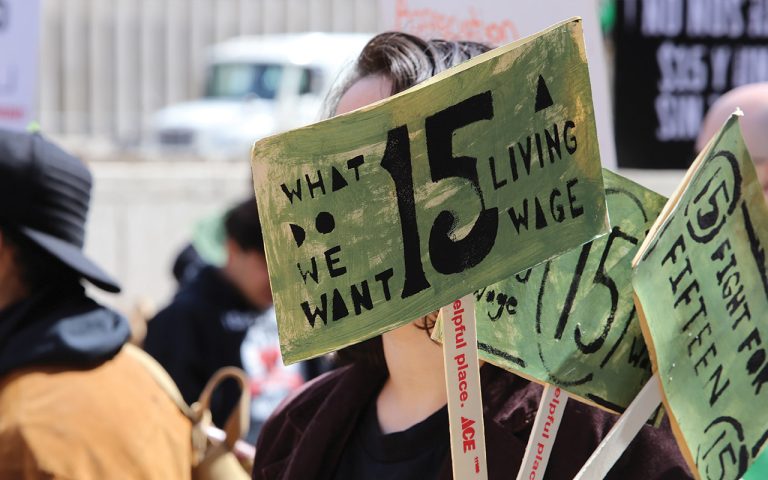
What happened to the federal minimum wage debate? (opens in a new tab)
Blog DEC 23, 2021
In 1912, textile workers in Lawrence, Massachusetts—mostly immigrant women from countries including Cuba, Ireland, Italy, Syria, and elsewhere—went on strike in response to wage cuts. This strike is sometimes referred…
By: Michelle Holder (opens in a new tab), Shaun Harrison (opens in a new tab)
The importance of anti-discrimination enforcement for a fair and equitable U.S. labor market and broadly shared economic growth (opens in a new tab)
Issue Briefs DEC 21, 2021
Almost six decades ago, the U.S. government enacted a series of landmark laws and regulations that advanced equal pay protections, protected against workplace segregation, and made it illegal for employers…
By: Carmen Sanchez Cumming (opens in a new tab)

Exploring the impact of automation and new technologies on the future of U.S. workers and their families (opens in a new tab)
Issue Briefs DEC 17, 2021
As technological advances seemingly reshape every aspect of how U.S. workers and their families live and work, a persistent question in research and policy discussions is how these advances will…
By: Kathryn Zickuhr (opens in a new tab)

Billionaires Income Tax proposal seeks to ensure that U.S. ultra-wealthy pay their fair share in taxes (opens in a new tab)
Blog DEC 17, 2021
There is a growing recognition among policymakers in Washington that something must be done to address the ever-widening U.S. wealth divide, which is especially dramatic when broken out by race.…
By: David S. Mitchell (opens in a new tab)

In Conversation with Jonathan Fisher (opens in a new tab)
In Conversation DEC 16, 2021
Equitable Growth in Conversation is a recurring series where we talk with economists and other academics to help us better understand whether and how economic inequality affects economic growth and…
By: Kate Bahn (opens in a new tab), Jonathan Fisher (opens in a new tab)

Worker power and pay quality for young workers without a college degree in the United States (opens in a new tab)
Blog DEC 9, 2021
New cross-country research by economist David Howell at The New School (also an Equitable Growth grantee and a member of Equitable Growth’s Research Advisory Board) provides strong evidence that the…
By: Kathryn Zickuhr (opens in a new tab)

Equitable Growth’s academic research and policy priorities shine through at Southern Economic Conference 2021 (opens in a new tab)
Blog DEC 9, 2021
The Southern Economic Association recently held its 91st Annual Meeting, gathering a diverse group of scholars from U.S. and international universities to discuss their research in theory and applied economics.…
By: Equitable Growth (opens in a new tab)

House Select Committee on Economic Disparity and Fairness in Growth (opens in a new tab)
Blog DEC 8, 2021
Hearing on “Growing our Economy by Investing in Families: How Supporting Family Caregiving Expands Economic Opportunity and Benefits All Americans” Testimony by Michelle Holder, President and CEO of the Washington…
By: Michelle Holder (opens in a new tab)
JOLTS Day Graphs: October 2021 Edition (opens in a new tab)
Blog DEC 8, 2021
Every month the U.S. Bureau of Labor Statistics releases data on hiring, firing, and other labor market flows from the Job Openings and Labor Turnover Survey, better known as JOLTS.…
By: Kathryn Zickuhr (opens in a new tab), Raksha Kopparam (opens in a new tab)

Jobs report: November posted weaker-than-expected job gains while visa backlogs could dampen further U.S. employment growth (opens in a new tab)
Blog DEC 3, 2021
According to the most recent Employment Situation Summary by the U.S. Bureau of Labor Statistics, the U.S. economy added 210,000 jobs between mid-October and mid-November—less than half the number of…
By: Carmen Sanchez Cumming (opens in a new tab), Kathryn Zickuhr (opens in a new tab)
Equitable Growth’s Jobs Day Graphs: November 2021 Report Edition (opens in a new tab)
Blog DEC 3, 2021
On December 3, the U.S. Bureau of Labor Statistics released new data on the U.S. labor market during the month of November. Below are five graphs compiled by Equitable Growth…
By: Kathryn Zickuhr (opens in a new tab), Carmen Sanchez Cumming (opens in a new tab)

The telling connection between affirmative action litigation, the racial composition of U.S. police forces, and the level of police killings of civilians (opens in a new tab)
Blog DEC 2, 2021
The disproportionate killing of innocent and unarmed Black men and women by police forces across the United States continues today despite more than five decades of steadily integrating many of…
By: Robynn Cox (opens in a new tab), Jamein Cunningham (opens in a new tab), Alberto Ortega (opens in a new tab)

The impact of neighborhood disparities on intergenerational mobility and economic growth in the United States (opens in a new tab)
Blog DEC 1, 2021
The neighborhoods and communities in which we grow up and live affect our future life outcomes. Yet the push for policymakers to address neighborhood disparities in health and economic outcomes…
By: Patrick Edwards (opens in a new tab)

Addressing the ‘double gap’ faced by Black women in the U.S. economy (opens in a new tab)
Blog NOV 30, 2021
In my testimony before the Joint Economic Committee of the U.S. Congress this past summer, I presented some of the findings from my 2020 report, “The “Double Gap” and the…
By: Michelle Holder (opens in a new tab)

U.S. disability programs provide valuable benefits to low-income recipients across a range of health conditions (opens in a new tab)
Blog NOV 22, 2021
The three components of the U.S. social insurance system serve retirees and those recipients facing challenging health conditions. But all three programs have grown in recent decades, sparking various calls…
By: Manasi Deshpande (opens in a new tab)

The importance of neighborhoods and intergenerational economic inequality in the United States (opens in a new tab)
Blog NOV 19, 2021
Many neighborhoods and communities across the United States are shaped by pervasive economic inequality spanning multiple generations. This intergenerational economic inequality today limits the prosperity of many people who want…
By: Vincient Whatley (opens in a new tab)

Testimony by Jonathan Fisher before the House Select Committee on Economic Disparity and Fairness in Growth (opens in a new tab)
Videos NOV 17, 2021
Statement for the Roundtable Meeting of the Committee on “Measuring Economic Disparity” House Select Committee on Economic Disparity and Fairness in Growth November 17, 2021 I am Jonathan Fisher, the…
By: Jonathan Fisher (opens in a new tab)

New research highlights the necessity of improving wage standards and bargaining power for low-wage workers in the United States (opens in a new tab)
Blog NOV 17, 2021
A new working paper sheds new light on the lack of bargaining power among low-wage workers in the United States by examining workers’ ability to bargain over wages when they…
By: Kathryn Zickuhr (opens in a new tab)
JOLTS Day Graphs: September 2021 Edition (opens in a new tab)
Blog NOV 12, 2021
Every month the U.S. Bureau of Labor Statistics releases data on hiring, firing, and other labor market flows from the Job Openings and Labor Turnover Survey, better known as JOLTS.…
By: Kathryn Zickuhr (opens in a new tab), Carmen Sanchez Cumming (opens in a new tab)

New research shows the importance of worker power for addressing U.S. wage inequality (opens in a new tab)
Blog NOV 9, 2021
Workers in the United States over the past 40 years experienced stagnant real wages for those at the lower end of the income distribution, along with rising income inequality, even…
By: Equitable Growth (opens in a new tab)

October U.S. Jobs report: Employment growth picked up steam last month (opens in a new tab)
Blog NOV 5, 2021
Job gains in the U.S. labor market picked up in October, according to the latest Employment Situation Summary released today by the U.S. Bureau of Labor Statistics. Between mid-September and…
By: Kathryn Zickuhr (opens in a new tab), Carmen Sanchez Cumming (opens in a new tab)
Equitable Growth’s Jobs Day Graphs: October 2021 Report Edition (opens in a new tab)
Blog NOV 5, 2021
On November 5th, the U.S. Bureau of Labor Statistics released new data on the U.S. labor market during the month of October. Below are five graphs compiled by Equitable Growth…
By: Kathryn Zickuhr (opens in a new tab), Carmen Sanchez Cumming (opens in a new tab)

Testimony by Michelle Holder before the Joint Economic Committee (opens in a new tab)
Blog OCT 28, 2021
Michelle Holder, the current president and CEO of the Washington Center for Equitable Growth, testified before the Joint Economic Committee of the U.S. Congress this past summer, when she was…
By: Michelle Holder (opens in a new tab)


Your Direct Line to Cutting Edge Research
Be the first to know about our latest events, research releases, and expert insights. Get exclusive updates delivered right to your inbox and never miss an opportunity to engage with our community.