



Policy
What Work Does Generative AI Do?
Essays SEP 8, 2026
By: Alexander Bick, Adam Blandin, David Deming, Tyler Schumacher
AI, Tech & Energy
Labor, Wages & Worker Power
 Browse All Resources
AUG 30, 2021
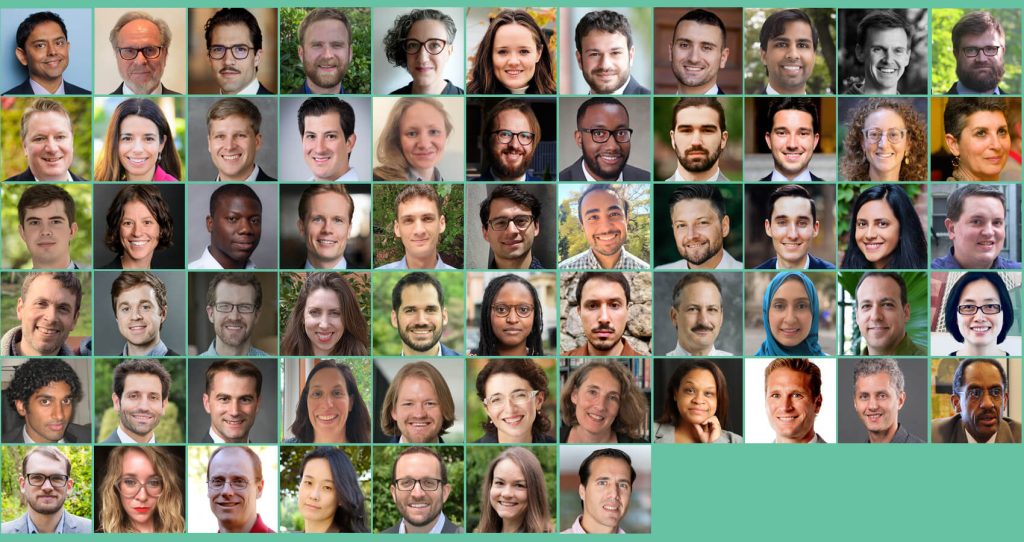
The Washington Center for Equitable Growth today announced its 2021 research grants, with funding of $1,392,795—a record-breaking level—awarded to 62 researchers. These scholars are studying the various channels through which economic inequality, in all its forms, impacts economic growth and stability.
For the past 8 years, Equitable Growth has funded economists and social scientists in various stages of their careers, including faculty members, postdoctoral students, and Ph.D. candidates at U.S. colleges and universities. This year’s cohort of scholars makes up the largest group of annual grantees in Equitable Growth history, with 48 academic and 14 doctoral grantees.
“The advances from every research grant will be invaluable to broadening our knowledge of the challenges and opportunities present in the U.S. economy for today’s workers and families, across race, ethnicity, gender, and class,” said Equitable Growth’s incoming President and CEO Michelle Holder in a press release announcing the grants.
Equitable Growth grants fall into four overarching categories: human capital and well-being, the labor market, macroeconomics and inequality, and market structure. The awards emphasize Equitable Growth’s commitment to funding cutting-edge research that addresses pressing policy concerns and will inform the policy debate in the months and years to come.
Equitable Growth’s 2021 Request for Proposals highlighted the importance of dimensions and intersections of inequality, particularly along the lines of race and ethnicity, in recognition of the fact that research on the consequences of structural racism is essential to understanding and identifying the drivers of U.S. income and wealth inequality, and how these inequalities are a drag on growth. Several funded projects will examine a number of issues related to structural racism and racial inequality, and also offer potential policy solutions.
Equitable Growth not only deepened our previous commitment to support research on the roots and effects of structural racism and discrimination, but also sought, for the first time, to fund studies on the economic effects of climate change.
Another first-of-its-kind development for Equitable Growth’s grant program this year were the investments made in research focused solely on child care, the importance of which for the smooth functioning of the economy the coronavirus pandemic has underscored.
Three grantees in this year’s cycle will study large, national firms and the effects of employer power on workers’ wages and labor market dynamics in the United States.
Other labor market studies include:
Much like our previous grant cycles, Equitable Growth this year will fund a number of compelling studies on market concentration and competition, including in the healthcare, agriculture, and Big Tech sectors.
Likewise, research projects centered around the macroeconomy and taxation, mobility, and human capital and well-being received funding to further develop our understanding of how these areas are connected to rising economic inequality.
This year’s applicants responded, as in years past, to Equitable Growth’s annual Request for Proposals and were selected in an extremely competitive process that included vetting by staff and a panel of external academic experts, along with review and approval by the Equitable Growth Steering Committee. As our 2021 grantees finalize and publish their research, we will ensure that policymakers and the public are aware of the latest evidence on these important questions about economic inequality and growth, continuing to serve as a bridge between the academic and policymaking communities.
Essays SEP 8, 2026
By: Alexander Bick, Adam Blandin, David Deming, Tyler Schumacher
Working Papers SEP 8, 2026
By: Alexander Bick, Adam Blandin, David Deming, Tyler Schumacher

Essays SEP 2, 2026
By: Megan Rivera
Get updates on our latest research, event announcements, and policy insights delivered straight to your inbox. Stay connected with the leading voices on equitable growth.


