


Resources
From peer-reviewed research to accessible policy briefs, explore the scholarship that’s shaping debates and driving change.

63 Results

The deeper argument at the heart of the federal budget debate (opens in a new tab)
Reports OCT 5, 2026
Interest rates on the national debt have recently crept up to levels that the U.S. government and the American people haven’t experienced in several decades. This is a potentially concerning…
By: Michael Linden (opens in a new tab)
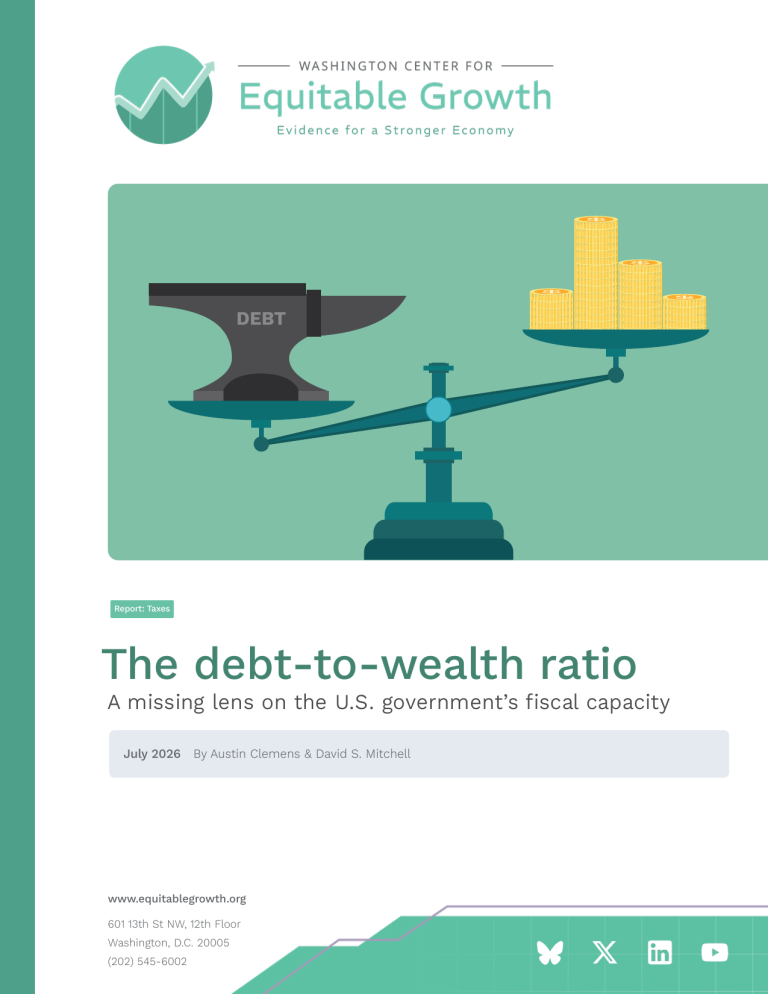
The debt-to-wealth ratio: A missing lens on the U.S. government’s fiscal capacity (opens in a new tab)
Reports JUL 30, 2026
Few statistics shape the fiscal debate in the United States as powerfully as the ratio of federal debt-to-Gross Domestic Product. Debt held by the public recently surpassed 100 percent of…
By: Austin Clemens (opens in a new tab), David S. Mitchell (opens in a new tab)
Defining top wealth and income thresholds for U.S. tax policy design and analysis (opens in a new tab)
Reports MAY 27, 2026
Wealth and income inequality are an ongoing area of interest for policymakers. In particular, the rise of the richest of the rich—not just the top 1 percent, but also the…
By: Austin Clemens (opens in a new tab)

How does early childhood care and education affect U.S. families and workers, and which policies support child participation and boost the quality of care? (opens in a new tab)
Reports APR 16, 2026
As states consider policy action in early childhood care and education, there is an existing—and growing—evidence base from which to draw lessons. This report summarizes the rigorous evidence on program…
By: Chloe Gibbs (opens in a new tab)
A review of the state of child care in the United States (opens in a new tab)
Reports APR 9, 2026
Affordable, available, high-quality child care is essential for sustained, broadly shared economic growth and equitable access to workforce opportunities. In most of the United States, however, child care fails this…
By: Sam Abbott (opens in a new tab), Shira Markoff (opens in a new tab)
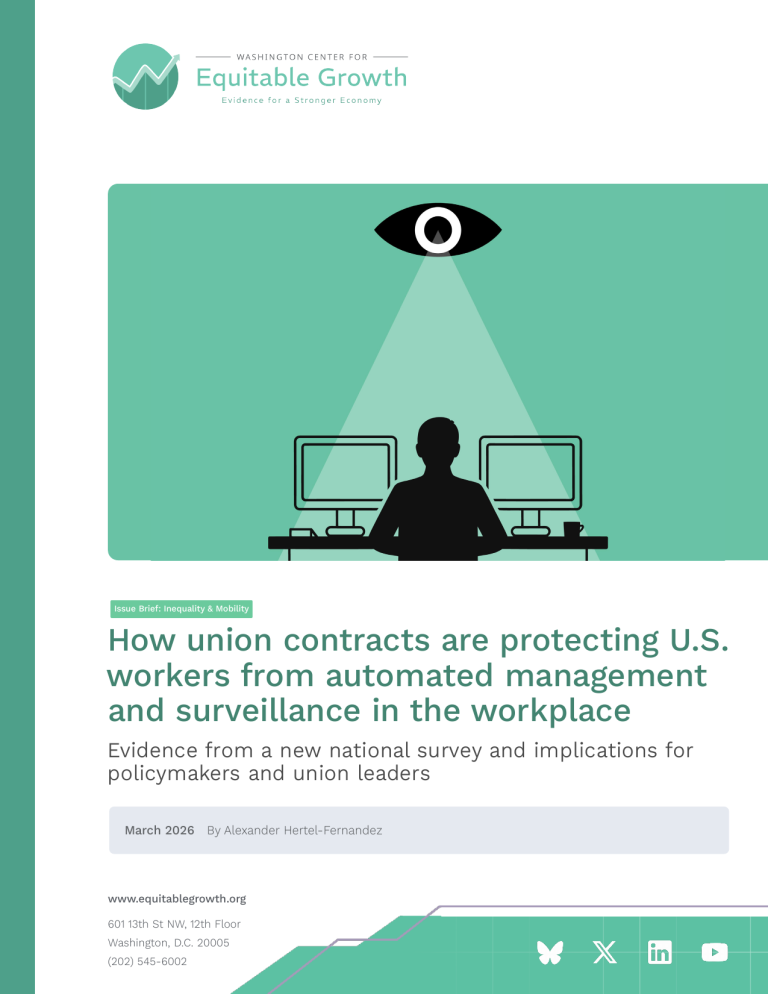
How union contracts are protecting U.S. workers from automated management and surveillance in the workplace (opens in a new tab)
Reports MAR 12, 2026
Employers are increasingly using electronic and automated tools to collect data on their workers on and off the job and then using that data to inform decisions about workers’ pay,…
By: Alexander Hertel-Fernandez (opens in a new tab)
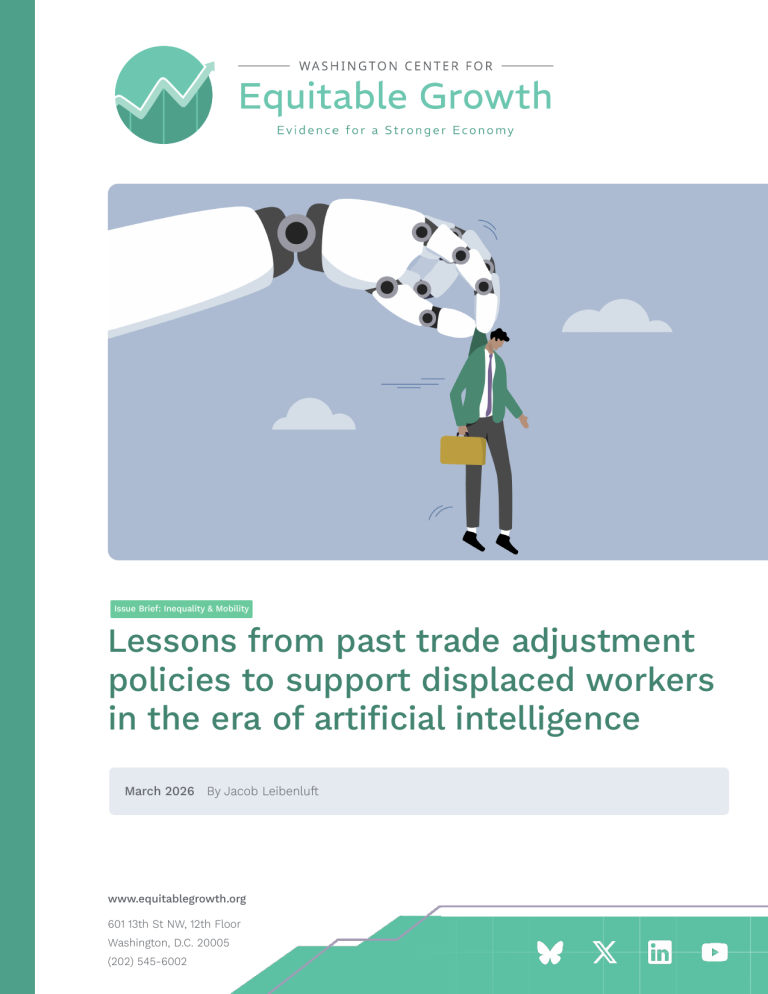
Lessons from past trade adjustment policies to support displaced workers in the era of artificial intelligence (opens in a new tab)
Reports MAR 11, 2026
More than 60 years ago, U.S. policymakers, economists, and labor leaders alike agreed that the potential for new economic forces to strengthen U.S. prosperity and security was just over the…
By: Jacob Leibenluft (opens in a new tab)
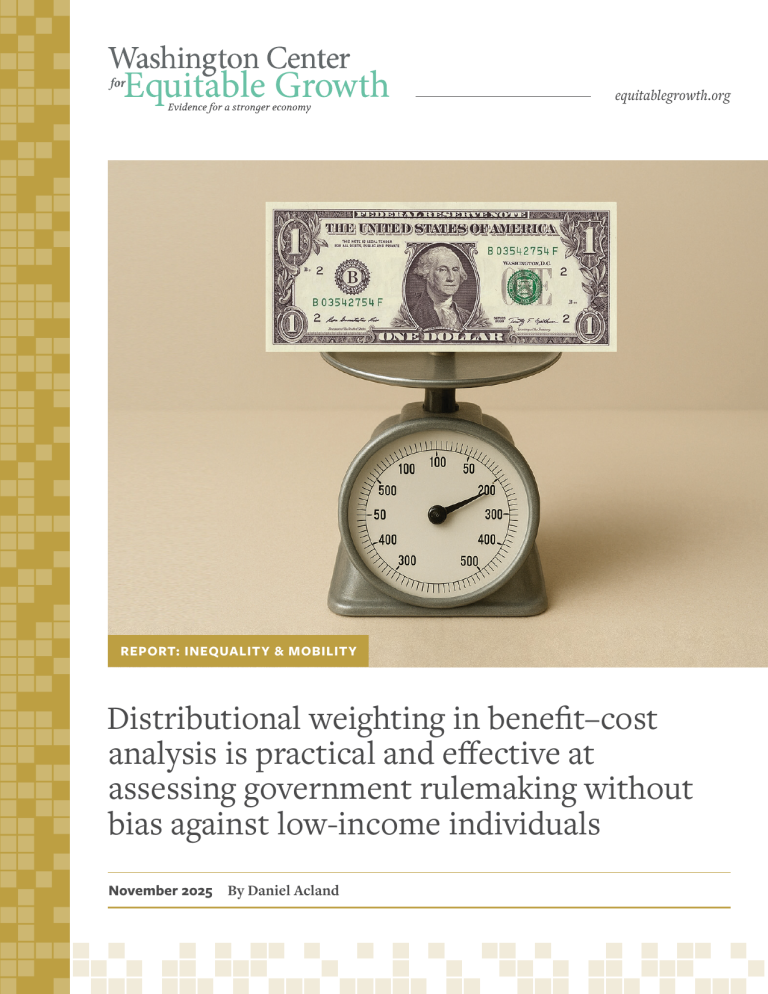
Distributional weighting in benefit-cost analysis is practical and effective at assessing government rulemaking without bias against low-income individuals (opens in a new tab)
Reports NOV 13, 2025
Distributional weighting in benefit-cost analysis is a tool for overcoming bias against lower-income individuals in economists’ measurements of the net benefit of government policies that affect populations at different levels…
By: Daniel Acland (opens in a new tab)
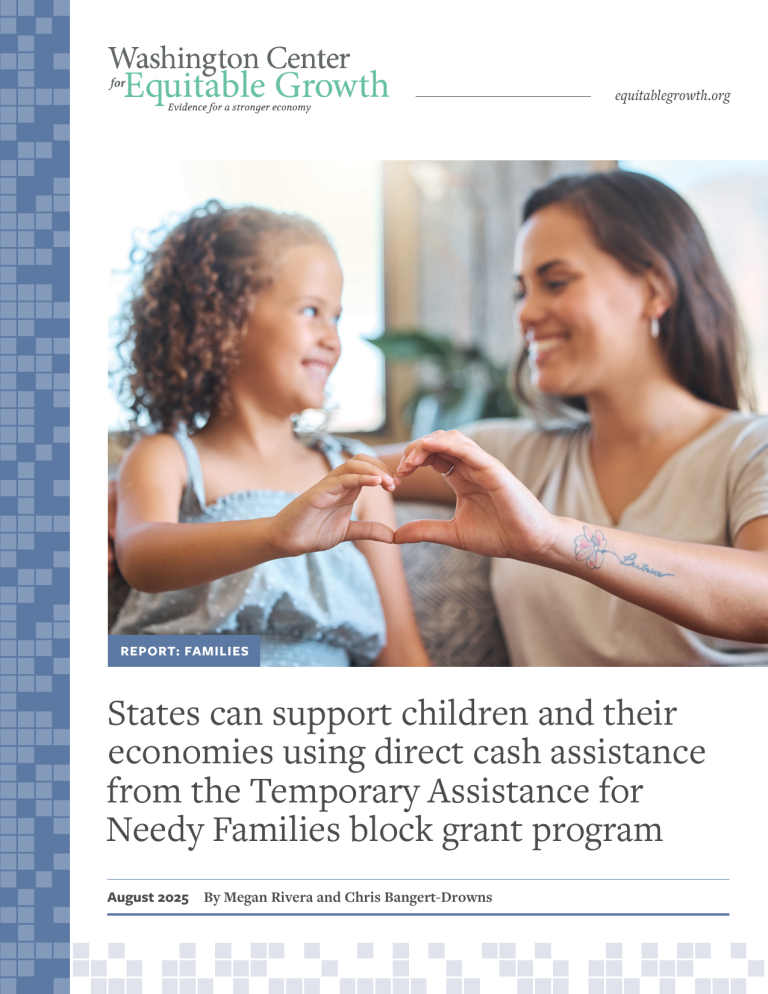
States can support children and their economies using direct cash assistance from the Temporary Assistance for Needy Families block grant program (opens in a new tab)
Reports AUG 28, 2025
Efficient, effective, and responsive income support programs can reduce economic inequality and support economic mobility. If targeted effectively, these programs can help children, families, and workers meet their needs and…
By: Megan Rivera (opens in a new tab), Christopher Bangert-Drowns (opens in a new tab)

What is austerity, and how does it affect the broader U.S. economy? (opens in a new tab)
Reports AUG 12, 2025
With the passage into law of the Republican budget reconciliation bill last month and the recent work of the Department of Government Efficiency under Elon Musk, austerity is once again…
By: Ernie Tedeschi (opens in a new tab), Kevin Rinz (opens in a new tab)
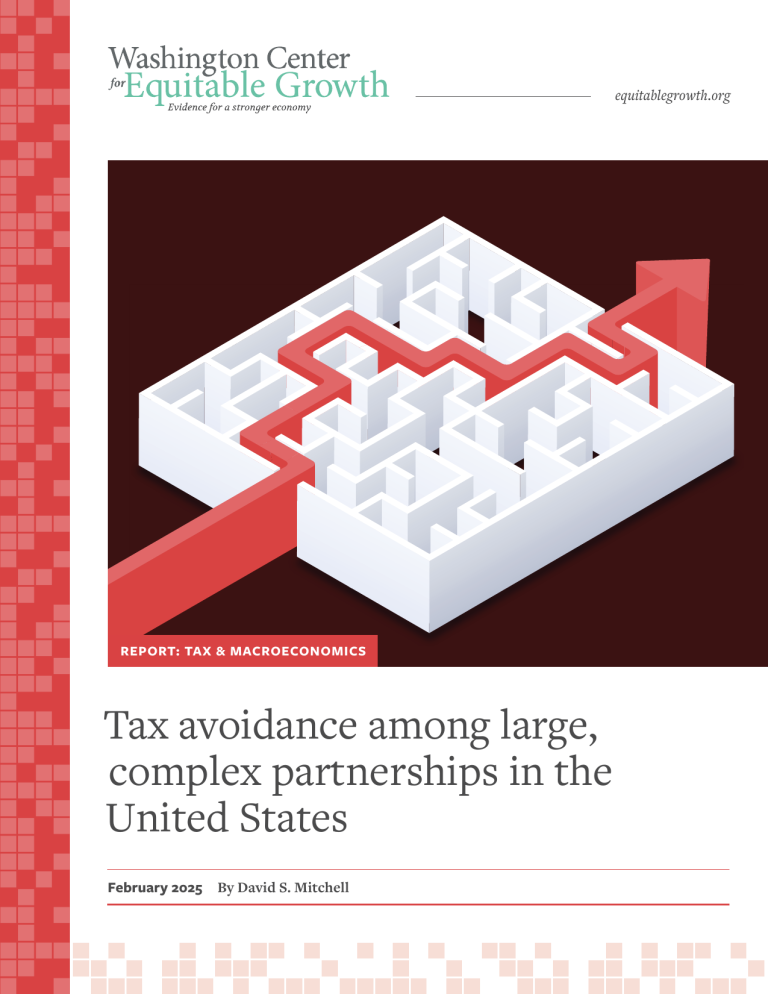
Tax avoidance among large, complex partnerships in the United States (opens in a new tab)
Reports FEB 12, 2025
Decades-old conventional wisdom held that businesses organized as partnerships in the United States were mostly small enterprises with a handful of active individuals sharing personal liability for the businesses they…
By: David S. Mitchell (opens in a new tab)
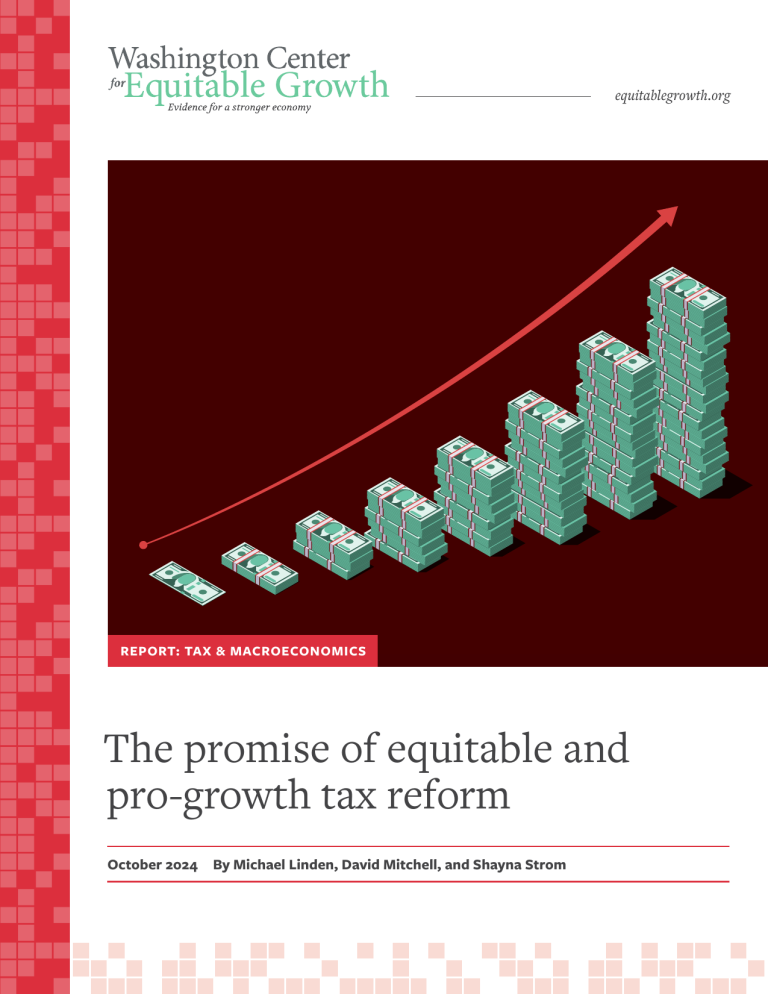
The promise of equitable and pro-growth tax reform (opens in a new tab)
Reports OCT 16, 2024
The impending expiration of large portions of the 2017 Tax Cuts and Jobs Act at the end of 2025 presents federal policymakers with a significant opportunity to reform the federal…
By: Michael Linden (opens in a new tab), David S. Mitchell (opens in a new tab), Shayna Strom (opens in a new tab)
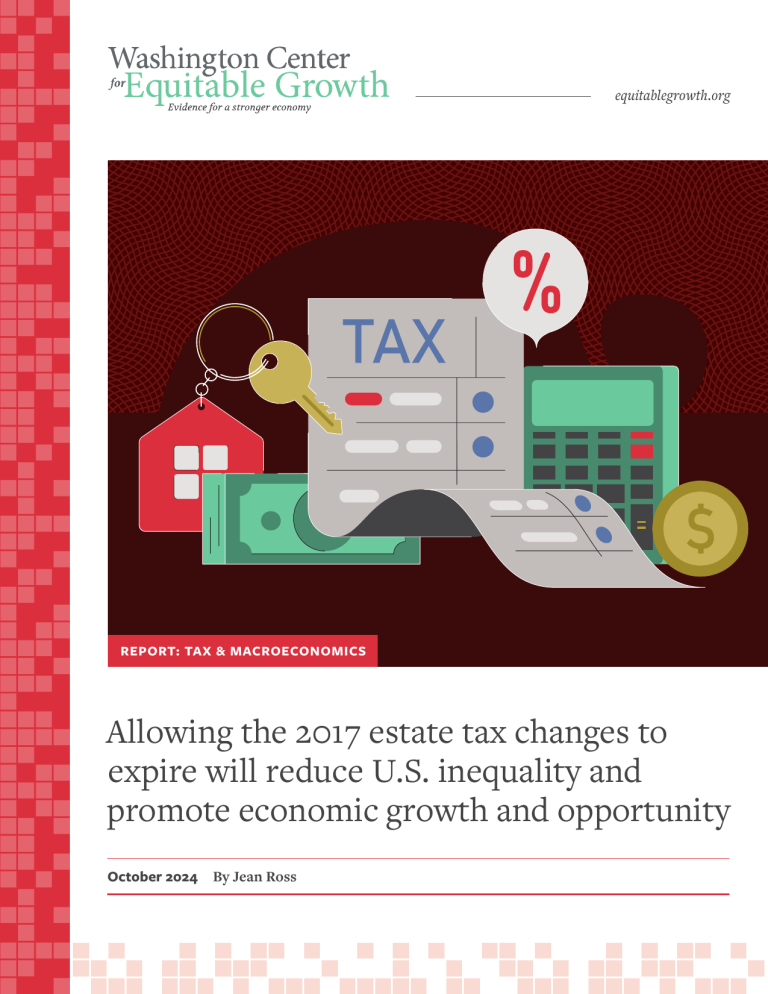
Allowing the 2017 estate tax changes to expire will reduce U.S. inequality and promote economic growth and opportunity (opens in a new tab)
Reports OCT 9, 2024
The 2017 Tax Cuts and Jobs Act made deep cuts to the personal income, estate, and corporate income taxes that were costly and heavily skewed toward the very wealthy. The…
By: Jean Ross (opens in a new tab)
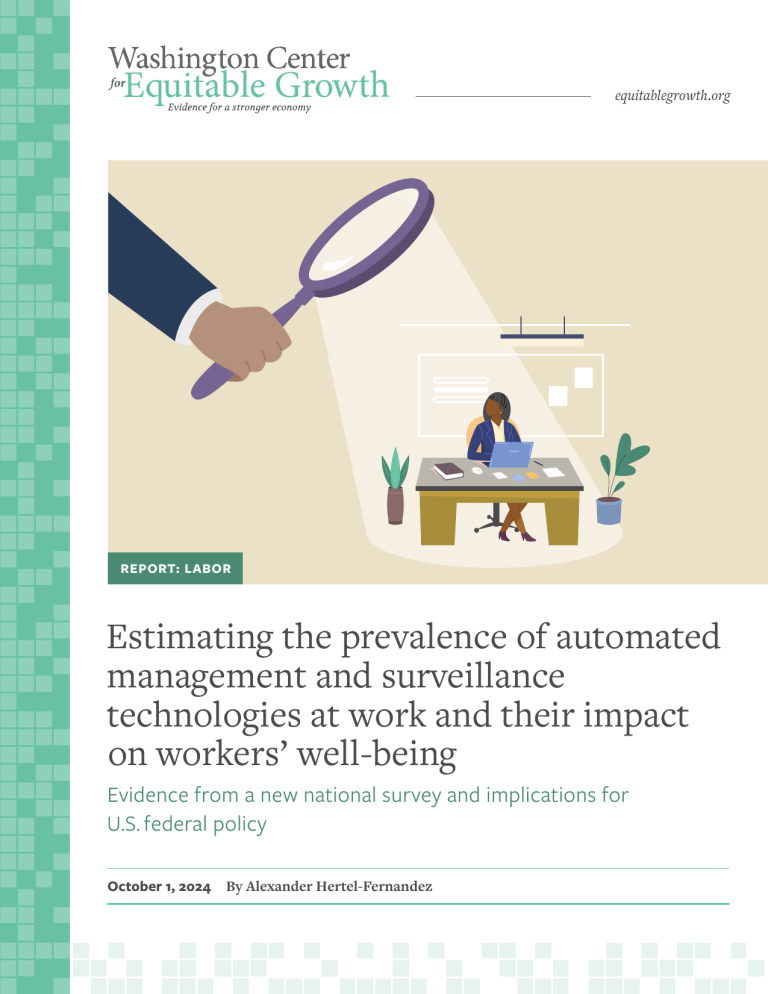
Estimating the prevalence of automated management and surveillance technologies at work and their impact on workers’ well-being (opens in a new tab)
Reports OCT 1, 2024
Evidence from a new national survey and implications for U.S. federal policy U.S. employers are deploying artificial-intelligence-powered and automated tools to monitor and manage workers, including tracking workers’ locations, activities,…
By: Alexander Hertel-Fernandez (opens in a new tab)
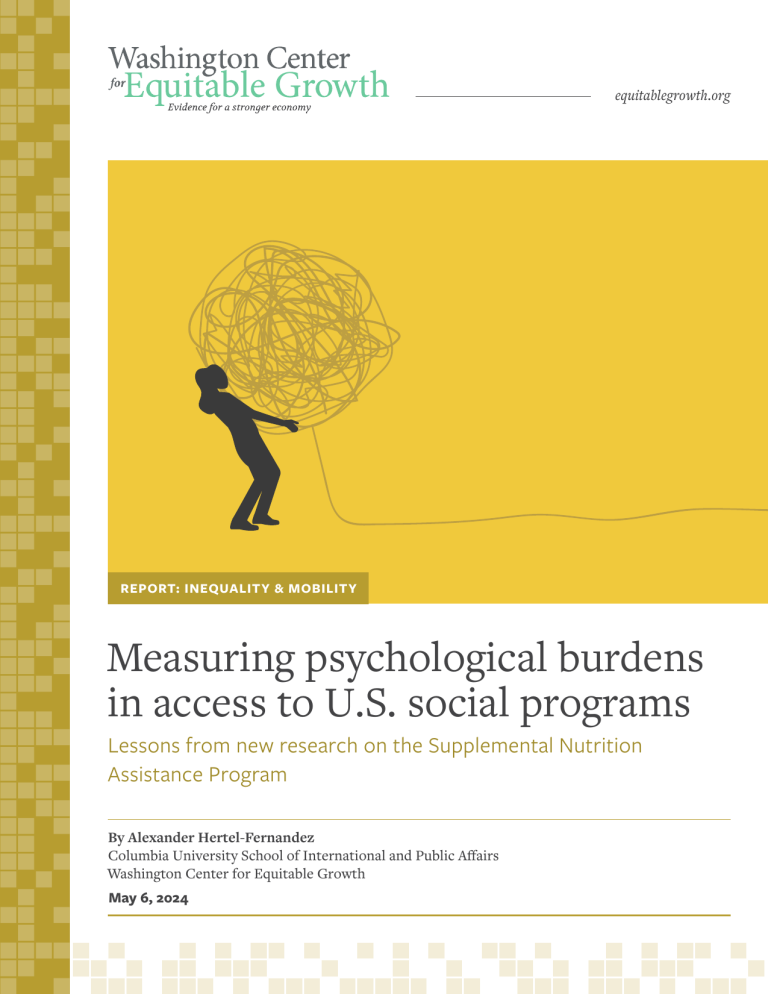
Measuring psychological burdens in access to U.S. social programs (opens in a new tab)
Reports MAY 6, 2024
Lessons from new research on the Supplemental Nutrition Assistance Program Policymakers are increasingly paying attention to administrative burdens—those “frictions that people face in their encounters with public services.” In 2022,…
By: Alexander Hertel-Fernandez (opens in a new tab)
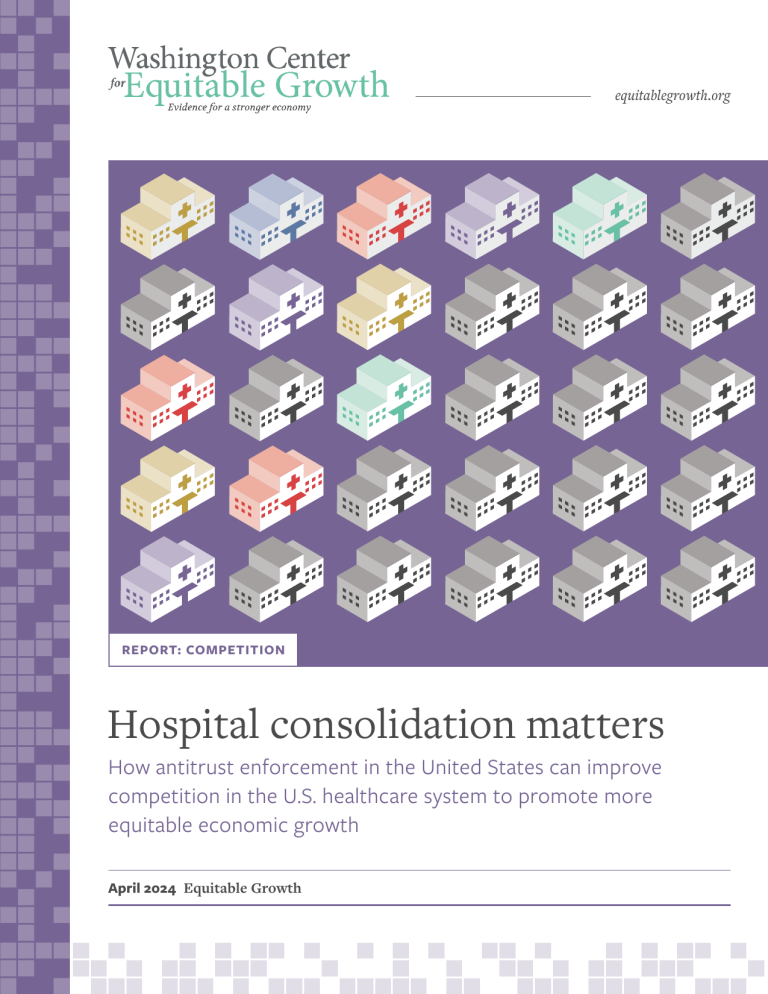
Hospital consolidation matters (opens in a new tab)
Reports APR 4, 2024
The U.S. policy landscape is replete with reports from organizations across the political spectrum decrying the lack of competition in hospital markets around the nation and the resulting high prices,…
By: Equitable Growth (opens in a new tab)
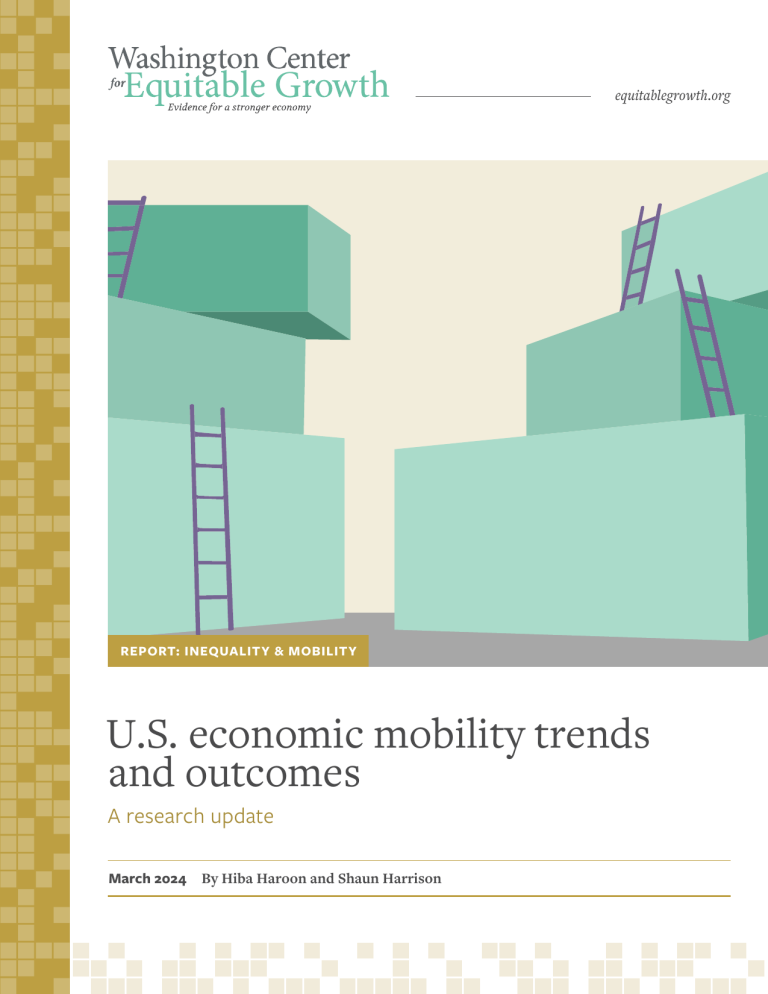
U.S. economic mobility trends and outcomes (opens in a new tab)
Reports MAR 29, 2024
A research update Fast facts Critical to the promise of the American dream is the expectation of intergenerational mobility. Invoked in ubiquitous phrases such as “pulling oneself up by the…
By: Hiba Haroon (opens in a new tab), Shaun Harrison (opens in a new tab)

The consequences of U.S. hospital consolidation on local economies, healthcare providers, and patients (opens in a new tab)
Reports NOV 15, 2023
Policymakers, regulators, stakeholders, and academics have yet to grapple with the full cross-sectional impacts of hospital mergers. While the evidence is clear that consolidation leads to higher prices in concentrated…
By: Amy Phillips (opens in a new tab)

Industrial policies will be more effective at supporting good jobs and a stronger U.S. economy where there is institutional support for worker power (opens in a new tab)
Reports JUL 6, 2023
Fast facts Interest in industrial policies as tools to address the climate crisis, reach national security goals, and boost domestic economic growth and innovation is surging, with more and more…
By: Carmen Sanchez Cumming (opens in a new tab)
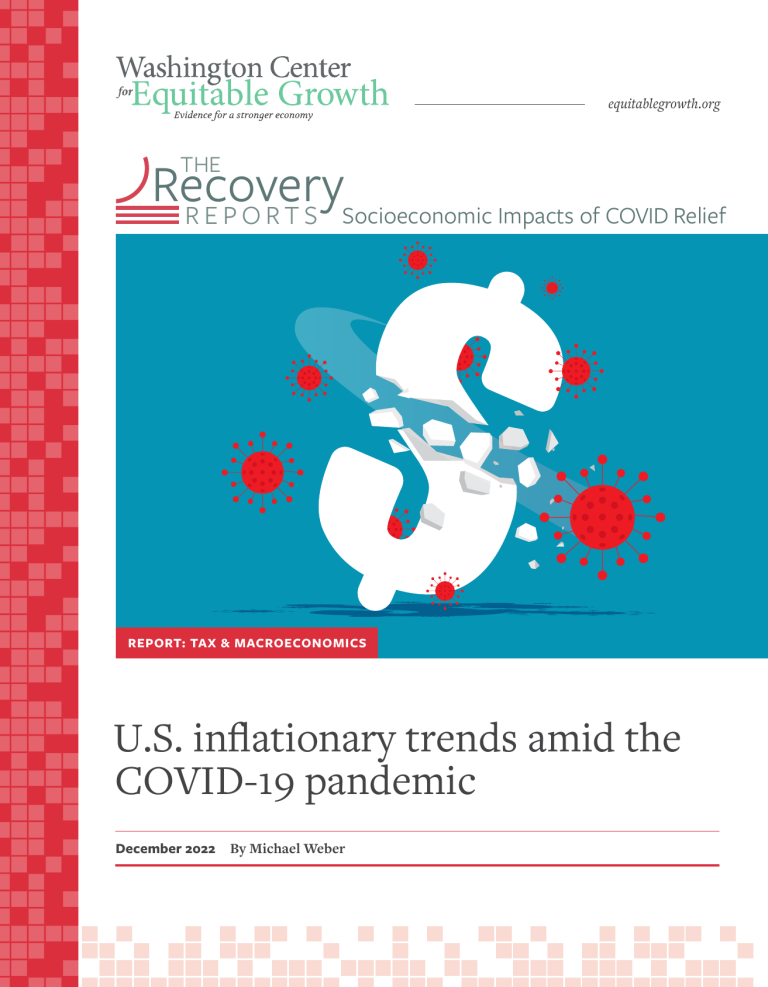
U.S. inflationary trends amid the COVID-19 pandemic (opens in a new tab)
Reports DEC 13, 2022
Fast facts The chair of the Federal Reserve, Jerome Powell, and other members of the U.S. central bank’s Federal Open Market Committee, which sets monetary policies, are keenly aware of…
By: Michael Weber (opens in a new tab)
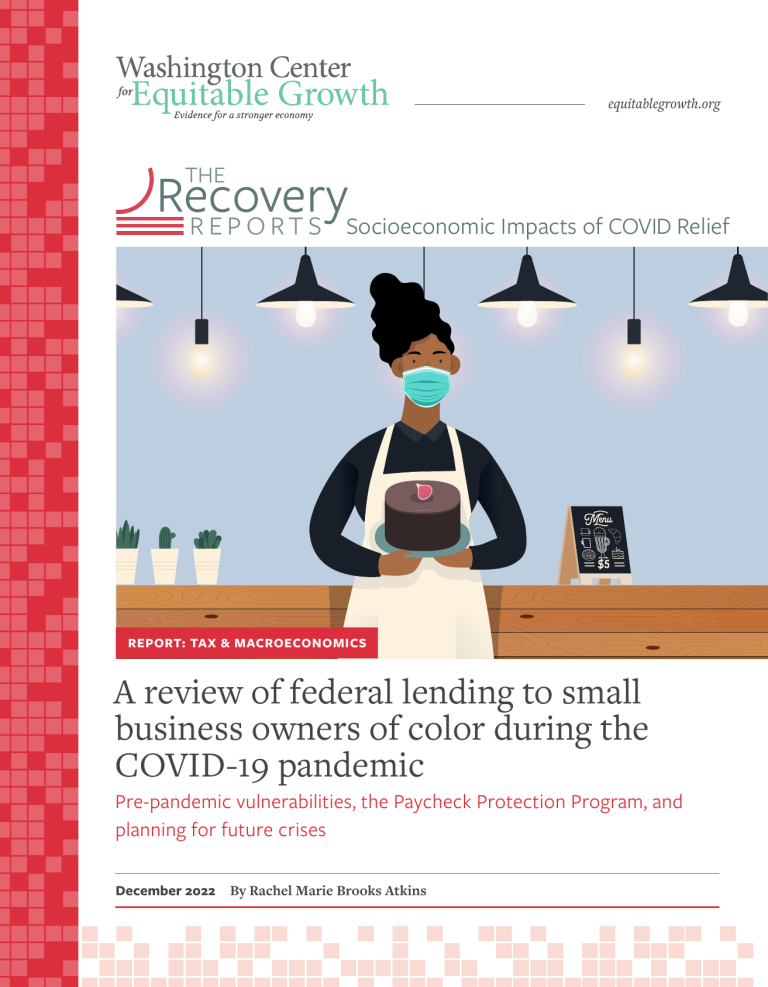
A review of federal lending to small business owners of color during the COVID-19 pandemic (opens in a new tab)
Reports DEC 13, 2022
The COVID-19 pandemic that began in early 2020 hammered small businesses across the globe. The number of active businesses declined precipitously, supply chain interruptions reduced business operations, and global trade…
By: Rachel Marie Brooks Atkins (opens in a new tab)
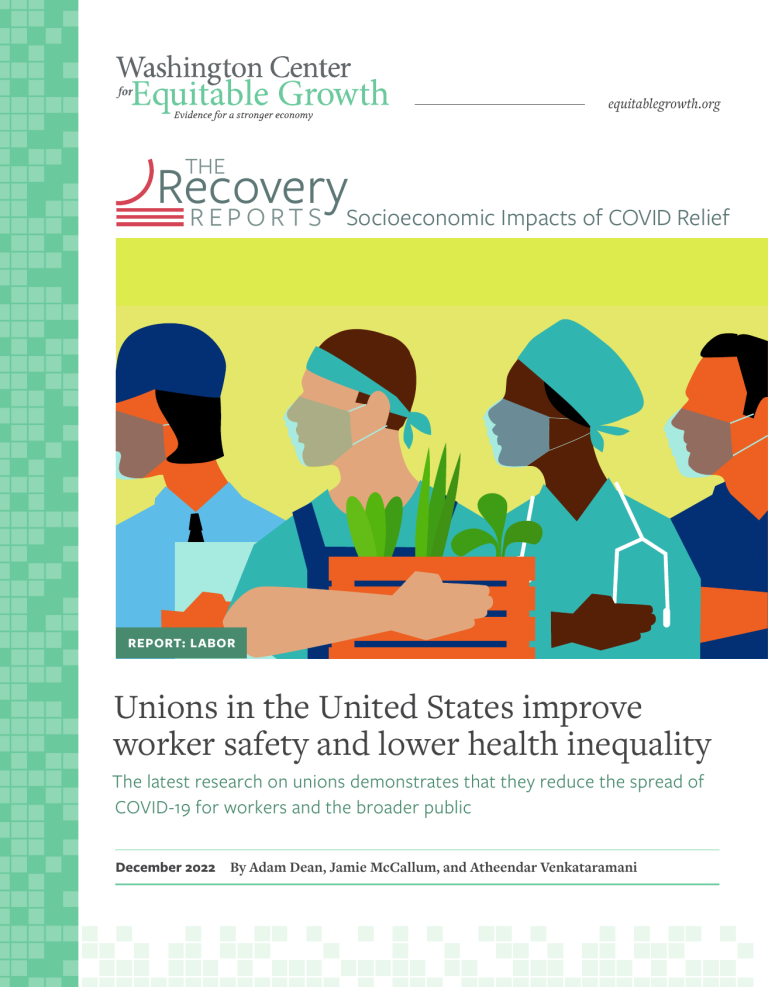
Unions in the United States improve worker safety and lower health inequality (opens in a new tab)
Reports DEC 13, 2022
Ros Reggans was overjoyed when she learned that her employer, a Chicago-area nursing home chain, had received more than $12 million in COVID-19 relief funds through the 2020 Coronavirus Aid,…
By: Adam Dean (opens in a new tab), Jamie McCallum (opens in a new tab), Atheendar Venkataramani (opens in a new tab)
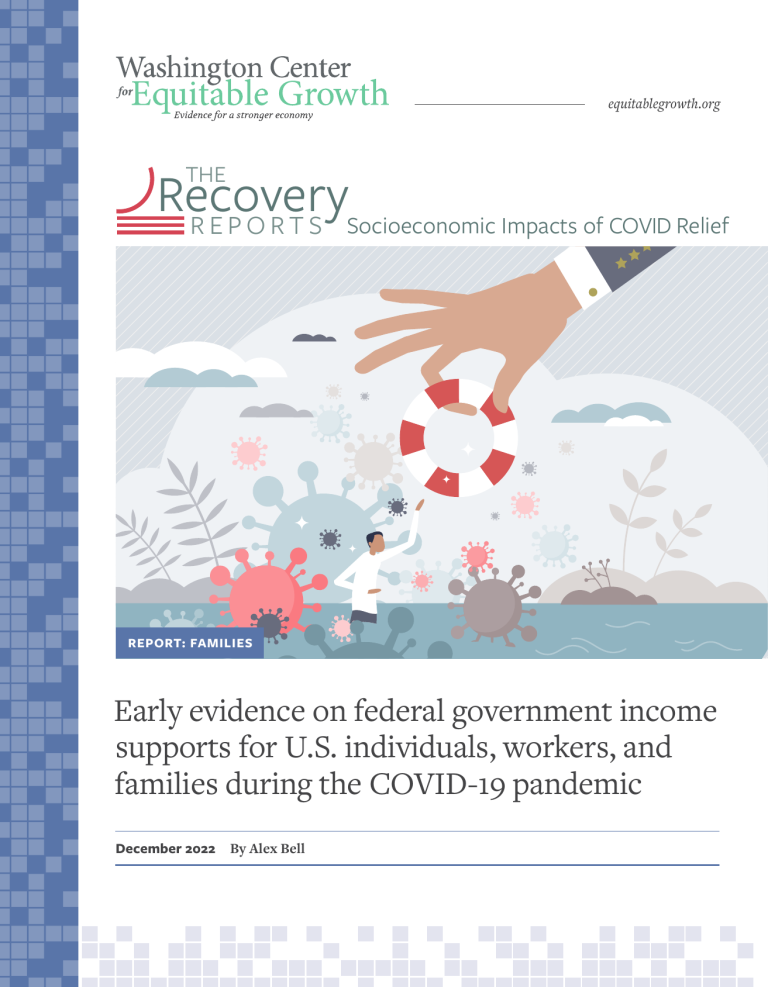
Early evidence on federal government income supports for U.S. individuals, workers, and families during the COVID-19 pandemic (opens in a new tab)
Reports DEC 13, 2022
This report focuses on preliminary research surrounding the three largest income support programs totaling $1.6 trillion that were paid directly to U.S. individuals, workers, and families amid the first two…
By: Alex Bell (opens in a new tab)
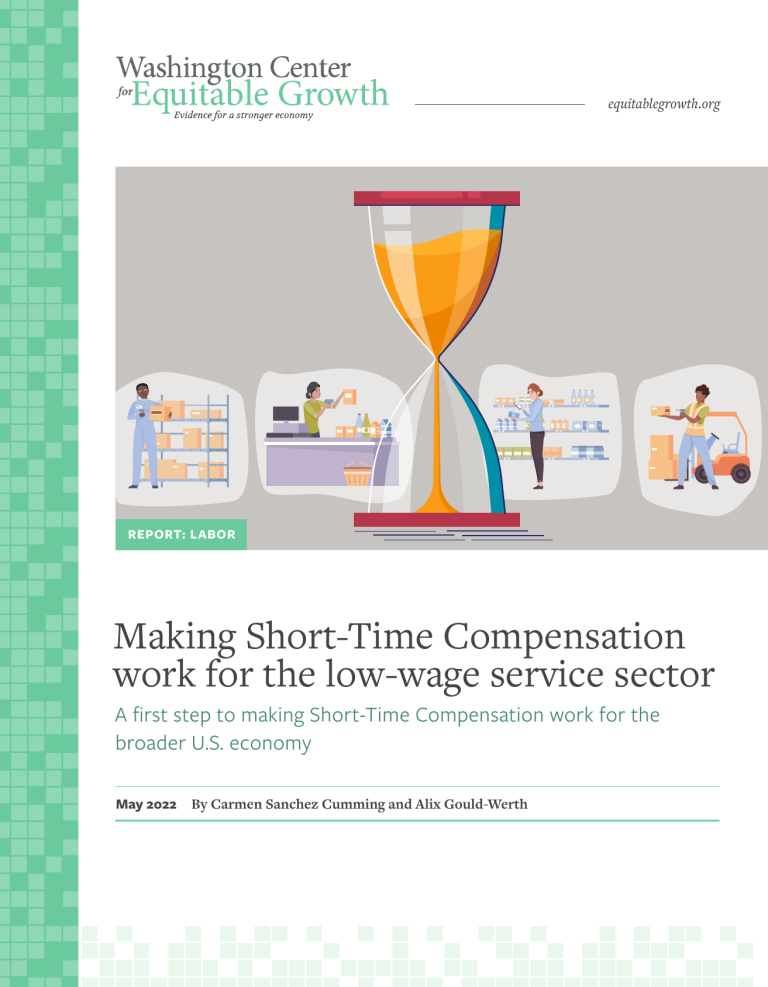
Making Short-Time Compensation work for the low-wage service sector (opens in a new tab)
Reports MAY 11, 2022
A first step to making Short-Time Compensation work for the broader U.S. economy Fast facts Short-Time Compensation—a social insurance program also known as worksharing that is part of the larger…
By: Carmen Sanchez Cumming (opens in a new tab), Alix Gould-Werth (opens in a new tab)

Protecting livestock producers and chicken growers (opens in a new tab)
Reports MAY 5, 2022
For more than a decade, ranchers, contract chicken growers, and other livestock producers have expressed concerns about the actions of the meatpackers who buy the livestock and slaughter it, and…
By: Michael Kades (opens in a new tab)
Implications of allowing U.S. employers to opt out of a payroll-tax-financed paid leave program (opens in a new tab)
Reports DEC 23, 2021
In recent years, policymakers have become increasingly focused on creating a national program of paid family and medical leave. The current patchwork arrangement of federal legislation, state initiatives, and employer-provided…
By: Laura D. Quinby (opens in a new tab), Robert L. Siliciano (opens in a new tab)
The child care economy (opens in a new tab)
Reports SEP 15, 2021
Fact Sheet: What the research says about the economics of early care and educationDownload Report: The child care economyDownload U.S. workers and their families are largely on their own when…
By: Sam Abbott (opens in a new tab)

Workplace surveillance is becoming the new normal for U.S. workers (opens in a new tab)
Reports AUG 18, 2021
In the first weeks of the pandemic back in the spring of 2020, as many as half of U.S. workers who remained employed were suddenly working from home. Managers scrambled…
By: Kathryn Zickuhr (opens in a new tab)
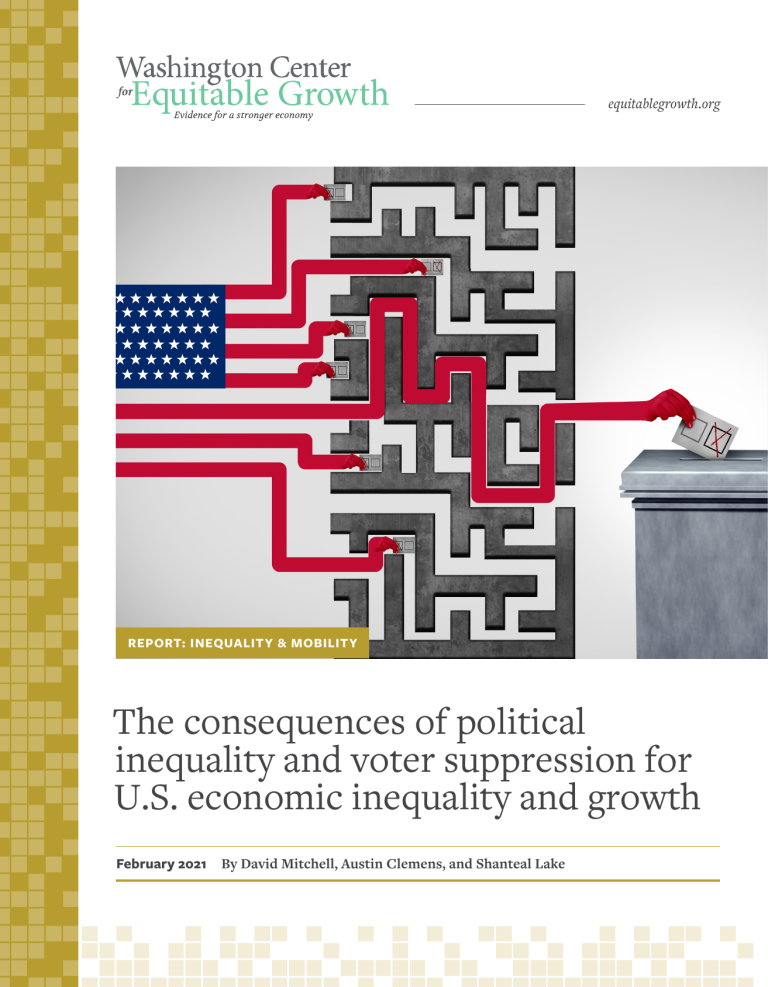
The consequences of political inequality and voter suppression for U.S. economic inequality and growth (opens in a new tab)
Reports FEB 3, 2021
Economic analysis that does not account for political power—who has it and how it is wielded—will inevitably fail to fully capture what keeps the United States from achieving equitable economic…
By: David S. Mitchell (opens in a new tab), Austin Clemens (opens in a new tab), Shanteal Lake (opens in a new tab)
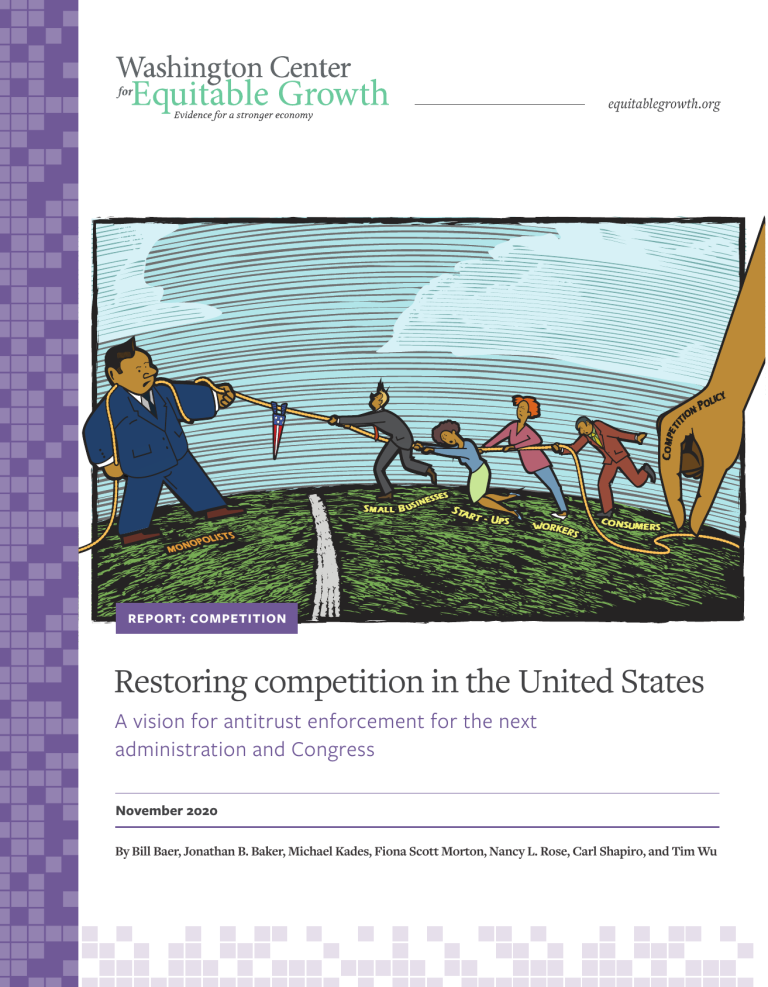
Restoring competition in the United States (opens in a new tab)
Reports NOV 19, 2020
Excessive market power plagues the U.S. economy. Market power increases the cost of goods and services for consumers, depresses prices and wages for those who supply dominant firms, and retards…
By: Bill Baer (opens in a new tab), Jonathan B. Baker (opens in a new tab), Michael Kades (opens in a new tab), Fiona M. Scott Morton (opens in a new tab), Nancy L. Rose (opens in a new tab), Tim Wu (opens in a new tab)
Public investments in education can spur equitable growth, pay for themselves, and create jobs for a stronger economic recovery (opens in a new tab)
Reports OCT 27, 2020
Public investments in education, in both physical structures and in services, are key to long-run economic growth and human well-being. Some of these investments are especially effective in promoting more…
By: Robert Lynch (opens in a new tab)
Cost-benefit analysis of U.S. tax regulations has failed. What should come next? (opens in a new tab)
Reports SEP 30, 2020
In December 2017, President Donald Trump signed into law the Tax Cuts and Jobs Act, the most significant tax legislation in 30 years. The rushed passage of the law meant…
By: Greg Leiserson (opens in a new tab)
Wage discrimination and the exploitation of workers in the U.S. labor market (opens in a new tab)
Reports SEP 15, 2020
The U.S. labor market can be daunting to navigate, and especially so in recent months, as the coronavirus pandemic and recession have created a public health crisis and fueled business…
By: Kate Bahn (opens in a new tab), Mark Stelzner (opens in a new tab), Emilie Openchowski (opens in a new tab)
Maintaining effective U.S. labor standards enforcement through the coronavirus recession (opens in a new tab)
Reports SEP 3, 2020
Workers in the United States are experiencing record unemployment at the same time that governments across the country are facing extraordinary budget deficits. Evidence from the Great Recession of 2007—2009…
By: Janice Fine (opens in a new tab), Daniel Galvin (opens in a new tab), Jenn Round (opens in a new tab), Hana Shepherd (opens in a new tab)
Women and the future of work in the United States (opens in a new tab)
Reports AUG 28, 2020
The story of the past several months is a fast-moving tragedy in a long moment of crisis for working people. Since the start of the coronavirus pandemic and resulting recession,…
By: Susan Green (opens in a new tab)
Unboxing scheduling practices for U.S. warehouse workers (opens in a new tab)
Reports MAY 28, 2020
Workers in the United States struggle with low-quality work schedules. The Fair Labor Standards Act is the main piece of labor legislation regulating work hours. The law, passed in 1938,…
By: Sam Abbott (opens in a new tab), Alix Gould-Werth (opens in a new tab)
Paid medical leave research (opens in a new tab)
Reports APR 30, 2020
Until recently, the policy debate over paid leave in the United States has most often focused on the need to expand access to paid parental and family caregiving benefits. Access…
By: Chantel Boyens (opens in a new tab)

U.S. school segregation in the 21st century (opens in a new tab)
Reports OCT 15, 2019
After several decades of neglect, school desegregation by race and income in primary and secondary schools is once again a topic of conversation among policymakers at the federal level and…
By: Will McGrew (opens in a new tab)
The state of U.S. federal antitrust enforcement (opens in a new tab)
Reports SEP 17, 2019
Competition policy in the United States has become a major public policy issue for the first time in decades. In industry after industry—the internet, agriculture, airlines, and employment markets, among…
By: Michael Kades (opens in a new tab)
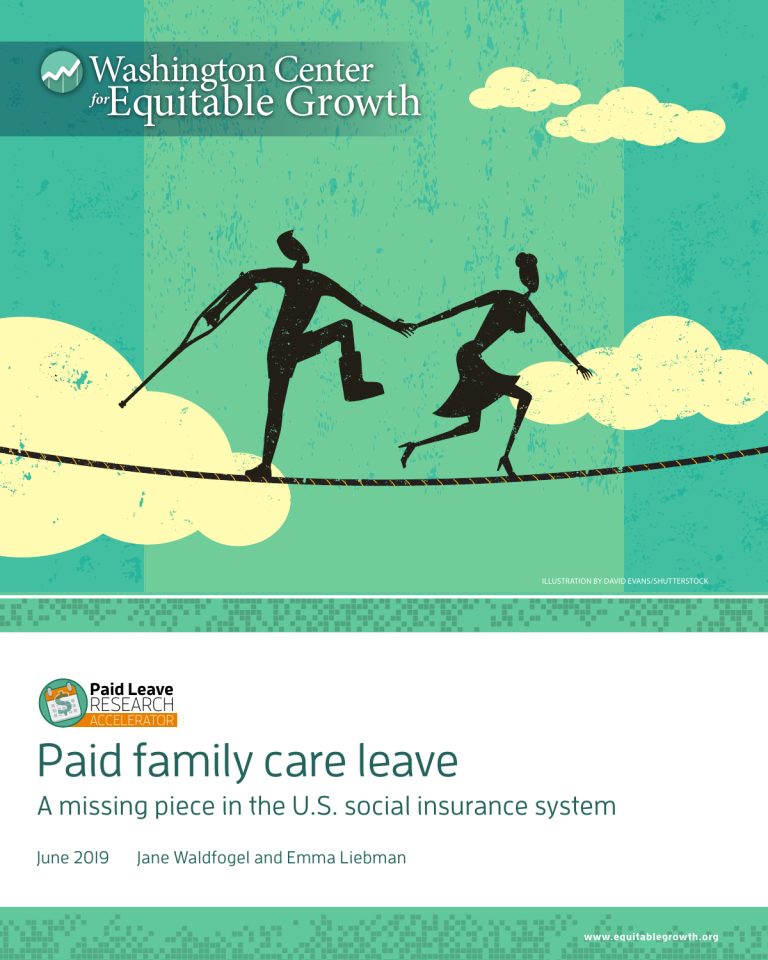
Paid family care leave (opens in a new tab)
Reports JUN 10, 2019
Paid family and medical leave is receiving increased attention in the United States by policymakers, employers, media, and the public. Former President Barack Obama discussed the issue at his 2015…
By: Jane Waldfogel (opens in a new tab), Emma Liebman (opens in a new tab)
Net worth taxes: What they are and how they work (opens in a new tab)
Reports MAR 21, 2019
Wealth inequality in the United States is high and has increased sharply in recent decades. The most recent estimates available suggest that the wealthiest 1 percent of households owns about…
By: Greg Leiserson (opens in a new tab), Will McGrew (opens in a new tab), Raksha Kopparam (opens in a new tab)
Paid Family and Medical Leave in the United States: A Data Agenda (opens in a new tab)
Reports MAR 7, 2019
The United States continues to be an outlier among developed countries for its lack of a national paid leave program. New parents across our nation struggle to balance the demands…
By: Amy Batchelor (opens in a new tab)
Paid Family and Medical Leave in the United States: A Research Agenda (opens in a new tab)
Reports OCT 22, 2018
Caregiving needs in the United States reach across the life cycle. Every day, 10,800 babies are born, 4,754 new cases of cancer are diagnosed, and 1,329 people develop Alzheimer’s disease.…
By: Elisabeth Jacobs (opens in a new tab)
Are today’s inequalities limiting tomorrow’s opportunities? (opens in a new tab)
Reports OCT 3, 2018
Intergenerational mobility is a concept core to the unique American identity. A nation of immigrants, the United States is supposed to be free of the constraints of Europe’s historic calcified…
By: Elisabeth Jacobs (opens in a new tab), Liz Hipple (opens in a new tab)
Household insecurity matters for U.S. macroeconomic stability (opens in a new tab)
Reports MAY 16, 2018
Household income in the United States became significantly more volatile beginning in the 1970s despite relatively stable overall economic growth during the 1980s. Macroeconomists called this period of stable aggregate…
By: Nisha Chikhale (opens in a new tab)
Gender wage inequality (opens in a new tab)
Reports APR 9, 2018
The U.S. economy is harmed directly and indirectly by the persistence of inequality between the wages of men and women. The data, research, and analysis assembled in this report break…
By: Sarah Jane Glynn (opens in a new tab)
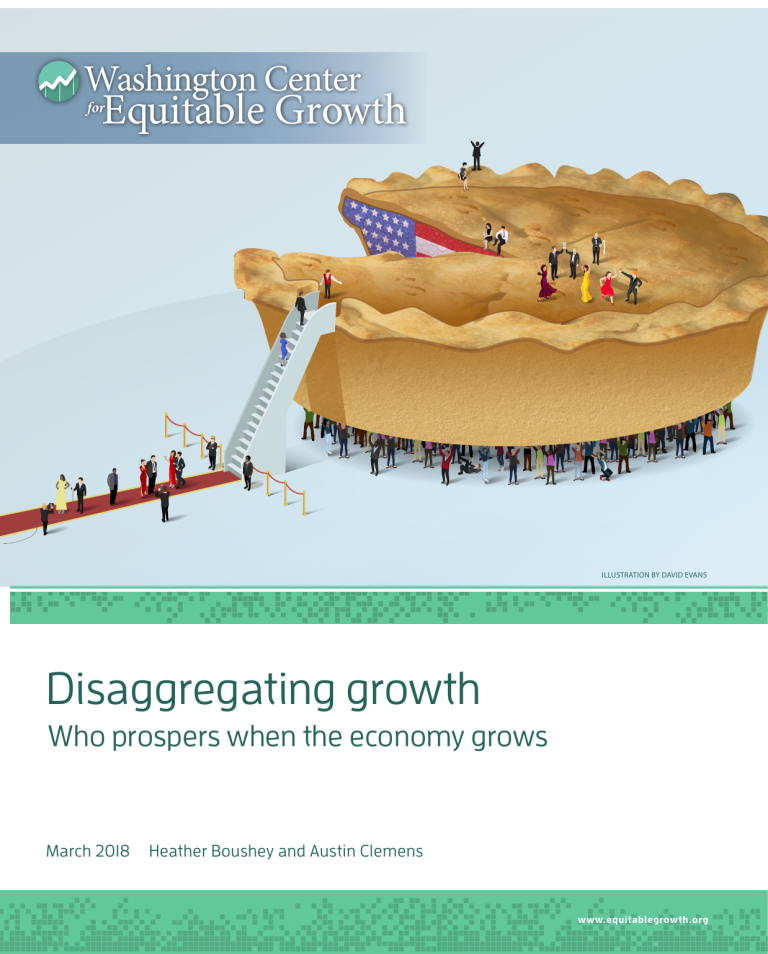
Disaggregating growth (opens in a new tab)
Reports MAR 28, 2018
The National Income and Product Accounts, or NIPA (also referred to as System of National Accounts, or SNA, outside of the United States), were a radical advance in economic measurement…
By: Austin Clemens (opens in a new tab), Heather Boushey (opens in a new tab)

U.S. antitrust and competition policy amid the new merger wave (opens in a new tab)
Reports JUL 27, 2017
Over the past 20 years, major sectors of the U.S. economy have undergone sweeping consolidation, from airlines to brewing, cable television to drug companies, eyeglasses to finance, and grocery stores…
By: John Kwoka (opens in a new tab)

A communications oligopoly on steroids (opens in a new tab)
Reports JUL 18, 2017
Digital communications platforms, whether offered by a cable company, a telecommunications firm, or an Internet services provider, deliver the most important text and video content that powers our economy, educates…
By: Gene Kimmelman (opens in a new tab), Mark Cooper (opens in a new tab)
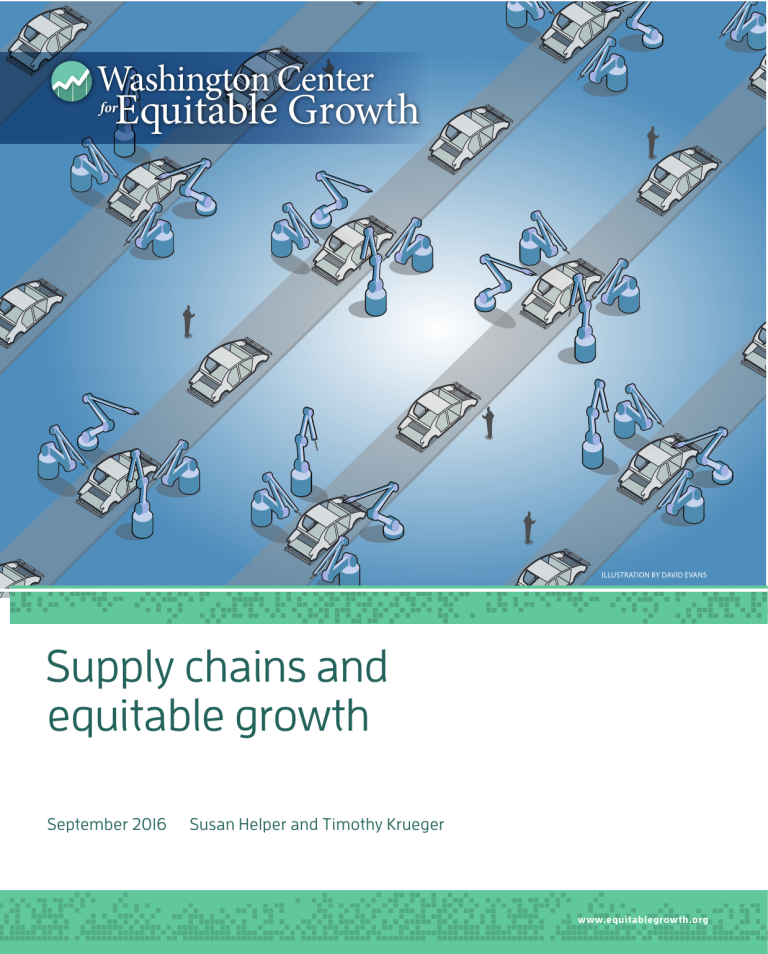
Supply chains and equitable growth (opens in a new tab)
Reports SEP 29, 2016
The U.S. economy has undergone a structural transformation in recent decades. Large firms have shifted from doing many activities in-house to buying goods and services from a complex web of…
By: Susan Helper (opens in a new tab), Timothy Krueger (opens in a new tab)
Strengthening the indispensable U.S. corporate tax (opens in a new tab)
Reports SEP 12, 2016
The U.S. system of corporate taxation is in desperate need of reform. Observers note that both the high statutory rate (35 percent) and the purported “worldwide” nature of our system…
By: Kimberly Clausing (opens in a new tab)
Taxing Capital (opens in a new tab)
Reports AUG 10, 2016
Taxing capital is a key way to maintain and increase the progressivity in the U.S. tax system and raise the revenue needed to support government activities and investments that in…
By: David Kamin (opens in a new tab)
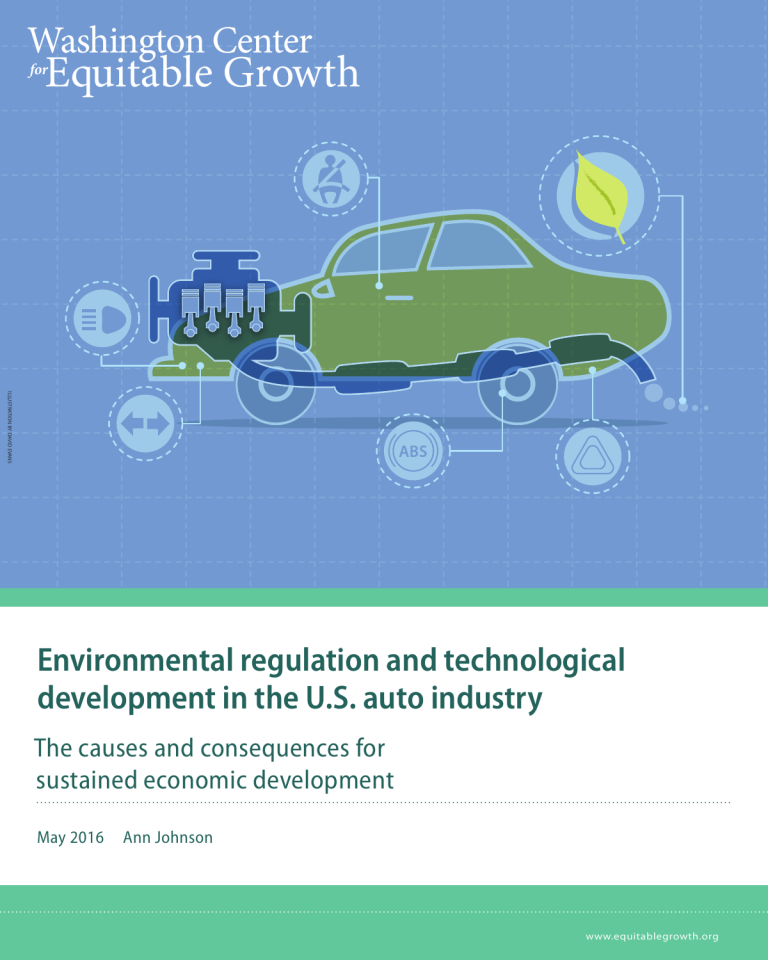
Environmental regulation and technological development in the U.S. auto industry (opens in a new tab)
Reports MAY 26, 2016
American automobiles today are nothing like the first horseless carriages to roll off the first assembly lines in and around Detroit. Yet the essential features remain—engines and driveshafts, pistons and…
Overworked America (opens in a new tab)
Reports MAY 16, 2016
Hard work is part and parcel of the American Dream, but at a certain point, working excessive hours can be detrimental to families, businesses, and the U.S. economy. While there…
By: Heather Boushey (opens in a new tab), Bridget Ansel (opens in a new tab)
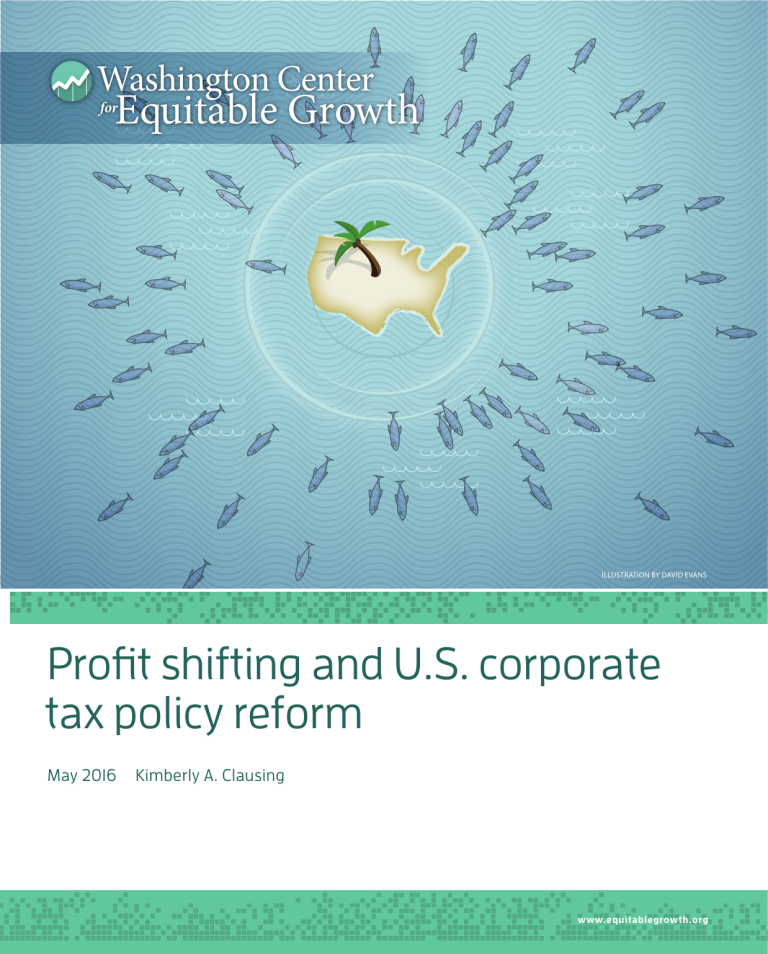
Profit shifting and U.S. corporate tax policy reform (opens in a new tab)
Reports MAY 10, 2016
This paper argues that the erosion of the U.S. corporate income tax base is a large policy problem. Profit shifting by U.S. multinational corporations is reducing U.S. government tax revenues…
By: Kimberly Clausing (opens in a new tab)
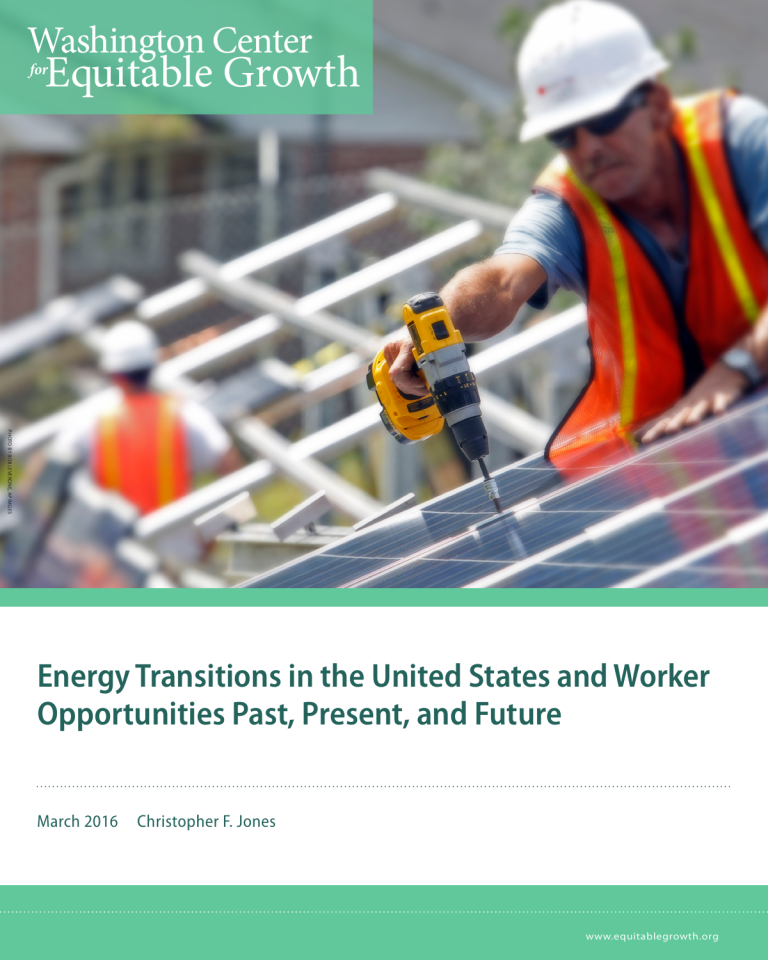
Energy transitions in the United States (opens in a new tab)
Reports MAR 7, 2016
This paper examines the challenges and opportunities energy workers have faced in past energy transitions in the coal industry, the traditional oil extraction industry, and the electrical generation industry to…
By: Christopher F. Jones (opens in a new tab)
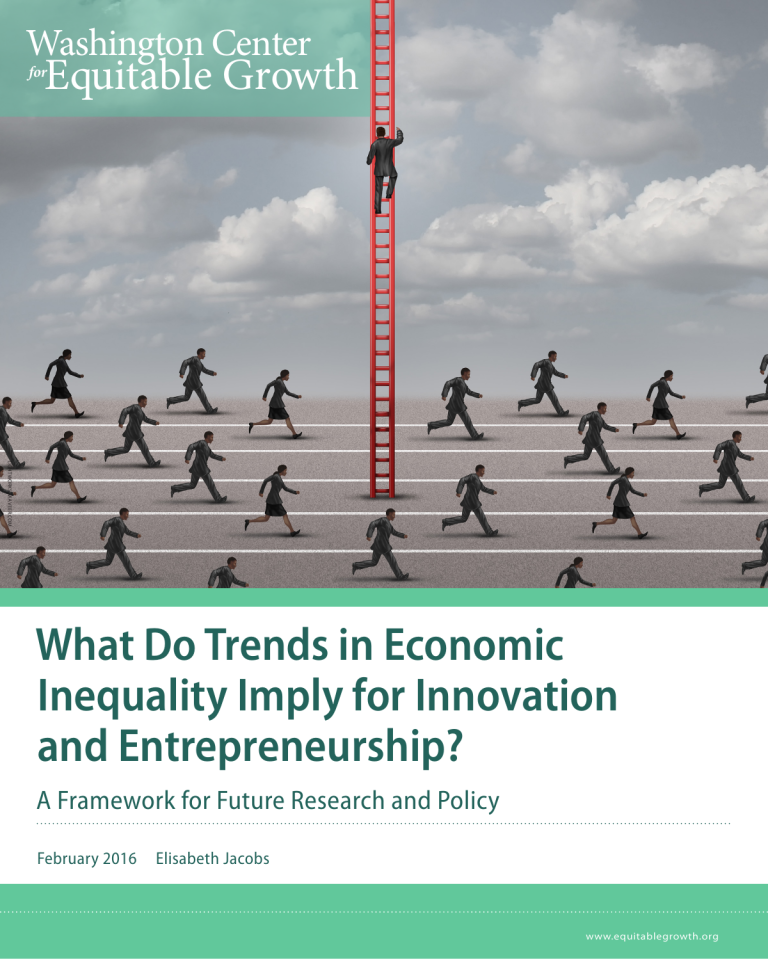
What do trends in economic inequality imply for innovation and entrepreneurship? (opens in a new tab)
Reports FEB 16, 2016
This paper develops a framework connecting rising economic inequality and declining levels of innovation and economic dynamism in the United States. The result is a set of research questions designed…
By: Elisabeth Jacobs (opens in a new tab)

Responsible innovation (opens in a new tab)
Reports FEB 8, 2016
Science and technology policy is one of the areas where looking to the years around 1970 is especially useful in thinking about strategies to promote innovation-led equitable economic growth today.…
By: Cyrus C. M. Mody (opens in a new tab)
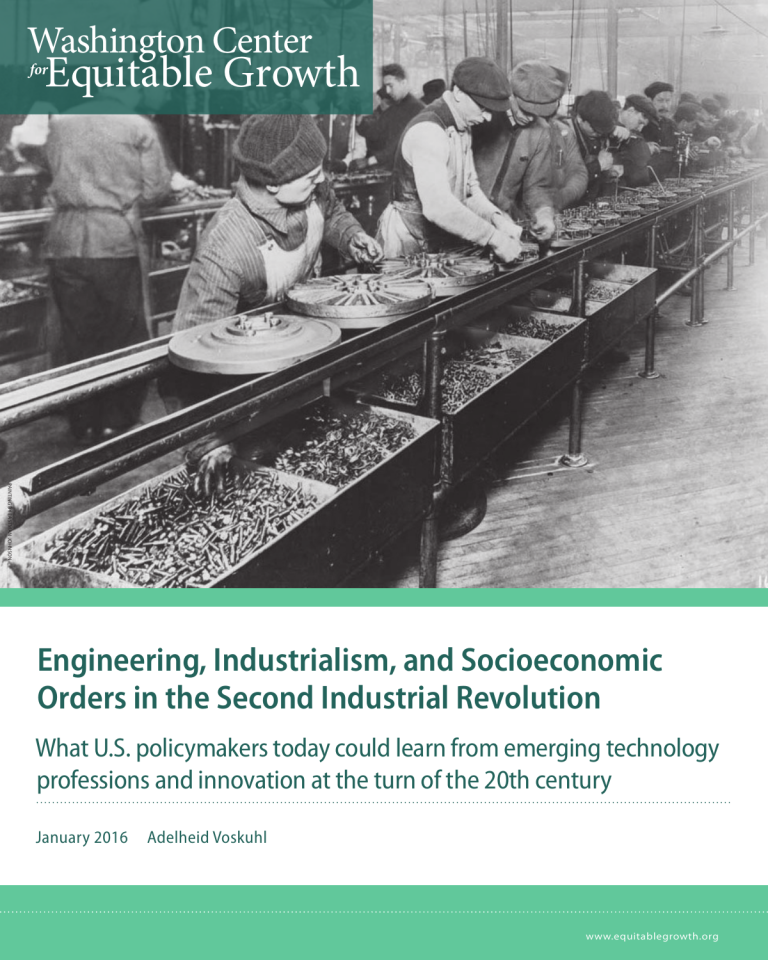
Engineering, industrialism, and socioeconomic orders in the Second Industrial Revolution (opens in a new tab)
Reports JAN 14, 2016
Historians of the Second Industrial Revolution in the late 19th and early 20th centuries are often asked to draw parallels between it and the current “Fourth” Industrial Revolution, characterized by…
By: Adelheid Voskuhl (opens in a new tab)

Not all inequality is the same (opens in a new tab)
Reports DEC 10, 2015
One lesson from slavery as an institution in the 19th century American South is that not all types of inequality are alike. Rather than focusing on economic inequality per se…
By: John Majewski (opens in a new tab)
The benefits and costs of investing in early childhood education (opens in a new tab)
Reports DEC 2, 2015
Research is increasingly demonstrating that investments in education provide significant benefits to children, families, and society as a whole, accelerating economic growth and promoting opportunity over time. This study describes…
By: Robert Lynch (opens in a new tab), Kavya Vaghul (opens in a new tab)
A snapshot of the long-term impacts of universal prekindergarten (opens in a new tab)
Reports DEC 2, 2015
Research is increasingly demonstrating that investments in education provide significant benefits to children, families, and society as a whole, accelerating economic growth and promoting opportunity over time. This study describes…
By: Austin Clemens (opens in a new tab), Robert Lynch (opens in a new tab), Kavya Vaghul (opens in a new tab)

Equitable growth and Southern California’s aerospace industry (opens in a new tab)
Reports NOV 18, 2015
The unusual mix of circumstances that produced explosive job growth in the aerospace industry in southern California after 1910 Is not fully reproducible, yet the story of economic rebirth in…
By: Matthew H. Hersch (opens in a new tab)


Your Direct Line to Cutting Edge Research
Be the first to know about our latest events, research releases, and expert insights. Get exclusive updates delivered right to your inbox and never miss an opportunity to engage with our community.