
Terms and conditions for generative AI users outline a new legal framework that puts U.S. consumers at risk
Essays AUG 20, 2026
By: Chiara Chanoi
JUL 27, 2017
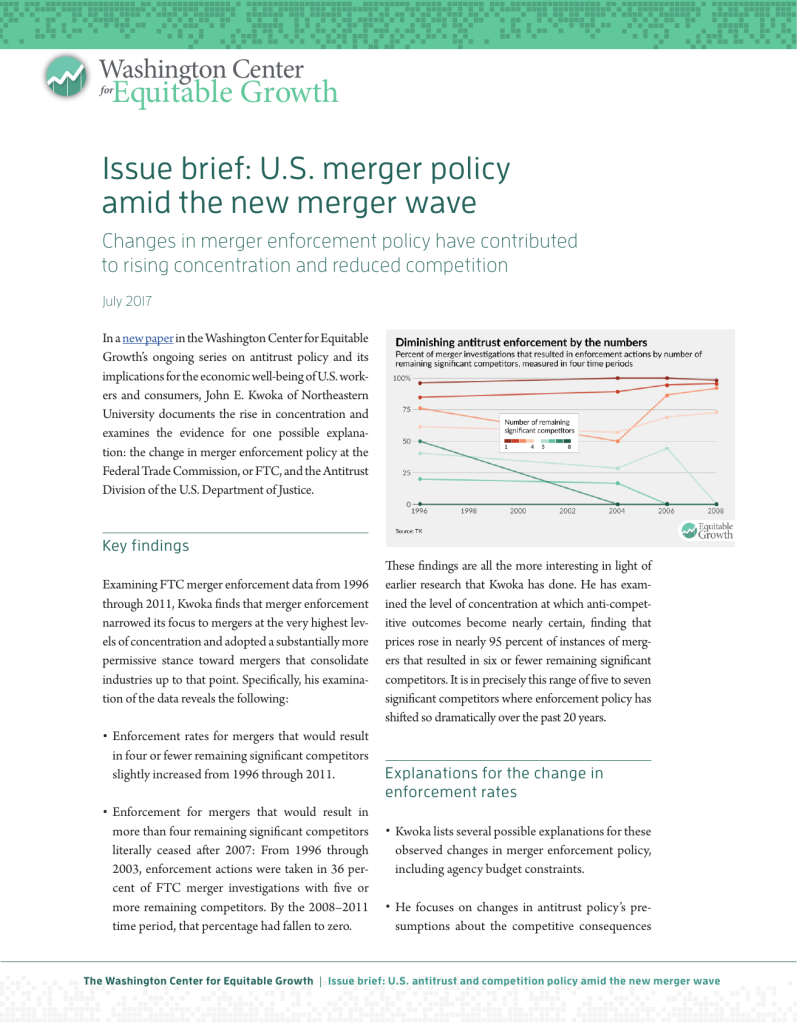
In a new paper (opens in a new tab) in the Washington Center for Equitable Growth’s ongoing series on antitrust policy (opens in a new tab) and its implications for the economic well-being of U.S. workers and consumers, John E. Kwoka of Northeastern University documents the rise in concentration and examines the evidence for one possible explanation: the change in merger enforcement policy at the Federal Trade Commission, or FTC, and the Antitrust Division of the U.S. Department of Justice.
Read the full PDF in your browser (opens in a new tab)
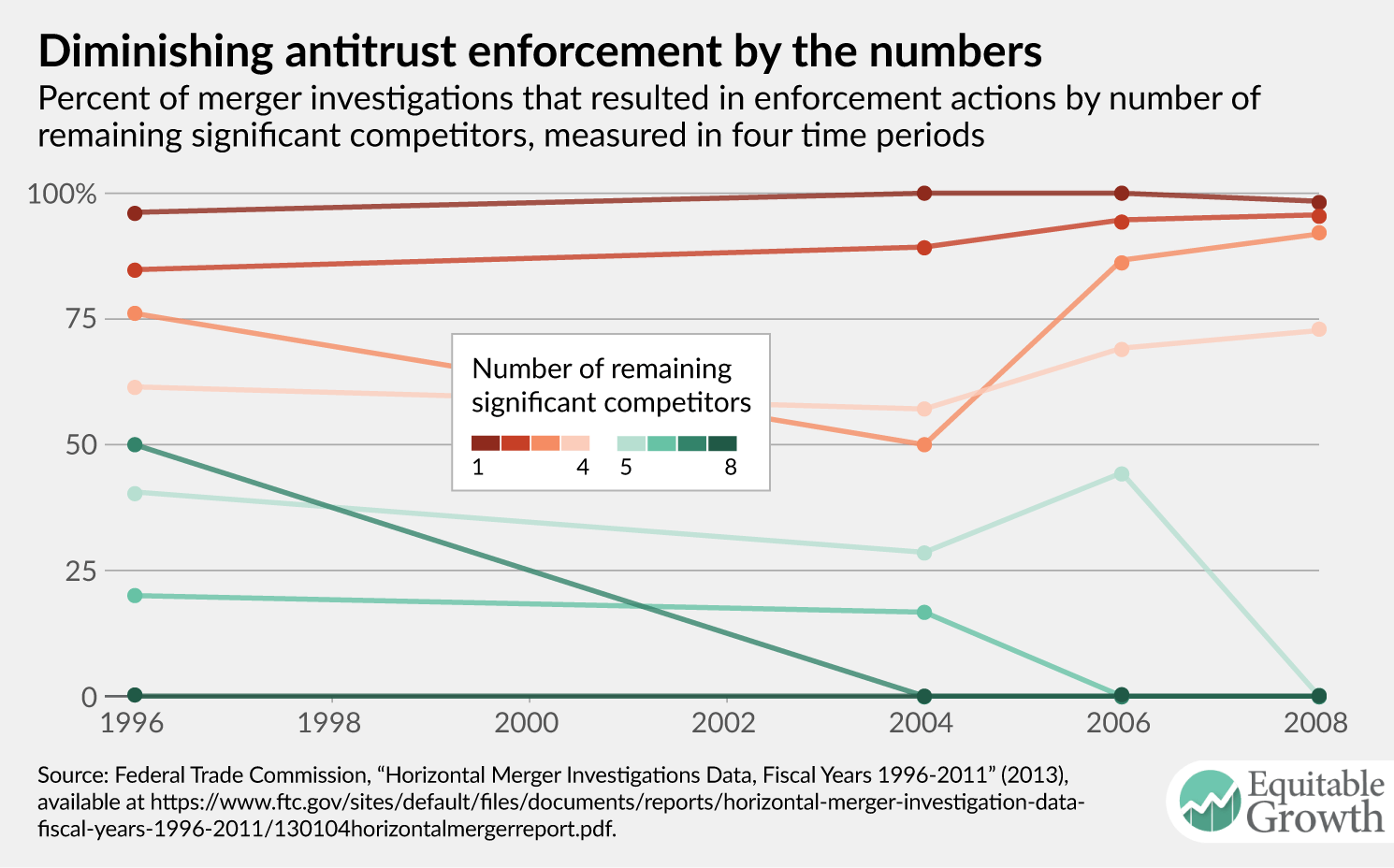
Examining FTC merger enforcement data from 1996 through 2011, Kwoka finds that merger enforcement narrowed its focus to mergers at the very highest levels of concentration and adopted a substantially more permissive stance toward mergers that consolidate industries up to that point. Specifically, his examination of the data reveals the following:

These findings are all the more interesting in light of earlier research that Kwoka has done. He has examined the level of concentration at which anti-competitive outcomes become nearly certain, finding that prices rose in nearly 95 percent of instances of mergers that resulted in six or fewer remaining significant competitors. It is in precisely this range of five to seven significant competitors where enforcement policy has shifted so dramatically over the past 20 years.
Please see “U.S. antitrust and competition policy amid the new merger wave (opens in a new tab),” by John E. Kwoka of Northeastern University for the Washington Center for Equitable Growth.
Essays AUG 20, 2026
By: Chiara Chanoi
Blog JAN 6, 2026
By: Equitable Growth
Blog JAN 5, 2026
By: Equitable Growth
Get updates on our latest research, event announcements, and policy insights delivered straight to your inbox. Stay connected with the leading voices on equitable growth.