


Resources
From peer-reviewed research to accessible policy briefs, explore the scholarship that’s shaping debates and driving change.

756 Results


Trump’s trade war with Canada grows increasingly costly as Section 338 tariffs harm both economies (opens in a new tab)
Essays SEP 22, 2026
President Donald Trump continues to escalate his administration’s perplexing trade spat with Canada through the expanded use of novel tariff powers in Section 338 of the Tariff Act of 1930.…
By: Christopher Bangert-Drowns (opens in a new tab)

What Work Does Generative AI Do? (opens in a new tab)
Essays SEP 8, 2026
Since August 2024, our Real-Time Population Survey (RPS), a nationally representative survey of U.S. adults ages 18 to 64, has tracked how many Americans use generative artificial intelligence (AI). The adoption…
By: Alexander Bick (opens in a new tab), Adam Blandin (opens in a new tab), David Deming (opens in a new tab), Tyler Schumacher (opens in a new tab)

What happens to U.S. workers without access to Unemployment Insurance amid economic downturns or disruptions related to AI? (opens in a new tab)
Essays SEP 2, 2026
The adoption of artificial intelligence in the workplace has led to predictions of U.S. labor market disruptions. In response, policymakers have increased attention on the fitness of the nation’s social…
By: Megan Rivera (opens in a new tab)

Economic research shows immigration is good for U.S. workers, the economy, and affordability (opens in a new tab)
Essays AUG 31, 2026
When President Donald Trump returned to the White House in 2025, mass deportations and immigration restrictions were renewed as one of the political priorities of his second administration. Since then,…
By: Christopher Bangert-Drowns (opens in a new tab)

Terms and conditions for generative AI users outline a new legal framework that puts U.S. consumers at risk (opens in a new tab)
Essays AUG 20, 2026
Generative AI, or genAI, is a form of artificial intelligence that produces content in response to prompts and includes large language model chatbots such as OpenAI’s ChatGPT or Anthropic’s Claude.…
By: Chiara Chanoi (opens in a new tab)

New research shows how U.S. homeownership and the accumulation of housing wealth are linked to political participation (opens in a new tab)
Essays AUG 14, 2026
Persistent affordability pressures have driven up housing costs for millions of U.S. families in recent years. Home prices remain near record highs relative to incomes, mortgage rates and associated costs…
By: Carlos Fernando Avenancio-Leon (opens in a new tab)

Estimating AI exposure is useful for research but cannot yet tell policymakers the whole story of AI’s impact on the labor market (opens in a new tab)
Essays AUG 7, 2026
Artificial intelligence has the potential to substantially change the nature and availability of work. To effectively manage the transitions this technology might bring to the U.S. economy, policymakers need information…
By: Chiara Chanoi (opens in a new tab)

Tracking new research on artificial intelligence and its impact on the U.S. labor market (opens in a new tab)
Essays AUG 5, 2026
Headlines often paint extreme and dissonant pictures of the future impact of AI on the U.S. economy and labor market, with workers themselves echoing the conflicting feelings of optimism and…
By: Equitable Growth (opens in a new tab)

The costs of the Trump administration’s tariffs diverge for countries and industries so far in 2026 (opens in a new tab)
Essays JUL 14, 2026
The first 4 months of 2026 saw continued seismic changes in U.S. trade policy. In late February, the U.S. Supreme Court struck down the Trump administration’s use of the International…
By: Christopher Bangert-Drowns (opens in a new tab)

Why Unemployment Insurance Alone Is Not Enough in the AI Era (opens in a new tab)
Essays JUL 8, 2026
Since the large language model ChatGPT was rolled out in November 2022, artificial intelligence has captured the public’s attention and generated myriad debates over the emerging technology’s potential impacts on…
By: Megan Rivera (opens in a new tab)

Streamlining applications to social programs unlocks more support for the U.S. families who need it most (opens in a new tab)
Essays JUL 7, 2026
Millions of low-income families in the United States tap into multiple social programs to help them meet their needs. A single household, for example, might rely on the Supplemental Nutrition…
By: Neil Cholli (opens in a new tab), Derek Wu (opens in a new tab)

Personal Income in the United States nudges up in May but is down 0.76 percent in the past 6 months (opens in a new tab)
Essays JUN 25, 2026
According to today’s release of Personal Income estimates from the U.S. Bureau of Economic Analysis, U.S. household incomes have fallen 0.76 percent in the past 6 months, with month-to-month declines…
By: Austin Clemens (opens in a new tab)

U.S. income data for 2024 shows the top 10 percent accrued the highest share of income since 2000 (opens in a new tab)
Essays JUN 25, 2026
Today, Equitable Growth updated the U.S. Inequality Tracker through 2024 following the release of new data last week by the U.S. Bureau of Economic Analysis. The data show that the…
By: Austin Clemens (opens in a new tab)

U.S. workers will be hurt by immigration enforcement overreach (opens in a new tab)
Essays JUN 17, 2026
President Donald Trump last week signed the $70 billion Secure America Act, a budget reconciliation package that boosts funding for immigration and border enforcement agencies while imposing no limits on their authority.…
By: Christopher Bangert-Drowns (opens in a new tab)

U.S. workers need sectoral bargaining now more than ever (opens in a new tab)
Essays JUN 4, 2026
U.S. union membership and coverage rates have declined for decades, fueled in part by legal barriers to new organizing, including the limiting of collective bargaining to specific workplaces or employers and misclassifying certain groups of workers so they…
By: Christopher Bangert-Drowns (opens in a new tab)

The U.S. public is angry about economic conditions, and the middle class is losing ground. Are these trends connected? (opens in a new tab)
Essays MAY 14, 2026
A random sample of recent headlines likely would yield two fairly common stories about the U.S. economy. One is that the public is angry about the economy and the other…
By: Michael Linden (opens in a new tab)

Is Taxing Wealth Possible? Practical? Desirable? Yes, if we’re smart about it (opens in a new tab)
Essays MAY 7, 2026
While the American economy has outperformed much of the industrialized world in recent years, there are good reasons to be deeply concerned about its long-term prospects. It is dogged by…
By: David S. Mitchell (opens in a new tab)

Research shows unions dampen support for right-wing populism and help workers navigate technological transitions (opens in a new tab)
Essays MAY 1, 2026
On May 1, much of the world—though not the United States—celebrates International Workers Day to honor the social and economic contributions of workers and labor unions. The May Day holiday began in large part to mark…
By: Christopher Bangert-Drowns (opens in a new tab)

Why the Iran war is bad for U.S. economic growth (opens in a new tab)
Essays APR 23, 2026
The growth trajectory of the U.S. economy is highly dependent on its connections to the outside world through trade and investments, as well as foreign policy and geopolitical developments. That…
By: Christopher Bangert-Drowns (opens in a new tab)

Research on climate change’s impact on U.S. workers underscores the benefits of workplace heat standards (opens in a new tab)
Essays APR 22, 2026
This year’s Earth Day follows a record-breaking heat wave across much of the East Coast, which followed a record-breaking heat wave that took hold in much of the West and…
By: Equitable Growth (opens in a new tab)

The other two-tiered U.S. tax system: How pass-through businesses let the ultra-wealthy dodge federal taxes (opens in a new tab)
Essays APR 15, 2026
Many Americans likely remember when the legendary value investor Warren Buffett drew attention to a glaring unfairness in the tax code by pointing out that he paid a lower effective…
By: David S. Mitchell (opens in a new tab)

Tariff policies in 2025 increased input costs for key U.S. industries, threatening growth and investment (opens in a new tab)
Essays MAR 24, 2026
All tariffs are not created equal. Throughout U.S. history, policymakers have imposed import taxes for a variety of economic and ideological reasons, with varying impacts. Targeted tariffs have been effective…
By: Christopher Bangert-Drowns (opens in a new tab)

Research-based perspectives on the connection between economic policy and rising support for authoritarian populism (opens in a new tab)
Essays MAR 19, 2026
In 2025, the Washington Center for Equitable Growth began to explore the evidence behind a link between the effects of economic policies and global support for authoritarian populist candidates for…
By: Melissa Grober-Morrow (opens in a new tab)

The unintended macroeconomic effects of U.S. climate policy uncertainty (opens in a new tab)
Essays MAR 17, 2026
Recent policy developments in the United States highlight just how quickly climate policies can change. In January 2026, the U.S. Environmental Protection Agency announced that it would stop considering lives…
By: Diego Känzig (opens in a new tab)

New research examines the historical macroeconomic effects of tariffs and sheds light on current U.S. trade policies (opens in a new tab)
Essays MAR 4, 2026
U.S. policymakers have enacted tariffs for a variety of reasons over the course of the country’s history. Motivated by economic pressures to raise federal revenues or address balance-of-payment issues, or…
By: Christopher Bangert-Drowns (opens in a new tab)

The state of the U.S. economy one year into the second Trump administration (opens in a new tab)
Essays FEB 23, 2026
President Donald Trump will soon give his annual State of the Union speech before Congress, one year into his second term in the White House. Ahead of his remarks, now…
By: Michael Linden (opens in a new tab)

Can remote work attenuate mothers’ mobility constraints in the U.S. labor force? (opens in a new tab)
Essays FEB 12, 2026
Women’s labor force participation increased dramatically over the course of the 20th century in the United States. Indeed, the labor force participation rate of women between the ages of 25…
By: Ilaria D’Angelis (opens in a new tab), Keren Horn (opens in a new tab)

Analyzing recent U.S. economic policies using Equitable Growth’s Inequality Tracker (opens in a new tab)
Essays JAN 22, 2026
The Washington Center for Equitable Growth’s Inequality Tracker is a data visualization tool designed to help policymakers and economic analysts examine and analyze U.S. income and wealth inequality in the…
By: Austin Clemens (opens in a new tab)

U.S. businesses report that tariff policies will likely lead to price increases and labor market impacts in 2026 (opens in a new tab)
Essays JAN 15, 2026
As 2026 begins, U.S. manufacturers are contending with a varied and uncertain economic environment. Many are weighing growth driven by domestic investments in data centers and artificial intelligence against the…
By: Christopher Bangert-Drowns (opens in a new tab)
Expanding eligibility for Unemployment Insurance helps low-income U.S. workers find better jobs (opens in a new tab)
Essays DEC 9, 2025
Unemployment Insurance serves as a critical income support program for U.S. workers who lose their jobs through no fault of their own. It is also a valuable tool to stabilize…
By: Casey McQuillan (opens in a new tab), Brendan Moore (opens in a new tab)

U.S. social insurance programs support workers and economic growth (opens in a new tab)
Essays DEC 2, 2025
Since coming to power in early 2025, Republican majorities in Congress have shifted resources away from the nation’s social insurance programs, most notably to offset the cost of H.R. 1,…
By: Megan Rivera (opens in a new tab)

Equitable Growth hosts Econ 101 virtual event on how U.S. social insurance programs boost economic mobility (opens in a new tab)
Essays DEC 1, 2025
Microsoft Copilot helped draft this event recap. The Washington Center for Equitable Growth recently hosted its latest Econ 101 briefing aimed at providing in-depth evidence for policymakers on how U.S.…
By: Equitable Growth (opens in a new tab)
Uncertainty created by ever-changing tariff policies harms U.S. economic growth (opens in a new tab)
Essays NOV 20, 2025
The approaches to international trade taken by the first and now second Trump administrations have been an endless jumble of tariff negotiations and ever-changing policies. Since 2018, duties have been…
By: Nirupama Rao (opens in a new tab)

What impact is artificial intelligence having on the U.S. labor market and the nation’s economy? (opens in a new tab)
Essays NOV 14, 2025
As new and groundbreaking technologies emerge, they can function as a blank canvas onto which people project both aspirations and anxieties. Artificial intelligence—despite its quick uptake in broader society and…
By: Megan Rivera (opens in a new tab)

Tariff costs impact industries with mostly White, male, and noncitizen workers (opens in a new tab)
Essays NOV 4, 2025
The U.S. economy is flying blind, with most economic-data publications paused indefinitely due to the shutdown of the federal government amid a general U.S. labor market slowdown and just as…
By: Christopher Bangert-Drowns (opens in a new tab)

Risks escalate for U.S. retirement plans due to unregulated private credit funds and new rules opening them up to retirement savings accounts (opens in a new tab)
Essays OCT 29, 2025
When the privately owned auto parts manufacturer First Brands Group earlier this month began to be unable to service its $6.1 billion debt load, the financial press began to pick…
By: Lenore Palladino (opens in a new tab)

Workplace exposure to artificial intelligence is higher among U.S. workers with higher wages, depending on how AI is used (opens in a new tab)
Essays OCT 23, 2025
Recent advances using artificial intelligence in workplaces, particularly large language models such as Claude.ai and ChatGPT, are increasingly disrupting the U.S. labor market. The cognitive power of AI has the…
By: Chiara Chanoi (opens in a new tab), Christopher Bangert-Drowns (opens in a new tab)

Equitable Growth supports scholars studying the economics of the energy transition (opens in a new tab)
Essays OCT 22, 2025
The Washington Center for Equitable Growth today announced a new cohort of grantees. These nine scholars will study how the design and implementation of federal policy influences how businesses and…
By: Equitable Growth (opens in a new tab)

Payment for schedule changes under Fair Workweek laws in three U.S. cities (opens in a new tab)
Essays OCT 16, 2025
Fair Workweek laws set new standards for scheduling U.S. workers in jobs and industries characterized by fluctuating and unpredictable work hours, such as jobs in retail and food service. A…
By: Susan Lambert (opens in a new tab), Julia Henly (opens in a new tab)

Rethinking U.S. economic mobility to study change within a generation (opens in a new tab)
Essays OCT 9, 2025
When most people think about intergenerational mobility, they often assume it unfolds gradually over long periods of time. Historical patterns have reinforced this perception, shaping a widespread belief that meaningful…
By: Raven Shaw (opens in a new tab)

The status of U.S. labor market data amid the government shutdown (opens in a new tab)
Essays OCT 3, 2025
The federal government ground to a halt earlier this week as Congress was unable to reach a bipartisan agreement on continuing funding after annual appropriations ran out at the end…
By: Christopher Bangert-Drowns (opens in a new tab), Michael Linden (opens in a new tab)

U.S. workers’ and managers’ experiences with Fair Workweek laws can inform enforcement and education (opens in a new tab)
Essays OCT 2, 2025
Fair Workweek laws are intended to set new standards for scheduling workers in jobs and industries characterized by fluctuating and unpredictable work hours, such as jobs in retail and food…
By: Susan Lambert (opens in a new tab), Julia Henly (opens in a new tab)

How Are Workers Experiencing Fair Workweek Laws? Evidence for policymakers and advocates (opens in a new tab)
Essays OCT 2, 2025
This factsheet, “How Are Workers Experiencing Fair Workweek Laws? Evidence for policymakers and advocates,” originally appeared on WorkRise at https://www.workrisenetwork.org/sites/default/files/2025-08/howareworkersexperiencingfairworkweeklaws.pdf. New laws that regulate employer scheduling practic…
By: Susan Lambert (opens in a new tab), Julia Henly (opens in a new tab)

Federal data is under attack, but data users can work together to preserve and democratize it (opens in a new tab)
Essays OCT 1, 2025
Staffing shortages, political interference, and a federal government shutdown are all disrupting the routine operations of the nonpartisan federal statistical agencies that reliably gather facts and publish data about the…
By: Peter Norlander (opens in a new tab)

Emergency paid leave during the COVID-19 pandemic offered essential protections for U.S. workers (opens in a new tab)
Essays SEP 23, 2025
When the COVID-19 pandemic swept across the United States in early 2020, it didn’t just bring about a public health emergency. It also exposed a longstanding weakness in the U.S.…
By: Tanya Byker (opens in a new tab), Elena Patel (opens in a new tab), Kristin Smith (opens in a new tab)

Equitable Growth announces funding for research on the impact of AI on U.S. workers and competition (opens in a new tab)
Essays SEP 18, 2025
The Washington Center for Equitable Growth today announced a new cohort of grantees studying how artificial intelligence and new technology can support workers and promote competition across the U.S. economy.…
By: Equitable Growth (opens in a new tab)

Populist voters feel a sense of loss that is reshaping democracies around the world (opens in a new tab)
Essays SEP 11, 2025
Across Europe, populist parties—once relegated to the political fringe—are now mainstays of national politics. Some are even winning power in the Netherlands, Sweden, Italy, Austria, and beyond. Whether left-wing or…
By: Justin Gest (opens in a new tab)

Threats to social status and support for far-right political parties (opens in a new tab)
Essays SEP 11, 2025
Once on the political fringes, far-right parties have become established actors in many democracies. The European Parliament election in 2024, for example, resulted in far-right parties receiving more than 20…
By: Tarik Abou-Chadi (opens in a new tab)

A place-based economic development strategy to foster rural U.S. prosperity (opens in a new tab)
Essays SEP 11, 2025
Whether one lives in a city of 2 million people or a town of 2,000, we all want to live in healthy and thriving communities, to have the chance to…
By: Gbenga Ajilore (opens in a new tab)

How U.S. tax policies have fueled right-wing populism (opens in a new tab)
Essays SEP 11, 2025
Among the many factors fueling support for right-wing populism in the United States is federal tax policies. The nation’s tax system confuses, frustrates, and angers many citizens in ways that…
By: Andrea Louise Campbell (opens in a new tab)
To restore democracy, end shareholder primacy at U.S. corporations and on Wall Street (opens in a new tab)
Essays SEP 11, 2025
Workers in the United States have no say over business decisions made in their workplaces by corporate America. Unions, of course, are important for workers’ ability to exercise power over…
By: Lenore Palladino (opens in a new tab)

Even health care, the strongest sector of the U.S. jobs market, cannot deliver the wages its workers deserve without unionization (opens in a new tab)
Essays SEP 10, 2025
The growth of jobs in the U.S. health care industry is the linchpin to a strong U.S. labor market in 2025 and beyond. Health care is one of only a…
By: Adam Dean (opens in a new tab), Jamie McCallum (opens in a new tab)

The Federal Reserve must maintain its independence for the U.S. economy to thrive (opens in a new tab)
Essays AUG 28, 2025
President Donald Trump is attempting to fire Federal Reserve Board Governor Lisa Cook, the first Black woman to serve in that role. He probably lacks the legal authority to do…
By: Alan Blinder (opens in a new tab)

Equitable Growth awards funding to early career scholars studying the effects of economic inequality (opens in a new tab)
Essays AUG 20, 2025
The Washington Center for Equitable Growth announced today that it has awarded funding to seven scholars seeking to better understand the effects of economic inequality in the United States and…
By: Equitable Growth (opens in a new tab)

The 10 worst policies for equitable economic growth in the 2025 budget reconciliation law (opens in a new tab)
Essays JUL 14, 2025
The 2025 budget reconciliation law that was enacted earlier this month is a sprawling piece of legislation, touching almost every corner of the federal budget and the U.S. economy. It…
By: David S. Mitchell (opens in a new tab)

Republican reconciliation bill’s cuts to social programs will damage some congressional districts’ local economies (opens in a new tab)
Essays JUL 11, 2025
In a recent working paper, Equitable Growth grantee Robert Manduca of the University of Michigan, Ann Arbor demonstrates that government transfers make sizable contributions to local economies in much of…
By: Chiara Chanoi (opens in a new tab)

Adoption of generative AI will have different effects across jobs in the U.S. logistics workforce (opens in a new tab)
Essays JUL 10, 2025
Generative artificial intelligence promises to profoundly reshape labor markets, much like previous automation waves did, but with clear differences. Unlike earlier technologies, such as computerization, which primarily automated routine administrative…
By: Christophe Combemale (opens in a new tab), Dustin Ferrone (opens in a new tab), Andrew Barber (opens in a new tab), Laurence Ales (opens in a new tab)

Americans informed about the distributional effects of Republicans’ tax and budget bill overwhelmingly oppose it (opens in a new tab)
Essays JUL 3, 2025
Republicans in the U.S. Senate recently passed a version of the One Big Beautiful Bill Act, championed by President Donald Trump. The House of Representatives passed an earlier version of…
By: Jacob Hacker (opens in a new tab), Patrick Sullivan (opens in a new tab)

Congressional Republicans’ budget bill is the most regressive in at least 40 years (opens in a new tab)
Essays JUN 25, 2025
The U.S. Congress is in the midst of debating a budget bill that would make massive changes to U.S. tax and spending policy over the course of the next decade…
By: Jacob Hacker (opens in a new tab), Patrick Sullivan (opens in a new tab)

Medicaid and SNAP cuts in congressional Republicans’ budget bill will negatively impact local economies (opens in a new tab)
Essays JUN 24, 2025
The budget reconciliation bill recently passed by the U.S. House of Representatives proposes to make large cuts to Medicaid, the Supplemental Nutrition Assistance Program, and other social programs to pay…
By: Robert Manduca (opens in a new tab)

Testimony by Michael Linden on “The Big Beautiful Betrayal—Working Folks Pay While The Mega Rich Profit” (opens in a new tab)
Essays JUN 17, 2025
Senator Kaine, Senator Murphy, and members of the Forum, thank you for the opportunity to be here today. I’m going to make three key points. First, the Republican budget bill…
By: Michael Linden (opens in a new tab)

The ‘funny math’ of top U.S. tax rates (opens in a new tab)
Essays JUN 11, 2025
The current reconciliation bill now before Congress won’t correct for the low tax rates paid by the richest Americans Overview Calculating the effective tax rate of the richest Americans can…
By: Patrick Driessen (opens in a new tab), David S. Mitchell (opens in a new tab)

The hidden trade-offs of nonwage job amenities for U.S. workers (opens in a new tab)
Essays JUN 10, 2025
When workers choose jobs with predictable schedules, safer conditions, or greater autonomy, they are often paying a price: lower wages. In some cases, these hidden trade-offs are considerable. Indeed, my…
By: Alex Bell (opens in a new tab)

U.S. labor market data reveal that different job characteristics contribute to the gender wage gap (opens in a new tab)
Essays JUN 5, 2025
In 2003, women in the United States earned on average approximately 80 percent as much as U.S. men did per hour. By 2024, the gender pay gap had grown to…
By: Chiara Chanoi (opens in a new tab)

A researcher’s guide to identifying policy-relevant research questions for the federal government (opens in a new tab)
Essays MAY 30, 2024
Social science researchers play an important role in the policymaking process. Researchers help policymakers at all levels of government to understand key trends and issues in the U.S. economy and…
By: Alexander Hertel-Fernandez (opens in a new tab)

Economic policy guides to reduce inequality for the 2020 U.S. election-year presidential and congressional transition (opens in a new tab)
Essays OCT 30, 2020
Change is coming to Washington, D.C. No matter who wins the presidential and congressional elections in 2020, a new set of economic policymakers will transition into government. They will come…
By: Corey Husak (opens in a new tab), David S. Mitchell (opens in a new tab)

Scholars and advocates say racial disparities and worker power are key to the coronavirus recession and to long-term U.S. economic recovery (opens in a new tab)
Essays OCT 30, 2020
The coronavirus recession took root in a U.S. economy already characterized by profound economic and racial inequality, deeply inadequate public investment, and significant holes in support systems for families. At…
By: Shanteal Lake (opens in a new tab)

College football’s inequality dilemma amid the coronavirus recession (opens in a new tab)
Essays SEP 8, 2020
Before the coronavirus pandemic and the recession it caused, the economics of college sports, particularly college football, took a backseat to game-day coverage of tens of millions of fans spending…
By: Kate Bahn (opens in a new tab)
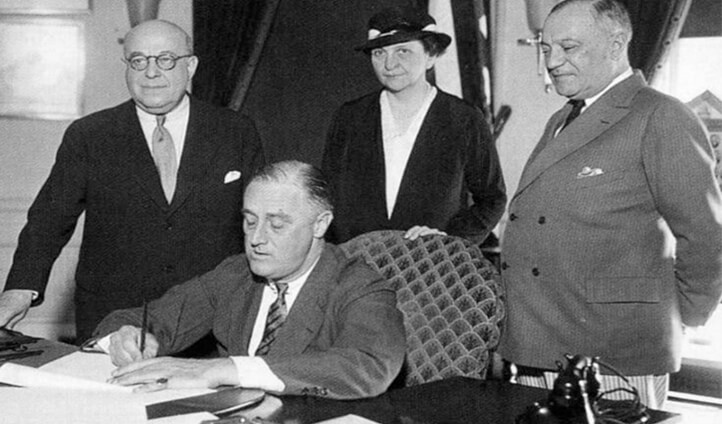
Labor Day: Labor standards and institutional support for collective action are essential for an equitable U.S. economy (opens in a new tab)
Essays SEP 4, 2020
The landmark U.S. labor laws enacted in the early to mid-20th century continue to represent the main legal structures governing employment relations in the United States. These laws were critical…
By: Kathryn Zickuhr (opens in a new tab), Carmen Sanchez Cumming (opens in a new tab)
Equitable Growth introduces book of innovative policy ideas for 2020 (opens in a new tab)
Essays FEB 18, 2020
The Washington Center for Equitable Growth today is publishing a collection of 21 essays, with innovative, evidence-based, and concrete policy ideas to shape the 2020 policy debate. The essays, which…
By: Equitable Growth (opens in a new tab)

Newly released U.S. poverty statistics show that recent economic growth is not broadly shared (opens in a new tab)
Essays SEP 11, 2019
The U.S. Census Bureau yesterday released the 2018 poverty rate alongside information on the 2018 median household income in the United States. The takeaway? Things are not improving that much.…
By: Alix Gould-Werth (opens in a new tab)

Perceived fiscal space and the case for automatic stabilizers (opens in a new tab)
Essays JUL 22, 2019
Why do policymakers around the world often place limits—often ill-advised ones—on their fiscal responses to financial crises? Do they act because of economic concerns about deficits and debt, or are…
By: David S. Mitchell (opens in a new tab)

Equitable Growth launches quarterly Working Paper Digest (opens in a new tab)
Essays JUL 17, 2019
The Washington Center for Equitable Growth today launched a new quarterly newsletter, the Equitable Growth Working Paper Digest, dedicated to informing readers about several of the working papers we’ve released…

Congressional panel investigates the market power of the ‘Big Four’ online platforms (opens in a new tab)
Essays JUL 15, 2019
Representatives from the “Big Four” online platform companies—Amazon.com Inc., Apple Inc., Facebook.com Inc., and Alphabet Inc.’s Google unit—are scheduled to testify on July 16 before the House Judiciary Committee’s antitrust…
By: Michael Kades (opens in a new tab)
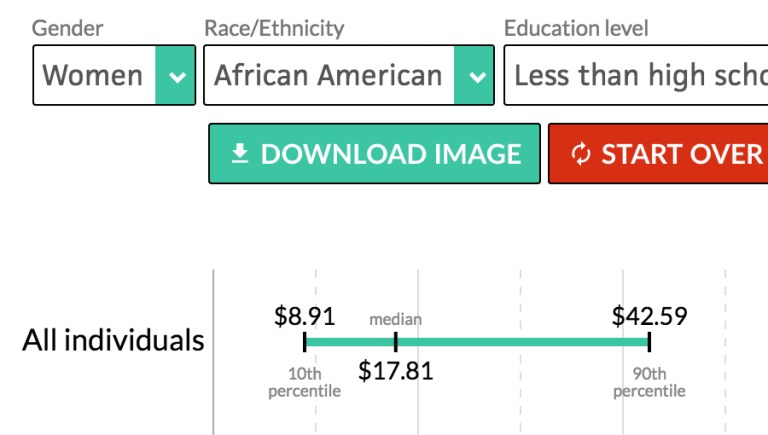
Interactive: Comparing wages within and across demographic groups in the United States (opens in a new tab)
Essays JUL 9, 2019
This post originally published Aug. 23, 2016. It was updated July 9, 2019 to incorporate new data. Hourly wages among U.S. workers vary enormously by gender, race, and education level.…
By: Austin Clemens (opens in a new tab), Kavya Vaghul (opens in a new tab), John Schmitt (opens in a new tab), Will McGrew (opens in a new tab)
Equitable Growth comments to the Federal Trade Commission on the agency’s proposed competition hearings (opens in a new tab)
Essays AUG 20, 2018
This summer, the Federal Trade Commission announced it would hold a series of hearings throughout the fall and winter on “whether broad-based changes in the economy, evolving business practices, new…
By: Equitable Growth (opens in a new tab)

Equitable Growth’s Jobs Day Graphs: June 2018 Report Edition (opens in a new tab)
Essays JUL 6, 2018
Earlier this morning, the U.S. Bureau of Labor Statistics released new data on the U.S. labor market during the month of June. Below are five graphs compiled by Equitable Growth…
By: Austin Clemens (opens in a new tab), Kate Bahn (opens in a new tab)
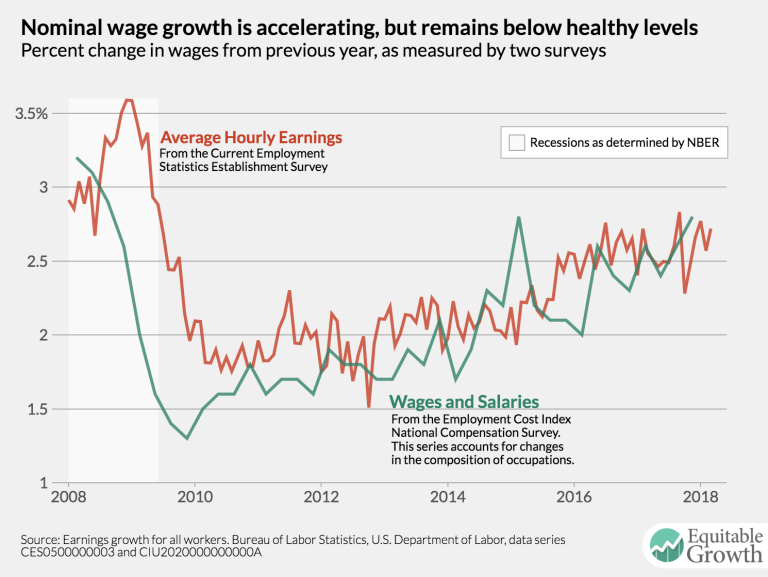
Equitable Growth’s Jobs Day Graphs: March 2018 Report Edition (opens in a new tab)
Essays APR 6, 2018
Earlier this morning, the U.S. Bureau of Labor Statistics released new data on the U.S. labor market during the month of March. Below are five graphs compiled by Equitable Growth…
By: Equitable Growth (opens in a new tab)

McDonald’s, monopsony, and the need for joint employer standards (opens in a new tab)
Essays APR 5, 2018
McDonald’s Corp. is involved in a case with the National Labor Relations Board regarding the company’s responsibility under the so-called joint employer standard for the firing of workers at their…
By: Kate Bahn (opens in a new tab)

The effects of wealth taxation on wealth accumulation and wealth inequality (opens in a new tab)
Essays APR 2, 2018
Recent research documenting an increase in wealth inequality since the 1980s has led to calls for the increased taxation of wealth, including a high-profile proposal from Thomas Piketty, the Paris…
By: Nisha Chikhale (opens in a new tab)

Stable work hours for U.S. workers are a hidden source of profits (opens in a new tab)
Essays MAR 29, 2018
For many part-time and low-wage workers in the U.S. retail and hospitality industries, constantly shifting schedules or requirements to be “on call” are increasingly the norm. Aided by computer scheduling…
By: Bridget Ansel (opens in a new tab)

The flat Phillips Curve and U.S. labor’s share of income (opens in a new tab)
Essays MAR 27, 2018
How flat is the Phillips Curve—the relationship between unemployment and inflation? This question is very much on the minds of U.S. central bankers because over the past several years the…
By: Nick Bunker (opens in a new tab)

New research on the relationship between race, place, and opportunity in the United States (opens in a new tab)
Essays MAR 20, 2018
Stanford economist and Equitable Growth Steering Committee Member Raj Chetty and fellow researchers Nathaniel Hendren, Maggie R. Jones, and Sonya R. Porter released a new research paper yesterday, titled “Race…
By: Liz Hipple (opens in a new tab)

JOLTS Day Graphs: January 2018 Report Edition (opens in a new tab)
Essays MAR 16, 2018
Every month the U.S. Bureau of Labor Statistics releases data on hiring, firing, and other labor market flows from the Job Openings and Labor Turnover Survey, better known as JOLTS.…
By: Nick Bunker (opens in a new tab)

Mothers in the United States earn less despite education and experience (opens in a new tab)
Essays MAR 13, 2018
It’s no secret that all women are disadvantaged in the U.S. labor market, but mothers face an additional handicap: the “motherhood wage penalty.” This penalty is one of the biggest…
By: Bridget Ansel (opens in a new tab)
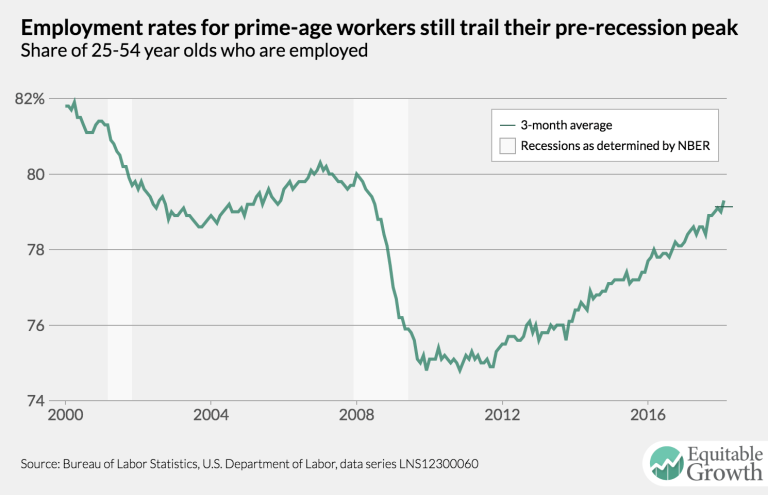
Equitable Growth’s Jobs Day Graphs: February 2018 Report Edition (opens in a new tab)
Essays MAR 9, 2018
Earlier this morning, the U.S. Bureau of Labor Statistics released new data on the U.S. labor market during the month of February. Below are five graphs compiled by Equitable Growth…
By: Equitable Growth (opens in a new tab)

What would lead to monetary overshooting by the Fed? (opens in a new tab)
Essays MAR 6, 2018
After years of dormancy, inflation in the U.S. economy just might be heading upward. The Federal Reserve’s preferred measure of inflation-the personal consumption expenditures price index-is still growing below the…
By: Nick Bunker (opens in a new tab)

For families, concern is not enough (opens in a new tab)
Essays MAR 2, 2018
What is this administration doing or proposing for actual American families? And does the research on the challenges they face back these ideas or an alternative path?
By: Heather Boushey (opens in a new tab)

Understanding the importance of household credit in high-income economies (opens in a new tab)
Essays FEB 28, 2018
In the wake of the Great Recession, it was clear that policymakers and economists alike needed to pay more attention to household debt. The dramatic rise in household debt prior…
By: Nick Bunker (opens in a new tab)

Credit card competition case before U.S. Supreme Court leaves consumers and competition in the balance (opens in a new tab)
Essays FEB 22, 2018
The U.S. Supreme Court next week will hear oral arguments in Ohio v. American Express, an antitrust case involving competition in the credit card industry. The U.S. Department of Justice…
By: Michael Kades (opens in a new tab)

How income inequality may affect U.S. interest rates (opens in a new tab)
Essays FEB 19, 2018
Long-term U.S. interest rates have been rising this year, with the yield on a 10-year Treasury bond increasing about half a percentage point since the beginning of the year. The…
By: Nick Bunker (opens in a new tab)

How the rise of market power in the United States may explain some macroeconomic puzzles (opens in a new tab)
Essays FEB 12, 2018
The U.S. macroeconomic data of the past 40 years have produced a number of surprising, and indeed puzzling, facts about economic growth and rising income and wealth inequality. Five of…
By: Jacob Robbins (opens in a new tab)

How does unconditional cash affect the labor market? (opens in a new tab)
Essays FEB 8, 2018
If I handed you a check for $2,000 and told you a similar check would come your way every year with no strings attached, how would this change your life?…
By: Nick Bunker (opens in a new tab)
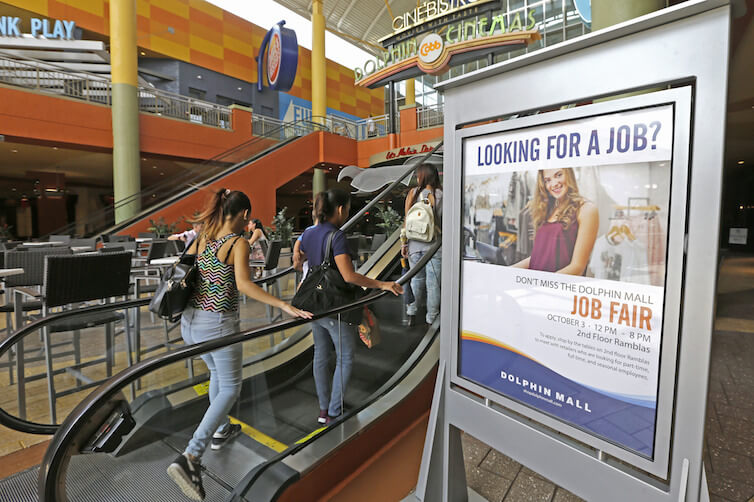
JOLTS Day Graphs: December 2017 Report Edition (opens in a new tab)
Essays FEB 6, 2018
Every month the U.S. Bureau of Labor Statistics releases data on hiring, firing, and other labor market flows from the Job Openings and Labor Turnover Survey, better known as JOLTS.…
By: Nick Bunker (opens in a new tab)
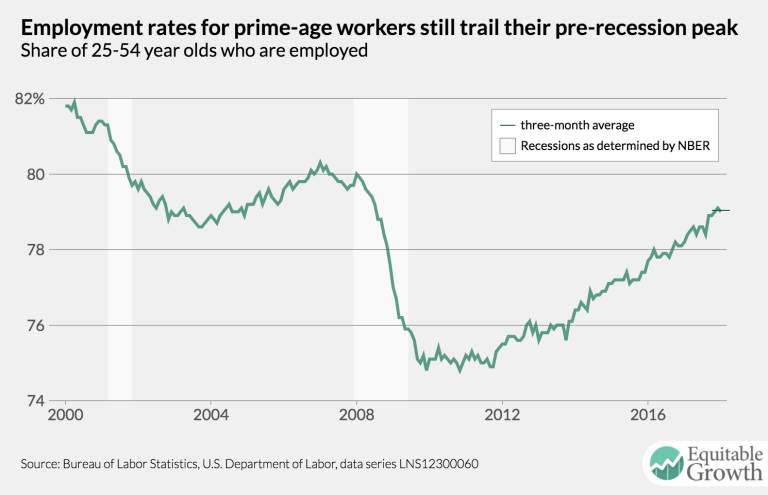
Equitable Growth’s Jobs Day Graphs: January 2018 Report Edition (opens in a new tab)
Essays FEB 2, 2018
Earlier this morning, the U.S. Bureau of Labor Statistics released new data on the U.S. labor market during the month of January. Below are five graphs compiled by Equitable Growth…
By: Equitable Growth (opens in a new tab)

Firms matter: Where you work is important to what you earn (opens in a new tab)
Essays FEB 1, 2018
Decades of research show that workers who involuntarily lose their jobs suffer long and enduring reduced earnings. Recent evidence on the effects of job loss in the aftermath of recessions…
By: Nisha Chikhale (opens in a new tab)

Dinner table entrepreneurship on both sides of the Atlantic (opens in a new tab)
Essays JAN 19, 2018
Want to own a successful business? Then you might want to listen to the wise words of your parent—if they own their own business, that is. New research by Hans…
By: Bridget Ansel (opens in a new tab)

Can the financial benefit of lobbying be quantified? (opens in a new tab)
Essays JAN 16, 2018
In a new working paper for the Washington Center for Equitable Growth’s Working Paper series, Equitable Growth grantee Daniel Carpenter and his co-author Brian Libgober at Harvard University seek to…
By: Liz Hipple (opens in a new tab)

The opioid crisis: A consequence of U.S. economic decline? (opens in a new tab)
Essays JAN 11, 2018
The opioid epidemic continues to devastate families and communities across the United States, causing serious health and socioeconomic crises. The high prescription rate for opioids and the subsequent misuse of…
By: Iris Marechal (opens in a new tab)
JOLTS Day Graphs: November 2017 Report Edition (opens in a new tab)
Essays JAN 9, 2018
Every month the U.S. Bureau of Labor Statistics releases data on hiring, firing, and other labor market flows from the Job Openings and Labor Turnover Survey, better known as JOLTS.…
By: Nick Bunker (opens in a new tab)

Equitable Growth’s Jobs Day Graphs: December 2017 Report Edition (opens in a new tab)
Essays JAN 5, 2018
Earlier this morning, the U.S. Bureau of Labor Statistics released new data on the U.S. labor market during the month of December. Below are five graphs compiled by Equitable Growth…
By: Equitable Growth (opens in a new tab)

Heather Boushey: SiriusXM Radio interview about economic inequality and the new tax law (opens in a new tab)
Essays DEC 28, 2017
On December 20, Equitable Growth Executive Director and Chief Economist Heather Boushey appeared on the Dean Obeidallah Show on SiriusXM Radio. Listen for a lively and informative discussion of economic…
By: Equitable Growth (opens in a new tab)

The 10 most popular Value Added posts of 2017 (opens in a new tab)
Essays DEC 28, 2017
With the end of 2017 approaching, let’s take a look back at the 10 most popular Value Added posts this year: Is the Fed being misguided by the Phillips curve?…

Heather Boushey: “The tax bill should’ve been called The Inequality Exacerbation Act” (opens in a new tab)
Essays DEC 22, 2017
“The permanent corporate tax cuts and other cuts benefiting the wealthy, combined with only short-term benefits for the middle class and measures that increase the cost of health insurance for…
By: Barry Toiv (opens in a new tab)

New worldwide report on inequality shows how the United States compares (opens in a new tab)
Essays DEC 15, 2017
Academics from the Paris School of Economics and the University of California, Berkeley on Thursday debuted the first annual World Inequality Report. This report, part of the WID.world project, includes…
By: Austin Clemens (opens in a new tab)

The unequal economic consequences of bad health (opens in a new tab)
Essays DEC 13, 2017
Many studies over the past several decades document the inverse relationship between the socioeconomic status of people around the world and their health. Some of these experts argue that health…
By: Iris Marechal (opens in a new tab)
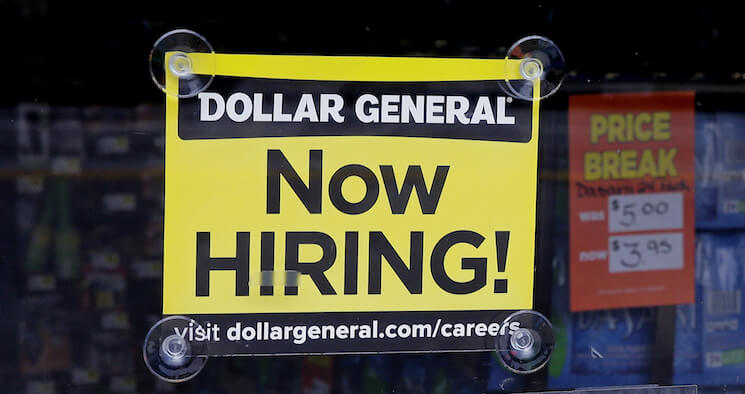
JOLTS Day Graphs: October 2017 Report Edition (opens in a new tab)
Essays DEC 11, 2017
Every month the U.S. Bureau of Labor Statistics releases data on hiring, firing, and other labor market flows from the Job Openings and Labor Turnover Survey, better known as JOLTS.…
By: Nick Bunker (opens in a new tab)
New data on the changing U.S. occupational structure (opens in a new tab)
Essays DEC 5, 2017
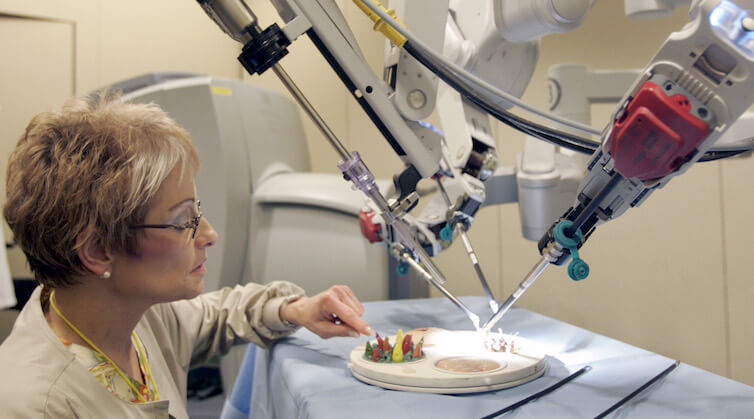
During the post-industrial period, there have been rapid changes in the composition and substance of U.S. jobs. Technological change, globalization, and other factors have changed the nature of work over…
By: Nisha Chikhale (opens in a new tab)

Ten years after the beginning of the Great Recession, is it time to abandon the natural rate hypothesis? (opens in a new tab)
Essays DEC 1, 2017
How far into the future will the aftershocks of the Great Recession be felt? According to the National Bureau of Economic Research, the Great Recession began in December 2007, meaning…
By: Nick Bunker (opens in a new tab)

U.S. corporate tax cuts and wage growth (opens in a new tab)
Essays NOV 30, 2017
The U.S. Senate this week may well pass a large cut in the U.S. corporate tax rate. Supporters argue that reducing the rate to 20 percent from 35 percent will…
By: Equitable Growth (opens in a new tab)

Unlocking the promise of antitrust enforcement (opens in a new tab)
Essays NOV 29, 2017
The Washington Center for Equitable Growth last month co-hosted an event with the Program on Law and Government at the Washington College of Law, called “Unlocking the Promise of Antitrust…
By: Liz Hipple (opens in a new tab)

Tax legislation is no place for paid family leave (opens in a new tab)
Essays NOV 20, 2017
It’s no secret that the United States is the only developed nation that does not have any legal right for employees to take paid leave. Given the urgency of the…
By: Heather Boushey (opens in a new tab)
Medicaid’s financial benefits are larger than previously thought (opens in a new tab)
Essays NOV 15, 2017
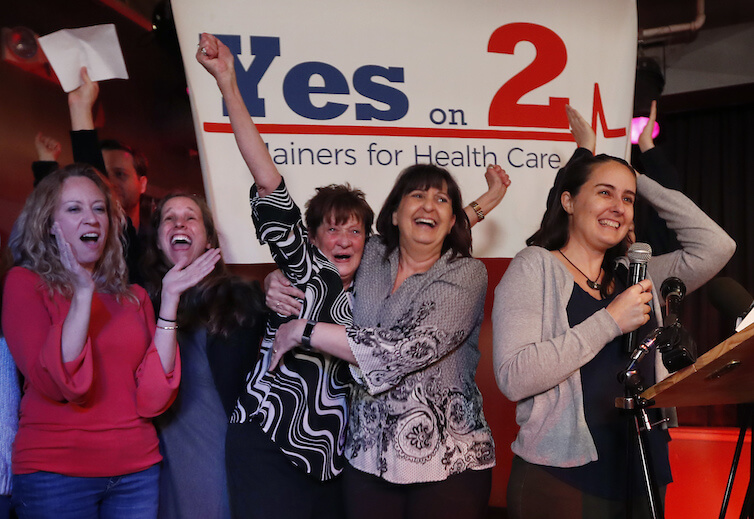
Given the costs associated with out-of-pocket health expenses across the United States, it’s no surprise that Medicaid can have a significant impact on the financial health of American families. But…
By: Bridget Ansel (opens in a new tab)

What does the research show about the need for fair work scheduling legislation in the United States? (opens in a new tab)
Essays NOV 14, 2017
Rep. Rosa DeLauro (D-CT) today is hosting a press conference with workers and advocates for fair scheduling practices to highlight her legislation, the Schedules That Work Act. Sen. Elizabeth Warren…
By: Liz Hipple (opens in a new tab)

The blueprint for a perpetual wealth machine for the very richest U.S. families (opens in a new tab)
Essays NOV 9, 2017
Death and taxes are supposed to be certainties in life, but if a proposed change to the U.S. tax code becomes law, then one of them will fall by the…
By: Nick Bunker (opens in a new tab)

JOLTS Day Graphs: September 2017 Report Edition (opens in a new tab)
Essays NOV 7, 2017
Every month the U.S. Bureau of Labor Statistics releases data on hiring, firing, and other labor market flows from the Job Openings and Labor Turnover Survey, better known as JOLTS.…
By: Nick Bunker (opens in a new tab)
Equitable Growth’s Jobs Day Graphs: October 2017 Report Edition (opens in a new tab)
Essays NOV 3, 2017
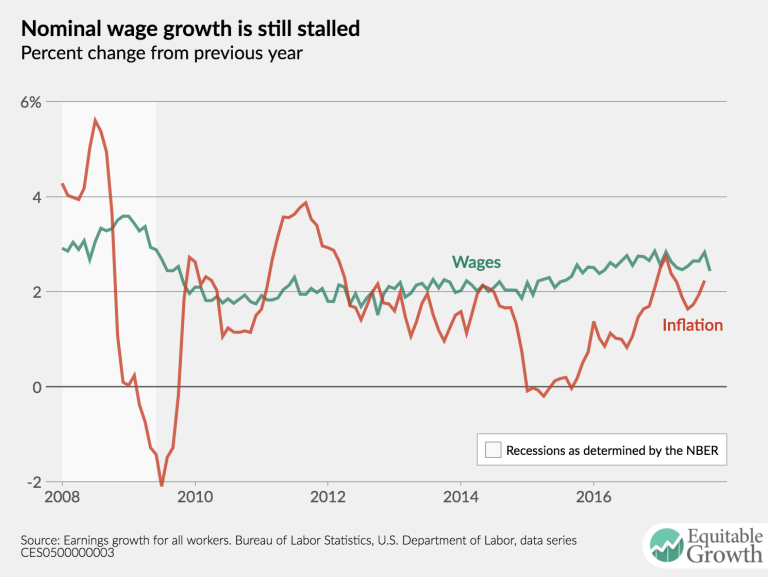
Earlier this morning, the U.S. Bureau of Labor Statistics released new data on the U.S. labor market during the month of October. Below are five graphs compiled by Equitable Growth…
By: Austin Clemens (opens in a new tab)
Policy rules and central bank independence (opens in a new tab)
Essays OCT 31, 2017
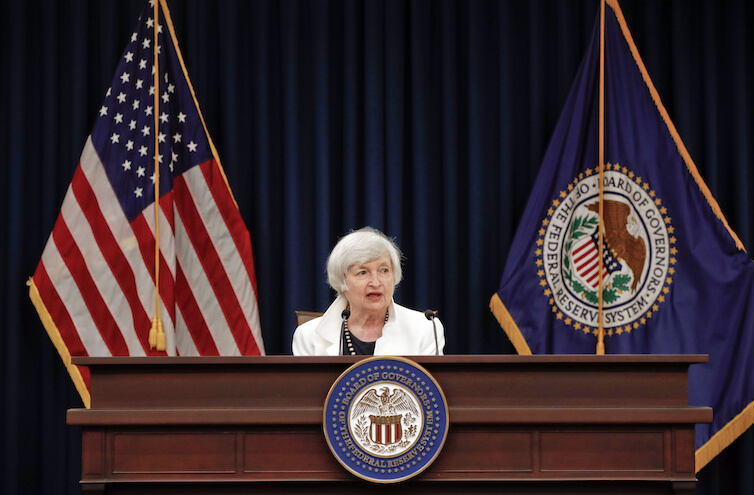
When explaining the need for central bank independence, economists and central bankers often turn to the metaphor of Odysseus and the Sirens. In order to hear the song of the…
By: Nick Bunker (opens in a new tab)
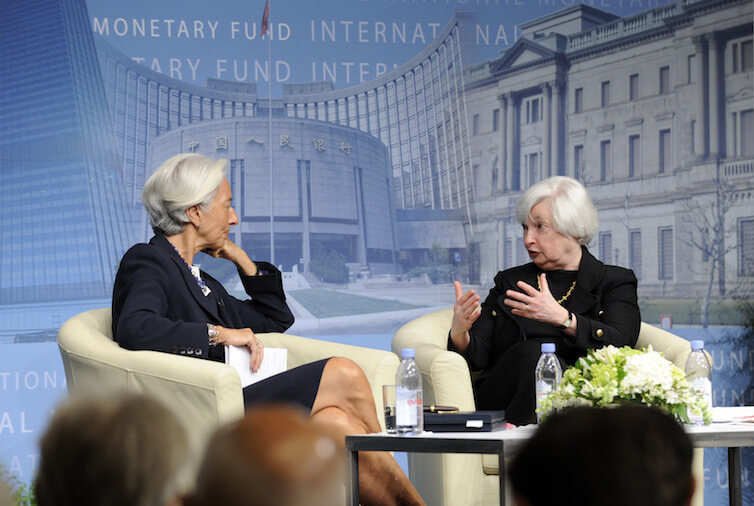
The gender gap in economics has ramifications far beyond the ivory tower (opens in a new tab)
Essays OCT 30, 2017
It’s no secret that the economics profession has a problem with women. In the wake of the publication of a University of California, Berkeley undergraduate’s senior thesis on sexism in…
By: Bridget Ansel (opens in a new tab)

Here’s why you should interpret tomorrow’s GDP growth estimate skeptically (opens in a new tab)
Essays OCT 26, 2017
Tomorrow morning, the Bureau of Economic Analysis will announce its first estimate for third quarter gross domestic product growth in 2017. A lot of time and energy will be spent…
By: Austin Clemens (opens in a new tab)

Do Americans think we should tax wealth? (opens in a new tab)
Essays OCT 17, 2017
The United States relies heavily on property taxes to finance state and local government spending, but unlike five other OECD nations, it has no recurring tax on total wealth, which…
By: Nisha Chikhale (opens in a new tab)
JOLTS Day Graphs: August 2017 Report Edition (opens in a new tab)
Essays OCT 11, 2017
Every month the U.S. Bureau of Labor Statistics releases data on hiring, firing, and other labor market flows from the Job Openings and Labor Turnover Survey, better known as JOLTS.…
By: Nick Bunker (opens in a new tab)

The forces behind the highly unequal U.S. wealth distribution (opens in a new tab)
Essays OCT 10, 2017
The Federal Reserve’s Survey of Consumer Finances release last week reported that 38.6 percent of wealth in the United States was owned by the top 1 percent of families in…
By: Nick Bunker (opens in a new tab)

Old companies may be slowing down the U.S. economy (opens in a new tab)
Essays OCT 4, 2017
Though Stevie Nicks didn’t sing about them, firms are getting older too. The age of companies is rising in the United States, just as the rate at which Americans are…
By: Nick Bunker (opens in a new tab)

More U.S. men are becoming nurses but not entering other traditionally female occupations (opens in a new tab)
Essays OCT 3, 2017
As U.S. manufacturing jobs have waned, and the service and health care sectors have flourished over the past few decades, a growing number of men are leaving behind traditional factory…
By: Bridget Ansel (opens in a new tab)

An update on the state of wealth inequality in the United States (opens in a new tab)
Essays SEP 28, 2017
The Federal Reserve yesterday released the 2016 version of its triennial Survey of Consumer Finances. The SCF reports data on income, assets, and debts for families in the United States.…
By: Nick Bunker (opens in a new tab)
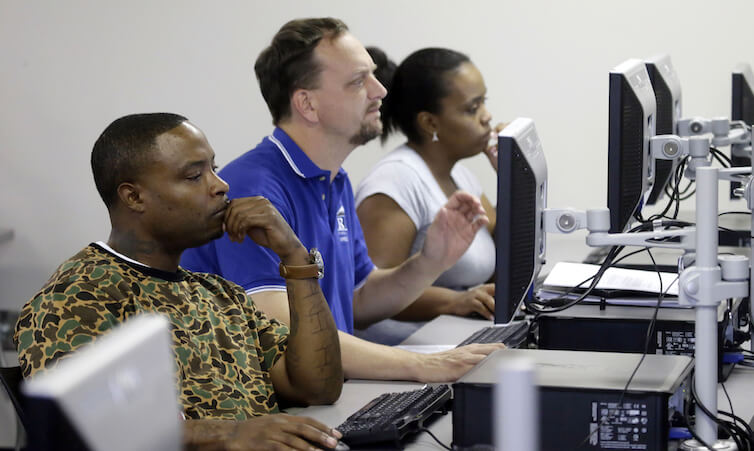
Income inequality and economic mobility remain defined largely by race and ethnicity in the United States (opens in a new tab)
Essays SEP 26, 2017
Last week, the Congressional Black Caucus held its Annual Legislative Conference, which is intended to discuss those policy issues affecting the black community. The need for a conference of this…
By: Jessica Fulton (opens in a new tab)
Expanding the Earned Income Tax Credit is worth exploring in the U.S. tax reform debate (opens in a new tab)
Essays SEP 21, 2017
In recent years, lawmakers on both sides of the congressional aisle have proposed expanding refundable tax credits for low-income workers across the United States such as the Earned Income Tax…
By: Nisha Chikhale (opens in a new tab)
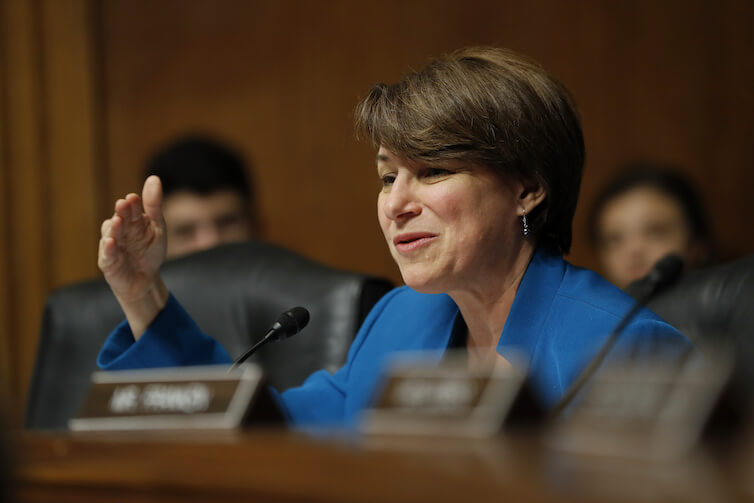
New federal antitrust legislation recognizes U.S. workers are not only consumers (opens in a new tab)
Essays SEP 20, 2017
The introduction of two new antitrust bills by Sen. Amy Klobuchar, D-MN, last week indicates that Democrats are serious about making antitrust enforcement a central plank in their economic policy…
By: Liz Hipple (opens in a new tab)

Another lesson from the 1930s for the Federal Reserve (opens in a new tab)
Essays SEP 19, 2017
The disoriented series of economic events over the past decade may seem unprecedented, but there are very few new things under the macroeconomic sun. Not even the upcoming unwinding of…
By: Nick Bunker (opens in a new tab)

Markups, macroeconomics, and the changing U.S. economy (opens in a new tab)
Essays SEP 14, 2017
Over the past several decades, the U.S. economy experienced changes in key economic metrics that don’t bode well for the welfare of most people. The labor share of income is…
By: Nick Bunker (opens in a new tab)
JOLTS Day Graphs: July 2017 Report Edition (opens in a new tab)
Essays SEP 12, 2017
Every month the U.S. Bureau of Labor Statistics releases data on hiring, firing, and other labor market flows from the Job Openings and Labor Turnover Survey, better known as JOLTS.…
By: Nick Bunker (opens in a new tab)

Previewing tomorrow’s annual income and poverty report (opens in a new tab)
Essays SEP 11, 2017
The U.S. Census Bureau will release its annual report, “Income and Poverty in the United States,” on Tuesday this week. The report summarizes results from the March edition of the…
By: Austin Clemens (opens in a new tab)
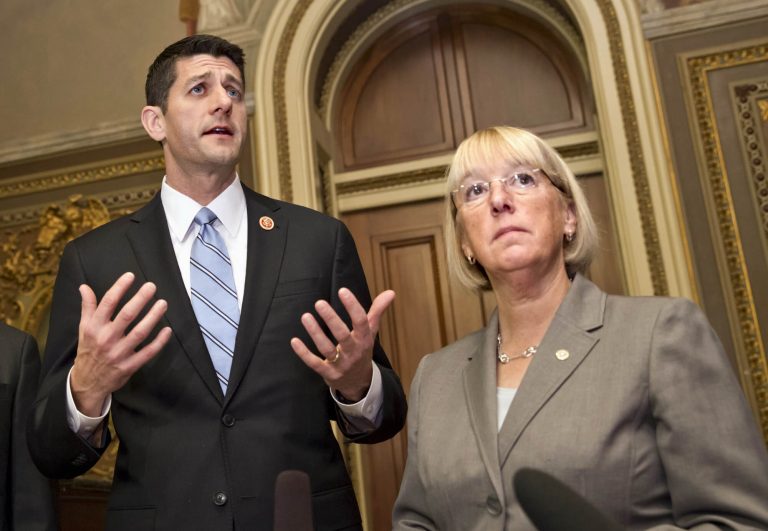
New report on evidence-based policymaking boasts recommendations that Congress must take seriously (opens in a new tab)
Essays SEP 7, 2017
The bipartisan, congressionally mandated Commission on Evidence-Based Policymaking released its final report today, advocating for a number of sound changes to the way the federal government collects, manages, and makes…
By: Austin Clemens (opens in a new tab)

Pay transparency is good for employees but can also benefit businesses (opens in a new tab)
Essays SEP 6, 2017
The Trump administration announced this past week that it is halting the implementation of an Obama-era rule that would have required U.S. employers with 100 or more employees to report…
By: Bridget Ansel (opens in a new tab)

When the next recession hits, how will fiscal stimulus affect government debt sustainability? (opens in a new tab)
Essays AUG 31, 2017
There’s a strain of thinking that argues any options for fighting the next recession are bound by the response to the past recession and other previous policy decisions. Take, for…
By: Nick Bunker (opens in a new tab)

How would homebuyers respond to a less generous U.S. mortgage interest deduction? (opens in a new tab)
Essays AUG 30, 2017
What would happen to U.S. homeownership rates, home sizes, and borrowing levels if tax reform reduces the generosity of the home mortgage interest deduction? A recent working paper examining the…
By: Nisha Chikhale (opens in a new tab)

No one measure of inequality tells the whole story–income, wealth, and consumption should be considered together (opens in a new tab)
Essays AUG 29, 2017
The Bureau of Labor Statistics, or BLS, releases the results of its annual Consumer Expenditure Survey, or CEX, today. This survey asks people to report their spending in dozens of…
By: Austin Clemens (opens in a new tab)

Preferential pass-through tax rates and the declining share of labor income in the United States (opens in a new tab)
Essays AUG 10, 2017
A new working paper underscores the importance of pass-through businesses, S corporations, and partnerships.
By: Nisha Chikhale (opens in a new tab)

The importance of equitable growth for future mobility in the United States (opens in a new tab)
Essays AUG 10, 2017
A recent paper looks at the likelihood that a child would earn the same amount of money or more than their parents at the same age.
By: Nick Bunker (opens in a new tab)
Disclosing salary history perpetuates past discrimination (opens in a new tab)
Essays AUG 9, 2017
A growing number of states and cities are passing legislation banning employers from asking about salary history during the job application process.
By: Bridget Ansel (opens in a new tab)
JOLTS Day Graphs: June 2017 Report Edition (opens in a new tab)
Essays AUG 8, 2017
Every month the U.S. Bureau of Labor Statistics releases data on hiring, firing, and other labor market flows from the Job Openings and Labor Turnover Survey, better known as JOLTS.…
By: Nick Bunker (opens in a new tab)

Measuring potential GDP in the United States, and the case for emphasizing demand in monetary policy (opens in a new tab)
Essays AUG 7, 2017
A recent study casts some doubts about the decline in estimates of potential gross domestic product in recent years.
By: Nick Bunker (opens in a new tab)

A glance at pay inequities for African American women’s Equal Pay Day (opens in a new tab)
Essays JUL 31, 2017
Today marks African American women’s Equal Pay Day, which represents the day that black women must work to in 2017 to make the same amount of money that men (of…
By: Nisha Chikhale (opens in a new tab)

Understanding the importance of antitrust policy for U.S. economic competitiveness and consumer choice (opens in a new tab)
Essays JUL 31, 2017
A new Equitable Growth paper documents the rise in industry concentration and examines the evidence for one possible explanation: the change in merger enforcement policy.
By: Liz Hipple (opens in a new tab)
Must-Read: Washington Center for Equitable Growth announces fourth round of annual grantmaking, bringing total awards to nearly $3 million (opens in a new tab)
Essays JUL 29, 2017
Must-Read: Equitable Growth announces new slate of grantees The Washington Center for Equitable Growth is excited to announce its 2017 class of grantees. Equitable Growth’s fourth slate of grant awards…

Has the momentum around paid leave reached a tipping point in the United States? (opens in a new tab)
Essays JUL 27, 2017
Existing state policies show that paid family leave based on a social insurance model can provide a critical benefit for everyone in the U.S. workforce.
By: Bridget Ansel (opens in a new tab)
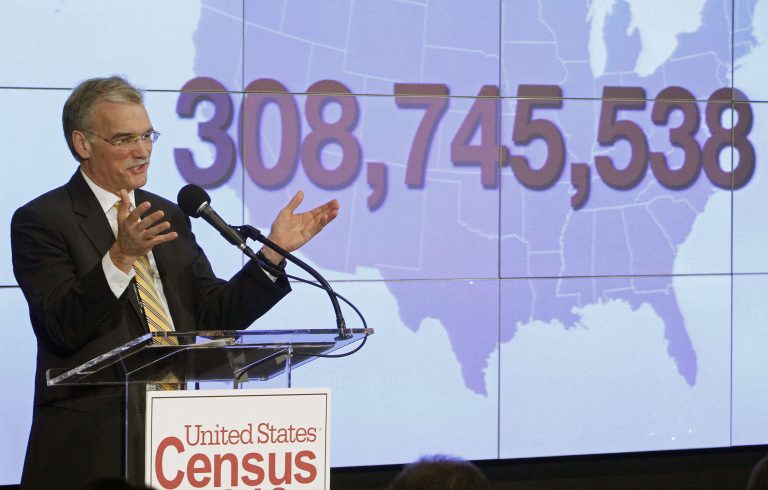
Will the United States give up on data collection? (opens in a new tab)
Essays JUL 26, 2017
The federal statistical agencies that collect important data are being threatened by insufficient funding proposals.
By: Austin Clemens (opens in a new tab)
Recessions, recoveries, and racial employment gaps in the United States (opens in a new tab)
Essays JUL 19, 2017
A recent paper looks at what might explain the differences in unemployment broken down by race and gender.
By: Nick Bunker (opens in a new tab)

Is declining competition causing slow U.S. business investment growth? (opens in a new tab)
Essays JUL 18, 2017
A new paper looks for evidence of a causal relationship between competition and investment.
By: Nick Bunker (opens in a new tab)

Are economic boom-and-bust cycles stronger when capital is more available? (opens in a new tab)
Essays JUL 12, 2017
A new Equitable Growth working paper illustrates the potential downsides for an economy when credit growth jumps upward.
By: Nick Bunker (opens in a new tab)
JOLTS Day Graphs: May 2017 Report Edition (opens in a new tab)
Essays JUL 11, 2017
Every month the U.S. Bureau of Labor Statistics releases data on hiring, firing, and other labor market flows from the Job Openings and Labor Turnover Survey, better known as JOLTS.…
By: Nick Bunker (opens in a new tab)

Equity, efficiency and education spending in the United States (opens in a new tab)
Essays JUN 27, 2017
Many studies of the long-term effects of pre-kindergarten programs in the United States find that they improve outcomes for those pre-K kids later in life, yet the effects on educational…
By: Nick Bunker (opens in a new tab)
Is the Fed being misguided by the Phillips curve? (opens in a new tab)
Essays JUN 21, 2017
Looking at the numbers, there’s some reason to be skeptical of the Federal Reserve’s implicit Philips curve.
By: Nick Bunker (opens in a new tab)

The unfortunate power of stereotypes (opens in a new tab)
Essays JUN 19, 2017
A new working paper finds that some judges make faulty decisions due to a systemic lack of accurate information based on racial stereotypes that drive bail decisions.
By: Heather Boushey (opens in a new tab)

Conservation easements and tax policies in the United States (opens in a new tab)
Essays JUN 15, 2017
Conservation easements are an illustrative example of the inequities inherent in the federal tax deduction for charitable contributions.
By: Kavya Vaghul (opens in a new tab)
A research roundup on unpredictable schedules in the United States (opens in a new tab)
Essays JUN 14, 2017
Unpredictable scheduling practices have negative economic ramifications for workers and their families, businesses, and the broader economy.
By: Bridget Ansel (opens in a new tab)

Time for the Fed to look beyond 2 percent target inflation? (opens in a new tab)
Essays JUN 13, 2017
The Federal Reserve’s 2 percent inflation target might have been the right target at a certain point in time, but it looks like its time has passed.
By: Nick Bunker (opens in a new tab)

Who loses disability insurance when it’s harder to apply? (opens in a new tab)
Essays JUN 12, 2017
Recent research finds that merely making it more difficult to apply for disability insurance pushes away the people who need help the most.
By: Nick Bunker (opens in a new tab)

JOLTS Day Graphs: April 2017 Report Edition (opens in a new tab)
Essays JUN 6, 2017
Every month the U.S. Bureau of Labor Statistics releases data on hiring, firing, and other labor market flows from the Job Openings and Labor Turnover Survey, better known as JOLTS.…
By: Nick Bunker (opens in a new tab)

Monetary policy via income redistribution (opens in a new tab)
Essays JUN 5, 2017
Traditionally, central bankers haven’t considered income and wealth inequality much when they conduct monetary policy. Perhaps some of them think about the impact of monetary policy on the levels of…
By: Nick Bunker (opens in a new tab)

Venture capital’s gender gap is costly for firms and the economy (opens in a new tab)
Essays JUN 1, 2017
A new study uncovers a surprising performance enhancer for venture capital funds: hiring partners who have daughters. A recent study by business professor Paul A. Gompers and doctorate student Sophie…
By: Bridget Ansel (opens in a new tab)

What unconventional policies are likely to stay in central bankers’ toolkits? (opens in a new tab)
Essays MAY 30, 2017
According to a recent paper from four economists, monetary policy innovations of the financial crisis era are likely to remain in central bankers’ toolkits.
By: Nick Bunker (opens in a new tab)

Trump administration 2018 budget swaps heavy cuts to education for focus on school choice (opens in a new tab)
Essays MAY 25, 2017
President Donald Trump’s budget for fiscal year 2018 beginning October 1 and released this past Tuesday contains some potentially bad news for the state of education in the United States.…
By: Kavya Vaghul (opens in a new tab)
Why enforcing U.S. labor standards may be more important than ever (opens in a new tab)
Essays MAY 24, 2017
These four fundamental characteristics of our labor market come together to make effective, strategic enforcement of labor protections more important than ever before.
By: Elisabeth Jacobs (opens in a new tab)
U.S. over-education and underemployment over the course of a lifetime (opens in a new tab)
Essays MAY 23, 2017
New research for the Washington Center for Equitable Growth shows that underemployment may be more prevalent for older workers than young workers.
By: Nick Bunker (opens in a new tab)

Just how big does the Federal Reserve’s balance sheet need to be? (opens in a new tab)
Essays MAY 18, 2017
For the past couple of years, the big question in U.S. monetary policy has been when the Federal Reserve will raise short-term interest rates. After raising short-term rates 0.25 percentage…
By: Nick Bunker (opens in a new tab)

A reminder on the current size of the gig economy (opens in a new tab)
Essays MAY 17, 2017
In a piece for a recent issue of The New Yorker, Nathan Heller reviews the impact of the gig economy in the United States. Heller looks at how the growth…
By: Nick Bunker (opens in a new tab)

Home is where the government subsidy is (opens in a new tab)
Essays MAY 16, 2017
In a piece in The New York Times Magazine, Harvard University sociologist Matthew Desmond outlines how U.S. government policy toward housing has become a source of inequality rather than a…
By: Nick Bunker (opens in a new tab)

Climbing the career ladder, switching jobs, and the gender wage gap in the United States (opens in a new tab)
Essays MAY 15, 2017
Want to earn more? That means you need to get a raise or promotion at your current job, or go out and find a new one with that same end…
By: Bridget Ansel (opens in a new tab)

How the opening to China may have partially fueled the U.S. housing bubble (opens in a new tab)
Essays MAY 11, 2017
The U.S. housing bubble burst more than 10 years ago, but the exact reasons for its inflation are still under debate. Consider the timing of the bubble (roughly 2002 to…
By: Nick Bunker (opens in a new tab)

Better understanding the importance of diversity in U.S. preschool programs (opens in a new tab)
Essays MAY 10, 2017
There’s a general consensus that early childhood education programs are a worthwhile investment in the United States for participants, their families, and the public at large. By nurturing both cognitive…
By: Kavya Vaghul (opens in a new tab)

JOLTS Day Graphs: March 2017 Report Edition (opens in a new tab)
Essays MAY 9, 2017
Every month the U.S. Bureau of Labor Statistics releases data on hiring, firing, and other labor market flows from the Job Openings and Labor Turnover Survey, better known as JOLTS.…
By: Nick Bunker (opens in a new tab)
Changes in U.S. lifetime income inequality (opens in a new tab)
Essays MAY 8, 2017
New research shows the significant decline in lifetime income growth for most men in the United States over the past six decades and provides some evidence that the gains for…
By: Nick Bunker (opens in a new tab)
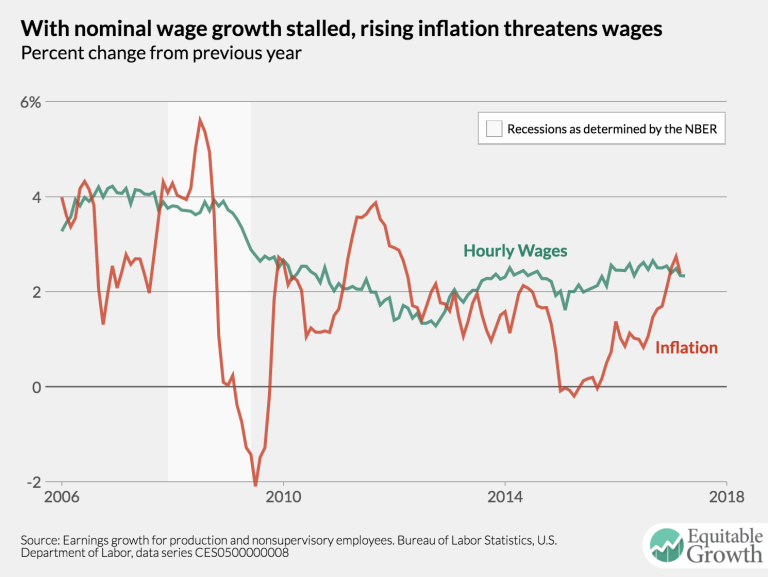
Equitable Growth’s Jobs Day Graphs: April 2017 Report Edition (opens in a new tab)
Essays MAY 5, 2017
Earlier this morning, The U.S. Bureau of Labor Statistics released new data on the U.S. labor market during the month of April. Below are five graphs compiled by Equitable Growth…
By: Equitable Growth (opens in a new tab)
Some very worrying trends in U.S. lifetime income growth (opens in a new tab)
Essays MAY 4, 2017
Most measures of income—and therefore income inequality—are snapshots in time. They look at one year and treat everyone who earned the same amount of money in that year as similar.…
By: Nick Bunker (opens in a new tab)

What’s going to reduce U.S. corporate savings? (opens in a new tab)
Essays MAY 3, 2017
Apple, Inc. has quite a bit of cash on its hands. The company has around a quarter of a trillion dollars in savings these days, with about 90 percent stashed…
By: Nick Bunker (opens in a new tab)

Should policymakers worry about the level of debt or the pace of credit growth? (opens in a new tab)
Essays MAY 1, 2017
Concern that a buildup in debt around the globe is going to cause some problems for financial and economic stability isn’t controversial. The bursting of the U.S. housing bubble in…
By: Nick Bunker (opens in a new tab)

How gig economy companies fit (or don’t fit) into the tax system (opens in a new tab)
Essays APR 27, 2017
In any major U.S. city today, hailing a ride straight from a cell phone, booking a short-term stay in a complete stranger’s house for vacation, or even soliciting help through…
By: Kavya Vaghul (opens in a new tab)

The student loan crisis is fueled by a weak labor market (opens in a new tab)
Essays APR 26, 2017
The student debt crisis in the United States continues to escalate. Over the past 17 years, the outstanding student loan balance has nearly quadrupled, reaching $1.4 trillion, and between 2000…
By: Kavya Vaghul (opens in a new tab)

Macro-prudential financial regulations versus capital controls (opens in a new tab)
Essays APR 25, 2017
A recent speech by the Bank of International Settlements’ head of research, Hyun Song Shin, could not be more timely. Shin argues that a recent re-evaluation of capital controls on…
By: Nick Bunker (opens in a new tab)

The importance of unemployment benefits for protecting against income drops (opens in a new tab)
Essays APR 25, 2017
During the worst part of the Great Recession, virtually every segment of the U.S. economy was adversely affected. Employment losses were severe and unevenly distributed, making many likely to be…
By: Nisha Chikhale (opens in a new tab)
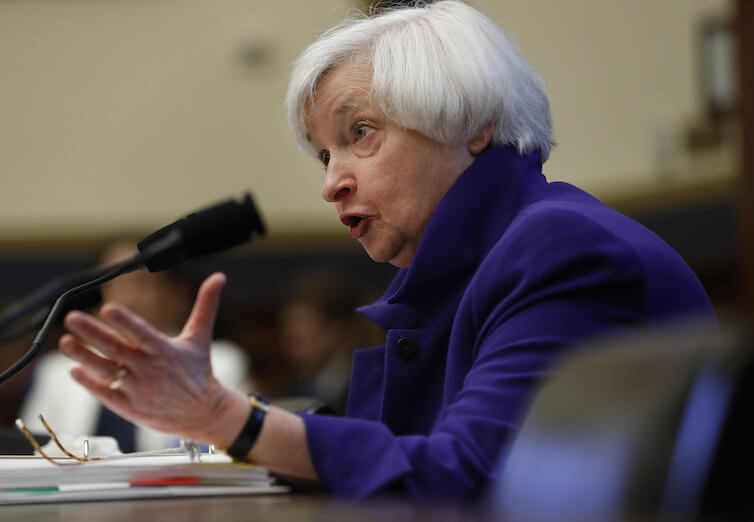
What would rules-based monetary policy look like? (opens in a new tab)
Essays APR 20, 2017
Governments in the leading economies of the world, including the United States, have given their central banks operational control of monetary policy over the past several decades. These seemingly more…
By: Nick Bunker (opens in a new tab)

A few graphs for Tax Day 2017 (opens in a new tab)
Essays APR 18, 2017
If you haven’t filed your federal taxes yet, here’s a reminder that today is Tax Day. As tax-filing season (at least for those who haven’t gotten an extension) comes to…
By: Kavya Vaghul (opens in a new tab)

U.S. income inequality trends in the 21st century (opens in a new tab)
Essays APR 17, 2017
How much has income inequality risen in the United States? Well, how do you define income? And what time period are you looking at? The most well-known statistics about income…
By: Nick Bunker (opens in a new tab)

A new way to look at how U.S. firms affect their workers’ pay now and in the future (opens in a new tab)
Essays APR 12, 2017
Economists and other social scientists have spent years focused almost solely on changes in the attributes of workers in their efforts to understand rising inequality in the United States, examining…
By: Nick Bunker (opens in a new tab)
JOLTS Day Graphs: February 2017 Report Edition (opens in a new tab)
Essays APR 11, 2017
Every month the U.S. Bureau of Labor Statistics releases data on hiring, firing, and other labor market flows from the Job Openings and Labor Turnover Survey, better known as JOLTS.…
By: Nick Bunker (opens in a new tab)

How corporate profit-shifting distorts the measurement of U.S. productivity (opens in a new tab)
Essays APR 10, 2017
The various ways in which companies reduce their tax bills can do some weird things to economic statistics. One startling case in point: The economies of the world appear to…
By: Nick Bunker (opens in a new tab)
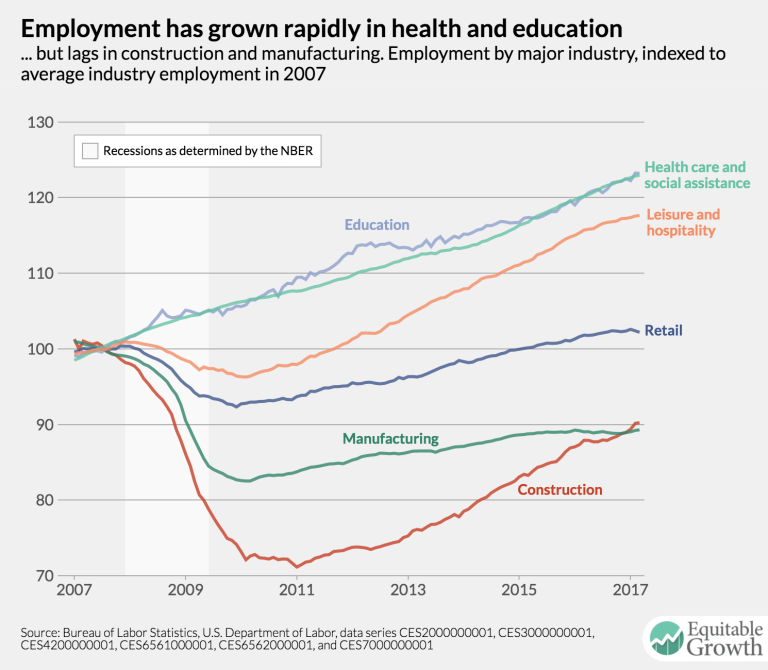
Equitable Growth’s Jobs Day Graphs: March 2017 Report Edition (opens in a new tab)
Essays APR 7, 2017
Earlier this morning, The U.S. Bureau of Labor Statistics released new data on the U.S. labor market during the month of March. Below are five graphs compiled by Equitable Growth…
By: Austin Clemens (opens in a new tab)

Evidence of ongoing gender discrimination in the U.S. labor market (opens in a new tab)
Essays APR 6, 2017
In his 1957 book, The Economics of Discrimination, the late Nobel Prize-winning economist Gary Becker argued that well-functioning markets work inexorably to eliminate racial, and other forms of, discrimination. By…
By: John Schmitt (opens in a new tab)

Time for an inflation rethink? (opens in a new tab)
Essays APR 5, 2017
Has the time come for central bankers to rethink their policy goals for inflation? In the Wall Street Journal earlier this week, David Harrison writes that just such a reconsideration…
By: Nick Bunker (opens in a new tab)
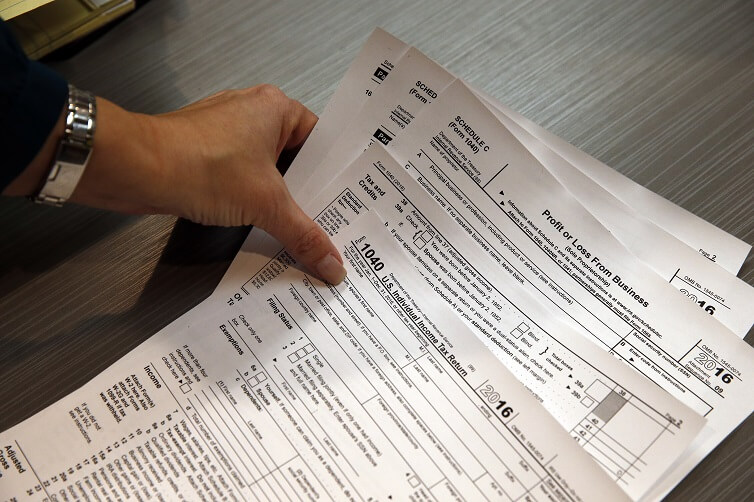
Remembering who pays Uncle Sam this year’s Tax Day (opens in a new tab)
Essays APR 4, 2017
With April 15 falling on a Saturday this year, Tax Day is on Tuesday, April 18. While it may not be everyone’s idea of a good time to finalize last-minute…
By: Heather Boushey (opens in a new tab)
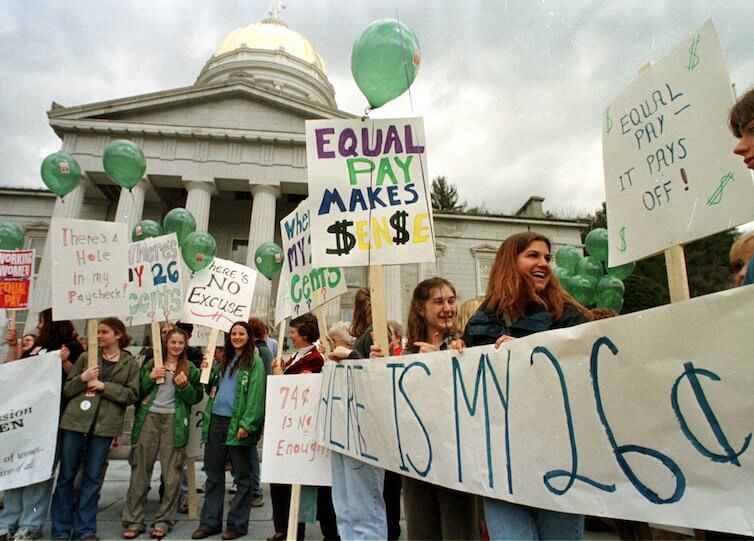
Do U.S. women choose low-paid occupations, or do low-paid occupations choose them? (opens in a new tab)
Essays APR 3, 2017
Tomorrow is Equal Pay Day, a “holiday” in the United States that symbolizes how far into the year women must work to earn what men did the previous year. Today,…
By: Bridget Ansel (opens in a new tab)
Despite increases, diversity still comes up short in U.S. venture capital (opens in a new tab)
Essays APR 3, 2017
Business leaders and organizations in the United States have lauded the impact of racial, ethnic, and gender diversity on companies’ bottom lines. From the acknowledgement by Forbes that a diverse…
By: Gabriel Matthews (opens in a new tab)

The once and future measurement of economic inequality in the United States (opens in a new tab)
Essays MAR 30, 2017
A slew of research into economic inequality replete with serious looking graphs may give the impression that measuring inequality in the United States is a solved problem. This is misleading.…
By: Austin Clemens (opens in a new tab)
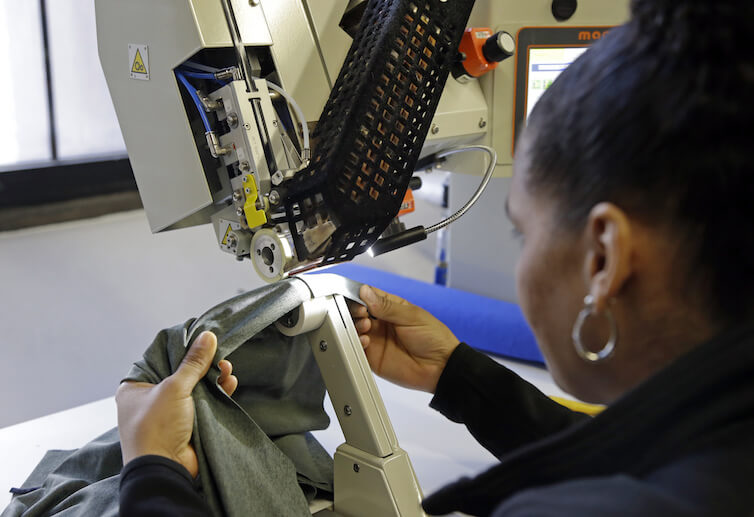
Another take on declining productivity growth in high-income countries (opens in a new tab)
Essays MAR 28, 2017
By now, the slowdown in productivity growth in the United States and other high-income countries is a well-known and much lamented trend. A slightly less appreciated aspect of productivity growth…
By: Nick Bunker (opens in a new tab)

Look to the 49th state for basic-income guidance (opens in a new tab)
Essays MAR 27, 2017
What do Finland, the province of Ontario, the Italian city of Livorno, the African nations of Kenya, Namibia, and Uganda, the Indian state of Madhya Pradesh, and the 49th state…
By: Heather Boushey (opens in a new tab)

What kind of fiscal policy works best at the zero lower bound? (opens in a new tab)
Essays MAR 23, 2017
When central banks can no longer push down short-term interest rates, what are macroeconomic policymakers to do? Policymakers and researchers had a wide-ranging debate about the kinds of unconventional monetary…
By: Nick Bunker (opens in a new tab)

Is an even larger pass-through business tax loophole destined to become part of the U.S. tax code? (opens in a new tab)
Essays MAR 22, 2017
Current conversations among academics and policymakers about corporate tax reform in the United States largely focus on the controversial border adjustment tax, projected revenue losses, and the distributional impacts of…
By: Kavya Vaghul (opens in a new tab)

How life experiences affect the views of U.S. monetary policymakers (opens in a new tab)
Essays MAR 21, 2017
The minutes of meetings of the Federal Open Market Committee are full of considerations of the latest economic data and deliberations about economic models. Data are parsed and the stability…
By: Nick Bunker (opens in a new tab)

Does Supplemental Security Income inhibit success? (opens in a new tab)
Essays MAR 20, 2017
It’s been nearly 21 years since the federal Personal Responsibility and Work Opportunity Reconciliation Act—commonly known as welfare reform—was passed. Most of the debate about the legacy of the bill…
By: Dionna Cheatham (opens in a new tab), Gabriel Matthews (opens in a new tab)
JOLTS Day Graphs: January 2017 Report Edition (opens in a new tab)
Essays MAR 16, 2017
Every month the U.S. Bureau of Labor Statistics releases data on hiring, firing, and other labor market flows from the Job Openings and Labor Turnover Survey, better known as JOLTS.…
By: Nick Bunker (opens in a new tab)

Changing sources of inflationary pressures in the United States (opens in a new tab)
Essays MAR 15, 2017
What drives inflation in the United States today is a $19 trillion question. The Federal Open Markets Committee is wrapping up its March meeting and is almost certain to announce…
By: Nick Bunker (opens in a new tab)

A potentially new and rising concern: inflation inequality in the United States (opens in a new tab)
Essays MAR 14, 2017
The rich are different from you and me. They have different consumption baskets. At least that is the tentative conclusion that some scholars are making in their recent research on…
By: Nick Bunker (opens in a new tab)

Does targeted or universal pre-Kindergarten better serve low-income kids? (opens in a new tab)
Essays MAR 13, 2017
Investing in early childhood education is a research-backed, cost-effective strategy for boosting long-term U.S. economic growth. For instance, economics Nobel Laureate James Heckman’s analyses of two comprehensive early childhood programs…
By: Elisabeth Jacobs (opens in a new tab)

College may not be the great equalizer across race and ethnicity (opens in a new tab)
Essays MAR 13, 2017
There’s a common perception that college is the great equalizer in the United States, a pathway to leveling the playing field between students from different socioeconomic groups. But the jury’s…
By: Kavya Vaghul (opens in a new tab)
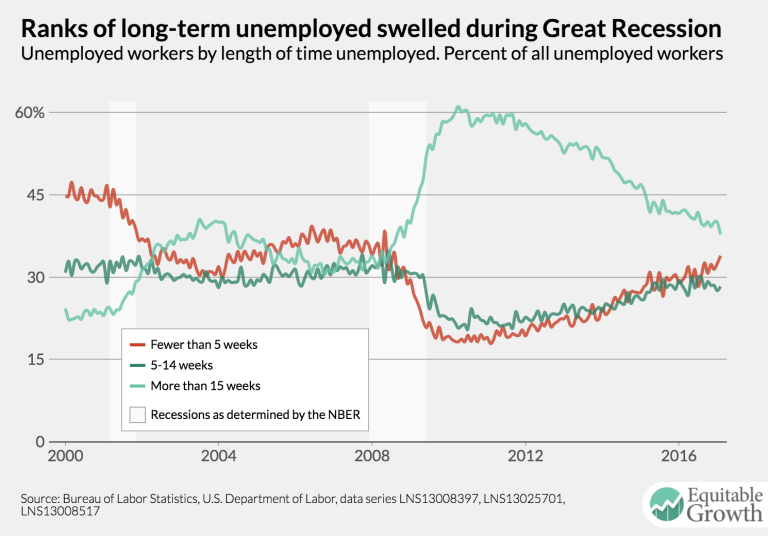
Equitable Growth’s Jobs Day Graphs: February 2017 Report Edition (opens in a new tab)
Essays MAR 10, 2017
Earlier this morning, The U.S. Bureau of Labor Statistics released new data on the U.S. labor market during the month of February. Below are five graphs compiled by Equitable Growth…
By: Equitable Growth (opens in a new tab)

The connection between U.S. unemployment and rising opioid abuse (opens in a new tab)
Essays MAR 7, 2017
Opioid abuse, or more accurately the upsurge in opioid abuse, is a headline-grabbing concern for many policymakers, who alongside a number of researchers are wading through the causes and implications…
By: Nick Bunker (opens in a new tab)

A childcare plan for wealthy families in the United States (opens in a new tab)
Essays MAR 6, 2017
The vast majority of children up and down the income scale grow up in dual-earner or single-parent homes. Without a parent who is able to care for children at home,…
By: Nisha Chikhale (opens in a new tab)

Thinking about levels when it comes to macroeconomic policy targets (opens in a new tab)
Essays MAR 2, 2017
In a piece last week at The New York Times’s the Upshot, Neil Irwin highlighted probably the biggest question for the U.S. economy in 2017: How far is it from…
By: Nick Bunker (opens in a new tab)

Sustaining preschool gains can help the benefits of early childhood education endure (opens in a new tab)
Essays MAR 1, 2017
In order to counter the “fade-out” of early childhood education’s benefits, research and policymakers need to think more about sustaining its gains.
By: Kavya Vaghul (opens in a new tab)

Declining business dynamism and illusive allocative efficiency (opens in a new tab)
Essays FEB 28, 2017
New research suggests that fewer U.S. companies are being started and workers are less likely to switch jobs, which could hurt productivity.
By: Nick Bunker (opens in a new tab)

Local economic decline affects marriage and fertility rates, but in a surprising way (opens in a new tab)
Essays FEB 27, 2017
Traditional marriage patterns are more common in areas where men’s economic status remains superior to women’s, but less so where men’s jobs have taken the largest hit.
By: Bridget Ansel (opens in a new tab)

What’s the problem a U.S. corporate tax cut will solve? (opens in a new tab)
Essays FEB 23, 2017
Given previous tax reform efforts and trends among corporations, policymakers should be skeptical that the new House tax reform proposal will do much to spur economic growth.
By: Nick Bunker (opens in a new tab)

The U.S. minimum wage improves access to traditional lines of credit (opens in a new tab)
Essays FEB 22, 2017
Economists have studied the employment effects of the minimum wage for more than a century. A fair reading of the full body of research suggests that increases in the minimum…
By: John Schmitt (opens in a new tab)
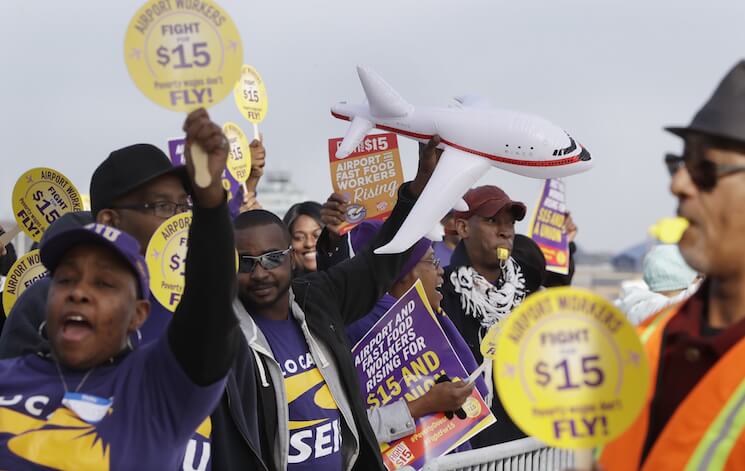
Why is collective bargaining so difficult in the United States compared to its international peers? (opens in a new tab)
Essays FEB 22, 2017
In many countries, there are striking differences between union coverage and density rates.
By: Matt Markezich (opens in a new tab)
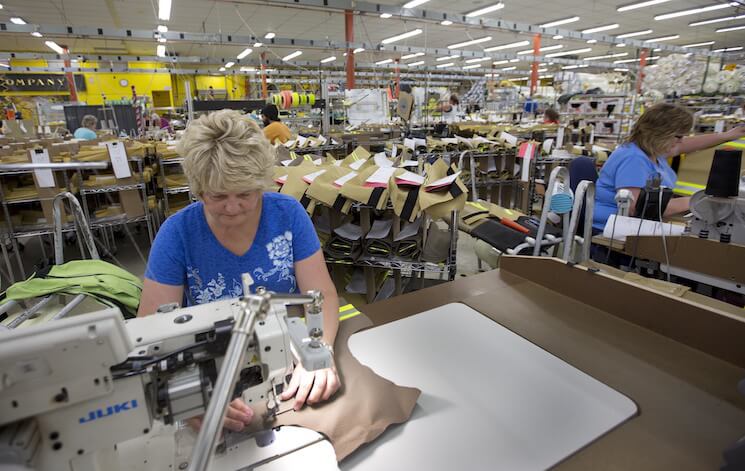
Are shocks to U.S. firm performance transmitted to their workers? (opens in a new tab)
Essays FEB 16, 2017
A new paper investigates whether changes in market demand faced by employers creates volatility in workers’ earnings.
By: Nisha Chikhale (opens in a new tab)

Can women’s “sagging middle” help explain the fall in U.S. labor force participation rates? (opens in a new tab)
Essays FEB 16, 2017
A new paper finds that a substantial share of women exit the labor force in their mid-30s through their mid-40s.
By: Elisabeth Jacobs (opens in a new tab)

Americans’ feelings about the U.S. economy make sense (opens in a new tab)
Essays FEB 15, 2017
A common conundrum for economists is the ongoing disconnect between macroeconomic outcomes and how Americans report feeling about the economy. While the economy is growing at a respectable rate, more…
By: Heather Boushey (opens in a new tab)

Modeling the decline in U.S. interest rates (opens in a new tab)
Essays FEB 14, 2017
A new framework for understanding why interest rates have declined so much may help us understand where interest rates will head and how policy might boost the natural rate of…
By: Nick Bunker (opens in a new tab)

U.S. millennials, the racial wealth divide, and asking parents for rent (opens in a new tab)
Essays FEB 13, 2017
Parents who help their adult children pay rent are likely to be disproportionately white, which could ultimately deepen the racial wealth gap.
By: Bridget Ansel (opens in a new tab)

U.S. tax revenue will rise modestly in the next 10 years, no thanks to corporate taxes (opens in a new tab)
Essays FEB 9, 2017
The continued erosion of corporate tax revenues will have long-term effects on total federal revenues and could even contribute to a further rise in income inequality.
By: Kavya Vaghul (opens in a new tab)

Why the United States still needs paid family and medical leave (opens in a new tab)
Essays FEB 8, 2017
With the re-introduction of the FAMILY Act in Congress yesterday, a look at the policy and economics landscape for paid family leave.
By: Matt Markezich (opens in a new tab)

JOLTS Day Graphs: December 2016 Report Edition (opens in a new tab)
Essays FEB 7, 2017
Every month the U.S. Bureau of Labor Statistics releases data on hiring, firing, and other labor market flows from the Job Openings and Labor Turnover Survey, better known as JOLTS.…
By: Nick Bunker (opens in a new tab)
What’s behind the decline in U.S. interest rates? (opens in a new tab)
Essays FEB 6, 2017
A new paper takes a look at secular stagnation and the forces behind declining U.S. interest rates.
By: Nick Bunker (opens in a new tab)
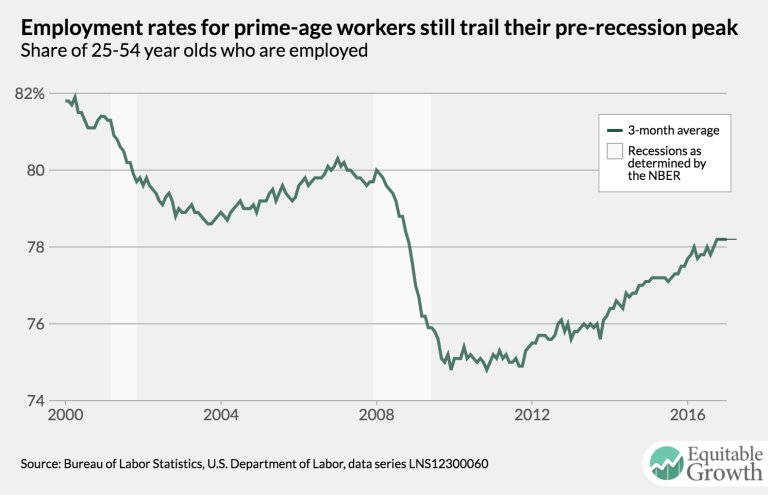
Equitable Growth’s Jobs Day Graphs: January 2017 Report Edition (opens in a new tab)
Essays FEB 3, 2017
Earlier this morning, The U.S. Bureau of Labor Statistics released new data on the U.S. labor market during the month of January. Below are five graphs compiled by Equitable Growth…
By: Equitable Growth (opens in a new tab)

An uncertain time at the Federal Reserve (opens in a new tab)
Essays FEB 1, 2017
With the start of a new year and a new presidential administration, uncertainties about how much slack remains in the labor market and the path of federal fiscal policy hang…
By: Nick Bunker (opens in a new tab)

The vast wealth gap between black and white women in the United States (opens in a new tab)
Essays JAN 31, 2017
Black women face a glaring gap in terms of wealth in comparison to white women.
By: Bridget Ansel (opens in a new tab)

The challenging and continuing slide in U.S. unionization rates (opens in a new tab)
Essays JAN 26, 2017
Every January, the U.S. Bureau of Labor Statistics releases new data on how many workers in the United States are members of unions or are covered by union contracts. Today,…
By: Heather Boushey (opens in a new tab)

Falling behind the rest of the world: Childcare in the United States (opens in a new tab)
Essays JAN 25, 2017
The United States spends less than almost all other developed countries on programs that help families and children.
By: Bridget Ansel (opens in a new tab), Matt Markezich (opens in a new tab)

Demographics, robots, and global economic growth (opens in a new tab)
Essays JAN 24, 2017
Several economists have raised the alarm that an older population will slow growth, but a new working paper suggests that these fears may be overblown.
By: Nick Bunker (opens in a new tab)

When recessions happen, who’s most at risk? (opens in a new tab)
Essays JAN 23, 2017
According to a new study, low-earning individuals, men, and workers in construction and manufacturing are more at risk during a recession.
By: Nick Bunker (opens in a new tab)

Across developed countries, family policies help women (opens in a new tab)
Essays JAN 19, 2017
A new working paper examines family policy across Western, high-income countries, to try and establish whether there is a cause-and-effect relationship between family polices and women’s employment outcomes.
By: Bridget Ansel (opens in a new tab)
Outsourcing and rising wage inequality in the United States and Germany (opens in a new tab)
Essays JAN 18, 2017
A new paper looking at German workers finds that domestic outsourcing leads to wage reductions of about 10 percent.
By: Nick Bunker (opens in a new tab)
Failing to invest in young kids is damaging the U.S. economy (opens in a new tab)
Essays JAN 17, 2017
A new report put out late last month by the White House Council of Economic Advisors finds that national spending levels for children are lowest for those under the age…
By: Bridget Ansel (opens in a new tab)
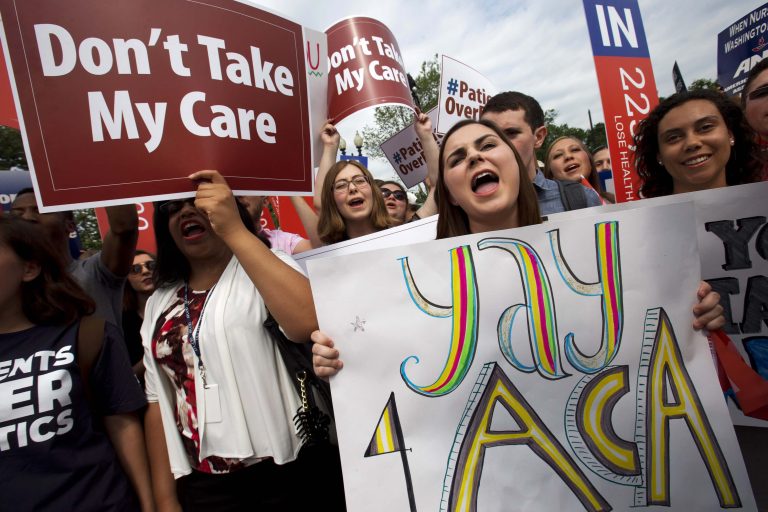
Repealing the Affordable Care Act could exacerbate U.S. income and health inequality (opens in a new tab)
Essays JAN 12, 2017
This week, Congress is beginning to take steps to repeal the Affordable Care Act. New research shows that repeal could have significant consequences for U.S. income and health inequality. The…
By: Kavya Vaghul (opens in a new tab)

Rising U.S. business concentration and the decline in labor’s share of income (opens in a new tab)
Essays JAN 10, 2017
A paper presented this past weekend at the annual meeting of the Allied Social Science Associations in Chicago offers a new take on an increasingly important economic policy question: What’s…
By: Nick Bunker (opens in a new tab)
#ASSA2017 Day 3 roundup (opens in a new tab)
Essays JAN 8, 2017
The annual meeting of the Allied Social Science Associations is this weekend in Chicago. The conference features hundreds of sessions covering a wide variety of economics research. Interesting papers are…
#ASSA2017 Day 2 roundup (opens in a new tab)
Essays JAN 7, 2017
The annual meeting of the Allied Social Science Associations is this weekend in Chicago. The conference features hundreds of sessions covering a wide variety of economics research. Interesting papers are…
#ASSA2017: Day 1 roundup (opens in a new tab)
Essays JAN 6, 2017
The annual meeting of the Allied Social Science Associations started today in Chicago. The conference features hundreds of sessions covering a wide variety of economics research. Interesting papers are all…
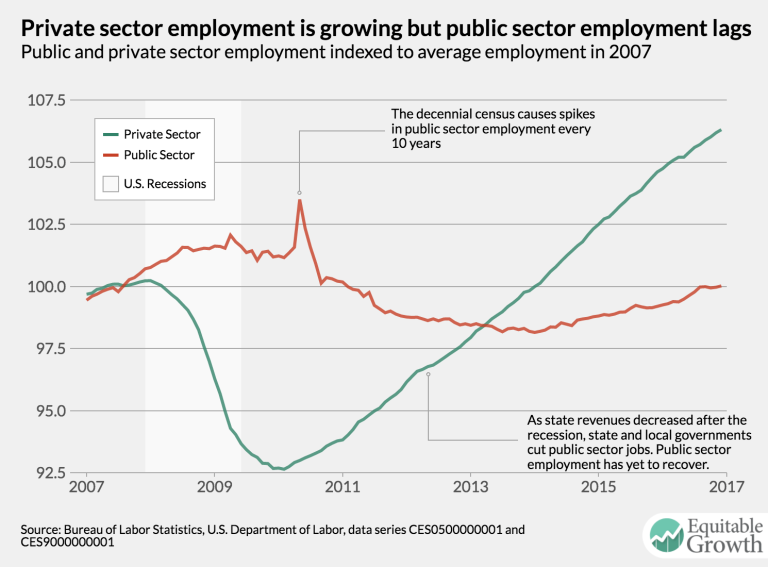
Equitable Growth’s Jobs Day Graphs: December 2016 Report Edition (opens in a new tab)
Essays JAN 6, 2017
Earlier this morning, The U.S. Bureau of Labor Statistics released new data on the U.S. labor market during the month of December. Below are five graphs compiled by Equitable Growth…
By: Equitable Growth (opens in a new tab)

U.S labor market tightness, hiring, and the decline in job switching (opens in a new tab)
Essays JAN 4, 2017
The U.S. labor market is heading toward full employment in 2017. But not every metric of labor market health seems to be in line with previous periods of labor market…
By: Nick Bunker (opens in a new tab)

The 10 most popular Value Added posts of 2016 (opens in a new tab)
Essays DEC 22, 2016
With the end of 2016 approaching, let’s take a look back at the 10 most popular Value Added posts this year: Does the one percent deserve what it gets? |…

The U.S. Recession and Recovery Have Been Tough on Everyone (opens in a new tab)
Essays DEC 20, 2016
The New York Times ran a surprising graph last week showing that the current economic recovery has been bad for white workers but a boon for workers of color. When…
By: John Schmitt (opens in a new tab), Nisha Chikhale (opens in a new tab)

Millions of Americans are stuck in part-time jobs (opens in a new tab)
Essays DEC 19, 2016
A new report finds that 6.4 million Americans are working part-time involuntarily.
By: Bridget Ansel (opens in a new tab)

Is U.S. investment capital flowing to the best possible destinations? (opens in a new tab)
Essays DEC 15, 2016
A new paper presents some data that might make us think about how efficient U.S. capital markets are these days.
By: Nick Bunker (opens in a new tab)

Many of the fastest growing jobs in the United States are missing men (opens in a new tab)
Essays DEC 14, 2016
Many of the occupations that will add the most jobs by 2024, including health care support, administrative assistance, early childhood care and education, and food preparation and services, are comprised…
By: Bridget Ansel (opens in a new tab)
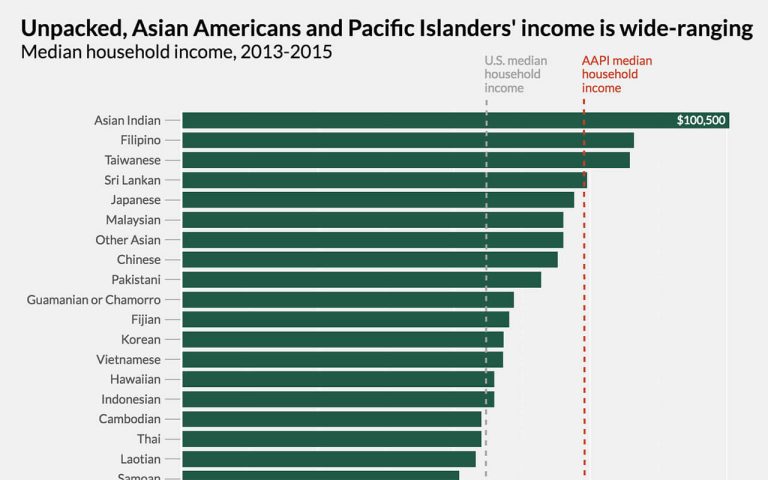
How data disaggregation matters for Asian Americans and Pacific Islanders (opens in a new tab)
Essays DEC 14, 2016
Hmong Americans are less likely than the average American to have a household income over $50,000, be employed, or be a college graduate. But the livelihoods of these families, which…
By: Christian Edlagan (opens in a new tab), Kavya Vaghul (opens in a new tab)

What could boost U.S. business investment? (opens in a new tab)
Essays DEC 13, 2016
Is everything alright with the state of business investment in the United States? Weak investment growth in the years since the Great Recession—both here and abroad—raises questions.
By: Nick Bunker (opens in a new tab)
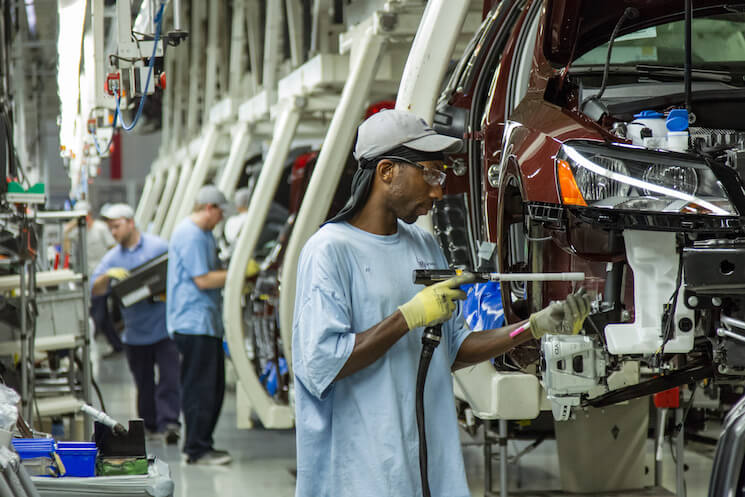
For American men, the black-white wage gap is at levels last seen in the 1950s (opens in a new tab)
Essays DEC 12, 2016
The median earnings gap between black and white men now stands at levels last seen more than 60 years ago, according to a new working paper by Patrick Bayer of…
By: Bridget Ansel (opens in a new tab)

The importance of equitable growth to absolute mobility in the United States (opens in a new tab)
Essays DEC 8, 2016
New research shows a precipitous decline in the probability that a person will earn more than their parents, what researchers call “absolute mobility.”
By: Nick Bunker (opens in a new tab)
How tight is the U.S. labor market? And how tight do we want it? (opens in a new tab)
Essays DEC 7, 2016
Data released this morning as part of the Job Openings and Labor Turnover Survey might be helpful not only when looking at the health of the labor market, but also…
By: Nick Bunker (opens in a new tab)


Your Direct Line to Cutting Edge Research
Be the first to know about our latest events, research releases, and expert insights. Get exclusive updates delivered right to your inbox and never miss an opportunity to engage with our community.