


Resources
From peer-reviewed research to accessible policy briefs, explore the scholarship that’s shaping debates and driving change.

205 Results


Factsheet: Using asset limits in public benefit programs (opens in a new tab)
Factsheets MAR 10, 2026
A household’s assets, or its overall wealth, are the resources required to ensure its family members can weather the financial disruption when unexpected expenses emerge. Yet many U.S. households do…
By: Megan Rivera (opens in a new tab)
ASSA 2026 Round-up: Day 2 (opens in a new tab)
Blog JAN 5, 2026
Yesterday was the second day of the 2026 annual meeting of the Allied Social Science Associations, which is organized by the American Economic Association. The 3-day conference, held in Philadelphia…
By: Equitable Growth (opens in a new tab)
ASSA 2026 Round-up: Day 1 (opens in a new tab)
Blog JAN 4, 2026
Yesterday was the first day of the 2026 annual meeting of the Allied Social Science Associations, which is organized by the American Economic Association. The 3-day conference, held in Philadelphia…
By: Equitable Growth (opens in a new tab)
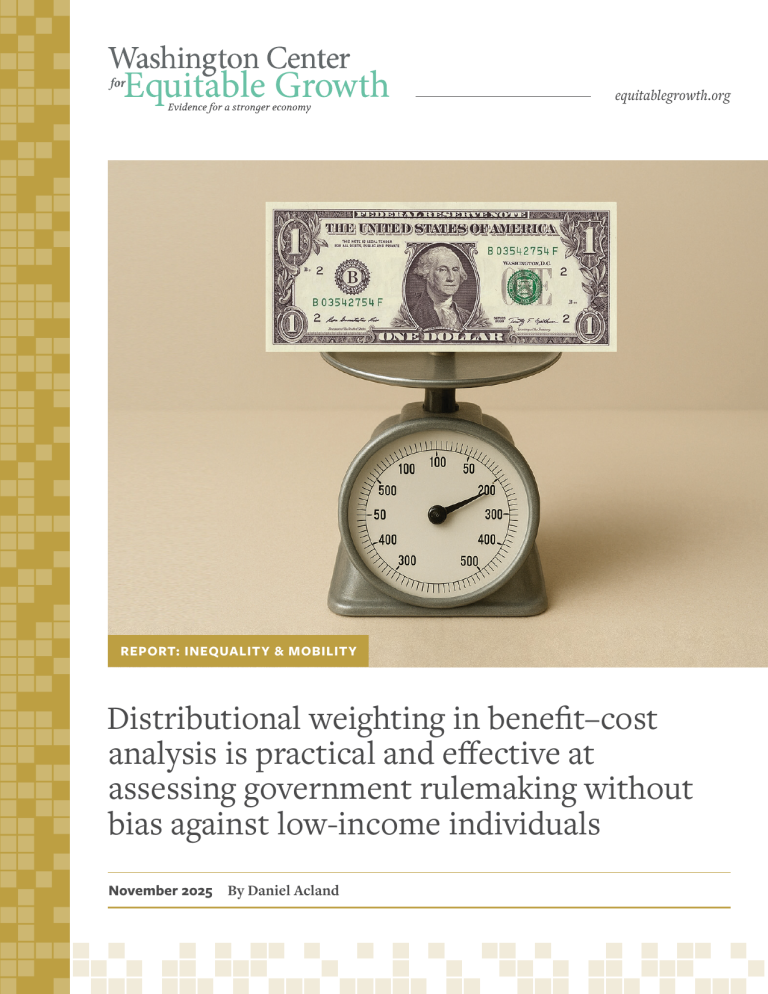
Distributional weighting in benefit-cost analysis is practical and effective at assessing government rulemaking without bias against low-income individuals (opens in a new tab)
Reports NOV 13, 2025
Distributional weighting in benefit-cost analysis is a tool for overcoming bias against lower-income individuals in economists’ measurements of the net benefit of government policies that affect populations at different levels…
By: Daniel Acland (opens in a new tab)
 View Chart
(opens in a new tab)
View Chart
(opens in a new tab)
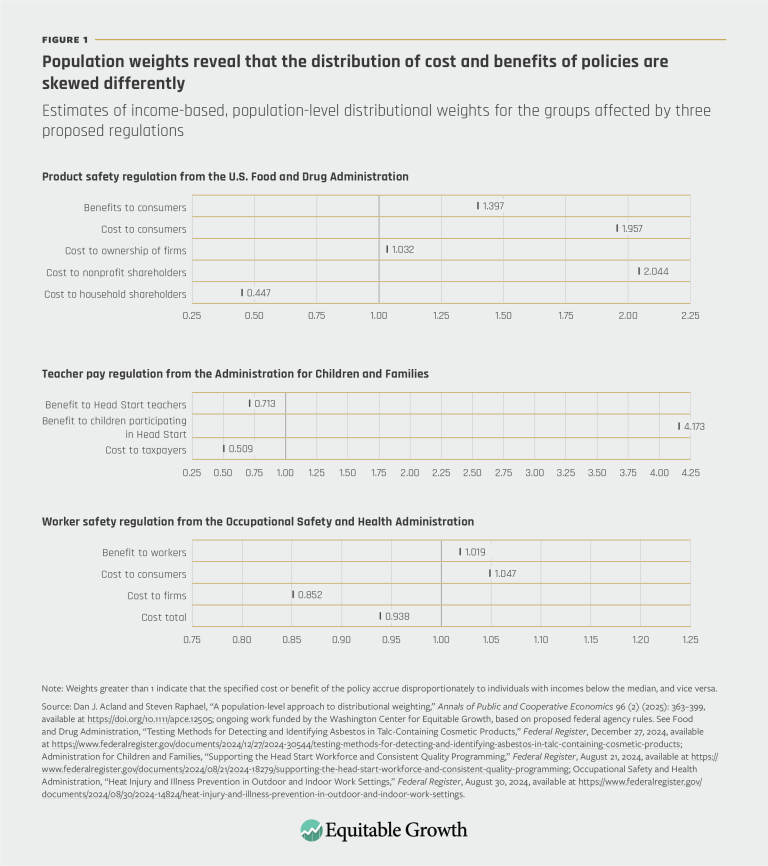
Population weights reveal that the distribution of cost and benefits of policies are skewed differently (opens in a new tab)
Visualizations NOV 13, 2025
Tariff costs impact industries with mostly White, male, and noncitizen workers (opens in a new tab)
Essays NOV 4, 2025
The U.S. economy is flying blind, with most economic-data publications paused indefinitely due to the shutdown of the federal government amid a general U.S. labor market slowdown and just as…
By: Christopher Bangert-Drowns (opens in a new tab)
 View Chart
(opens in a new tab)
View Chart
(opens in a new tab)
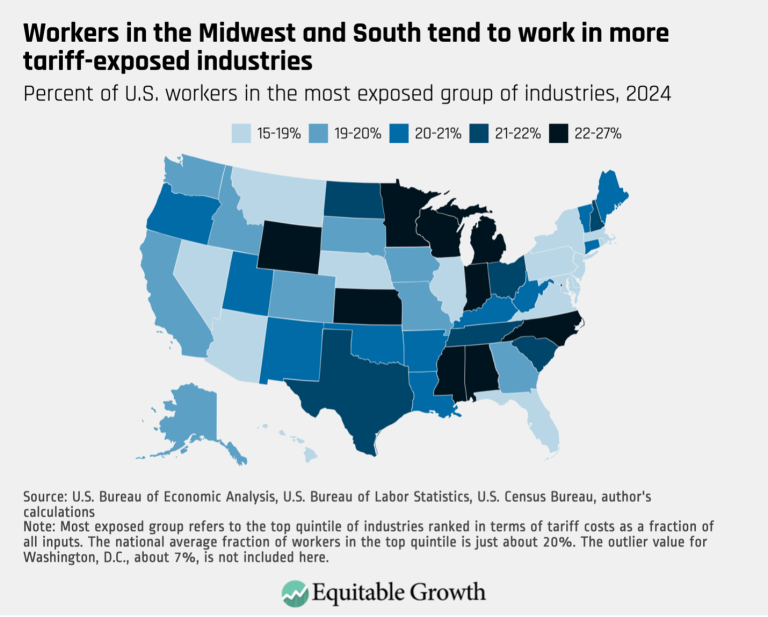
Workers in the Midwest and South tend to work in more tariff-exposed industries (opens in a new tab)
Visualizations NOV 3, 2025
 View Chart
(opens in a new tab)
View Chart
(opens in a new tab)
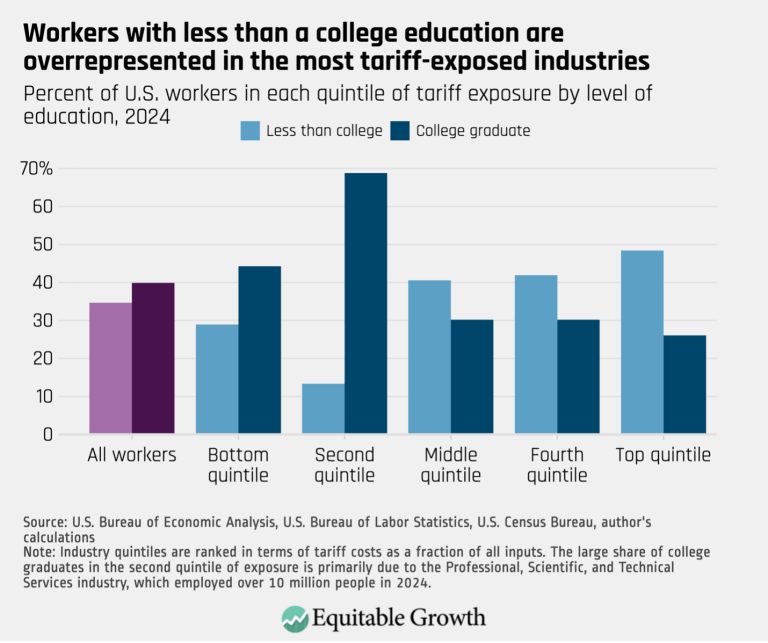
Workers with less than a college education are overrepresented in the most tariff-exposed industries (opens in a new tab)
Visualizations NOV 3, 2025
 View Chart
(opens in a new tab)
View Chart
(opens in a new tab)
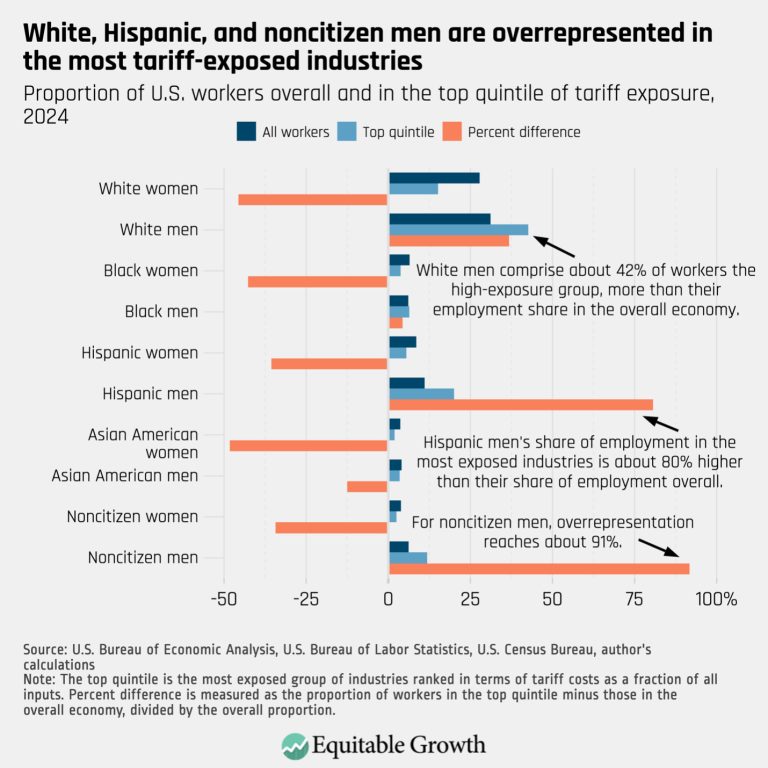
White, Hispanic, and noncitizen men are overrepresented in the most tariff-exposed industries (opens in a new tab)
Visualizations NOV 3, 2025
 View Chart
(opens in a new tab)
View Chart
(opens in a new tab)
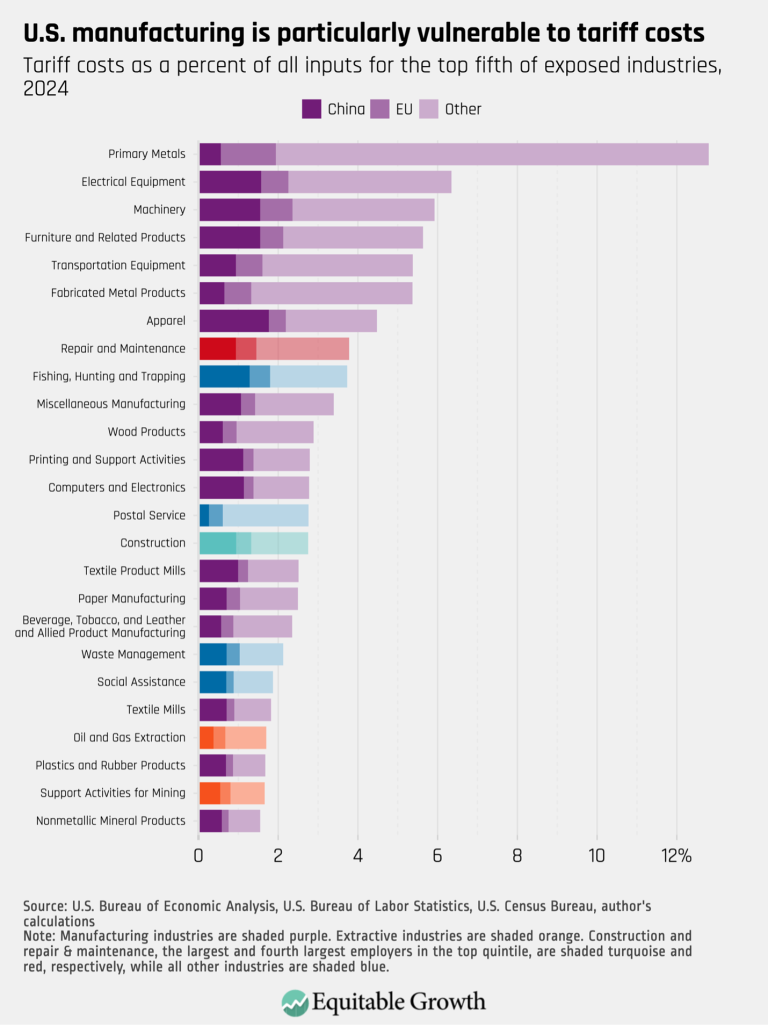
U.S. manufacturing is particularly vulnerable to tariff costs (opens in a new tab)
Visualizations NOV 3, 2025

The 10 worst policies for equitable economic growth in the 2025 budget reconciliation law (opens in a new tab)
Essays JUL 14, 2025
The 2025 budget reconciliation law that was enacted earlier this month is a sprawling piece of legislation, touching almost every corner of the federal budget and the U.S. economy. It…
By: David S. Mitchell (opens in a new tab)

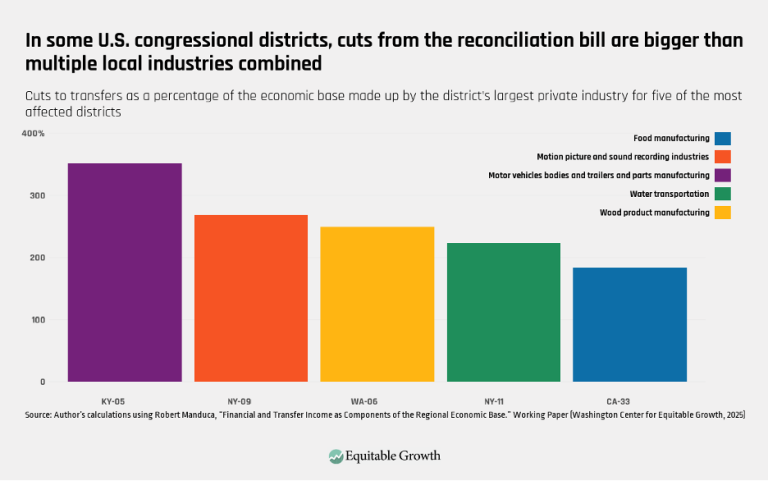
Republican reconciliation bill’s cuts to social programs will damage some congressional districts’ local economies (opens in a new tab)
Essays JUL 11, 2025
In a recent working paper, Equitable Growth grantee Robert Manduca of the University of Michigan, Ann Arbor demonstrates that government transfers make sizable contributions to local economies in much of…
By: Chiara Chanoi (opens in a new tab)
 View Chart
(opens in a new tab)
View Chart
(opens in a new tab)
In some U.S. congressional districts, cuts from the reconciliation bill are bigger than multiple local industries combined (opens in a new tab)
Visualizations JUL 10, 2025

Americans informed about the distributional effects of Republicans’ tax and budget bill overwhelmingly oppose it (opens in a new tab)
Essays JUL 3, 2025
Republicans in the U.S. Senate recently passed a version of the One Big Beautiful Bill Act, championed by President Donald Trump. The House of Representatives passed an earlier version of…
By: Jacob Hacker (opens in a new tab), Patrick Sullivan (opens in a new tab)
 View Chart
(opens in a new tab)
View Chart
(opens in a new tab)
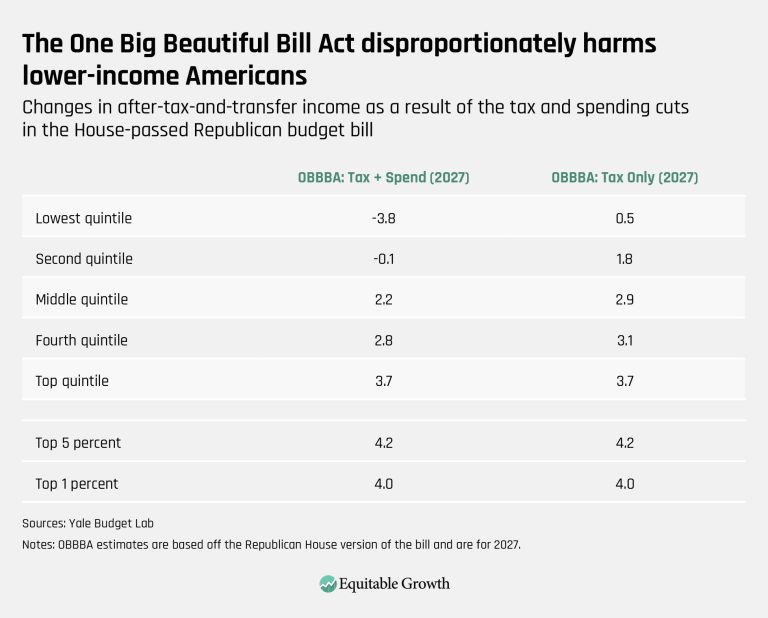
The One Big Beautiful Bill Act disproportionately harms lower-income Americans (opens in a new tab)
Visualizations JUL 3, 2025

Americans Informed About the Distributional Effects of Republicans’ Budget Bill Overwhelmingly Oppose It (opens in a new tab)
Working Papers JUN 25, 2025
Republicans in the Senate are currently considering the One Big Beautiful Bill Act, which, if enacted, would be the most regressive U.S. tax and budget law in at least the…
By: Jacob S. Hacker, Patrick Sullivan (opens in a new tab)

Congressional Republicans’ budget bill is the most regressive in at least 40 years (opens in a new tab)
Essays JUN 25, 2025
The U.S. Congress is in the midst of debating a budget bill that would make massive changes to U.S. tax and spending policy over the course of the next decade…
By: Jacob Hacker (opens in a new tab), Patrick Sullivan (opens in a new tab)
 View Chart
(opens in a new tab)
View Chart
(opens in a new tab)
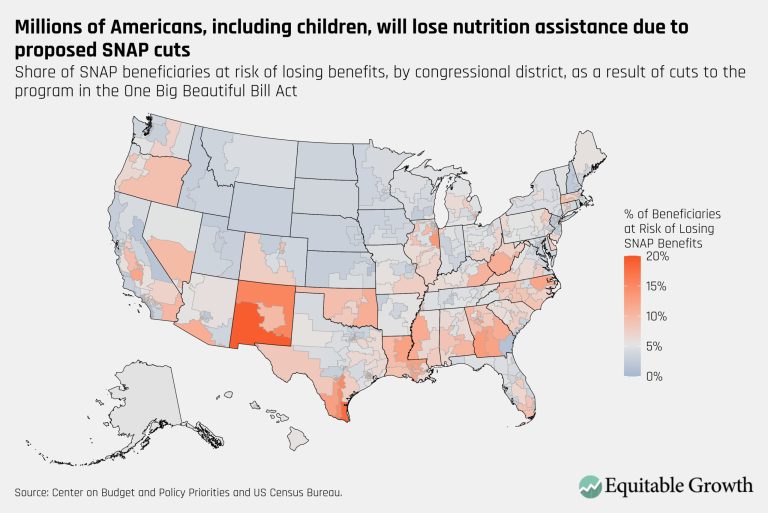
Millions of Americans, including children, will lose nutrition assistance due to proposed SNAP cuts – updated (opens in a new tab)
Visualizations JUN 24, 2025

Medicaid and SNAP cuts in congressional Republicans’ budget bill will negatively impact local economies (opens in a new tab)
Essays JUN 24, 2025
The budget reconciliation bill recently passed by the U.S. House of Representatives proposes to make large cuts to Medicaid, the Supplemental Nutrition Assistance Program, and other social programs to pay…
By: Robert Manduca (opens in a new tab)
Financial and Transfer Income as Components of the Regional Economic Base (opens in a new tab)
Working Papers JUN 24, 2025
Economists and geographers have long divided industries into “basic” and “nonbasic” sectors depending on whether they bring money into a region from outside or serve local demand. Traditionally, the regional…
By: Robert Manduca (opens in a new tab)
 View Chart
(opens in a new tab)
View Chart
(opens in a new tab)
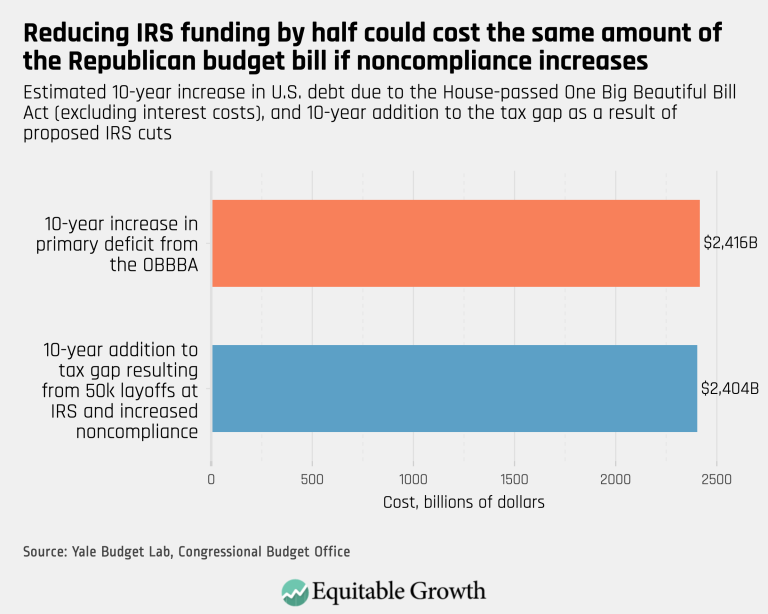
Reducing IRS funding by half could cost the same amount of the Republican budget bill in noncompliance increases (opens in a new tab)
Visualizations JUN 23, 2025
 View Chart
(opens in a new tab)
View Chart
(opens in a new tab)
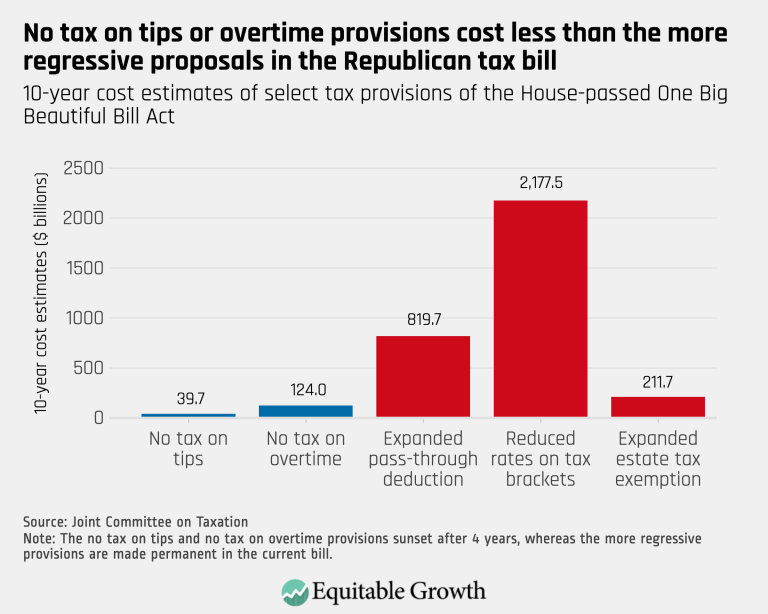
No tax on tips or overtime provisions cost less than the more regressive proposals in the Republican tax bill (opens in a new tab)
Visualizations JUN 23, 2025
 View Chart
(opens in a new tab)
View Chart
(opens in a new tab)
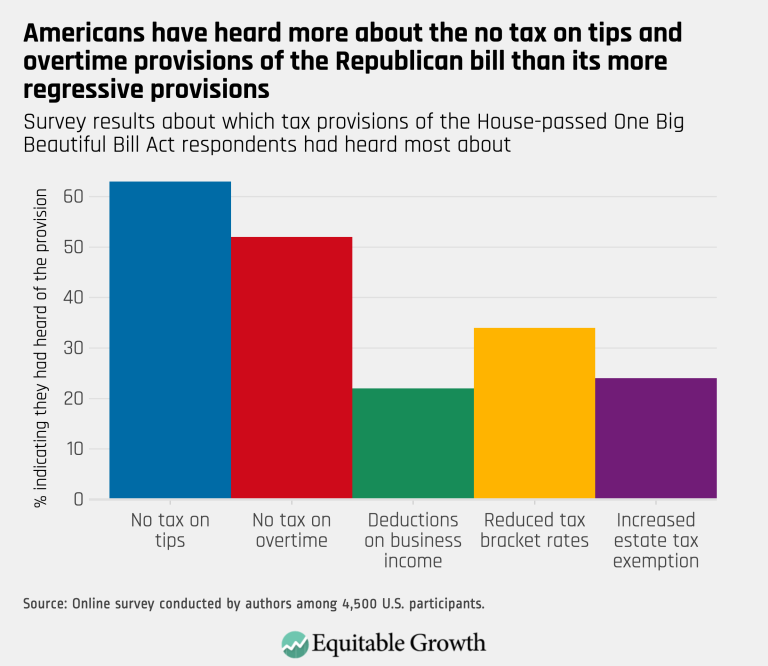
Americans have heard more about the no tax on tips and overtime provisions of the Republican bill than its more regressive provisions (opens in a new tab)
Visualizations JUN 23, 2025
 View Chart
(opens in a new tab)
View Chart
(opens in a new tab)
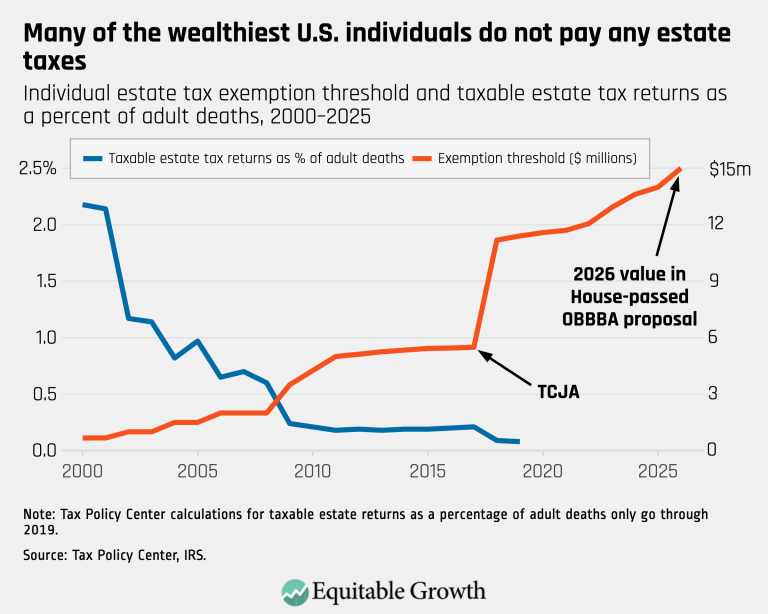
Many of the wealthiest U.S. individuals do not pay any estate taxes (opens in a new tab)
Visualizations JUN 23, 2025
 View Chart
(opens in a new tab)
View Chart
(opens in a new tab)
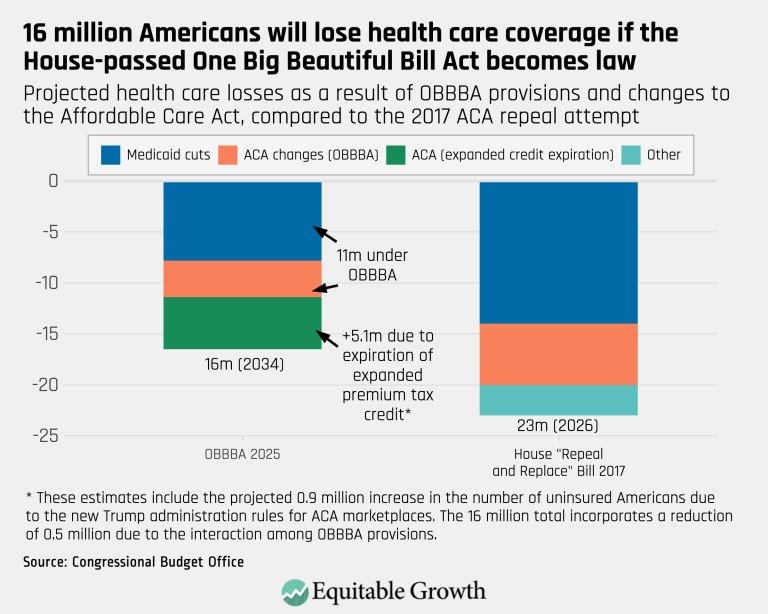
16 million Americans will lose health care coverage if the House-passed One Big Beautiful Bill Act becomes law (opens in a new tab)
Visualizations JUN 23, 2025

The political implications of bad jobs and the decline of unions (opens in a new tab)
Blog MAY 13, 2025
Bad jobs have become a distinctive feature of the U.S. economy over the past few decades. Globally, a lack of adequate demand, or what economists call “secular stagnation,” has meant…
By: Adam Dean (opens in a new tab), Jamie McCallum (opens in a new tab)

More accurately measuring economic sentiment will help build a U.S. economy—and democracy—that works for all (opens in a new tab)
Blog MAY 13, 2025
When politicians and members of the media discuss the state of “the economy” in the United States, they often use a small handful of data points. Of all the indicators…
By: Jonathan Cohen (opens in a new tab), Katherine Cramer (opens in a new tab)

Housing insecurity and U.S. economic policies: Lessons from tenant organizing (opens in a new tab)
Blog MAY 13, 2025
The destructive force of authoritarian power has become a prominent feature of U.S. political life. In just the first few months of 2025, we’ve seen unprecedented moves to use the…
By: Jamila Michener (opens in a new tab)

Factsheet: What we know about the federal employer-provided child care credit and how can it be better used by businesses (opens in a new tab)
Factsheets APR 22, 2025
The employer-provided child care credit, also referred to as Section 45F in the Internal Revenue Code, provides a limited subsidy to businesses in the United States that provide child care…
By: Megan Rivera (opens in a new tab)

Request for Proposals: The economic effects of the Inflation Reduction Act (opens in a new tab)
RFPs APR 2, 2025
By: Equitable Growth (opens in a new tab)
ASSA 2025 Round-up: Day 3 (opens in a new tab)
Blog JAN 6, 2025
Yesterday was the third and final day of the 2025 annual meeting of the Allied Social Science Associations, which is organized by the American Economic Association. The 3-day conference, held…
By: Equitable Growth (opens in a new tab)

ASSA 2025 Round-up: Day 2 (opens in a new tab)
Blog JAN 5, 2025
Yesterday was the second day of the 2025 annual meeting of the Allied Social Science Associations, which is organized by the American Economic Association. The 3-day conference, held in San…
By: Equitable Growth (opens in a new tab)

ASSA 2025 Round-up: Day 1 (opens in a new tab)
Blog JAN 4, 2025
Yesterday was the first day of the 2025 annual meeting of the Allied Social Science Associations, which is organized by the American Economic Association. The 3-day conference, held in San…
By: Equitable Growth (opens in a new tab)
Request for Proposals: Promoting competition and supporting workers in an era of AI innovation (opens in a new tab)
RFPs NOV 20, 2024
By: Equitable Growth (opens in a new tab)
Request for proposals: Research grants for early career scholars (opens in a new tab)
RFPs OCT 30, 2024
By: Equitable Growth (opens in a new tab)

New federal heat standard will protect U.S. workers from the ill effects of high temperatures amid intensifying climate change (opens in a new tab)
Blog AUG 1, 2024
U.S. workers are more vulnerable than ever to the ill effects of high and rising temperatures as the world continues to shatter heat records this year. Climate-related deaths and injuries…
By: Equitable Growth (opens in a new tab)
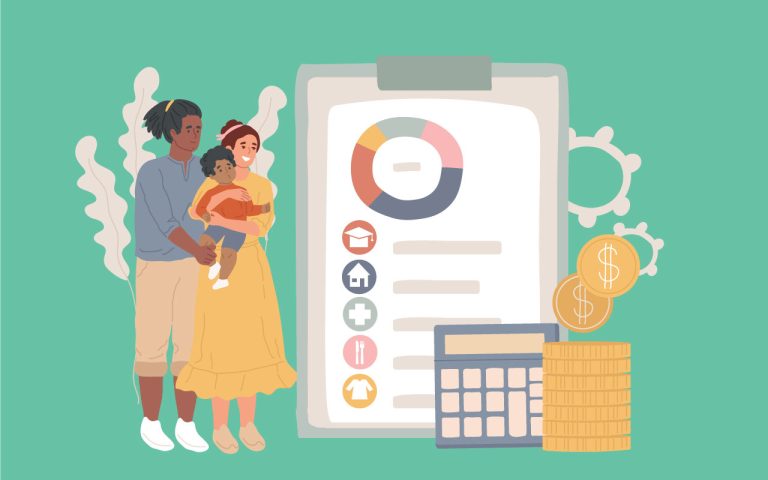
Enhanced Child Tax Credit helped U.S. families afford life-enhancing necessities and cope with inflation (opens in a new tab)
Blog APR 2, 2024
Amid ongoing congressional debate over expanding the Child Tax Credit for U.S. families, it’s important to understand why the fears about the expansion of that tax credit in 2021 were…
By: David S. Mitchell (opens in a new tab)
Spending Responses to the Child Tax Credit Expansions (opens in a new tab)
Working Papers APR 2, 2024
This article summarizes the literature that studied how people used the 2021 advance Child Tax Credit. Four primary findings emerged. Families more frequently reporting paying down debt during the first…
By: Jonathan Fisher (opens in a new tab), Jake Schild (opens in a new tab), David S. Johnson

Request for Proposals: How effective was the fiscal response to the COVID-19 recession for workers? (opens in a new tab)
RFPs MAR 18, 2024
By: Equitable Growth (opens in a new tab)

Ahead of President Biden’s State of the Union address, the U.S. economy is strong (opens in a new tab)
Blog FEB 21, 2024
On March 7, President Joe Biden will deliver the 2024 State of the Union address to the U.S. Congress and the American public, in which he will tout his economic…
By: Austin Clemens (opens in a new tab)
 View Chart
(opens in a new tab)
View Chart
(opens in a new tab)
Personal loan delinquency is low or within normal levels for all major loan types (opens in a new tab)
Visualizations FEB 20, 2024
 View Chart
(opens in a new tab)
View Chart
(opens in a new tab)
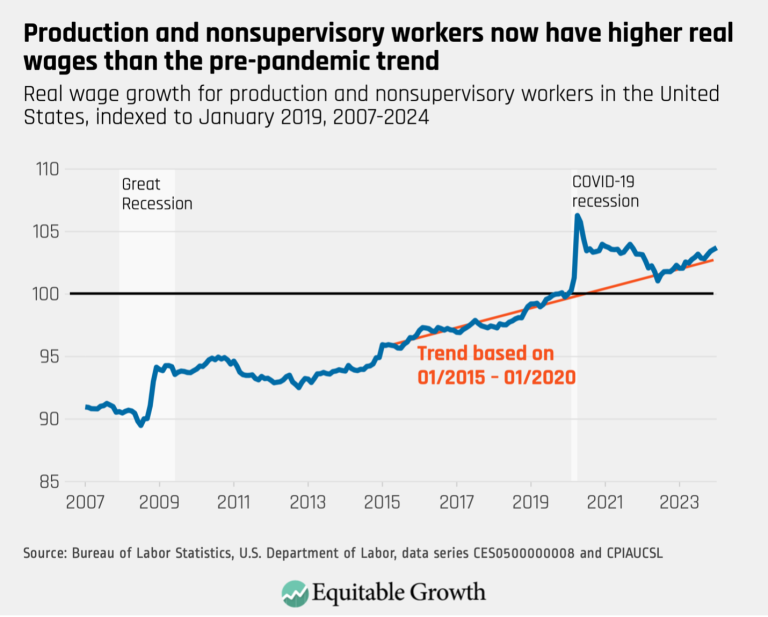
Production and nonsupervisory workers now have higher real wages than the pre-pandemic trend (opens in a new tab)
Visualizations FEB 20, 2024
 View Chart
(opens in a new tab)
View Chart
(opens in a new tab)
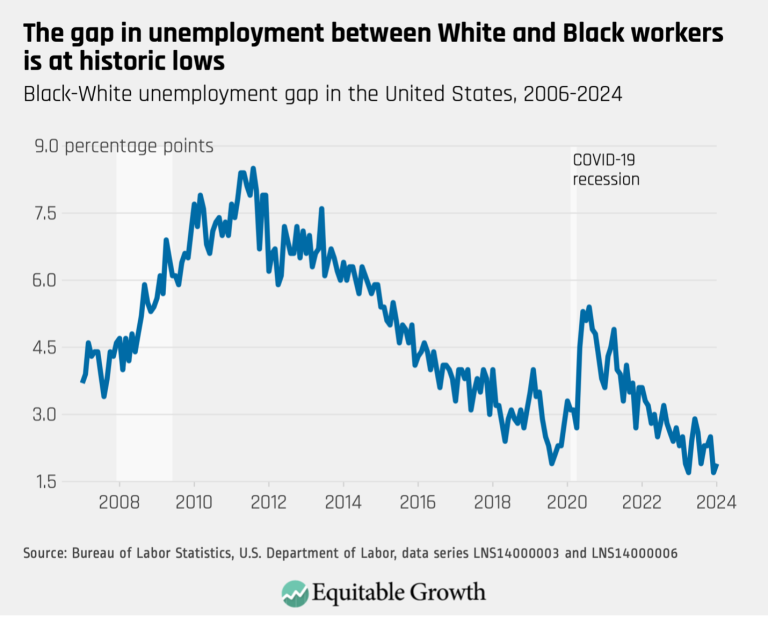
The gap in unemployment between White and Black workers is at historic lows (opens in a new tab)
Visualizations FEB 20, 2024
 View Chart
(opens in a new tab)
View Chart
(opens in a new tab)
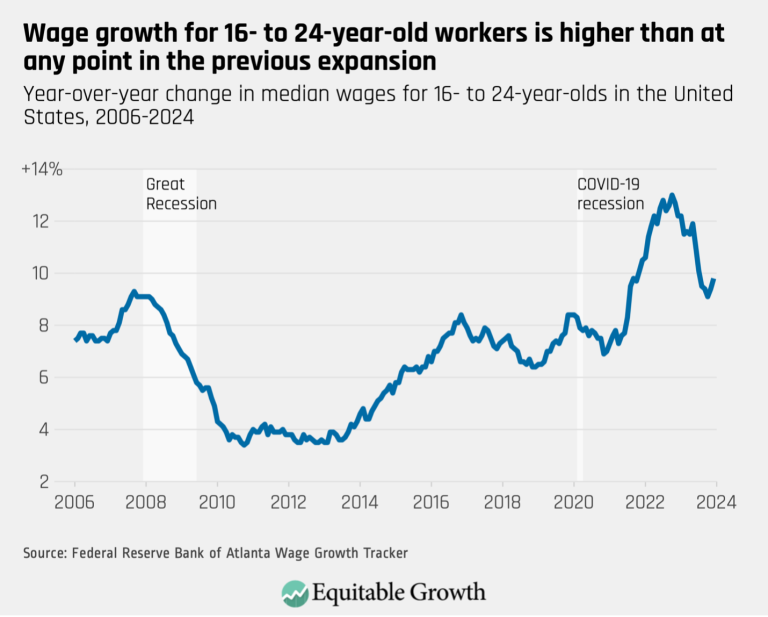
Wage growth for 16- to 24-year-old workers is higher than at any point in the previous expansion (opens in a new tab)
Visualizations FEB 20, 2024
 View Chart
(opens in a new tab)
View Chart
(opens in a new tab)
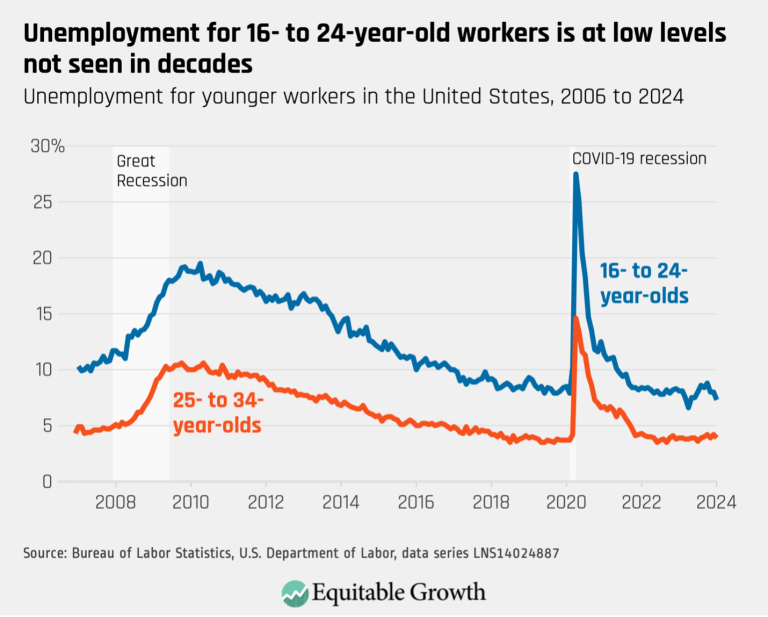
Unemployment for 16- to 24-year-old workers is at low levels not seen in decades (opens in a new tab)
Visualizations FEB 20, 2024
 View Chart
(opens in a new tab)
View Chart
(opens in a new tab)
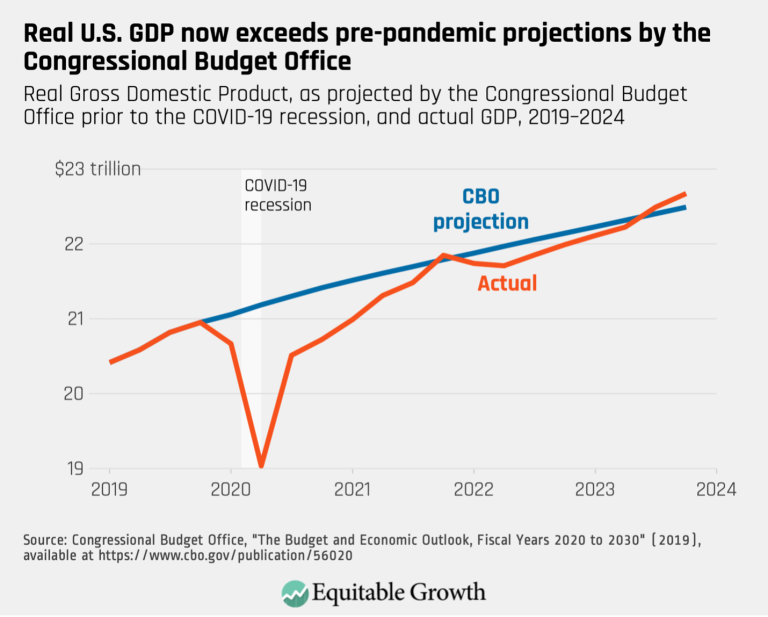
Real U.S. GDP now exceeds pre-pandemic projections by the Congressional budget Office (opens in a new tab)
Visualizations FEB 20, 2024
 View Chart
(opens in a new tab)
View Chart
(opens in a new tab)
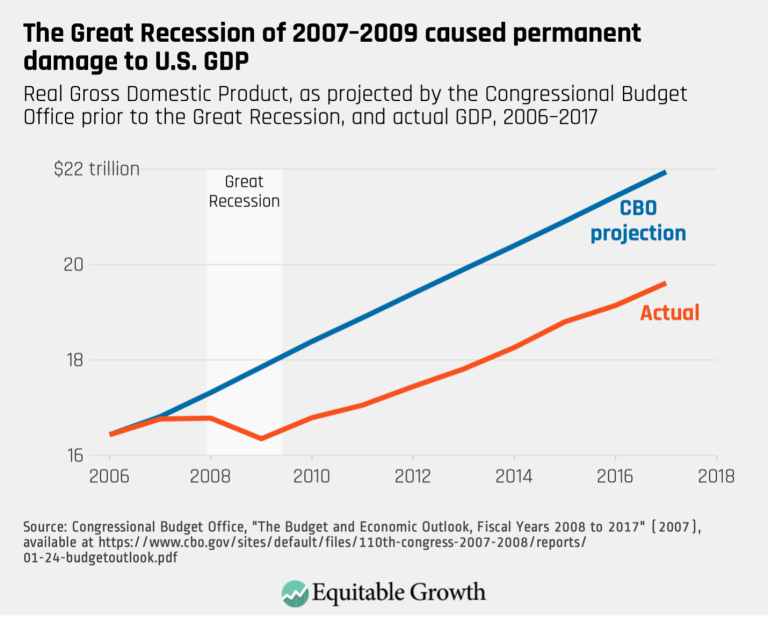
The Great Recession of 2007-2009 caused permanent damage to U.S. GDP (opens in a new tab)
Visualizations FEB 20, 2024
Request for proposals: Research grants for early career scholars (opens in a new tab)
RFPs NOV 30, 2023
By: Equitable Growth (opens in a new tab)
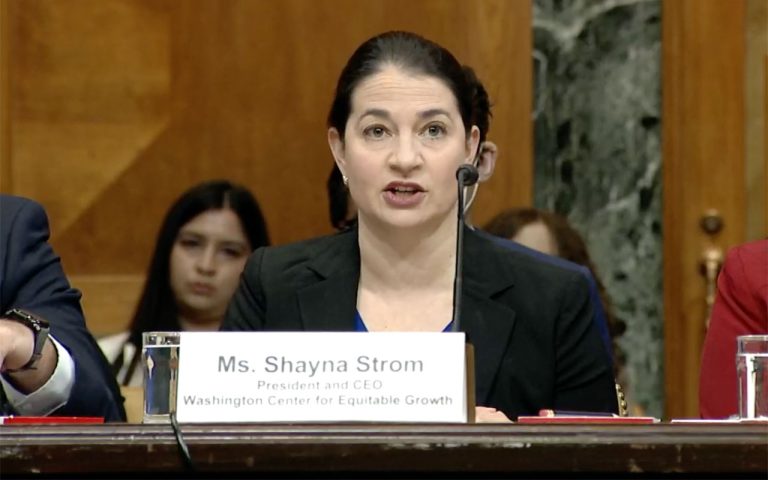
Testimony by Shayna Strom before the Senate Budget Committee (opens in a new tab)
Blog SEP 20, 2023
Chairman Whitehouse, Ranking Member Grassley, and members of the committee, thank you for the opportunity to testify today. I am the President and CEO of the Washington Center for Equitable…
By: Shayna Strom (opens in a new tab)
 View Chart
(opens in a new tab)
View Chart
(opens in a new tab)
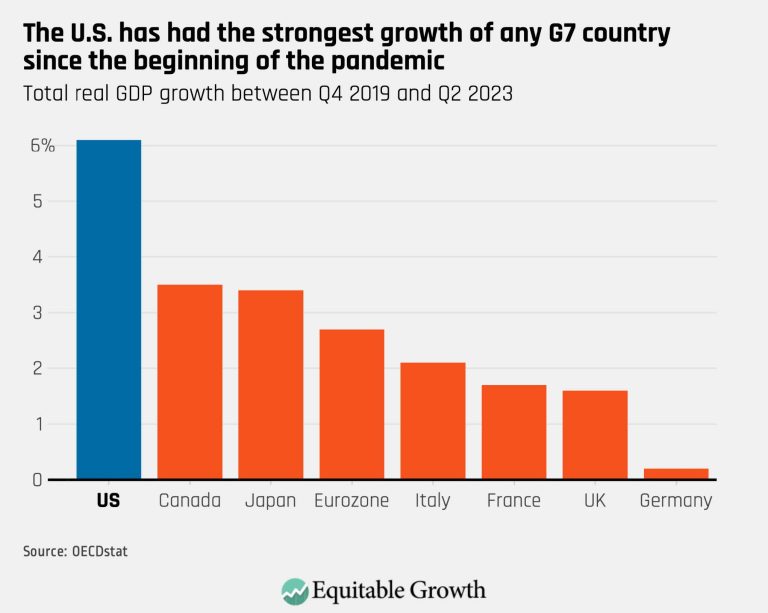
The U.S. has had the strongest growth of any G7 country since the beginning of the pandemic (opens in a new tab)
Visualizations SEP 20, 2023
 View Chart
(opens in a new tab)
View Chart
(opens in a new tab)
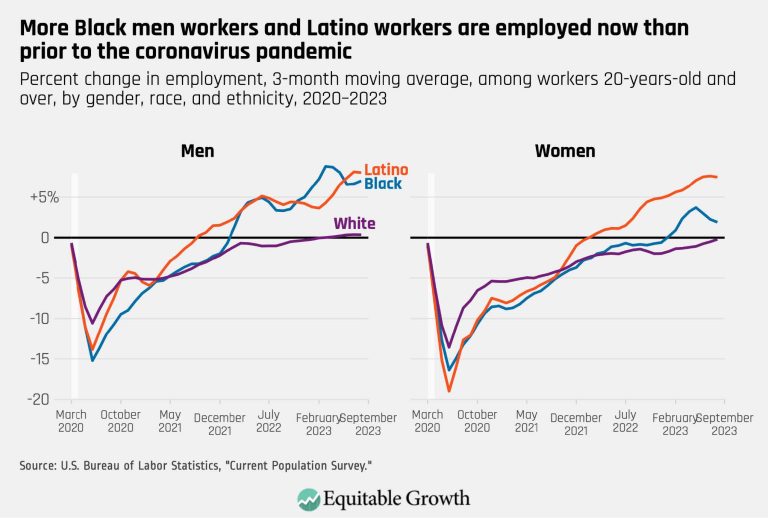
More Black men workers and Latino workers are employed now than prior to the coronavirus pandemic (opens in a new tab)
Visualizations SEP 20, 2023
 View Chart
(opens in a new tab)
View Chart
(opens in a new tab)
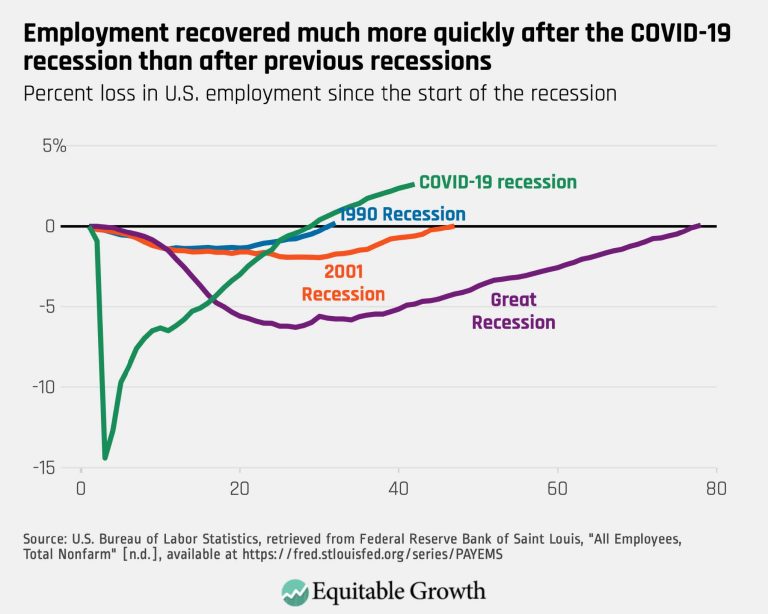
Employment recovered much more quickly after the COVID-19 recession than after previous recessions (opens in a new tab)
Visualizations SEP 20, 2023
 View Chart
(opens in a new tab)
View Chart
(opens in a new tab)
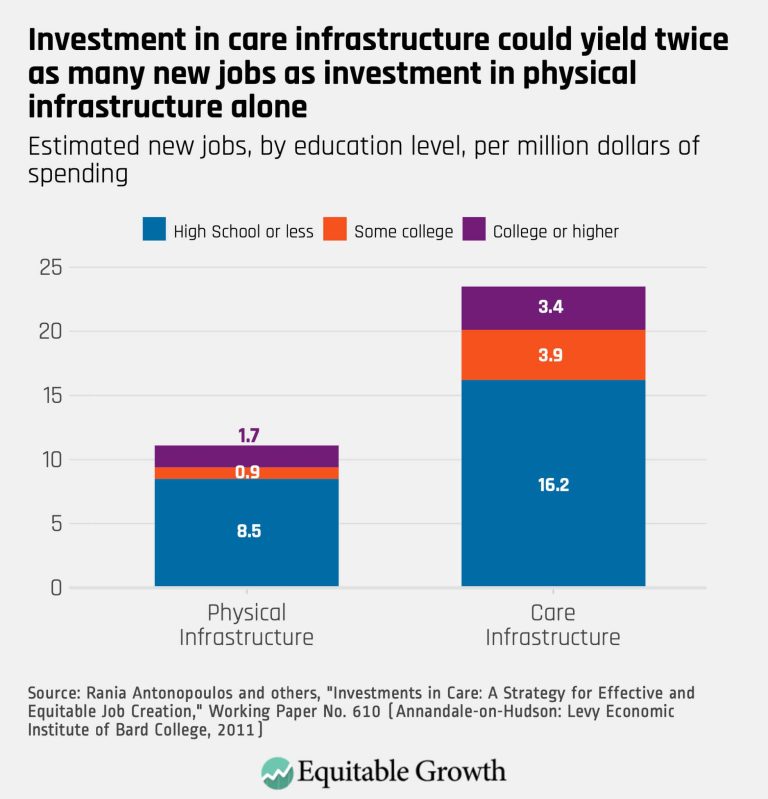
Investment in care infrastructure could yield twice as many new jobs as investment in physical infrastructure alone (opens in a new tab)
Visualizations SEP 19, 2023
The effects of the expanded Child Tax Credit on low-income families in the United States (opens in a new tab)
Blog AUG 2, 2023
Childhood poverty is a stubborn problem in the United States. About 11 million U.S. children lived in poverty prior to the COVID-19 pandemic, accounting for nearly one-third of the impoverished…
By: Jesus Torres (opens in a new tab)

Short-term effects of the expanded Child Tax Credit on U.S. labor force participation amid the COVID-19 pandemic (opens in a new tab)
Blog JUL 26, 2023
There is a common politicized thread to arguments against expanding the federal antipoverty Child Tax Credit program permanently and to the justifications that a majority of the U.S. Supreme Court…
By: Sullivan Anderson (opens in a new tab)
The Short-Term Labor Supply Response to the Expanded Child Tax Credit (opens in a new tab)
Working Papers JUL 26, 2023
We estimate the extensive and intensive margin labor supply response to the monthly Child Tax Credit disbursed in 2021 as a part of the American Rescue Plan Act. Using Current…
By: Brandon Enriquez (opens in a new tab), Damon Jones (opens in a new tab), Ernest V. Tedeschi

Algorithmic wage discrimination requires policy solutions that enforce predictability and the U.S. spirit of equal pay for equal work (opens in a new tab)
Blog JUL 12, 2023
U.S. consumers generally believe that gig workers who labor for companies such as Uber Technologies Inc. and Lyft Inc. are free to set their own hours and thus able to…
By: Veena Dubal (opens in a new tab)
Equitable Growth delivers economist sign-on letter and comment letter to the White House Office of Information and Regulatory Affairs on its Proposed Revisions to Circular A-4, Regulatory Analysis (opens in a new tab)
Issue Briefs JUN 20, 2023
This post has been updated to reflect that Equitable Growth’s economist sign-on letter, not our comment letter, was submitted to regulations.gov due to an administrative submission error. The Washington Center…
By: Equitable Growth (opens in a new tab)

The importance of the American Rescue Plan for U.S. workers and families on the law’s second anniversary, in 8 charts (opens in a new tab)
Blog MAR 10, 2023
Tomorrow marks 2 years since the American Rescue Plan Act was signed into law. One year after the COVID-19 pandemic that began in early 2020 triggered enormous employment losses and…
By: Carmen Sanchez Cumming (opens in a new tab), Raksha Kopparam (opens in a new tab)

A missed opportunity to expand the Child Tax Credit will affect U.S. families and the broader economy now and for years to come (opens in a new tab)
Blog DEC 21, 2022
Earlier this week, the U.S. Congress released its proposed omnibus bill that funds the federal government through September 2023 and makes various other reforms to the nation’s retirement system, antitrust…
By: Equitable Growth (opens in a new tab)
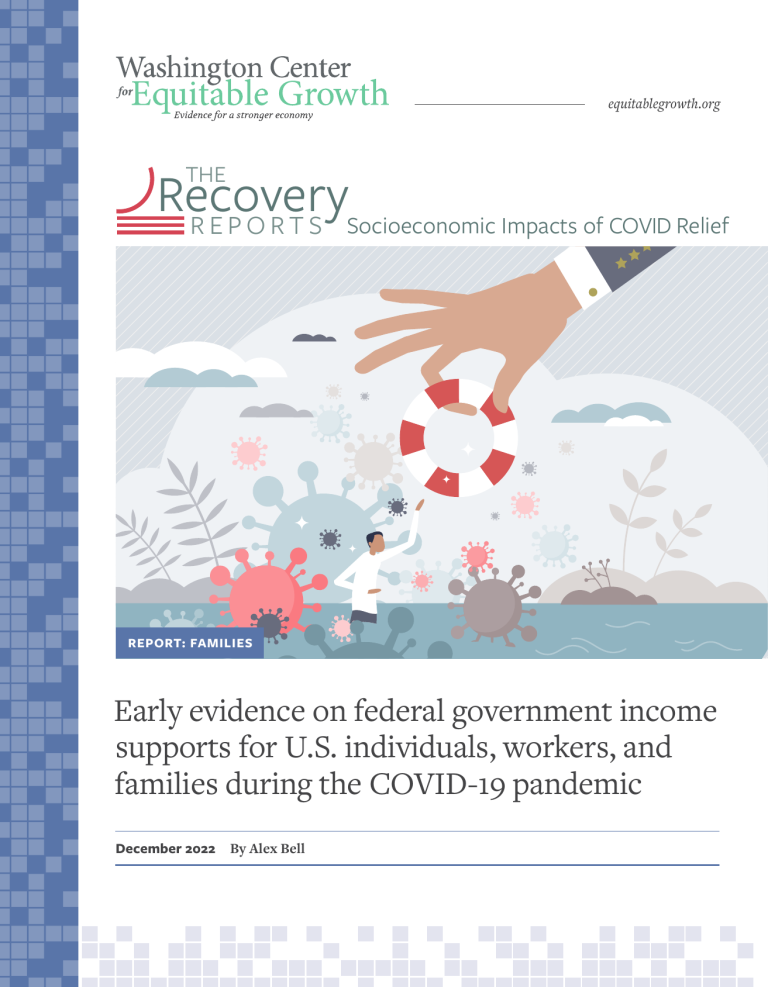
Early evidence on federal government income supports for U.S. individuals, workers, and families during the COVID-19 pandemic (opens in a new tab)
Reports DEC 13, 2022
This report focuses on preliminary research surrounding the three largest income support programs totaling $1.6 trillion that were paid directly to U.S. individuals, workers, and families amid the first two…
By: Alex Bell (opens in a new tab)
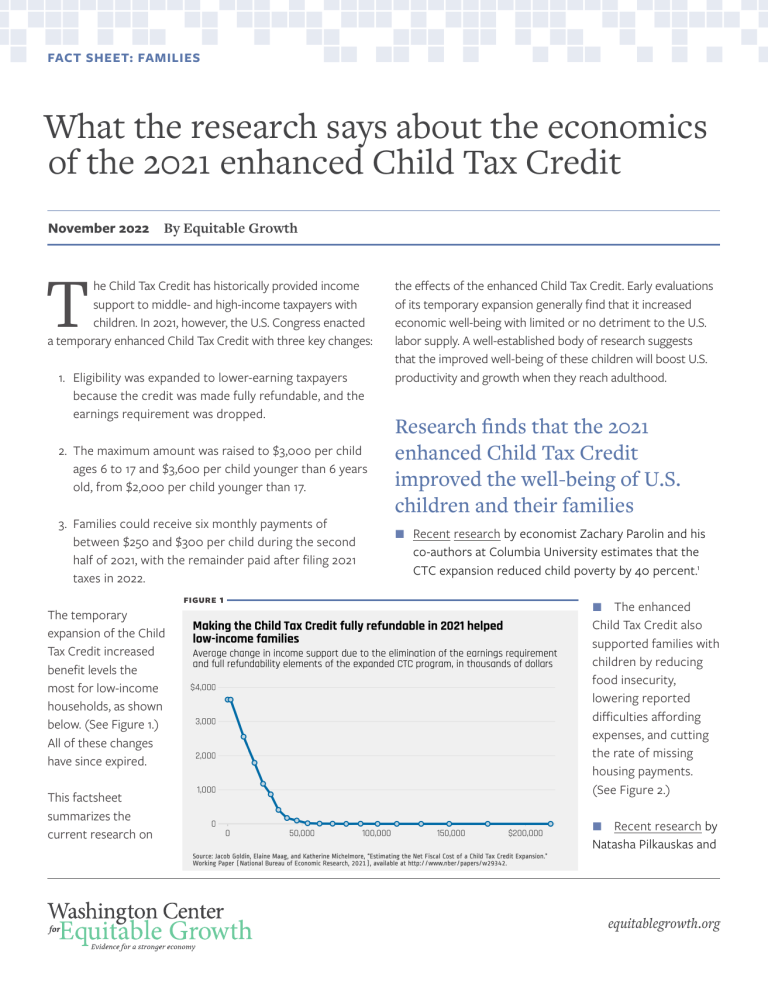
Factsheet: What the research says about the economics of the 2021 enhanced Child Tax Credit (opens in a new tab)
Factsheets NOV 29, 2022
The Child Tax Credit has historically provided income support to middle- and high-income taxpayers with children. In 2021, however, the U.S. Congress enacted a temporary enhanced Child Tax Credit with…
By: Equitable Growth (opens in a new tab)
 View Chart
(opens in a new tab)
View Chart
(opens in a new tab)
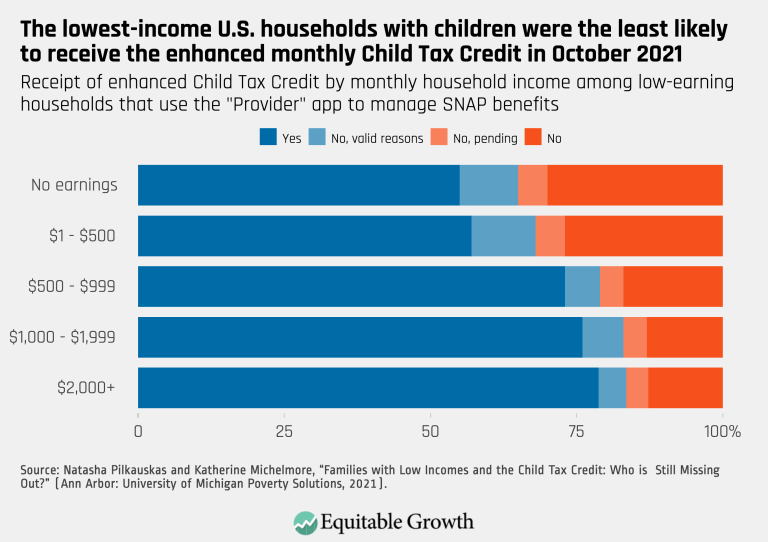
The lowest-income U.S. households with children were the least likely to receive the enhanced monthly Child Tax Credit in October 2021 (opens in a new tab)
Visualizations NOV 28, 2022
 View Chart
(opens in a new tab)
View Chart
(opens in a new tab)
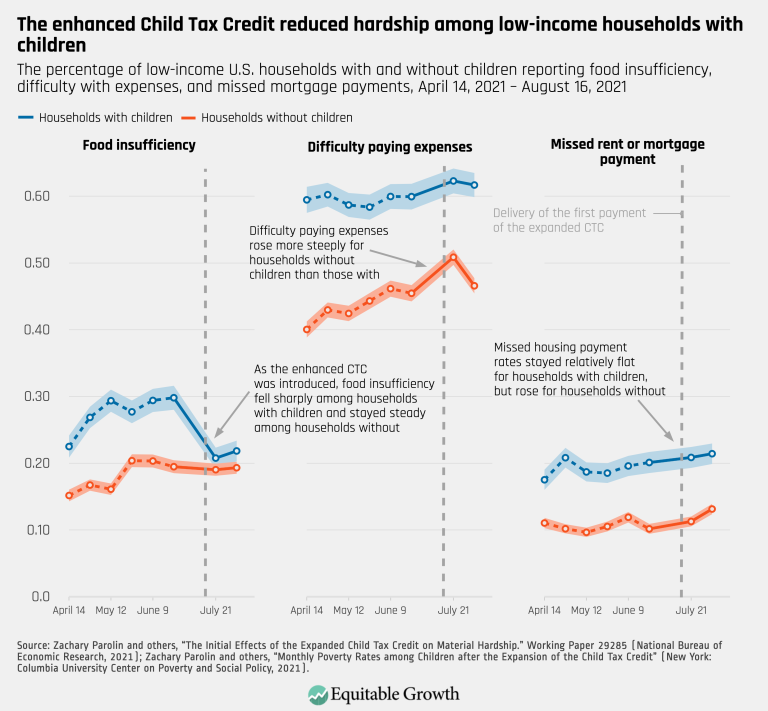
The enhanced Child Tax Credit reduced hardship among low-income households with children (opens in a new tab)
Visualizations NOV 28, 2022
 View Chart
(opens in a new tab)
View Chart
(opens in a new tab)
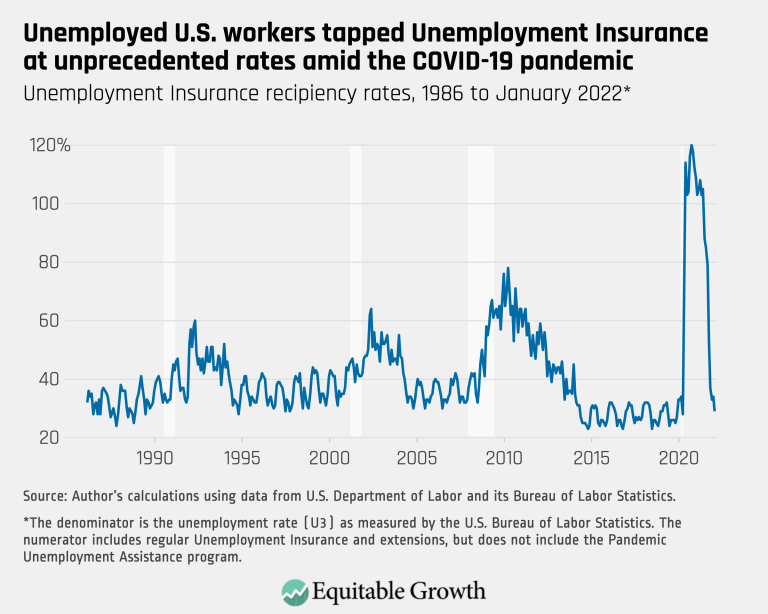
Unemployed U.S. workers tapped Unemployment Insurance at unprecedented rates amid the COVID-19 pandemic (opens in a new tab)
Visualizations NOV 17, 2022
 View Chart
(opens in a new tab)
View Chart
(opens in a new tab)
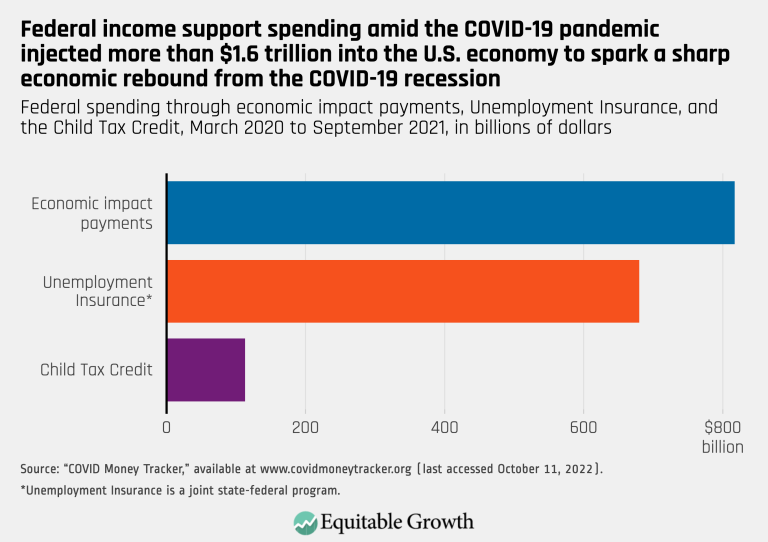
Federal income support spending amid the COVID-19 pandemic injected more than $1.6 trillion into the U.S. economy to spark a sharp economic rebound from the COVID-19 recession (opens in a new tab)
Visualizations NOV 14, 2022

What federal statistical agencies can do to improve survey response rates among Hispanic communities in the United States (opens in a new tab)
Blog OCT 14, 2022
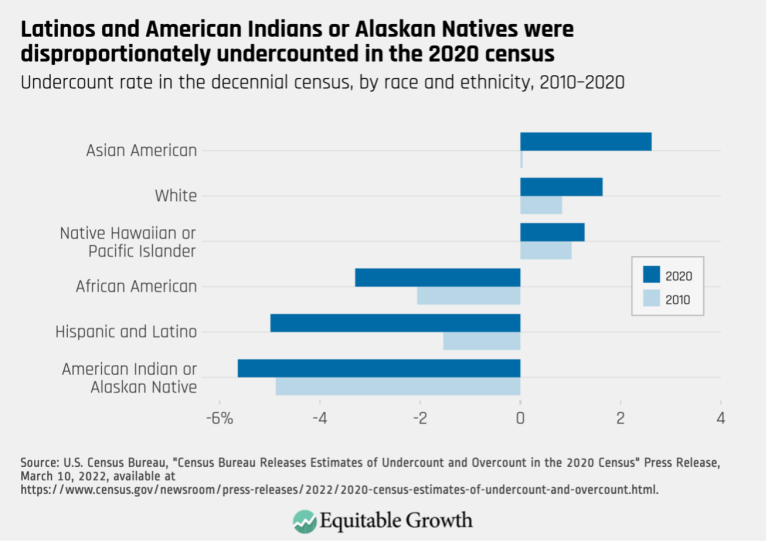
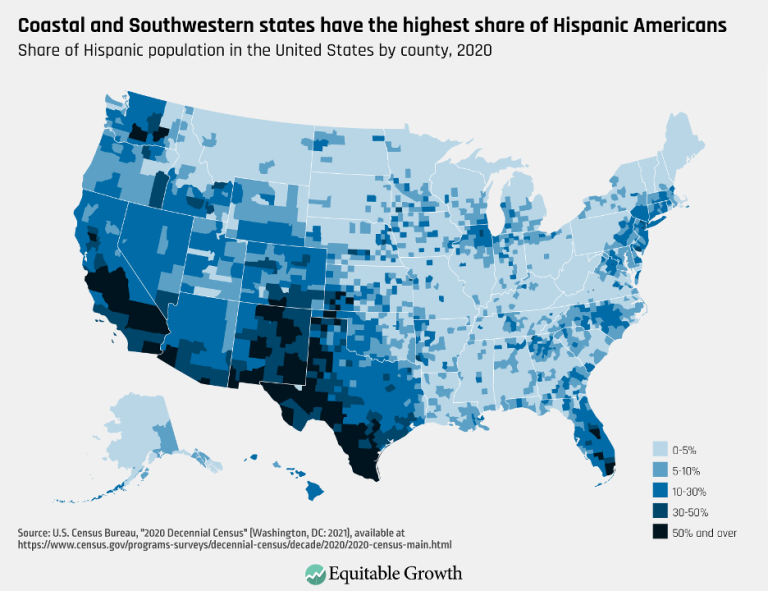
Between 2010 and 2020, the Hispanic American population grew 23 percent, making it one of the fastest-growing communities in the United States. According to the 2020 decennial census, Hispanic Americans…
By: Raksha Kopparam (opens in a new tab)
 View Chart
(opens in a new tab)
View Chart
(opens in a new tab)
Latinos and American Indians or Alaskan Natives were disproportionately undercounted in the 2020 census (opens in a new tab)
Visualizations OCT 14, 2022
 View Chart
(opens in a new tab)
View Chart
(opens in a new tab)
Coastal and Southwestern states have the highest share of Hispanic Americans (opens in a new tab)
Visualizations OCT 14, 2022

Policymakers can still use American Rescue Plan funds to bolster the U.S. child care system and ensure it has a strong future (opens in a new tab)
Blog SEP 20, 2022
In January, the 118th Congress will draw to a close following a productive session that saw legislative action on pandemic relief, infrastructure investments, manufacturing and research incentives, and critical investments…
By: Sam Abbott (opens in a new tab)
 View Chart
(opens in a new tab)
View Chart
(opens in a new tab)
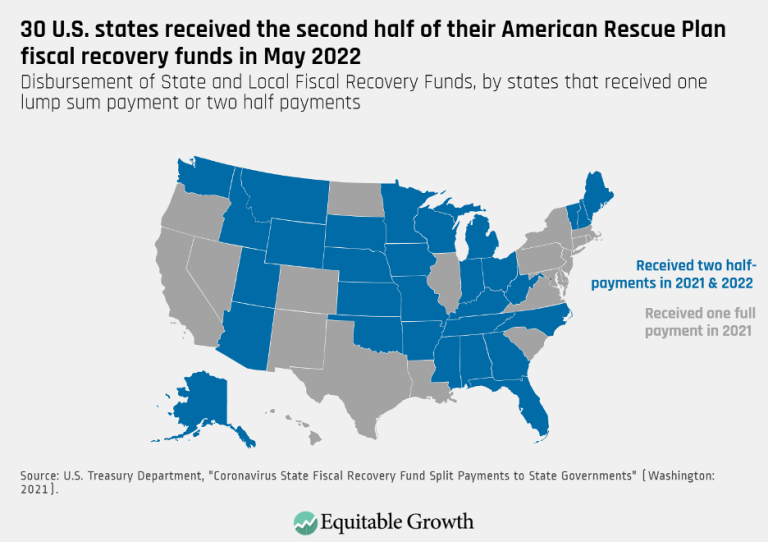
30 U.S. states received the second half of their American Rescue plan fiscal recovery funds in May 2022 (opens in a new tab)
Visualizations SEP 19, 2022

Consumers initially spend less than a third of their stimulus checks, on average, amid recessions (opens in a new tab)
Blog SEP 12, 2022
Economists and policymakers alike generally agree on the effectiveness of sending out direct stimulus checks to individuals to help reverse an economic downturn by encouraging more consumer spending. But they…
By: Equitable Growth (opens in a new tab)
Marginal Propensity to Consume in Recessions: a Meta-analysis (opens in a new tab)
Working Papers SEP 12, 2022
This paper assembles a dataset of 1244 estimates of marginal propensities to consume (MPC) out of stimulus checks and other small transitory or predictable payments—as reported by 40 studies. I…
 View Chart
(opens in a new tab)
View Chart
(opens in a new tab)
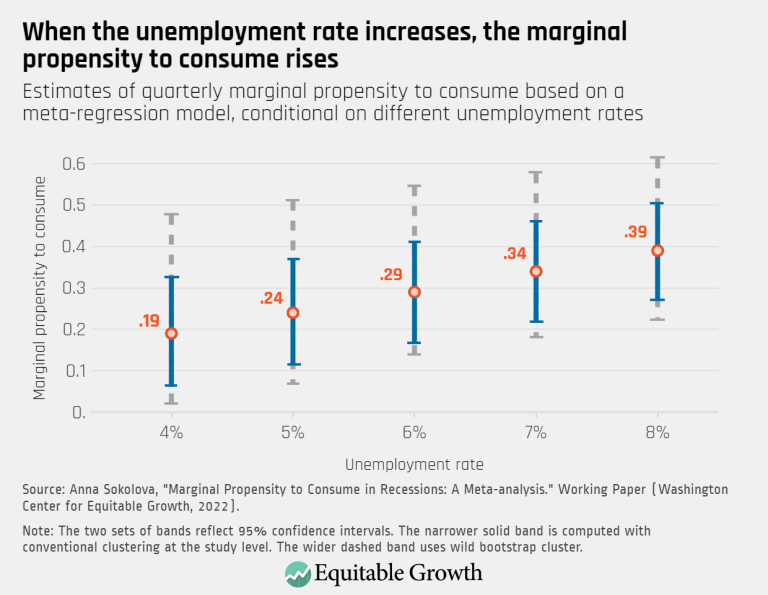
When the unemployment rate increases, the marginal propensity to consume rises (opens in a new tab)
Visualizations SEP 8, 2022
 View Chart
(opens in a new tab)
View Chart
(opens in a new tab)
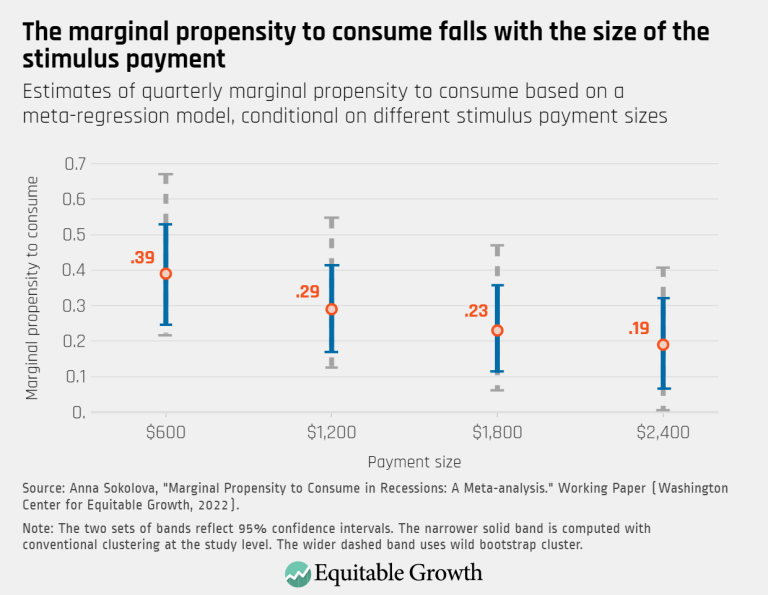
The marginal propensity to consume falls with the size of the stimulus payment (opens in a new tab)
Visualizations SEP 8, 2022

Measuring spending inequality in the United States in real time (opens in a new tab)
Blog SEP 8, 2022
The onset of the COVID-19 pandemic and the resulting recession in 2020, followed by a swift U.S. economic recovery, offer lessons today about why real-time data are so crucial to…
By: Loujaina Abdelwahed (opens in a new tab), Jacob Robbins (opens in a new tab), Cole Campbell (opens in a new tab), Shogher Ohannessian (opens in a new tab), Todd Czurylo (opens in a new tab)

Why the Inflation Reduction Act is key to strong, broad-based U.S. economic growth (opens in a new tab)
Blog AUG 16, 2022
The Inflation Reduction Act spells good news for the U.S. economy. The newly signed legislation makes historic investments to combat climate change, lower healthcare costs, and crack down on tax…
By: David S. Mitchell (opens in a new tab)

How to stop a recession by strengthening income supports in the United States (opens in a new tab)
Blog AUG 15, 2022
Income support programs, such as Unemployment Insurance and the Supplemental Nutrition Assistance Program, are powerful tools to deploy when the threat of recession looms and unemployment climbs. By providing income…
By: Alix Gould-Werth (opens in a new tab)
 View Chart
(opens in a new tab)
View Chart
(opens in a new tab)
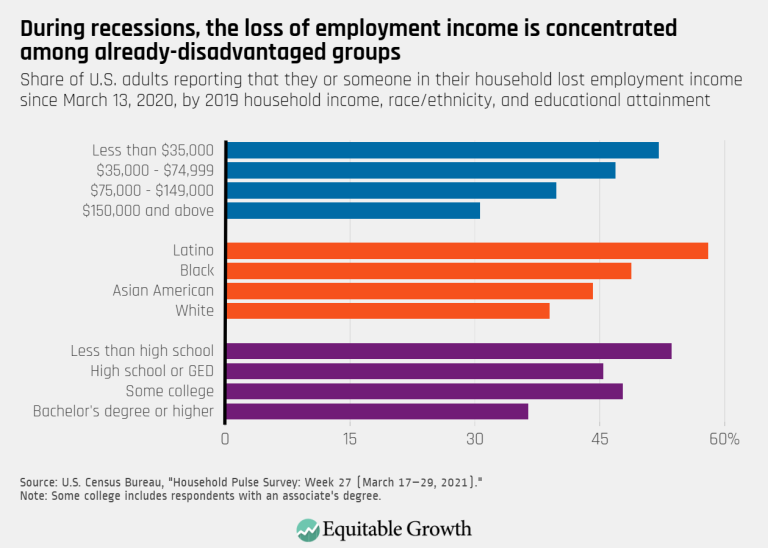
During recessions, the loss of employment income is concentrated among already-disadvantaged groups (opens in a new tab)
Visualizations AUG 12, 2022

Policymakers tackling inflation can’t overlook the impact of higher interest rates on the U.S. child care market (opens in a new tab)
Blog AUG 11, 2022
As families in the United States grapple with rising prices and ongoing supply shortages, fiscal and monetary policymakers are shifting their focus from the COVID-19 recession and recovery to the…
By: Sam Abbott (opens in a new tab)
 View Chart
(opens in a new tab)
View Chart
(opens in a new tab)
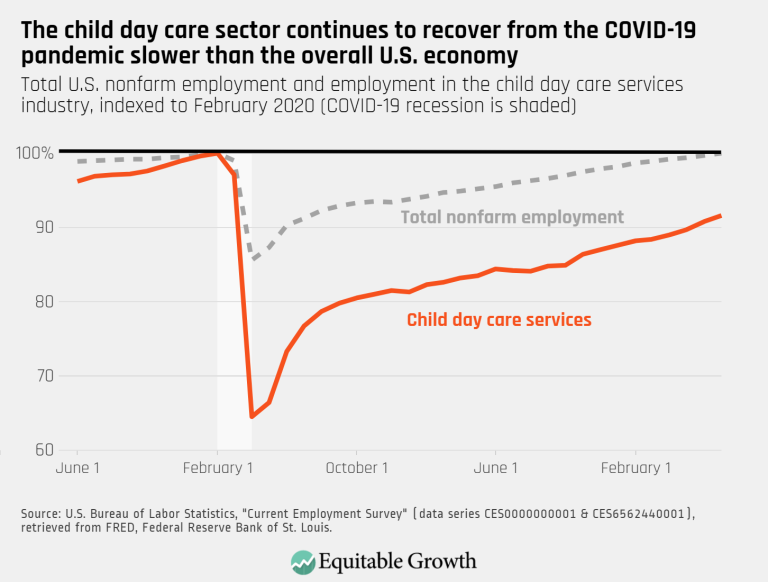
The child day care sector continues to recover from the COVID-19 pandemic slower than the overall U.S. economy (opens in a new tab)
Visualizations AUG 9, 2022
 View Chart
(opens in a new tab)
View Chart
(opens in a new tab)
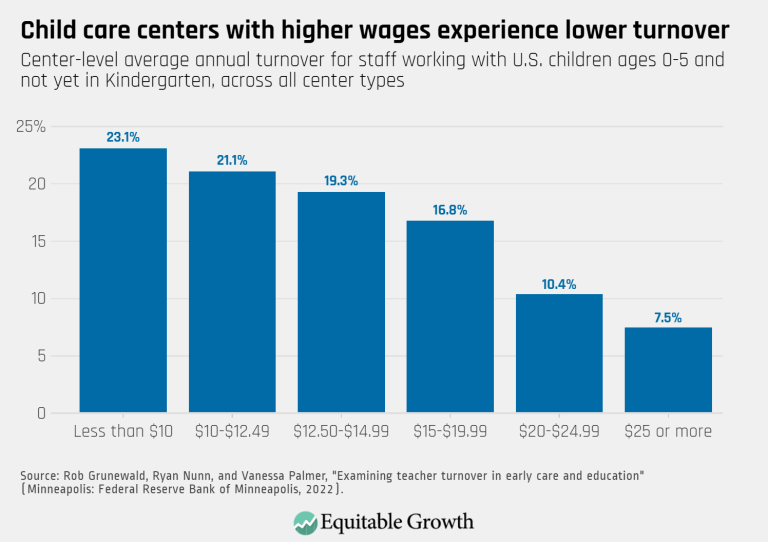
Child care centers with higher wages experience lower turnover (opens in a new tab)
Visualizations AUG 9, 2022

The economic evidence behind the Inflation Reduction Act and why it will boost strong, broad-based economic growth (opens in a new tab)
Blog AUG 5, 2022
The Inflation Reduction Act spells good news for the U.S. economy. The proposed legislation now before the U.S. Senate would make historic investments to combat climate change, lower healthcare costs,…
By: David S. Mitchell (opens in a new tab)
 View Chart
(opens in a new tab)
View Chart
(opens in a new tab)
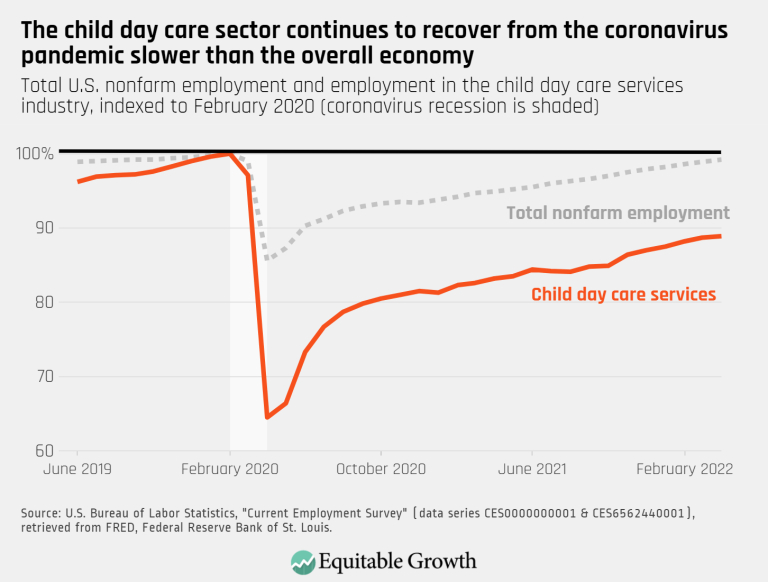
The child day care sector continues to recover from the COVID-19 pandemic slower than the overall economy (opens in a new tab)
Visualizations MAY 20, 2022

Child care costs are going to rise, but policymakers can help U.S. families manage these increases (opens in a new tab)
Blog MAY 18, 2022
For decades, the U.S. child care market has been on the verge of a crisis. As any parent knows, child care in the United States has long been too expensive,…
By: Sam Abbott (opens in a new tab)
 View Chart
(opens in a new tab)
View Chart
(opens in a new tab)
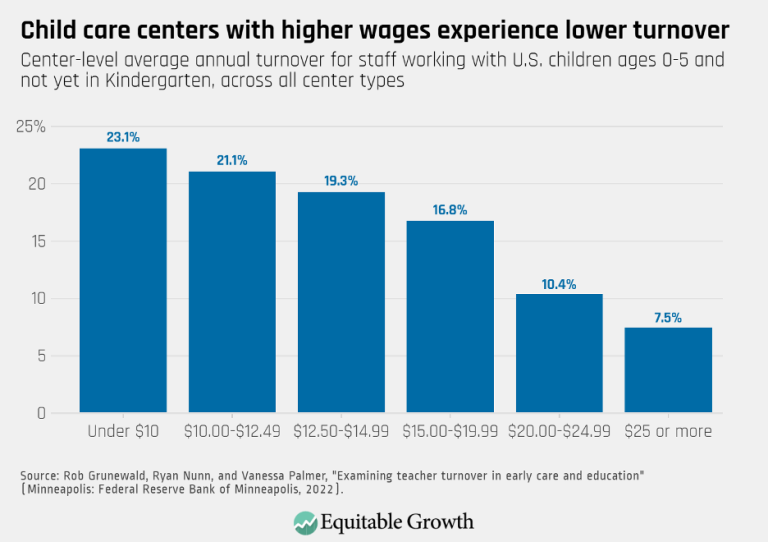
Child care centers with higher wages experience lower turnover (opens in a new tab)
Visualizations MAY 18, 2022
 View Chart
(opens in a new tab)
View Chart
(opens in a new tab)
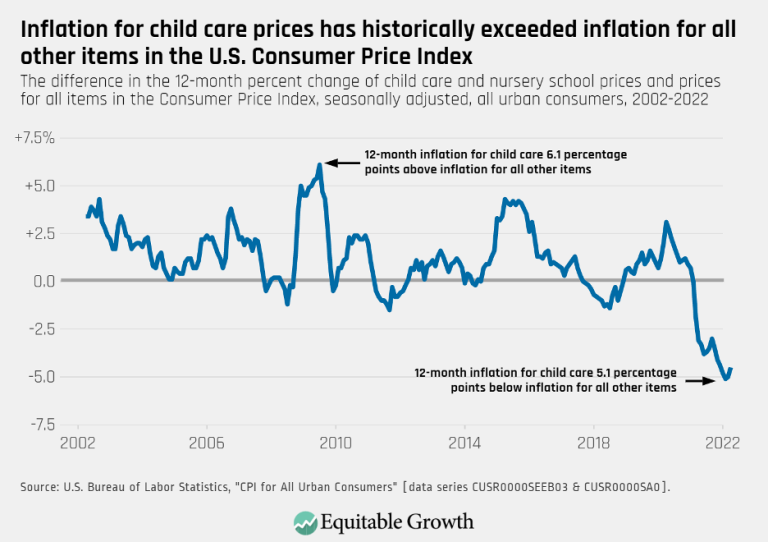
Inflation for child care prices has historically exceeded inflation for all other items in the U.S. Consumer Price Index (opens in a new tab)
Visualizations MAY 18, 2022
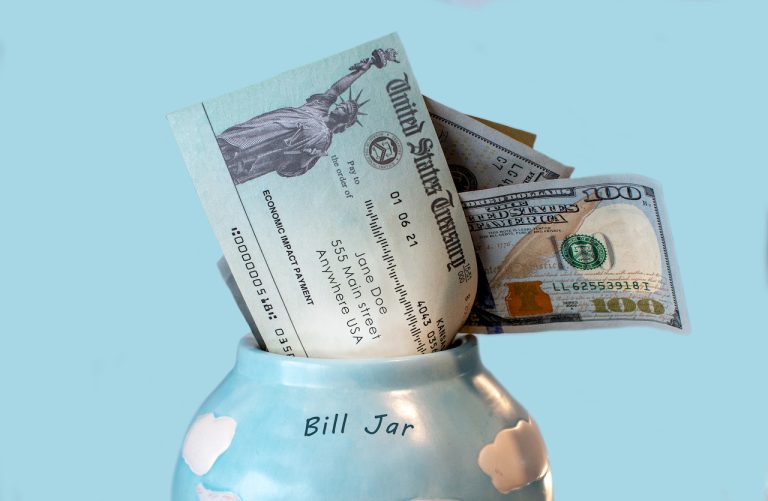
Fostering academic research on U.S. economic impact payments that goes beyond the marginal propensity to consume (opens in a new tab)
Blog JAN 18, 2022
Direct government payments to individuals are now a standard part of U.S. fiscal policymakers’ recession-fighting toolkit. Three rounds of so-called economic impact payments from the federal government have been paid…
By: Karen Dynan (opens in a new tab)
Cyclical Demand Shifts and Cost of Living Inequality (opens in a new tab)
Working Papers JAN 11, 2022
This paper examines the cyclical behavior of low-income versus high-income household price indices and documents two new facts: (1) during recessions prices rise more for products purchased relatively more by…
By: Jacob Orchard (opens in a new tab)
The economic evidence behind 10 policies in the Build Back Better Act (opens in a new tab)
Issue Briefs NOV 24, 2021
The U.S. House of Representatives late last week passed a key plank of President Joe Biden’s economic agenda, the Build Back Better Act. Coming on the heels of the president…
By: Maryam Janani-Flores (opens in a new tab), David S. Mitchell (opens in a new tab)
 View Chart
(opens in a new tab)
View Chart
(opens in a new tab)
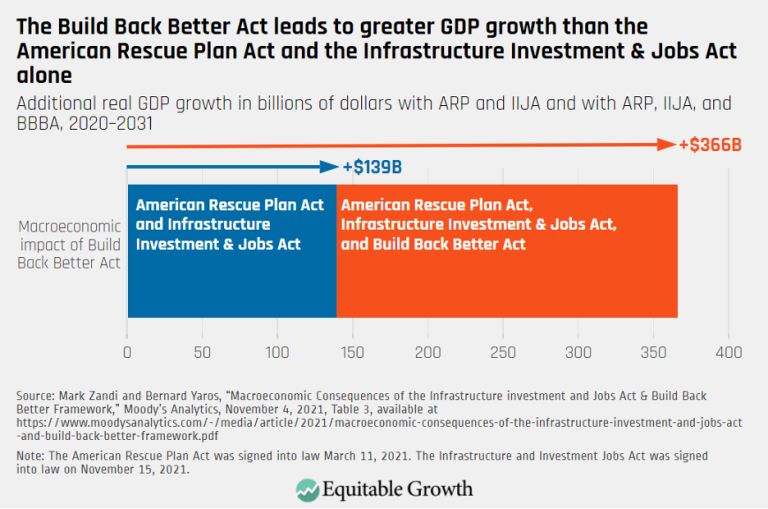
The Build Back Better Act leads to greater GDP growth than the American Rescue Plan Act and the Infrastructure Investment & Jobs Act alone (opens in a new tab)
Visualizations NOV 24, 2021

U.S. disability programs provide valuable benefits to low-income recipients across a range of health conditions (opens in a new tab)
Blog NOV 22, 2021
The three components of the U.S. social insurance system serve retirees and those recipients facing challenging health conditions. But all three programs have grown in recent decades, sparking various calls…
By: Manasi Deshpande (opens in a new tab)

Dispatch from EconCon 2021: Addressing racial and gender stratification in the U.S. economy is key to an equitable and sustainable recovery (opens in a new tab)
Blog OCT 21, 2021
The 2-day EconCon 2021 conference, held virtually from October 6–7, featured speakers, panelists, and moderators from across the progressive policy and academic landscape. They were tasked by the co-hosts of…
By: Equitable Growth (opens in a new tab)
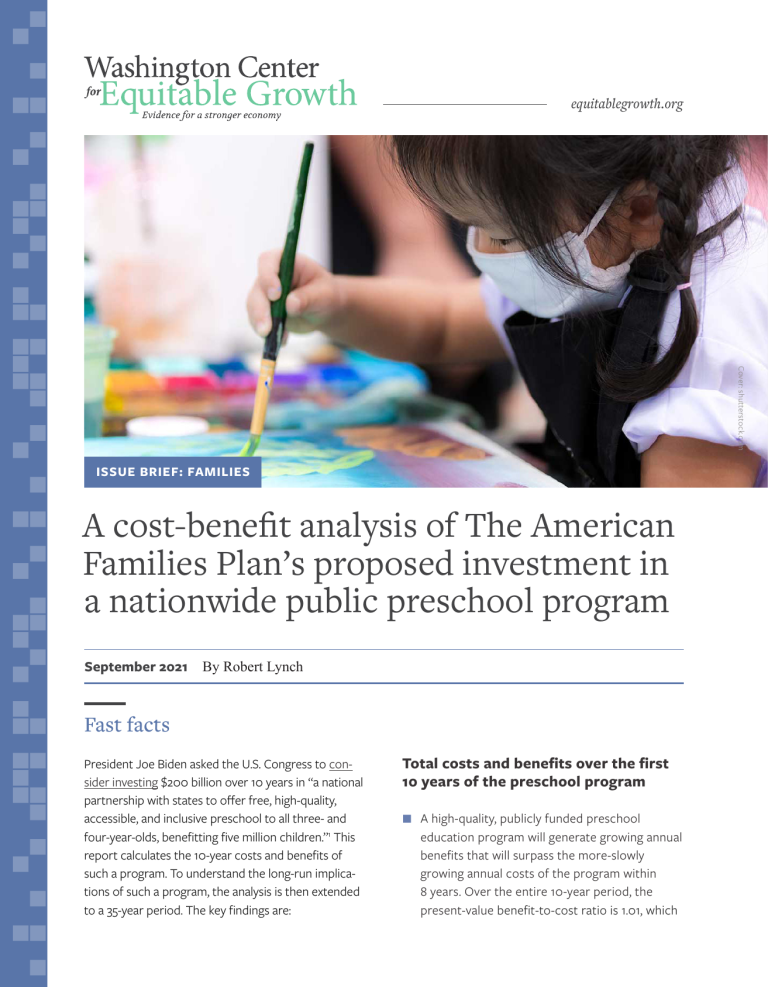
A cost-benefit analysis of The American Families Plan’s proposed investment in a nationwide public preschool program (opens in a new tab)
Issue Briefs SEP 22, 2021
President Joe Biden asked the U.S. Congress to consider investing $200 billion over 10 years in “a national partnership with states to offer free, high-quality, accessible, and inclusive preschool to…
By: Robert Lynch (opens in a new tab)

The coming public debt scare should not spook U.S. policymakers from investing in physical and social infrastructure (opens in a new tab)
Blog SEP 7, 2021
Public debt scaremongering is back in fashion on Capitol Hill. Republican legislators, from Senate Minority Leader Mitch McConnell (R-KY) on down, are invoking the high level of federal government debt—currently…
By: Barry Eichengreen (opens in a new tab)

Completing the unfinished New Deal to overcome 21st century U.S. economic inequality (opens in a new tab)
Blog AUG 31, 2021
President Joe Biden wants Congress to enact his two signature legislative packages—the $1 trillion bipartisan physical infrastructure plan passed by the U.S. Senate earlier in August and a $3.5 trillion…
By: David S. Mitchell (opens in a new tab)

Excessive heat harms U.S. workers unequally as the safety risks from climate change soar (opens in a new tab)
Blog JUL 19, 2021
This summer’s West Coast heat waves come as no surprise. But headlines about the various negative effects of excessive heat, including fatal wildfires, often overlook the plight of everyday workers.…
By: Michael Garvey (opens in a new tab)
Temperature, workplace safety, and labor market inequality (opens in a new tab)
Working Papers JUL 19, 2021
Using data covering the universe of injury claims from the nation’s largest worker’s compensation system (2001-2018), we explore the relationship between temperature and workplace safety and its implications for labor…
By: R. Jisung Park (opens in a new tab), Nora Pankratz (opens in a new tab), A. Patrick Behrer (opens in a new tab)

Climate change among many issues discussed at annual Western Economic Association International conference (opens in a new tab)
Blog JUL 15, 2021
The Western Economic Association International at the end of June held its 96th annual conference, bringing audiences together for more than 280 concurrent sessions to collaborate, share, and learn from…
By: Equitable Growth (opens in a new tab)
 View Chart
(opens in a new tab)
View Chart
(opens in a new tab)
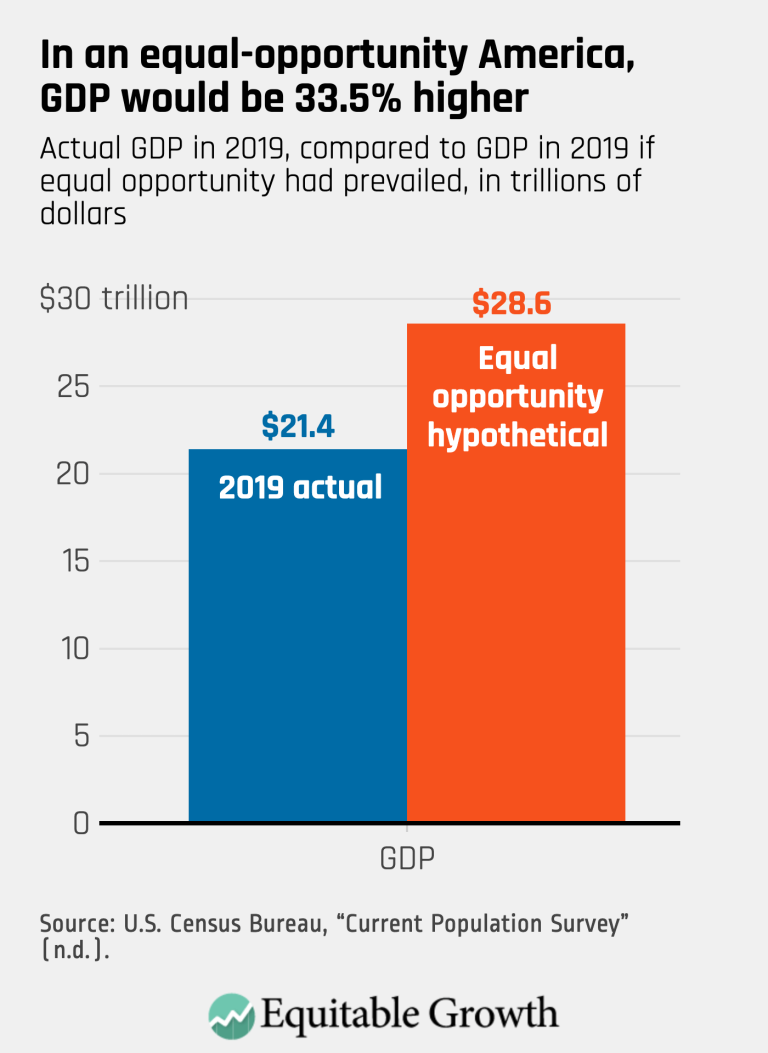
In an equal-opportunity America, GDP would be 33.5% higher (opens in a new tab)
Visualizations JUL 2, 2021
 View Chart
(opens in a new tab)
View Chart
(opens in a new tab)
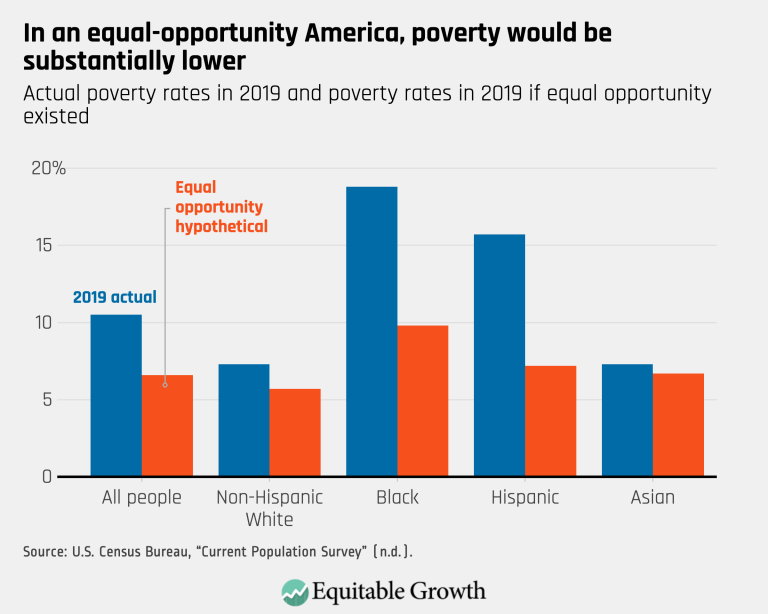
In an equal-opportunity America, poverty would be substantially lower (opens in a new tab)
Visualizations JUL 2, 2021
 View Chart
(opens in a new tab)
View Chart
(opens in a new tab)
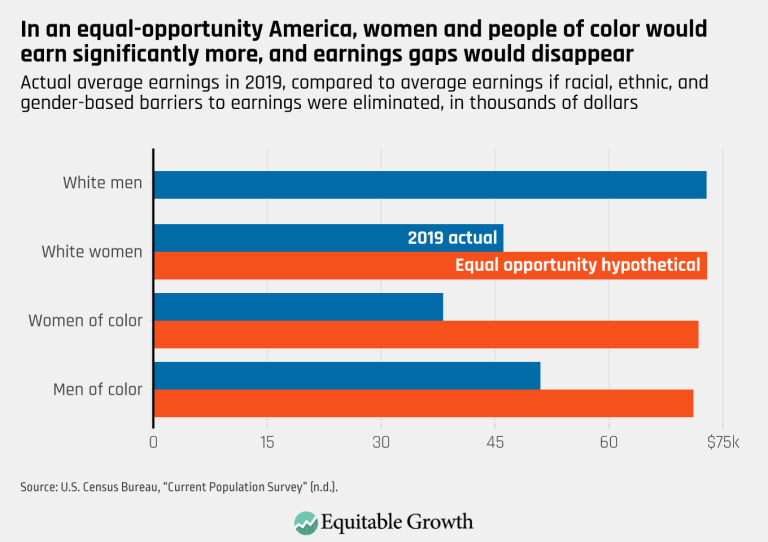
In an equal-opportunity America, women and people of color would earn significantly more, and earnings gaps would disappear (opens in a new tab)
Visualizations JUL 2, 2021
The economic benefits of equal opportunity in the United States by ending racial, ethnic, and gender disparities (opens in a new tab)
Issue Briefs JUN 29, 2021
Racial, ethnic, and gender disparities across the U.S. economy are a personal tragedy for the millions of individuals who suffer from the emotional, psychological, and social consequences. These disparities also…
By: Robert Lynch (opens in a new tab)

A new report lays out the path forward for faltering U.S. Unemployment Insurance system (opens in a new tab)
Blog JUN 24, 2021
Today, experts from seven organizations released a fortuitously timed report charting a path forward for the U.S. Unemployment Insurance program. Unemployment Insurance is the main social insurance program designed to…
By: Alix Gould-Werth (opens in a new tab)
 View Chart
(opens in a new tab)
View Chart
(opens in a new tab)
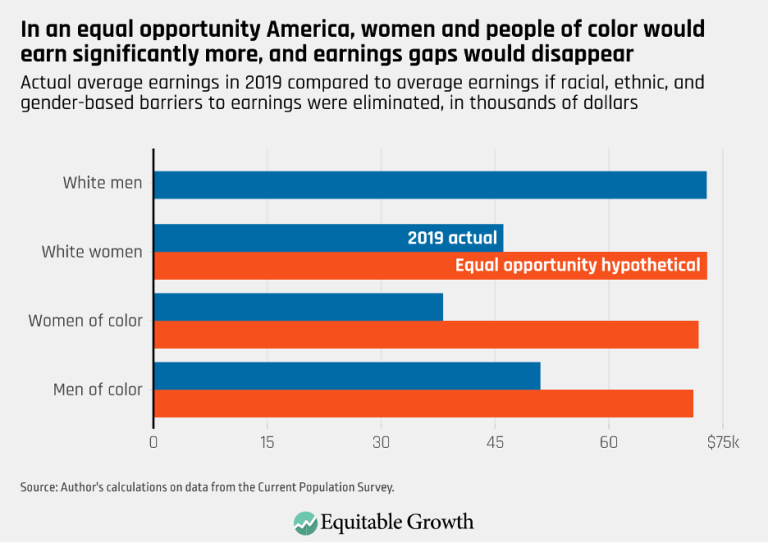
In an equal opportunity America, women and people of color would earn significantly more, and earnings gaps would disappear (opens in a new tab)
Visualizations JUN 7, 2021
 View Chart
(opens in a new tab)
View Chart
(opens in a new tab)
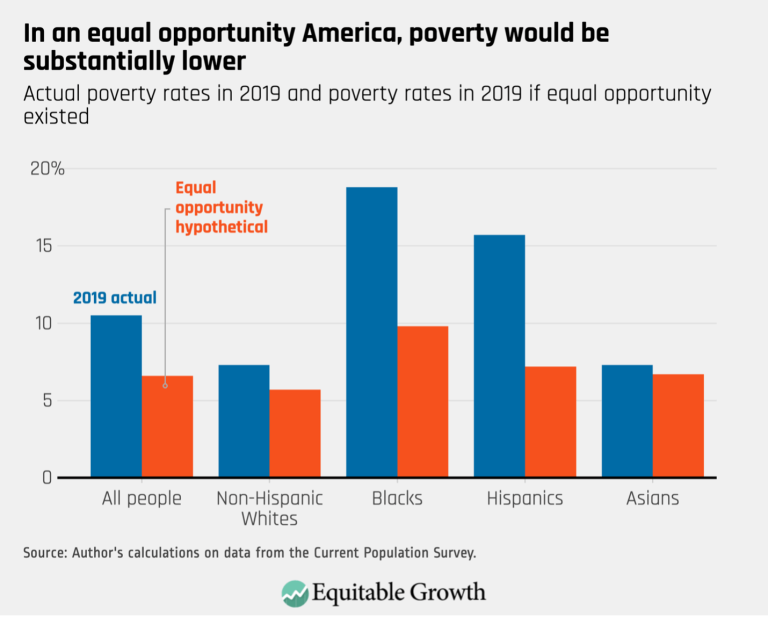
In an equal opportunity America, poverty would be substantially lower (opens in a new tab)
Visualizations JUN 7, 2021
Tax Refund Uncertainty: Evidence and Welfare Implications (opens in a new tab)
Working Papers APR 8, 2021
Transfers paid through annual tax refunds are a large but uncertain source of income for poor households. We document that low-income tax-filers have substantial subjective uncertainty about these refunds. We…
By: Sydnee Caldwell (opens in a new tab), Scott Nelson (opens in a new tab), Daniel Waldinger (opens in a new tab)

Executive actions to coordinate federal countercyclical regulatory policy (opens in a new tab)
Blog FEB 17, 2021
This factsheet has been adapted from Yair Listokin’s Vision 2020 essay and his 2019 book, Law and Macroeconomics: Legal Remedies to Recessions. Overview Traditional macroeconomic tools—fiscal policy from the U.S.…
By: Equitable Growth (opens in a new tab)
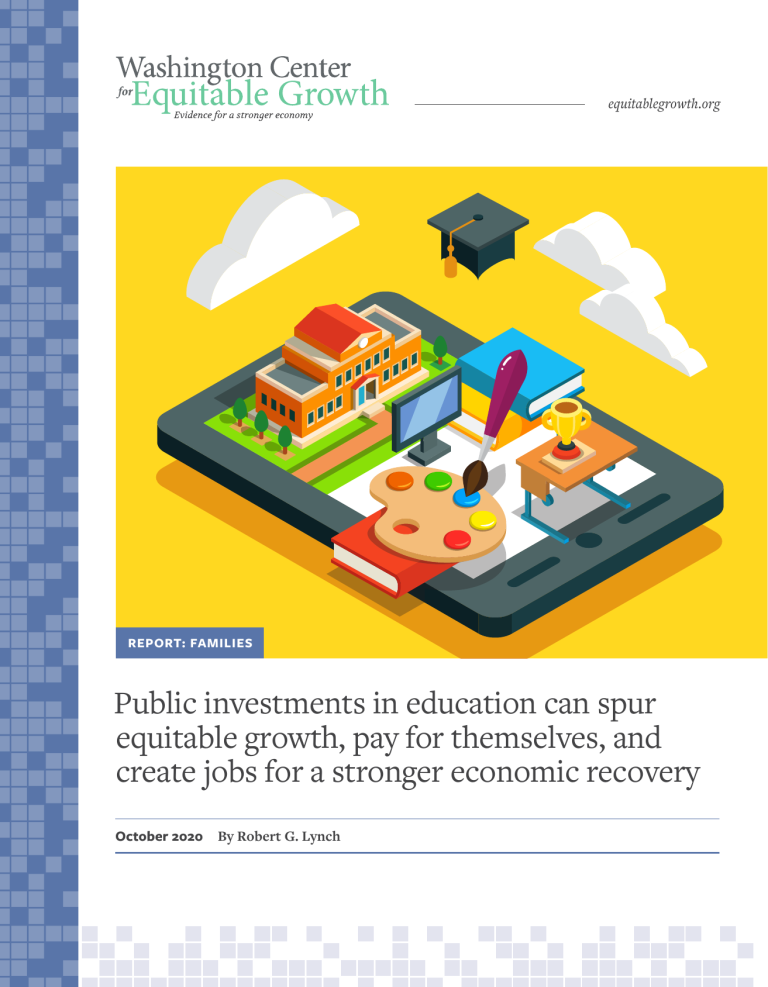
Public investments in education can spur equitable growth, pay for themselves, and create jobs for a stronger economic recovery (opens in a new tab)
Reports OCT 27, 2020
Public investments in education, in both physical structures and in services, are key to long-run economic growth and human well-being. Some of these investments are especially effective in promoting more…
By: Robert Lynch (opens in a new tab)
The rising number of U.S. households with burdensome student debt calls for a federal response (opens in a new tab)
Issue Briefs OCT 21, 2020
Today, about 43 million adults in the United States collectively hold $1.5 trillion in federal student loan debt and an additional $119 billion in private student loans not backed by…
By: Raksha Kopparam (opens in a new tab), Austin Clemens (opens in a new tab)
Can policymakers reverse the unequal decline in middle-age U.S. homeownership rates? (opens in a new tab)
Issue Briefs OCT 13, 2020
Homeownership in the United States has long functioned as a wealth equalizer, allowing middle-class families to build wealth while they pay for their housing costs. Because houses have generally appreciated…
By: Austin Clemens (opens in a new tab), John Sabelhaus (opens in a new tab)
 View Chart
(opens in a new tab)
View Chart
(opens in a new tab)
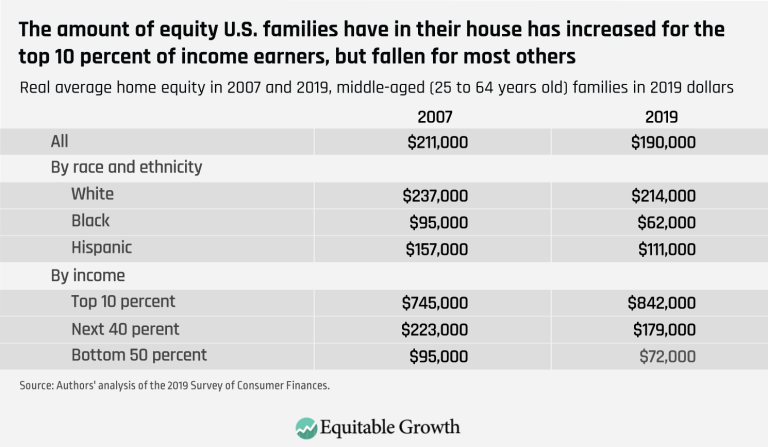
The amount of equity U.S. families have in their house has increased for the top 10 percent of income earners, but fallen for most others (opens in a new tab)
Visualizations OCT 13, 2020
 View Chart
(opens in a new tab)
View Chart
(opens in a new tab)
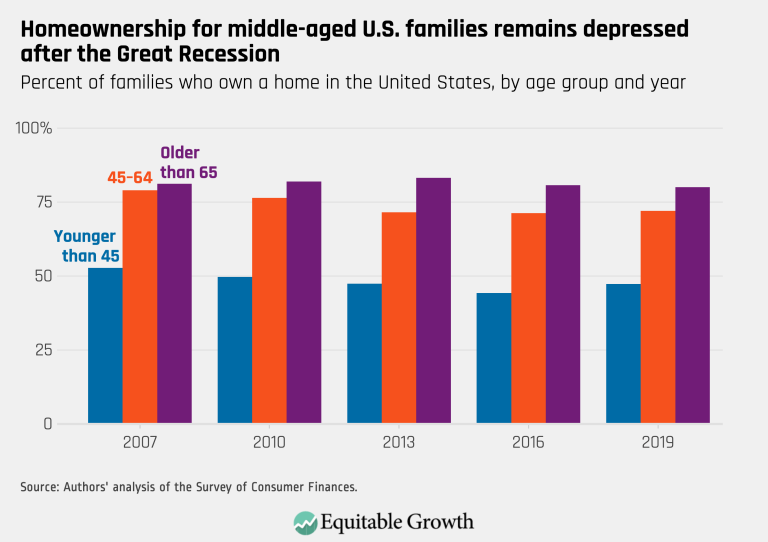
Homeownership for middle-aged U.S. families remains depressed after the Great Recession (opens in a new tab)
Visualizations OCT 9, 2020
 View Chart
(opens in a new tab)
View Chart
(opens in a new tab)
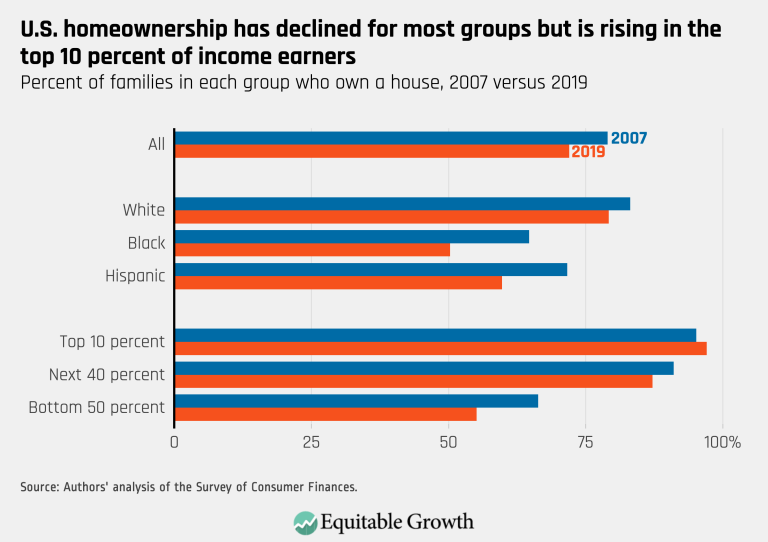
U.S. homeownership has declined for most groups but is rising in the top 10 percent of income earners (opens in a new tab)
Visualizations OCT 9, 2020
 View Chart
(opens in a new tab)
View Chart
(opens in a new tab)
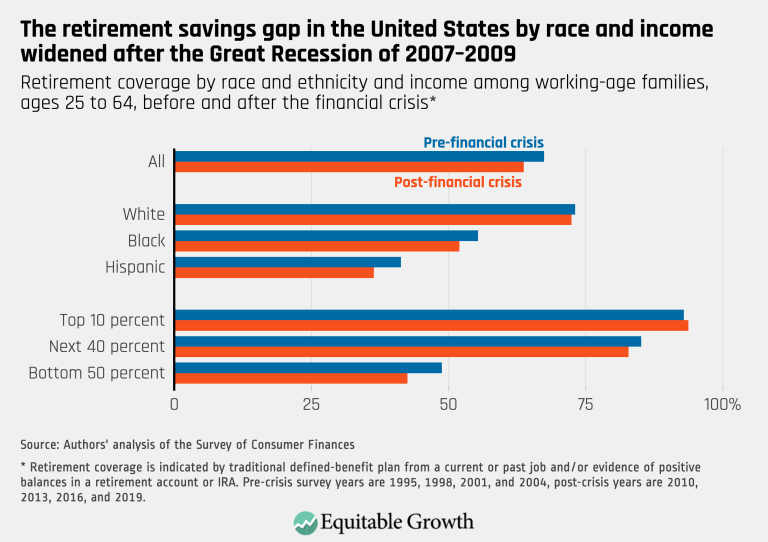
The retirement savings gap in the United States by race and income widened after the Great Recession of 2007–2009 (opens in a new tab)
Visualizations OCT 7, 2020
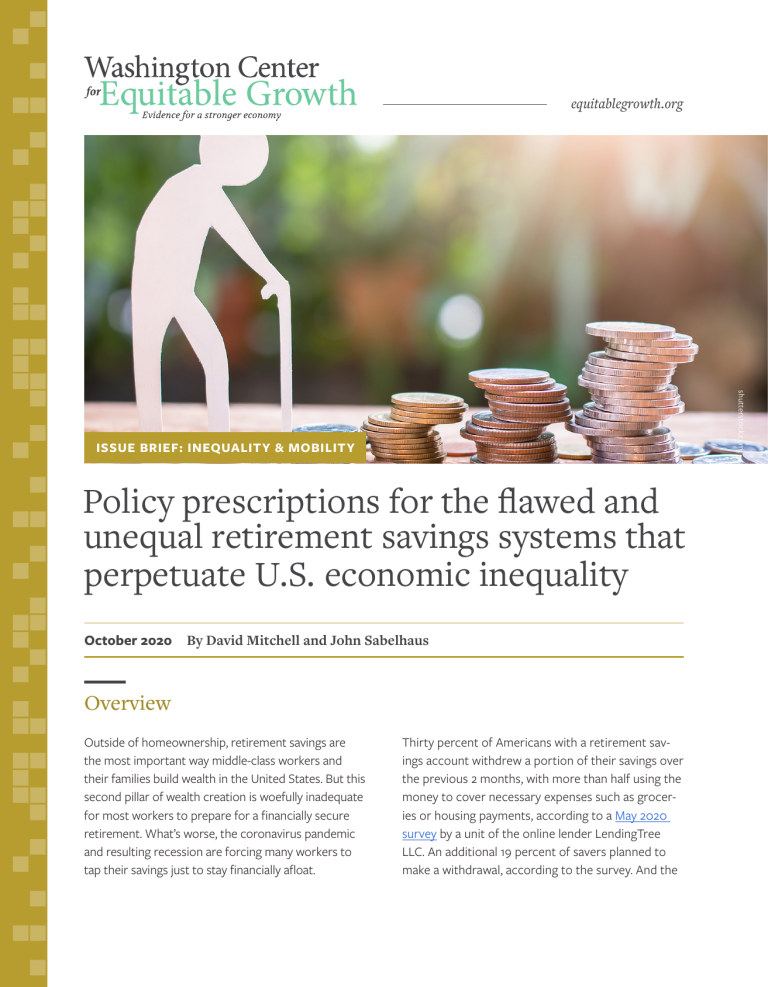
Policy prescriptions for the flawed and unequal retirement savings systems that perpetuate U.S. economic inequality (opens in a new tab)
Issue Briefs OCT 7, 2020
Outside of homeownership, retirement savings are the most important way middle-class workers and their families build wealth in the United States. But this second pillar of wealth creation is woefully…
By: David S. Mitchell (opens in a new tab), John Sabelhaus (opens in a new tab)
 View Chart
(opens in a new tab)
View Chart
(opens in a new tab)
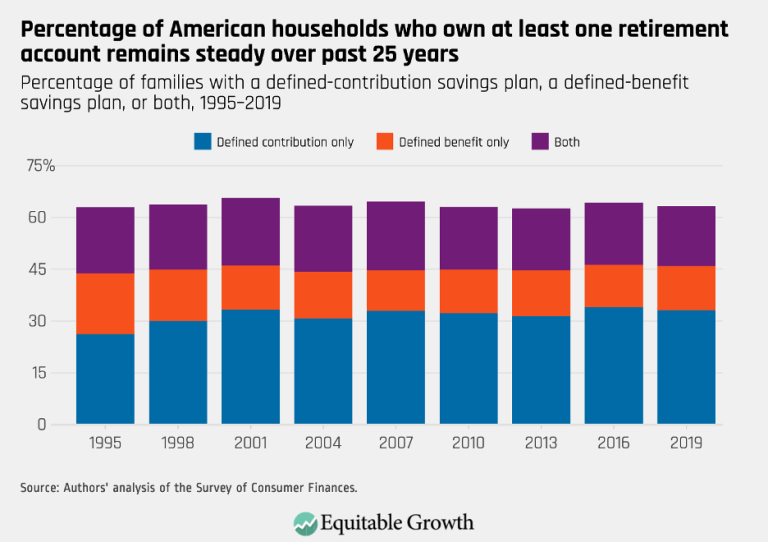
Percentage of American households who own at least one retirement account remains steady over past 25 years (opens in a new tab)
Visualizations OCT 6, 2020
 View Chart
(opens in a new tab)
View Chart
(opens in a new tab)
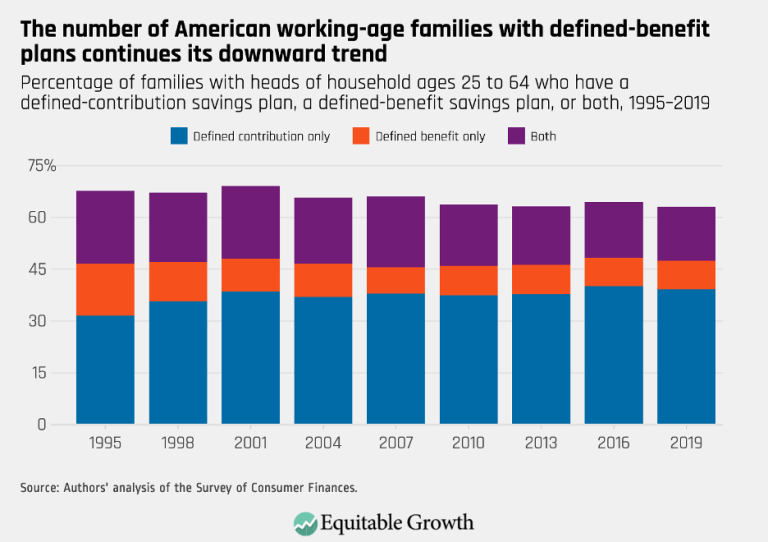
The number of American working-age families with defined-benefit plans continues downward trend (opens in a new tab)
Visualizations OCT 6, 2020
 View Chart
(opens in a new tab)
View Chart
(opens in a new tab)
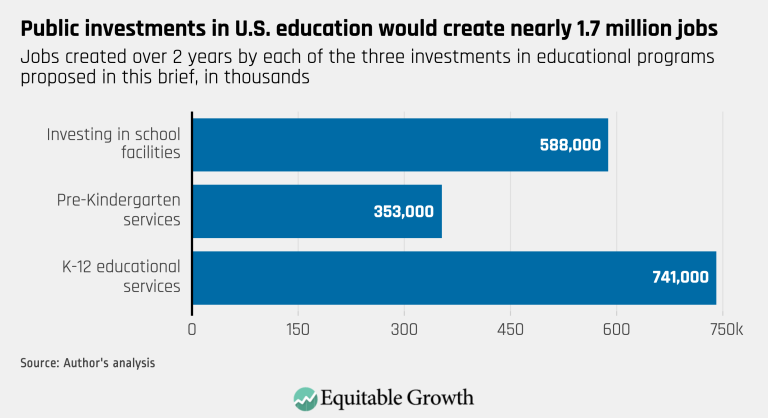
Public investment in U.S. education would create nearly 1.7 million jobs (opens in a new tab)
Visualizations SEP 22, 2020
 View Chart
(opens in a new tab)
View Chart
(opens in a new tab)
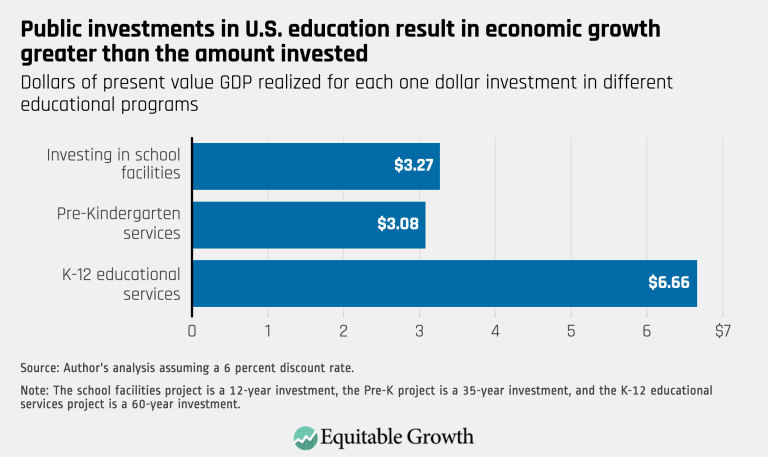
Public investment in U.S. education result in economic growth greater than the amount invested (opens in a new tab)
Visualizations SEP 22, 2020
 View Chart
(opens in a new tab)
View Chart
(opens in a new tab)
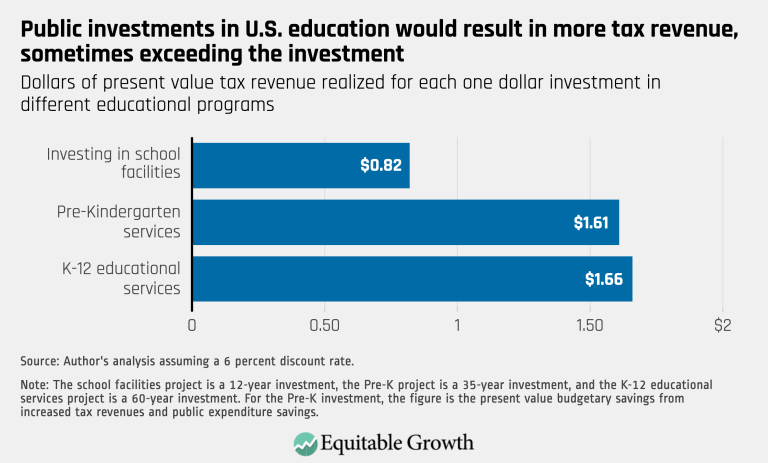
Public investment in U.S. education would result in more tax revenue, sometimes exceeding the investment (opens in a new tab)
Visualizations SEP 22, 2020

The hidden costs of stock-market-first U.S. economic policies (opens in a new tab)
Blog SEP 22, 2020
The idea that sound U.S. economic policy begins and ends with a strong stock market is becoming pervasive. Advocates of what I call the stock-market-first approach want you to focus…
By: John Sabelhaus (opens in a new tab)

Equitable Growth announces record $1.07 million in research grants on inequality and broadly shared growth (opens in a new tab)
Blog AUG 31, 2020
The Washington Center for Equitable Growth today announced research grants totaling $1,074,060—our largest year to date—to seek evidence on important issues related to the intersections between economic inequality and growth.…
By: Korin Davis (opens in a new tab)

Achieving universal paid family and medical leave in the United States (opens in a new tab)
Blog AUG 24, 2020
The coronavirus pandemic and the recession it caused lay bare a familiar challenge for U.S. workers—balancing family and job responsibilities without access to paid family and medical leave. When a…
By: Equitable Growth (opens in a new tab)

Disaggregated data on Asian Americans, Native Hawaiians, and Pacific Islanders is crucial amid the coronavirus pandemic (opens in a new tab)
Issue Briefs AUG 20, 2020
The novel coronavirus pandemic and the recession it caused lay bare the clear links between racial and ethnic economic inequities, structural racism, and the outsized harm of these crises on…
By: Christian Edlagan (opens in a new tab), Raksha Kopparam (opens in a new tab)
 View Chart
(opens in a new tab)
View Chart
(opens in a new tab)
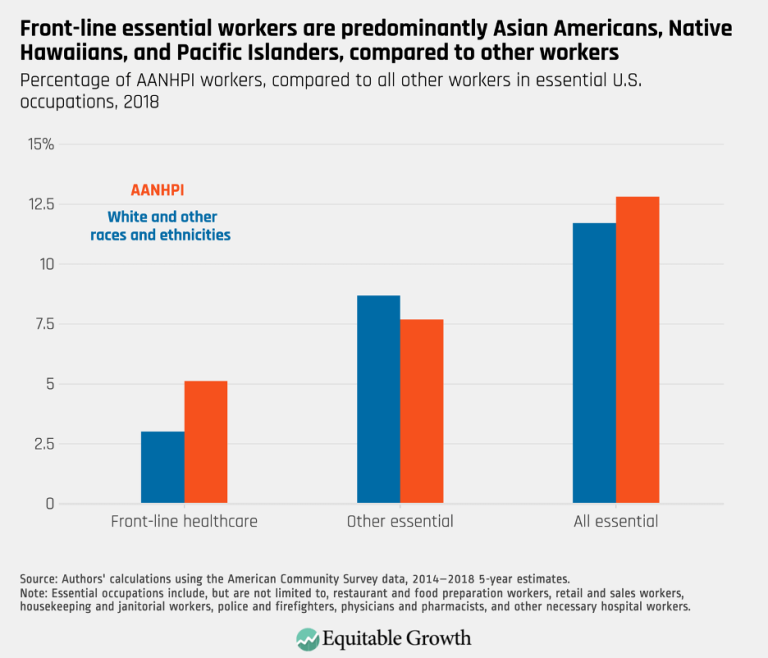
Front-line essential workers are predominately Asian Americans, Native Hawaiians, and Pacific Islanders, compared to other workers (opens in a new tab)
Visualizations AUG 20, 2020
 View Chart
(opens in a new tab)
View Chart
(opens in a new tab)
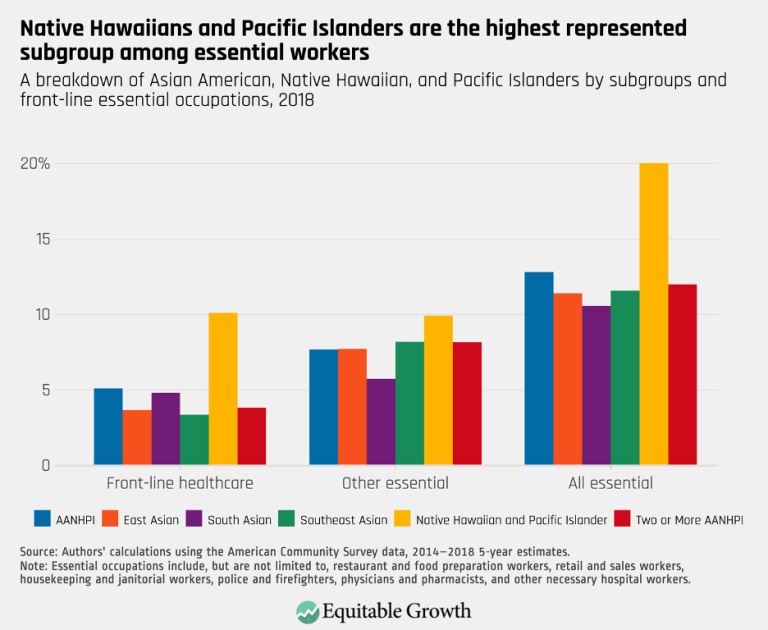
Native Hawaiians and Pacific Islanders are the highest represented subgroup among essential workers (opens in a new tab)
Visualizations AUG 20, 2020
 View Chart
(opens in a new tab)
View Chart
(opens in a new tab)
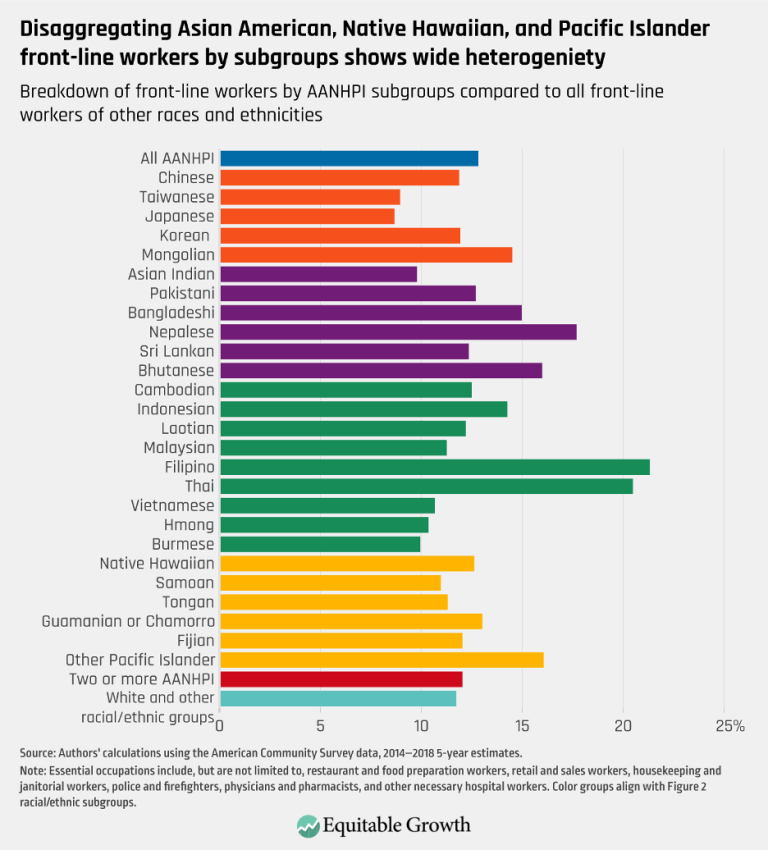
Disaggregating Asian American, Native Hawaiian, and Pacific Islander front-line workers by subgroups shows wide heterogeneity (opens in a new tab)
Visualizations AUG 20, 2020
Testimony by Heather Boushey before the Joint Economic Committee on the Coronavirus Recession (opens in a new tab)
Blog JUL 30, 2020
Thank you, Vice Chair Beyer and Chairman Lee, for inviting me to speak today. It’s an honor to be here. My name is Heather Boushey, and I am president and…
By: Heather Boushey (opens in a new tab)
 View Chart
(opens in a new tab)
View Chart
(opens in a new tab)
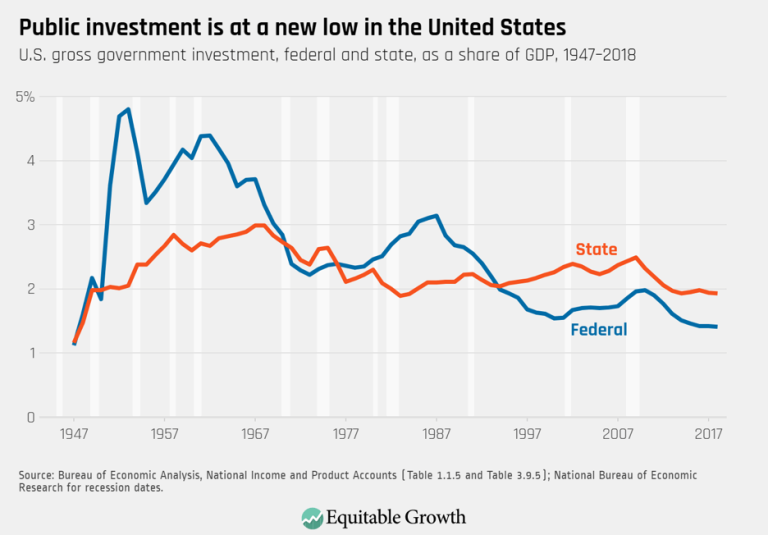
Public investment is at a new low in the United States (opens in a new tab)
Visualizations JUL 30, 2020

Congress must act to help U.S. families facing an income crisis (opens in a new tab)
Blog JUL 29, 2020
We now have 4.3 million confirmed cases of the novel coronavirus in the United States. The virus moves fast, and policymakers in Washington move slow. Families across the country face…
By: Claudia Sahm (opens in a new tab)
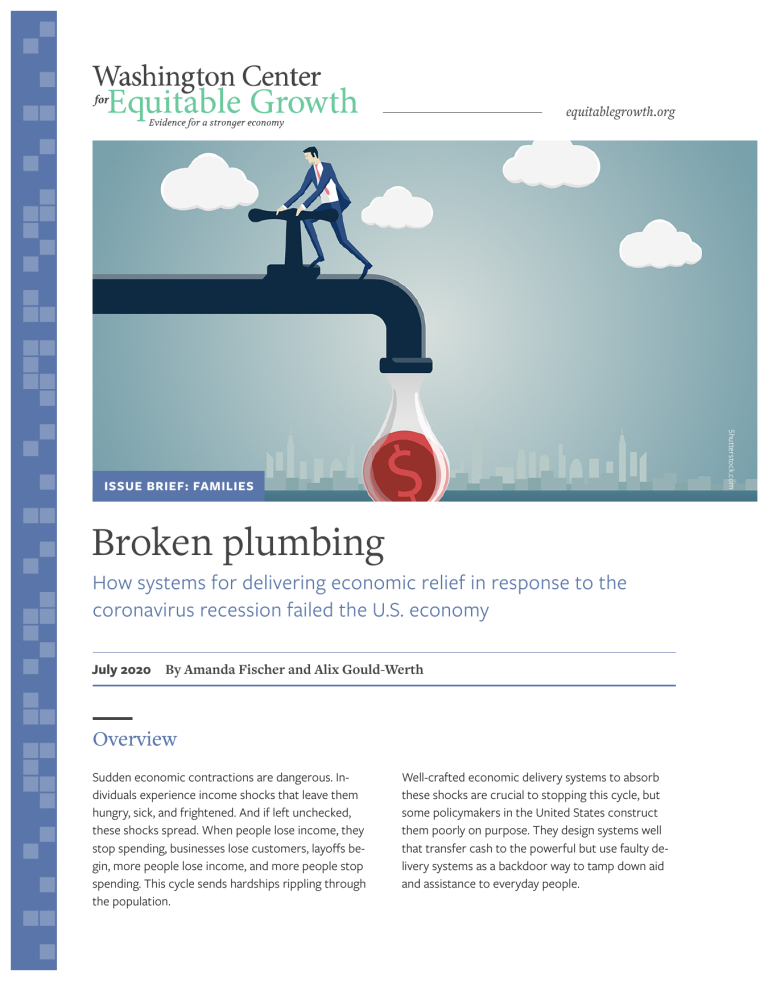
Broken plumbing: How systems for delivering economic relief in response to the coronavirus recession failed the U.S. economy (opens in a new tab)
Issue Briefs JUL 29, 2020
Sudden economic contractions are dangerous. Individuals experience income shocks that leave them hungry, sick, and frightened. And if left unchecked, these shocks spread. When people lose income, they stop spending,…
By: Amanda Fischer (opens in a new tab), Alix Gould-Werth (opens in a new tab)
 View Chart
(opens in a new tab)
View Chart
(opens in a new tab)
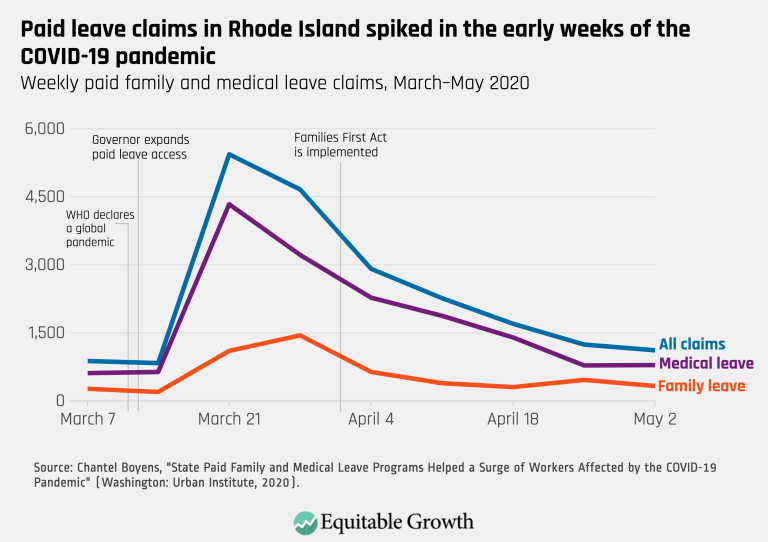
Paid leave claims in Rhode Island spiked in the early weeks of the COVID-19 pandemic (opens in a new tab)
Visualizations JUL 29, 2020
 View Chart
(opens in a new tab)
View Chart
(opens in a new tab)
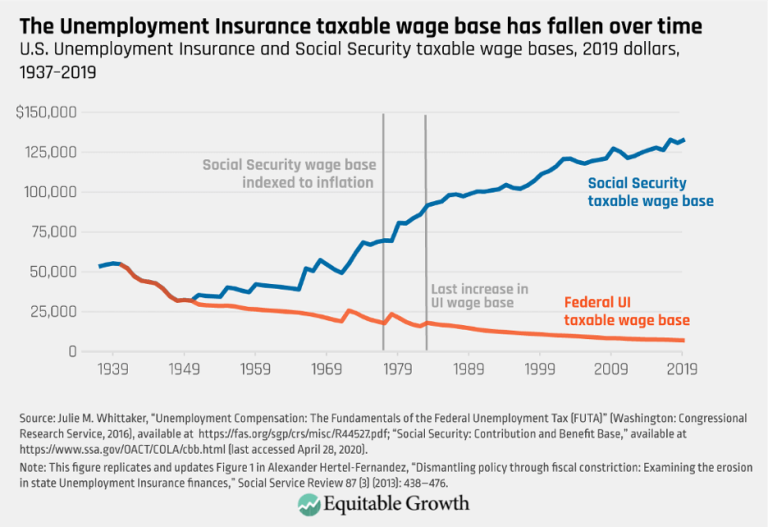
The Unemployment Insurance taxable wage base has fallen over time (opens in a new tab)
Visualizations JUL 28, 2020
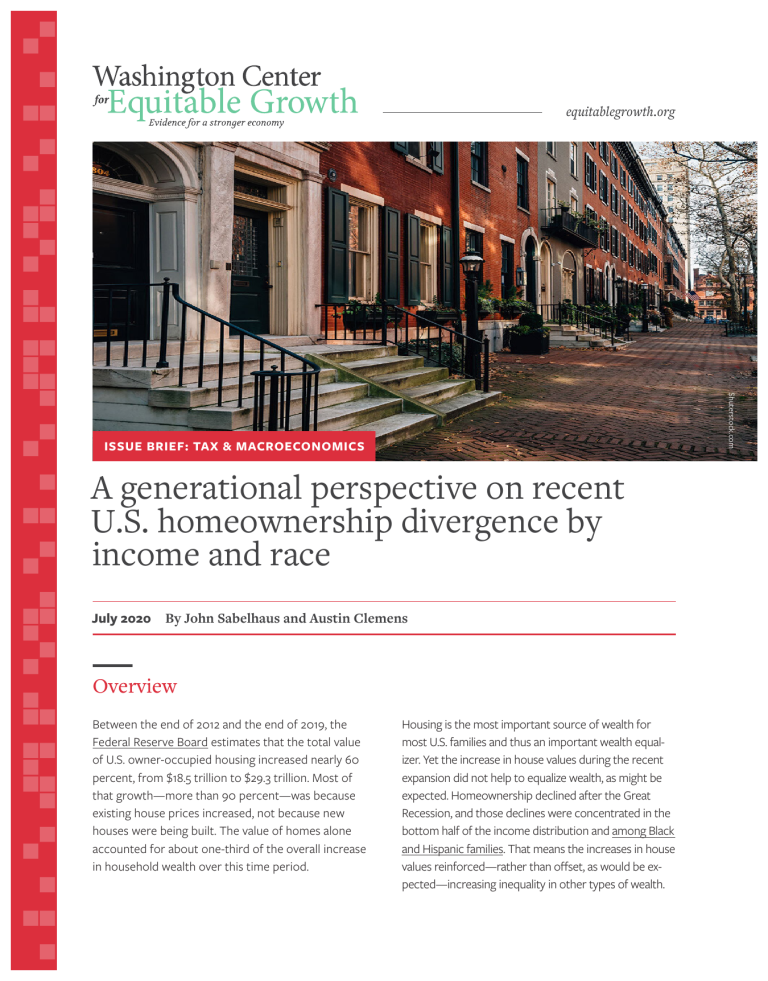
A generational perspective on recent U.S. homeownership divergence by income and race (opens in a new tab)
Issue Briefs JUL 27, 2020
Between the end of 2012 and the end of 2019, the Federal Reserve Board estimates that the total value of U.S. owner-occupied housing increased nearly 60 percent, from $18.5 trillion…
By: John Sabelhaus (opens in a new tab), Austin Clemens (opens in a new tab)
 View Chart
(opens in a new tab)
View Chart
(opens in a new tab)
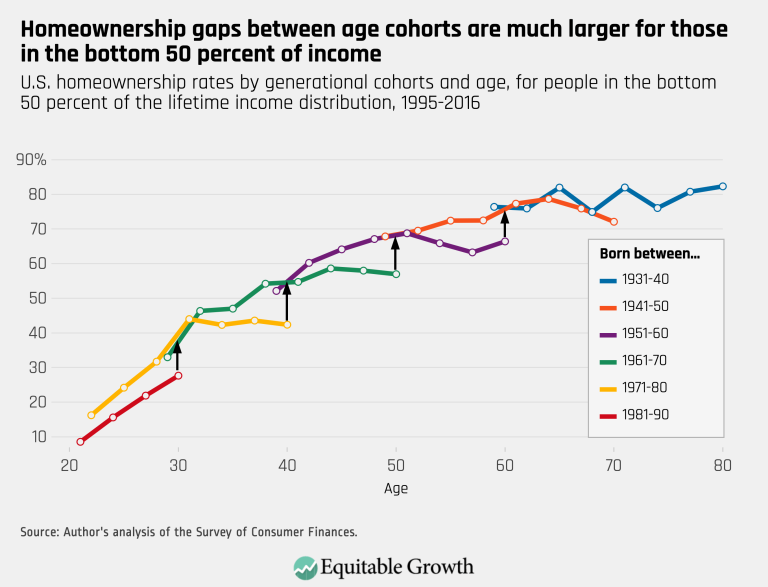
Homeownership gaps between age cohorts are much larger for those in the bottom 50 percent of income (opens in a new tab)
Visualizations JUL 27, 2020
 View Chart
(opens in a new tab)
View Chart
(opens in a new tab)
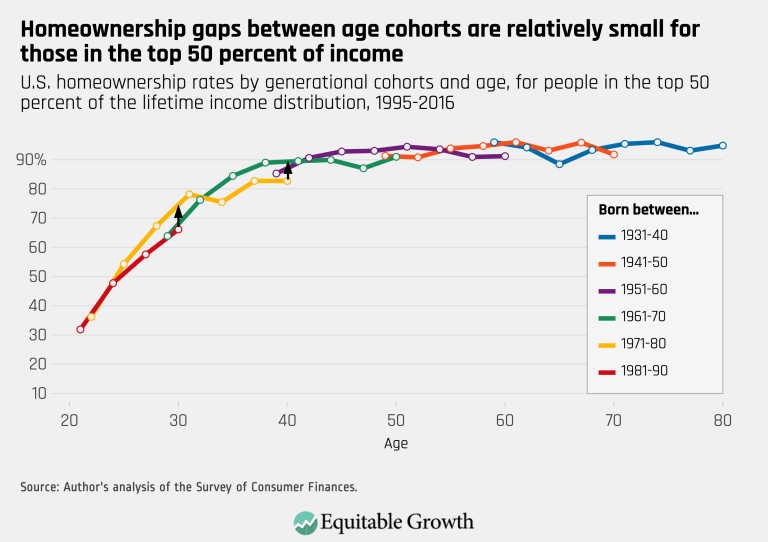
Homeownership gaps between age cohorts are relatively small for those in the top 50 percent of income (opens in a new tab)
Visualizations JUL 27, 2020
 View Chart
(opens in a new tab)
View Chart
(opens in a new tab)
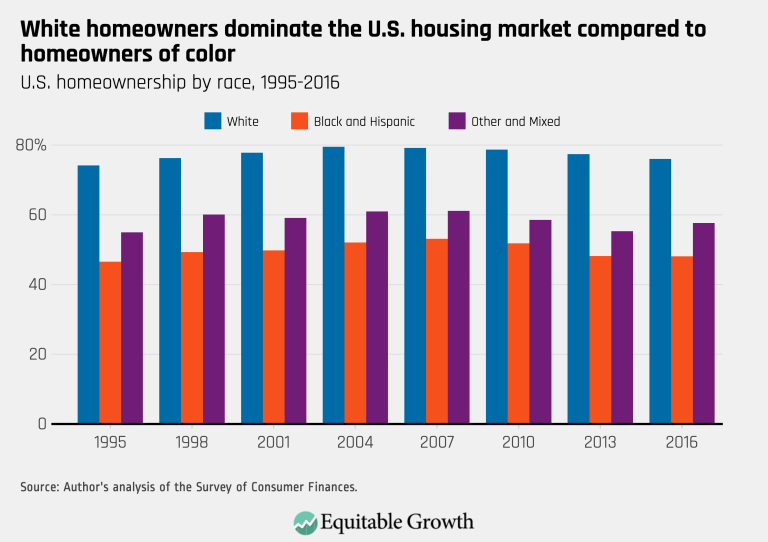
White homeowners dominate the U.S. housing market compared to homeowners of color (opens in a new tab)
Visualizations JUL 24, 2020
 View Chart
(opens in a new tab)
View Chart
(opens in a new tab)
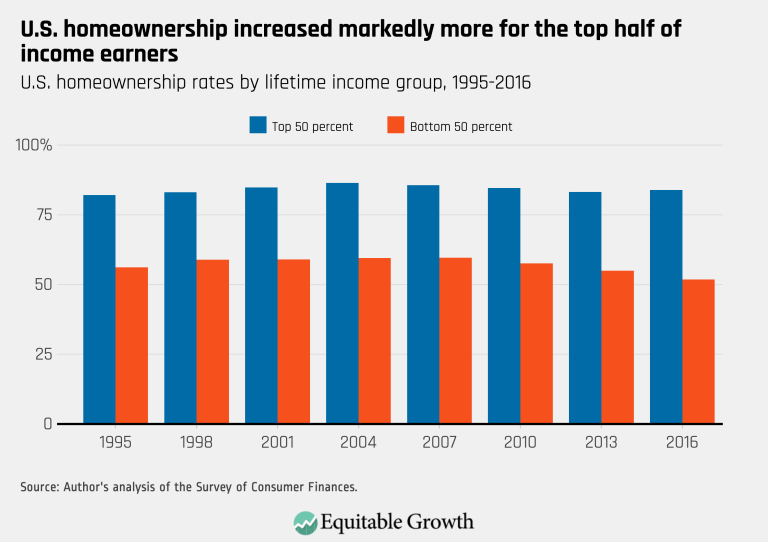
U.S. homeownership increased markedly more for the top half of income earners (opens in a new tab)
Visualizations JUL 24, 2020
 View Chart
(opens in a new tab)
View Chart
(opens in a new tab)
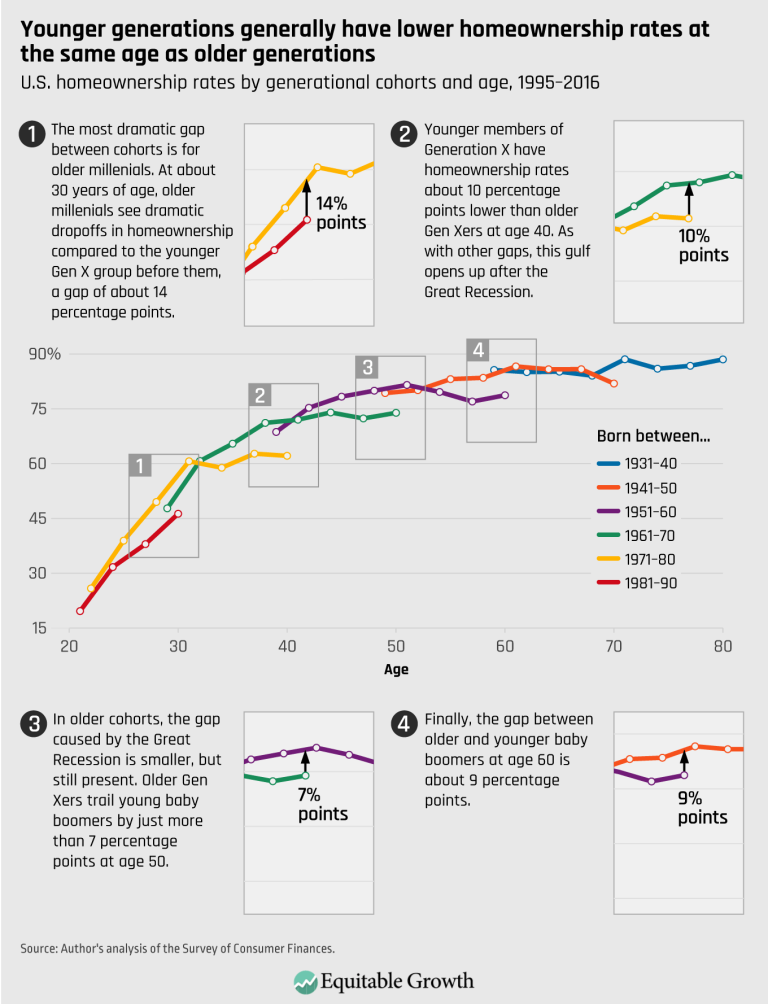
Younger generations generally have lower homeownership rates at the same age as older generations (opens in a new tab)
Visualizations JUL 24, 2020

New research on the Great Recession shows extended unemployment benefits insignificantly affect U.S. unemployment rates (opens in a new tab)
Blog JUL 21, 2020
Unemployment rates in the United States are currently higher than they were at height of the Great Recession, standing at 11.1 percent in June after declining from a record high…
By: Kate Bahn (opens in a new tab)
One year later: Recession Ready and the coronavirus recession (opens in a new tab)
Videos JUN 1, 2020
Proposals put forth can help support communities, stabilize the economy amid coronavirus recession One year ago, long before the risks of the new coronavirus and the ensuing recession enveloped our…
By: Equitable Growth (opens in a new tab)
Green stimulus, not dirty bailouts, is the smart investment strategy during the coronavirus recession (opens in a new tab)
Issue Briefs MAY 18, 2020
In March, the federal government passed the Coronavirus Aid, Relief, and Economic Security bill, more commonly known as the CARES Act. The law aims to provide relief for businesses and…
By: Leah Stokes (opens in a new tab), Matto Mildenberger (opens in a new tab)

Where should the marginal dollar go in U.S. fiscal policy—to testing or to the safety net—amid a pandemic-induced economic downturn? (opens in a new tab)
Blog APR 27, 2020
In our recent working paper, “An SEIR Infectious Disease Model with Testing and Conditional Quarantine,” the two of us and Simon Mongey, an assistant professor of economics at the University…
By: David Berger (opens in a new tab), Kyle Herkenhoff (opens in a new tab)

Dealing with the U.S. economic and public health effects of the coronavirus recession compassionately and with an eye on a strong recovery (opens in a new tab)
Blog APR 17, 2020
On March 24, I presented to a teleconference of about 100 economists and other experts gathered by my colleagues Emmanuel Saez and Gabriel Zucman of the University of California, Berkeley…
By: Jason Furman (opens in a new tab)

Two significant U.S. macroeconomic needs to consider amid the coronavirus pandemic (opens in a new tab)
Blog APR 15, 2020
Emmanuel Saez and Gabriel Zucman of the University of California, Berkeley organized a teleconference in late March of more than 100 economists and other experts at which I, along with…
By: N. Gregory Mankiw (opens in a new tab)
Rescuing small businesses to fight the coronavirus recession and prevent further economic inequality in the United States (opens in a new tab)
Issue Briefs APR 14, 2020
The U.S. Congress last month mobilized trillions of dollars in the Coronavirus Aid, Relief and Economic Security Act to help workers and businesses survive while mandatory COVID-19 public health measures…
By: Amanda Fischer (opens in a new tab)
 View Chart
(opens in a new tab)
View Chart
(opens in a new tab)
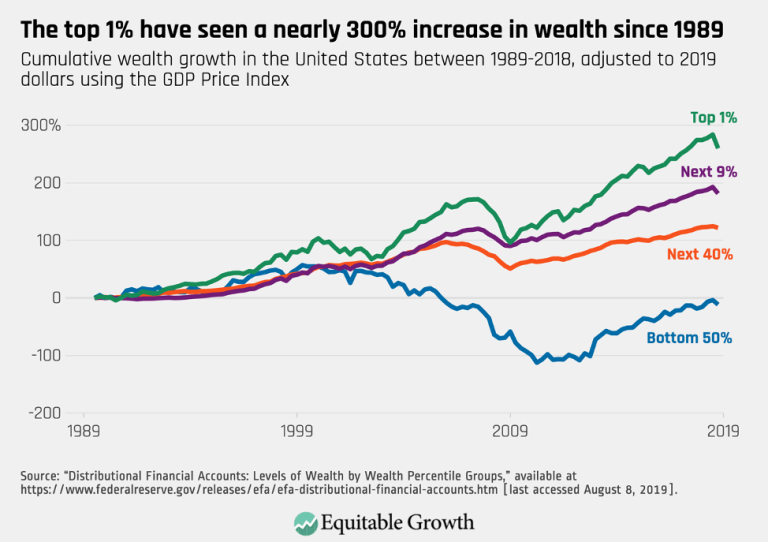
The top 1% have seen a nearly 300% increase in wealth since 1989 (opens in a new tab)
Visualizations APR 14, 2020
 View Chart
(opens in a new tab)
View Chart
(opens in a new tab)
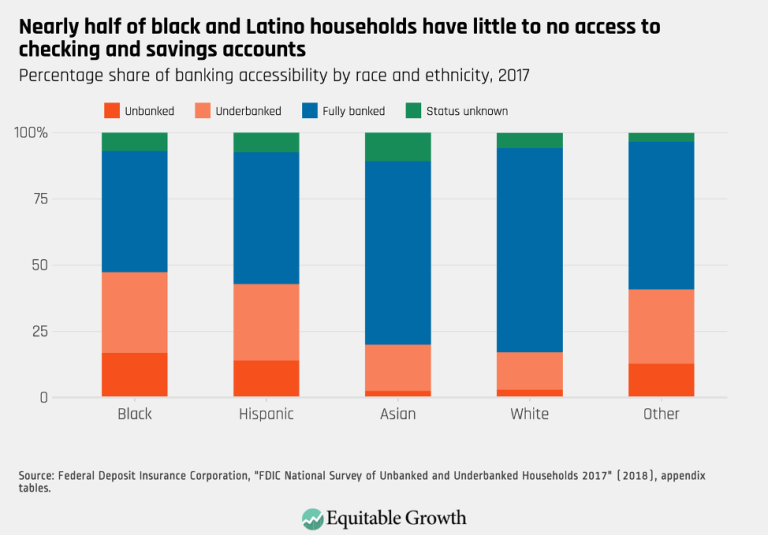
Nearly half of black and Latino households have little to no access to checking and savings accounts (opens in a new tab)
Visualizations APR 14, 2020
 View Chart
(opens in a new tab)
View Chart
(opens in a new tab)
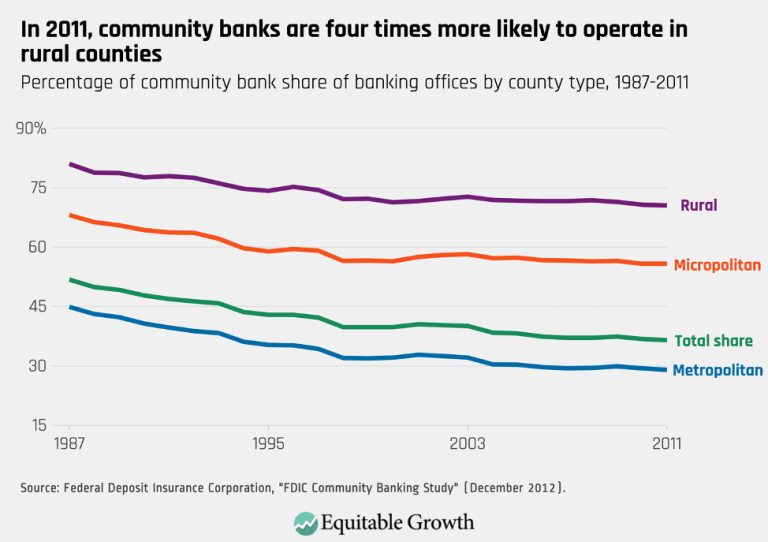
In 2011, community banks are four times more likely to operate in rural counties (opens in a new tab)
Visualizations APR 14, 2020

The three ways fiscal policy can be used to fight COVID-19 and the coronavirus recession (opens in a new tab)
Blog APR 14, 2020
Late in March, before the U.S. Congress passed the $2.2 trillion Coronavirus Aid, Relief, and Economic Security Act and President Donald Trump signed it into law, economists Emmanuel Saez and…
By: Olivier Blanchard (opens in a new tab)

U.S. economic policy principles for confronting the coronavirus recession (opens in a new tab)
Blog APR 8, 2020
This post reflects our organization’s overall guiding policy principles for confronting the coronavirus recession as detailed on March 24. These principles still hold as there remains much to be done…
By: Heather Boushey (opens in a new tab), Somin Park (opens in a new tab)

Getting money urgently to low-wage U.S. workers (opens in a new tab)
Blog MAR 30, 2020
To cushion the blow of the COVID-19 pandemic, the U.S. Congress last week passed and President Donald Trump signed the $2.2 trillion emergency stimulus package, including provisions to send checks…
By: Lisa Cook (opens in a new tab)

Congress fights back, and it’s absolutely necessary (opens in a new tab)
Blog MAR 27, 2020
(This piece was updated on April 1, 2020 to reflect the IRS guidance on the economic impact payments related to the coronavirus recession.) The coronavirus is killing people at a…
By: Claudia Sahm (opens in a new tab)
 View Chart
(opens in a new tab)
View Chart
(opens in a new tab)
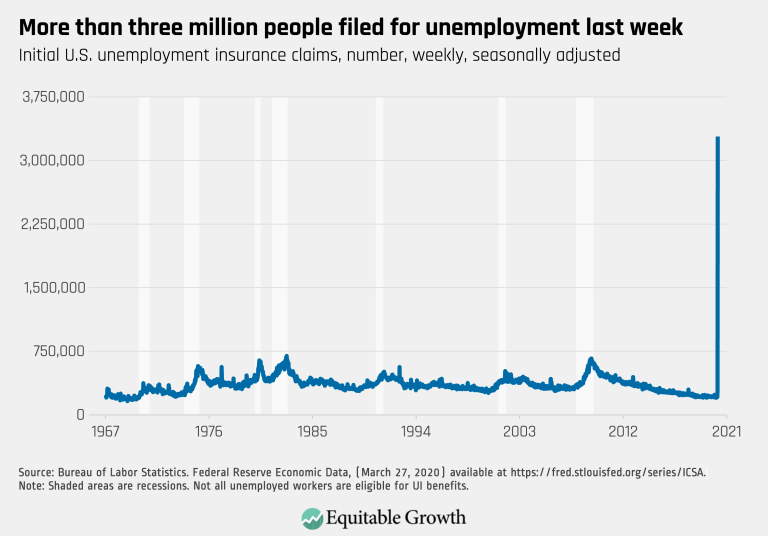
More than three million people filed for unemployment last week (opens in a new tab)
Visualizations MAR 27, 2020

Economic experts propose policy responses to coronavirus recession (opens in a new tab)
Blog MAR 24, 2020
University of California, Berkeley economists Emmanuel Saez and Gabriel Zucman, in cooperation with Economics for Inclusive Prosperity, are hosting an invitation-only online conference today to discuss economic policy responses to…
By: Equitable Growth (opens in a new tab)


Your Direct Line to Cutting Edge Research
Be the first to know about our latest events, research releases, and expert insights. Get exclusive updates delivered right to your inbox and never miss an opportunity to engage with our community.