


Impact
Our work connects economic evidence to policy decisions that shape people’s lives. We support scholars, translate data, and help research reach policymakers, media, and the public.

Get Involved
If you’re interested in supporting this work or partnering with Equitable Growth, we’d like to hear from you. Email us at info@equitablegrowth.org (opens in a new tab).
Voices From the Field
Support from Equitable Growth helps move research from early ideas to published work and policy engagement. Researchers in our network use this support to grow their work, connect with policymakers, and expand the reach of their ideas.

[Equitable Growth] encouraged me to stay up to date on related policy issues. Since I have written more and deeper thanks to the support from Equitable Growth, I have received more attention from media, policy makers, and private firms, which keeps me doing more research in the area. The positive feedback loop between academic research and non-academic exposure is great.
Support from Equitable Growth has advanced my research in a number of ways. Thanks to the grant I and my co-author Mark Curtis at Wake Forest University received to examine the growth of green jobs in the U.S. economy, I was able to spend additional time on this research and hire research assistants to advance the project. One of the papers from this project was recently presented at the NBER Environmental and Energy Policy and the Economy 2022 Conference at the National Press Club. This conference gathers researchers and policymakers around energy policy, and it elevated our findings about green jobs to a broader audience. I have tweeted live from this conference and have benefited from Twitter engagement with Equitable Growth. Together, the funding and the public engagement around the research has allowed our projects to go further reach a broader audience. I would strongly encourage researchers to apply to Equitable Growth’s grant program. Obviously, the program will financially support your research, but Equitable Growth is far more than that. Equitable Growth allows researchers to connect with other like-minded researchers, with policymakers and with the broader public. I made a new connection when Equitable Growth posted a federal grant announcement on its mailing list and we, along with some other colleagues, are now collaborating on a whole new research agenda. The Equitable Growth team also helped me connect with staffers on the Hill about policy proposals related to my research, and with journalists who wanted to write on topics close to my expertise.
Read More from Ioana Marinescu
Ioana Marinescu
Associate Professor at the University of Pennsylvania School of Social Policy and Practice, Faculty Research Fellow at the National Bureau of Economic Research, Former Principal Economist at the U.S. Department of Justice

I want to do research that impacts the world and EG is a conduit for that. I can definitely see myself going down different paths in terms of standard or monetary economics, but support and interest [from Equitable Growth] is very influential. Equitable Growth has substantially impacted my academic career. Aside from funding, EG helped get me access to data, helped me get exposure for my ideas. For anyone working in important areas of economics, EG has had a very large impact on me and on policy in this country.
Jacob Robbins
Assistant Professor of Economics
Equitable Growth raised the profile of my policy relevant research. It helped connect my research to relevant policy platforms.
If it weren’t for Equitable Growth’s Dissertation Fellowship, I would probably not have been able to stay in academia or get a research job after my PhD. I have been doing policy-relevant work recently that results from being part of networks that EG helped me build. Therefore, bringing together these researchers who wish to contribute to the policy debate is a great contribution EG makes.

The one-on-one meetings with legislators helped guide my approach to writing about my research. Over the years, the WCEG has facilitated several meetings for me, and I learned more about the policy making process through those meetings. Each time, I have tilted my pitch to better communicate my findings. It led to me to write several policy-oriented whitepapers and op-eds. I look forward to doing more in the future.
Read More from Kyle Herkenhoff
Kyle Herkenhoff
Associate Professor at the University of Minnesota and Visiting Scholar at the Federal Reserve Bank of Minneapolis

Equitable Growth played an important role in my evolution as a researcher. I was awarded a doctoral grant to study whether parents influence the labor market outcomes of their adult children. During Equitable Growth’s grantee conference, I discussed my project and mentioned an interesting pattern that it was not uncommon for children to work for the same firms as their parents. These discussions helped inform my dissertation, which explores how family connections shape economic opportunity and shows that individuals born to high-income parents tend to earn more later in life because their parents are in better positions to use their professional connections to provide access to high-paying jobs. Equitable Growth’s funding helped me to progress from an early-stage research project to a final paper. I participated in the Dissertation Scholar program during graduate school and learned a great deal about how research translates into real-world impact. Equitable Growth assisted me in synthesizing the findings of my research into a short, comprehensible pitch was particularly helpful as I entered the job market.
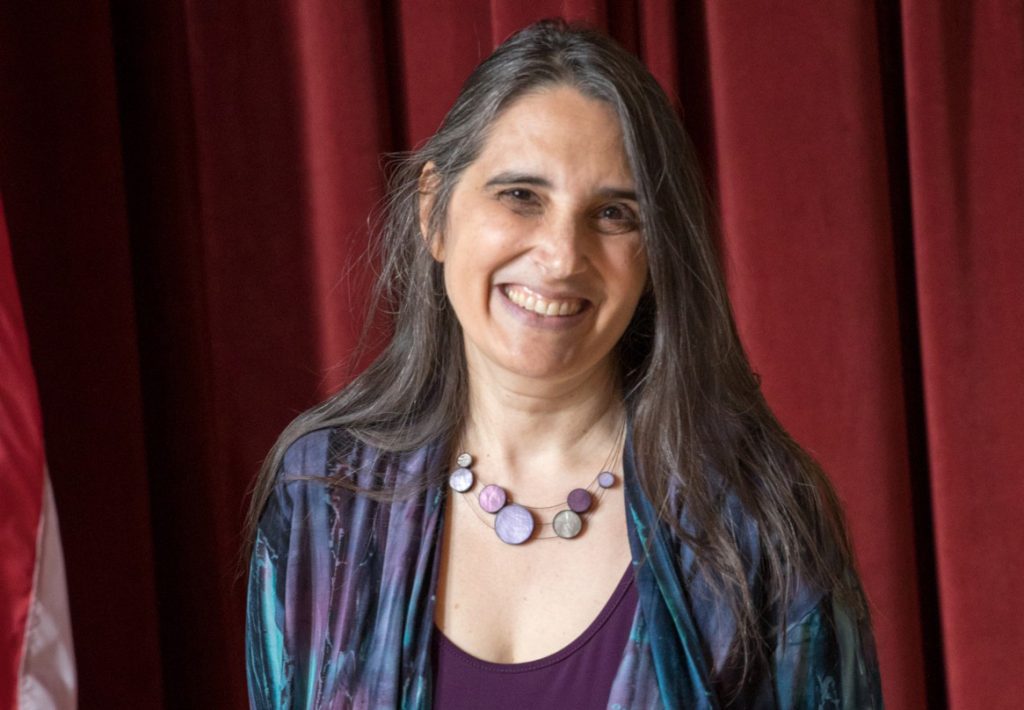
My next book comes out of engagement with policymakers and advocates that Equitable Growth facilitated! It’s been enormously helpful to hear from advocates and policymakers what would be helpful.
Joya Misra
Professor of Sociology and Public Policy
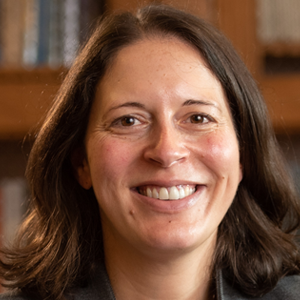
The grant from Equitable Growth was very helpful in allowing me to pursue research on a timely topic of broad policy interest. It helped spark a line of research.
[Equitable Growth] encouraged me to stay up to date on related policy issues. Since I have written more and deeper thanks to the support from Equitable Growth, I have received more…
Support from Equitable Growth has advanced my research in a number of ways. Thanks to the grant I and my co-author Mark Curtis at Wake Forest University received to examine the…
Read More from Ioana Marinescu
Ioana Marinescu
Associate Professor at the University of Pennsylvania School of Social Policy and Practice, Faculty Research Fellow at the National Bureau of Economic Research, Former Principal Economist at the U.S. Department of Justice
I want to do research that impacts the world and EG is a conduit for that. I can definitely see myself going down different paths in terms of standard or monetary economics, but…
Jacob Robbins
Assistant Professor of Economics
Equitable Growth raised the profile of my policy relevant research. It helped connect my research to relevant policy platforms.
If it weren’t for Equitable Growth’s Dissertation Fellowship, I would probably not have been able to stay in academia or get a research job after my PhD. I have been…
The one-on-one meetings with legislators helped guide my approach to writing about my research. Over the years, the WCEG has facilitated several meetings for me, and I learned more…
Read More from Kyle Herkenhoff
Kyle Herkenhoff
Associate Professor at the University of Minnesota and Visiting Scholar at the Federal Reserve Bank of Minneapolis
Equitable Growth played an important role in my evolution as a researcher. I was awarded a doctoral grant to study whether parents influence the labor market outcomes of their…
My next book comes out of engagement with policymakers and advocates that Equitable Growth facilitated! It’s been enormously helpful to hear from advocates and policymakers…
Joya Misra
Professor of Sociology and Public Policy
The grant from Equitable Growth was very helpful in allowing me to pursue research on a timely topic of broad policy interest. It helped spark a line of research.


How Support Leads to Real Outcomes
Grantees describe how funding, convenings, and direct connections to policymakers shaped their work. Researchers have advanced dissertations, developed new research agendas, and presented findings to broader audiences including policymakers, journalists, and academic peers.