



Policy
What Work Does Generative AI Do?
Essays SEP 8, 2026
By: Alexander Bick, Adam Blandin, David Deming, Tyler Schumacher
AI, Tech & Energy
Labor, Wages & Worker Power
 Browse All Resources
APR 16, 2020
By: Corey Husak and Carmen Sanchez Cumming
The mandatory public health measures to control the spread of COVID-19 are deepening the effects of the coronavirus recession. More than 17 million workers are now seeking Unemployment Insurance benefits, 42 states plus Washington, D.C. and Puerto Rico are under shelter-in-place (opens in a new tab) orders, and the U.S. Congress, Federal Reserve, and Trump administration are undertaking unprecedented efforts to cushion the economic blow. According to estimates by the Washington Center for Equitable Growth’s Director of Macroeconomic Policy Claudia Sahm, the U.S. unemployment rate reached 14 percent (opens in a new tab) in early April.
Though the coronavirus recession is affecting most workers, the 7 percent (opens in a new tab) of the U.S. labor force who are classified as independent contractors are among the most at risk because of their lack (opens in a new tab) of any of the basic building blocks of the labor safety net. For instance, they are not:
One notable exception is that for the first time in history, the Coronavirus Aid, Relief, and Economic Security, or CARES, Act established temporary eligibility rules (opens in a new tab) for pandemic Unemployment Insurance benefits for independent contractors. Most states, however, are not currently accepting (opens in a new tab) claims from independent contractors and other self-employed workers, leaving behind thousands of workers who are now suffering. This is a result of an unprecedented volume of incoming claims, years of lowering (opens in a new tab) employers’ tax burdens at the expense (opens in a new tab) of robust unemployment systems, and confusing guidance from President Trump’s Department of Labor, the last of which seems to exclude many independent contractors that the law sought to make eligible (opens in a new tab).
Notwithstanding the important expansion of Unemployment Insurance, independent contractors are among the most vulerable during the coronavirus recession. Many independent contractors provide face-to-face services. They are either the workers most exposed to the new coronavirus on the job—such as home care aides and food and last-mile delivery workers—or most likely to be out of work without a safety net—as with workers such as ride-hailing drivers, artists, and hairdressers. Despite being classified as essential, those in the first group often lack the most basic rights and protections, such as sick leave or health insurance. Because they are at the frontlines, they and their families are at particular risk (opens in a new tab) of getting sick.
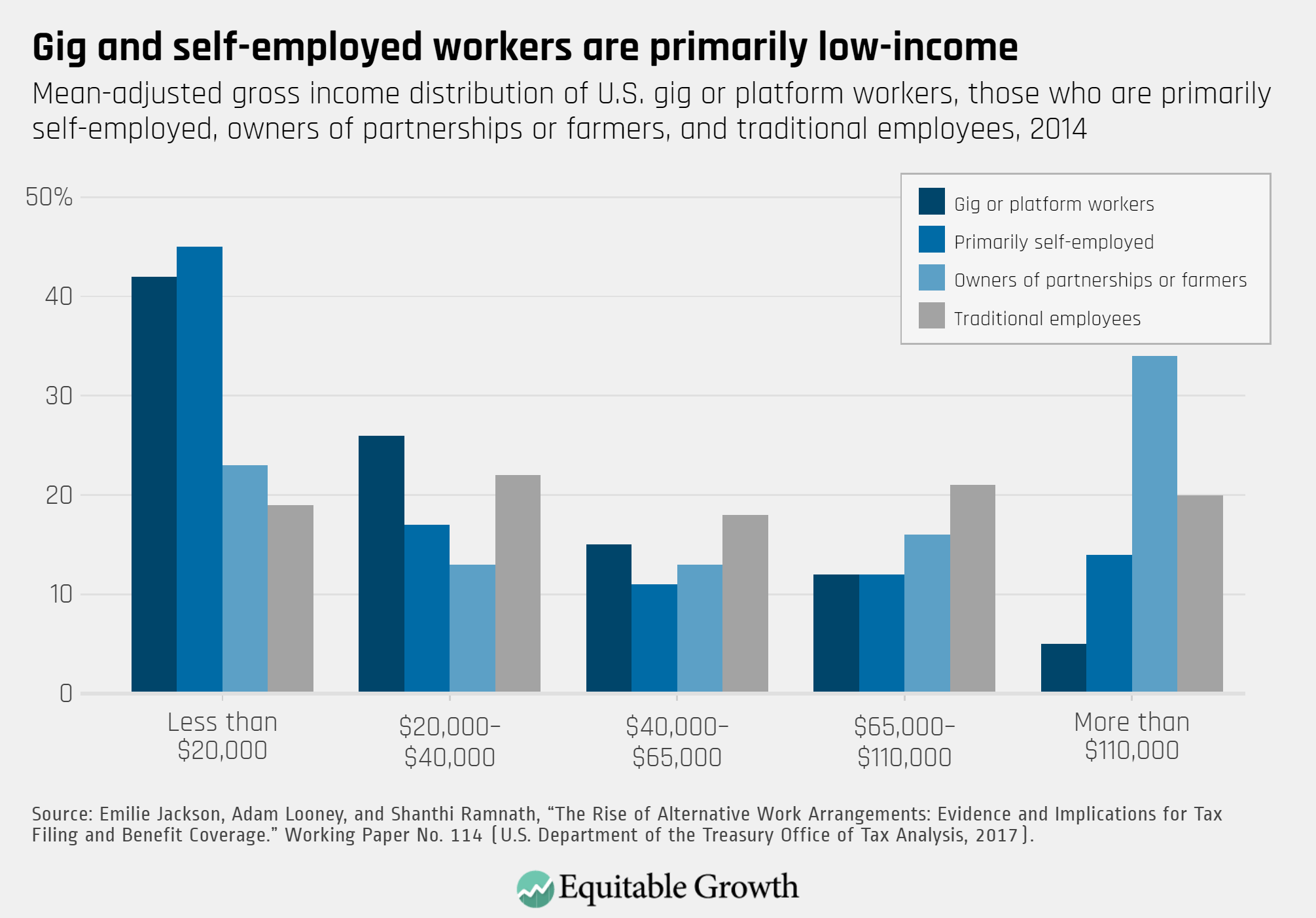
The coronavirus recession is therefore making already precarious working conditions even more insecure. Research shows (opens in a new tab) that self-employed workers at the bottom of the income scale tend to be worse-off than comparable workers in traditional employment relationships. Platform-based “gig-workers” providing in-person services—generally a subset of self-employed independent contractors—are disproportionately people of color (opens in a new tab) and from low-income (opens in a new tab) backgrounds. This means that the workers most affected by layoffs or lack of access to benefits are also among the least likely to have the financial cushion needed to weather this crisis. (See Figure 1.)
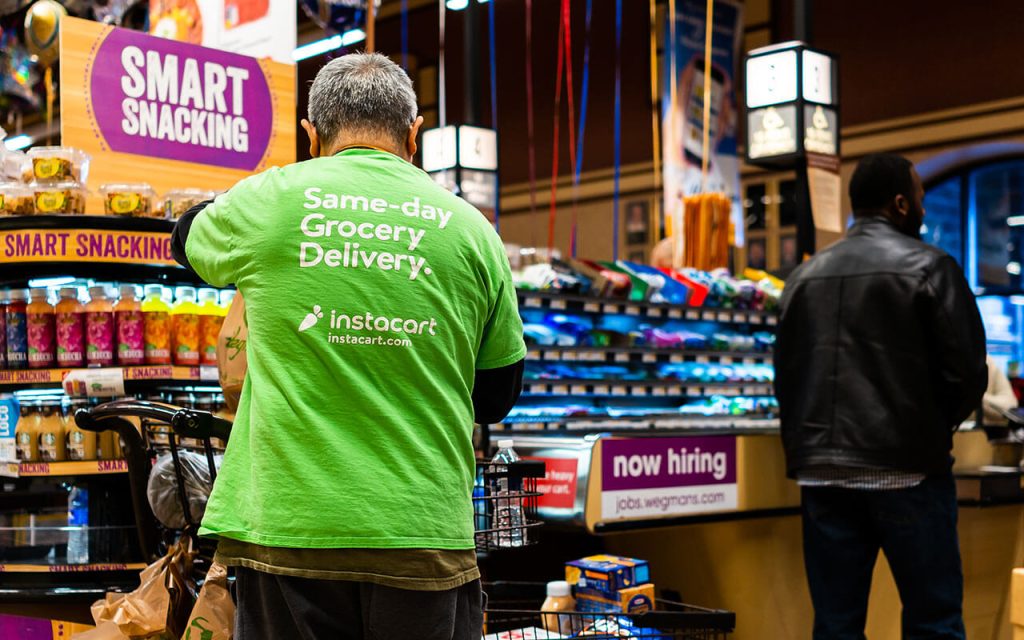
Like workers at Amazon.com, Inc. (opens in a new tab), Amazon’s grocery store subsidiary Whole Foods (opens in a new tab), and McDonalds Corp. (opens in a new tab), many independent contractors are fighting for better working conditions in this crisis. In late March, independent contractors at Instacart, a service that picks out and delivers groceries to subscribers, held a nationwide strike demanding (opens in a new tab) that the platform provide them with basic protective gear, hazard payment, and a fair sick leave policy. Just a few days before that, workers protested (opens in a new tab) in front of Uber Technologies Inc.’s headquarters in San Francisco, where drivers called for the enforcement of Assembly Bill 5, or AB 5.
Implemented in January 2020, AB 5 closes major regulatory loopholes in U.S. labor law, making it more difficult for employers to misclassify workers as independent contractors. In doing so, the law limits firms’ ability to rely on business models based on low labor costs, holding them accountable for providing their workers with benefits, rights, and protections. Though these efforts to re-classify gig workers as employees have been slow-moving and met with big pushback from gig employers, AB 5 can serve as a model for the nation.
Independent contractors’ lack of the right to form a union or collectively bargain translates into lower earnings, lack of access to benefits, and more exposure to workplace violations such as wage theft (opens in a new tab) and sexual harassment (opens in a new tab). Any attempt to collectively bargain would likely violate the Sherman Antitrust Act, which specifically exempts unions for employees from antitrust rules, but this exemption does not apply to independent contractors. Therefore, if independent contractors banded together to raise their pay, they could be illegally colluding to raise prices—another way that current law actually protects companies (opens in a new tab) from their workers.
Essays SEP 8, 2026
By: Alexander Bick, Adam Blandin, David Deming, Tyler Schumacher
Working Papers SEP 8, 2026
By: Alexander Bick, Adam Blandin, David Deming, Tyler Schumacher

Essays SEP 2, 2026
By: Megan Rivera
Get updates on our latest research, event announcements, and policy insights delivered straight to your inbox. Stay connected with the leading voices on equitable growth.


