


Resources
From peer-reviewed research to accessible policy briefs, explore the scholarship that’s shaping debates and driving change.

973 Results


The One Big Beautiful Bill Act, one year later: Parsing the evidence on the law’s consequences so far (opens in a new tab)
Blog JUN 30, 2026
The One Big Beautiful Bill Act signed into law one year ago on July 4, 2025, shifted trillions of dollars in income from working-class families to corporations and very wealthy…
By: Lily Roberts (opens in a new tab)
ASSA 2026 Round-up: Day 3 (opens in a new tab)
Blog JAN 6, 2026
Yesterday was the third and final day of the 2026 annual meeting of the Allied Social Science Associations, which is organized by the American Economic Association. The 3-day conference, held…
By: Equitable Growth (opens in a new tab)
ASSA 2026 Round-up: Day 2 (opens in a new tab)
Blog JAN 5, 2026
Yesterday was the second day of the 2026 annual meeting of the Allied Social Science Associations, which is organized by the American Economic Association. The 3-day conference, held in Philadelphia…
By: Equitable Growth (opens in a new tab)
ASSA 2026 Round-up: Day 1 (opens in a new tab)
Blog JAN 4, 2026
Yesterday was the first day of the 2026 annual meeting of the Allied Social Science Associations, which is organized by the American Economic Association. The 3-day conference, held in Philadelphia…
By: Equitable Growth (opens in a new tab)

Accounting for capital gains in income significantly increases U.S. inequality (opens in a new tab)
Blog JUL 15, 2025
The Washington Center for Equitable Growth’s recently launched U.S. Inequality Tracker uses data from the U.S. Bureau of Economic Analysis to show how income and wealth inequality have evolved in…
By: Austin Clemens (opens in a new tab)

Equitable Growth responds to passage of the federal budget bill (opens in a new tab)
Blog JUL 7, 2025
On Friday, President Donald Trump signed the 2025 federal budget bill, cementing into law the most regressive piece of tax and budget legislation to be passed in the United States…
By: Equitable Growth (opens in a new tab)

Business owners often use their firms as tax shelters, reducing government revenue and reported income inequality (opens in a new tab)
Blog MAY 22, 2025
Picture this scene: After sharing a meal with friends, someone in the group grabs the check and says, “I’ll take this so I can expense it through my company.” It…
By: David Leite (opens in a new tab)

The political implications of bad jobs and the decline of unions (opens in a new tab)
Blog MAY 13, 2025
Bad jobs have become a distinctive feature of the U.S. economy over the past few decades. Globally, a lack of adequate demand, or what economists call “secular stagnation,” has meant…
By: Adam Dean (opens in a new tab), Jamie McCallum (opens in a new tab)

Federal and state governments can help solve the employment problems of people in distressed places to spur equitable growth (opens in a new tab)
Blog MAY 13, 2025
Places in the United States differ greatly in their residents’ access to jobs, including access to good jobs. In economically distressed places, these job problems can be addressed by creating…
By: Timothy Bartik (opens in a new tab)

More accurately measuring economic sentiment will help build a U.S. economy—and democracy—that works for all (opens in a new tab)
Blog MAY 13, 2025
When politicians and members of the media discuss the state of “the economy” in the United States, they often use a small handful of data points. Of all the indicators…
By: Jonathan Cohen (opens in a new tab), Katherine Cramer (opens in a new tab)

Understanding the role of immigration and economic factors in boosting support for far-right political parties (opens in a new tab)
Blog MAY 13, 2025
Far-right and right-wing populist political parties differ in many respects, but nearly all share one common thread: strong opposition to immigration. These parties often push for stricter border controls and,…
By: Sirus H. Dehdari (opens in a new tab)

America’s job-quality crisis and how to revive workers’ pay, dignity, job advancement, and economic well-being (opens in a new tab)
Blog MAY 13, 2025
The poor quality of jobs in the United States is a slow-burning crisis that has been underway for many decades and has eroded many workers’ quality of life. Too many…
By: Erin Kelly (opens in a new tab)

How the China trade shock impacted U.S. manufacturing workers and labor markets, and the consequences for U.S. politics (opens in a new tab)
Blog MAY 13, 2025
In the early 2000s, manufacturing-intensive communities in the United States entered a period of economic upheaval that would reshape their labor markets over the next two decades. China’s dramatic rise…
By: David Autor (opens in a new tab), David Dorn (opens in a new tab), Gordon Hanson (opens in a new tab)

Housing insecurity and U.S. economic policies: Lessons from tenant organizing (opens in a new tab)
Blog MAY 13, 2025
The destructive force of authoritarian power has become a prominent feature of U.S. political life. In just the first few months of 2025, we’ve seen unprecedented moves to use the…
By: Jamila Michener (opens in a new tab)

Countering right-wing populism: Identifying its cultural roots and charting a path forward (opens in a new tab)
Blog MAY 13, 2025
Donald Trump’s victory in the 2024 U.S. presidential election set off an animated debate among Democrats over what went wrong with their policymaking, messaging, and campaigning. Specifically, Democrats puzzled over…
By: Yotam Margalit (opens in a new tab)

How the economic and political geography of the United States fuels right-wing populism—and what the Democratic Party can do about it (opens in a new tab)
Blog MAY 13, 2025
In wealthy nations around the world, the rise of the knowledge economy has increased political and economic divides that fuel right-wing populism. These divides generally have a strong geographic dimension,…
By: Jacob Hacker (opens in a new tab), Paul Pierson (opens in a new tab)

Tariffs pose real risks to the U.S. labor market (opens in a new tab)
Blog MAY 12, 2025
Uncertainty around trade policy makes it difficult to discuss the current state of the U.S. labor market. Businesses, workers, and policymakers at all levels make decisions based on both what…
By: Kevin Rinz (opens in a new tab)

Testimony by Michael Linden before the House Budget Committee (opens in a new tab)
Blog MAY 8, 2025
Chairman Arrington, Ranking Member Boyle, members of this committee, thank you for the opportunity to be here. Today, I’d like to make three main points. First, the main culprit responsible…
By: Michael Linden (opens in a new tab)

Advancing economic research on the Inflation Reduction Act: Q&A with Susan Helper (opens in a new tab)
Blog MAY 1, 2025
The Inflation Reduction Act of 2022 is the most significant economic and clean energy jobs program the United States has ever initiated. To improve overall understanding of whether the new…
By: Susan Helper (opens in a new tab)

Evaluating the Inflation Reduction Act: Job quality, spillovers, and place-based policymaking (opens in a new tab)
Blog APR 16, 2025
The Inflation Reduction Act of 2022 is the most significant economic and clean energy jobs program the United States has ever initiated. To improve overall understanding of whether the new…
By: Equitable Growth (opens in a new tab)

Improving economic outcomes for single mothers and their children across the United States (opens in a new tab)
Blog APR 16, 2025
Single-mother households are becoming more and more common in the United States. Over the past 50 years, the number of children raised by single mothers has more than doubled. It…
By: Megan Rivera (opens in a new tab)

“Econ 101” briefing on taxing multinationals brings Hill staffers up to speed on U.S. role in coordinating global crack-down on tax avoidance (opens in a new tab)
Blog APR 3, 2025
The Washington Center for Equitable Growth last week hosted a briefing for Capitol Hill staffers on multinational corporate tax trends and policies—another in our “Econ 101” series for Hill staffers.…
By: Elena Patel (opens in a new tab)

Analogies for AI policymaking (opens in a new tab)
Blog MAR 27, 2025
As a suite of technologies under the label of artificial intelligence increasingly take center stage, policymakers recognize the need to develop deep technical expertise about the deployment of evolving technologies…
By: Sorelle Friedler (opens in a new tab), Marc Aidinoff (opens in a new tab)

What makes a job ‘good’? How U.S. labor market data can provide insight to improve workers’ economic conditions (opens in a new tab)
Blog MAR 26, 2025
Since the Great Recession of 2007–2009, a great deal of U.S. economic policymaking has been dedicated to creating jobs. The tools used to do so vary widely, from awarding grants…
By: Kevin Rinz (opens in a new tab), Chiara Chanoi (opens in a new tab)

Do not abandon the care agenda (opens in a new tab)
Blog MAR 19, 2025
This column, co-authored by Equitable Growth President and CEO Shayna Strom and former Deputy Director of the White House Gender Policy Council Shilpa Phadke, first appeared in Democracy Journal in…
By: Equitable Growth (opens in a new tab)

Equitable Growth hosts Hill briefing on proliferation and taxation of U.S. pass-through businesses (opens in a new tab)
Blog MAR 13, 2025
On March 7, the Washington Center for Equitable Growth hosted a briefing—part of a series we call “Econ 101”—for Hill staffers curious about the proliferation of pass-through businesses and how…
By: Equitable Growth (opens in a new tab)

The U.S. House of Representatives’ budget resolution threatens social infrastructure programs, putting families’ well-being at risk (opens in a new tab)
Blog MAR 10, 2025
In late February, the U.S. House of Representatives passed a budget resolution that calls for $4.5 trillion in tax cuts and $2 trillion in federal spending cuts. This resolution provides…
By: Priyanka Anand (opens in a new tab), Robert Moffitt (opens in a new tab)

Tackling AI, taxation, and the fair distribution of AI’s benefits (opens in a new tab)
Blog MAR 5, 2025
Artificial intelligence poses significant challenges to income growth, inequality, and meaningful work. At the same time, AI has geopolitical significance, with many national and supranational governments shying away from intervening…
By: Mona Sloane (opens in a new tab), Ekkehard Ernst (opens in a new tab)

New research finds capital gains are highly concentrated and hardly taxed, underscoring widespread U.S. inequality (opens in a new tab)
Blog FEB 26, 2025
For two decades, booming stock, housing, and private business markets have driven large capital gains in the United States. Real capital gains, which are the inflation-adjusted appreciation of a financial…
By: Jacob Robbins (opens in a new tab), Cole Campbell (opens in a new tab), Sam Wylde (opens in a new tab)

Boosting U.S. worker power and voice in the AI-enabled workplace (opens in a new tab)
Blog FEB 19, 2025
The deployment of Artificial Intelligence in the workplace has grown rapidly in the United States. Labor unions have been at the forefront of efforts to encourage more productive and sustainable…
By: Virginia Doellgast (opens in a new tab), Nell Geiser (opens in a new tab)
As the U.S. labor market stabilizes, is nominal wage growth now too hot? (opens in a new tab)
Blog FEB 13, 2025
After the tumultuous swings of the early COVID-19 pandemic period and years of normalization since then, economic data from the past several months suggest that the U.S. labor market may…
By: Kevin Rinz (opens in a new tab)

Testimony by Michael Linden House Oversight Subcommittee on Healthcare and Financial Services (opens in a new tab)
Blog FEB 11, 2025
Chairman Grothman, Ranking Member Krishnamoorthi, and members of the Committee – thank you for the opportunity to be here. Today, I’d like to make three main points. First, federal investments…
By: Michael Linden (opens in a new tab)

Understanding market concentration in the AI supply chain (opens in a new tab)
Blog JAN 28, 2025
Artificial intelligence is more than just the applications we use, such as chatbots and predictive algorithms. Beneath the surface of AI lies a technology stack that is increasingly concentrated at…
By: Tejas Narechania (opens in a new tab)
ASSA 2025 Round-up: Day 3 (opens in a new tab)
Blog JAN 6, 2025
Yesterday was the third and final day of the 2025 annual meeting of the Allied Social Science Associations, which is organized by the American Economic Association. The 3-day conference, held…
By: Equitable Growth (opens in a new tab)
ASSA 2025 Round-up: Day 2 (opens in a new tab)
Blog JAN 5, 2025
Yesterday was the second day of the 2025 annual meeting of the Allied Social Science Associations, which is organized by the American Economic Association. The 3-day conference, held in San…
By: Equitable Growth (opens in a new tab)
ASSA 2025 Round-up: Day 1 (opens in a new tab)
Blog JAN 4, 2025
Yesterday was the first day of the 2025 annual meeting of the Allied Social Science Associations, which is organized by the American Economic Association. The 3-day conference, held in San…
By: Equitable Growth (opens in a new tab)

New U.S. Treasury Department research shows that it pays to be an S corporation (opens in a new tab)
Blog DEC 16, 2024
Businesses that are organized as so-called pass-through entities for tax purposes—meaning their profits show up on the owners’ personal tax returns rather than on an entity-based tax return—pay a lower…
By: Michael Linden (opens in a new tab)

Recent research shows how paid leave impacts women’s employment and financial security in the United States (opens in a new tab)
Blog DEC 13, 2024
During the first several months of the COVID-19 pandemic, the federal government ensured that all U.S. workers had access to at least 2 weeks of paid sick leave and up…
By: Shira Markoff (opens in a new tab)

New research highlights the impact of COVID-era unconditional cash benefits for U.S. workers and families (opens in a new tab)
Blog DEC 10, 2024
The breadth of the economic impact of the COVID-19 pandemic ushered in sweeping, albeit temporary, changes to income support programs and tax policies in the United States. These changes include…
By: Shira Markoff (opens in a new tab)

Addressing pervasive tax evasion by cryptocurrency users (opens in a new tab)
Blog NOV 21, 2024
The price of bitcoin and other cryptocurrencies reached record highs last week, buoyed by the U.S. election of Donald Trump, who is seen as friendly to this novel asset class,…
By: Magne Mogstad (opens in a new tab), Tom Meling (opens in a new tab), Arnstein Vestre (opens in a new tab)

The U.S. labor market keeps beating projections (opens in a new tab)
Blog NOV 5, 2024
No single economic indicator fully describes the state of the U.S. labor market. Yet a range of commonly used measures, from the unemployment rate and the prime-age employment-population ratio to…
By: Kevin Rinz (opens in a new tab)

Changing earnings requirements for Unemployment Insurance could improve access and better support U.S. workers (opens in a new tab)
Blog OCT 24, 2024
Temporary changes to the Unemployment Insurance program played an enormous role in the U.S. policy response to the COVID-19 pandemic and resulting sharp-but-short recession in 2020. Typically, Unemployment Insurance replaces…
By: Kevin Rinz (opens in a new tab)
Equitable Growth virtual event details how tax policies affect U.S. economic growth and could combat income and wealth inequality (opens in a new tab)
Blog OCT 23, 2024
The Washington Center for Equitable Growth recently held the second in a two-part event series on tax policies for congressional staffers interested in learning more about using persuasive, evidence-backed arguments…
By: Equitable Growth (opens in a new tab)

Equitable Growth renews collective bargaining agreement with Nonprofit Professional Employees Union (opens in a new tab)
Blog OCT 7, 2024
The Washington Center for Equitable Growth has renewed its 3-year collective bargaining agreement with the Nonprofit Professional Employees Union IFPTE Local 70. The agreement, which was signed on August 23,…
By: Equitable Growth (opens in a new tab)

End Ineffective Business Tax Breaks Before Creating New Ones (opens in a new tab)
Blog OCT 7, 2024
(This opinion piece first appeared in Tax Notes Federal on September 23, 2024.) Vice President Kamala Harris recently proposed an expanded tax benefit for start-up businesses, aimed at helping fledgling…
By: David S. Mitchell (opens in a new tab)

Equitable Growth’s ‘Econ 101’ offered congressional staffers a rundown of the contours of U.S. tax policy (opens in a new tab)
Blog OCT 2, 2024
The Washington Center for Equitable Growth recently hosted a congressional briefing—part of a series we call “Econ 101”—for Hill staffers interested in learning more about the ins and outs of…
By: Equitable Growth (opens in a new tab)

New data show significant changes in racial and class mobility gaps in the United States (opens in a new tab)
Blog SEP 19, 2024
Past research shows that differences in intergenerational mobility between Black and White Americans have persisted since the 1880s. Current racial economic mobility gaps are rooted in historical discriminatory policies, such…
By: Shira Markoff (opens in a new tab)

The unequal impact of the Federal Reserve’s monetary tightening and easing on firms in the United States (opens in a new tab)
Blog SEP 16, 2024
The easing of inflation in the U.S. economy beginning in 2022 and recent signs of weakness in the U.S. labor market over the past several quarters have led households and…
By: Ezgi Kurt (opens in a new tab)
The upcoming U.S. election’s most important policy effects are under the radar (opens in a new tab)
Blog SEP 3, 2024
Although the old maxim that Labor Day marks the true beginning of U.S. presidential campaigns may no longer hold, the end of summer and beginning of fall remain a period…
By: Kevin Rinz (opens in a new tab)

Will labor’s surging popularity result in new union members in the United States? (opens in a new tab)
Blog AUG 29, 2024
Mass strikes across U.S. industries, successful organizing drives in multiple sectors of the economy, and a U.S. president who declares himself proud to be labeled “the most pro-union president in…
By: Jake Rosenfeld (opens in a new tab)
Early career scholars to receive Equitable Growth funding to study economic inequality (opens in a new tab)
Blog AUG 28, 2024
The Washington Center for Equitable Growth today announced a new slate of grantees. These 10 scholars responded to a Request for Proposals specifically targeted at those early in their careers…
By: Equitable Growth (opens in a new tab)

Equitable Growth invests in new research to better understand the effects of the fiscal response to the COVID-19 recession (opens in a new tab)
Blog AUG 28, 2024
The Washington Center for Equitable Growth today announced a new cohort of grantees in response to a Request for Proposals on the effectiveness of the fiscal response to the COVID-19…
By: Equitable Growth (opens in a new tab)

New economic analyses of the 2017 Trump tax cuts find mixed effects that policymakers should consider when those tax cuts expire in 2025 (opens in a new tab)
Blog AUG 22, 2024
Former President Donald Trump’s hallmark economic policy was a swathe of tax cuts for the wealthy and big corporations in 2017. His Tax Cuts and Jobs Act, or TCJA, supercharged…
By: Rakeen Mabud (opens in a new tab), Janelle Jones (opens in a new tab), Michael Linden (opens in a new tab)

New labor market data suggest that U.S. wage growth may be cooling too much (opens in a new tab)
Blog AUG 6, 2024
After increasing rapidly over the course of 2021, nominal wage growth (before accounting for inflation) in the United States has been trending down consistently across measures since early- to mid-2022.…
By: Kevin Rinz (opens in a new tab)

New federal heat standard will protect U.S. workers from the ill effects of high temperatures amid intensifying climate change (opens in a new tab)
Blog AUG 1, 2024
U.S. workers are more vulnerable than ever to the ill effects of high and rising temperatures as the world continues to shatter heat records this year. Climate-related deaths and injuries…
By: Equitable Growth (opens in a new tab)

New federal heat standard offers novel distributional analysis to determine which workers benefit and how (opens in a new tab)
Blog JUL 16, 2024
The U.S. Department of Labor recently released a much-anticipated proposed rule that promises to protect workers from on-the-job injuries and deaths that result from toiling in the heat. The timing…
By: David S. Mitchell (opens in a new tab)

The new Labor Department overtime rule is a win for workers—and good policy, too (opens in a new tab)
Blog JUL 8, 2024
On July 1, the first step of the U.S. Department of Labor’s new overtime rule went into effect, meaning about 1 million salaried, white-collar workers currently exempt from overtime began…
By: Janelle Jones (opens in a new tab), Rajesh Nayak (opens in a new tab)

On Juneteenth: New research demonstrates how economic mobility is restricted for Black Americans (opens in a new tab)
Blog JUN 18, 2024
On June 19, 1865, emancipation was officially declared in the state of Texas, more than two full years after the Emancipation Proclamation and more than two full months after the…
By: Shaun Harrison (opens in a new tab)

Equitable Growth receives funding to advance women’s power, gender equality, and care economy (opens in a new tab)
Blog MAY 28, 2024
Melinda French Gates’ Pivotal funds organization as part of $1 billion global commitment The Washington Center for Equitable Growth announced today that it has received funding from Pivotal as part…
By: Equitable Growth (opens in a new tab)

What is going on with wage growth in the United States? (opens in a new tab)
Blog MAY 16, 2024
Fast wage growth is a key feature of a strong labor market. U.S. workers, and low-wage workers in particular, experienced exceptional wage growth over the past couple of years, which…
By: Kevin Rinz (opens in a new tab)

Equitable Growth delivers letter on proposed IRS rule to expand data sharing with the U.S. Department of Commerce (opens in a new tab)
Blog MAY 15, 2024
On April 29, the Washington Center for Equitable Growth delivered a comment letter responding to a proposed rule from the Internal Revenue Service that would expand the amount of administrative…
By: Equitable Growth (opens in a new tab)

U.S. workers, generative AI, and the future of work (opens in a new tab)
Blog MAY 9, 2024
The launch of ChatGPT in November 2022 captured the world’s attention and illustrated the potential of generative Artificial Intelligence to instantly perform tasks long considered quintessentially “human.” Already, the technology…
By: Molly Kinder (opens in a new tab)

Structural changes in the U.S. economy highlight anew the gray areas of continued racial bias and discrimination in American workplaces (opens in a new tab)
Blog MAY 8, 2024
Four years after George Floyd was murdered in Minneapolis by three city police officers and the Black Lives Matter movement led large-scale protests across the country, workplaces across the U.S.…
By: Adia Harvey Wingfield (opens in a new tab)

New workplace surveillance bill would protect U.S. workers and address new technological risks (opens in a new tab)
Blog MAY 2, 2024
Across the U.S. economy, the risks posed by unchecked automated surveillance and management technologies are widespread—and growing. These technologies can sometimes be beneficial for workers, customers, and businesses alike. For…
By: Alexander Hertel-Fernandez (opens in a new tab)
New recommendations for an integrated system of U.S. inequality statistics chart a bold path forward (opens in a new tab)
Blog APR 23, 2024
A new report from the National Academy of Science’s Committee on National Statistics is packed with recommendations for building an integrated system of national statistics that can provide accurate and…
By: Austin Clemens (opens in a new tab)

An Unemployment Insurance modernization bill now before the U.S. Senate is a much-needed step in the right direction (opens in a new tab)
Blog APR 9, 2024
The nearly 90-year-old federal-state Unemployment Insurance program provides much-needed relief to unemployed workers who lose their jobs through no fault of their own and helps to stabilize the U.S. economy…
By: Alexander Hertel-Fernandez (opens in a new tab)
Enhanced Child Tax Credit helped U.S. families afford life-enhancing necessities and cope with inflation (opens in a new tab)
Blog APR 2, 2024
Amid ongoing congressional debate over expanding the Child Tax Credit for U.S. families, it’s important to understand why the fears about the expansion of that tax credit in 2021 were…
By: David S. Mitchell (opens in a new tab)

Testimony by Michael Linden before the Joint Economic Committee (opens in a new tab)
Blog MAR 12, 2024
Chair Heinrich, Vice Chair Schweikert, Members of the Committee, thank you so much for extending me the opportunity to testify before you today. My testimony will broadly cover three important…
By: Michael Linden (opens in a new tab)

Equitable Growth hosts State of the Union press briefing with leading U.S. economists (opens in a new tab)
Blog MAR 7, 2024
The Washington Center for Equitable Growth last week hosted an online press briefing in prelude to tonight’s State of the Union address to the U.S. Congress by President Joe Biden.…
By: Equitable Growth (opens in a new tab)

The state of the U.S. labor market 4 years after the start of the COVID-19 recession (opens in a new tab)
Blog MAR 5, 2024
Over the past 4 years, the U.S. economy—in particular the U.S. labor market—weathered some incredible shocks and fluctuations. From the COVID-19 pandemic and supply chain breakdowns to global energy shocks…
By: Michael Linden (opens in a new tab)

Ahead of President Biden’s State of the Union address, the U.S. economy is strong (opens in a new tab)
Blog FEB 21, 2024
On March 7, President Joe Biden will deliver the 2024 State of the Union address to the U.S. Congress and the American public, in which he will tout his economic…
By: Austin Clemens (opens in a new tab)

Equitable Growth’s recent ‘Econ 101’ assessed the state of the U.S. economy and recovery for Capitol Hill staff (opens in a new tab)
Blog FEB 13, 2024
The Washington Center for Equitable Growth hosted a briefing last week—part of a series we call “Econ 101”—presenting insight on the state of the U.S. economy and how the current…
By: Equitable Growth (opens in a new tab)
New Circular A-4 offers opportunities for researchers interested in disaggregating the costs and benefits of U.S. regulations (opens in a new tab)
Blog FEB 1, 2024
This column is adapted from remarks I made at the Allied Social Sciences Associations 2024 annual meeting, held earlier this year in San Antonio, Texas, as part of a panel…
By: David S. Mitchell (opens in a new tab)

The impacts of increasing U.S. hospital consolidation on Medicaid recipients (opens in a new tab)
Blog JAN 25, 2024
The U.S. healthcare sector is a consequential part of the overall economy. As of 2021, U.S. healthcare expenditures alone would rank third among the world’s largest economies in terms of…
By: Sunita Desai (opens in a new tab), Kyle Smith (opens in a new tab)

Statement on the passing of Nobel laureate Robert Solow (opens in a new tab)
Blog JAN 11, 2024
A founding member of the Washington Center for Equitable Growth’s Steering Committee, Solow was also a longtime partner and advisor to the organization Robert Solow, the Nobel laureate and longtime…
By: Equitable Growth (opens in a new tab)

Doubling down on cuts to the IRS is bad for the federal budget and for tax fairness in the United States (opens in a new tab)
Blog JAN 9, 2024
The U.S. Congress recently announced a bipartisan budget deal for fiscal year 2024 appropriations for the U.S. federal government. The budget is largely consistent with the framework agreed to in…
By: David S. Mitchell (opens in a new tab)
ASSA 2024 Round-up: Day 3 (opens in a new tab)
Blog JAN 8, 2024
Yesterday was the third and final day of the 2024 annual meeting of the Allied Social Science Associations, which is organized by the American Economic Association. The 3-day conference, held…
By: Equitable Growth (opens in a new tab)
ASSA 2024 Round-up: Day 2 (opens in a new tab)
Blog JAN 7, 2024
Yesterday was the second day of the 2024 annual meeting of the Allied Social Science Associations, which is organized by the American Economic Association. The 3-day conference, held in person…
By: Equitable Growth (opens in a new tab)
ASSA 2024 Round-up: Day 1 (opens in a new tab)
Blog JAN 6, 2024
Yesterday was the first day of the 2024 annual meeting of the Allied Social Science Associations, which is organized by the American Economic Association. The 3-day conference, held in person…
By: Equitable Growth (opens in a new tab)
Six years later, more evidence shows the Tax Cuts and Jobs Act benefits U.S. business owners and executives, not average workers (opens in a new tab)
Blog DEC 20, 2023
When policymakers were debating the Tax Cuts and Jobs Act of 2017, many proponents claimed that average U.S. workers would benefit via wage increases. These adherents of trickle-down economic theory…
By: David S. Mitchell (opens in a new tab)

What the research says about the impacts of hospital consolidation across the United States (opens in a new tab)
Blog DEC 6, 2023
When patients in the United States rely on hospitals for care, they are often at their most vulnerable, such as during acute illnesses, when suffering major injuries, or while giving…
By: Amy Phillips (opens in a new tab)

New evidence shows that limiting a tax break for highly leveraged firms doesn’t hurt the U.S. economy (opens in a new tab)
Blog NOV 21, 2023
Does increasing taxes on businesses reduce private-sector investment? Most economists agree that investment in new projects and technologies is a key driver of economic growth. While the tax code plays…
By: David S. Mitchell (opens in a new tab)

Sameera Fazili and Mary Beth Maxwell join Equitable Growth’s Board of Directors (opens in a new tab)
Blog NOV 15, 2023
The Washington Center for Equitable Growth today announced the addition of two new members to its board of directors: Sameera Fazili, former deputy assistant to the president and deputy director…
By: Equitable Growth (opens in a new tab)
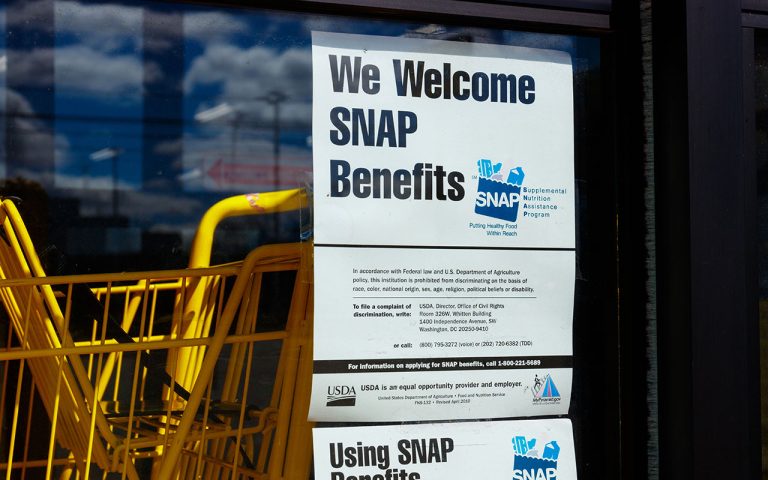
New evidence suggests that receiving benefits from the Supplemental Nutrition Assistance Program facilitates work in the long run (opens in a new tab)
Blog NOV 13, 2023
One of today’s most heated debates around U.S. income support programs is about work requirements. From the removal of work requirements through the 2021 enhancements to the Child Tax Credit…
By: Alix Gould-Werth (opens in a new tab)


Your Direct Line to Cutting Edge Research
Be the first to know about our latest events, research releases, and expert insights. Get exclusive updates delivered right to your inbox and never miss an opportunity to engage with our community.