


Resources
From peer-reviewed research to accessible policy briefs, explore the scholarship that’s shaping debates and driving change.

303 Results

What Work Does Generative AI Do? (opens in a new tab)
Working Papers SEP 8, 2026
We measure how workers use genAI for their jobs in a nationally representative survey linking genAI adoption to detailed occupations and tasks. Our data provide the first task-level genAI adoption…
By: Alexander Bick (opens in a new tab), Adam Blandin (opens in a new tab), David Deming (opens in a new tab), Tyler Schumacher (opens in a new tab)
The Terms and Conditions of Generative AI (opens in a new tab)
Working Papers AUG 20, 2026
Generative AI raises pressing questions for myriad doctrinal areas. Policymakers and scholars have responded rapidly, devoting substantial attention to these difficult legal and policy questions. But, as a practical matter,…
By: John M. Newman, Andres Sawicki (opens in a new tab)
Housing Wealth Accumulation and Electoral Representation (opens in a new tab)
Working Papers AUG 14, 2026
We document that housing wealth accumulation systematically differs among homeowners by their political participation. Using a nationwide voter-property dataset, we find that realized housing appreciation increases monotonically the more a…
By: Carlos F. Avenancio-León, Yutao He (opens in a new tab), Michael Reher (opens in a new tab)
Multiple Program Participation in the Safety Net: Incidence, Impediments, and Implications (opens in a new tab)
Working Papers JUL 7, 2026
Multiple program participation is a defining feature of the U.S. safety net, with half of recipients enrolling in two or more programs. Yet most research examines programs in isolation, missing…
By: Neil A. Cholli, Derek Wu (opens in a new tab)

In Conversation with Costa Samaras (opens in a new tab)
In Conversation JUN 2, 2026
Equitable Growth in Conversation is a recurring series where we talk with economists and other academics to help us better understand whether and how economic inequality affects economic growth and…
By: Shayna Strom (opens in a new tab)
Navigating the research on the impacts of AI on work, workers, and the labor market (opens in a new tab)
Research Databases MAY 21, 2026
Artificial intelligence will have a largely unpredictable but potentially profound effect on the labor market. Individuals have speculated how AI will affect the workforce since its earliest developments. But public…
By: Chiara Chanoi (opens in a new tab)
Barriers to Benefits: Unemployment Insurance Take-Up and Labor Market Effects (opens in a new tab)
Working Papers MAY 19, 2026
Unemployment insurance (UI) take-up is relatively low in the United States. We implement a large-scale field experiment among 50,000 likely unemployed individuals to study the causes and labor supply implications…
By: Casey McQuillan (opens in a new tab), Brendan Moore (opens in a new tab)
The Macroeconomic Effects of Climate Policy Uncertainty (opens in a new tab)
Working Papers MAR 17, 2026
We develop a novel measure of climate policy uncertainty based on newspaper coverage. Our index spikes during key U.S. climate policy events—including presidential announcements on international agreements, congressional debates, and…
By: Konstantinos Gavriilidis (opens in a new tab), Diego R. Känzig, Ramya Raghavan (opens in a new tab), James H. Stock (opens in a new tab)
The Macroeconomic Effects of Tariffs: Evidence From U.S. Historical Data (opens in a new tab)
Working Papers MAR 4, 2026
We study the macroeconomic effects of tariff policy using U.S. historical data from 1840–2024. We construct a narrative series of plausibly exogenous tariff changes–based on major legislative actions, multilateral negotiations,…
By: Tamar den Besten (opens in a new tab), Diego Känzig (opens in a new tab)
Understanding the Congestion Child Penalty: Can Remote Work Attenuate It? (opens in a new tab)
Working Papers FEB 12, 2026
We study the impact of commuting time on the labor supply of women with children in the United States. We show that congestion and long commutes discourage the labor force…
By: Ilaria D’Angelis (opens in a new tab), Keren Horn (opens in a new tab)
Dissecting Racial Politicization: Long-Run Evidence from the Food Stamp Program (opens in a new tab)
Working Papers FEB 2, 2026
We explore long-run racial polarization induced by the original Food Stamps Program: a major policy choice to expand the social safety net in the United States in the 1960s and…
By: Carlos F. Avenancio-León, Troup Howard (opens in a new tab), William Mullins (opens in a new tab)

In Conversation with Sabeel Rahman (opens in a new tab)
In Conversation NOV 18, 2025
Equitable Growth in Conversation is a recurring series where we talk with economists and other academics to help us better understand whether and how economic inequality affects economic growth and…
By: Shayna Strom (opens in a new tab)
AI exposure by U.S. occupations and work tasks and the effect on wages (opens in a new tab)
Working Papers OCT 23, 2025
This analysis of labor market AI exposure builds on previous work from the Pew Research Center and the AI firm Anthropic as well as Equitable Growth’s own job quality series,…
By: Chiara Chanoi (opens in a new tab), Chris Bangert-Drowns
The Benefits of Unemployment Insurance For Marginally Attached Workers (opens in a new tab)
Working Papers OCT 21, 2025
Existing research consistently finds that UI benefits delay job finding with limited effects on job quality, but focuses on changes in unemployment insurance (UI) generosity while holding fixed access to…
By: Casey McQuillan (opens in a new tab), Brendan Moore (opens in a new tab)
Changing Opportunity: Sociological Mechanisms Underlying Growing Class Gaps and Shrinking Race Gaps in Economic Mobility (opens in a new tab)
Working Papers OCT 9, 2025
We show that intergenerational mobility changed rapidly by race and class in recent decades and use these trends to study the causal mechanisms underlying changes in economic mobility. For white…
By: Raj Chetty (opens in a new tab), Will Dobbie (opens in a new tab), Benjamin Goldman (opens in a new tab), Sonya R. Porter, Crystal S. Yang
Extracting O*NET Features from the NLx Corpus to Build Public Use Aggregate Labor Market Data (opens in a new tab)
Working Papers OCT 1, 2025
Data from online job postings are difficult to access and are not built in a standard or transparent manner. Data included in the standard taxonomy and occupational information database (O*NET)…
By: Stephen Meisenbacher (opens in a new tab), Svetlozar Nestorov (opens in a new tab), Peter Norlander (opens in a new tab)

In Conversation with Omari Swinton (opens in a new tab)
In Conversation SEP 24, 2025
Equitable Growth in Conversation is a recurring series where we talk with economists and other academics to help us better understand whether and how economic inequality affects economic growth and…
By: Sanjay Supan (opens in a new tab)
Fitting the Bill? The First Federal Paid Leave Mandate (opens in a new tab)
Working Papers SEP 23, 2025
We find that the first federal paid leave mandate in the US, enacted under the Families First Coronavirus Response Act, increased paid leave taking by nearly 200% for eligible workers,…
By: Tanya Byker (opens in a new tab), Elena Patel (opens in a new tab), Kristin Smith (opens in a new tab)
In Her Hands: A Guaranteed Income Initiative (opens in a new tab)
Working Papers SEP 4, 2025
In Her Hands (IHH) is a guaranteed income (GI) initiative aimed at addressing persistent economic insecurity among women in neighborhoods with some of Georgia’s highest poverty rates. Co-designed with local…
By: Laura Brugger (opens in a new tab), Shadonna Davis (opens in a new tab), Desha Elliott (opens in a new tab), Leah Hamilton (opens in a new tab), Stephen Roll (opens in a new tab), Latrice Rollins (opens in a new tab), Simone Smith (opens in a new tab), Aaron Quick (opens in a new tab), Naomi Zewde (opens in a new tab)
Why Financial Crises Recur (opens in a new tab)
Working Papers AUG 5, 2025
Financial crises have occurred around the world for over two centuries. These crises have been so costly and frequent that one wonders why governments cannot prevent them from recurring despite…
By: Gary B. Gorton (opens in a new tab), Jeffery Y. Zhang (opens in a new tab)
How are Municipal-Level Fair Workweek Laws Playing Out on the Ground? Experiences of Food Service and Retail Workers in Three Cities (opens in a new tab)
Working Papers JUL 24, 2025
An updated version of this paper was posted on December 09, 2025. The first municipal-level law regulating employers’ scheduling practices was enacted in SanFrancisco in 2015. A decade later, ten…
By: Susan J. Lambert, Julia R. Henly, Hyojin Cho (opens in a new tab), Resha Swanson-Varner (opens in a new tab), Yuxi He (opens in a new tab)
Equity Prices, Market Power, and Optimal Corporate Tax Policy (opens in a new tab)
Working Papers JUL 22, 2025
We study the optimal design of corporate tax policy in a textbook life-cycle model featuring two key deviations: (i) firms are imperfectly competitive and (ii) households save by purchasing equity…
By: Ignacio González (opens in a new tab), Juan A. Montecino (opens in a new tab), Joseph E. Stiglitz
Optimal Monetary Policy Under Menu Costs (opens in a new tab)
Working Papers JUL 1, 2025
We analytically characterize optimal monetary policy in a multisector economy with menu costs and contrast it with the textbook New Keynesian model based on Calvo pricing. Following a sectoral productivity…
By: Daniele Caratelli (opens in a new tab), Basil Halperin (opens in a new tab)

Americans Informed About the Distributional Effects of Republicans’ Budget Bill Overwhelmingly Oppose It (opens in a new tab)
Working Papers JUN 25, 2025
Republicans in the Senate are currently considering the One Big Beautiful Bill Act, which, if enacted, would be the most regressive U.S. tax and budget law in at least the…
By: Jacob S. Hacker, Patrick Sullivan (opens in a new tab)
Financial and Transfer Income as Components of the Regional Economic Base (opens in a new tab)
Working Papers JUN 24, 2025
Economists and geographers have long divided industries into “basic” and “nonbasic” sectors depending on whether they bring money into a region from outside or serve local demand. Traditionally, the regional…
By: Robert Manduca (opens in a new tab)
The Firm as Tax Shelter (opens in a new tab)
Working Papers MAY 22, 2025
I present evidence that firms serve as tax-free consumption vehicles. Drawing on a unique combination of data from an electronic invoicing program in Portugal (e-Fatura), I show that individuals who…
By: David Leite (opens in a new tab)

Request for Proposals: The economic effects of the Inflation Reduction Act (opens in a new tab)
RFPs APR 2, 2025
By: Equitable Growth (opens in a new tab)
The distribution of capital gains in the United States (opens in a new tab)
Working Papers FEB 26, 2025
Booming stock, housing, and private business markets have driven large capital gains in the United States, averaging 20% of national income over the past two decades. Using internal IRS tax…
By: Cole Campbell (opens in a new tab), Jacob A. Robbins, Sam Wylde (opens in a new tab)
The Spiderweb of Partnership Tax Structures (opens in a new tab)
Working Papers FEB 12, 2025
U.S. partnerships control more than $40 trillion in assets, vastly outnumber U.S. public firms, and contribute significantly to the U.S. tax non-compliance of pass-through entities, which is larger than the…
By: Ryan Hess (opens in a new tab), Emily Black (opens in a new tab), Zaynah Javed (opens in a new tab), Jonathan Hennessy (opens in a new tab), Rebecca Lester (opens in a new tab), Jacob Goldin (opens in a new tab), Daniel E. Ho, Annette Portz (opens in a new tab)

In Conversation with Fenaba Addo (opens in a new tab)
In Conversation DEC 12, 2024
Equitable Growth in Conversation is a recurring series where we talk with economists and other academics to help us better understand whether and how economic inequality affects economic growth and…
By: Shira Markoff (opens in a new tab)
Who Gains from Corporate Tax Cuts? (opens in a new tab)
Working Papers NOV 27, 2024
Goods producers increase their capital expenditure and employment in response to a cut in marginal corporate income tax rates or an increase in investment tax credits. In contrast, companies in…
By: James Cloyne (opens in a new tab), Ezgi Kurt (opens in a new tab), Paolo Surico (opens in a new tab)
Crypto Tax Evasion (opens in a new tab)
Working Papers NOV 21, 2024
We quantify the extent of crypto tax noncompliance and evasion, and assess the efficacy of alternative tax enforcement interventions. The context of the study is Norway. This context allows us…
By: Tom G. Meling, Magne Mogstad (opens in a new tab), Arnstein Vestre (opens in a new tab)
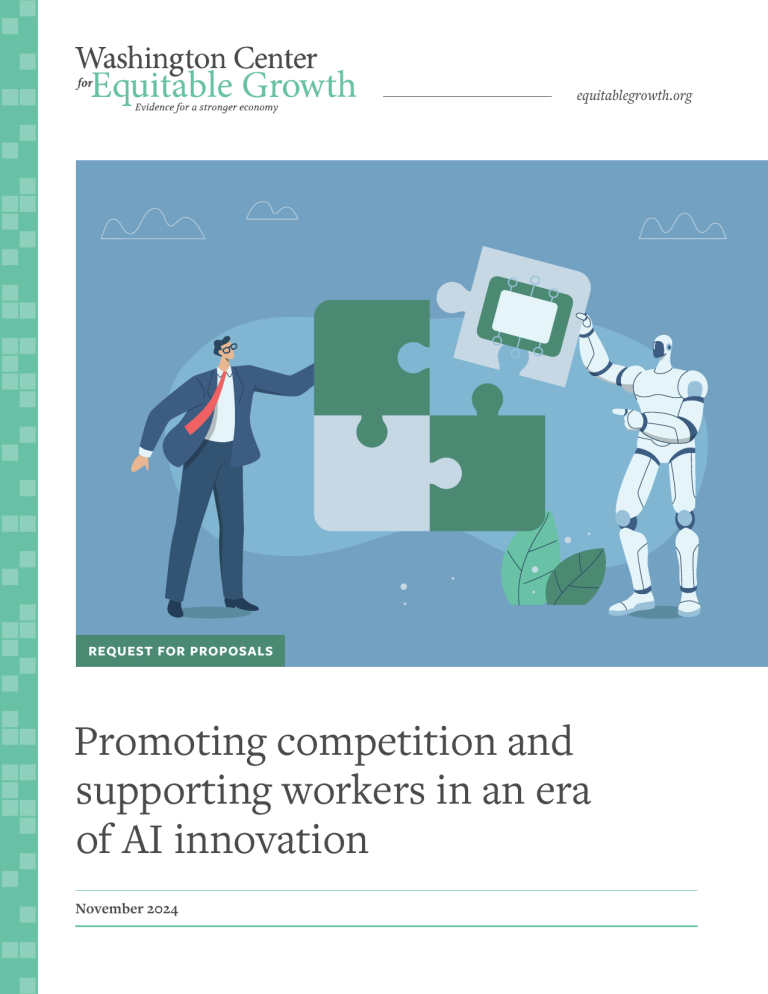
Request for Proposals: Promoting competition and supporting workers in an era of AI innovation (opens in a new tab)
RFPs NOV 20, 2024
By: Equitable Growth (opens in a new tab)
Request for proposals: Research grants for early career scholars (opens in a new tab)
RFPs OCT 30, 2024
By: Equitable Growth (opens in a new tab)
Asymmetric Effects of Monetary Policy on Firms (opens in a new tab)
Working Papers SEP 16, 2024
This paper documents firm-level evidence on the asymmetric effects of monetary policy in the US. Focusing on the 1980q3-2019q4 period, I find that monetary tightenings show larger effects on firms’…
By: Ezgi Kurt (opens in a new tab)

In Conversation with Mishaela Durán (opens in a new tab)
In Conversation SEP 12, 2024
Equitable Growth in Conversation is a recurring series where we talk with economists and other academics to help us better understand whether and how economic inequality affects economic growth and…
By: Shira Markoff (opens in a new tab)
Bonus Question: How Does Flexible Incentive Pay Affect Wage Rigidity? (opens in a new tab)
Working Papers JUL 17, 2024
We introduce dynamic incentive contracts into a model of inflation and unemployment dynamics. Our main result is that wage cyclicality from incentives neither affects the slope of the Phillips curve…
By: Meghana Gaur (opens in a new tab), John Grigsby (opens in a new tab), Jonathon Hazell (opens in a new tab), Abdoulaye Ndiaye (opens in a new tab)

In Conversation with Natalie Foster (opens in a new tab)
In Conversation JUL 2, 2024
Equitable Growth in Conversation is a recurring series where we talk with economists and other academics to help us better understand whether and how economic inequality affects economic growth and…
By: Michael Linden (opens in a new tab)

In Conversation with Miles Corak (opens in a new tab)
In Conversation JUN 6, 2024
Equitable Growth in Conversation is a recurring series where we talk with economists and other academics to help us better understand whether and how economic inequality affects economic growth and…
By: Austin Clemens (opens in a new tab)

Equitable Growth Insights: Synthesizing economic mobility research (opens in a new tab)
Research Databases MAY 15, 2024
Equitable Growth’s Insights newsletter on U.S. economic mobility is a quarterly newsletter that synthesizes research from academia, journalism, and the nonprofit sector. Each edition seeks to distill insights from research…
Behavioral Responses to Wealth Taxation: Evidence from Colombia (opens in a new tab)
Working Papers MAY 14, 2024
We study behavioral responses to personal wealth taxes in Colombia. We utilize tax microdata from 1993 to 2016 linked with the leaked Panama Papers to investigate offshoring to the country’s…
By: Juliana Londoño-Vélez (opens in a new tab), Javier Avila-Mahecha (opens in a new tab)
Is There Too Little Antitrust Enforcement in the US Hospital Sector? (opens in a new tab)
Working Papers APR 24, 2024
From 2002 to 2020, there were over 1,000 mergers of US hospitals. During this period, the Federal Trade Commission (FTC) took enforcement actions against 13 transactions. However, using the FTC’s…
By: Zarek Brot-Goldberg (opens in a new tab), Zack Cooper (opens in a new tab), Stuart V. Craig, Lev Klarnet (opens in a new tab)
Spending Responses to the Child Tax Credit Expansions (opens in a new tab)
Working Papers APR 2, 2024
This article summarizes the literature that studied how people used the 2021 advance Child Tax Credit. Four primary findings emerged. Families more frequently reporting paying down debt during the first…
By: Jonathan Fisher (opens in a new tab), Jake Schild (opens in a new tab), David S. Johnson

In Conversation with Sasha Killewald (opens in a new tab)
In Conversation MAR 27, 2024
Equitable Growth in Conversation is a recurring series where we talk with economists and other academics to help us better understand whether and how economic inequality affects economic growth and…
By: Austin Clemens (opens in a new tab)

Request for Proposals: How effective was the fiscal response to the COVID-19 recession for workers? (opens in a new tab)
RFPs MAR 18, 2024
By: Equitable Growth (opens in a new tab)

In Conversation with Timothy Smeeding (opens in a new tab)
In Conversation JAN 16, 2024
Equitable Growth in Conversation is a recurring series where we talk with economists and other academics to help us better understand whether and how economic inequality affects economic growth and…
By: Jonathan Fisher (opens in a new tab)
Request for proposals: Research grants for early career scholars (opens in a new tab)
RFPs NOV 30, 2023
By: Equitable Growth (opens in a new tab)
HBCU Enrollment and Longer-Term Outcomes (opens in a new tab)
Working Papers NOV 20, 2023
Using data from nearly 1.2 million Black SAT takers, we estimate the impacts of initially enrolling in an Historically Black College and University (HBCU) on educational, economic, and financial outcomes.…
By: Ashley Edwards (opens in a new tab), Justin Ortagus (opens in a new tab), Jonathan Smith (opens in a new tab), Andria Smythe (opens in a new tab)


Your Direct Line to Cutting Edge Research
Be the first to know about our latest events, research releases, and expert insights. Get exclusive updates delivered right to your inbox and never miss an opportunity to engage with our community.