


Resources
From peer-reviewed research to accessible policy briefs, explore the scholarship that’s shaping debates and driving change.

821 Results


Economic research shows immigration is good for U.S. workers, the economy, and affordability (opens in a new tab)
Essays AUG 31, 2026
When President Donald Trump returned to the White House in 2025, mass deportations and immigration restrictions were renewed as one of the political priorities of his second administration. Since then,…
By: Christopher Bangert-Drowns (opens in a new tab)
 View Chart
(opens in a new tab)
View Chart
(opens in a new tab)
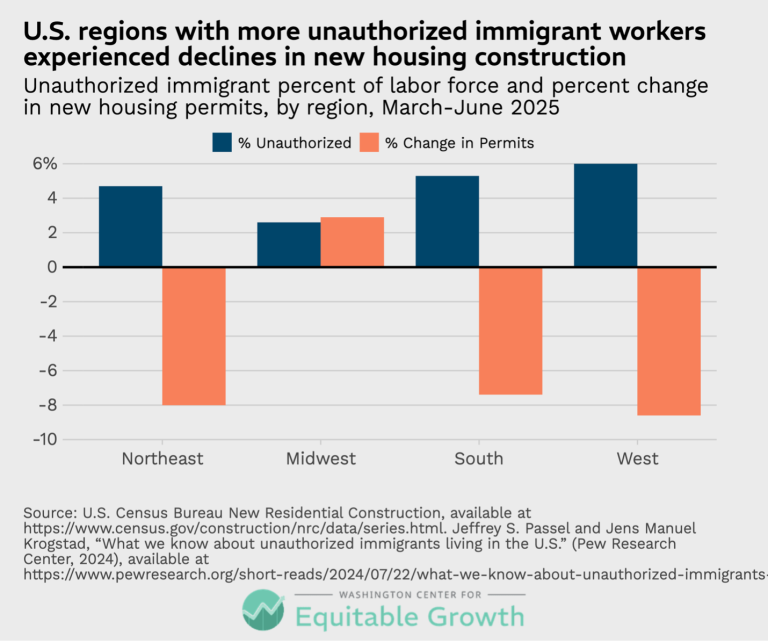
U.S. regions with more unauthorized immigrant workers experienced declines in new housing construction (opens in a new tab)
Visualizations AUG 31, 2026
 View Chart
(opens in a new tab)
View Chart
(opens in a new tab)
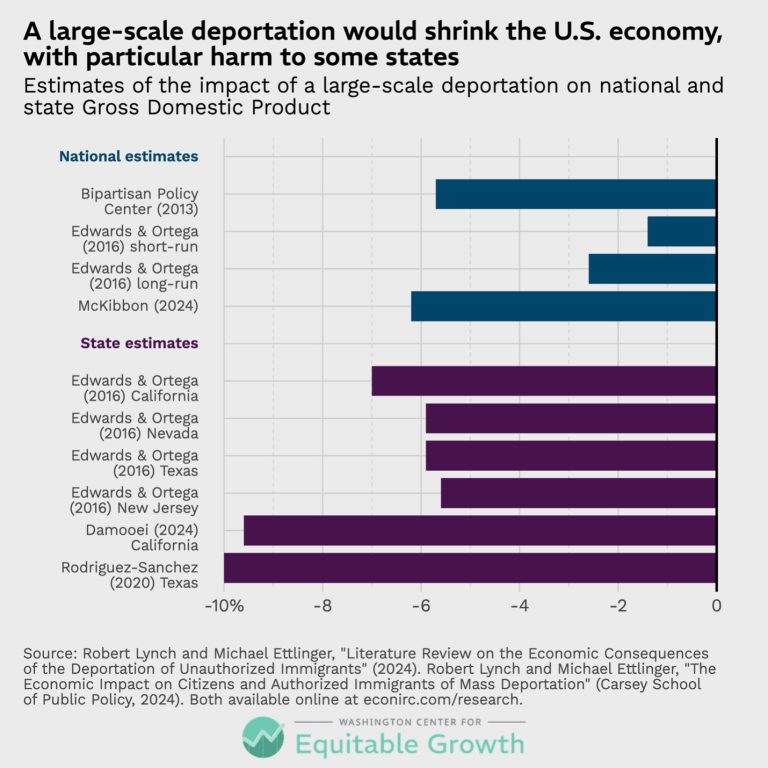
A large-scale deportation would shrink the U.S. economy, with particular harm to some states (opens in a new tab)
Visualizations AUG 31, 2026

Streamlining applications to social programs unlocks more support for the U.S. families who need it most (opens in a new tab)
Essays JUL 7, 2026
Millions of low-income families in the United States tap into multiple social programs to help them meet their needs. A single household, for example, might rely on the Supplemental Nutrition…
By: Neil Cholli (opens in a new tab), Derek Wu (opens in a new tab)
Multiple Program Participation in the Safety Net: Incidence, Impediments, and Implications (opens in a new tab)
Working Papers JUL 7, 2026
Multiple program participation is a defining feature of the U.S. safety net, with half of recipients enrolling in two or more programs. Yet most research examines programs in isolation, missing…
By: Neil A. Cholli, Derek Wu (opens in a new tab)

The One Big Beautiful Bill Act, one year later: Parsing the evidence on the law’s consequences so far (opens in a new tab)
Blog JUN 30, 2026
The One Big Beautiful Bill Act signed into law one year ago on July 4, 2025, shifted trillions of dollars in income from working-class families to corporations and very wealthy…
By: Lily Roberts (opens in a new tab)
Barriers to Benefits: Unemployment Insurance Take-Up and Labor Market Effects (opens in a new tab)
Working Papers MAY 19, 2026
Unemployment insurance (UI) take-up is relatively low in the United States. We implement a large-scale field experiment among 50,000 likely unemployed individuals to study the causes and labor supply implications…
By: Casey McQuillan (opens in a new tab), Brendan Moore (opens in a new tab)

Factsheet: What the research says about early care and education in the United States (opens in a new tab)
Factsheets APR 16, 2026
Research has long shown the importance and value of high-quality early childhood care and education. Child care offers working parents the ability to fully participate in the labor force and…
By: Equitable Growth (opens in a new tab)
How does early childhood care and education affect U.S. families and workers, and which policies support child participation and boost the quality of care? (opens in a new tab)
Reports APR 16, 2026
As states consider policy action in early childhood care and education, there is an existing—and growing—evidence base from which to draw lessons. This report summarizes the rigorous evidence on program…
By: Chloe Gibbs (opens in a new tab)
 View Chart
(opens in a new tab)
View Chart
(opens in a new tab)
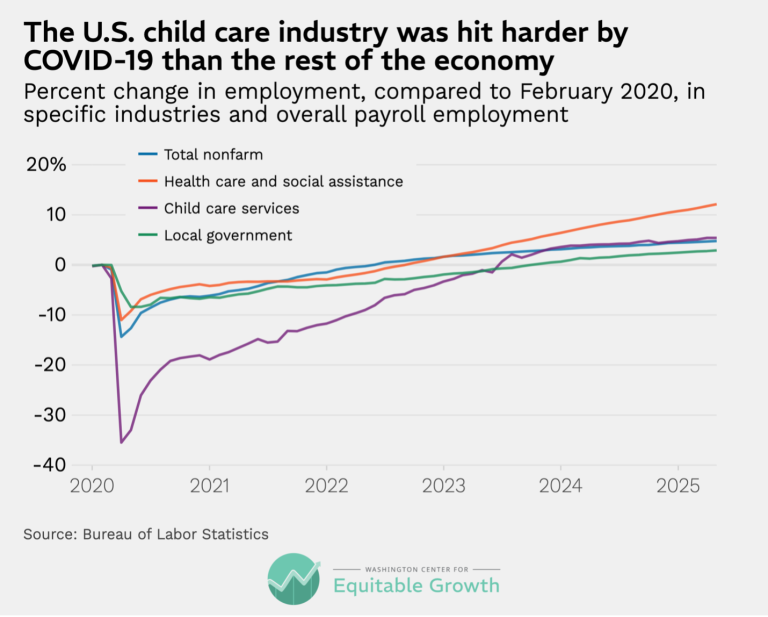
The U.S. child care industry was hit harder by COVID-19 than the rest of the economy (opens in a new tab)
Visualizations APR 15, 2026
 View Chart
(opens in a new tab)
View Chart
(opens in a new tab)
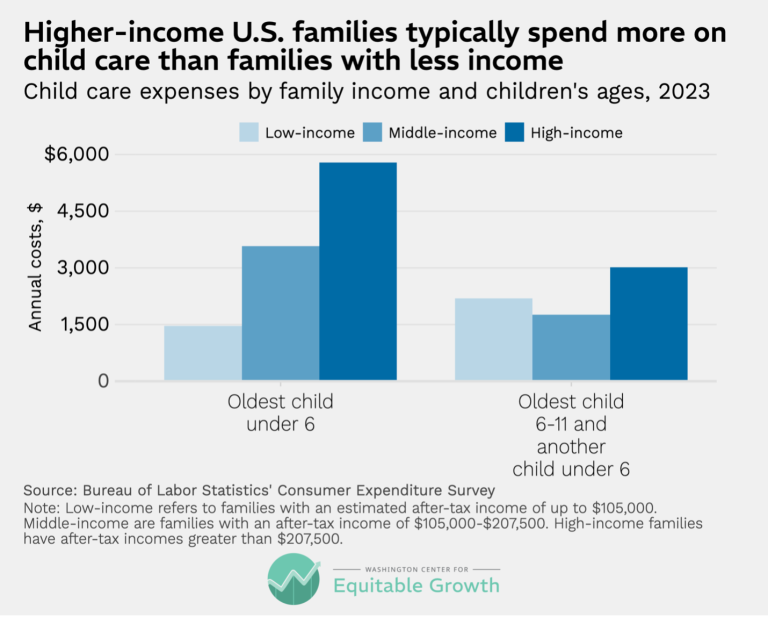
Higher-income U.S. families typically spend more on child care than families with less income (opens in a new tab)
Visualizations APR 15, 2026
 View Chart
(opens in a new tab)
View Chart
(opens in a new tab)
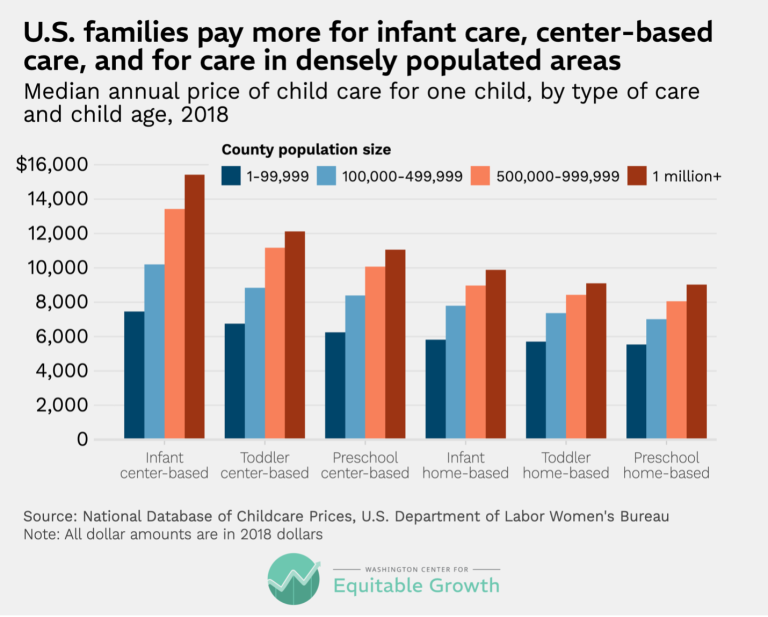
U.S. families pay more for infant care, center-based care, and for care in densely populated areas (opens in a new tab)
Visualizations APR 15, 2026
 View Chart
(opens in a new tab)
View Chart
(opens in a new tab)
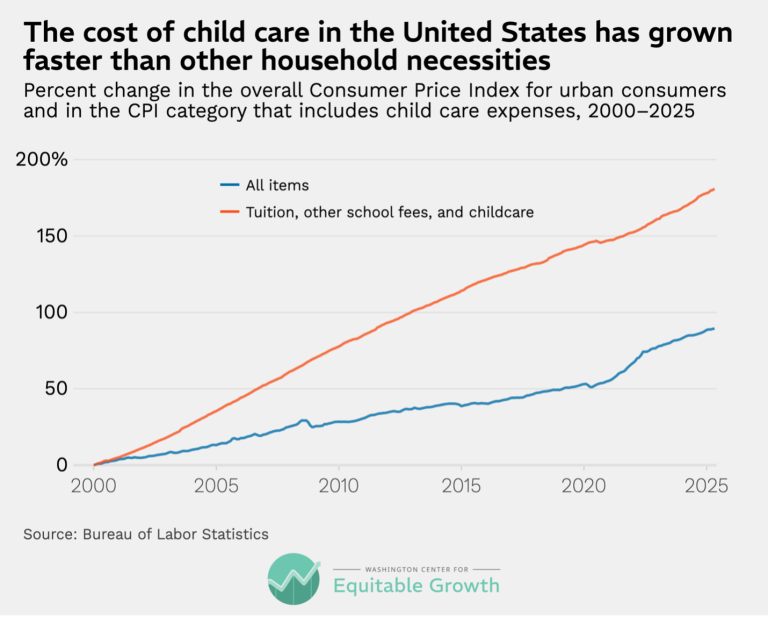
The cost of child care in the United States has grown faster than other household necessities (opens in a new tab)
Visualizations APR 15, 2026

Federal policymakers can ensure Trump accounts do not exacerbate inequality in the United States (opens in a new tab)
Issue Briefs APR 14, 2026
In July 2025, Congress passed a federal budget bill (Public Law 119-21, also commonly known as the One Big Beautiful Bill Act) that, among other things, established a new type…
By: Megan Rivera (opens in a new tab)
A review of the state of child care in the United States (opens in a new tab)
Reports APR 9, 2026
Affordable, available, high-quality child care is essential for sustained, broadly shared economic growth and equitable access to workforce opportunities. In most of the United States, however, child care fails this…
By: Sam Abbott (opens in a new tab), Shira Markoff (opens in a new tab)
 View Chart
(opens in a new tab)
View Chart
(opens in a new tab)
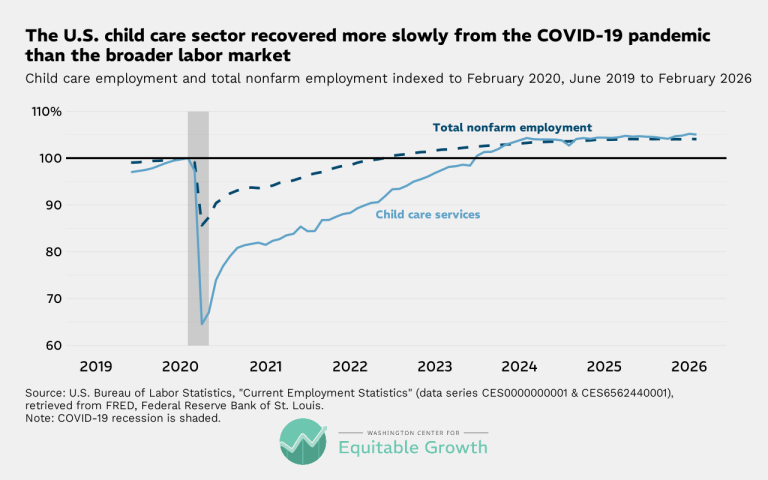
The U.S. child care sector recovered more slowly from the COVID-19 pandemic than the broader labor market (opens in a new tab)
Visualizations APR 8, 2026
 View Chart
(opens in a new tab)
View Chart
(opens in a new tab)
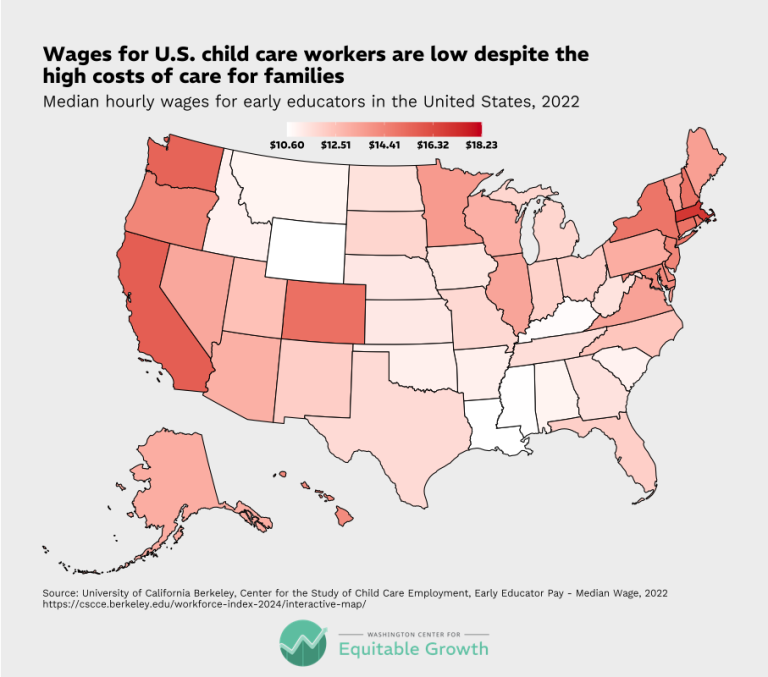
Wages for U.S. child care workers are low despite the high costs of care for families (opens in a new tab)
Visualizations APR 8, 2026

Factsheet: Using asset limits in public benefit programs (opens in a new tab)
Factsheets MAR 10, 2026
A household’s assets, or its overall wealth, are the resources required to ensure its family members can weather the financial disruption when unexpected expenses emerge. Yet many U.S. households do…
By: Megan Rivera (opens in a new tab)

Can remote work attenuate mothers’ mobility constraints in the U.S. labor force? (opens in a new tab)
Essays FEB 12, 2026
Women’s labor force participation increased dramatically over the course of the 20th century in the United States. Indeed, the labor force participation rate of women between the ages of 25…
By: Ilaria D’Angelis (opens in a new tab), Keren Horn (opens in a new tab)
Understanding the Congestion Child Penalty: Can Remote Work Attenuate It? (opens in a new tab)
Working Papers FEB 12, 2026
We study the impact of commuting time on the labor supply of women with children in the United States. We show that congestion and long commutes discourage the labor force…
By: Ilaria D’Angelis (opens in a new tab), Keren Horn (opens in a new tab)

Why federal food assistance became politically polarizing—and what to do about it (opens in a new tab)
Issue Briefs FEB 2, 2026
On January 31, 1964, President Lyndon B. Johnson requested that Congress pass federal legislation to make the Food Stamp Program permanent. Up to that point, the program had operated as…
By: Carlos Fernando Avenancio-Leon (opens in a new tab)
Dissecting Racial Politicization: Long-Run Evidence from the Food Stamp Program (opens in a new tab)
Working Papers FEB 2, 2026
We explore long-run racial polarization induced by the original Food Stamps Program: a major policy choice to expand the social safety net in the United States in the 1960s and…
By: Carlos F. Avenancio-León, Troup Howard (opens in a new tab), William Mullins (opens in a new tab)
ASSA 2026 Round-up: Day 2 (opens in a new tab)
Blog JAN 5, 2026
Yesterday was the second day of the 2026 annual meeting of the Allied Social Science Associations, which is organized by the American Economic Association. The 3-day conference, held in Philadelphia…
By: Equitable Growth (opens in a new tab)
ASSA 2026 Round-up: Day 1 (opens in a new tab)
Blog JAN 4, 2026
Yesterday was the first day of the 2026 annual meeting of the Allied Social Science Associations, which is organized by the American Economic Association. The 3-day conference, held in Philadelphia…
By: Equitable Growth (opens in a new tab)

U.S. social insurance programs support workers and economic growth (opens in a new tab)
Essays DEC 2, 2025
Since coming to power in early 2025, Republican majorities in Congress have shifted resources away from the nation’s social insurance programs, most notably to offset the cost of H.R. 1,…
By: Megan Rivera (opens in a new tab)

Equitable Growth hosts Econ 101 virtual event on how U.S. social insurance programs boost economic mobility (opens in a new tab)
Essays DEC 1, 2025
Microsoft Copilot helped draft this event recap. The Washington Center for Equitable Growth recently hosted its latest Econ 101 briefing aimed at providing in-depth evidence for policymakers on how U.S.…
By: Equitable Growth (opens in a new tab)
Distributional weighting in benefit-cost analysis is practical and effective at assessing government rulemaking without bias against low-income individuals (opens in a new tab)
Reports NOV 13, 2025
Distributional weighting in benefit-cost analysis is a tool for overcoming bias against lower-income individuals in economists’ measurements of the net benefit of government policies that affect populations at different levels…
By: Daniel Acland (opens in a new tab)
 View Chart
(opens in a new tab)
View Chart
(opens in a new tab)
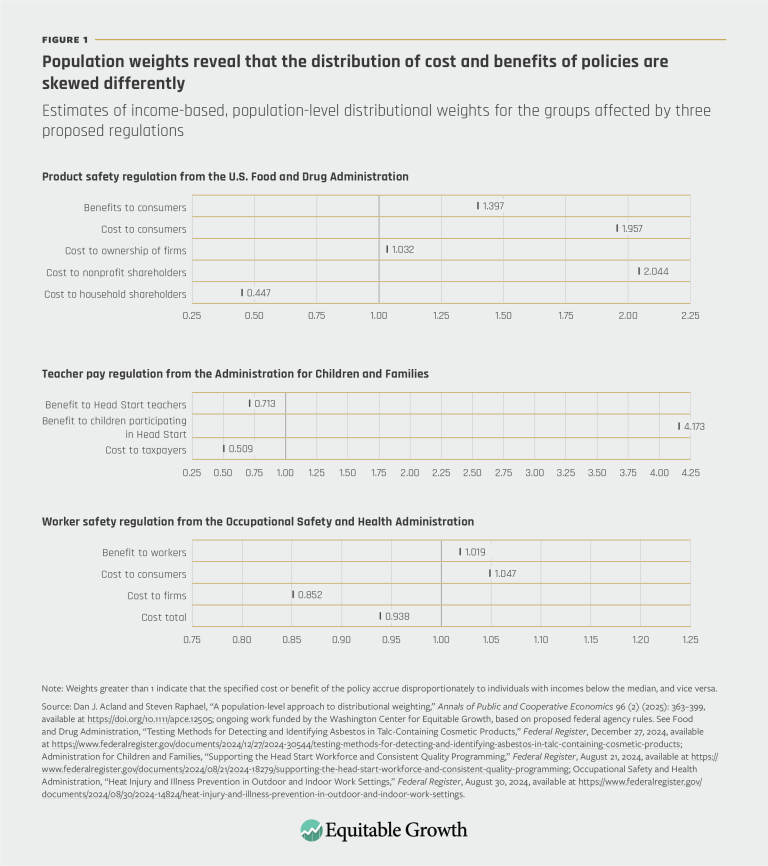
Population weights reveal that the distribution of cost and benefits of policies are skewed differently (opens in a new tab)
Visualizations NOV 13, 2025

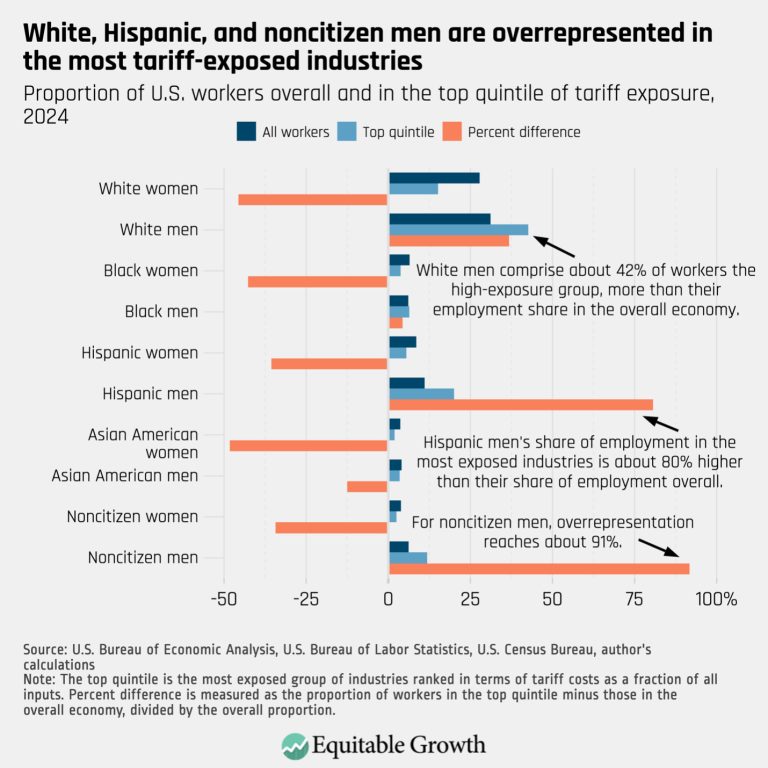
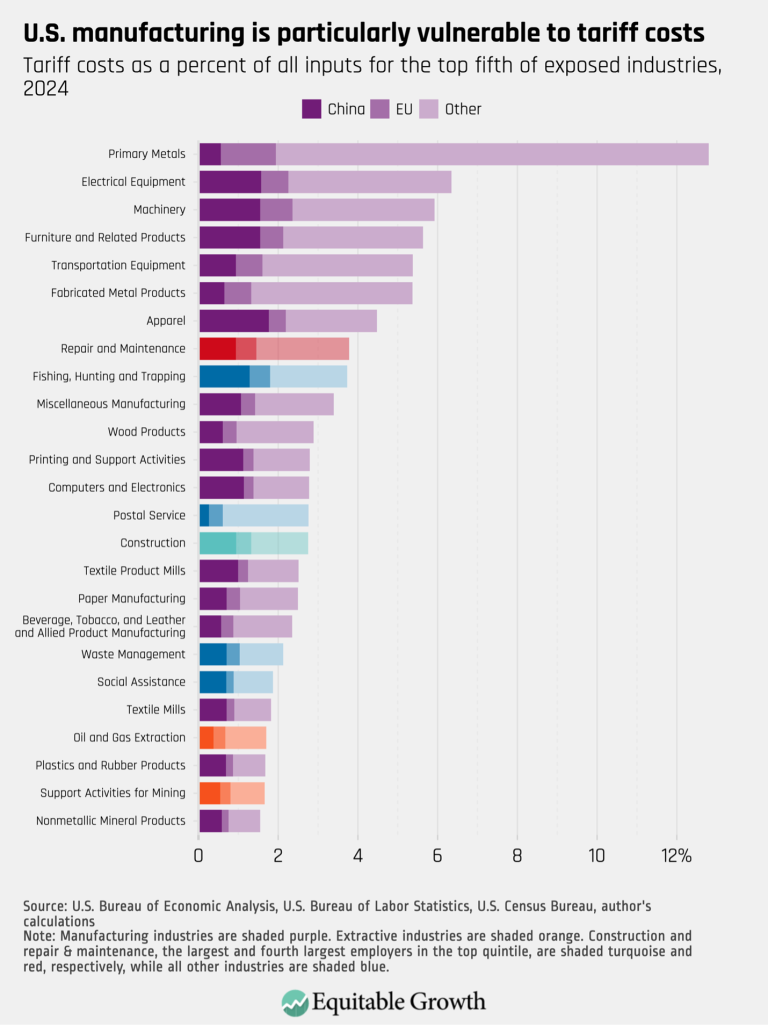
Tariff costs impact industries with mostly White, male, and noncitizen workers (opens in a new tab)
Essays NOV 4, 2025
The U.S. economy is flying blind, with most economic-data publications paused indefinitely due to the shutdown of the federal government amid a general U.S. labor market slowdown and just as…
By: Christopher Bangert-Drowns (opens in a new tab)
 View Chart
(opens in a new tab)
View Chart
(opens in a new tab)
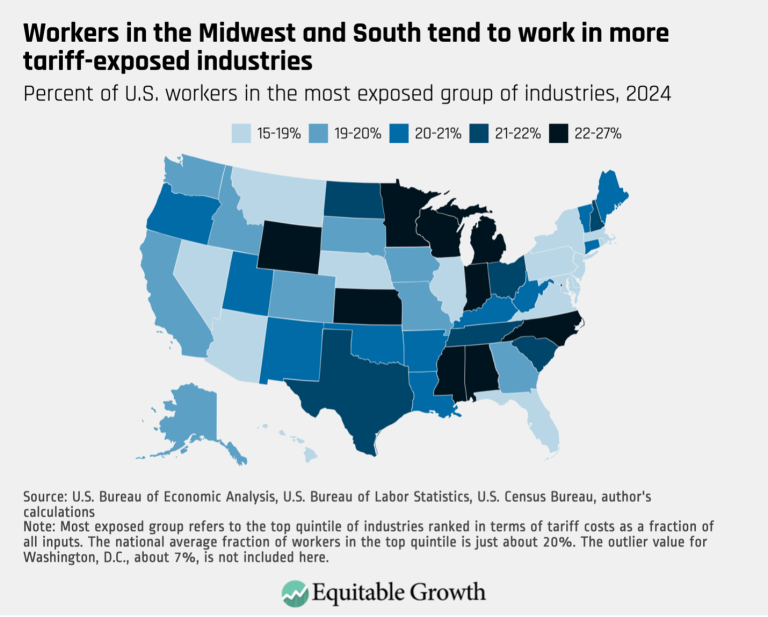
Workers in the Midwest and South tend to work in more tariff-exposed industries (opens in a new tab)
Visualizations NOV 3, 2025
 View Chart
(opens in a new tab)
View Chart
(opens in a new tab)
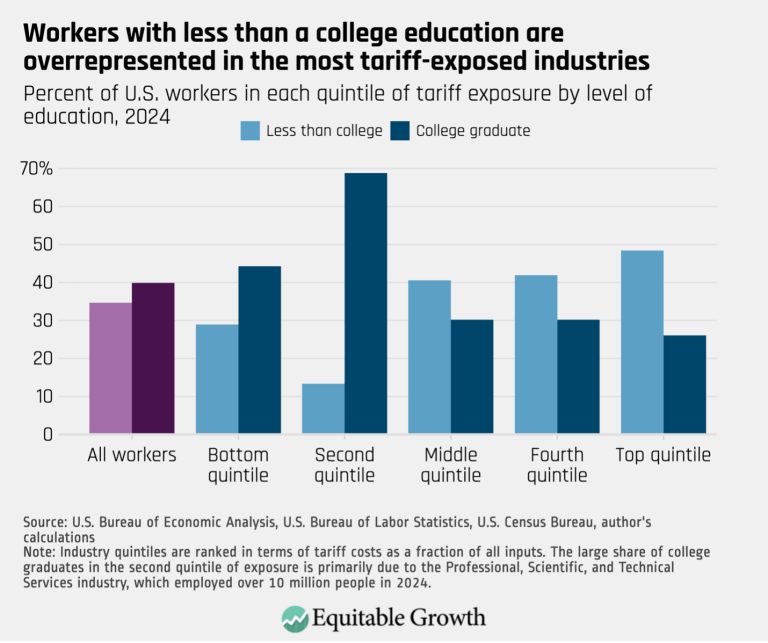
Workers with less than a college education are overrepresented in the most tariff-exposed industries (opens in a new tab)
Visualizations NOV 3, 2025
 View Chart
(opens in a new tab)
View Chart
(opens in a new tab)
White, Hispanic, and noncitizen men are overrepresented in the most tariff-exposed industries (opens in a new tab)
Visualizations NOV 3, 2025
 View Chart
(opens in a new tab)
View Chart
(opens in a new tab)
U.S. manufacturing is particularly vulnerable to tariff costs (opens in a new tab)
Visualizations NOV 3, 2025

In Conversation with Omari Swinton (opens in a new tab)
In Conversation SEP 24, 2025
Equitable Growth in Conversation is a recurring series where we talk with economists and other academics to help us better understand whether and how economic inequality affects economic growth and…
By: Sanjay Supan (opens in a new tab)
Fitting the Bill? The First Federal Paid Leave Mandate (opens in a new tab)
Working Papers SEP 23, 2025
We find that the first federal paid leave mandate in the US, enacted under the Families First Coronavirus Response Act, increased paid leave taking by nearly 200% for eligible workers,…
By: Tanya Byker (opens in a new tab), Elena Patel (opens in a new tab), Kristin Smith (opens in a new tab)

Even health care, the strongest sector of the U.S. jobs market, cannot deliver the wages its workers deserve without unionization (opens in a new tab)
Essays SEP 10, 2025
The growth of jobs in the U.S. health care industry is the linchpin to a strong U.S. labor market in 2025 and beyond. Health care is one of only a…
By: Adam Dean (opens in a new tab), Jamie McCallum (opens in a new tab)
In Her Hands: A Guaranteed Income Initiative (opens in a new tab)
Working Papers SEP 4, 2025
In Her Hands (IHH) is a guaranteed income (GI) initiative aimed at addressing persistent economic insecurity among women in neighborhoods with some of Georgia’s highest poverty rates. Co-designed with local…
By: Laura Brugger (opens in a new tab), Shadonna Davis (opens in a new tab), Desha Elliott (opens in a new tab), Leah Hamilton (opens in a new tab), Stephen Roll (opens in a new tab), Latrice Rollins (opens in a new tab), Simone Smith (opens in a new tab), Aaron Quick (opens in a new tab), Naomi Zewde (opens in a new tab)
States can support children and their economies using direct cash assistance from the Temporary Assistance for Needy Families block grant program (opens in a new tab)
Reports AUG 28, 2025
Efficient, effective, and responsive income support programs can reduce economic inequality and support economic mobility. If targeted effectively, these programs can help children, families, and workers meet their needs and…
By: Megan Rivera (opens in a new tab), Christopher Bangert-Drowns (opens in a new tab)
 View Chart
(opens in a new tab)
View Chart
(opens in a new tab)
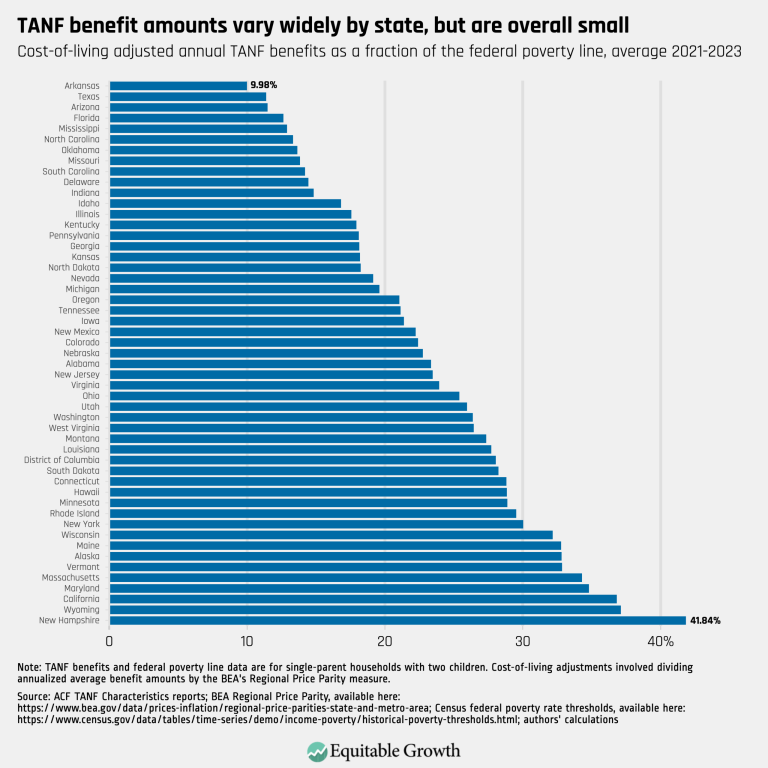
TANF benefit amounts vary widely by state, but are overall small – updated (opens in a new tab)
Visualizations AUG 26, 2025
 View Chart
(opens in a new tab)
View Chart
(opens in a new tab)
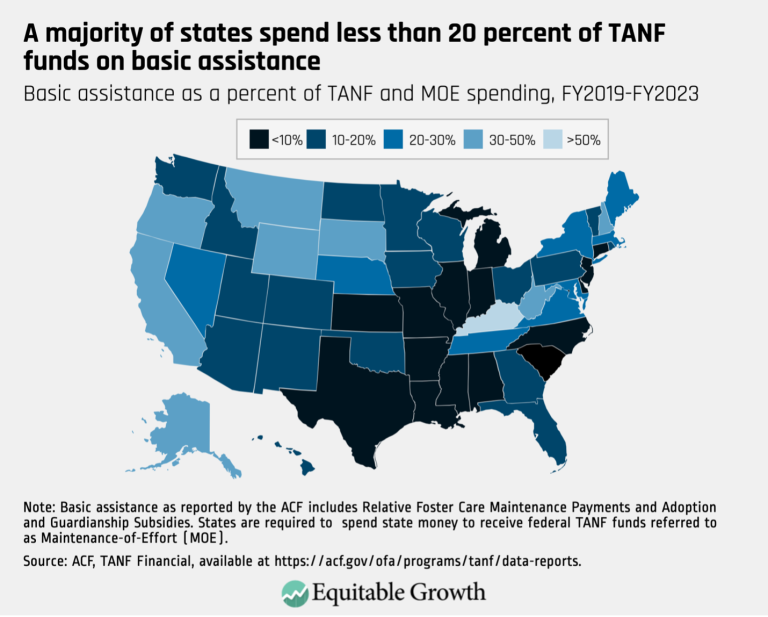
A majority of states spend less than 20 percent of TANF funds on basic assistance (opens in a new tab)
Visualizations AUG 26, 2025
 View Chart
(opens in a new tab)
View Chart
(opens in a new tab)
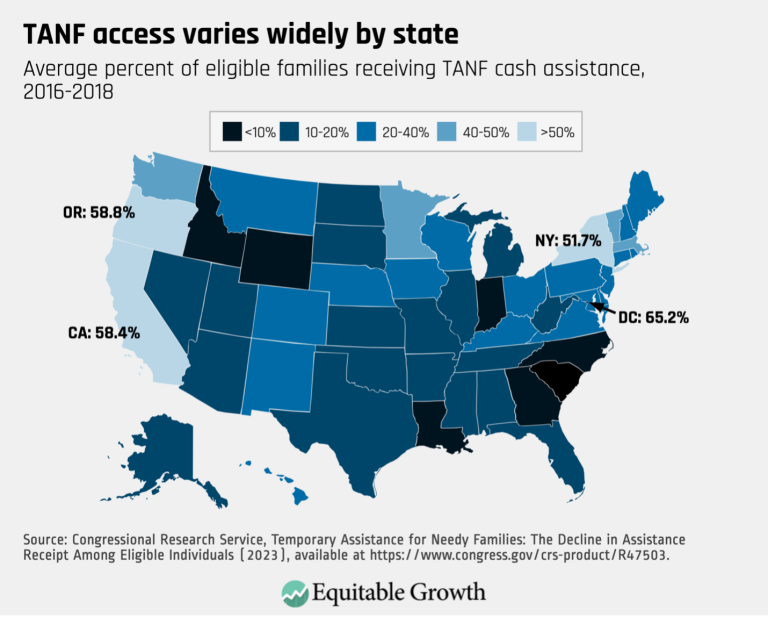
TANF access varies widely by state (opens in a new tab)
Visualizations AUG 26, 2025
 View Chart
(opens in a new tab)
View Chart
(opens in a new tab)
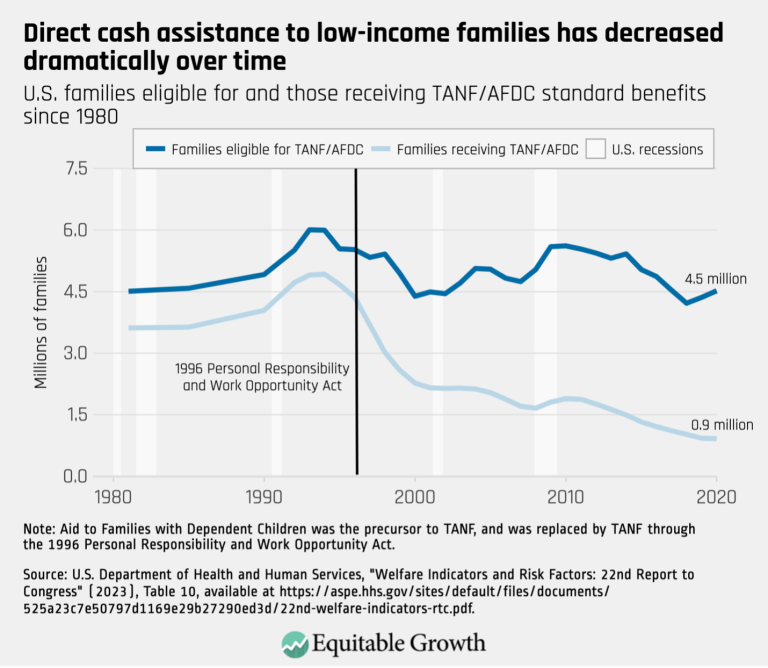
Direct cash assistance to low-income families has decreased dramatically over time (opens in a new tab)
Visualizations AUG 26, 2025

The 10 worst policies for equitable economic growth in the 2025 budget reconciliation law (opens in a new tab)
Essays JUL 14, 2025
The 2025 budget reconciliation law that was enacted earlier this month is a sprawling piece of legislation, touching almost every corner of the federal budget and the U.S. economy. It…
By: David S. Mitchell (opens in a new tab)

Republican reconciliation bill’s cuts to social programs will damage some congressional districts’ local economies (opens in a new tab)
Essays JUL 11, 2025
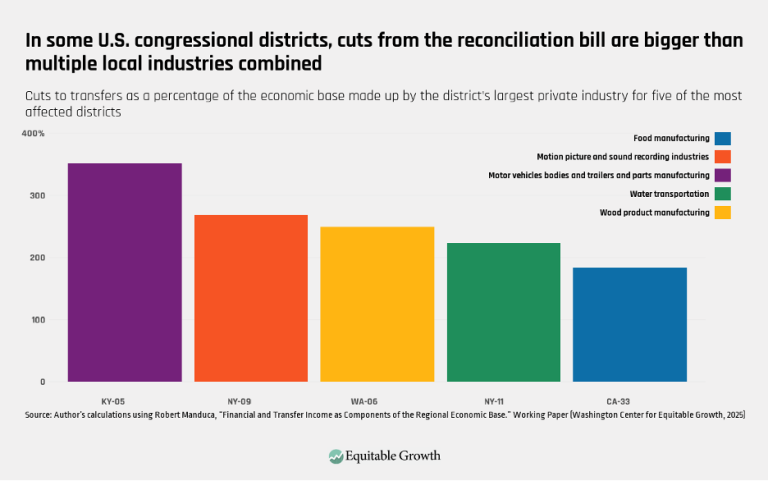
In a recent working paper, Equitable Growth grantee Robert Manduca of the University of Michigan, Ann Arbor demonstrates that government transfers make sizable contributions to local economies in much of…
By: Chiara Chanoi (opens in a new tab)
 View Chart
(opens in a new tab)
View Chart
(opens in a new tab)
In some U.S. congressional districts, cuts from the reconciliation bill are bigger than multiple local industries combined (opens in a new tab)
Visualizations JUL 10, 2025

Americans informed about the distributional effects of Republicans’ tax and budget bill overwhelmingly oppose it (opens in a new tab)
Essays JUL 3, 2025
Republicans in the U.S. Senate recently passed a version of the One Big Beautiful Bill Act, championed by President Donald Trump. The House of Representatives passed an earlier version of…
By: Jacob Hacker (opens in a new tab), Patrick Sullivan (opens in a new tab)
 View Chart
(opens in a new tab)
View Chart
(opens in a new tab)
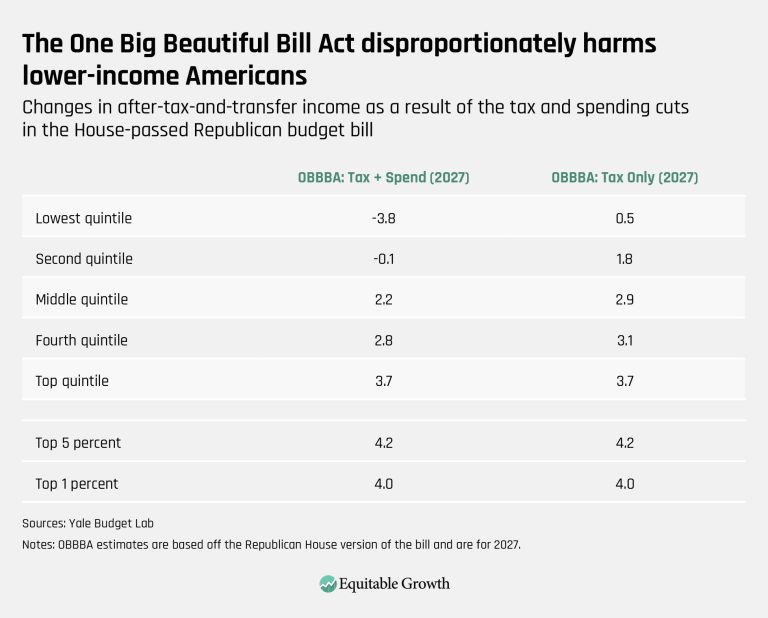
The One Big Beautiful Bill Act disproportionately harms lower-income Americans (opens in a new tab)
Visualizations JUL 3, 2025

Americans Informed About the Distributional Effects of Republicans’ Budget Bill Overwhelmingly Oppose It (opens in a new tab)
Working Papers JUN 25, 2025
Republicans in the Senate are currently considering the One Big Beautiful Bill Act, which, if enacted, would be the most regressive U.S. tax and budget law in at least the…
By: Jacob S. Hacker, Patrick Sullivan (opens in a new tab)

Congressional Republicans’ budget bill is the most regressive in at least 40 years (opens in a new tab)
Essays JUN 25, 2025
The U.S. Congress is in the midst of debating a budget bill that would make massive changes to U.S. tax and spending policy over the course of the next decade…
By: Jacob Hacker (opens in a new tab), Patrick Sullivan (opens in a new tab)
 View Chart
(opens in a new tab)
View Chart
(opens in a new tab)
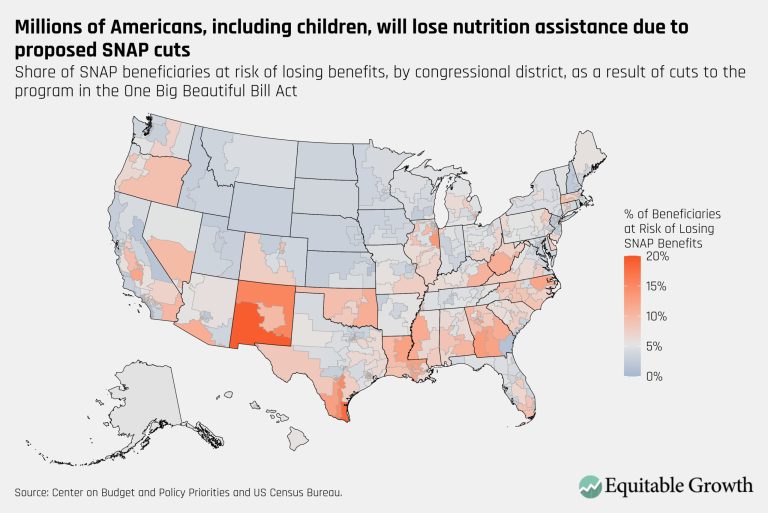
Millions of Americans, including children, will lose nutrition assistance due to proposed SNAP cuts – updated (opens in a new tab)
Visualizations JUN 24, 2025

Medicaid and SNAP cuts in congressional Republicans’ budget bill will negatively impact local economies (opens in a new tab)
Essays JUN 24, 2025
The budget reconciliation bill recently passed by the U.S. House of Representatives proposes to make large cuts to Medicaid, the Supplemental Nutrition Assistance Program, and other social programs to pay…
By: Robert Manduca (opens in a new tab)
Financial and Transfer Income as Components of the Regional Economic Base (opens in a new tab)
Working Papers JUN 24, 2025
Economists and geographers have long divided industries into “basic” and “nonbasic” sectors depending on whether they bring money into a region from outside or serve local demand. Traditionally, the regional…
By: Robert Manduca (opens in a new tab)
 View Chart
(opens in a new tab)
View Chart
(opens in a new tab)
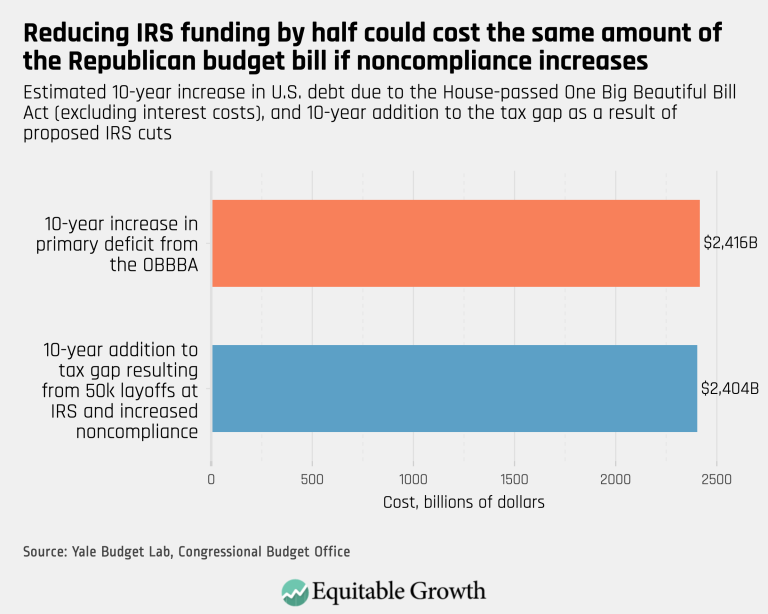
Reducing IRS funding by half could cost the same amount of the Republican budget bill in noncompliance increases (opens in a new tab)
Visualizations JUN 23, 2025
 View Chart
(opens in a new tab)
View Chart
(opens in a new tab)
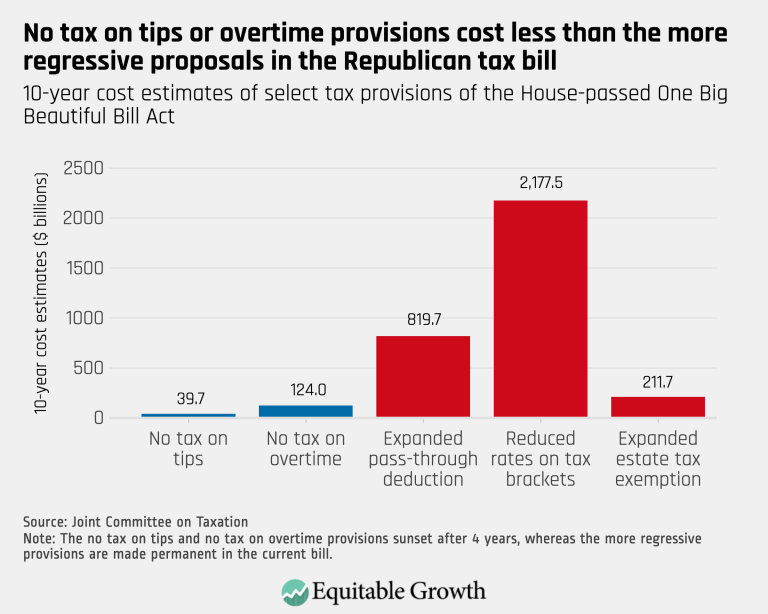
No tax on tips or overtime provisions cost less than the more regressive proposals in the Republican tax bill (opens in a new tab)
Visualizations JUN 23, 2025
 View Chart
(opens in a new tab)
View Chart
(opens in a new tab)
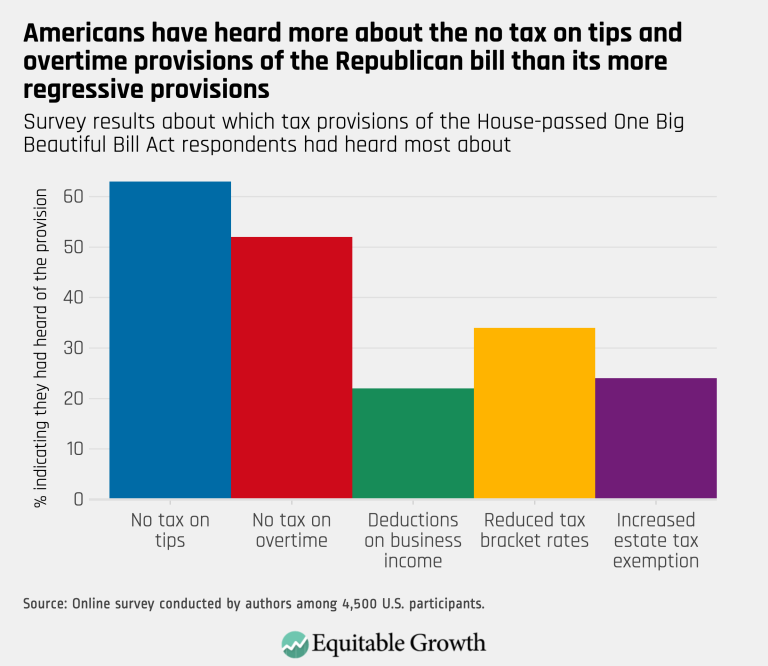
Americans have heard more about the no tax on tips and overtime provisions of the Republican bill than its more regressive provisions (opens in a new tab)
Visualizations JUN 23, 2025
 View Chart
(opens in a new tab)
View Chart
(opens in a new tab)
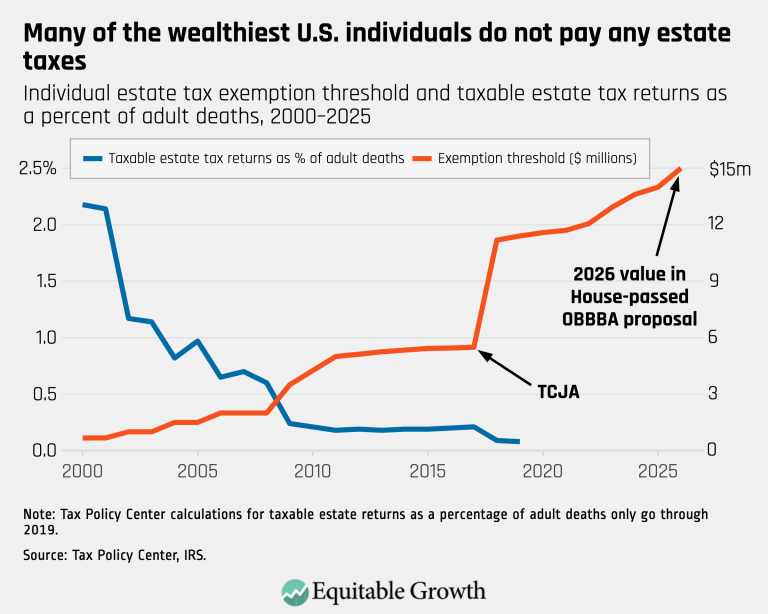
Many of the wealthiest U.S. individuals do not pay any estate taxes (opens in a new tab)
Visualizations JUN 23, 2025
 View Chart
(opens in a new tab)
View Chart
(opens in a new tab)
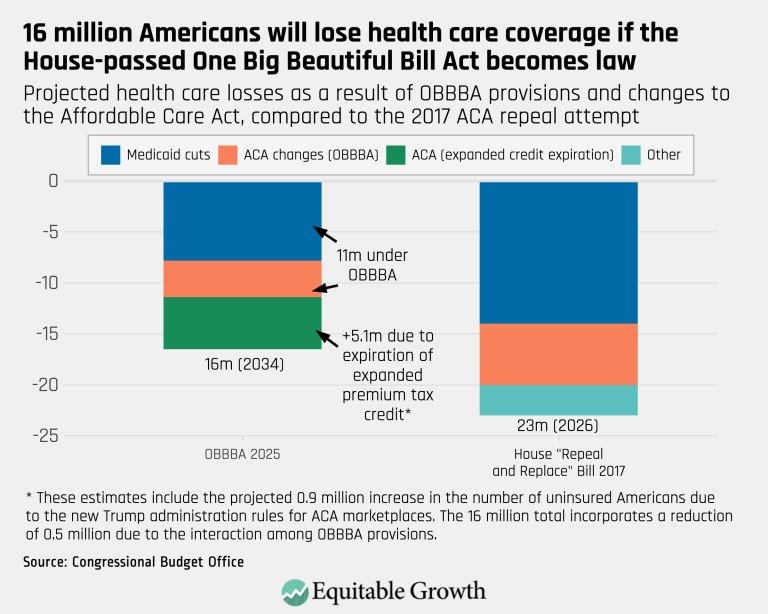
16 million Americans will lose health care coverage if the House-passed One Big Beautiful Bill Act becomes law (opens in a new tab)
Visualizations JUN 23, 2025

The hidden trade-offs of nonwage job amenities for U.S. workers (opens in a new tab)
Essays JUN 10, 2025
When workers choose jobs with predictable schedules, safer conditions, or greater autonomy, they are often paying a price: lower wages. In some cases, these hidden trade-offs are considerable. Indeed, my…
By: Alex Bell (opens in a new tab)
 View Chart
(opens in a new tab)
View Chart
(opens in a new tab)
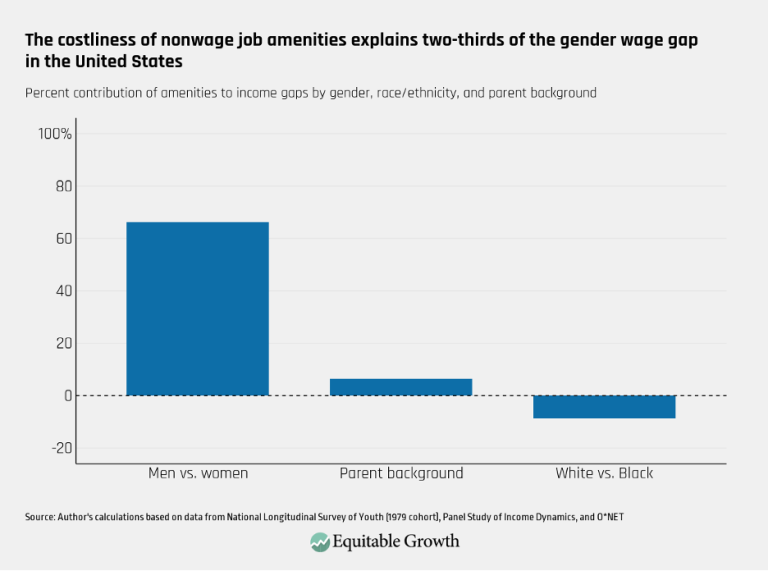
The costliness of nonwage job amenities explains two-thirds of the gender wage gap in the United States (opens in a new tab)
Visualizations JUN 10, 2025
 View Chart
(opens in a new tab)
View Chart
(opens in a new tab)
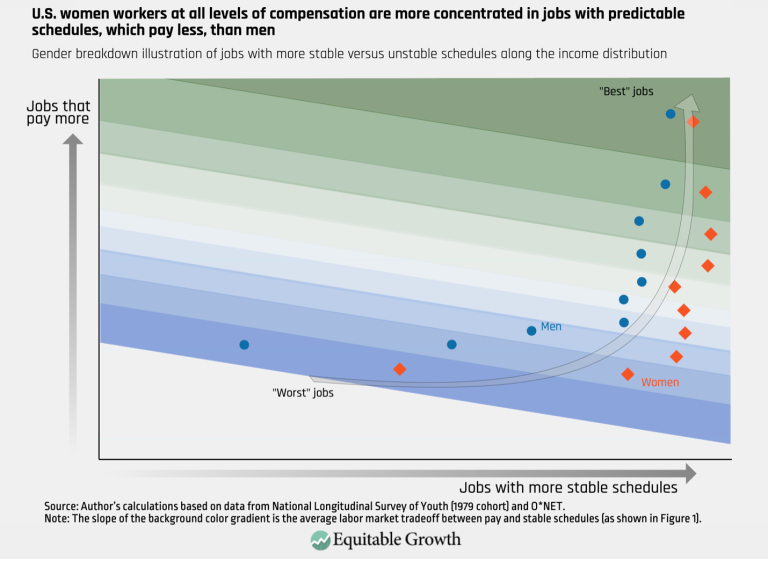
U.S. women workers at all levels of compensation are more concentrated in jobs with predictable schedules, which pay less, than men (opens in a new tab)
Visualizations JUN 10, 2025
 View Chart
(opens in a new tab)
View Chart
(opens in a new tab)
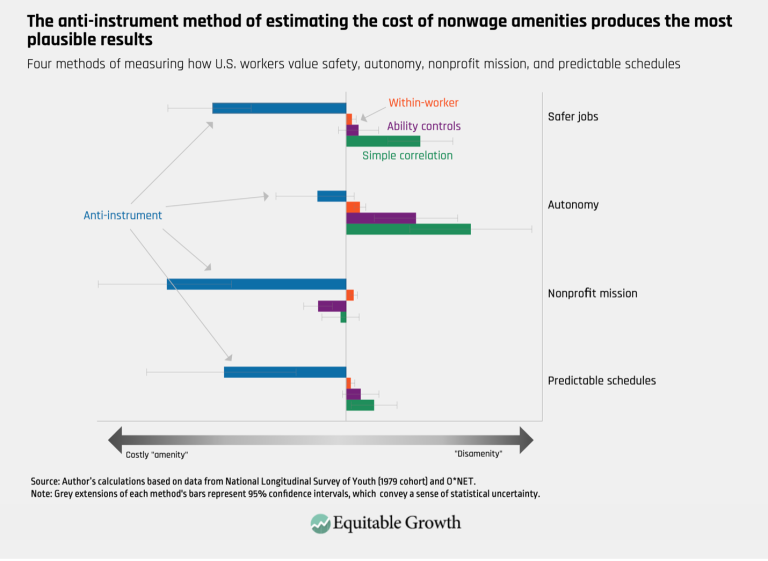
The anti-instrument method of estimating the cost of nonwage amenities produces the most plausible results (opens in a new tab)
Visualizations JUN 10, 2025

The political implications of bad jobs and the decline of unions (opens in a new tab)
Blog MAY 13, 2025
Bad jobs have become a distinctive feature of the U.S. economy over the past few decades. Globally, a lack of adequate demand, or what economists call “secular stagnation,” has meant…
By: Adam Dean (opens in a new tab), Jamie McCallum (opens in a new tab)

More accurately measuring economic sentiment will help build a U.S. economy—and democracy—that works for all (opens in a new tab)
Blog MAY 13, 2025
When politicians and members of the media discuss the state of “the economy” in the United States, they often use a small handful of data points. Of all the indicators…
By: Jonathan Cohen (opens in a new tab), Katherine Cramer (opens in a new tab)

Housing insecurity and U.S. economic policies: Lessons from tenant organizing (opens in a new tab)
Blog MAY 13, 2025
The destructive force of authoritarian power has become a prominent feature of U.S. political life. In just the first few months of 2025, we’ve seen unprecedented moves to use the…
By: Jamila Michener (opens in a new tab)

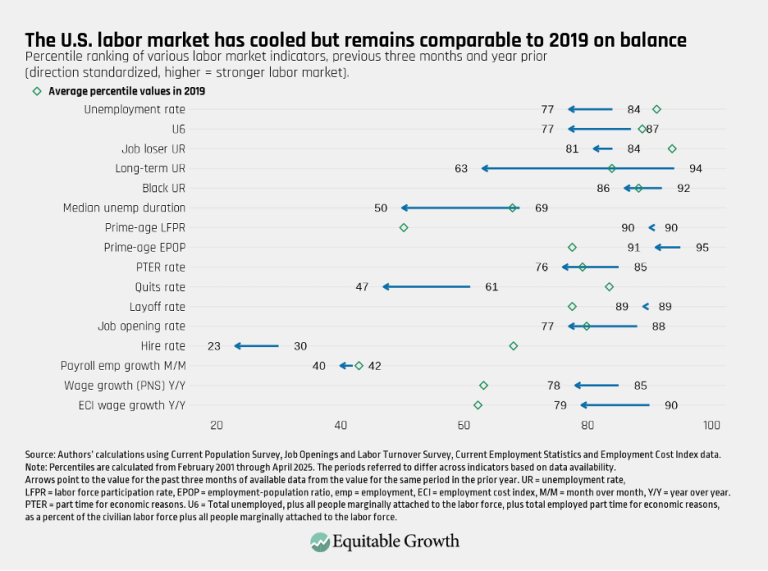
Tariffs pose real risks to the U.S. labor market (opens in a new tab)
Blog MAY 12, 2025
Uncertainty around trade policy makes it difficult to discuss the current state of the U.S. labor market. Businesses, workers, and policymakers at all levels make decisions based on both what…
By: Kevin Rinz (opens in a new tab)
 View Chart
(opens in a new tab)
View Chart
(opens in a new tab)
rinz fig 1 (opens in a new tab)
Visualizations MAY 9, 2025
 View Chart
(opens in a new tab)
View Chart
(opens in a new tab)
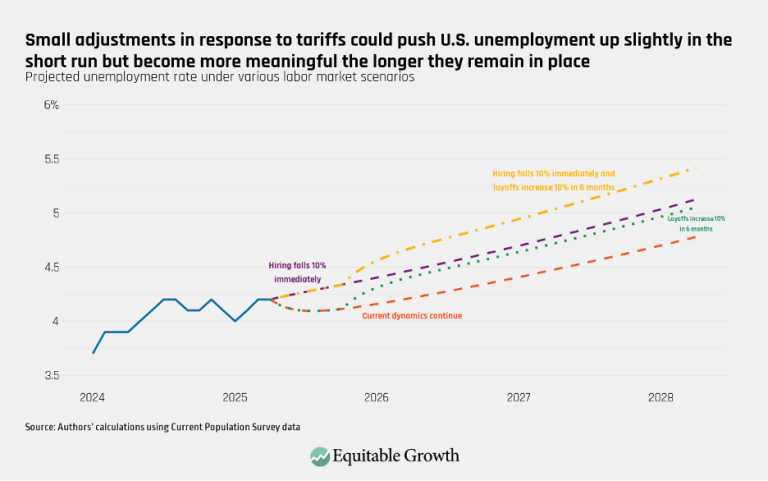
Small adjustments in response to tariffs could push U.S. unemployment up slightly in the short run but become more meaningful the longer they remain in place (opens in a new tab)
Visualizations MAY 9, 2025
 View Chart
(opens in a new tab)
View Chart
(opens in a new tab)
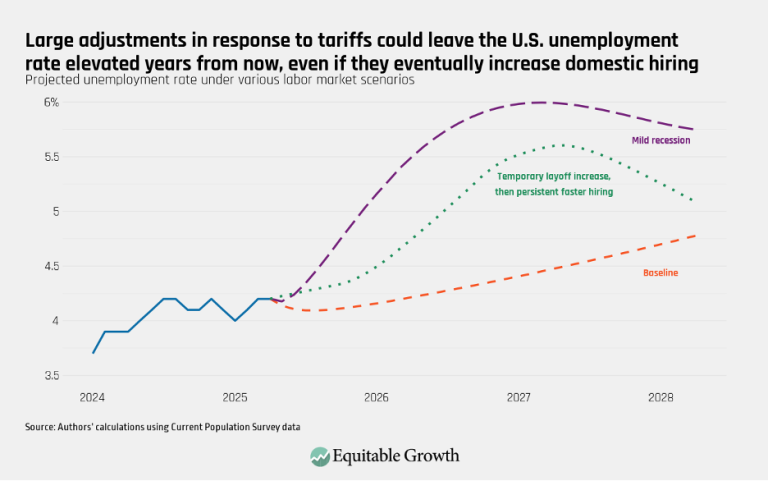
rinz fig 3 (opens in a new tab)
Visualizations MAY 9, 2025

Factsheet: What we know about the federal employer-provided child care credit and how can it be better used by businesses (opens in a new tab)
Factsheets APR 22, 2025
The employer-provided child care credit, also referred to as Section 45F in the Internal Revenue Code, provides a limited subsidy to businesses in the United States that provide child care…
By: Megan Rivera (opens in a new tab)

Improving economic outcomes for single mothers and their children across the United States (opens in a new tab)
Blog APR 16, 2025
Single-mother households are becoming more and more common in the United States. Over the past 50 years, the number of children raised by single mothers has more than doubled. It…
By: Megan Rivera (opens in a new tab)

Request for Proposals: The economic effects of the Inflation Reduction Act (opens in a new tab)
RFPs APR 2, 2025
By: Equitable Growth (opens in a new tab)

Do not abandon the care agenda (opens in a new tab)
Blog MAR 19, 2025
This column, co-authored by Equitable Growth President and CEO Shayna Strom and former Deputy Director of the White House Gender Policy Council Shilpa Phadke, first appeared in Democracy Journal in…
By: Equitable Growth (opens in a new tab)

The U.S. House of Representatives’ budget resolution threatens social infrastructure programs, putting families’ well-being at risk (opens in a new tab)
Blog MAR 10, 2025
In late February, the U.S. House of Representatives passed a budget resolution that calls for $4.5 trillion in tax cuts and $2 trillion in federal spending cuts. This resolution provides…
By: Priyanka Anand (opens in a new tab), Robert Moffitt (opens in a new tab)

Testimony by Michael Linden House Oversight Subcommittee on Healthcare and Financial Services (opens in a new tab)
Blog FEB 11, 2025
Chairman Grothman, Ranking Member Krishnamoorthi, and members of the Committee – thank you for the opportunity to be here. Today, I’d like to make three main points. First, federal investments…
By: Michael Linden (opens in a new tab)
ASSA 2025 Round-up: Day 3 (opens in a new tab)
Blog JAN 6, 2025
Yesterday was the third and final day of the 2025 annual meeting of the Allied Social Science Associations, which is organized by the American Economic Association. The 3-day conference, held…
By: Equitable Growth (opens in a new tab)
ASSA 2025 Round-up: Day 2 (opens in a new tab)
Blog JAN 5, 2025
Yesterday was the second day of the 2025 annual meeting of the Allied Social Science Associations, which is organized by the American Economic Association. The 3-day conference, held in San…
By: Equitable Growth (opens in a new tab)

ASSA 2025 Round-up: Day 1 (opens in a new tab)
Blog JAN 4, 2025
Yesterday was the first day of the 2025 annual meeting of the Allied Social Science Associations, which is organized by the American Economic Association. The 3-day conference, held in San…
By: Equitable Growth (opens in a new tab)

Recent research shows how paid leave impacts women’s employment and financial security in the United States (opens in a new tab)
Blog DEC 13, 2024
During the first several months of the COVID-19 pandemic, the federal government ensured that all U.S. workers had access to at least 2 weeks of paid sick leave and up…
By: Shira Markoff (opens in a new tab)

In Conversation with Fenaba Addo (opens in a new tab)
In Conversation DEC 12, 2024
Equitable Growth in Conversation is a recurring series where we talk with economists and other academics to help us better understand whether and how economic inequality affects economic growth and…
By: Shira Markoff (opens in a new tab)

New research highlights the impact of COVID-era unconditional cash benefits for U.S. workers and families (opens in a new tab)
Blog DEC 10, 2024
The breadth of the economic impact of the COVID-19 pandemic ushered in sweeping, albeit temporary, changes to income support programs and tax policies in the United States. These changes include…
By: Shira Markoff (opens in a new tab)
Request for Proposals: Promoting competition and supporting workers in an era of AI innovation (opens in a new tab)
RFPs NOV 20, 2024
By: Equitable Growth (opens in a new tab)
Request for proposals: Research grants for early career scholars (opens in a new tab)
RFPs OCT 30, 2024
By: Equitable Growth (opens in a new tab)

In Conversation with Mishaela Durán (opens in a new tab)
In Conversation SEP 12, 2024
Equitable Growth in Conversation is a recurring series where we talk with economists and other academics to help us better understand whether and how economic inequality affects economic growth and…
By: Shira Markoff (opens in a new tab)

New federal heat standard will protect U.S. workers from the ill effects of high temperatures amid intensifying climate change (opens in a new tab)
Blog AUG 1, 2024
U.S. workers are more vulnerable than ever to the ill effects of high and rising temperatures as the world continues to shatter heat records this year. Climate-related deaths and injuries…
By: Equitable Growth (opens in a new tab)

In Conversation with Natalie Foster (opens in a new tab)
In Conversation JUL 2, 2024
Equitable Growth in Conversation is a recurring series where we talk with economists and other academics to help us better understand whether and how economic inequality affects economic growth and…
By: Michael Linden (opens in a new tab)

Equitable Growth receives funding to advance women’s power, gender equality, and care economy (opens in a new tab)
Blog MAY 28, 2024
Melinda French Gates’ Pivotal funds organization as part of $1 billion global commitment The Washington Center for Equitable Growth announced today that it has received funding from Pivotal as part…
By: Equitable Growth (opens in a new tab)
Measuring psychological burdens in access to U.S. social programs (opens in a new tab)
Reports MAY 6, 2024
Lessons from new research on the Supplemental Nutrition Assistance Program Policymakers are increasingly paying attention to administrative burdens—those “frictions that people face in their encounters with public services.” In 2022,…
By: Alexander Hertel-Fernandez (opens in a new tab)
 View Chart
(opens in a new tab)
View Chart
(opens in a new tab)
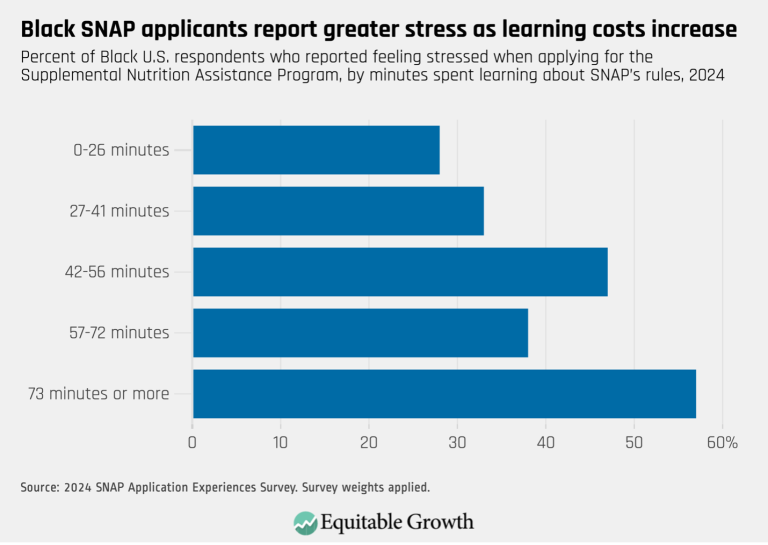
Black SNAP applicants report greater stress as learning costs increase (opens in a new tab)
Visualizations APR 30, 2024
 View Chart
(opens in a new tab)
View Chart
(opens in a new tab)
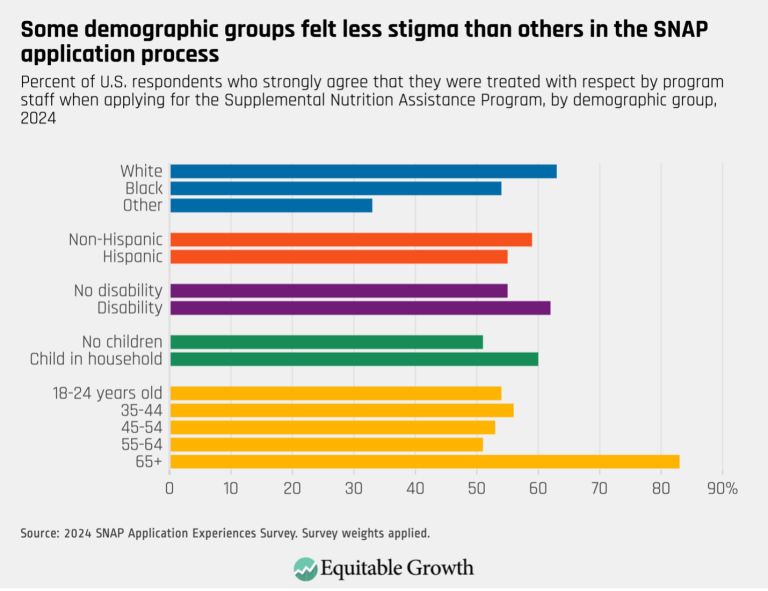
Some demographic groups felt less stigma than others in the SNAP application process (opens in a new tab)
Visualizations APR 30, 2024
 View Chart
(opens in a new tab)
View Chart
(opens in a new tab)
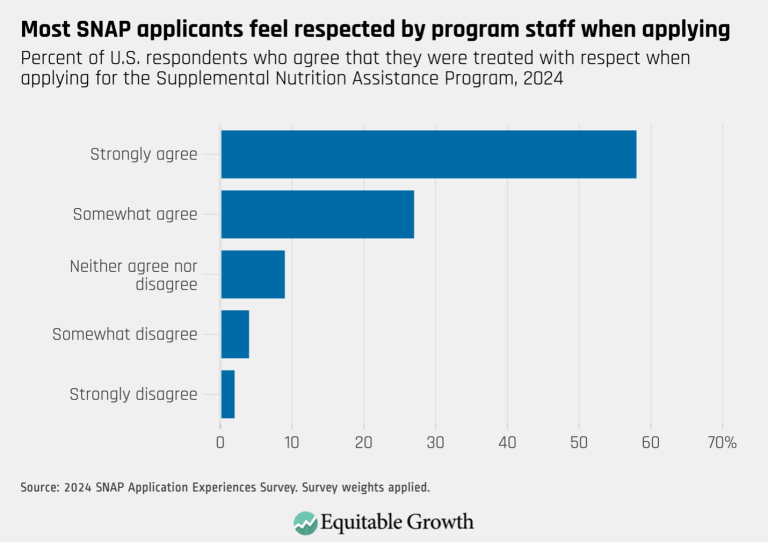
Most SNAP applicants feel respected by program staff when applying (opens in a new tab)
Visualizations APR 30, 2024
 View Chart
(opens in a new tab)
View Chart
(opens in a new tab)
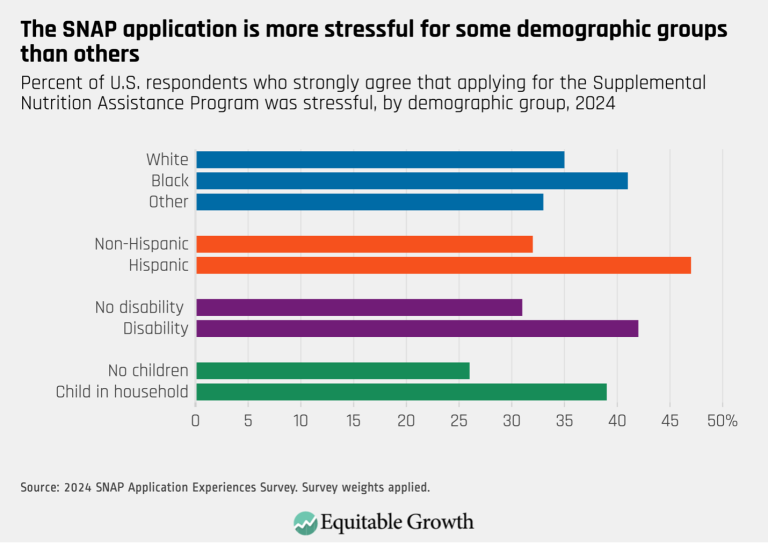
The SNAP application is more stressful for some demographic groups than others (opens in a new tab)
Visualizations APR 30, 2024
 View Chart
(opens in a new tab)
View Chart
(opens in a new tab)
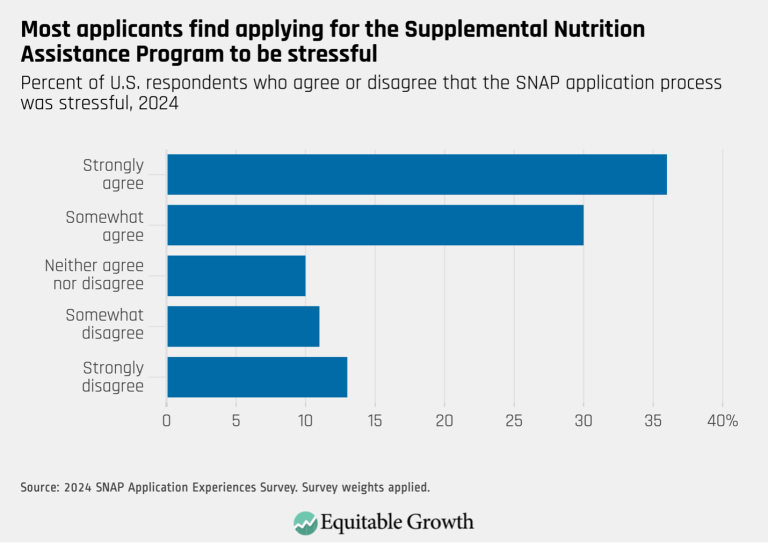
Most applicants find applying for the Supplemental Nutrition Assistance Program to be stressful (opens in a new tab)
Visualizations APR 30, 2024
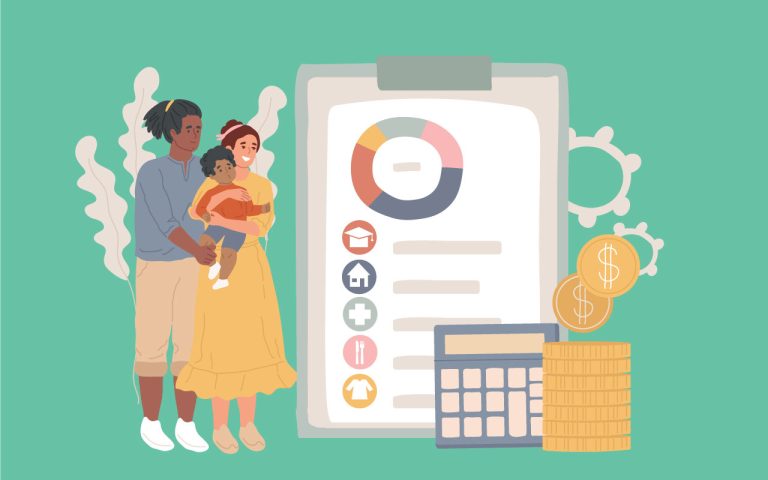
Enhanced Child Tax Credit helped U.S. families afford life-enhancing necessities and cope with inflation (opens in a new tab)
Blog APR 2, 2024
Amid ongoing congressional debate over expanding the Child Tax Credit for U.S. families, it’s important to understand why the fears about the expansion of that tax credit in 2021 were…
By: David S. Mitchell (opens in a new tab)
Spending Responses to the Child Tax Credit Expansions (opens in a new tab)
Working Papers APR 2, 2024
This article summarizes the literature that studied how people used the 2021 advance Child Tax Credit. Four primary findings emerged. Families more frequently reporting paying down debt during the first…
By: Jonathan Fisher (opens in a new tab), Jake Schild (opens in a new tab), David S. Johnson

Request for Proposals: How effective was the fiscal response to the COVID-19 recession for workers? (opens in a new tab)
RFPs MAR 18, 2024
By: Equitable Growth (opens in a new tab)

Equitable Growth hosts State of the Union press briefing with leading U.S. economists (opens in a new tab)
Blog MAR 7, 2024
The Washington Center for Equitable Growth last week hosted an online press briefing in prelude to tonight’s State of the Union address to the U.S. Congress by President Joe Biden.…
By: Equitable Growth (opens in a new tab)

The state of the U.S. labor market 4 years after the start of the COVID-19 recession (opens in a new tab)
Blog MAR 5, 2024
Over the past 4 years, the U.S. economy—in particular the U.S. labor market—weathered some incredible shocks and fluctuations. From the COVID-19 pandemic and supply chain breakdowns to global energy shocks…
By: Michael Linden (opens in a new tab)
 View Chart
(opens in a new tab)
View Chart
(opens in a new tab)
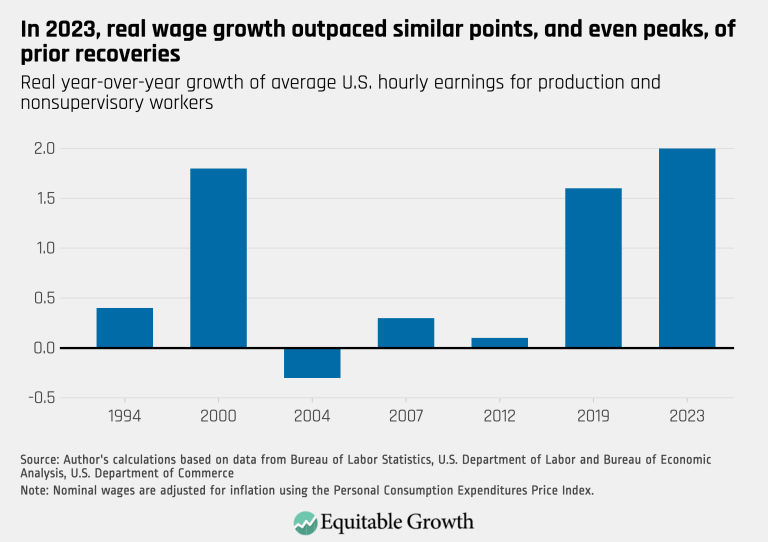
In 2023, real wage growth outpaces similar points, and even peaks, of prior recoveries (opens in a new tab)
Visualizations MAR 4, 2024
 View Chart
(opens in a new tab)
View Chart
(opens in a new tab)
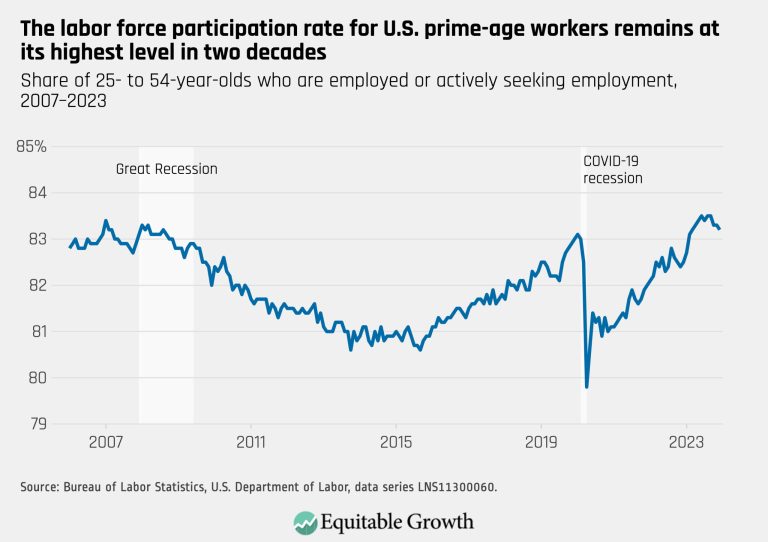
The labor force participation rate for U.S. prime-age workers remains at its highest level in two decades (opens in a new tab)
Visualizations MAR 4, 2024

Ahead of President Biden’s State of the Union address, the U.S. economy is strong (opens in a new tab)
Blog FEB 21, 2024
On March 7, President Joe Biden will deliver the 2024 State of the Union address to the U.S. Congress and the American public, in which he will tout his economic…
By: Austin Clemens (opens in a new tab)
 View Chart
(opens in a new tab)
View Chart
(opens in a new tab)
Personal loan delinquency is low or within normal levels for all major loan types (opens in a new tab)
Visualizations FEB 20, 2024
 View Chart
(opens in a new tab)
View Chart
(opens in a new tab)
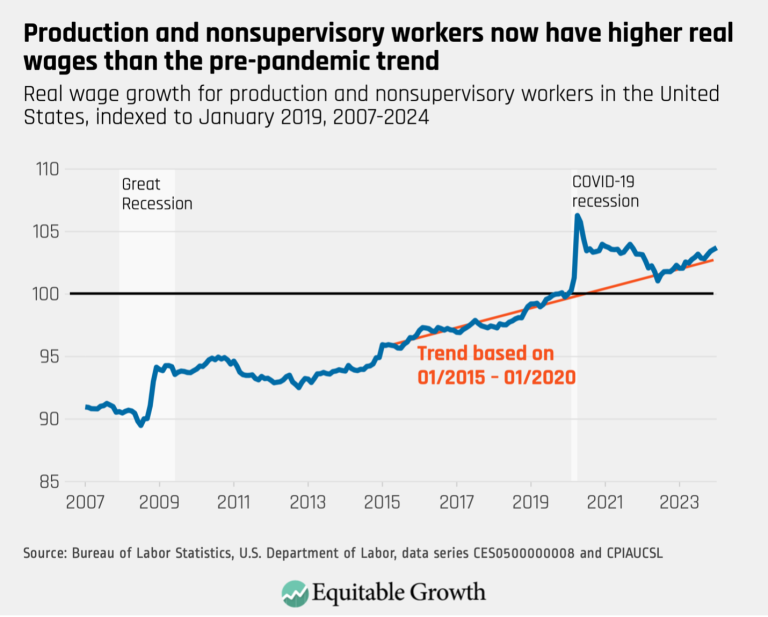
Production and nonsupervisory workers now have higher real wages than the pre-pandemic trend (opens in a new tab)
Visualizations FEB 20, 2024
 View Chart
(opens in a new tab)
View Chart
(opens in a new tab)
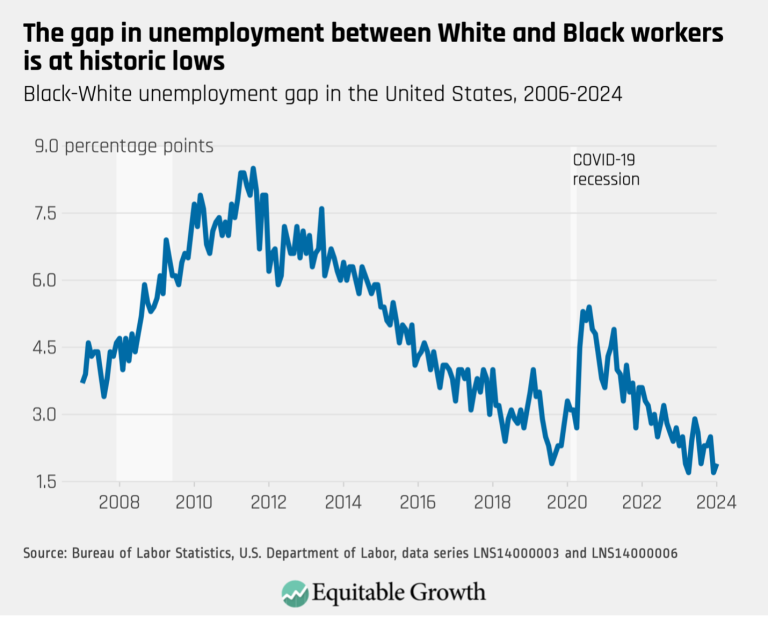
The gap in unemployment between White and Black workers is at historic lows (opens in a new tab)
Visualizations FEB 20, 2024
 View Chart
(opens in a new tab)
View Chart
(opens in a new tab)
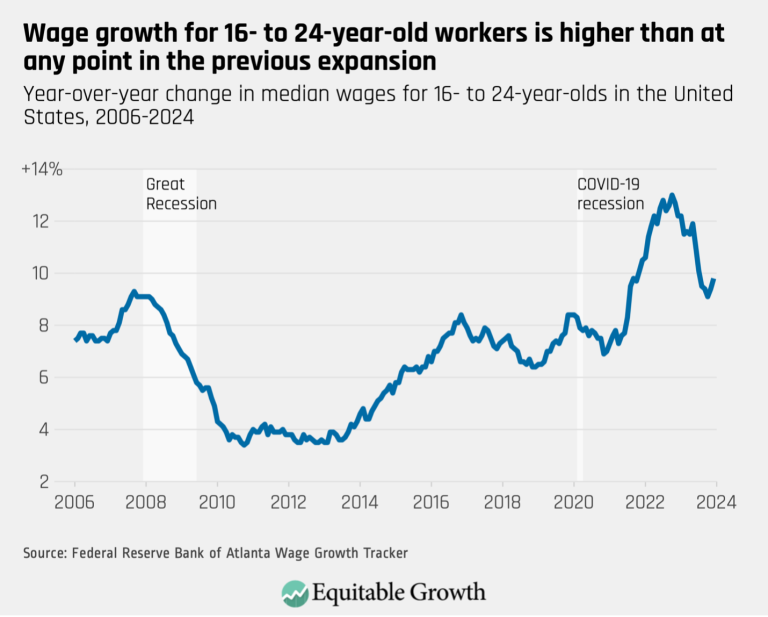
Wage growth for 16- to 24-year-old workers is higher than at any point in the previous expansion (opens in a new tab)
Visualizations FEB 20, 2024
 View Chart
(opens in a new tab)
View Chart
(opens in a new tab)
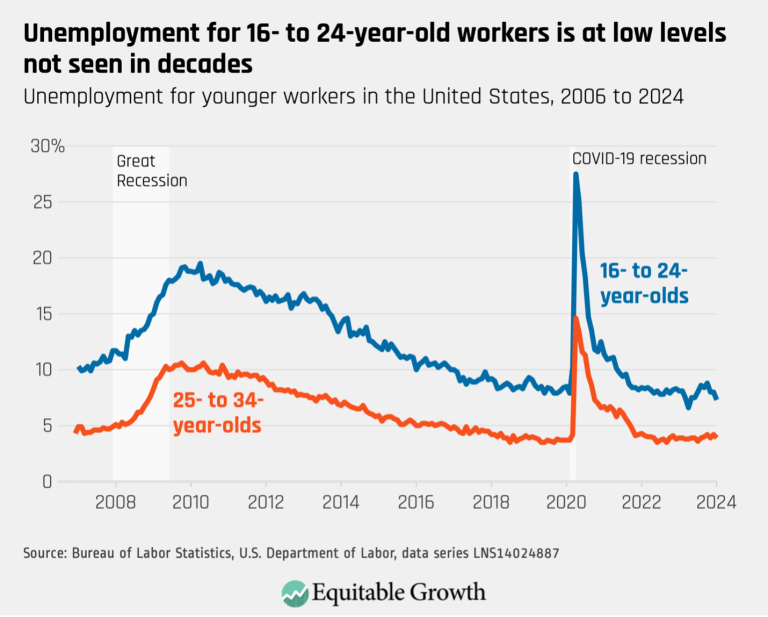
Unemployment for 16- to 24-year-old workers is at low levels not seen in decades (opens in a new tab)
Visualizations FEB 20, 2024
 View Chart
(opens in a new tab)
View Chart
(opens in a new tab)
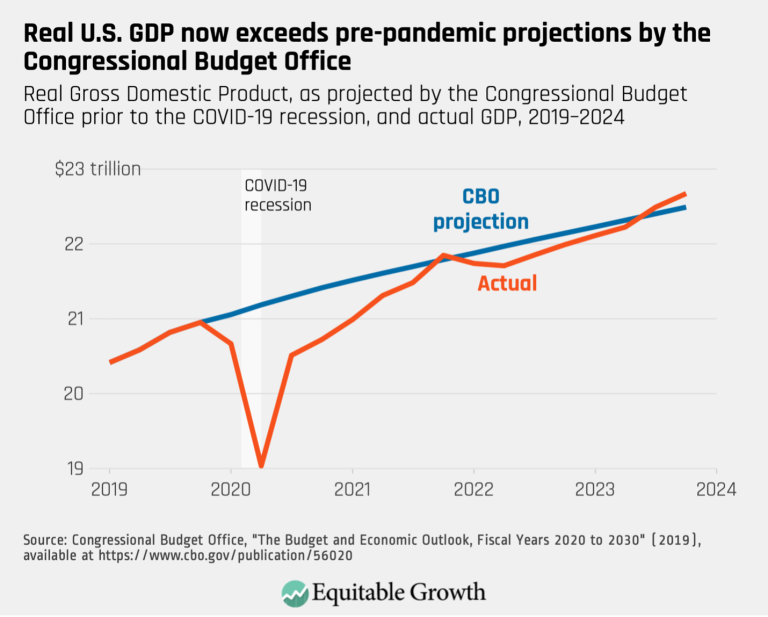
Real U.S. GDP now exceeds pre-pandemic projections by the Congressional budget Office (opens in a new tab)
Visualizations FEB 20, 2024
 View Chart
(opens in a new tab)
View Chart
(opens in a new tab)
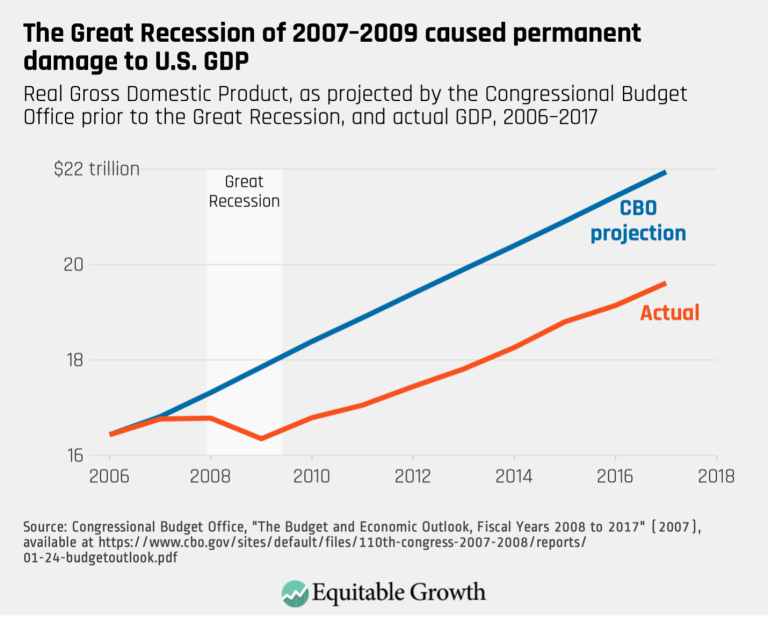
The Great Recession of 2007-2009 caused permanent damage to U.S. GDP (opens in a new tab)
Visualizations FEB 20, 2024

Equitable Growth’s recent ‘Econ 101’ assessed the state of the U.S. economy and recovery for Capitol Hill staff (opens in a new tab)
Blog FEB 13, 2024
The Washington Center for Equitable Growth hosted a briefing last week—part of a series we call “Econ 101”—presenting insight on the state of the U.S. economy and how the current…
By: Equitable Growth (opens in a new tab)


Your Direct Line to Cutting Edge Research
Be the first to know about our latest events, research releases, and expert insights. Get exclusive updates delivered right to your inbox and never miss an opportunity to engage with our community.