


Resources
From peer-reviewed research to accessible policy briefs, explore the scholarship that’s shaping debates and driving change.

249 Results


Terms and conditions for generative AI users outline a new legal framework that puts U.S. consumers at risk (opens in a new tab)
Essays AUG 20, 2026
Generative AI, or genAI, is a form of artificial intelligence that produces content in response to prompts and includes large language model chatbots such as OpenAI’s ChatGPT or Anthropic’s Claude.…
By: Chiara Chanoi (opens in a new tab)
ASSA 2026 Round-up: Day 3 (opens in a new tab)
Blog JAN 6, 2026
Yesterday was the third and final day of the 2026 annual meeting of the Allied Social Science Associations, which is organized by the American Economic Association. The 3-day conference, held…
By: Equitable Growth (opens in a new tab)
ASSA 2026 Round-up: Day 2 (opens in a new tab)
Blog JAN 5, 2026
Yesterday was the second day of the 2026 annual meeting of the Allied Social Science Associations, which is organized by the American Economic Association. The 3-day conference, held in Philadelphia…
By: Equitable Growth (opens in a new tab)
ASSA 2026 Round-up: Day 1 (opens in a new tab)
Blog JAN 4, 2026
Yesterday was the first day of the 2026 annual meeting of the Allied Social Science Associations, which is organized by the American Economic Association. The 3-day conference, held in Philadelphia…
By: Equitable Growth (opens in a new tab)

What impact is artificial intelligence having on the U.S. labor market and the nation’s economy? (opens in a new tab)
Essays NOV 14, 2025
As new and groundbreaking technologies emerge, they can function as a blank canvas onto which people project both aspirations and anxieties. Artificial intelligence—despite its quick uptake in broader society and…
By: Megan Rivera (opens in a new tab)
Equity Prices, Market Power, and Optimal Corporate Tax Policy (opens in a new tab)
Working Papers JUL 22, 2025
We study the optimal design of corporate tax policy in a textbook life-cycle model featuring two key deviations: (i) firms are imperfectly competitive and (ii) households save by purchasing equity…
By: Ignacio González (opens in a new tab), Juan A. Montecino (opens in a new tab), Joseph E. Stiglitz

Request for Proposals: The economic effects of the Inflation Reduction Act (opens in a new tab)
RFPs APR 2, 2025
By: Equitable Growth (opens in a new tab)

Understanding market concentration in the AI supply chain (opens in a new tab)
Blog JAN 28, 2025
Artificial intelligence is more than just the applications we use, such as chatbots and predictive algorithms. Beneath the surface of AI lies a technology stack that is increasingly concentrated at…
By: Tejas Narechania (opens in a new tab)
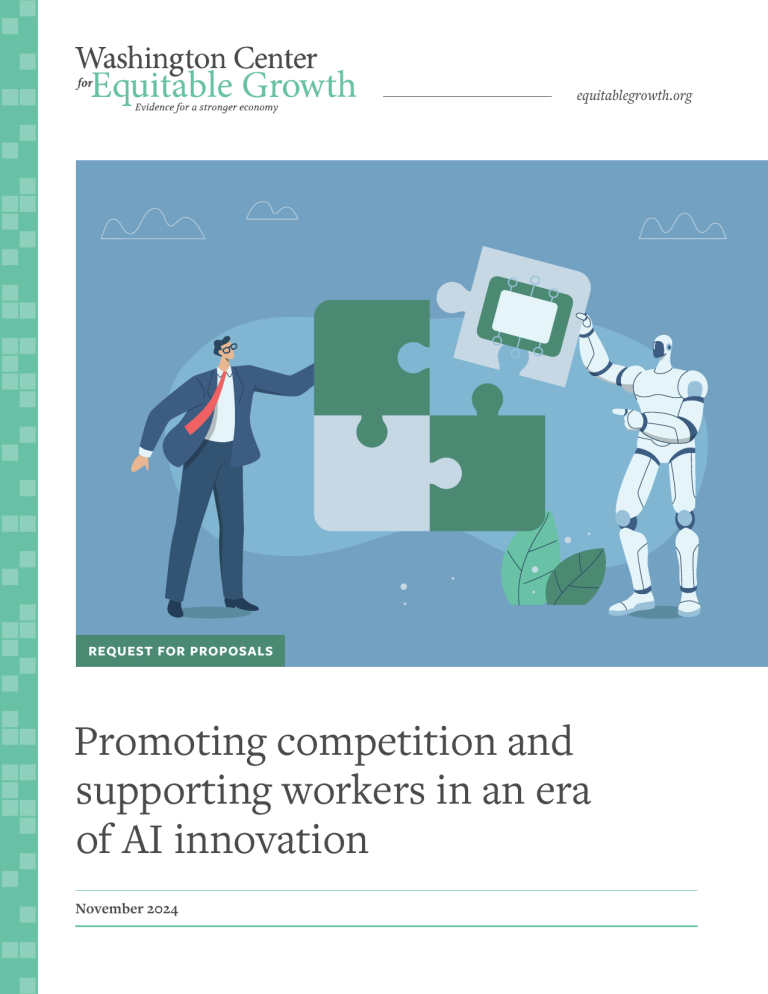
Request for Proposals: Promoting competition and supporting workers in an era of AI innovation (opens in a new tab)
RFPs NOV 20, 2024
By: Equitable Growth (opens in a new tab)

Request for proposals: Research grants for early career scholars (opens in a new tab)
RFPs OCT 30, 2024
By: Equitable Growth (opens in a new tab)
 View Chart
(opens in a new tab)
View Chart
(opens in a new tab)
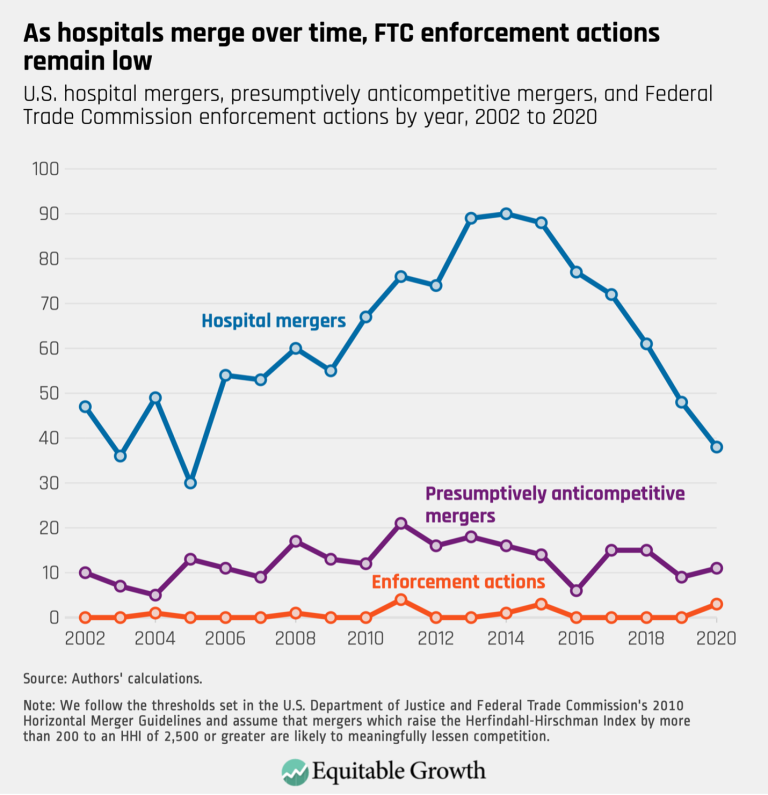
As hospitals merge over time, FTC enforcement actions remain low (opens in a new tab)
Visualizations JUL 25, 2024
 View Chart
(opens in a new tab)
View Chart
(opens in a new tab)
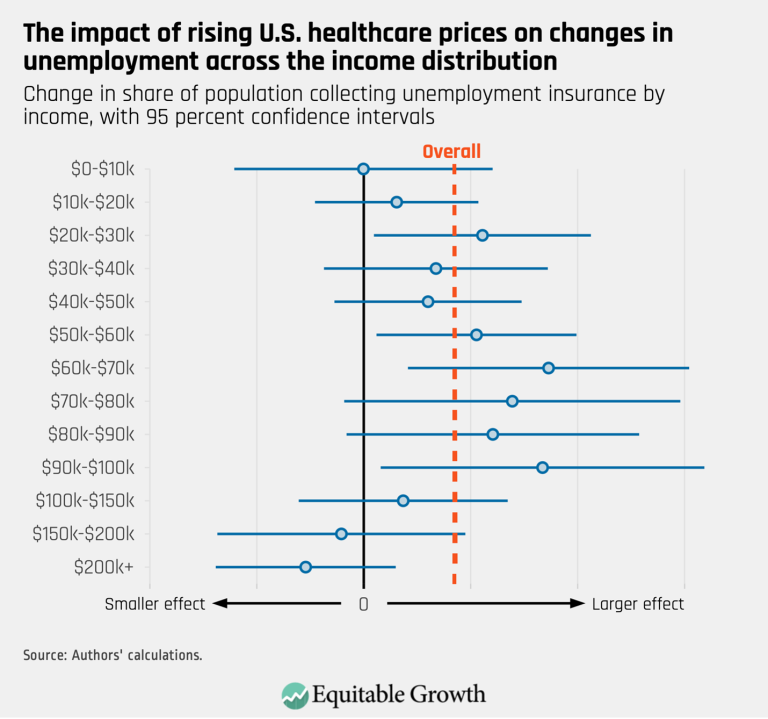
The impact of rising U.S. healthcare prices on changes in unemployment across the income distribution (opens in a new tab)
Visualizations JUL 25, 2024
 View Chart
(opens in a new tab)
View Chart
(opens in a new tab)
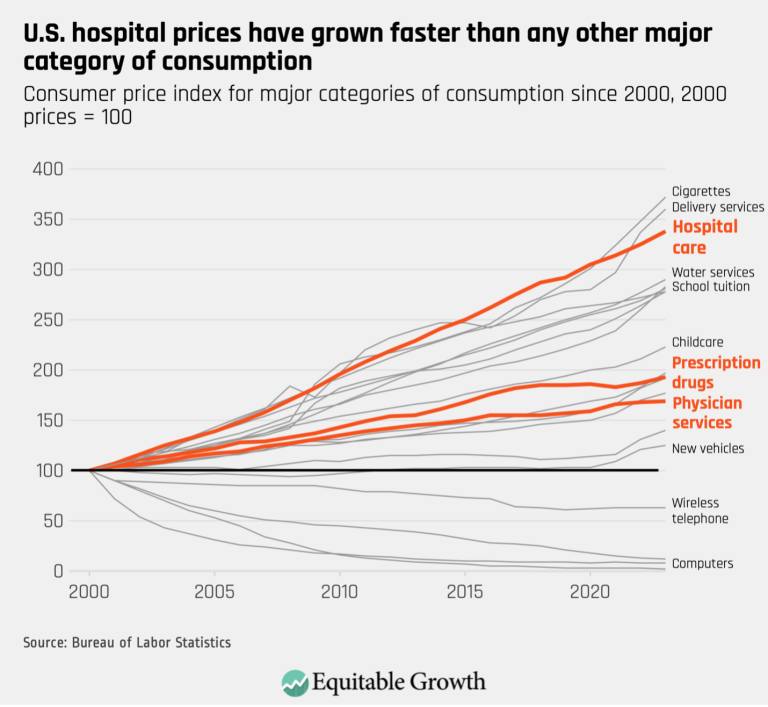
U.S. hospital prices have grown faster than any other major category of consumption (opens in a new tab)
Visualizations JUL 25, 2024
Hospital consolidation and rising health care prices lead to job losses for U.S. workers (opens in a new tab)
Issue Briefs JUL 25, 2024
The majority of working-age adults in the United States have health insurance via their employers. Theory and a growing body of research suggest that when the cost of workers’ benefits…
By: Zarek Brot-Goldberg (opens in a new tab), Zack Cooper (opens in a new tab), Stuart Craig (opens in a new tab), Lev Klarnet (opens in a new tab)
Is There Too Little Antitrust Enforcement in the US Hospital Sector? (opens in a new tab)
Working Papers APR 24, 2024
From 2002 to 2020, there were over 1,000 mergers of US hospitals. During this period, the Federal Trade Commission (FTC) took enforcement actions against 13 transactions. However, using the FTC’s…
By: Zarek Brot-Goldberg (opens in a new tab), Zack Cooper (opens in a new tab), Stuart V. Craig, Lev Klarnet (opens in a new tab)

Combating market power through a graduated U.S. corporate income tax (opens in a new tab)
Issue Briefs APR 15, 2024
Editor’s note: This version has been updated from the original publication on April 15, 2024. The update corrects a prior underestimate of the revenue potential from graduated corporate tax rates…
By: Kimberly Clausing (opens in a new tab)

Hospital consolidation matters (opens in a new tab)
Reports APR 4, 2024
The U.S. policy landscape is replete with reports from organizations across the political spectrum decrying the lack of competition in hospital markets around the nation and the resulting high prices,…
By: Equitable Growth (opens in a new tab)

Matching competition policy in the U.S. healthcare industry to address a new generation of challenges in provider markets (opens in a new tab)
Issue Briefs MAR 20, 2024
Antitrust policy in the U.S. healthcare sector is perennially 10 years behind the industry. But at the start of the Biden administration in early 2021, there was hope for a…
By: Barak D. Richman (opens in a new tab)

Request for Proposals: How effective was the fiscal response to the COVID-19 recession for workers? (opens in a new tab)
RFPs MAR 18, 2024
By: Equitable Growth (opens in a new tab)

The impacts of increasing U.S. hospital consolidation on Medicaid recipients (opens in a new tab)
Blog JAN 25, 2024
The U.S. healthcare sector is a consequential part of the overall economy. As of 2021, U.S. healthcare expenditures alone would rank third among the world’s largest economies in terms of…
By: Sunita Desai (opens in a new tab), Kyle Smith (opens in a new tab)

What the research says about the impacts of hospital consolidation across the United States (opens in a new tab)
Blog DEC 6, 2023
When patients in the United States rely on hospitals for care, they are often at their most vulnerable, such as during acute illnesses, when suffering major injuries, or while giving…
By: Amy Phillips (opens in a new tab)
Request for proposals: Research grants for early career scholars (opens in a new tab)
RFPs NOV 30, 2023
By: Equitable Growth (opens in a new tab)

Sameera Fazili and Mary Beth Maxwell join Equitable Growth’s Board of Directors (opens in a new tab)
Blog NOV 15, 2023
The Washington Center for Equitable Growth today announced the addition of two new members to its board of directors: Sameera Fazili, former deputy assistant to the president and deputy director…
By: Equitable Growth (opens in a new tab)

The consequences of U.S. hospital consolidation on local economies, healthcare providers, and patients (opens in a new tab)
Reports NOV 15, 2023
Policymakers, regulators, stakeholders, and academics have yet to grapple with the full cross-sectional impacts of hospital mergers. While the evidence is clear that consolidation leads to higher prices in concentrated…
By: Amy Phillips (opens in a new tab)
Antitrust Enforcement Increases Economic Activity (opens in a new tab)
Working Papers SEP 13, 2023
We hand-collect and standardize information describing all 3,055 antitrust lawsuits brought by the Department of Justice (DOJ) between 1971 and 2018. Using restricted establishment-level microdata from the U.S. Census, we…
By: Tania Babina (opens in a new tab), Simcha Barkai (opens in a new tab), Jessica Jeffers (opens in a new tab), Ezra Karger (opens in a new tab), Ekaterina Volkova (opens in a new tab)

U.S. labor market concentration, competition, and worker bargaining power as employment trends shift from manufacturing to services (opens in a new tab)
Blog SEP 6, 2023
Labor market concentration and competition in the United States has received renewed and well-deserved attention over the past several years. Competitive labor markets are critical engines of economic growth, worker…
By: Laura Alexander (opens in a new tab)
Local and National Concentration Trends in Jobs and Sales: The Role of Structural Transformation (opens in a new tab)
Working Papers SEP 6, 2023
National industrial concentration in the U.S. has risen sharply since the early 1980s, but there remains dispute over whether local geographic concentration has followed a similar trend. Using near population…
By: David Autor (opens in a new tab), Christina Patterson (opens in a new tab), John Van Reenen (opens in a new tab)

New data and analysis suggest private equity takeovers of U.S. medical practices cause anticompetitive harms to patients, insurers, and employers in local markets (opens in a new tab)
Blog JUL 10, 2023
The linked resources and the PDF for this piece were updated on February 20, 2024. Private equity firms are deeply engaged in buying up and consolidating medical practices across the…
By: Laura Alexander (opens in a new tab)

Equitable Growth delivers comment letter responding to the Federal Trade Commission’s Advanced Notice of Proposed Rulemaking on Non-Compete Clauses (opens in a new tab)
Blog APR 20, 2023
The Washington Center for Equitable Growth this week delivered a comment letter responding to the Federal Trade Commission’s Advanced Notice of Proposed Rulemaking on Non-Compete Clauses. In our comment letter,…
By: Equitable Growth (opens in a new tab)

Major federal ‘Big Tech’ antitrust case against Google will test the strength of current U.S. antitrust laws in new digital markets (opens in a new tab)
Blog MAR 13, 2023
A high-profile antitrust enforcement action taken in January by the Antitrust Division of the U.S. Department of Justice against Alphabet Inc.’s Google unit—one of the largest technology companies in the…
By: Laura Alexander (opens in a new tab)

New research suggests connections between market concentration and the exercise of political power in the United States (opens in a new tab)
Blog JAN 12, 2023
Consolidation of markets at the hands of U.S. companies that are actively engaged in mergers and acquisitions raises an important question about the political ramifications of market concentration. Do mergers…
By: Laura Alexander (opens in a new tab)
Political Power and Market Power (opens in a new tab)
Working Papers JAN 12, 2023
We study the link between political influence and industrial concentration. A model of an oligopoly that engages in lobbying shows that a merger may lead to an increase or a…
By: Bo Cowgill (opens in a new tab), Andrea Prat (opens in a new tab), Tommaso Valletti
Power and Dignity in the Low-Wage Labor Market: Theory and Evidence from Wal-Mart Workers (opens in a new tab)
Working Papers DEC 14, 2022
We measure workers’ preferences for wages and non-wage amenities at America’s largest employer, Walmart, using targeted survey experiments. We find that workers have an economically significant willingness to pay for…
By: Arindrajit Dube (opens in a new tab), Suresh Naidu (opens in a new tab), Adam D. Reich

Supermarket chain Kroger’s takeover of rival Albertsons is a test for U.S. antitrust law on pre-closing dividends (opens in a new tab)
Blog NOV 16, 2022
The recently proposed $24.6 billion takeover of the nation’s fourth-largest supermarket chain, Albertsons Companies Inc., by the second-largest chain, Kroger Co., poses an array of serious and apparent antitrust concerns…
By: Laura Alexander (opens in a new tab)

Equitable Growth names Shayna Strom as interim president and CEO (opens in a new tab)
Blog SEP 8, 2022
The Washington Center for Equitable Growth today announced that Shayna Strom has been named its interim president and CEO. Strom comes to the organization with decades of experience bridging nonprofits,…
By: Equitable Growth (opens in a new tab)

NBER Summer Institute 2022 Round-up: Week 2 (opens in a new tab)
Blog JUL 26, 2022
On July 11, the National Bureau of Economic Research kicked off its summer institute, an annual 3-week conference featuring discussions and paper presentations on various topics in economics, including disaggregating…
By: Equitable Growth (opens in a new tab)

Common ownership in the U.S. economy (opens in a new tab)
Blog MAY 25, 2022
Large investment management companies such as BlackRock Inc., The Vanguard Group Inc., and Fidelity Investments—each with tens of trillions of dollars of assets under management—offer a wide array of mutual…
By: Florian Ederer (opens in a new tab), Bruno Pellegrino (opens in a new tab)
A Tale of Two Networks: Common Ownership and Product Market Rivalry (opens in a new tab)
Working Papers MAY 25, 2022
We study the welfare implications of the rise of common ownership in the United States from 1994 to 2018. We build a general equilibrium model with a hedonic demand system…
By: Florian Ederer (opens in a new tab), Bruno Pellegrino (opens in a new tab)

Protecting livestock producers and chicken growers (opens in a new tab)
Reports MAY 5, 2022
For more than a decade, ranchers, contract chicken growers, and other livestock producers have expressed concerns about the actions of the meatpackers who buy the livestock and slaughter it, and…
By: Michael Kades (opens in a new tab)
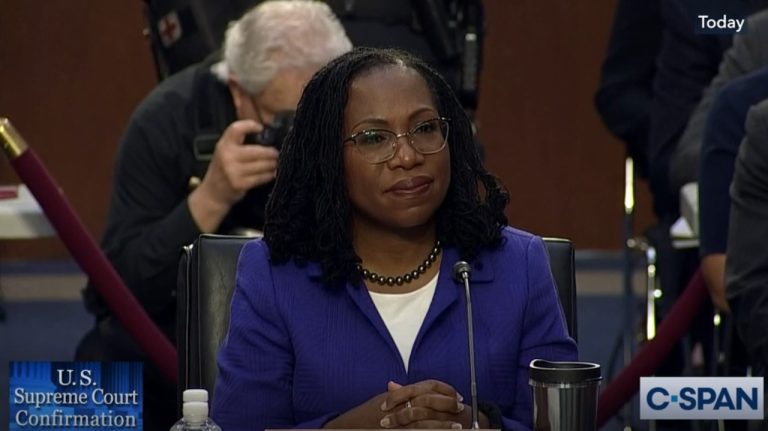
Justice Ketanji Brown Jackson will bring new perspectives on mass incarceration to U.S. Supreme Court jurisprudence (opens in a new tab)
Issue Briefs APR 7, 2022
Justice Ketanji Brown Jackson made history today after the U.S. Senate confirmed her nomination to the U.S. Supreme Court by a vote of 53 to 47. The Senate vote sealed…
By: Shanteal Lake (opens in a new tab)
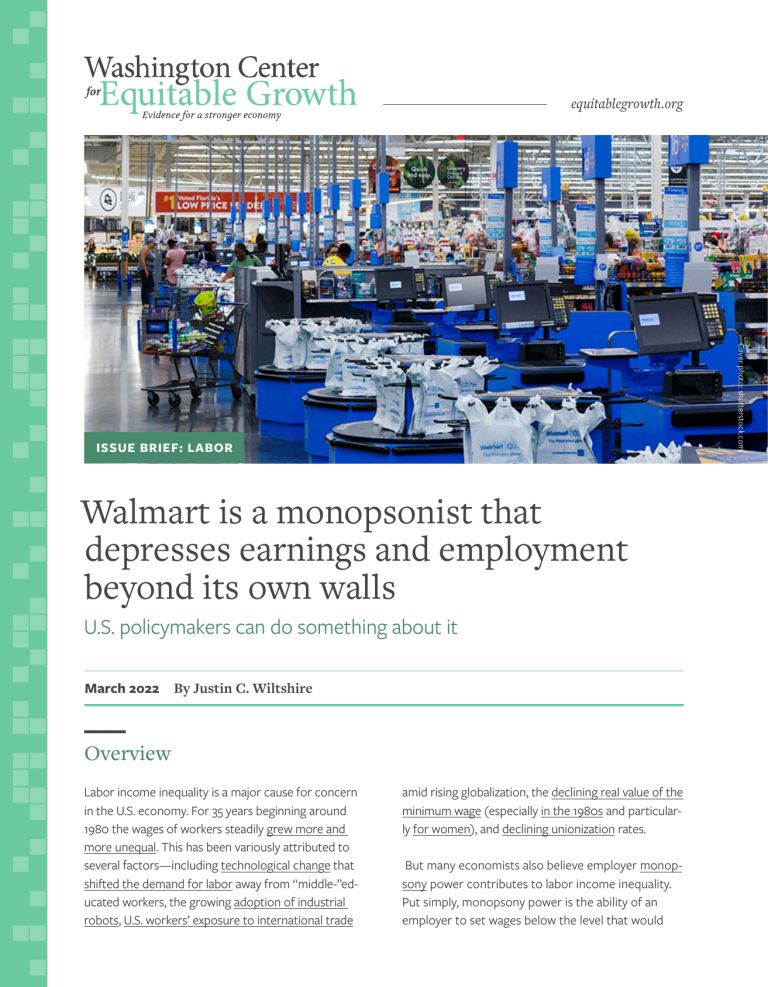
Walmart is a monopsonist that depresses earnings and employment beyond its own walls, but U.S. policymakers can do something about it (opens in a new tab)
Issue Briefs MAR 29, 2022
Labor income inequality is a major cause for concern in the U.S. economy. For 35 years beginning around 1980 the wages of workers steadily grew more and more unequal. This…
By: Justin Wiltshire (opens in a new tab)
Closing the Innovation Gap in Pink and Black (opens in a new tab)
Working Papers JAN 10, 2022
Recent research shows the negative impact of discrimination not only on the targets of discrimination but also on the economy as a whole. Racial and gender inequality can limit the…
By: Lisa D. Cook, Janet Gerson (opens in a new tab), Jennifer Kuan (opens in a new tab)
Falling Rates and Rising Superstars (opens in a new tab)
Working Papers JAN 7, 2022
Do low interest rates contribute to the rise in market concentration? Using data on firm financials and high frequency monetary policy shocks, we find that falling interest rates disproportionately benefit…
By: Thomas Kroen (opens in a new tab), Ernest Liu (opens in a new tab), Atif Mian (opens in a new tab), Amir Sufi (opens in a new tab)

Equitable Growth’s academic research and policy priorities shine through at Southern Economic Conference 2021 (opens in a new tab)
Blog DEC 9, 2021
The Southern Economic Association recently held its 91st Annual Meeting, gathering a diverse group of scholars from U.S. and international universities to discuss their research in theory and applied economics.…
By: Equitable Growth (opens in a new tab)

Equitable Growth announces record $1.39 million in research grants for scholars examining economic inequality and growth (opens in a new tab)
Blog AUG 30, 2021
The Washington Center for Equitable Growth today announced its 2021 research grants, with funding of $1,392,795—a record-breaking level—awarded to 62 researchers. These scholars are studying the various channels through which…
By: Equitable Growth (opens in a new tab)

Myths about competition in the global economy harm humanity and our planet (opens in a new tab)
Blog AUG 11, 2021
Competition around the globe is facing a crisis today. Mega corporations benefit from neoliberal ideologies and lax enforcement of the antitrust laws. Growing market power among fewer and fewer firms…
By: Raksha Kopparam (opens in a new tab)

In Conversation with Michelle Meagher (opens in a new tab)
In Conversation AUG 11, 2021
Equitable Growth in Conversation is a recurring series where we talk with economists and other academics to help us better understand whether and how economic inequality affects economic growth and…
By: Michael Kades (opens in a new tab)

Competitive Edge: Congress needs to restore the Federal Trade Commission’s authority to seek monetary remedies when companies break the law (opens in a new tab)
Blog JUL 28, 2021
Antitrust and competition issues are receiving renewed interest, and for good reason. So far, the discussion has occurred at a high level of generality. To address important specific antitrust enforcement…
By: Michael Kades (opens in a new tab)

Competitive Edge: The silver lining for antitrust enforcement in the Supreme Court’s embrace of “textualism” (opens in a new tab)
Videos JUL 28, 2021
Antitrust and competition issues are receiving renewed interest, and for good reason. So far, the discussion has occurred at a high level of generality. To address important specific antitrust enforcement…
By: Andrew I. Gavil (opens in a new tab)

NBER Summer Institute 2021 Round-up: Week 2 (opens in a new tab)
Blog JUL 26, 2021
On July 12, the National Bureau of Economic Research kicked off its summer institute, an annual 3-week conference featuring discussions and paper presentations on specific subfields of economics, including wealth…
By: Equitable Growth (opens in a new tab)

Kate Bahn testimony before the Joint Economic Committee on monopsony, workers, and corporate power (opens in a new tab)
Blog JUL 14, 2021
Thank you Chair Beyer, Ranking Member Lee, and members of the Joint Economic Committee for inviting me to testify today. My name is Kate Bahn and I am the Director…
By: Kate Bahn (opens in a new tab)
 View Chart
(opens in a new tab)
View Chart
(opens in a new tab)
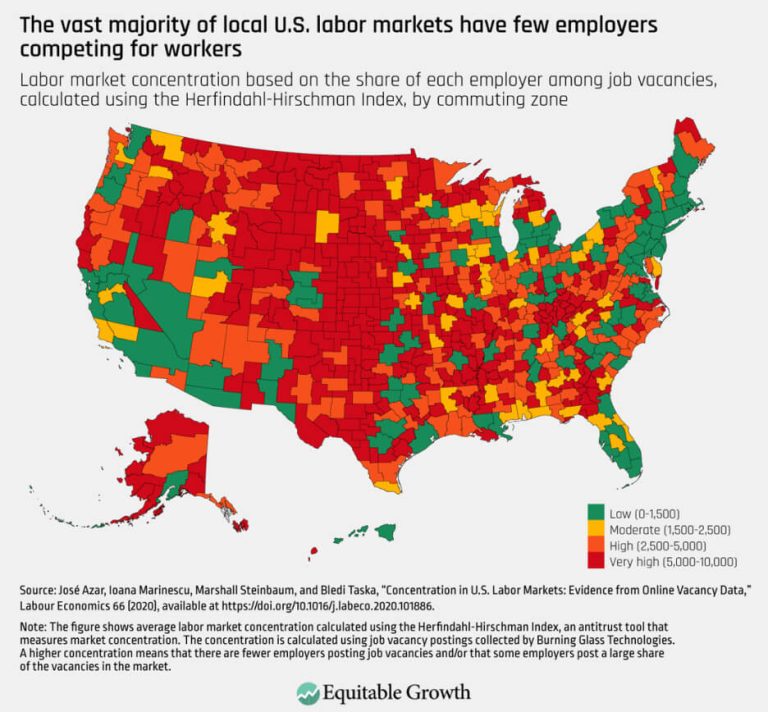
The vast majority of local U.S. labor markets have few employers competing for workers (opens in a new tab)
Visualizations JUL 13, 2021

A Canary in the Coal Mine for the Failure of U.S. Competition Law: Competition Problems in Prescription Drug Market (opens in a new tab)
Blog JUL 13, 2021
Michael KadesDirector, Markets and Competition Policy, Washington Center for Equitable GrowthSubcommittee on Competition Policy, Antitrust, and Consumer Rights:Prescription for Change: Cracking Down on Anticompetitive Conduct in Prescription Drug Markets July…
By: Michael Kades (opens in a new tab)

New U.S. antitrust legislation before Congress must mandate an anticompetitive presumption for acquisitions of nascent potential competitors by dominant firms (opens in a new tab)
Blog JUN 22, 2021
Antitrust and competition issues are receiving renewed interest, and for good reason. So far, the discussion has occurred at a high level of generality. To address important specific antitrust enforcement…
By: Steven C. Salop (opens in a new tab)

The future of work and worker power post-COVID a key topic at the 2021 Labor and Employment Relations Association annual conference (opens in a new tab)
Blog JUN 14, 2021
Last week, the Labor and Employment Relations Association, or LERA, held its 73rd annual conference. The virtual event, which took place over four days, featured more than 350 presenters from…
By: Equitable Growth (opens in a new tab)

The CREATES Act shows legislation can stop anticompetitive pharmaceutical industry practices (opens in a new tab)
Blog MAY 27, 2021
In December 2019, Congress passed the Creating and Restoring Equal Access to Equivalent Samples, or CREATES, Act, bipartisan legislation to stop anticompetitive strategies that delay competition in pharmaceutical markets and…
By: Michael Kades (opens in a new tab)

Statement for the Record by Michael Kades for the House Committee on Oversight and Reform (opens in a new tab)
Blog MAY 18, 2021
Michael KadesDirector, Markets and Competition PolicyWashington Center for Equitable GrowthStatement for the RecordHouse Committee on Oversight and Reform“Unsustainable Drug Prices (Part III): Testimony from AbbVie CEO” May 18, 2021 This…
By: Michael Kades (opens in a new tab)

The Merger Filing Fee Modernization Act is a down payment on the future of antitrust enforcement (opens in a new tab)
Blog MAY 6, 2021
The Senate Judiciary Committee is likely to approve a bipartisan antitrust bill soon that will be a down payment on reviving effective antitrust enforcement in the United States. The Merger…
By: Michael Kades (opens in a new tab)
 View Chart
(opens in a new tab)
View Chart
(opens in a new tab)
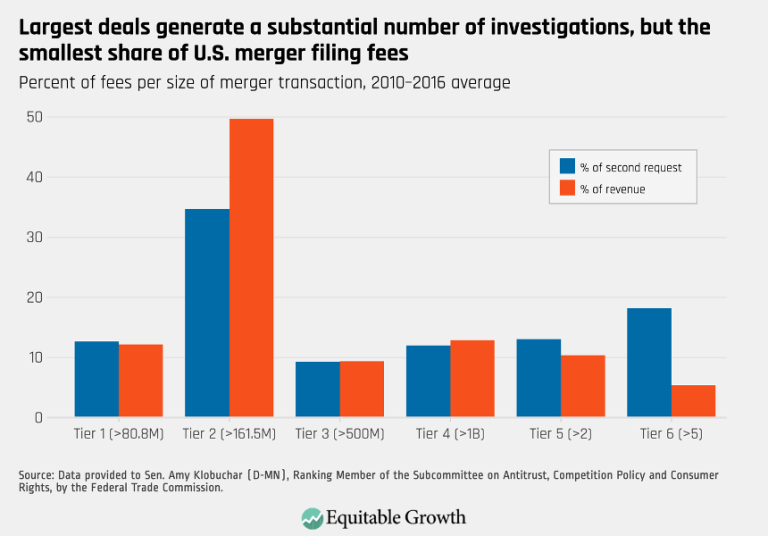
Largest deals generate a substantial number of investigations, but the smallest share of U.S. merger filing fees (opens in a new tab)
Visualizations MAY 6, 2021
 View Chart
(opens in a new tab)
View Chart
(opens in a new tab)
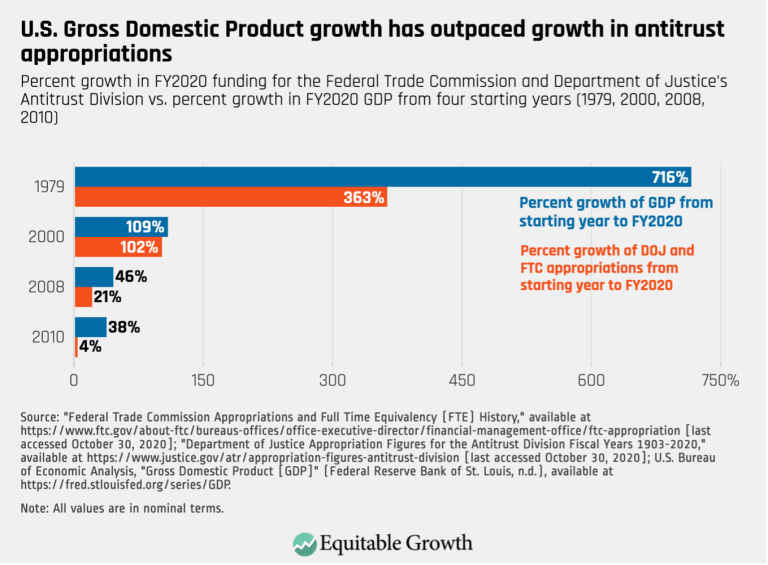
U.S. Gross Domestic Product growth has outpaced growth in antitrust appropriations (opens in a new tab)
Visualizations MAY 6, 2021
 View Chart
(opens in a new tab)
View Chart
(opens in a new tab)
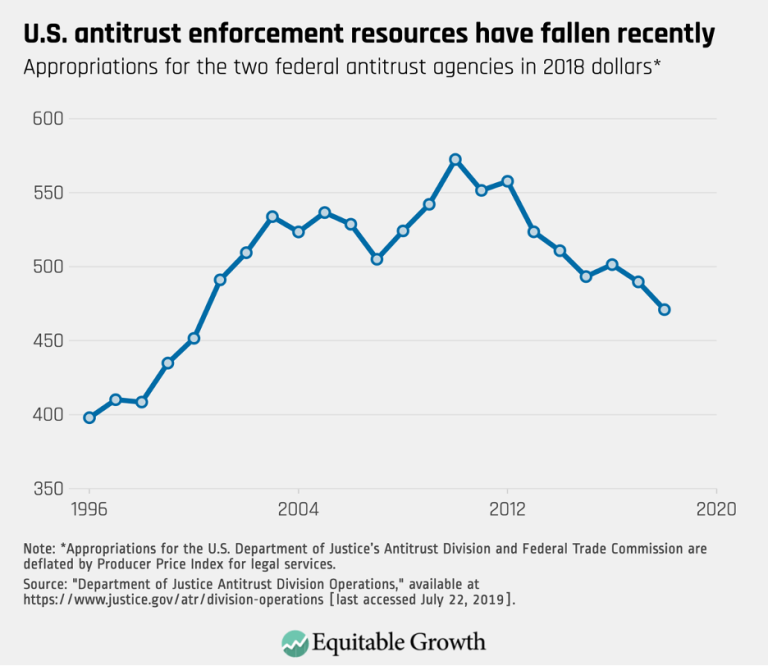
U.S. antitrust enforcement resources have fallen recently (opens in a new tab)
Visualizations MAY 6, 2021
 View Chart
(opens in a new tab)
View Chart
(opens in a new tab)
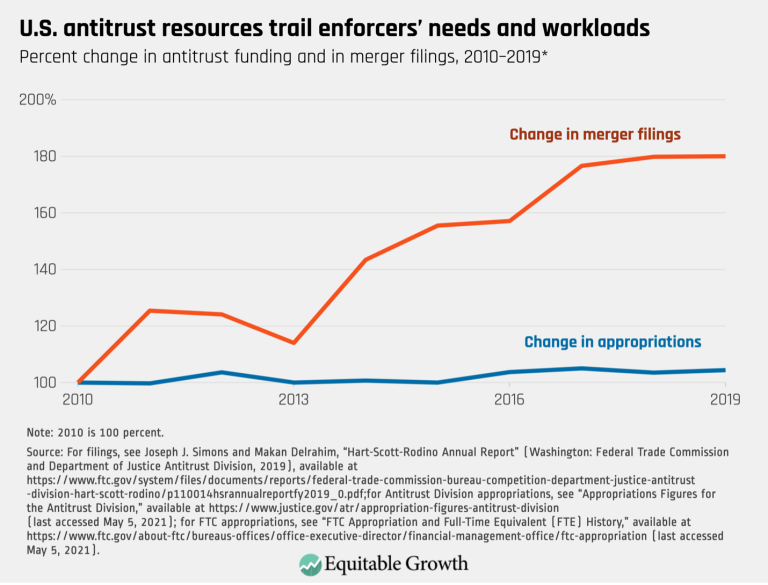
U.S. antitrust resources trail enforcers’ needs and workloads (opens in a new tab)
Visualizations MAY 6, 2021

Executive actions to coordinate antitrust and competition policies across the federal government (opens in a new tab)
Blog FEB 19, 2021
Relevant federal offices and agencies: National Economic Council Council of Economic Advisers Office of Information and Regulatory Affairs, or OIRA Office of Management and Budget Domestic Policy Council The U.S.…
By: Equitable Growth (opens in a new tab)

Competitive Edge: Big Ag’s monopsony problem: How market dominance harms U.S. workers and consumers (opens in a new tab)
Blog FEB 18, 2021
Antitrust and competition issues are receiving renewed interest, and for good reason. So far, the discussion has occurred at a high level of generality. To address important specific antitrust enforcement…
By: Nathan Miller (opens in a new tab)

A new vision for antitrust enforcement in the United States (opens in a new tab)
Videos FEB 2, 2021
The Washington Center for Equitable Growth late last year held an event, titled “Restoring Competition in the United States: A Vision of Antitrust Enforcement for the Next Decade,” to discuss…
By: Raksha Kopparam (opens in a new tab)

Competitive Edge: Why noncompete clauses in employment contracts are by and large harmful to U.S. workers and the U.S. economy (opens in a new tab)
Blog JAN 28, 2021
Antitrust and competition issues are receiving renewed interest, and for good reason. So far, the discussion has occurred at a high level of generality. To address important specific antitrust enforcement…
By: David Balan (opens in a new tab)
Labor Non-Compete Agreements: Tool for Economic Efficiency, or Means to Extract Value from Workers? (opens in a new tab)
Working Papers JAN 28, 2021
A number of theoretical arguments have been offered in favor of non-compete provisions in labor agreements. While there has been considerable empirical research on the effects of those provisions, there…
By: David J. Balan
 View Chart
(opens in a new tab)
View Chart
(opens in a new tab)
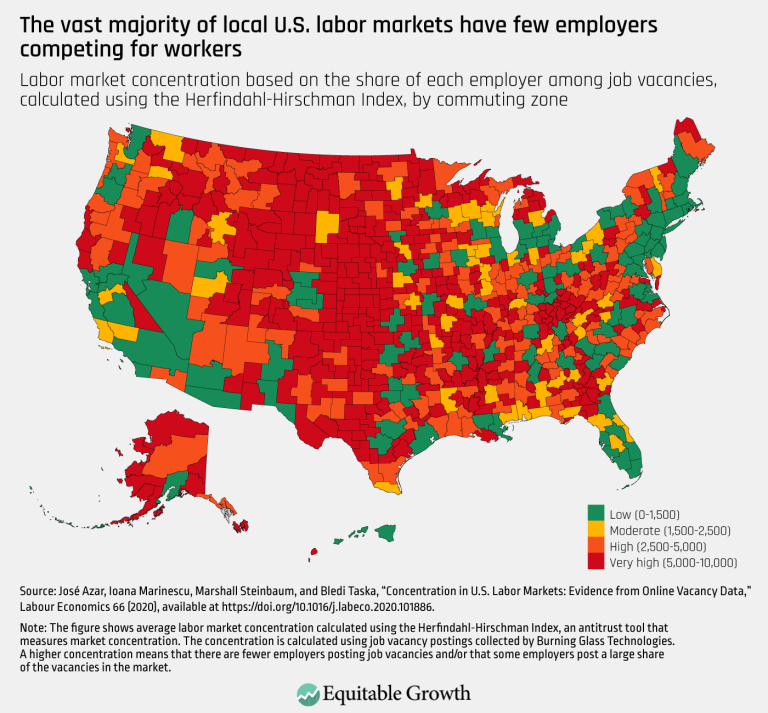
The vast majority of local U.S. labor markets have few employers competing for workers (opens in a new tab)
Visualizations JAN 21, 2021

Boosting wages when U.S. labor markets are not competitive (opens in a new tab)
Blog JAN 14, 2021
This essay is part of Boosting Wages for U.S. Workers in the New Economy, a compilation of 10 essays from leading economic thinkers who explore alternative policies for boosting wages…
By: Ioana Marinescu (opens in a new tab)

Addressing gender and racial disparities in the U.S. labor market to boost wages and power innovation (opens in a new tab)
Blog JAN 14, 2021
This essay is part of Boosting Wages for U.S. Workers in the New Economy, a compilation of 10 essays from leading economic thinkers who explore alternative policies for boosting wages…
By: Lisa Cook (opens in a new tab)

How to bring down the price of drugs such as the novel coronavirus therapy remdesivir (opens in a new tab)
Issue Briefs NOV 20, 2020
The extraordinary ongoing effort to find treatments to cure, ameliorate symptoms of, and vaccinate against the novel coronavirus and COVID-19, the disease caused by the virus, is a reminder of…
By: Aaron S. Kesselheim (opens in a new tab)

Restoring competition in the United States (opens in a new tab)
Reports NOV 19, 2020
Excessive market power plagues the U.S. economy. Market power increases the cost of goods and services for consumers, depresses prices and wages for those who supply dominant firms, and retards…
By: Bill Baer (opens in a new tab), Jonathan B. Baker (opens in a new tab), Michael Kades (opens in a new tab), Fiona M. Scott Morton (opens in a new tab), Nancy L. Rose (opens in a new tab), Tim Wu (opens in a new tab)
 View Chart
(opens in a new tab)
View Chart
(opens in a new tab)
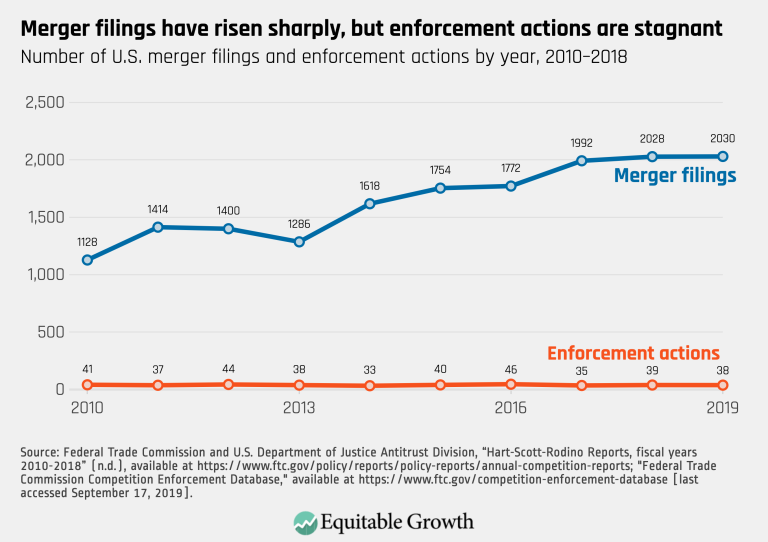
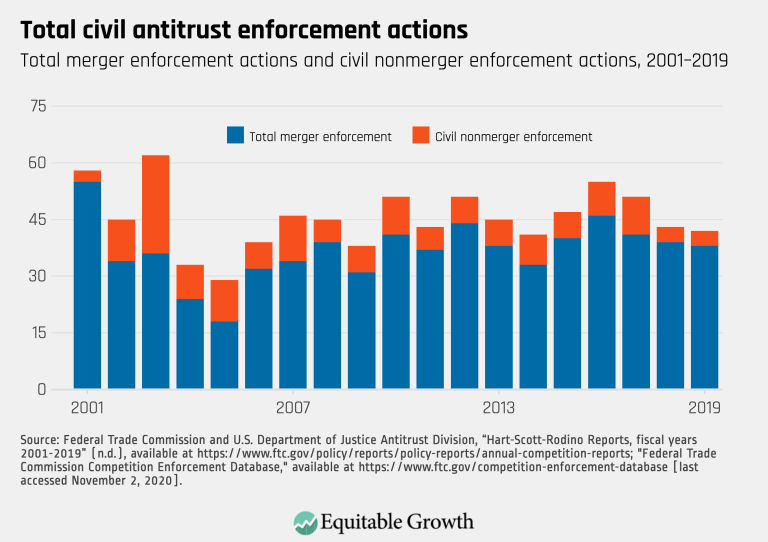
Merger filings have risen sharply, but enforcement actions are stagnant (opens in a new tab)
Visualizations NOV 17, 2020
 View Chart
(opens in a new tab)
View Chart
(opens in a new tab)
Total civil antitrust enforcement actions (opens in a new tab)
Visualizations NOV 17, 2020

Equitable Growth’s labor market experts deliver comment letter to U.S. Department of Labor on status of independent contractors (opens in a new tab)
Blog OCT 27, 2020
The Washington Center for Equitable Growth this week delivered a comment letter to Amy DeBisschop, director of the Division of Regulations, Legislation and Interpretation at the Wage and Hour Division…
By: Kate Bahn (opens in a new tab), Corey Husak (opens in a new tab), Carmen Sanchez Cumming (opens in a new tab)

Equitable Growth’s Amanda Fischer joins others in comment letter to antitrust regulator on harmful U.S. banking consolidation (opens in a new tab)
Blog OCT 27, 2020
A safe and strong banking sector is more important than ever as the coronavirus recession continues to strain individuals and families in the United States. In response to the U.S.…
By: Equitable Growth (opens in a new tab)

Testimony by Michael Kades before the Subcommittee on Antitrust, Commercial, and Administrative Law on digital markets (opens in a new tab)
Blog OCT 1, 2020
Michael KadesDirector, Markets and Competition PolicyWashington Center for Equitable Growth“Proposals to Strengthen the Antitrust Laws and Restore Competition Online”Subcommittee on Antitrust, Commercial, and Administrative Law October 1, 2020 Thank you…
By: Michael Kades (opens in a new tab)

Competitive Edge: Remedying monopoly violation by social networks—the role of interoperability and rulemaking (opens in a new tab)
Blog SEP 23, 2020
Antitrust and competition issues are receiving renewed interest, and for good reason. So far, the discussion has occurred at a high level of generality. To address important specific antitrust enforcement…
By: Michael Kades (opens in a new tab), Fiona M. Scott Morton (opens in a new tab)
Interoperability as a competition remedy for digital networks (opens in a new tab)
Working Papers SEP 23, 2020
Addressing entry barriers created by network effects is critical to remedying a monopolization violation in a social network market (e.g. Facebook). For a social network, interoperability is likely a necessary,…
By: Michael Kades (opens in a new tab), Fiona Scott Morton
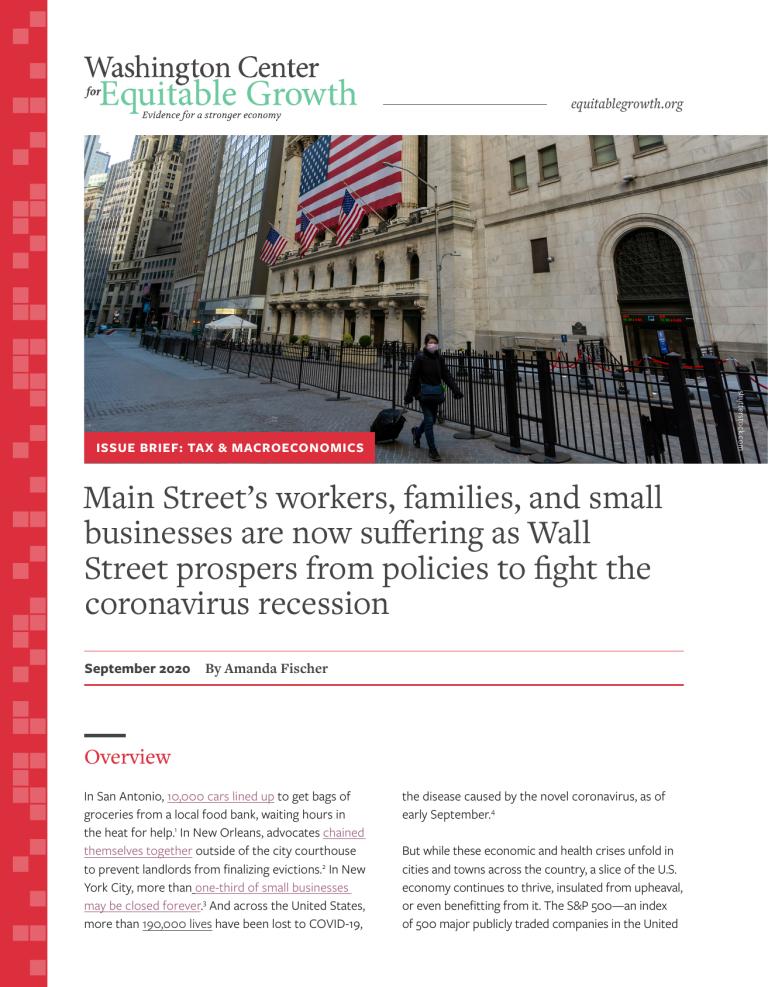
Main Street’s workers, families, and small businesses are now suffering as Wall Street prospers from policies to fight the coronavirus recession (opens in a new tab)
Issue Briefs SEP 17, 2020
In San Antonio, 10,000 cars lined up to get bags of groceries from a local food bank, waiting hours in the heat for help. In New Orleans, advocates chained themselves…
By: Amanda Fischer (opens in a new tab)

Equitable Growth announces record $1.07 million in research grants on inequality and broadly shared growth (opens in a new tab)
Blog AUG 31, 2020
The Washington Center for Equitable Growth today announced research grants totaling $1,074,060—our largest year to date—to seek evidence on important issues related to the intersections between economic inequality and growth.…
By: Korin Davis (opens in a new tab)

Combating the market power of U.S. corporations over workers and consumers (opens in a new tab)
Blog AUG 26, 2020
Recent economic research establishes that the United States suffers from a growing market power problem. Market power, often referred to as monopoly power, means consumers pay more for the goods…
By: Equitable Growth (opens in a new tab)

The curious case of the federal prosecutor who sided with defendants (opens in a new tab)
Blog AUG 25, 2020
Antitrust policy has been front and center in U.S. public policy debates over the past few years. The House Judiciary Committee recently completed its investigation into digital markets. Senate Democrats…
By: Michael Kades (opens in a new tab)

Hearing with tech CEOs sets stage for new legislation to tackle anticompetitive conduct by dominant firms in the U.S. economy (opens in a new tab)
Blog AUG 10, 2020
The CEOs of Apple Inc., Amazon.com Inc., Facebook Inc., and Alphabet Inc.’s Google unit testified in late July before the House Judiciary Committee’s Antitrust, Commercial, and Administrative Law Subcommittee. None…
By: Michael Kades (opens in a new tab)
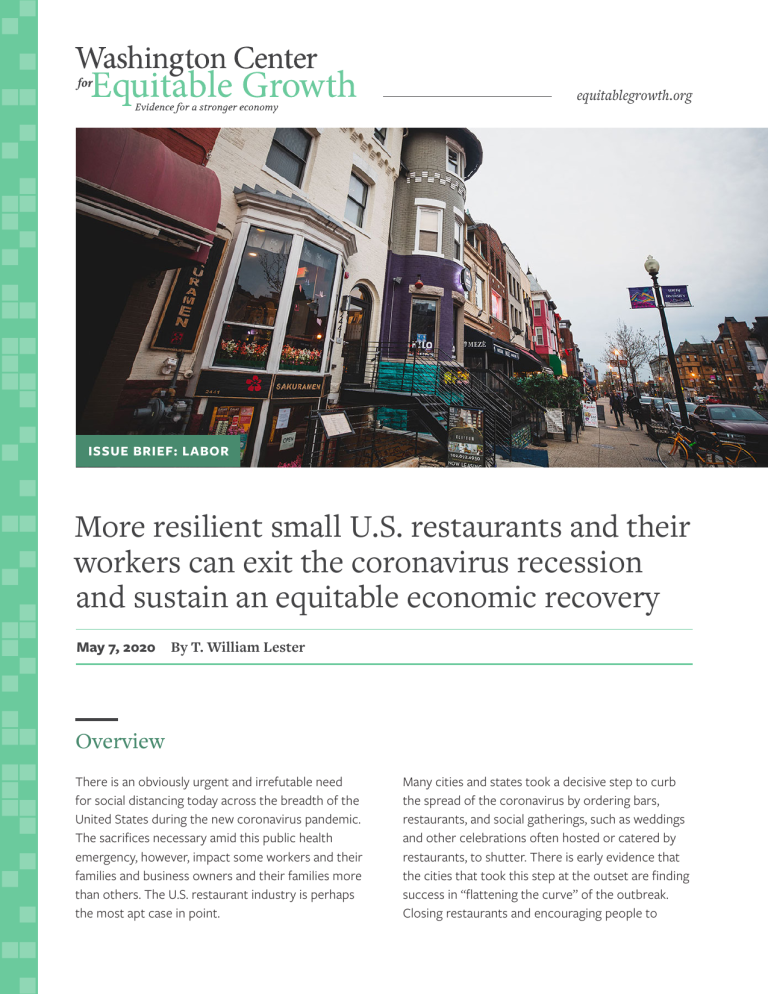
More resilient small U.S. restaurants and their workers can exit the coronavirus recession and sustain an equitable economic recovery (opens in a new tab)
Issue Briefs MAY 7, 2020
There is an obviously urgent and irrefutable need for social distancing today across the breadth of the United States during the new coronavirus pandemic. The sacrifices necessary amid this public…
By: T. William Lester (opens in a new tab)
 View Chart
(opens in a new tab)
View Chart
(opens in a new tab)
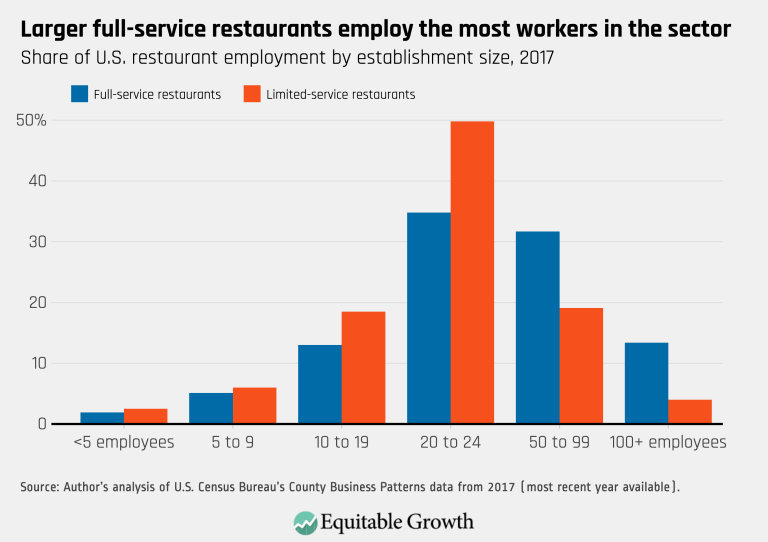
Larger full-service restaurants employ the most workers in the sector (opens in a new tab)
Visualizations MAY 6, 2020
 View Chart
(opens in a new tab)
View Chart
(opens in a new tab)
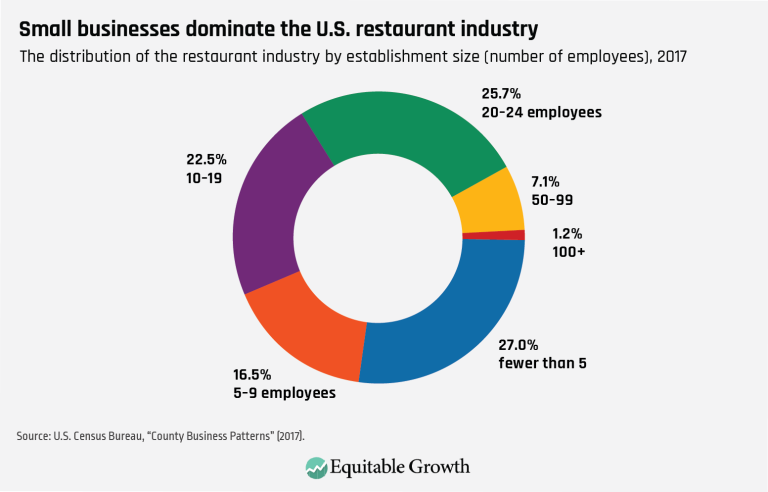
Small businesses dominate the U.S. restaurant industry (opens in a new tab)
Visualizations MAY 6, 2020
 View Chart
(opens in a new tab)
View Chart
(opens in a new tab)
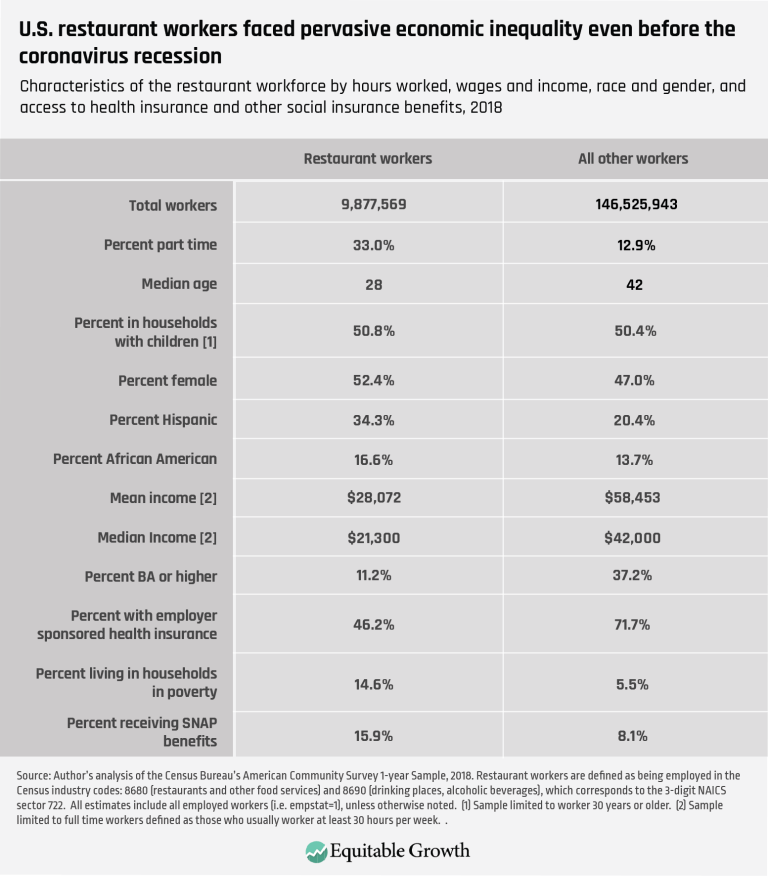
U.S. restaurant workers faced pervasive economic inequality even before the coronavirus recession (opens in a new tab)
Visualizations MAY 6, 2020

Antitrust experts call on Congress to address failings in antitrust law to preserve competition and prevent monopolies in digital marketplaces (opens in a new tab)
Blog MAY 4, 2020
A group of the nation’s top U.S. antitrust experts told Congress this week that outdated and bad economic theory has undermined antitrust enforcement, allowing dominant companies to gain an unfair…
By: Michael Kades (opens in a new tab)

Competitive Edge: The future of vertical mergers and the thing called ‘EDM’ (opens in a new tab)
Blog MAR 19, 2020
Antitrust and competition issues are receiving renewed interest, and for good reason. So far, the discussion has occurred at a high level of generality. To address important specific antitrust enforcement…
By: Jonathan Sallet (opens in a new tab)

Equitable Growth launches Vision 2020 book with discussion of research and policy ideas (opens in a new tab)
Videos FEB 24, 2020
The need for systemic change, the power of government to improve the U.S. economy and society, and the importance of connecting research, evidence, and data to the U.S. policymaking process…
By: David S. Mitchell (opens in a new tab)

Equitable Growth introduces book of innovative policy ideas for 2020 (opens in a new tab)
Essays FEB 18, 2020
The Washington Center for Equitable Growth today is publishing a collection of 21 essays, with innovative, evidence-based, and concrete policy ideas to shape the 2020 policy debate. The essays, which…
By: Equitable Growth (opens in a new tab)

Reforming U.S. antitrust enforcement and competition policy (opens in a new tab)
Blog FEB 18, 2020
This essay is part of Vision 2020: Evidence for a stronger economy, a compilation of 21 essays presenting innovative, evidence-based, and concrete ideas to shape the 2020 policy debate. The…
By: Fiona M. Scott Morton (opens in a new tab)

Improving competition to lower U.S. prescription drug costs (opens in a new tab)
Blog FEB 18, 2020
This essay is part of Vision 2020: Evidence for a stronger economy, a compilation of 21 essays presenting innovative, evidence-based, and concrete ideas to shape the 2020 policy debate. The…
By: Aaron S. Kesselheim (opens in a new tab)

Wage and employment implications of U.S. labor market monopsony and possible policy solutions (opens in a new tab)
Blog FEB 18, 2020
This essay is part of Vision 2020: Evidence for a stronger economy, a compilation of 21 essays presenting innovative, evidence-based, and concrete ideas to shape the 2020 policy debate. The…
By: Sydnee Caldwell (opens in a new tab), Suresh Naidu (opens in a new tab)
Monopsony in Labor Markets: A Meta-Analysis (opens in a new tab)
Working Papers FEB 5, 2020
When jobs offered by different employers are not perfect substitutes, employers gain wage-setting power; the extent of this power can be captured by the elasticity of labor supply to the…
By: Anna Sokolova (opens in a new tab), Todd Sorensen (opens in a new tab)

“Women’s Work-Life Economics” (opens in a new tab)
Blog JAN 30, 2020
This article, “Women’s Work-Life Economics,” originally appeared in the 2019, Volume 23 of “LERA Perspectives on Work,” a magazine published by the Labor and Employment Relations Association, or LERA. More…
By: Heather Boushey (opens in a new tab), Kate Bahn (opens in a new tab)

ASSA Round-up: Day 3 (opens in a new tab)
Blog JAN 5, 2020
Today was the final day of the three-day annual meeting of the Allied Social Science Associations, which is organized by the American Economic Association. The conference, held in San Diego…
By: Equitable Growth (opens in a new tab)

ASSA Round-up: Day 2 (opens in a new tab)
Blog JAN 4, 2020
Today was the second day of the three-day annual meeting of the Allied Social Science Associations, which is organized by the American Economic Association. The conference, held in San Diego…
By: Equitable Growth (opens in a new tab)

ASSA Round-up: Day 1 (opens in a new tab)
Blog JAN 3, 2020
Today was the first day of the three-day annual meeting of the Allied Social Science Associations, which is organized by the American Economic Association. The conference, held in San Diego…
By: Equitable Growth (opens in a new tab)

Equitable Growth’s Michael Kades co-authors AARP amicus brief in Impax Laboratories, Inc. v. Federal Trade Commission court case (opens in a new tab)
Blog DEC 26, 2019
The Washington Center for Equitable Growth’s Director of Markets and Competition Policy Michael Kades co-authored an amicus brief for AARP and the AARP Foundation filed with the U.S. Court of…
By: Equitable Growth (opens in a new tab)

Congress adopts historic prescription drug pricing reform (opens in a new tab)
Blog DEC 23, 2019
Here’s a sentence that might seem impossible, given our current political circumstances, but it’s true: The U.S. Congress just passed, and President Donald Trump signed, significant bipartisan legislation to curb…
By: Michael Kades (opens in a new tab)

Competitive Edge: Underestimating the cost of underenforcing U.S. antitrust laws (opens in a new tab)
Blog DEC 13, 2019
Antitrust and competition issues are receiving renewed interest, and for good reason. So far, the discussion has occurred at a high level of generality. To address important specific antitrust enforcement…
By: Michael Kades (opens in a new tab)
 View Chart
(opens in a new tab)
View Chart
(opens in a new tab)
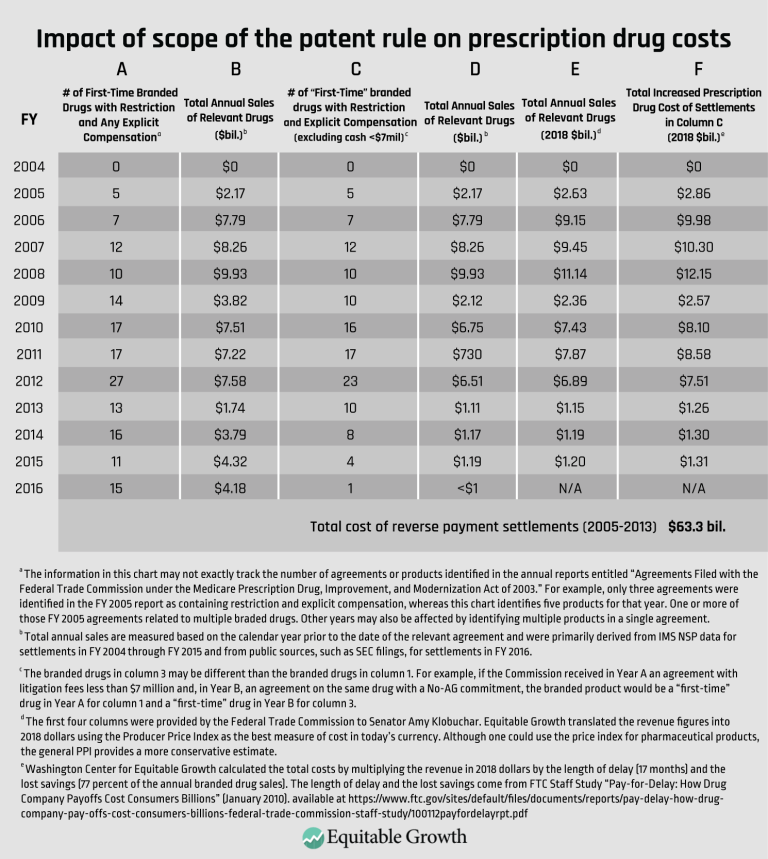
Impact of scope of the patent rule on prescription drug costs (opens in a new tab)
Visualizations DEC 13, 2019
 View Chart
(opens in a new tab)
View Chart
(opens in a new tab)
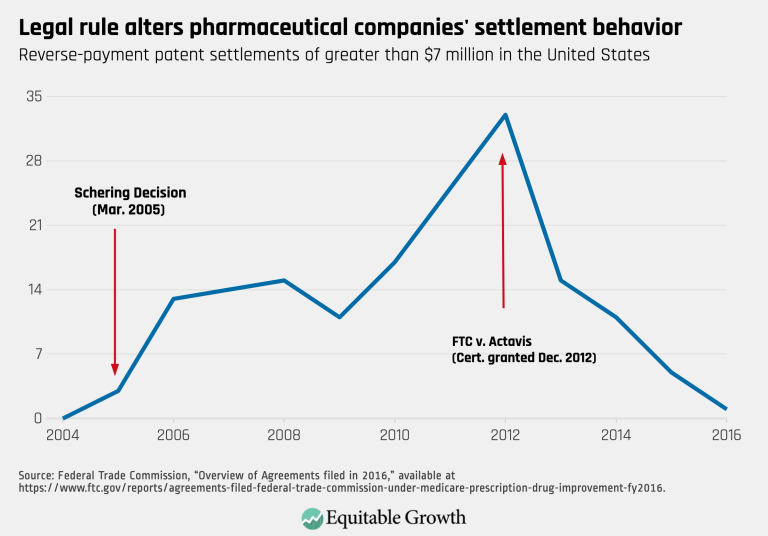
Legal rule alters pharmaceutical companies’ settlement behavior (opens in a new tab)
Visualizations DEC 13, 2019
 View Chart
(opens in a new tab)
View Chart
(opens in a new tab)
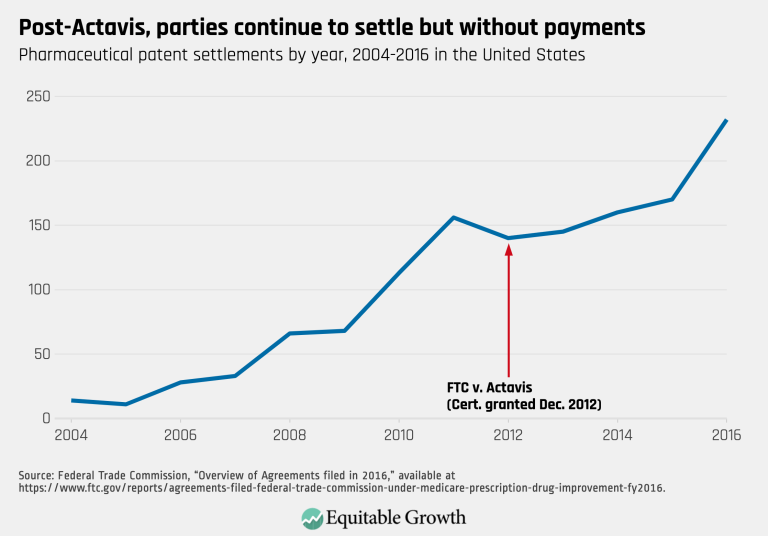
Post-Actavis, parties continue to settle but without payments (opens in a new tab)
Visualizations DEC 13, 2019
Did Timing Matter? Life Cycle Differences in Effects of Exposure to the Great Recession (opens in a new tab)
Working Papers NOV 19, 2019
Exposure to a recession can have persistent, negative consequences, but does the severity of those consequences depend on when in the life cycle a person is exposed? I estimate the…
By: Kevin Rinz (opens in a new tab)

Antitrust remedies to the domination of digital platform technologies and the acquisition of nascent competitors (opens in a new tab)
Blog NOV 19, 2019
The debate over the role of large internet companies and their impact on the U.S. economy ranges from those who see nothing wrong to proposals to break them up. Within…
By: Michael Kades (opens in a new tab)


Your Direct Line to Cutting Edge Research
Be the first to know about our latest events, research releases, and expert insights. Get exclusive updates delivered right to your inbox and never miss an opportunity to engage with our community.