


Issue Areas
The Washington Center for Equitable Growth is engaged in an array of issues to advance evidence-based ideas and policies that promote strong, stable, and broad-based economic growth.

4,071 Results

What Work Does Generative AI Do? (opens in a new tab)
Essays Sep 8, 2026
Since August 2024, our Real-Time Population Survey (RPS), a nationally representative survey of U.S. adults ages 18 to 64, has tracked how many Americans use generative artificial intelligence (AI). The adoption…
What Work Does Generative AI Do? (opens in a new tab)
Working Papers Sep 8, 2026
We measure how workers use genAI for their jobs in a nationally representative survey linking genAI adoption to detailed occupations and tasks. Our data provide the first task-level genAI adoption…

What happens to U.S. workers without access to Unemployment Insurance amid economic downturns or disruptions related to AI? (opens in a new tab)
Essays Sep 2, 2026
The adoption of artificial intelligence in the workplace has led to predictions of U.S. labor market disruptions. In response, policymakers have increased attention on the fitness of the nation’s social…

Economic research shows immigration is good for U.S. workers, the economy, and affordability (opens in a new tab)
Essays Aug 31, 2026
When President Donald Trump returned to the White House in 2025, mass deportations and immigration restrictions were renewed as one of the political priorities of his second administration. Since then,…
 View Chart
(opens in a new tab)
View Chart
(opens in a new tab)
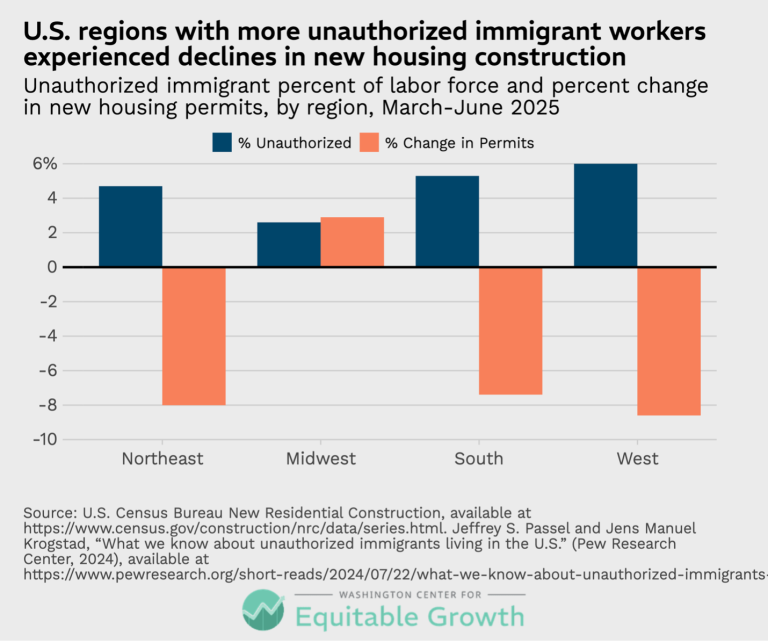
U.S. regions with more unauthorized immigrant workers experienced declines in new housing construction (opens in a new tab)
Visualizations Aug 31, 2026
 View Chart
(opens in a new tab)
View Chart
(opens in a new tab)
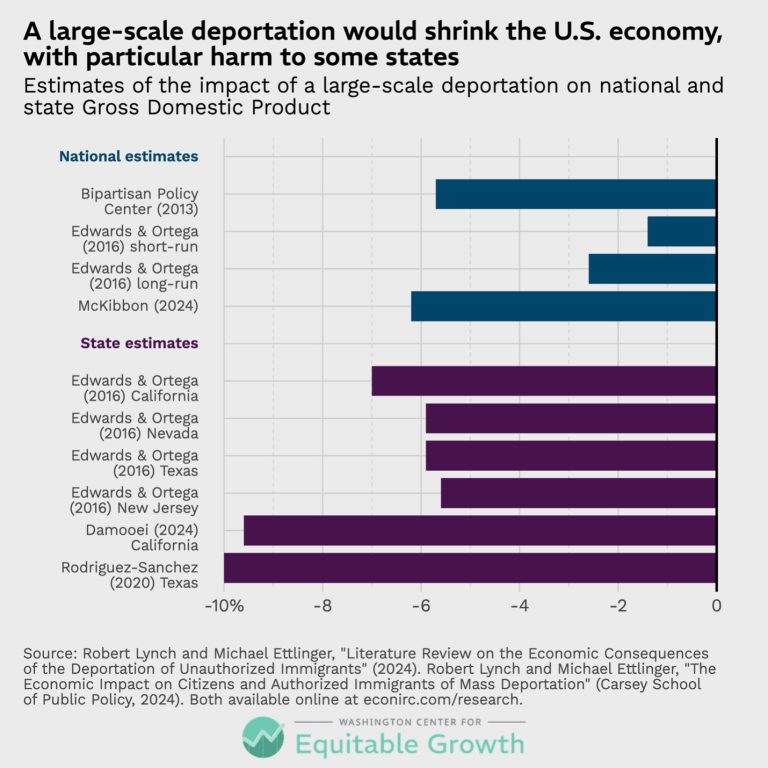
A large-scale deportation would shrink the U.S. economy, with particular harm to some states (opens in a new tab)
Visualizations Aug 31, 2026
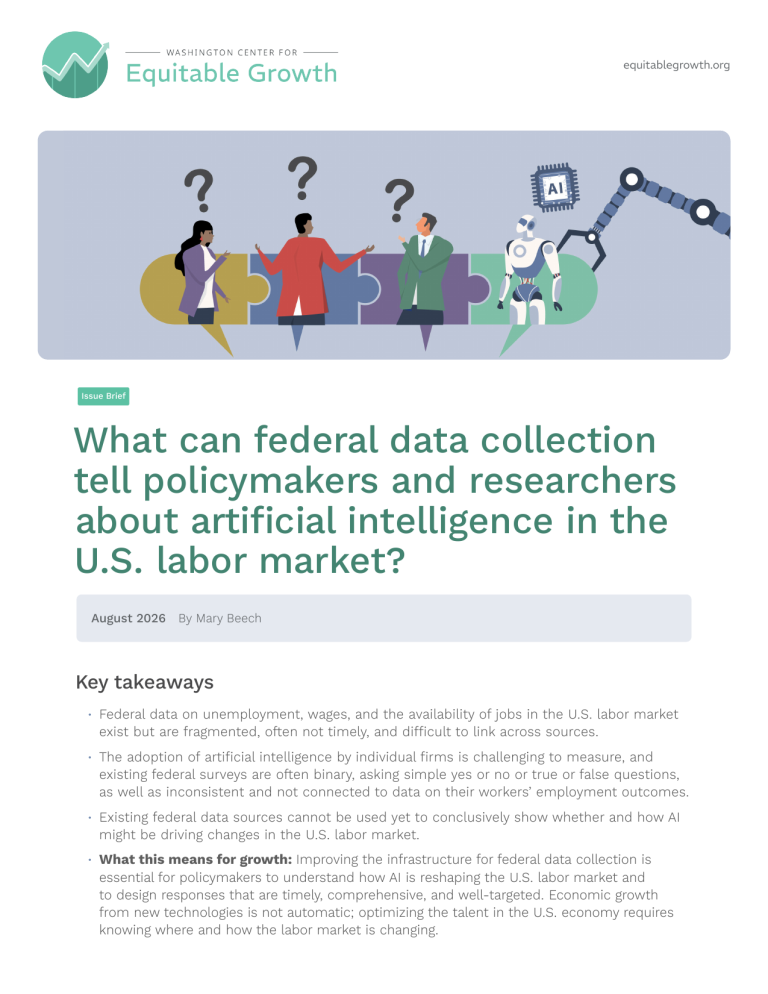
What can federal data collection tell policymakers and researchers about artificial intelligence in the U.S. labor market? (opens in a new tab)
Issue Briefs Aug 24, 2026
It is impossible to perfectly predict how artificial intelligence will affect the U.S. labor market. Policymakers and researchers are grappling with important questions around this topic, including what new opportunities…
Terms and conditions for generative AI users outline a new legal framework that puts U.S. consumers at risk (opens in a new tab)
Essays Aug 20, 2026
Generative AI, or genAI, is a form of artificial intelligence that produces content in response to prompts and includes large language model chatbots such as OpenAI’s ChatGPT or Anthropic’s Claude.…
The Terms and Conditions of Generative AI (opens in a new tab)
Working Papers Aug 20, 2026
Generative AI raises pressing questions for myriad doctrinal areas. Policymakers and scholars have responded rapidly, devoting substantial attention to these difficult legal and policy questions. But, as a practical matter,…

New research shows how U.S. homeownership and the accumulation of housing wealth are linked to political participation (opens in a new tab)
Essays Aug 14, 2026
Persistent affordability pressures have driven up housing costs for millions of U.S. families in recent years. Home prices remain near record highs relative to incomes, mortgage rates and associated costs…
Housing Wealth Accumulation and Electoral Representation (opens in a new tab)
Working Papers Aug 14, 2026
We document that housing wealth accumulation systematically differs among homeowners by their political participation. Using a nationwide voter-property dataset, we find that realized housing appreciation increases monotonically the more a…

Defining extreme wealth is more complicated than it looks (opens in a new tab)
Videos Aug 13, 2026
Facing high levels of income and wealth inequality and shrinking tax revenues, U.S. policymakers are showing increased interest in proposals to tax the richest households. Yet determining which households fall into that category is complex and changes based…
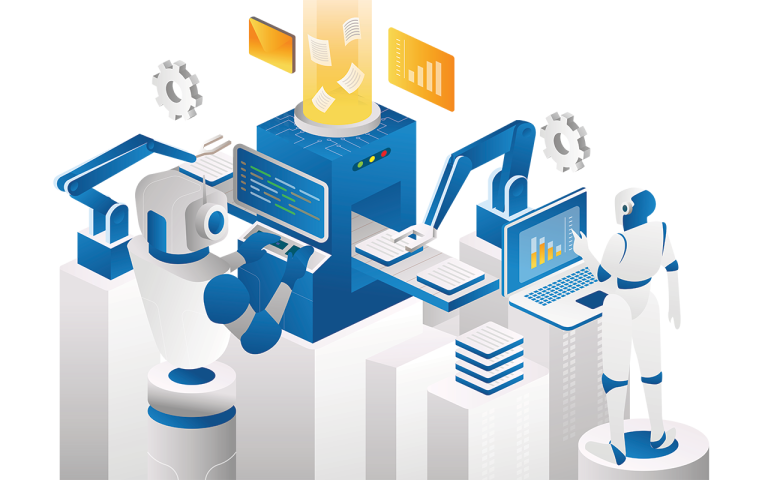
Estimating AI exposure is useful for research but cannot yet tell policymakers the whole story of AI’s impact on the labor market (opens in a new tab)
Essays Aug 7, 2026
Artificial intelligence has the potential to substantially change the nature and availability of work. To effectively manage the transitions this technology might bring to the U.S. economy, policymakers need information…

Tracking new research on artificial intelligence and its impact on the U.S. labor market (opens in a new tab)
Essays Aug 5, 2026
Headlines often paint extreme and dissonant pictures of the future impact of AI on the U.S. economy and labor market, with workers themselves echoing the conflicting feelings of optimism and…
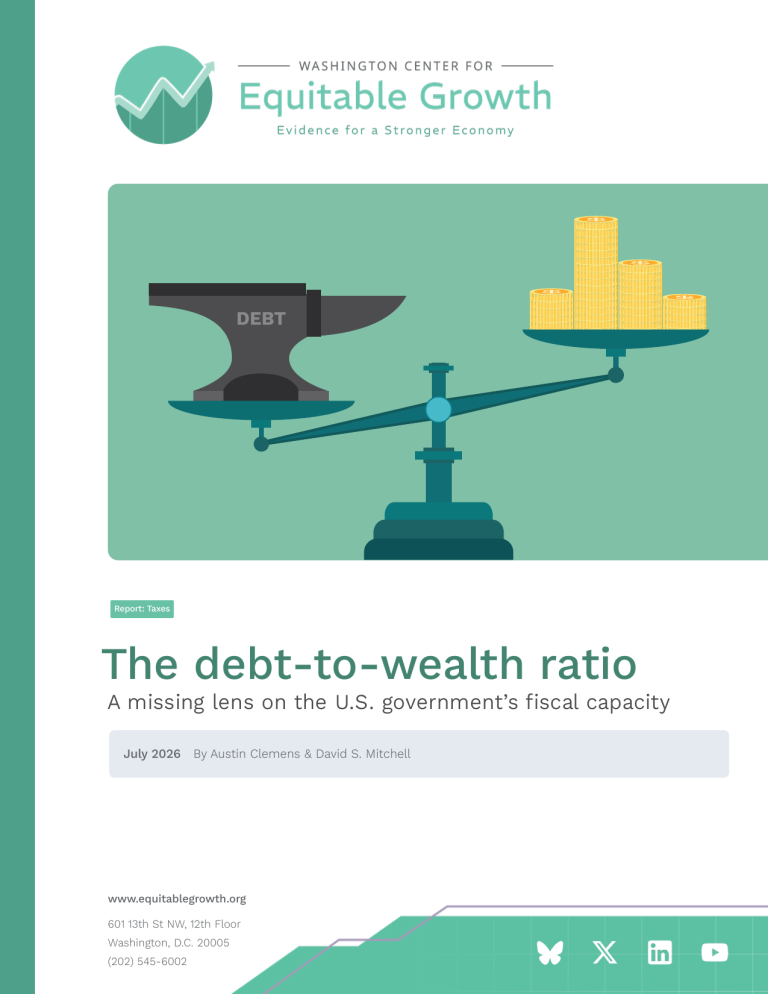
The debt-to-wealth ratio: A missing lens on the U.S. government’s fiscal capacity (opens in a new tab)
Reports Jul 30, 2026
Few statistics shape the fiscal debate in the United States as powerfully as the ratio of federal debt-to-Gross Domestic Product. Debt held by the public recently surpassed 100 percent of…
 View Chart
(opens in a new tab)
View Chart
(opens in a new tab)
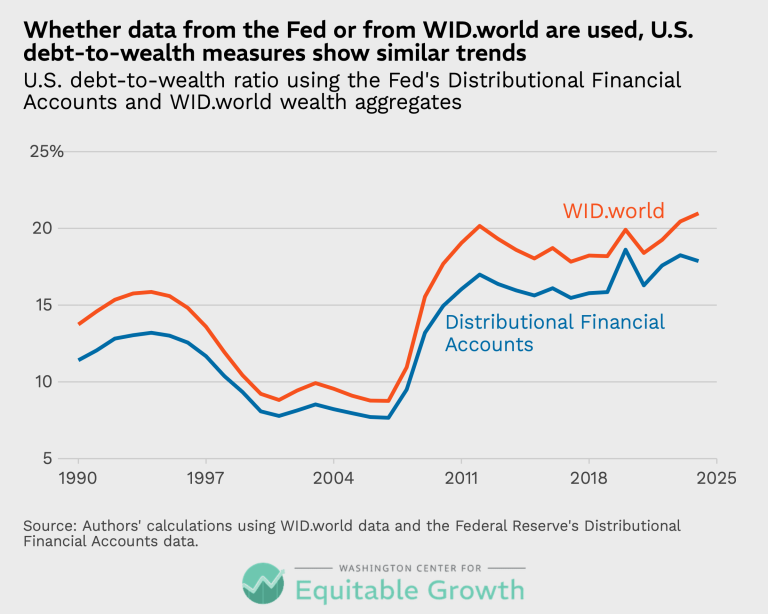
Whether data from the Fed or from WID.world are used, U.S. debt-to-wealth measures show similar trends (opens in a new tab)
Visualizations Jul 22, 2026
 View Chart
(opens in a new tab)
View Chart
(opens in a new tab)
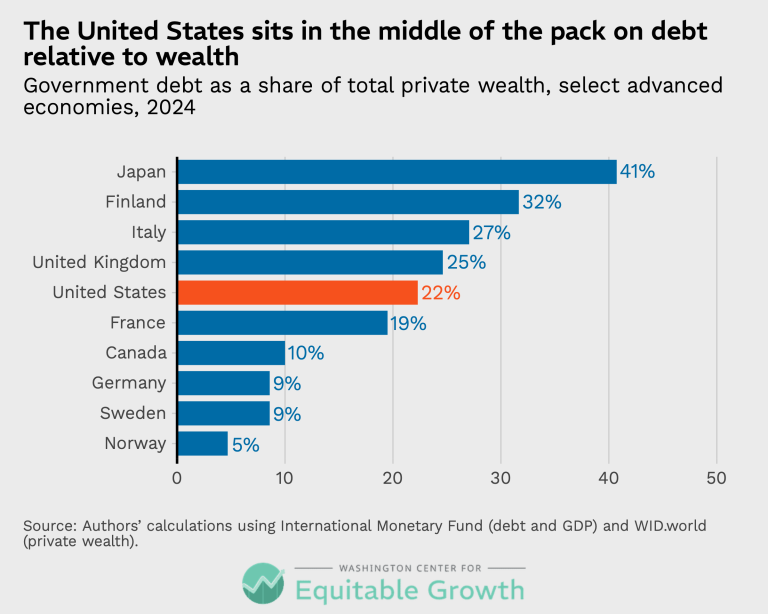
The United States sits in the middle of the pack on debt relative to wealth (opens in a new tab)
Visualizations Jul 22, 2026
 View Chart
(opens in a new tab)
View Chart
(opens in a new tab)
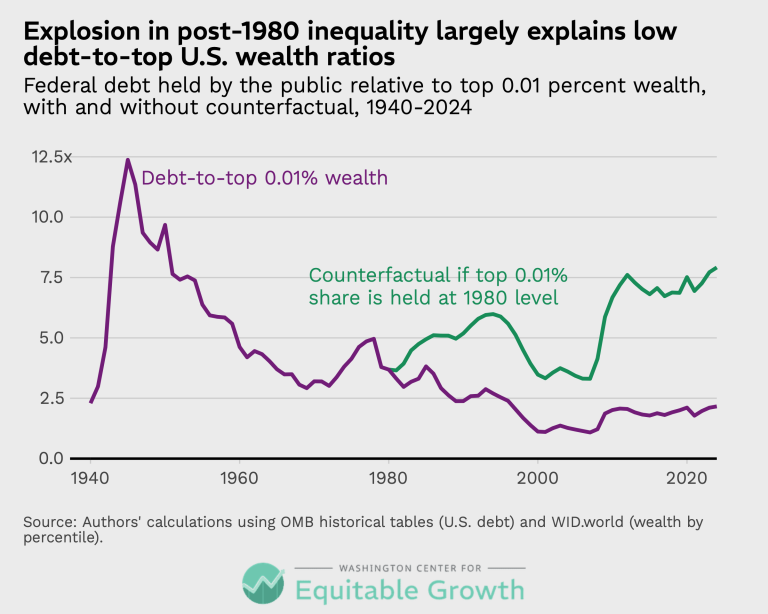
Explosion in post-1980 inequality largely explains low debt-to-top U.S. wealth ratios (opens in a new tab)
Visualizations Jul 22, 2026



































Your Source for the Latest Insights
Get updates on our latest research, event announcements, and policy insights delivered straight to your inbox. Stay connected with the leading voices on equitable growth.