


Issue Areas
The Washington Center for Equitable Growth is engaged in an array of issues to advance evidence-based ideas and policies that promote strong, stable, and broad-based economic growth.

36 Results

 View Chart
(opens in a new tab)
View Chart
(opens in a new tab)
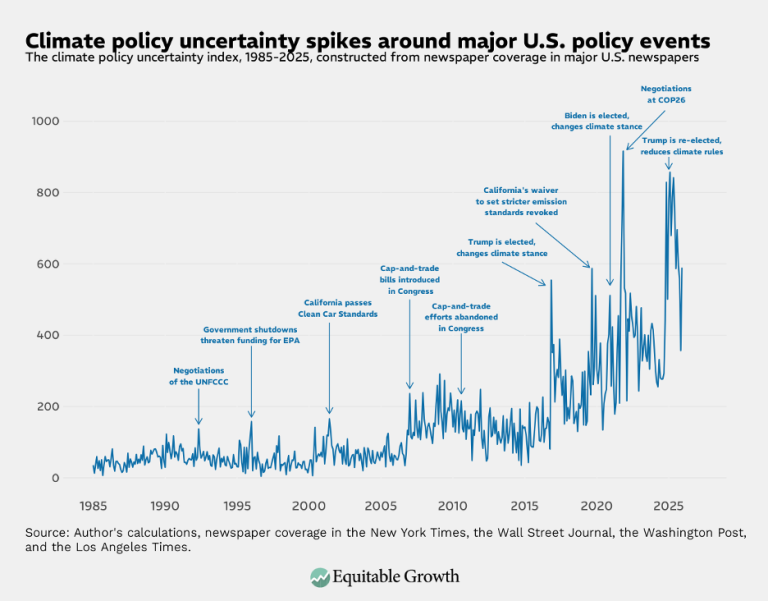
Climate policy uncertainty spikes around major U.S. policy events (opens in a new tab)
Visualizations Mar 17, 2026
 View Chart
(opens in a new tab)
View Chart
(opens in a new tab)
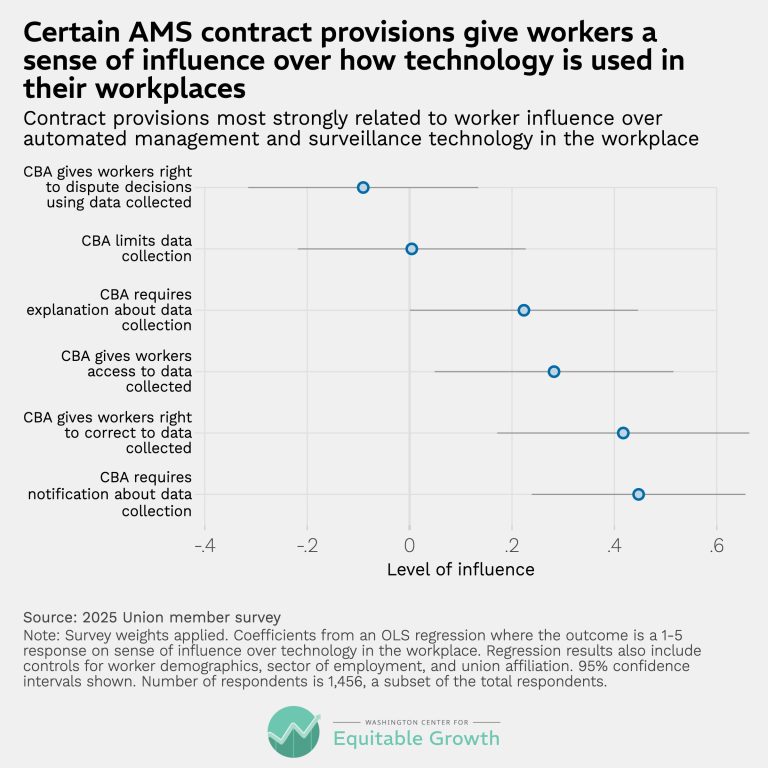
Certain AMS contract provisions give workers a sense of influence over how technology is used in their workplaces (opens in a new tab)
Visualizations Mar 12, 2026
 View Chart
(opens in a new tab)
View Chart
(opens in a new tab)
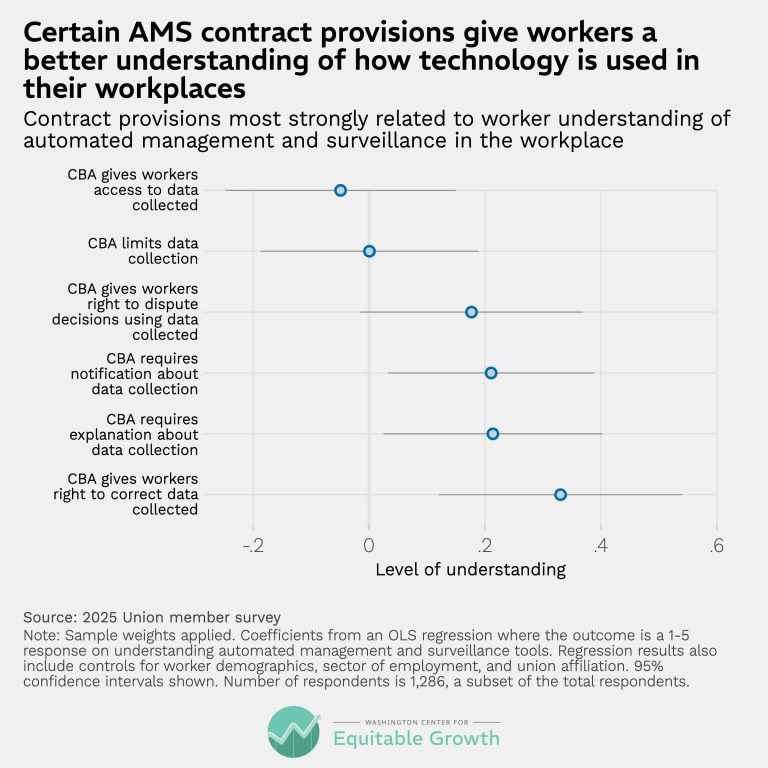
Certain AMS contract provisions give workers a better understanding of how technology is used in their workplaces (opens in a new tab)
Visualizations Mar 12, 2026
 View Chart
(opens in a new tab)
View Chart
(opens in a new tab)
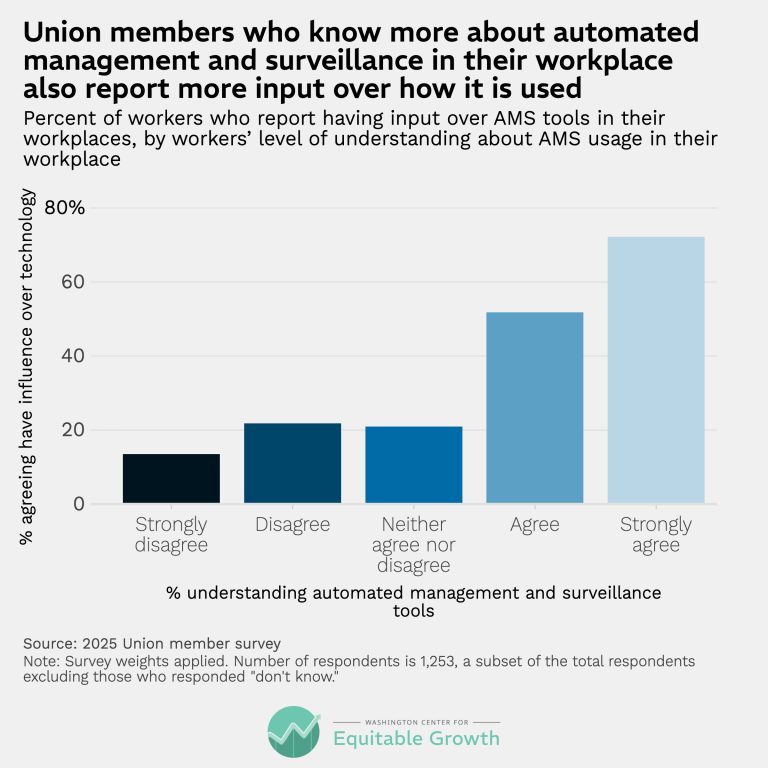
Union members who know more about automated management and surveillance in their workplace also report more input over how it is used (opens in a new tab)
Visualizations Mar 12, 2026
 View Chart
(opens in a new tab)
View Chart
(opens in a new tab)
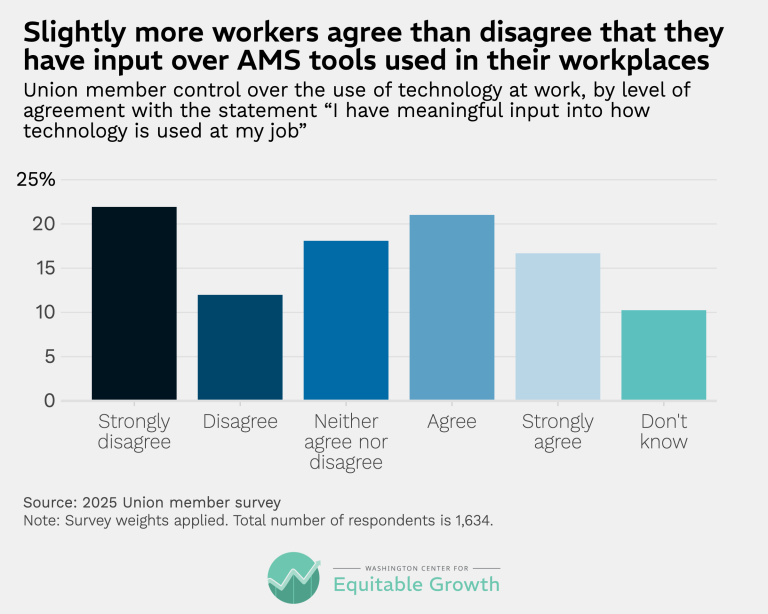
Slightly more workers agree than disagree that they have input over AMS tools used in their workplaces (opens in a new tab)
Visualizations Mar 12, 2026
 View Chart
(opens in a new tab)
View Chart
(opens in a new tab)
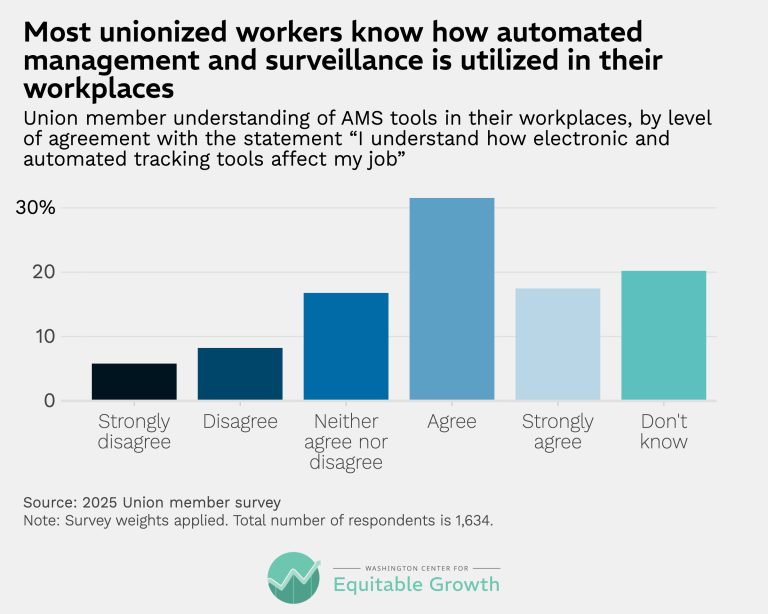
Most unionized workers know how automated management and surveillance are utilized in their workplaces (opens in a new tab)
Visualizations Mar 12, 2026
 View Chart
(opens in a new tab)
View Chart
(opens in a new tab)
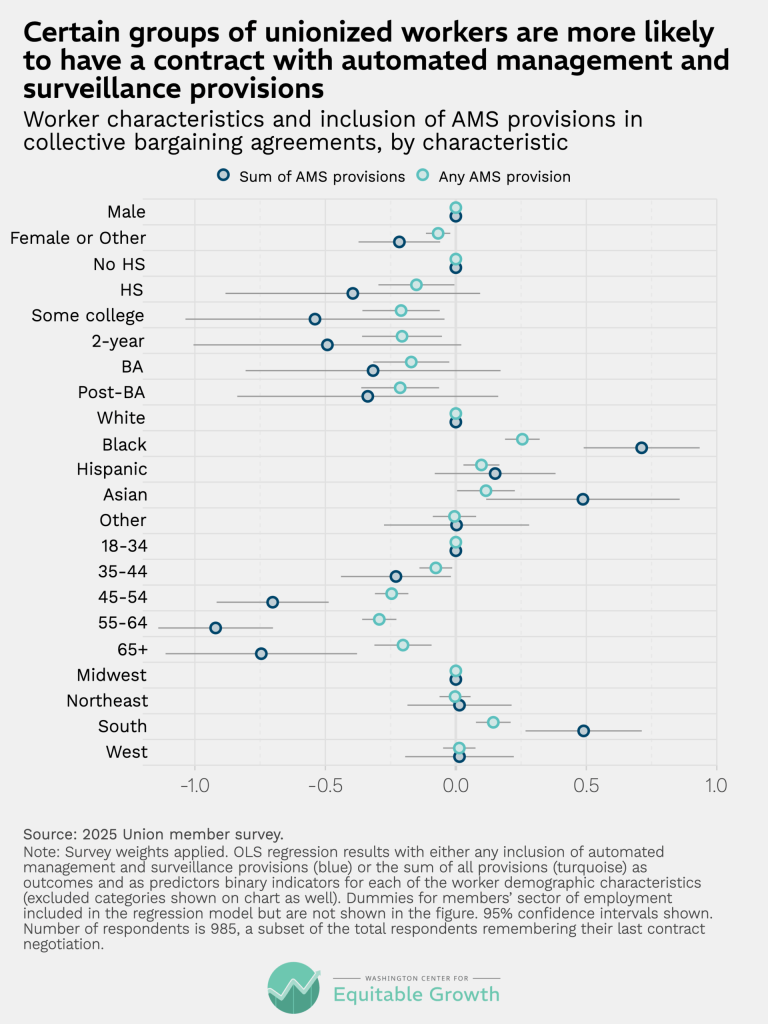
Certain groups of unionized workers are more likely to have a contract with automated management and surveillance provisions (opens in a new tab)
Visualizations Mar 12, 2026
 View Chart
(opens in a new tab)
View Chart
(opens in a new tab)
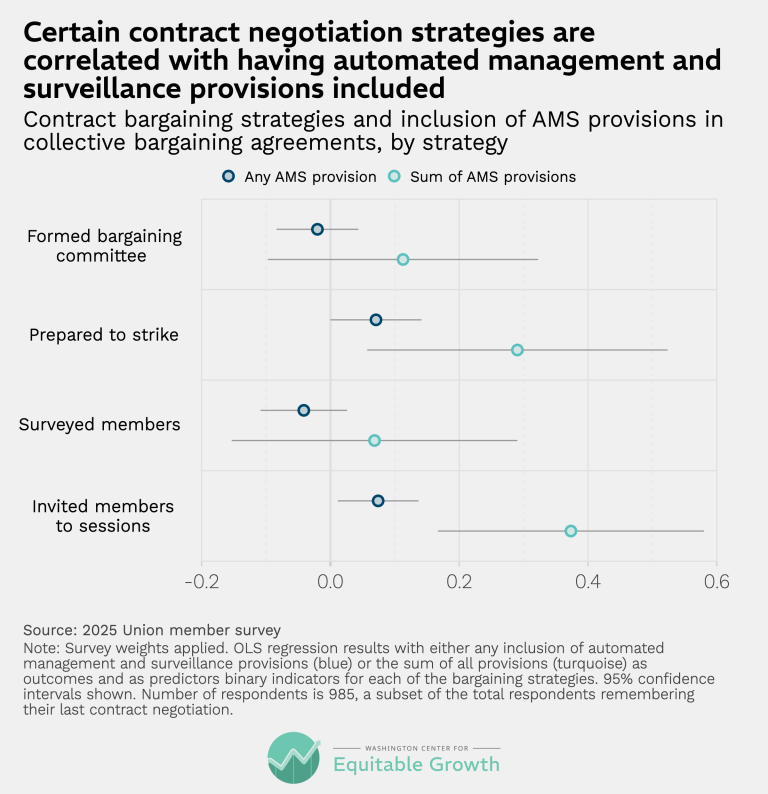
Certain contract negotiation strategies are correlated having automated management and surveillance provisions included (opens in a new tab)
Visualizations Mar 12, 2026
 View Chart
(opens in a new tab)
View Chart
(opens in a new tab)
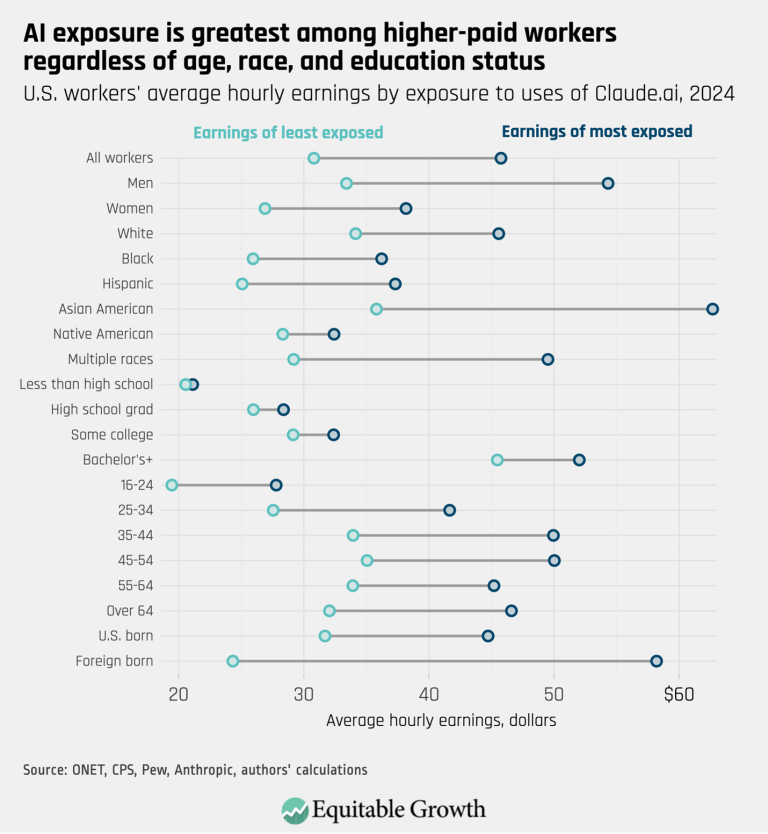
AI exposure is greatest among higher-paid workers regardless of age, race and education status (opens in a new tab)
Visualizations Oct 22, 2025
 View Chart
(opens in a new tab)
View Chart
(opens in a new tab)
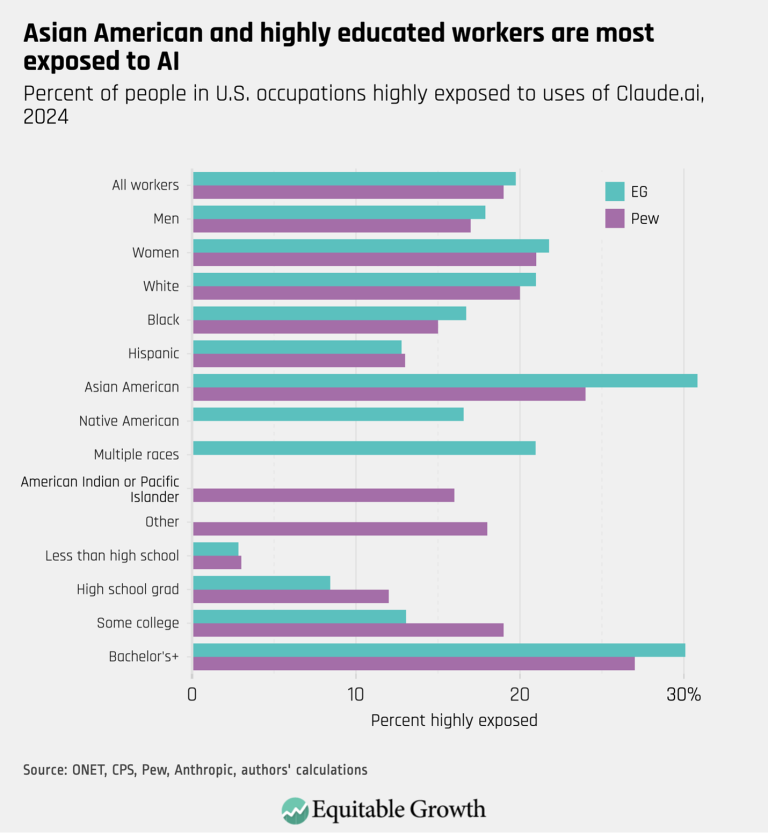
Asian American and highly educated workers are most exposed to AI (opens in a new tab)
Visualizations Oct 22, 2025
 View Chart
(opens in a new tab)
View Chart
(opens in a new tab)
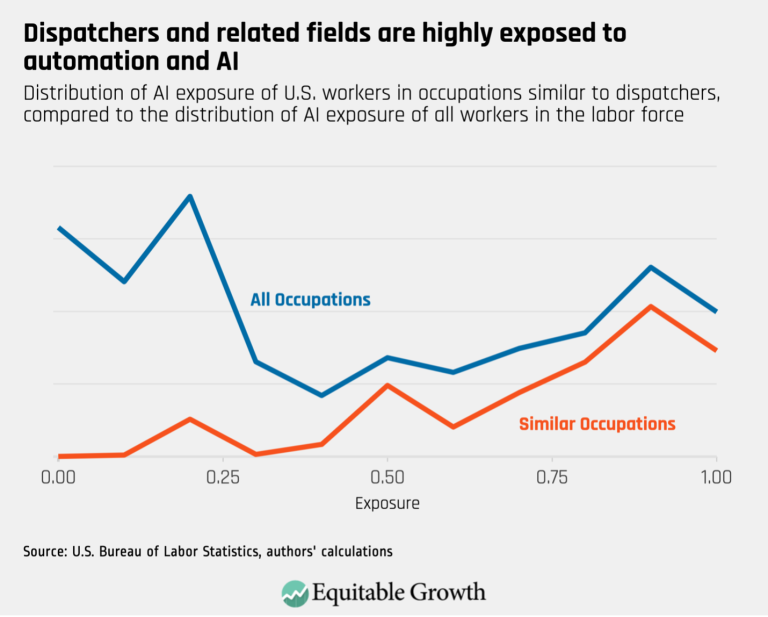
Dispatchers and related fields are highly exposed to automation and AI (opens in a new tab)
Visualizations Jul 10, 2025
 View Chart
(opens in a new tab)
View Chart
(opens in a new tab)
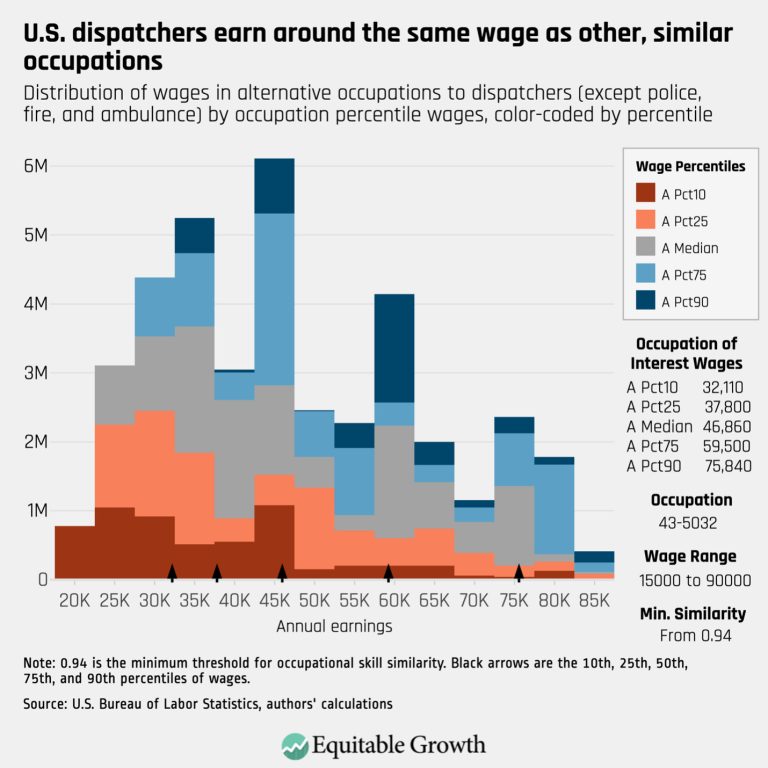
U.S. dispatchers earn around the same wage as other, similar occupations (opens in a new tab)
Visualizations Jul 10, 2025
 View Chart
(opens in a new tab)
View Chart
(opens in a new tab)
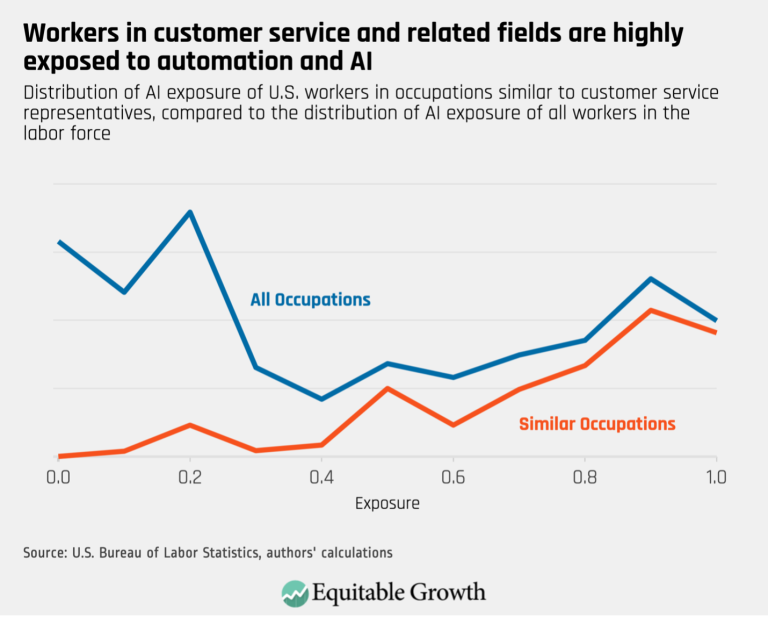
Workers in customer service and related fields are highly exposed to automation and AI (opens in a new tab)
Visualizations Jul 10, 2025
 View Chart
(opens in a new tab)
View Chart
(opens in a new tab)
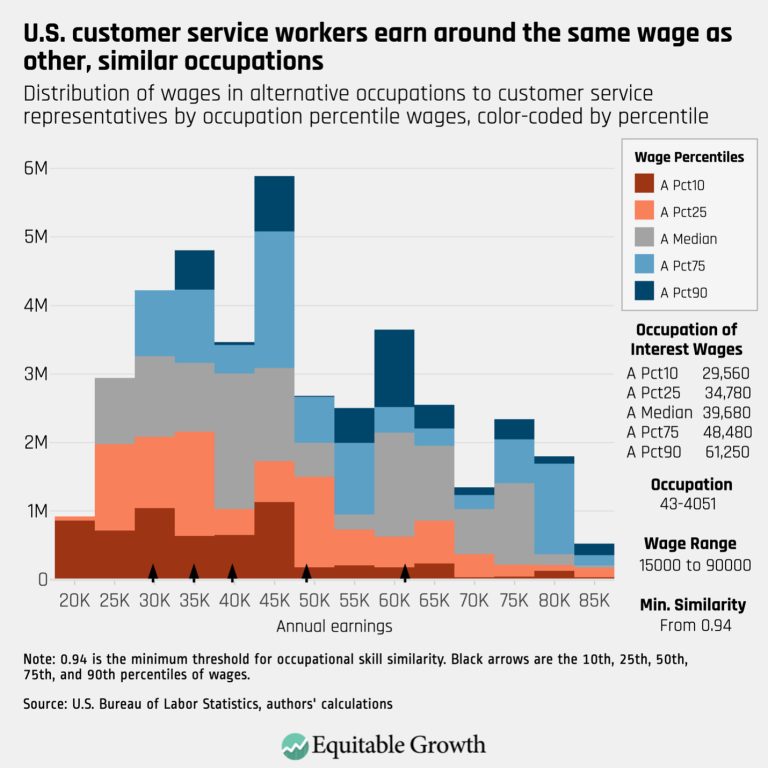
U.S. customer service workers earn around the same wage as other, similar occupations (opens in a new tab)
Visualizations Jul 10, 2025
 View Chart
(opens in a new tab)
View Chart
(opens in a new tab)
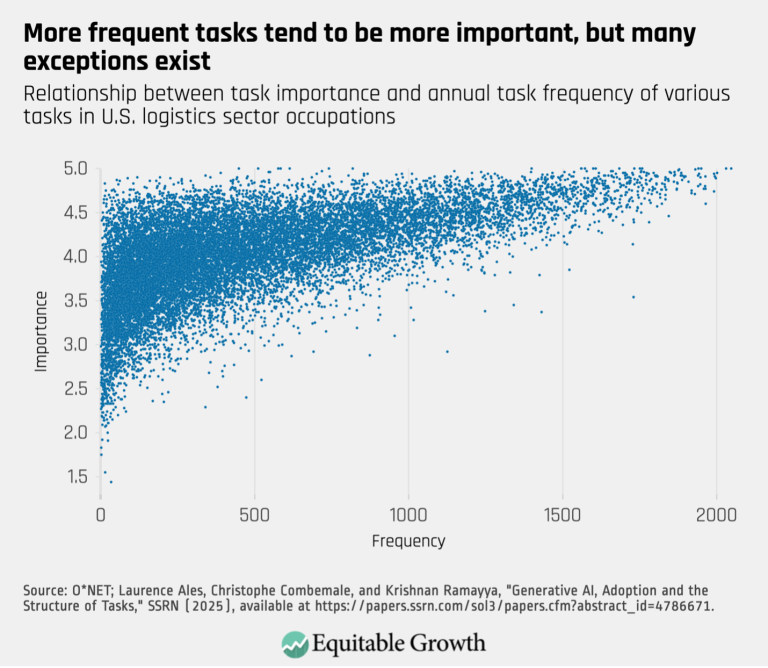
More frequent tasks tend to be more important, but many exceptions exist (opens in a new tab)
Visualizations Jul 9, 2025
 View Chart
(opens in a new tab)
View Chart
(opens in a new tab)
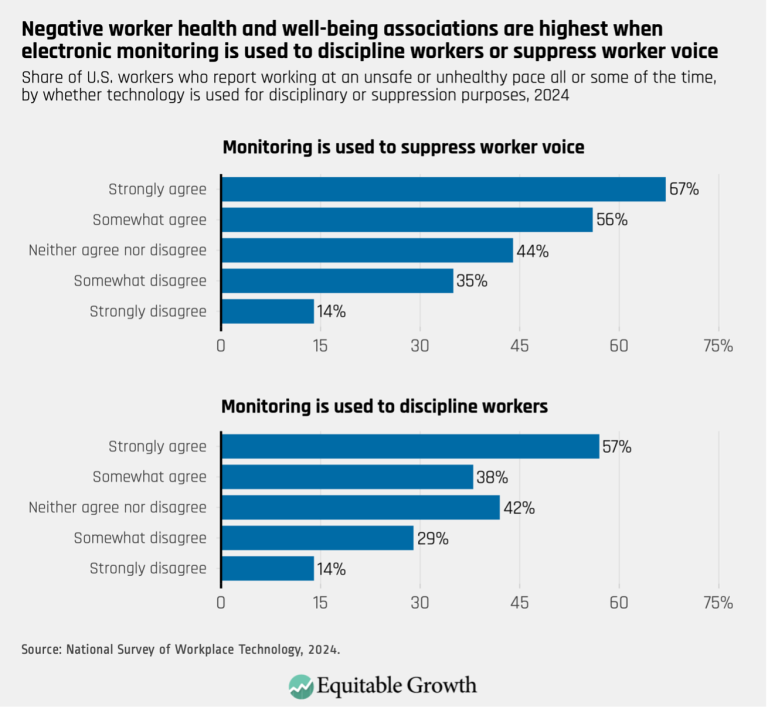
Negative worker health and well-being associations are highest when electronic monitoring is used to discipline workers or suppress worker voice (opens in a new tab)
Visualizations Sep 12, 2024
 View Chart
(opens in a new tab)
View Chart
(opens in a new tab)
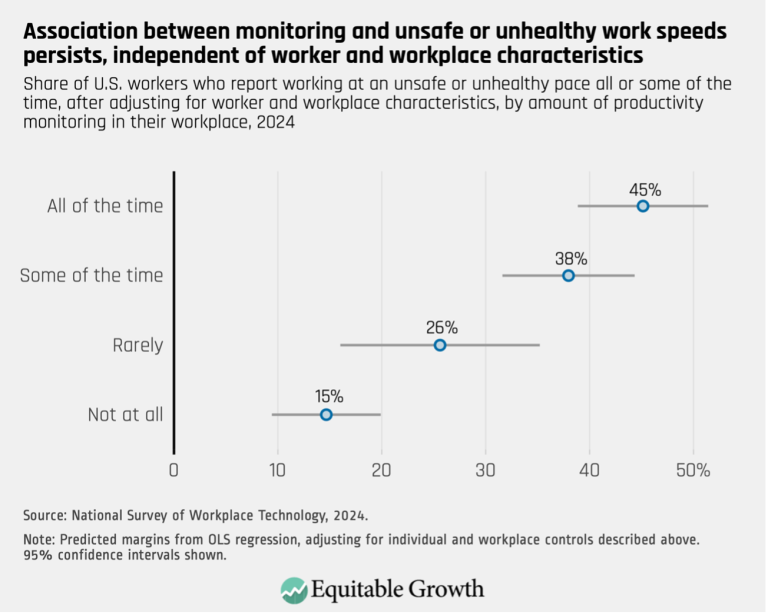
Association between monitoring and unsafe or unhealthy work speeds persists, independent of worker and workplace characteristics (opens in a new tab)
Visualizations Sep 12, 2024
 View Chart
(opens in a new tab)
View Chart
(opens in a new tab)
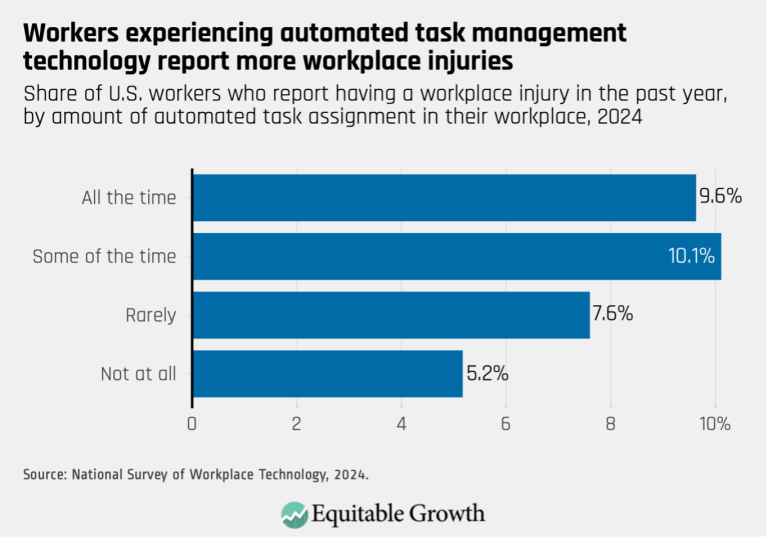
Workers experiencing automated task management technology report more workplace injuries (opens in a new tab)
Visualizations Sep 12, 2024
 View Chart
(opens in a new tab)
View Chart
(opens in a new tab)
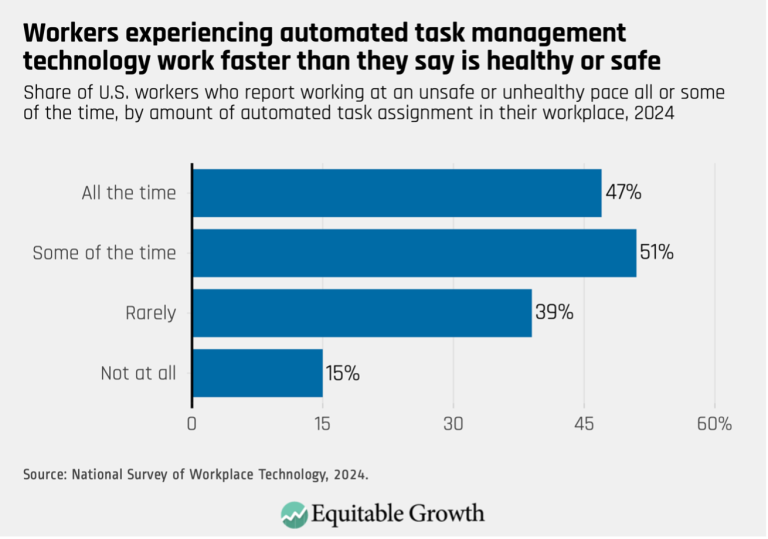
Workers experiencing automated task management technology work faster than they say is healthy or safe (opens in a new tab)
Visualizations Sep 12, 2024
 View Chart
(opens in a new tab)
View Chart
(opens in a new tab)
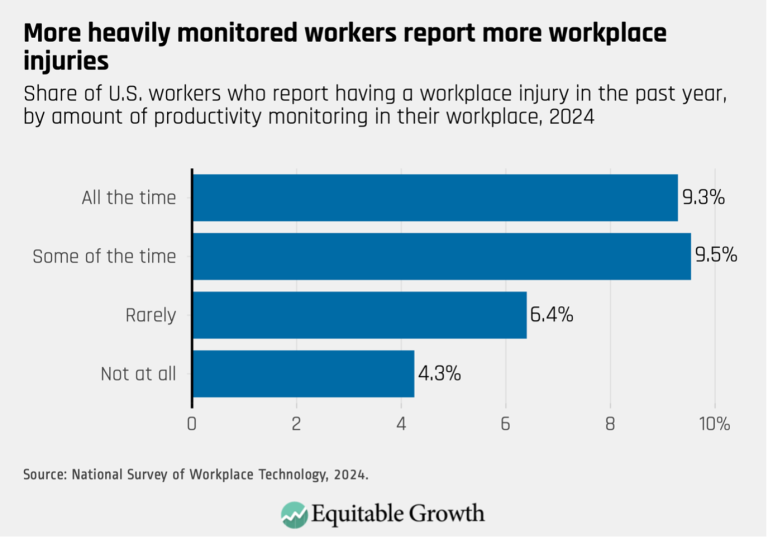
More heavily monitored workers report more workplace injuries (opens in a new tab)
Visualizations Sep 12, 2024
 View Chart
(opens in a new tab)
View Chart
(opens in a new tab)
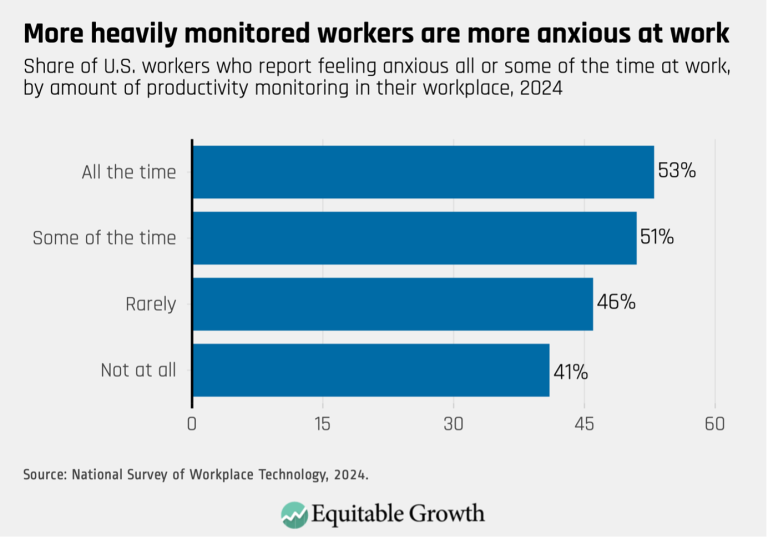
More heavily monitored workers are more anxious at work (opens in a new tab)
Visualizations Sep 12, 2024
 View Chart
(opens in a new tab)
View Chart
(opens in a new tab)
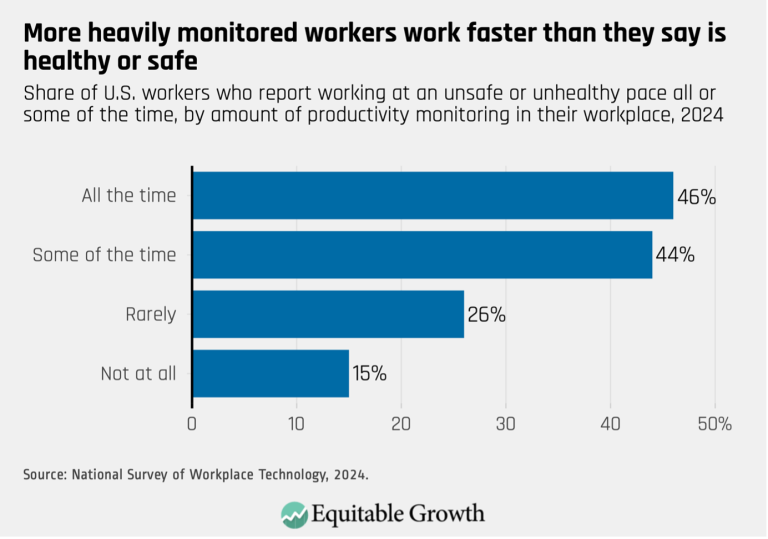
More heavily monitored workers works faster than they say is healthy or safe (opens in a new tab)
Visualizations Sep 12, 2024
 View Chart
(opens in a new tab)
View Chart
(opens in a new tab)
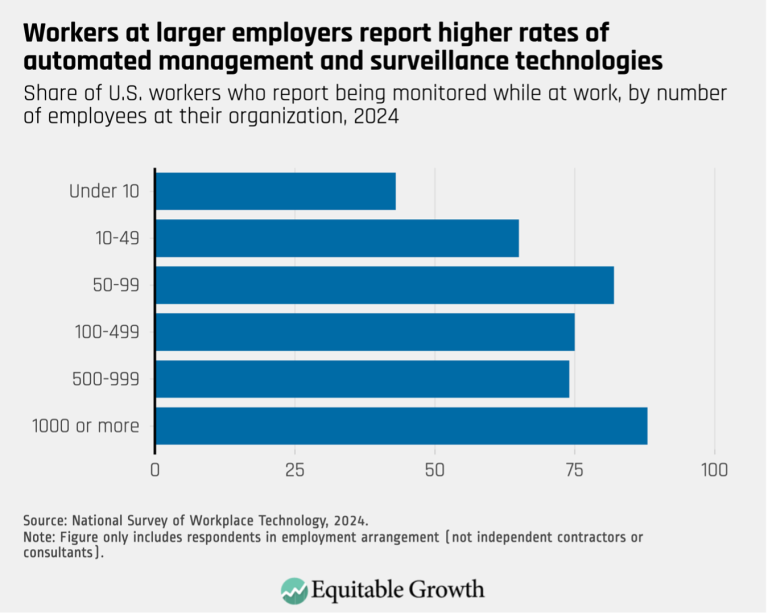
Workers at larger employers report higher rates of automated management and surveillance technologies (opens in a new tab)
Visualizations Sep 12, 2024
 View Chart
(opens in a new tab)
View Chart
(opens in a new tab)
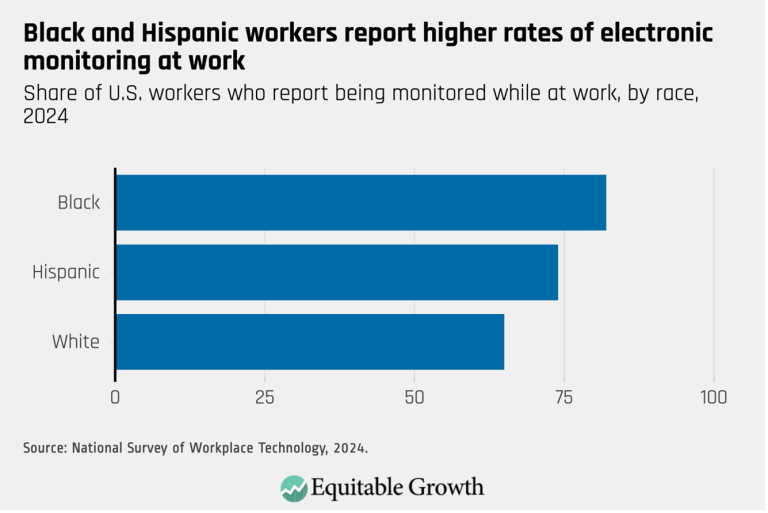
Black and Hispanic workers report higher rates of electronic monitoring at work (opens in a new tab)
Visualizations Sep 12, 2024









































Your Source for the Latest Insights
Get updates on our latest research, event announcements, and policy insights delivered straight to your inbox. Stay connected with the leading voices on equitable growth.