


Policy
What Work Does Generative AI Do?
Essays SEP 8, 2026
By: Alexander Bick, Adam Blandin, David Deming, Tyler Schumacher
AI, Tech & Energy
Labor, Wages & Worker Power
 Browse All Resources
JUN 23, 2020
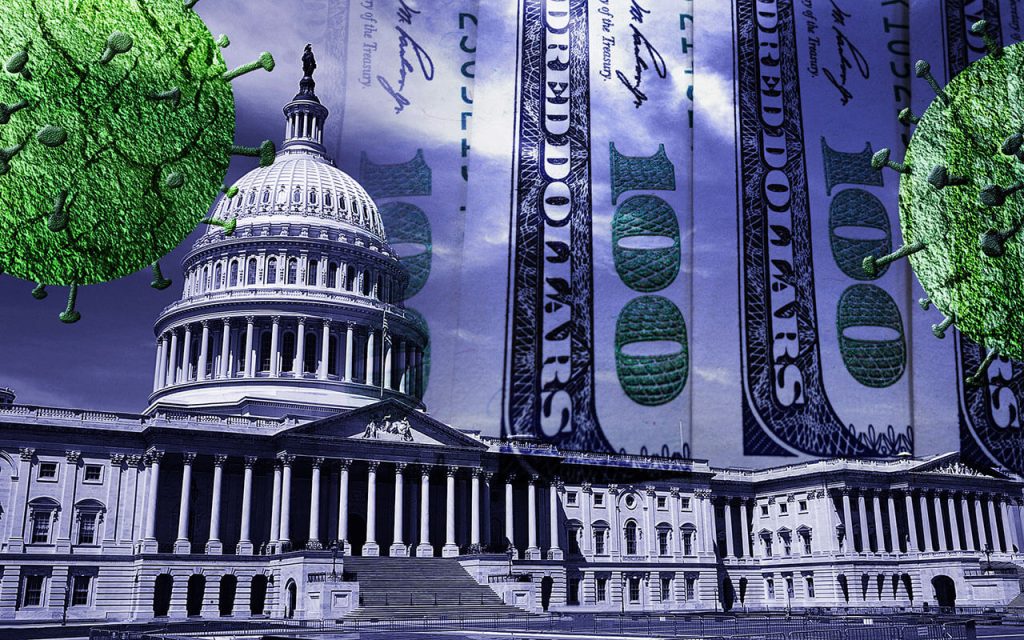
The coronavirus pandemic and the ensuing economic recession have exposed and exacerbated many systemic inequalities in U.S. society, especially for Black and Latinx families. Even after a decade of growth following the end of the Great Recession in 2009, with low inflation and historically low unemployment, the U.S. economy before today’s crises was extraordinarily fragile, built upon a foundation weakened by rampant inequality.
The recovery from the coronavirus recession must be different from the previous recovery. The benefits of that recovery went largely to the wealthy and left the U.S. economy deeply vulnerable. To have a chance of emerging on a stronger footing, with less economic and racial inequality and more sustainable economic growth, policymakers need to respond with robust, evidence-based measures that attack the underlying problems causing inequality and help achieve economic security for all.
As part of our Vision 2020 initiative to ensure that the election-year economic policy debate focuses on big ideas grounded in the latest research, the Washington Center for Equitable Growth is hosting a webinar with top economic experts on June 25 to discuss the kind of bold policy initiatives that can help transform the U.S. economy. Titled “Vision 2020: Focusing on economic recovery and structural change,” the conversation will focus on how current finance, banking, and labor laws and institutions exacerbate economic and racial inequality, and what we can do to set the stage for strong, stable, and broad-based economic growth going forward.
The webinar will feature two panels. The first, “Democratizing the Economy,” will focus on the need for new or drastically reformed institutions to address how financial institutions and the Federal Reserve have exacerbated inequality. The second, “Building Power for Workers and Families,” will describe how enhanced collective bargaining rights, public benefit and social insurance programs, anti-discrimination protections, and other power-building policies can help Black, Latinx, and other workers emerge stronger from these crises.
Our panelists will be Mehrsa Baradaran of the University of California, Irvine, Alexander Hertel-Fernandez of Columbia University, Emma Coleman Jordan (opens in a new tab) of Georgetown University, Taryn Morrissey of American University, and Naomi Zewde, of the City University of New York. Equitable Growth CEO and President Heather Boushey and I will moderate the panels.
The June 25 event is scheduled for 2:00 p.m. – 3:30 p.m. EDT. Click here (opens in a new tab) to register.
After the Great Recession of 2007–2009, when the U.S. economy lost 8.7 million jobs and $12 trillion in total household net worth, one group emerged stronger than ever: the wealthiest 1 percent, who took only a few years to regain most of what they had lost (opens in a new tab). When the coronavirus crisis hit earlier this year, middle-class families were still recovering from that devastating shock 10 years earlier. To avoid a similar outcome, Boushey and Equitable Growth’s Somin Park have laid out principles for policies that can support the right kind of economic recovery. These principles, which underlie the ideas to be discussed in the upcoming webinar, are:
These principles also are consistent with the policy proposals contained in the book and conference that kicked off Equitable Growth’s Vision 2020 project, both titled Vision 2020: Evidence for a Stronger Economy. Taken together, the ideas contained in the book’s 21 chapters form the backbone of what could be an agenda for equitable growth in the third decade of the 21st century. Hertel-Fernandez, Morrissey, and Zewde authored or co-authored three of the chapters. Their proposals, which respectively address labor law reforms, early childhood care and education, and student-loan debt, will be discussed on Thursday in the context of recovery from the coronavirus recession. For summaries of those chapters, Equitable Growth is today publishing a Vision 2020 backgrounder focused on the coronavirus recession, which can be found here (opens in a new tab).
The health, economic, and social effects of the coronavirus pandemic and the ensuing recession have helped make the case for the kinds of big, bold ideas that are the basis of the Vision 2020 initiative. Join us (opens in a new tab) on June 25 as some of the nation’s top scholars connect the dots between our current, multifaceted crises and the future structural change we so desperately need.
Essays SEP 8, 2026
By: Alexander Bick, Adam Blandin, David Deming, Tyler Schumacher
Working Papers SEP 8, 2026
By: Alexander Bick, Adam Blandin, David Deming, Tyler Schumacher

Essays SEP 2, 2026
By: Megan Rivera
Get updates on our latest research, event announcements, and policy insights delivered straight to your inbox. Stay connected with the leading voices on equitable growth.


