
What happens to U.S. workers without access to Unemployment Insurance amid economic downturns or disruptions related to AI?
Essays SEP 2, 2026
By: Megan Rivera
JUN 18, 2020
By: Liz Hipple, Shanteal Lake and Maria Monroe
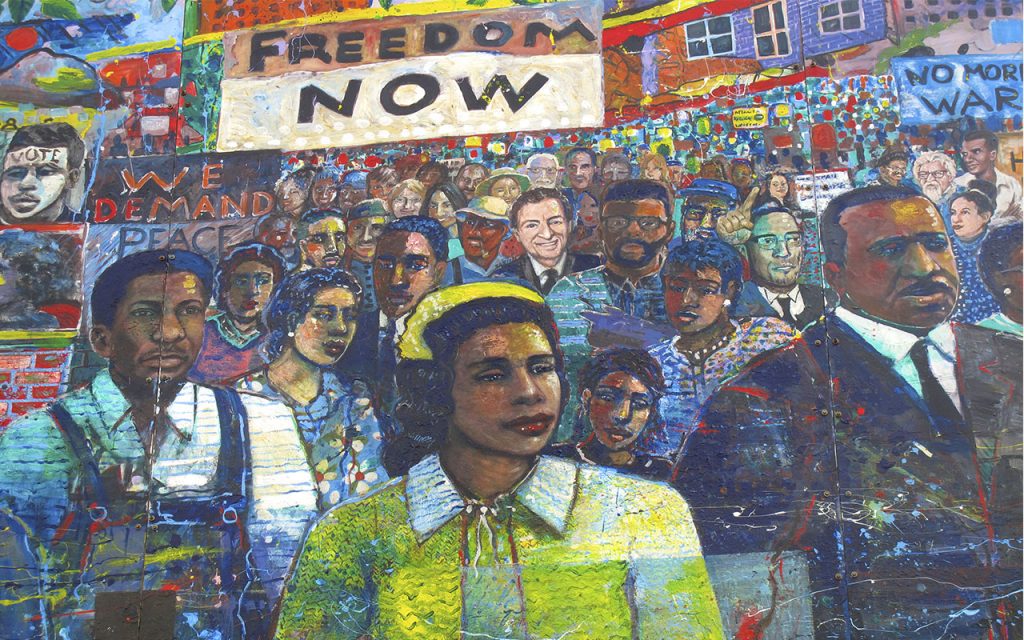
While Juneteenth marks a day of resilience, endurance, and emancipation for Black Americans, this year’s anniversary is also a harsh reminder of the delayed freedom granted in 1865. For many, there is a renewed interest in the day traditionally meant to celebrate freedom, as the country grapples with two viruses eating away at the nation—COVID-19 and White supremacy—both of which underscore the nation’s longstanding history of institutional racism and racial inequality.
This year’s 155th anniversary comes at a time marked by global unrest and protests against systemic racism (opens in a new tab) and police brutality (opens in a new tab) that led to the deaths of George Floyd (opens in a new tab), Breonna Taylor (opens in a new tab), Ahmaud Arbery (opens in a new tab), Rayshard Brooks (opens in a new tab), and countless other Black Americans (opens in a new tab). This same level of disparate impact can be seen in national coronavirus data, which show Black Americans losing their jobs (opens in a new tab)and dying (opens in a new tab)at nearly three times the rate of White Americans.
The economic disparities between Black and White Americans are prolonged and profound. In observance of Juneteenth, the Washington Center for Equitable Growth is reflecting on the perceived progress made in the lives of Black Americans and highlighting evidenced-backed policy solutions needed to reduce economic racial inequality.
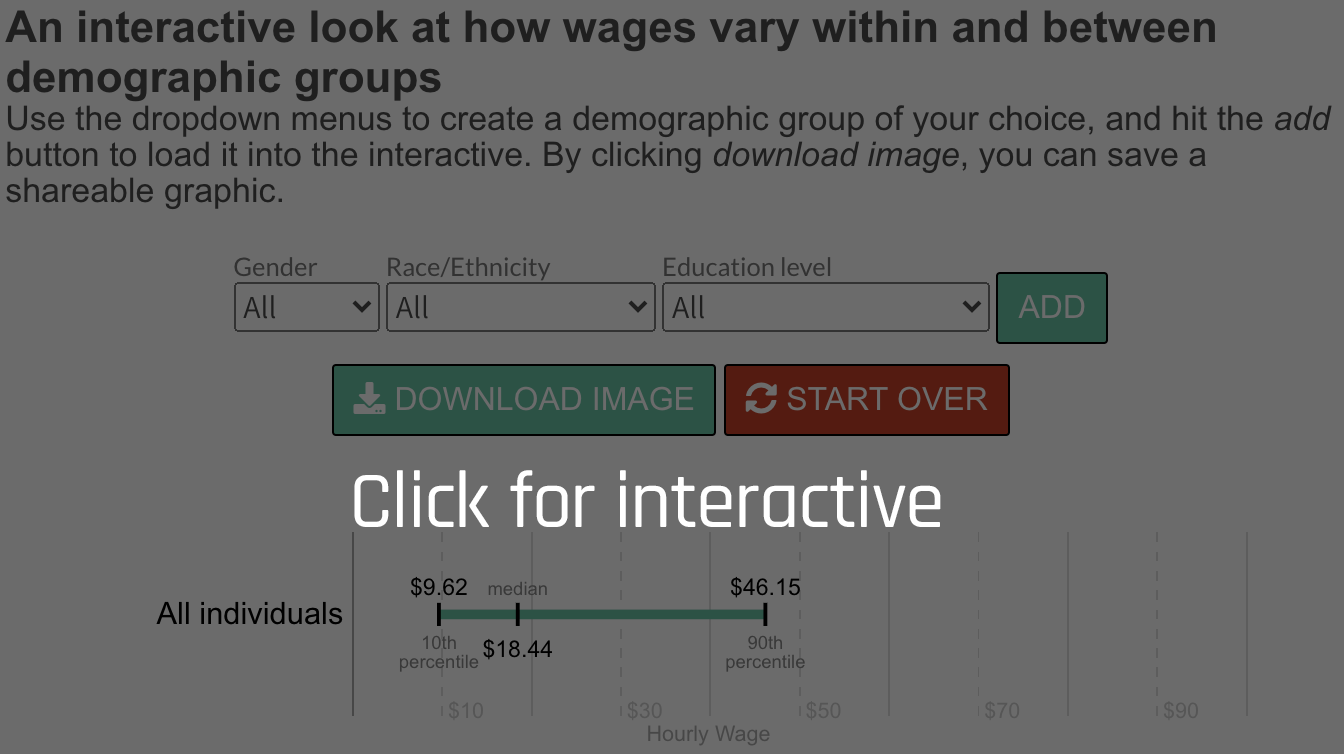
Black workers, especially Black female workers, have lower salaries than White workers with similar levels of education. While the median White male worker with a college degree earns $31.25 an hour, the median Black male worker with a college degree only earns only $23.08. This is only $5 more than a White male worker with a high school degree. Some of this wage gap is due to occupational segregation, but the majority of it is “unexplained” and is attributed to discrimination. (See Interactive.)
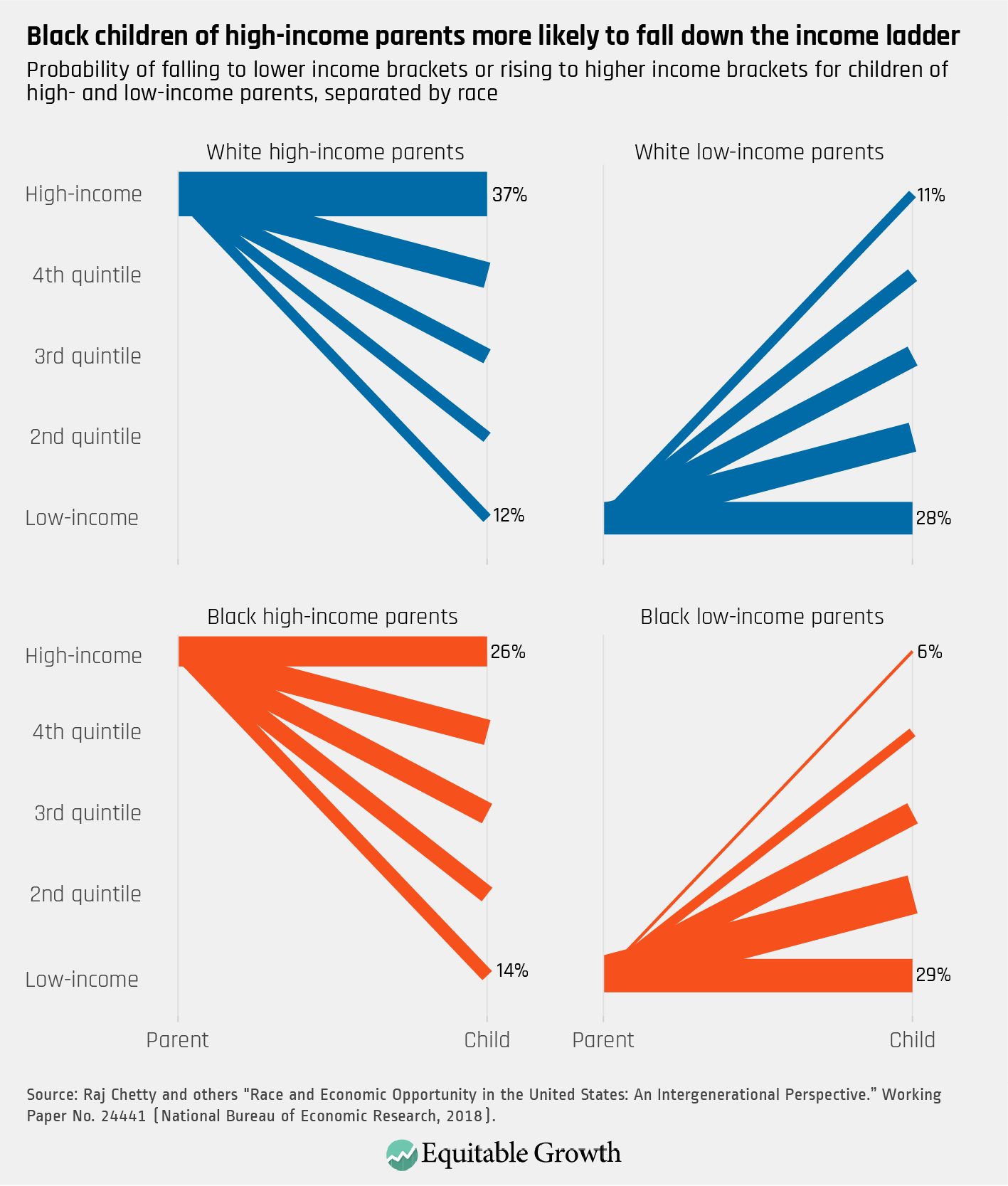
Black Americans also experience a disparity in intergenerational mobility, or the relationship between their income as an adult and their parents’ income at a similar age. While Latinx and Asian Americans have intergenerational mobility rates converging (opens in a new tab) with those of White Americans, Black and Native Americans do not. One reason for this is that even when raised in high-income families, Black children are far more likely to experience downward mobility. (See Figure 1.)

The role of the U.S. criminal justice system in driving downward mobility for Black Americans is strongly hinted at (opens in a new tab) in this research. More research is clearly needed to further our understanding of the economic consequences of our racist criminal justice system.
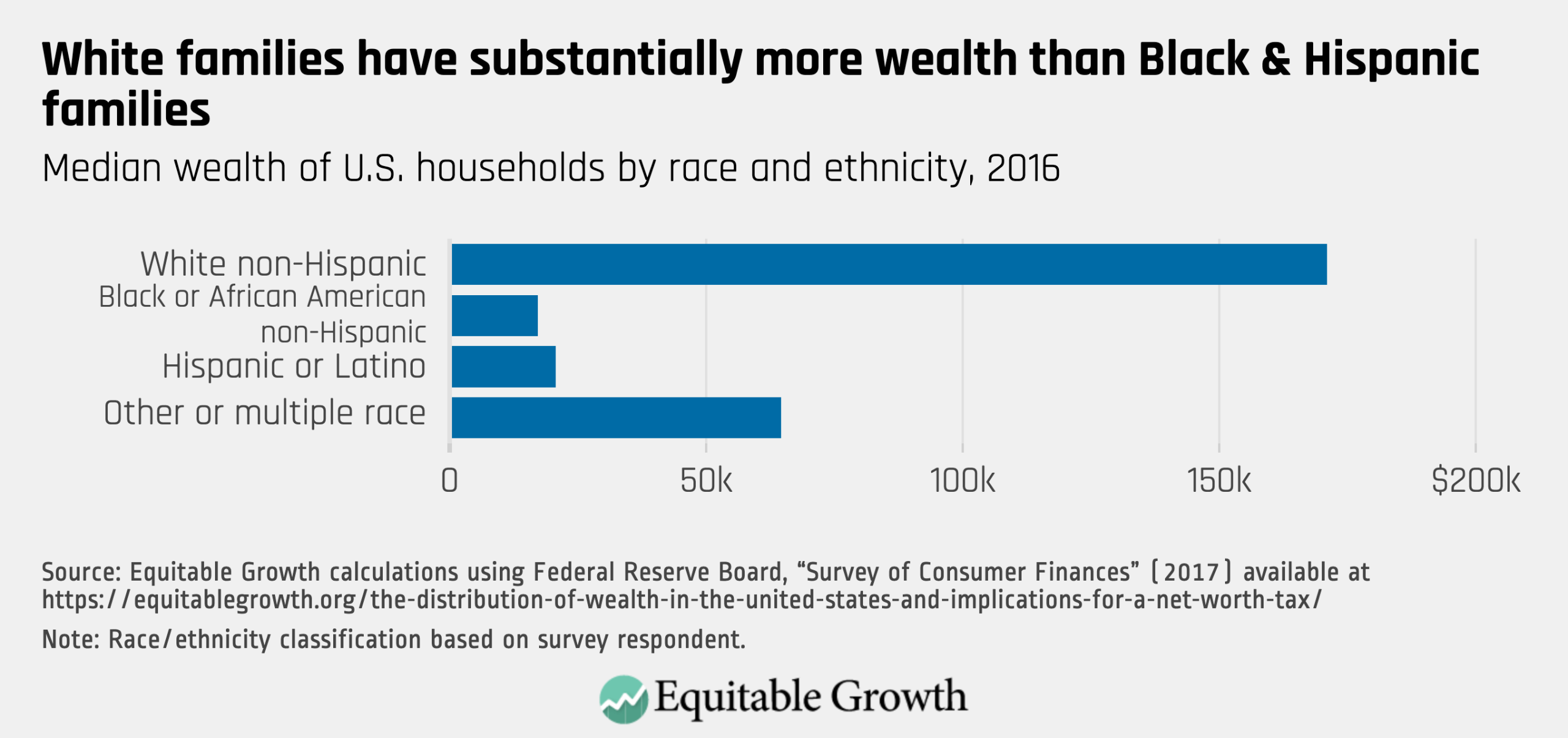
The Black-White racial wealth divide is even larger than the Black-White income gap. White families have median wealth of $171,000 while Black families have median wealth of only $17,600. Differences in income (opens in a new tab) or education cannot explain this wealth divide between White and Black American families—the net worth of Black families in the top income quintile is only $262,800 (opens in a new tab), which is barely more than half that of White families in the top income quintile. (See Figure 2.)

Median wealth of U.S. households by race and ethnicity, 2016
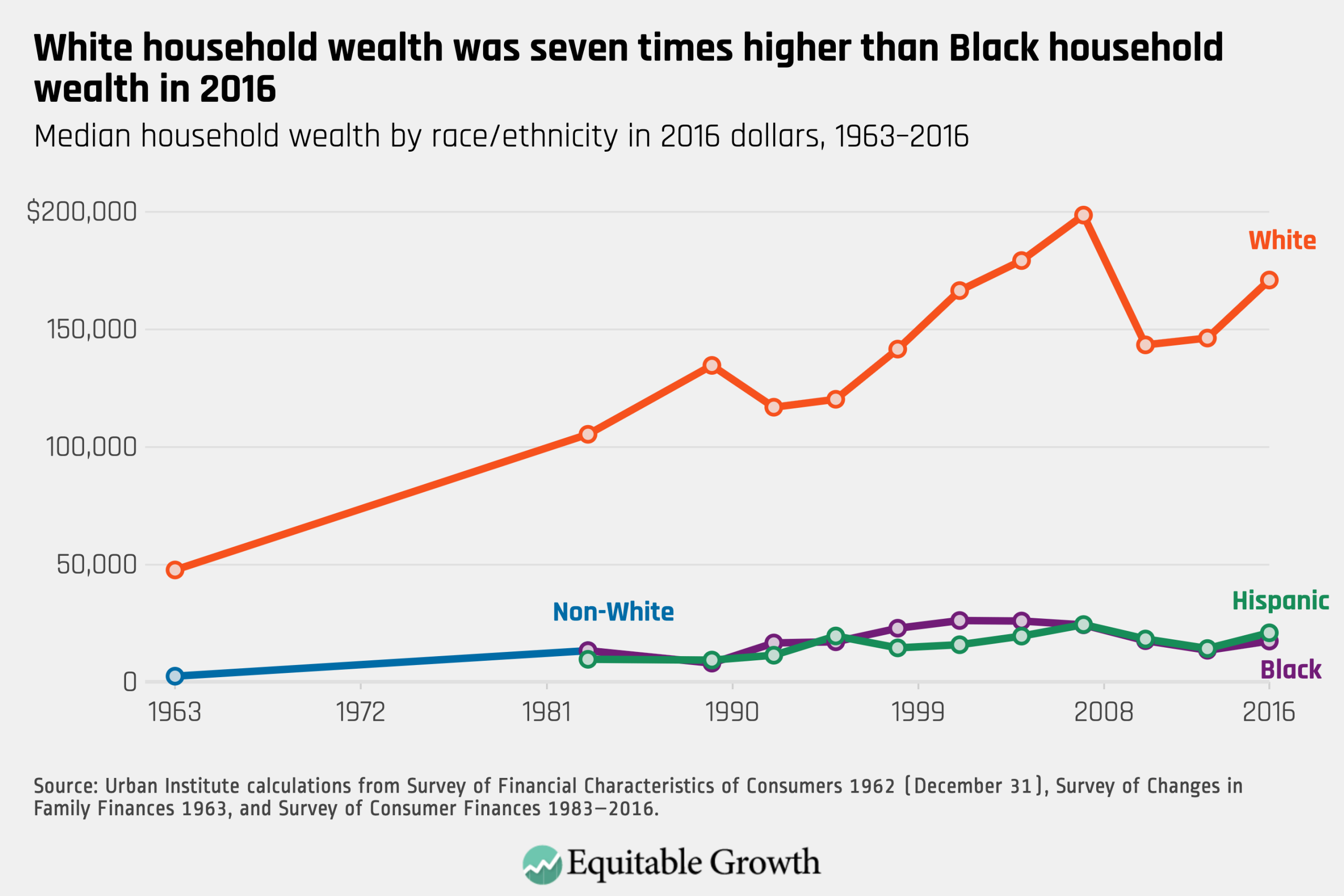
The Black-White racial wealth divide has not decreased over time, despite Black Americans’ education and income levels improving over time. This again belies arguments that the economic racial inequality that Black Americans experience is due to differences in skills rewarded by the marketplace. (See Figure 3.)

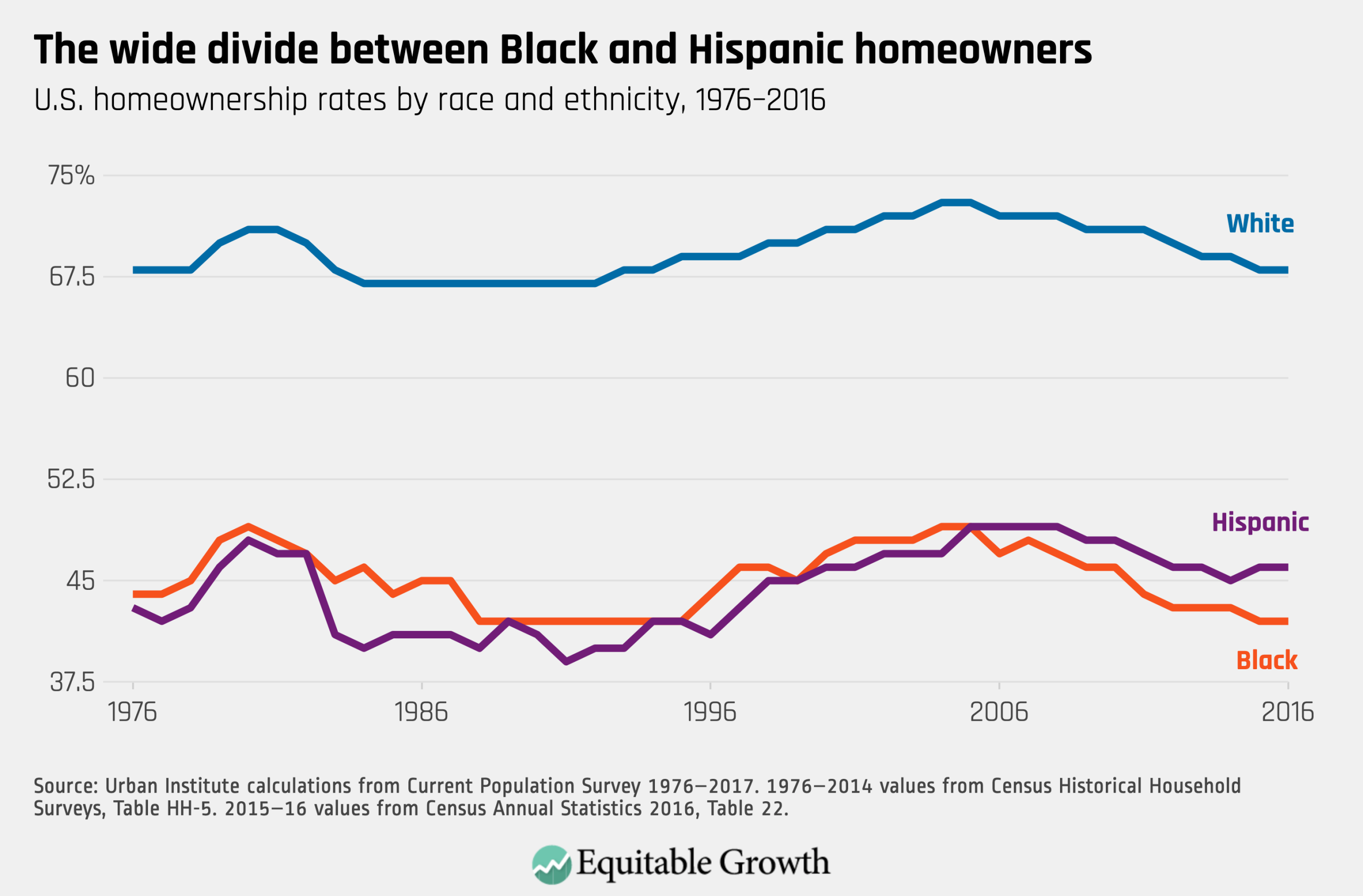
One major contributor to the Black-White racial wealth divide is the systemic policy support for White (opens in a new tab) homeownership and systematic barring of Black homeownership through federal policies that created redlining (opens in a new tab) and the modern mortgage market in the 1930s. These policies have had lingering effects for decades, and despite the Fair Housing Act of 1968 legally barring discrimination in housing, Black homeownership rates have not meaningfully changed. They were further worsened during the mid-2000s housing bubble, when banks gave Black borrowers subprime mortgages even (opens in a new tab) when (opens in a new tab) they had better credit scores than White borrowers. (See Figure 4.)

U.S. homeownership rates by race and ethnicity, 1976–2016
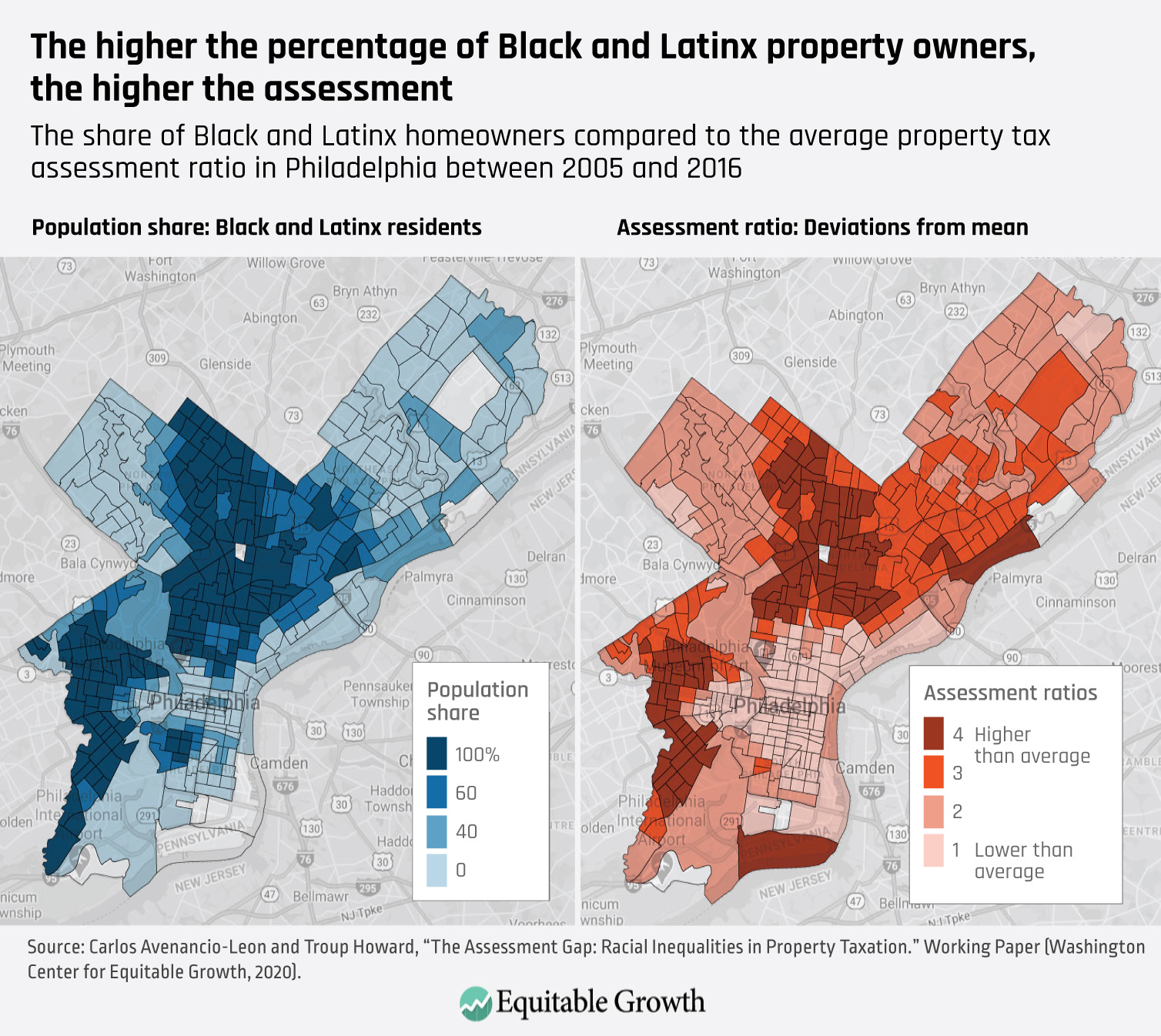
In addition, even when able to purchase homes, Black and Latinx homeowners face higher property tax burdens. New research from Carlos Avenancio-León of Indiana University Bloomington and Troup Howard of the University of California, Berkeley found that even within regions where every homeowner theoretically faces the same rate of taxation, Black and Latinx homeowners nonetheless end up paying a 10 percent to 13 percent higher tax rate, on average, within the same local property tax jurisdiction. (See Map.)

The share of Black and Latinx homeowners compared to the average property tax ratio in Philadelphia between 2005 and 2016
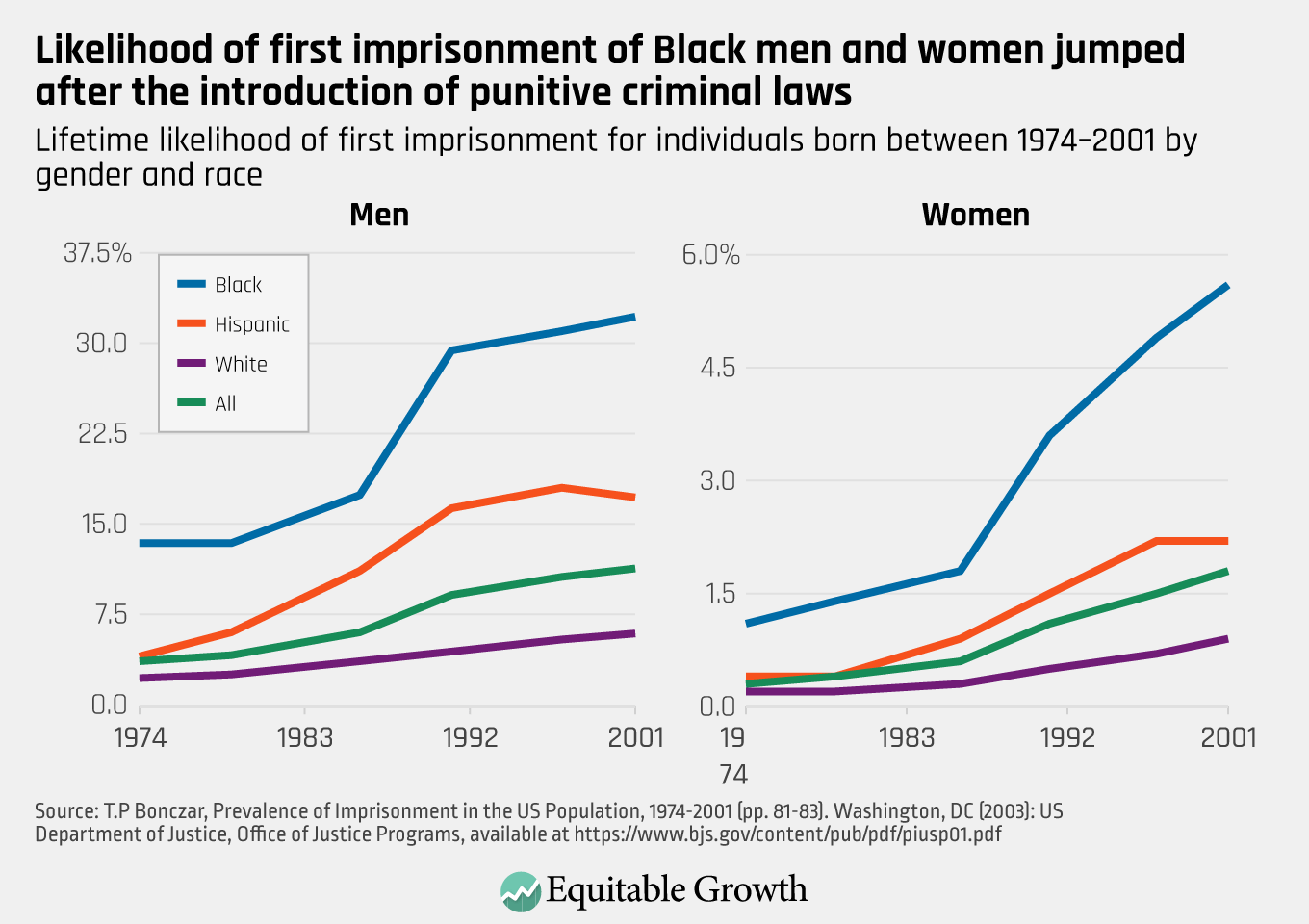
An issue in its own right, the disproportionate incarceration of Black people is also a contributing factor to economic racial inequality. Time served is time away from the labor market, detrimental to finding and keeping future employment, and penalizes even those found innocent through administrative fines and fees. The dramatic increase in incarceration over recent decades has not been driven by increases in crime but rather by a shift to more punitive sentencing regimes that disproportionately fall on Black and Latinx communities. (See Figure 5.)

Lifetime likelihood of first imprisonment for individuals born between 1974–2001 by gender and race
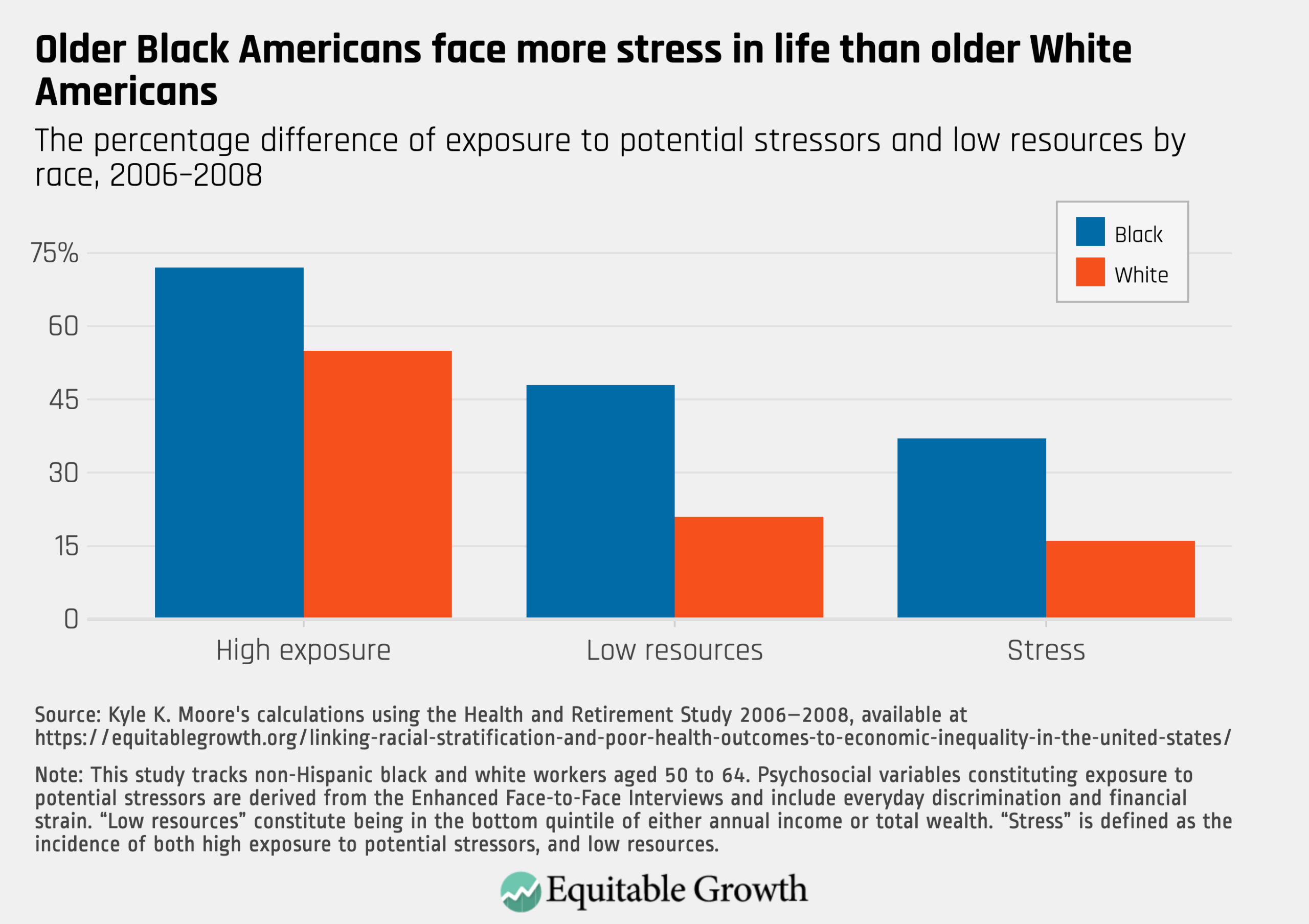
The health disparities that Black Americans experience in conditions such as hypertension and inflammation are an example of the limits of an economic framework for understanding racial disparities. Even at similar levels of income and education, Black Americans experience worse health outcomes. One reason is the discrimination and racism experienced daily by Black Americans, which exacts a physical toll that increases the incidence of these types of conditions. (See Figure 6.)

The percentage difference of exposure to potential stressors and low resources by race, 2006–2008
Higher incidence of these types of conditions is already a matter of public health justice. But when paired with the novel coronavirus (opens in a new tab) that turns these pre-existing conditions into acute vulnerabilities, it becomes especially so. Layer on top of this the disproportionate representation of Black workers in jobs where they’re exposed to the coronavirus, the housing they’re constrained to because of the ongoing legacy of redlining and other discriminatory mortgage lending practices, and other structural inequalities, and there now is a perfect storm for a global health pandemic to vastly disproportionately impact (opens in a new tab) Black communities.
The economic racial inequality facing Black Americans has not improved over time despite rising education levels and a growing national economy. That is because economic racial inequality is due to intentional public policies of discrimination (opens in a new tab), segregation, and incarceration. Therefore, only structural economic change will be sufficient to address economic racial inequality.
“There comes a time when the cup of endurance runs over, and men are no longer willing to be plunged into the abyss of despair.”
Martin Luther King Jr.
One group of policy solutions to consider focus on wealth building. Policies that simply ensure workers are being paid fairly and equitably the money they earn is an easy place to start. Possible suggestions include sufficiently funding (opens in a new tab) the Equal Employment Opportunity Commission so it can enforce existing anti-discrimination labor laws and prosecute wage theft, and eliminating the tipped minimum wage, which is racist in origin (opens in a new tab) and was supported along starkly racial lines (opens in a new tab) here in Washington, D.C.
Policies that address the racist differences in credit options—such as postal banking, as recommended by Washington Center for Equitable Growth board member and UC Irvine law professor Mehrsa Baradaran—and reforms to the Community Reinvestment Act are another group. Addressing student debt, which disproportionately burdens (opens in a new tab) Black students as a consequence of the Black-White wealth divide, will also be necessary, either through a progressive approach or even outright cancellation. But, ultimately, centuries of enslavement, institutionalized violence, purposeful exclusion (opens in a new tab) from the White wealth-building policies of the New Deal, and ongoing labor market discrimination—all of which have contributed to the Black-White wealth gap—call for a reparations program (opens in a new tab) on a scale sufficient to address the problem.
Another group of policy solutions focused on addressing the racism of the U.S. criminal justice system would also serve to redirect taxpayer dollars toward public investments that improve economic growth and mobility for Black Americans. Defunding the police would redirect public funds from policing to education, social services, and other pro-social public goods that will boost intergenerational mobility. This would merely reverse the policy choices (opens in a new tab) many cities made decades ago, as Black migrants from the South moved to northern cities as part of the Great Migration, with those cities responding by decreasing public expenditures—except on policing.
We need to enact policies that begin to eradicate economic racial inequality as soon as possible. While our nation made some progress toward making the U.S. economy and society much more equitable since enslaved Black Americans gained their freedom in 1865, the legacy of Jim Crow and the continuing economic racial discrimination so evident in the graphics above shows how much further we have to go. Downward mobility is on the rise, racist policies have not been eradicated, and the racial wealth divide is not only not closing but rather is increasing. It is abundantly clear that we still have much work to do.
A few suggestions on individual scholars to follow for in-depth reading on these issues:
Olubenga Ajilore (opens in a new tab), senior economist, Center for American Progress
Algernon Austin (opens in a new tab), senior researcher, NAACP Legal Defense Fund
Carlos Avenancio, assistant professor of finance, Indiana University Bloomington
Nina Banks (opens in a new tab), associate professor of economics, Bucknell University
Mehrsa Baradaran, professor of law, University of California, Irvine School of Law
Peter Blair (opens in a new tab), assistant professor of education, Harvard Graduate School of Education
Lisa Cook, professor, Michigan State University
Robynn Cox, assistant professor of social work, University of Southern California
William Darity, Jr., Samuel DuBois Cook professor of public policy, African and African American studies, and economics, and the director of the Samuel DuBois Cook Center on Social Equity at Duke University
Ellora Derenoncourt, incoming assistant professor, University of California, Berkeley
Dania Francis, assistant professor of economics, University of Massachusetts, Boston
Darrick Hamilton, executive director of the Kirwan Institute for the Study of Race and Ethnicity, Ohio State University
Bradley Hardy, associate professor, American University
Kilolo Kijakazi (opens in a new tab), institute fellow, Urban Institute
Trevon Logan, Hazel C. Youngberg Trustees distinguished professor of economics, Ohio State University
Kyle Moore, senior policy analyst, U.S. Congress Joint Economic Committee
Anna Gifty Opoku-Agyeman (opens in a new tab), co-founder and CEO, the Sadie Collective
Mark Paul, assistant professor of economics, New College of Florida
William E. Spriggs (opens in a new tab), chief economist, AFL-CIO
Fanta Traore (opens in a new tab), co-Founder and COO, the Sadie Collective
Valerie Wilson (opens in a new tab), director, program on race, ethnicity, and the economy, Economic Policy Institute
Jhacova Williams (opens in a new tab), economist, Economic Policy Institute
Naomi Zewde, assistant professor, Graduate School of Public Health and Health Policy, City University of New York (CUNY) Hunter College
Essays SEP 2, 2026
By: Megan Rivera
Essays AUG 31, 2026
By: Christopher Bangert-Drowns
Essays AUG 14, 2026
By: Carlos Fernando Avenancio-Leon
Get updates on our latest research, event announcements, and policy insights delivered straight to your inbox. Stay connected with the leading voices on equitable growth.