



Policy
What Work Does Generative AI Do?
Essays SEP 8, 2026
By: Alexander Bick, Adam Blandin, David Deming, Tyler Schumacher
AI, Tech & Energy
Labor, Wages & Worker Power
 Browse All Resources
MAY 6, 2016
By: Nick Bunker

This is a weekly post we publish on Fridays with links to articles that touch on economic inequality and growth. The first section is a round-up of what Equitable Growth has published this week and the second is work we’re highlighting from elsewhere. We won’t be the first to share these articles, but we hope by taking a look back at the whole week, we can put them in context.
The U.S. unemployment rate is close to many economists’ estimate of its long-run level. But accelerating wage growth isn’t here yet. What could explain the lack of takeoff? We investigate.
On Tuesday, we published the latest set of papers in the Equitable Growth working paper series. This month’s batch covers the macroeconomic effects of unemployment benefit extensions (opens in a new tab), the possible decline in intragenerational mobility, and how elections affect foreign direct investment.
When it comes to that second working paper, the result is quite surprising. Most of the research has found that mobility over a career has stayed relatively flat since the early 1980s. But the paper argues that one’s relative position at the beginning of their career has become more correlated with their position later on.
Last week, we released an interactive graph on trends in U.S. labor force participation that lets you select a specific time period to look at. This week, we released another edition that lets you select an age bracket to look at. Check it out.
Good news: The labor share of income in the United States is creeping upward. The bad news: This is partly due to productivity growth being so slow right now. So while labor may be gaining relatively, it’s in part because the economy’s long-run potential is slowing down.
Heather Boushey and Kavya Vaghul continue their series of issue briefs on the importance of women’s working hours for family economic security. In this installment, the two look at trends in economic security for young families.
The recovery in the U.S. housing market after the bursting of the bubble has been quite unequal. In fact, the increase in housing inequality has now reached its highest level since the Second World War. Jim Tankersley and Ted Mellnik dig into the data and the story. [wonkblog (opens in a new tab)]
Gig economy companies—those like Uber and Airbnb that serve as digital platforms—have been heralded as many things, including forces for reducing income inequality. But new evidence indicates they do just the opposite, as Eric Morath reports. [real time economics (opens in a new tab)]
Wealth can be transmitted from one generation to the next in a number of ways. Homeownership is one such way, as parents can help their children build up enough money for a down payment. But this doesn’t seem to happen as often for black Americans. Emily Badger looks into this finding. [wonkblog (opens in a new tab)]
The increases in the U.S. labor force participation rate in recent months have spurred some hopes that labor market strength is pulling workers back into the labor force. But as Luke Kawa reports, there’s some evidence that this hasn’t happened yet, and the increases may be fleeting. [bloomberg (opens in a new tab)]
As economists have started to contemplate the use of “helicopter money” to help boost economic growth, many have maintained that it’s just a form of fiscal policy run through a central bank. But Martin Sandbu disagrees with that framing. [free lunch (opens in a new tab)]
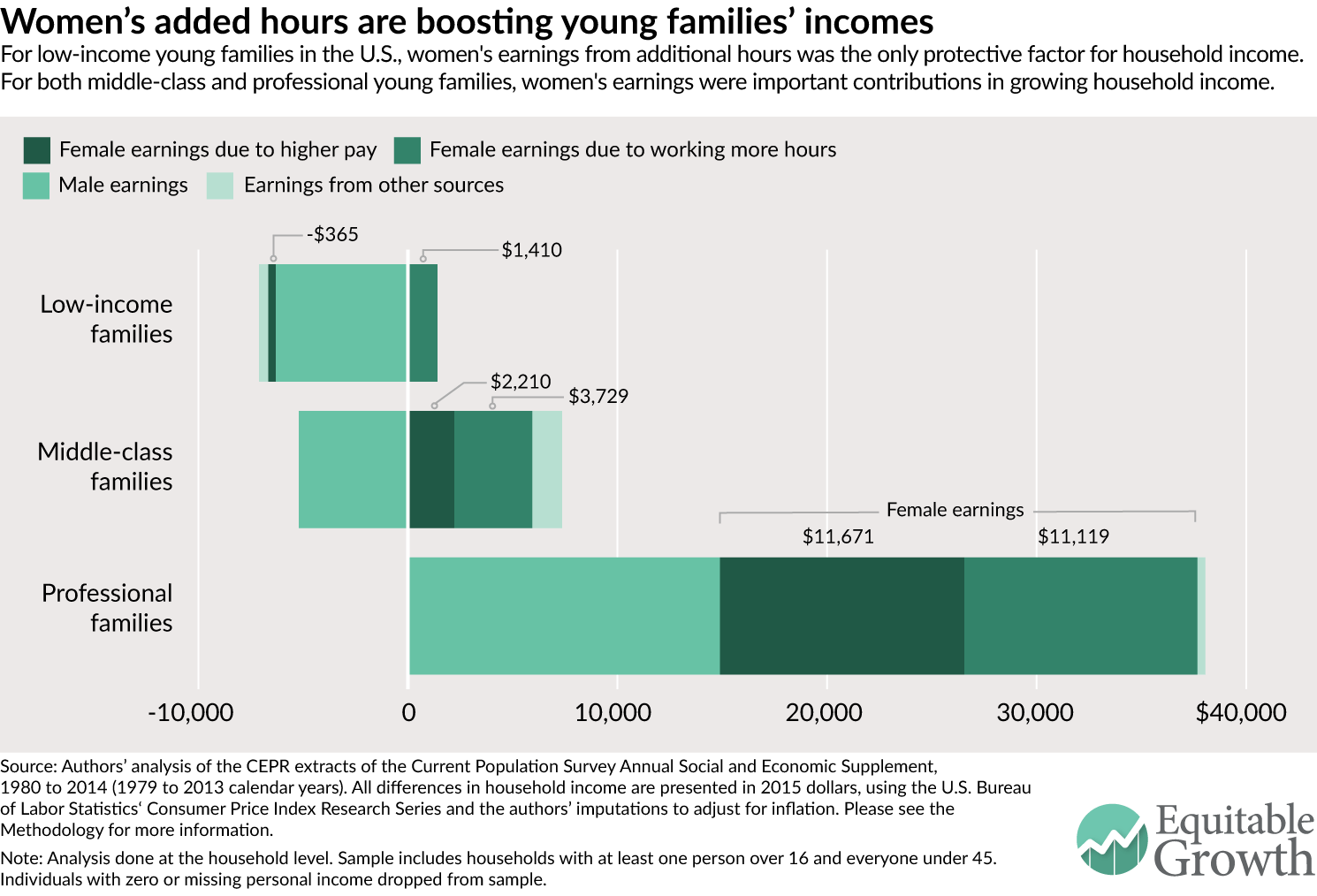
Figure from “Garnering economic security is complicated for young families,” by Heather Boushey and Kavya Vaghul.
Essays SEP 8, 2026
By: Alexander Bick, Adam Blandin, David Deming, Tyler Schumacher

Essays SEP 2, 2026
By: Megan Rivera

Essays AUG 31, 2026
By: Christopher Bangert-Drowns
Get updates on our latest research, event announcements, and policy insights delivered straight to your inbox. Stay connected with the leading voices on equitable growth.


