



Policy
What Work Does Generative AI Do?
Essays SEP 8, 2026
By: Alexander Bick, Adam Blandin, David Deming, Tyler Schumacher
AI, Tech & Energy
Labor, Wages & Worker Power
 Browse All Resources
OCT 20, 2017
By: Nick Bunker

This is a weekly post we publish on Fridays with links to articles that touch on economic inequality and growth. The first section is a round-up of what Equitable Growth published this week and the second is the work we’re highlighting from elsewhere. We won’t be the first to share these articles, but we hope by taking a look back at the whole week, we can put them in context.
This week’s Working Paper series release features two papers. The first paper argues that the decline in the labor share of income can be traced back to the slowdown in productivity growth. The second uses online surveys to look at what Americans think about taxing capital.
Nisha Chikhale writes about the second paper, focusing on its finding that Americans seem to favor a wealth tax, especially if the wealth is inherited.
In the latest issue of Democracy Journal, Heather Boushey reviews (opens in a new tab) Richard V. Reeves’s book, Dream Hoarders, looking at the privileges of the United States’s “favored fifth.”
As part of the Equitable Growth in Conversation series, Heather Boushey talks to Reed College economist Kimberly A. Clausing about reforming the corporate income tax.
Reforming the tax code is supposed to lead to a simpler code with fewer loopholes. Greg Leiserson argues the “Unified Framework” for tax code changes from the Trump Administration and Congressional Republicans would create two new wasteful tax expenditures.
Bridget Ansel and Heather Boushey write in a new report (opens in a new tab) for the Hamilton Project about the reforms needed to update labor standards for 21st century families.
Many details of the tax code changes proposed in the “Unified Framework” are still hazy. Ernie Tedeschi points out that the clearest proposals would boost the incomes of richer taxpayers while those purporting to boost the incomes of those at the middle and the bottom are the fuzziest. [the upshot (opens in a new tab)]
The problem of regional inequality is increasingly shaping U.S. politics and doesn’t seem to be going away anytime soon. Ryan Avent writes about potential policy solutions. [the economist (opens in a new tab)]
Thomas Piketty’s Capital in the Twenty-First Century sparked a wide-ranging conversation about wealth and income inequality. But the tome had some important gaps. Melissa S. Kearney reviews After Piketty, an attempt to fill in those gaps. [foreign affairs (opens in a new tab)]
Matthew C. Klein writes about a new paper from Harvard University economist (and Equitable Growth Steering Committee member) Jason Furman on the relationship between inequality and growth. Furman suggests that policymakers might want to spend more time looking at the distributional impacts of policy and less on the growth effects. [ft alphaville (opens in a new tab)]
Are today’s technology giants just another version of the IBMs and Hewlett-Packards of the past that were disrupted by new start-ups? No, argues Farhad Manjoo. The new “frightful five” have taken steps to prevent the emergence of new competitors. [nyt (opens in a new tab)]
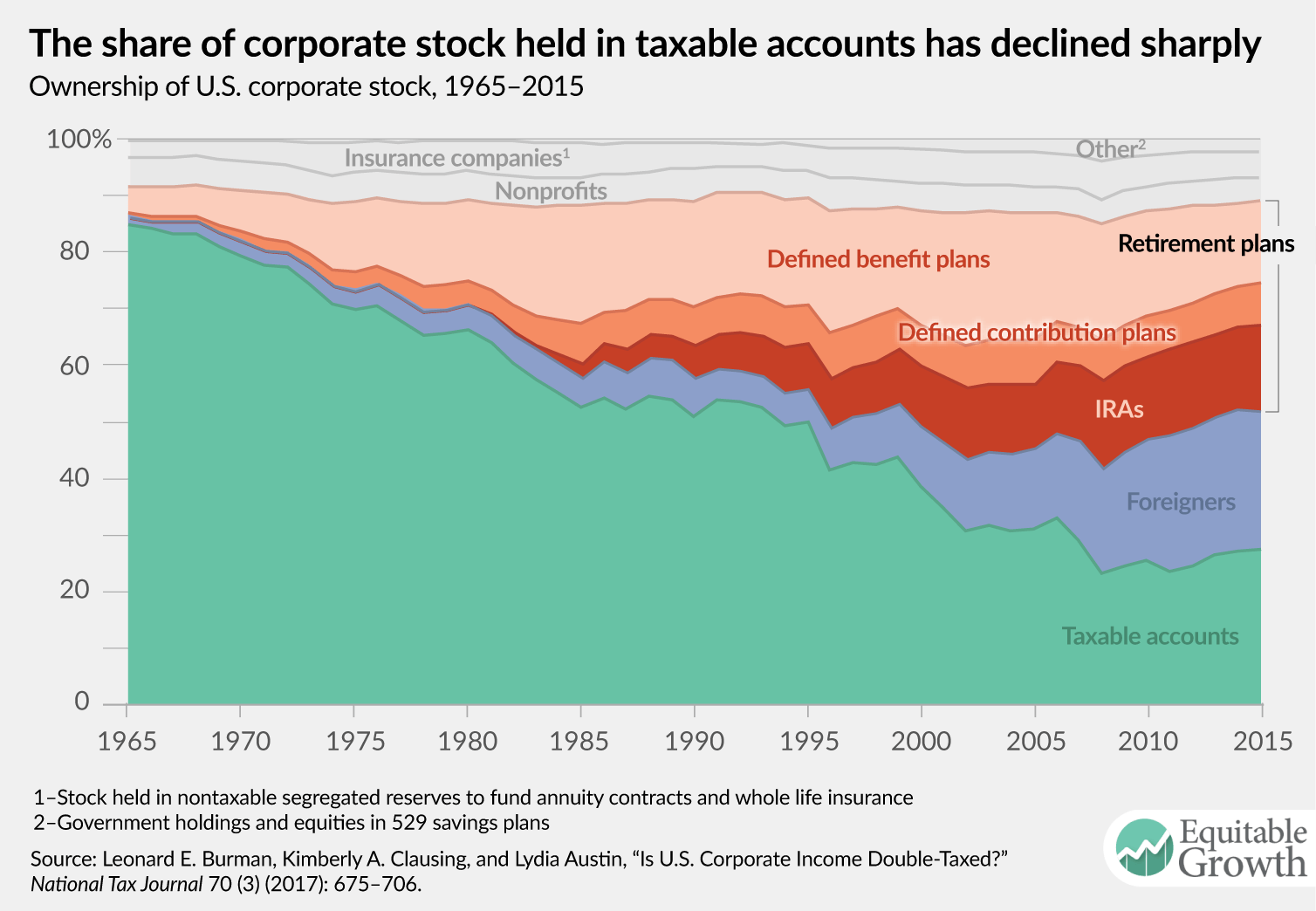
Figure is from “The ‘Unified Framework’ is a proposal for two new wasteful tax expenditures,” by Greg Leiserson
Essays SEP 8, 2026
By: Alexander Bick, Adam Blandin, David Deming, Tyler Schumacher

Essays SEP 2, 2026
By: Megan Rivera

Essays AUG 31, 2026
By: Christopher Bangert-Drowns
Get updates on our latest research, event announcements, and policy insights delivered straight to your inbox. Stay connected with the leading voices on equitable growth.


