




Policy
What Work Does Generative AI Do?
Essays SEP 8, 2026
By: Alexander Bick, Adam Blandin, David Deming, Tyler Schumacher
AI, Tech & Energy
Labor, Wages & Worker Power
 Browse All Resources
JAN 12, 2018
By: Bridget Ansel

This is a weekly post we publish on Fridays with links to articles that touch on economic inequality and growth. The first section is a round-up of what Equitable Growth published this week and the second is the work we’re highlighting from elsewhere. We won’t be the first to share these articles, but we hope by taking a look back at the whole week, we can put them in context.
Iris Marechal highlights new research showing that economic conditions played a very small role in the growing opioid crisis, countering the common “deaths of despair” theory. Rather, the reduction in cost and increase in availability of drugs were the biggest drivers.
Nick Bunker digs into the latest Job Openings and Labor Turnover Survey data release, better known as JOLTS, and what that tells us about the state of the economy.
Speaking of JOLTS, Nick is featured (opens in a new tab) on Planet Money’s “The Indicator” this week for their episode, “Why Quitting is Awesome.” Nick discusses why he loves this lesser-known data set, and why more people quitting their job is reflective of a stronger economy.
Georgetown University economist Harry Holzer pushes back on Walmart’s assertion that the new corporate tax cut incentivized the company to raise wages to provide better benefits. Holzer argues that Walmart probably would have taken these actions even without the new tax cuts in 2018 given the more competitive labor market and the company’s attempt to banish its reputation as a bad employer. [fortune (opens in a new tab)]
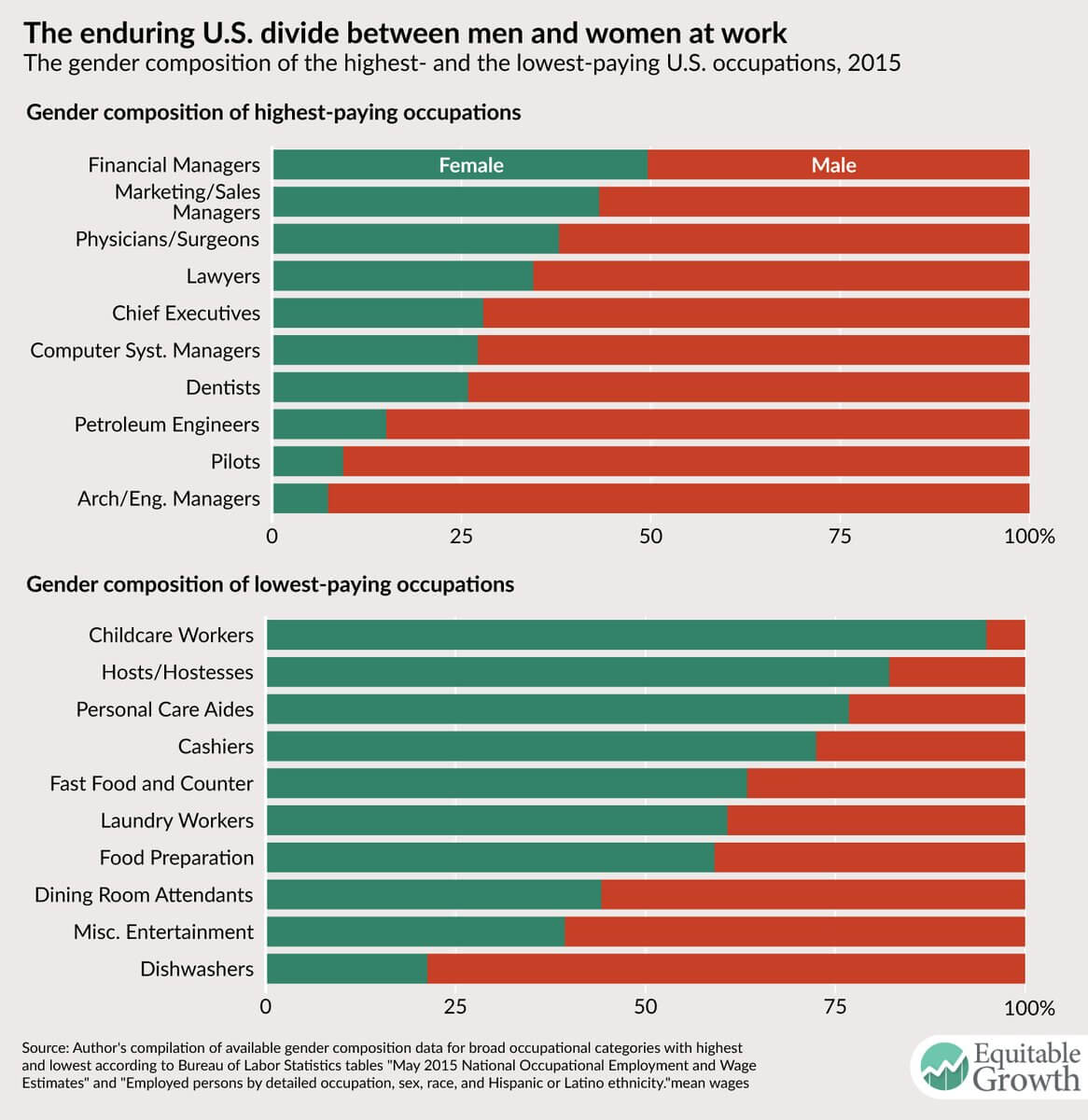
Claire Cain Miler and Ruth Fremson look at the growing number of men who have gone into nursing, a historically female-dominated occupation, in an era in which traditionally male jobs are on the decline. [the upshot (opens in a new tab)]
While some are touting the historically low unemployment rates for black and Hispanic workers, Gillian B. White cautions us to not applaud just yet. She highlights how significant racial discrepancies in the unemployment rate continue to exist, even among individuals of similar education and skill levels. [the atlantic (opens in a new tab)]
Branko Milanovic, an economist at the Graduate Center of the City University of New York, looks at the work of early 20th century scholars, such as John Hobson, Max Weber, and Rudolf Hilferding, and what their more holistic view of economic and social forces can teach us today. [vox (opens in a new tab)]
Heather Long writes about a proposal to give each newborn in the United States a “Baby Bond” between $500 and $50,000 depending on their parents’ wealth. The money, according to Darrick Hamilton of the New School and William Darity of Duke University, could help mitigate historic levels of wealth inequality within the United States. [wonkblog (opens in a new tab)]
Essays SEP 8, 2026
By: Alexander Bick, Adam Blandin, David Deming, Tyler Schumacher

Essays SEP 2, 2026
By: Megan Rivera

Essays AUG 31, 2026
By: Christopher Bangert-Drowns
Get updates on our latest research, event announcements, and policy insights delivered straight to your inbox. Stay connected with the leading voices on equitable growth.


