




Policy
What Work Does Generative AI Do?
Essays SEP 8, 2026
By: Alexander Bick, Adam Blandin, David Deming, Tyler Schumacher
AI, Tech & Energy
Labor, Wages & Worker Power
 Browse All Resources
FEB 23, 2018
By: Nick Bunker

This is a weekly post we publish on Fridays with links to articles that touch on economic inequality and growth. The first section is a round-up of what Equitable Growth published this week and the second is the work we’re highlighting from elsewhere. We won’t be the first to share these articles, but we hope by taking a look back at the whole week, we can put them in context.
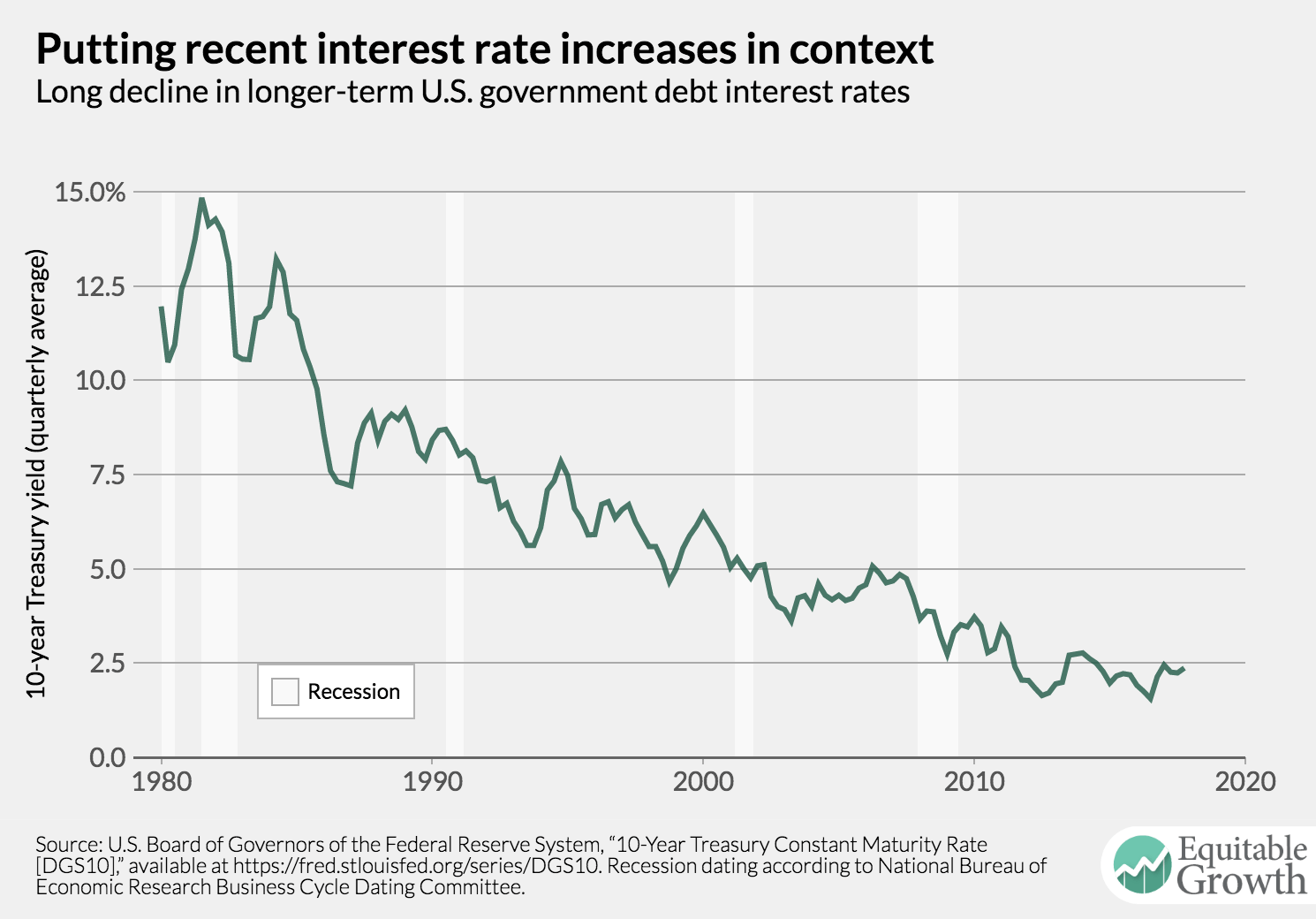
The latest release in the Equitable Growth Working Paper series looks at how high levels of income inequality might affect aggregate demand. Adrien Auclert of Stanford University and Matthew Rognlie of Northwestern University summarize their research while another post digs into what their findings might mean for the future of interest rates.
The U.S. Supreme Court next week will hear oral arguments in Ohio v. American Express, a case you likely haven’t heard of. But as Michael Kades argues, how the court rules on the case could have a major impact on the future of antitrust policy.
Check out the slides from a presentation Greg Leiserson gave this week on the recently passed Tax Cuts and Jobs Act.
The Family and Medical Leave Act was signed into law 25 years ago, notes former U.S. Treasury Secretary Robert E. Rubin, but “while the FMLA was a landmark achievement, it doesn’t go far enough. American workers and businesses need a universal paid leave program.” [wapo (opens in a new tab)]
Leah Fessler interviews Harvard University economist Claudia Goldin about Goldin’s research into the origins of the gender pay gap and her own career. [quartz (opens in a new tab)]
Marcus Casey and Bradley Hardy—fellows at The Brookings Institution—point out that while the black unemployment rate is having its time in the national spotlight as it hit historical lows recently, the economic well-being of any community can’t be determined by just the unemployment rate. [brookings (opens in a new tab)]
Should employers in the United States be able to ask a prospective hire about her previous salaries? Several states and cities have passed laws recently banning the practice. Noam Scheiber looks into how such policies might affect hiring. [nyt (opens in a new tab)]
The rate at which U.S. workers participated in the labor force at one time far outstretched the participation rate of workers in the United Kingdom. But since the late 1990s, the participation rate in the United States has dropped sharply while and the U.K. rate has risen. What happened? Ernie Tedeschi dives into the data. [medium (opens in a new tab)]
Essays SEP 8, 2026
By: Alexander Bick, Adam Blandin, David Deming, Tyler Schumacher

Essays SEP 2, 2026
By: Megan Rivera

Essays AUG 31, 2026
By: Christopher Bangert-Drowns
Get updates on our latest research, event announcements, and policy insights delivered straight to your inbox. Stay connected with the leading voices on equitable growth.


