
What happens to U.S. workers without access to Unemployment Insurance amid economic downturns or disruptions related to AI?
Essays SEP 2, 2026
By: Megan Rivera
MAR 4, 2020
By: Claudia Sahm
The human tragedy of the coronavirus is now here in the United States. Nine deaths (opens in a new tab) from the coronavirus have been reported in Washington state so far. Each day, more and more people are falling ill. Tragically, some will die; many others will recover but very well may spread the virus further. Quarantines are likely to be widespread.
The coronavirus is first and foremost a public health crisis. The front lines are the women and men who work at hospitals, community health centers, and pharmacies across the country. Each of us can contribute when we check on our elderly neighbors, make sure our children wash their hands (for 20 seconds with soap!), and take precautions to stay healthy and calm.
The coronavirus is a threat to our economy, too. We are starting to see it here, at the 26,000-feet (and falling (opens in a new tab)) view of our volatile financial markets displayed in our living rooms, on our mobile phones, and on TVs in barbershops (opens in a new tab) across the country. Last week, stocks plunged 11 percent in a single week—the most rapid correction ever. The yields on 10-year Treasuries, a benchmark interest rate for mortgages and other loans in the United States, are now less than 1 percent—the lowest level on record. (See Figure 1.)
Figure 1
Long-term interest rates in the United States fall to lowest level on record
Daily yields on 10-year Treasury bonds, percent change, 1960–2020
<img data-caption="Source: Federal Reserve Economic Data, “10-Year Treasury Constant Maturity Rate” (March 3, 2020) available at https://fred.stlouisfed.org/series/DGs10.
Note: Shaded areas are recessions.” alt=”Source: Federal Reserve Economic Data, “10-Year Treasury Constant Maturity Rate” (March 3, 2020) available at https://fred.stlouisfed.org/series/DGs10.
Note: Shaded areas are recessions.” class=”wp-photo size-full wp-image-55825″ src=”/wp-content/uploads/2020/03/fredgraph.png” alt=”Source: Federal Reserve Economic Data, “10-Year Treasury Constant Maturity Rate” (March 3, 2020) available at https://fred.stlouisfed.org/series/DGs10. Note: Shaded areas are recessions.” width=”1399″ height=”929″ data-attachurl=”https://equitablegrowth.org/?attachment_id=55825″ data-attachid=”55825″ data-alignment=”alignnone”>
Low interest rates are good for many people, businesses, and local governments. If they need to borrow money, they will pay less in interest and can generally get a better deal from lenders. Here, the Fed is helping push interest rates lower. In fact, lowering rates is its primary way to provide support during tough times.
Indeed, at times like these—when uncertainty is high and misinformation rampant—lower interest rates are a sign of potential trouble. Unrest in financial markets is the primary reason why interest rates and stock prices are falling. When the Fed cuts rates, it is trying to support the economy and calm financial markets. The Fed does not control the market; it plays an important supporting role. So, why are interest rates hitting all-time lows? Investors around the world are buying up the safest assets available—U.S. Treasury bonds. Unless the government sells more Treasuries, their price—referred to as the yield—will continue to fall. The flight to safety today is a flight from the economic consequences of the coronavirus.
Yesterday, the Federal Reserve acted (opens in a new tab) decisively. It cut the federal funds rate 0.5 percentage points. That may not sound like much, but it is a bold move from an institution known for its caution. As of last Friday, it said in a press release that it was “closely monitoring developments (opens in a new tab).” No word of a rate cut then. And it cut almost two weeks before its next regular meeting (opens in a new tab).
The Fed decided two weeks was too long to wait. Its decision to act outside of a meeting in Washington was not business as usual (opens in a new tab). Moreover, it acted a mere three hours after a phone call with central bank leaders and financial ministers across the globe. An hour later, Fed Chair Jerome Powell held a press conference (opens in a new tab) to explain the decision
Can the Fed do it alone? No. Its policy tools, such as cutting interest rates, are too blunt to help the people who need it most. People in our country are getting sick, and the most vulnerable workers could lose their jobs if they are too ill to show up. Monetary policy cannot address this gaping public health problem. Yes, the Fed might calm financial markets some. Yes, the Fed might help businesses and borrowers who are taking on debt. The Fed is doing its part, doing what it can. But it needs help.
Chair Powell made that clear before the cameras (opens in a new tab), saying:
The virus outbreak is something that will require a multifaceted response. And that response will come in the first instance from healthcare professionals and health policy experts. It will also come from fiscal authorities, should they determine that a response is appropriate. It will come from many other public- and private-sector actors, businesses, schools, state and local governments. But there’s also a role for monetary policy.
And again, saying:
You saw this morning’s G-7 statement of finance ministers and governors. I think that statement does reflect coordination at a high level in a form of a commitment to use all available tools, including healthcare policy, fiscal policy, and monetary policy as appropriate. So, in terms of fiscal policy, again not our role, we have a full plate with monetary policy, not our role to give advice to the fiscal policymakers. But you saw the mention in the G-7 statement as appropriate as well.
It is not Chair Powell’s job to tell the president and Congress what to do. Even so, his words are as close as a Fed official gets to sending out the “Bat Signal (opens in a new tab)” and begging for a fiscal response.
So, what can the federal government do? Here is my proposal, grounded in more than a decade of research and forecasting at the Fed.
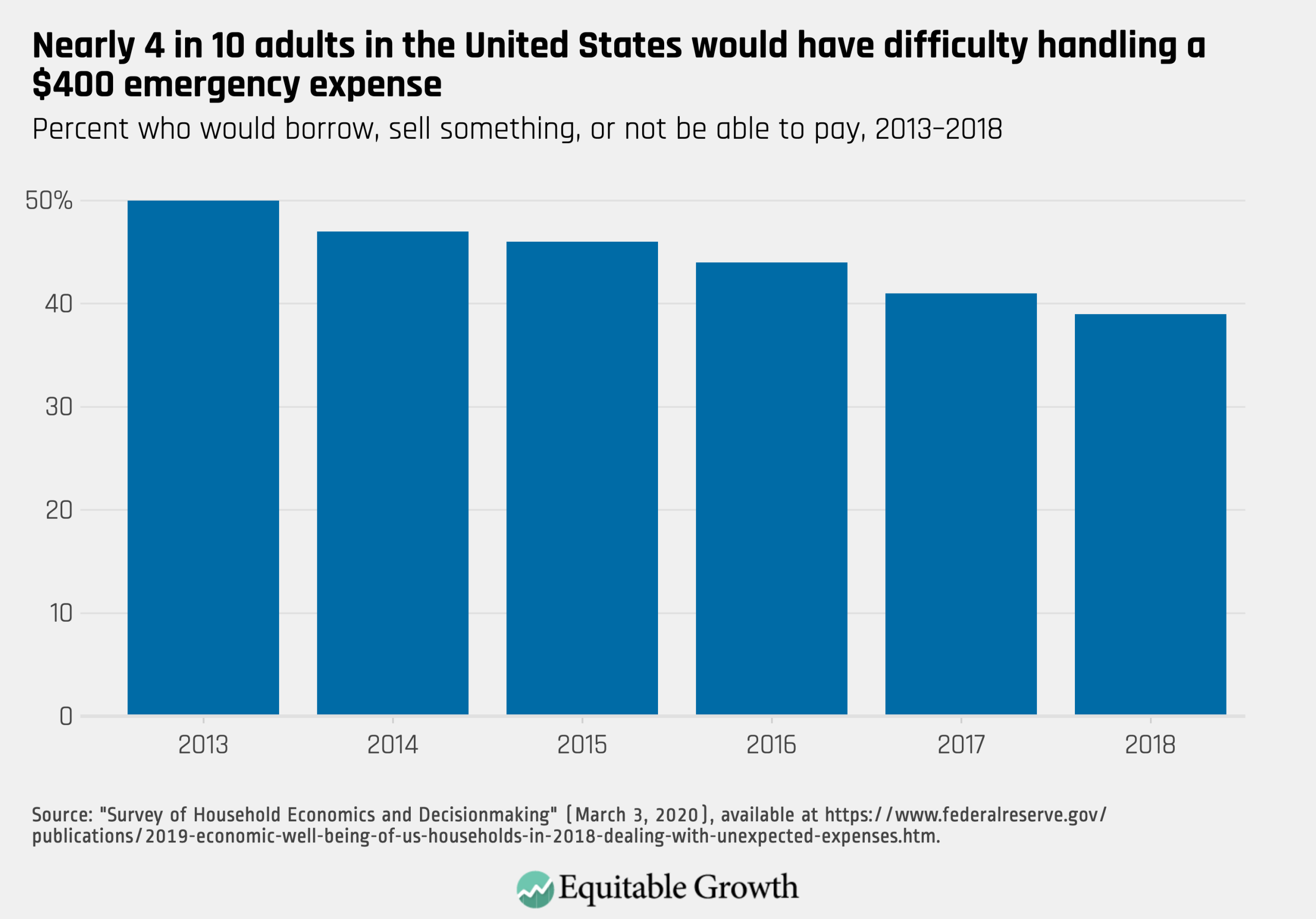
U.S. policymakers can beat the coronavirus, but it will take a rapid healthcare response and bold economic policies. We have no choice. Too many Americans are one paycheck away from financial catastrophe. Four in 10 U.S. adults tell us that if they had a $400 emergency expense, they would have to borrow, sell something, or would not be able to pay it. (See Figure 2.)

Only 1 in 10 adults say they could not pay the expense by any means. But that expectation does not account for the consequences of that adult, or a family member, or co-workers, coming down with the coronavirus. Someone out of work for a week due to the pandemic would very quickly come up $400 short. Borrowing, trying to sell something, or picking up odd jobs is not how we want people to deal with this public health crisis.
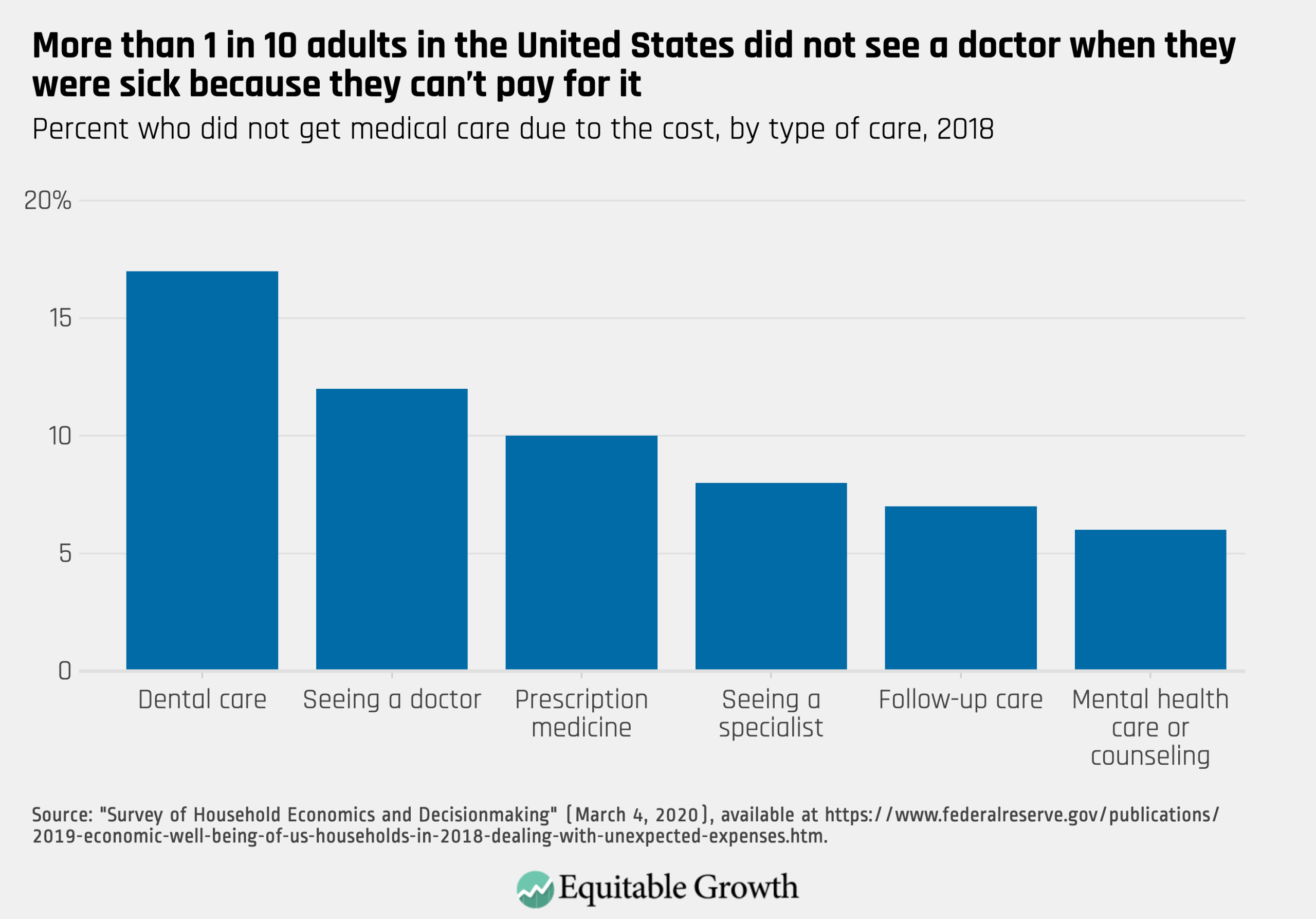
If the federal government does not give people financial support now, then we most certainly risk a worse public health crisis. Many people have so little savings that they regularly do not get the medical care that they need. In 2018, one-quarter of adults said that they or a family member went without some form of medical care because they could not pay for it. More than 1 in 10 skipped visiting a doctor in the past year when sick. (See Figure 3.)

The coronavirus is highly contagious. If people cannot afford to go to see a doctor, they could get very sick and they might also spread the coronavirus to others. The federal government needs to give people the financial support they need to get healthy, stay healthy, and keep their family and co-workers healthy. This is a public health crisis—all arms of the federal government need to take coordinated action now.
Essays SEP 2, 2026
By: Megan Rivera
Essays AUG 31, 2026
By: Christopher Bangert-Drowns
Videos AUG 13, 2026
By: Equitable Growth
Get updates on our latest research, event announcements, and policy insights delivered straight to your inbox. Stay connected with the leading voices on equitable growth.