

What happens to U.S. workers without access to Unemployment Insurance amid economic downturns or disruptions related to AI?
Essays SEP 2, 2026
By: Megan Rivera
APR 29, 2021
During his first 100 days in office, President Joe Biden turned core elements of his Build Back Better campaign plan (opens in a new tab) into concrete policy proposals for congressional consideration. Dubbed the American Jobs Plan (opens in a new tab) and the American Families Plan (opens in a new tab), his two most recent proposals are designed to complement the temporary economic boosters included in the American Rescue Plan (opens in a new tab)—legislation, passed by Congress and signed by the president in March, focused on addressing the coronavirus recession.
The American Jobs Plan and the American Families Plan, though, would go further than the American Rescue Plan. President Biden’s two new plans would make large-scale, and in some cases permanent, investments in the nation’s physical and human infrastructure, combating racial, income, and wealth inequality and restructuring large parts of the U.S. economy. As 225 leading economists explained in a letter to Congress earlier this month, these proposals, if designed correctly, could promote strong, stable, and broad-based economic growth. And indeed many of the big ideas included in the two new plans are backed by extensive academic evidence, much of which has been funded and featured by the Washington Center for Equitable Growth.
Let’s walk through the major elements of the administration’s new plans, which were outlined by the president in a joint address to Congress last night, alongside the underlying academic evidence, in turn.
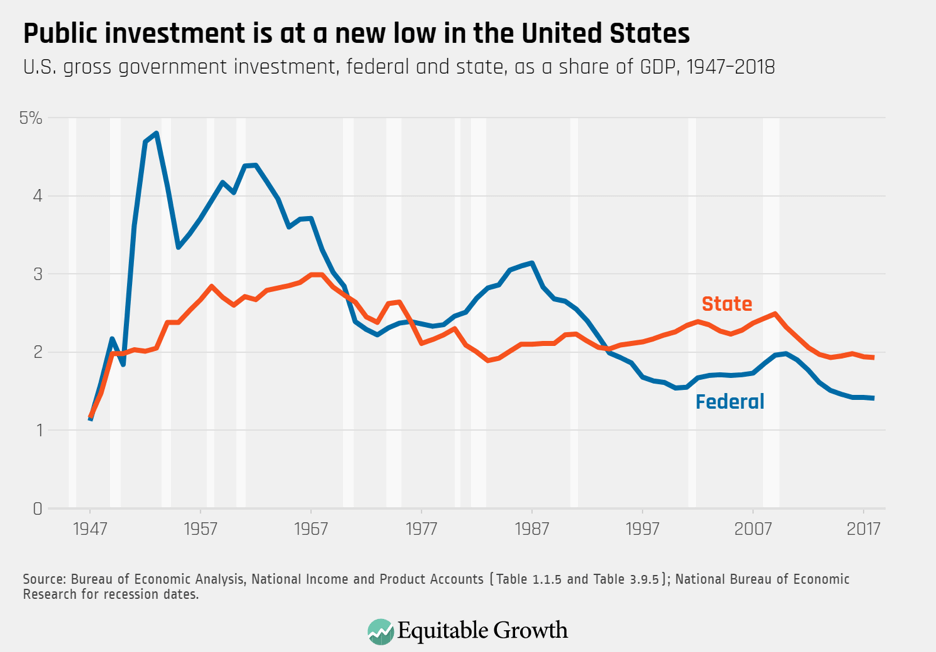
In total, this plan includes $2.3 trillion in public investments in physical and human infrastructure, science research and technological development, and climate change mitigation and environmental justice. It would begin to reverse the decades-long downward trend in government investment. (See Figure 1.)
U.S. gross government investment, federal and state, as a share of GDP, 1947–2018
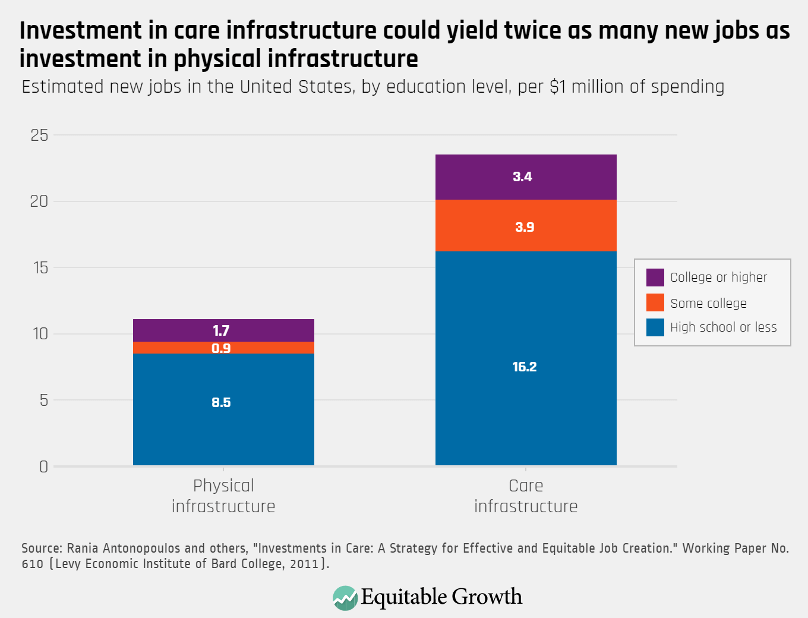
We know from academic research that the decline in public investments has weakened growth and increased inequality. Specific policies in this plan to address these weaknesses include:
Estimated new jobs in the United States, by education level, per $1 million of spending
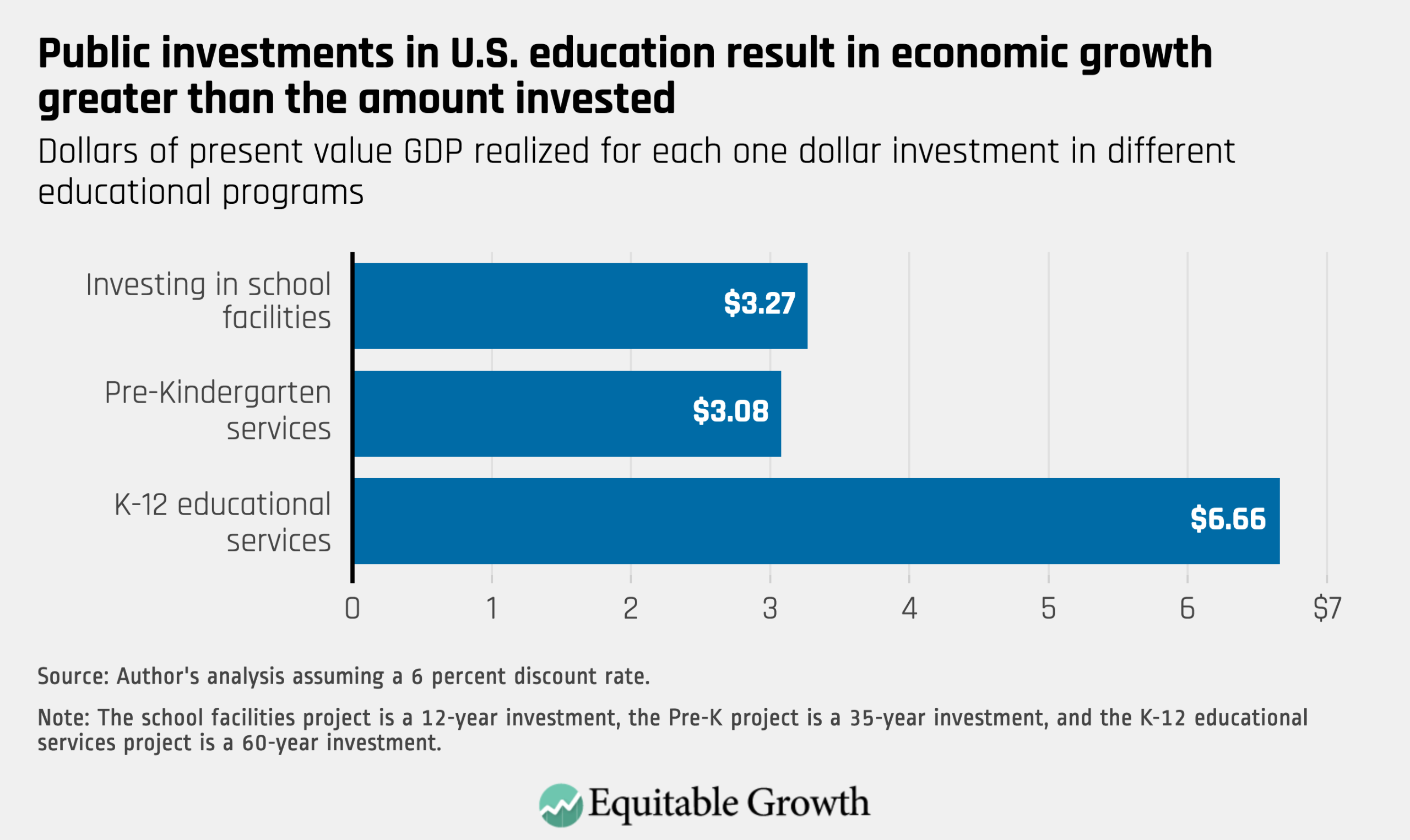
The American Families Plan, released by the White House yesterday, is all about human capital investments and enhancing the nation’s social infrastructure so that children are not raised in poverty, have access to high-quality pre-Kindergarten and child care, and families can better balance caregiving and work obligations. Specific policies in this $1.8 trillion plan include:
Dollars of present value GDP realized for each one dollar investment in different educational programs
The top fiscal policy priority for U.S. policymakers should be to make long-overdue public investments in physical and human infrastructure, which evidence shows will pay long-term dividends in the form of strong, stable, and broadly shared economic growth. These investments should be focused on the areas that are most holding back the U.S. economy—and that were so exposed by the coronavirus pandemic—namely combating racial discrimination and injustice, mitigating the effects of climate change, empowering workers, and expanding social insurance protections. The key elements of the American Jobs Plan and American Families Plan, as described by President Biden in his joint address to Congress last night, would represent a huge step toward those goals.
Attention now turns to Congress, which must work with the administration to fill in the details and craft legislation that can pass both chambers. Some concerns raised by some members of Congress, such as those around deficits and economic “overheating,” are not well-founded and should not stand in the way of action. But there remain legitimate questions about which elements of the president’s plans should be included or excised, and which policies that were left out by the president—such as instituting mark-to-market capital gains taxation, cancelling student loan debt, and improving the way we measure the economy—should be added back in by Congress.
In answering these questions, our hope is that policymakers follow the compilation of academic evidence that Equitable Growth and others have assembled and capitalize on this opportunity to make structural economic change that spurs strong, stable, and broad-based growth.
Essays SEP 2, 2026
By: Megan Rivera
Essays AUG 31, 2026
By: Christopher Bangert-Drowns
Essays AUG 14, 2026
By: Carlos Fernando Avenancio-Leon
Get updates on our latest research, event announcements, and policy insights delivered straight to your inbox. Stay connected with the leading voices on equitable growth.