



Policy
What Work Does Generative AI Do?
Essays SEP 8, 2026
By: Alexander Bick, Adam Blandin, David Deming, Tyler Schumacher
AI, Tech & Energy
Labor, Wages & Worker Power
 Browse All Resources
JUN 28, 2022


Equitable Growth is committed to building a community of scholars working to understand how inequality affects broadly shared growth and stability. To that end, we have created the monthly series, “Expert Focus (opens in a new tab).” This series highlights scholars in the Equitable Growth network and beyond who are at the frontier of social science research. We encourage you to learn more about both the researchers featured below and our broader network of experts (opens in a new tab).
With access to abortion in the United States increasingly restricted or banned, and access to contraception under threat (opens in a new tab) in several states as well, research on the links between reproductive care and equity, economic stability, and overall health and well-being is more important than ever. Though reproductive health is often seen as outside the realm of economic research and policy, the reality is that access to these important healthcare and family planning options has vast economic and financial impacts on the lives of people who may become pregnant and their families.
An array of research already documents the links between bodily autonomy and economic opportunity, as well as the economic impacts of access to abortion and contraception. Studies find, for instance, that access to birth control pills were directly linked to women’s increased labor force participation (opens in a new tab) and reductions in the gender wage divide (opens in a new tab). Other research demonstrates that access to abortion improves financial outcomes (opens in a new tab) and reduces the likelihood (opens in a new tab) of a woman being in poverty for up to 4 years, as well as facilitates many labor market opportunities (opens in a new tab) for women and boosts educational outcomes (opens in a new tab).
Furthermore, reproductive justice (opens in a new tab) scholarship and activism has long acknowledged the important links between economic disparities and health inequality, as well as pioneered a framework for considering how reproductive health can be affected by other factors, including race, sexual orientation, immigration or disability status, and environmental conditions.
This month’s installment of Expert Focus highlights scholars whose research establishes extensive evidence on the clear ties between access to reproductive healthcare and economic outcomes, as well as scholars who have made significant contributions to our understanding of how reproductive health inequities intersect with racial and gender inequality. After the U.S. Supreme Court’s decision on June 24 to overturn Roe v. Wade, and thus overturn the nationwide right to access an abortion, the implications for the physical and mental health of individuals who may become pregnant are now front and center across the United States, as are the widespread economic and financial ramifications (opens in a new tab) for those people and their families.
The work the scholars featured in this Expert Focus and other scholars—including those featured in past installments of Expert Focus, such as Martha Bailey at University of California, Los Angeles and Adriana Kugler at Georgetown University—are doing to document those impacts should guide federal and state policymakers as they face the post-Roe era (opens in a new tab) in the United States.
Indiana University Bloomington
Jennifer Barber (opens in a new tab) is a professor of sociology at Indiana University Bloomington and a senior scientist at the university’s Kinsey Institute (opens in a new tab). Much of her recent work explores contraception use (opens in a new tab), pregnancy desires (opens in a new tab), and intimate partner violence (opens in a new tab), as well as the racial divides in access to birth control (opens in a new tab) and attitudes about pregnancy (opens in a new tab). Barber also previously directed the Relationship Dynamics and Social Life project (opens in a new tab), which surveyed 18- and 19-year-old women each week over 2.5 years to track changes in their social lives, such as intimate relationships, sexual behavior, and contraception use.
One element of this project examines racial disparities (opens in a new tab). Black women, for instance, are 2.4 times more likely than White women to have an unplanned pregnancy, in part due to racial disparities in the U.S. poverty rate and access to contraception—and the underlying mechanisms driving those disparities. Barber is a collaborator with fellow Equitable Growth grantee Martha Bailey on the M-CARES project (opens in a new tab), which is exploring how subsidizing reproductive care affects women’s decisions around contraceptive use.
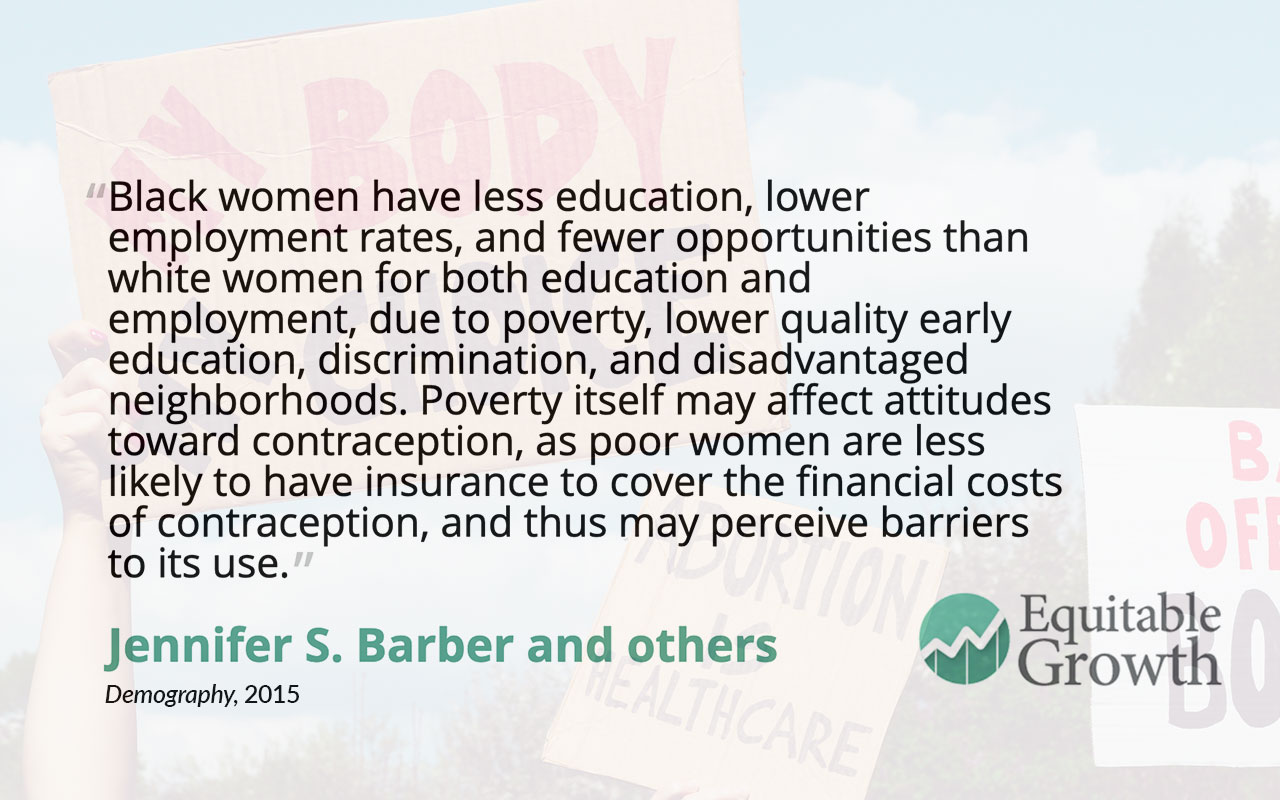
Quote from Jennifer S Barber
Washington University in St. Louis
Zakiya T. Luna (opens in a new tab) is a Dean’s Distinguished Professorial Scholar in the Department of Sociology at Washington University in St. Louis. Her research focuses specifically on social movements and social change, health and inequality, and human rights and reproduction, with an emphasis on the effects of the intersecting inequalities within and across these areas, including gender and racial disparities. Luna is the author of Reproductive Rights as Human Rights: Women of Color and the Fight for Reproductive Justice (opens in a new tab), a look at how women of color—and SisterSong (opens in a new tab) in particular, which is the largest national multiethnic reproductive justice advocacy organization—were central to making the reproductive justice movement what it is today and linking the cause of reproductive rights to issues of fair wages, safe housing, job security, and other economic rights. She has written extensively on reproductive justice, and is co-creator and former co-editor of the University of California Press book series Reproductive Justice: A New Vision for the Twenty-First Century (opens in a new tab), a collection of publications that explores the current reproductive justice landscape and serves as a resource for students and advocates.
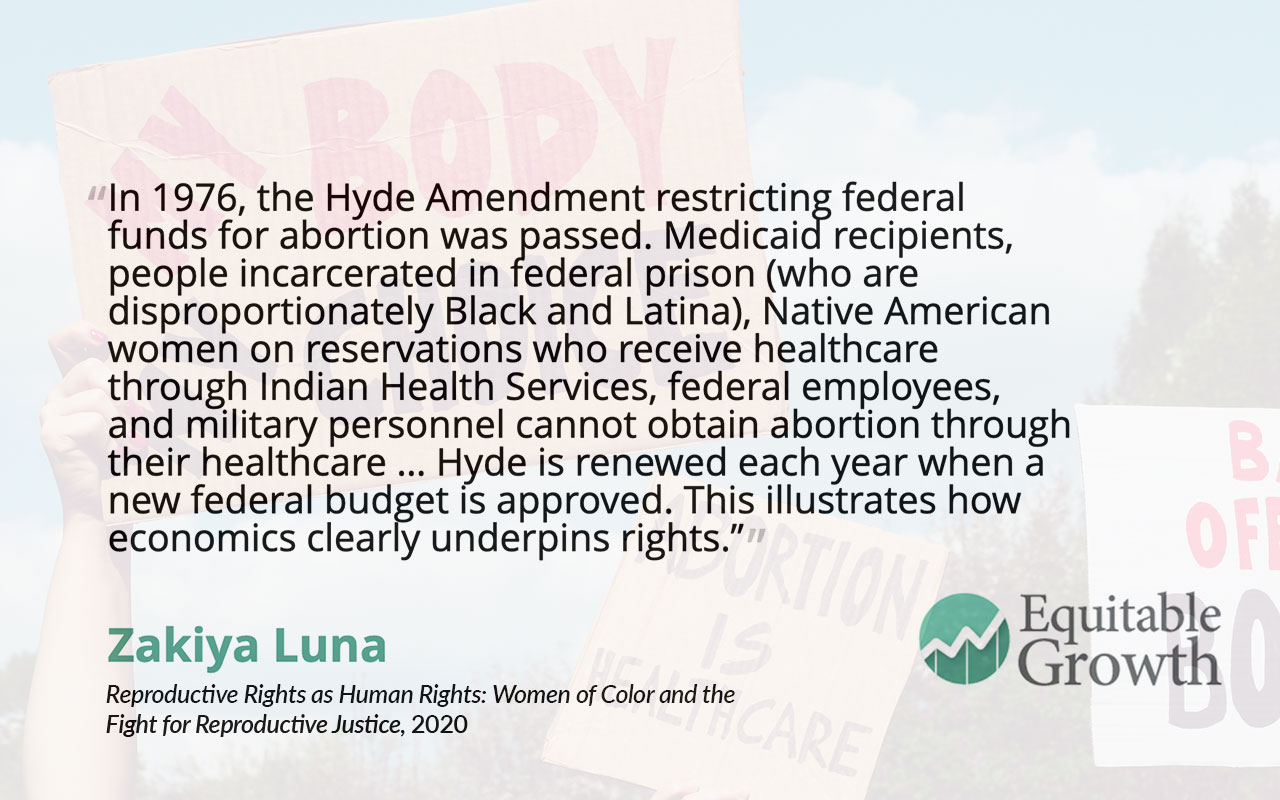
Quote from Zakiya Luna
Middlebury College
Caitlin Knowles Myers (opens in a new tab) is the John G. McCullough professor of economics at Middlebury College. Myers’ research examines issues related to gender, race, and the economy, and especially the effects of reproductive policies on people’s professional lives and economic outcomes. Her current work focuses primarily on access to abortion care (opens in a new tab) and the effects of abortion restrictions or burdensome processes, such as traveling to receive care (opens in a new tab) or mandatory waiting periods (opens in a new tab), on the incidence of abortions.
She also writes extensively in the popular press, academic journals, and for research organizations on the growing body of research (opens in a new tab) reinforcing the economic impacts (opens in a new tab) of access to abortion care (opens in a new tab) for women, what restricting that care would do (opens in a new tab) to women, the U.S. labor force, and the overall economy in the United States, and what a post-Roe era (opens in a new tab) could mean in terms of U.S. abortion access and incidence (opens in a new tab). Myers was the lead economist on an amicus brief (opens in a new tab) sent to the Supreme Court in the Dobbs v. Jackson Women’s Health Organization case, detailing the economic imperative of not overturning Roe and signed by more than 150 leading economists.
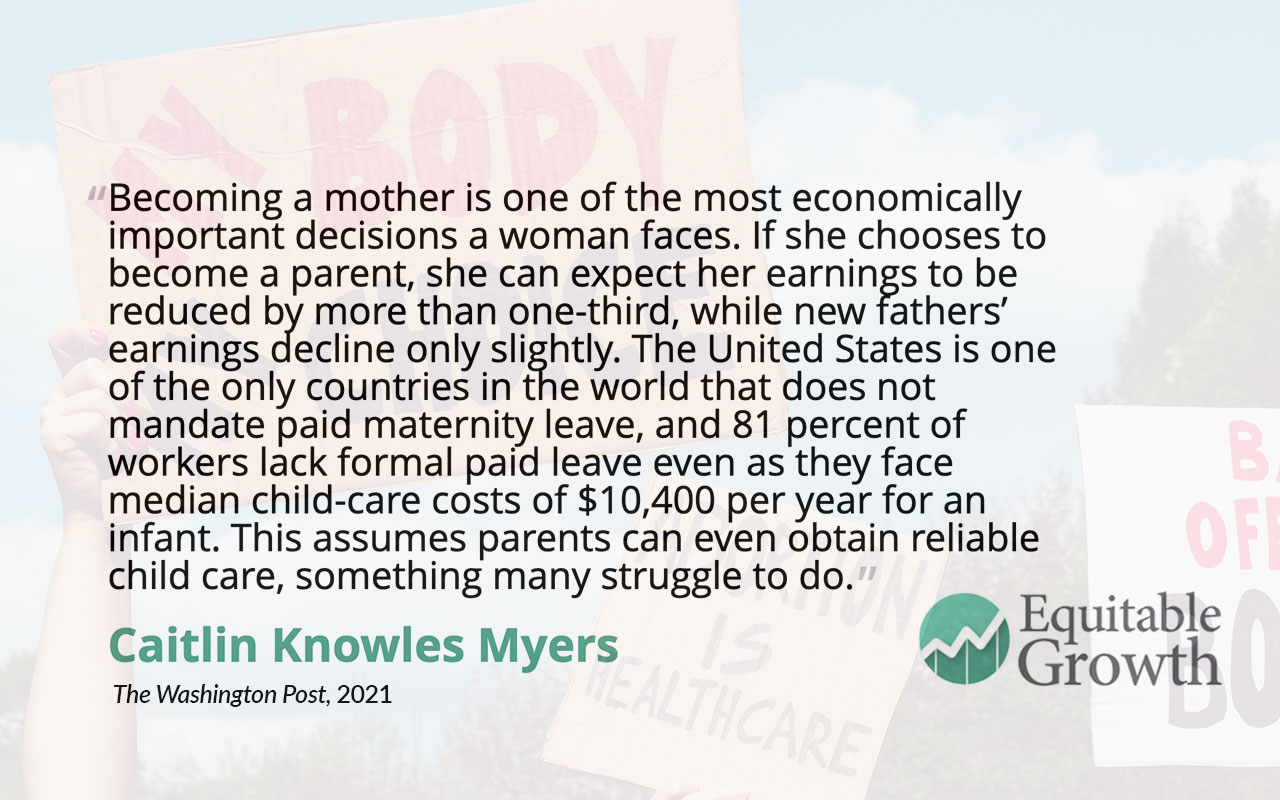
Quote from Caitlin Knowles Myers
Georgia Institute of Technology (incoming)
Mayra Pineda-Torres (opens in a new tab) is an incoming assistant professor of economics at the Georgia Institute of Technology. Her research interests are centered on the intersection of health economics, labor economics, and gender economics, with a particular focus on topics related to women and teen well-being and the economic and health impacts of access to reproductive healthcare. Her works in progress include papers on access to abortion care and its effects on inter-partner violence and educational attainment. She also co-authored an article that looks into the effects of abortion mandatory waiting periods (opens in a new tab) on abortion timing and abortion rates in Tennessee.
In addition, she has a working paper with Kelly Jones at American University on the impacts of exposure to TRAP laws (opens in a new tab) during adolescence on teen birth rates and educational attainment. This paper finds that young Black women are particularly affected by TRAP laws. In states with such restrictions, teen births increase by 3 percent compared to states without these laws. The paper also finds that adolescent exposure to TRAP laws has downstream impacts on education for Black women, who are 2 to 6 percent less likely to start and complete college.
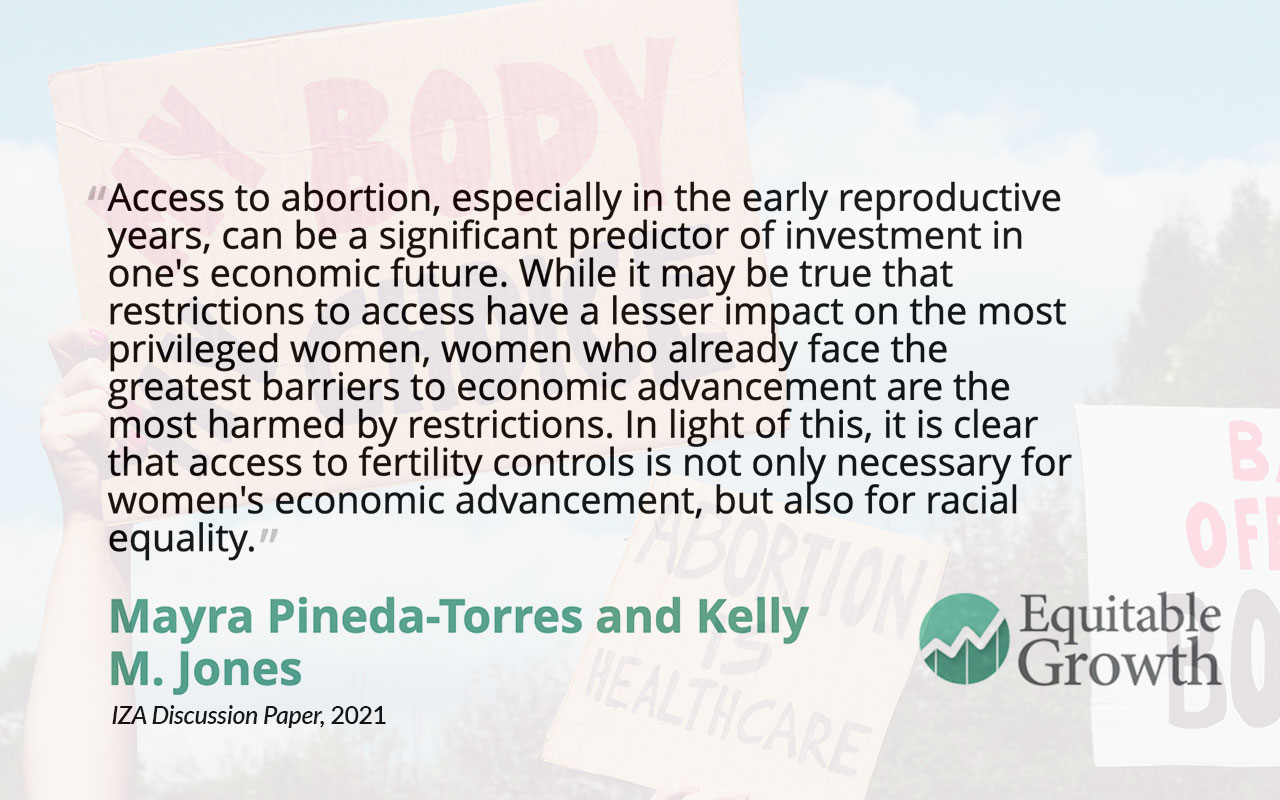
Quote from Mayra Pineda-Torres
Smith College
Loretta J. Ross (opens in a new tab) is an associate professor of the study of women and gender at Smith College. Her research interests lie in women’s human rights, reproductive justice, and White supremacy. Ross’ expertise lies in her background as a reproductive justice pioneer and her own personal experience with abortion and unintended pregnancy. She has co-authored three books on reproductive justice (opens in a new tab)—a framework that she co-created with 11 other Black women working within and beyond the pro-choice movement in the 1990s that combines reproductive rights and social justice into one theory of change and centers the voices and experiences of women of color and other marginalized people.
In 1997, she co-founded SisterSong (opens in a new tab), a Southern-based, women of color-led national reproductive justice collective, to work together to improve institutional policies and systems that affect not just the reproductive health of marginalized communities but also their economic security and well-being. Ross is a sought-after thought leader (opens in a new tab) who speaks often (opens in a new tab) (including before congressional committees (opens in a new tab)) about the impact of restricting access to abortion care on women, and especially women of color.
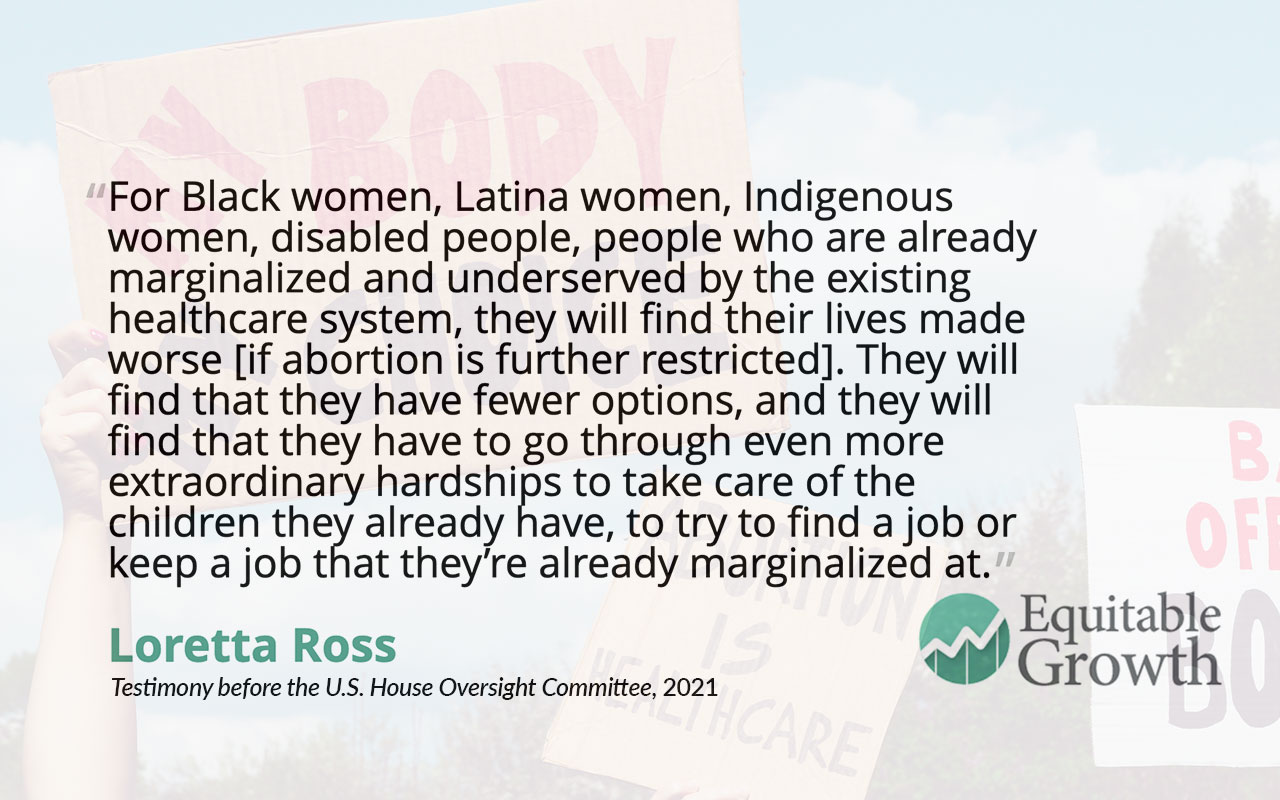
Quote from Loretta Ross
Equitable Growth is building a network of experts across disciplines and at various stages in their career who can exchange ideas and ensure that research on inequality and broadly shared growth is relevant, accessible, and informative to both the policymaking process and future research agendas. Explore the ways you can connect with our network or take advantage of the support we offer here (opens in a new tab).
Essays SEP 8, 2026
By: Alexander Bick, Adam Blandin, David Deming, Tyler Schumacher
Working Papers SEP 8, 2026
By: Alexander Bick, Adam Blandin, David Deming, Tyler Schumacher

Essays SEP 2, 2026
By: Megan Rivera
Get updates on our latest research, event announcements, and policy insights delivered straight to your inbox. Stay connected with the leading voices on equitable growth.


