






Policy
What Work Does Generative AI Do?
Essays SEP 8, 2026
By: Alexander Bick, Adam Blandin, David Deming, Tyler Schumacher
AI, Tech & Energy
Labor, Wages & Worker Power
 Browse All Resources
FEB 18, 2021
By: Nathan Miller

Antitrust and competition issues are receiving renewed interest, and for good reason. So far, the discussion has occurred at a high level of generality. To address important specific antitrust enforcement and competition issues, the Washington Center for Equitable Growth has launched this blog, which we call “Competitive Edge (opens in a new tab).” This series features leading experts in antitrust enforcement on a broad range of topics: potential areas for antitrust enforcement, concerns about existing doctrine, practical realities enforcers face, proposals for reform, and broader policies to promote competition. Hiba Hafiz and Nathan Miller authored this contribution.
The octopus image, above, updates an iconic editorial cartoon (opens in a new tab) first published in 1904 in the magazine Puck to portray the Standard Oil monopoly. Please note the harpoon. Our goal for Competitive Edge is to promote the development of sharp and effective tools to increase competition in the United States economy.
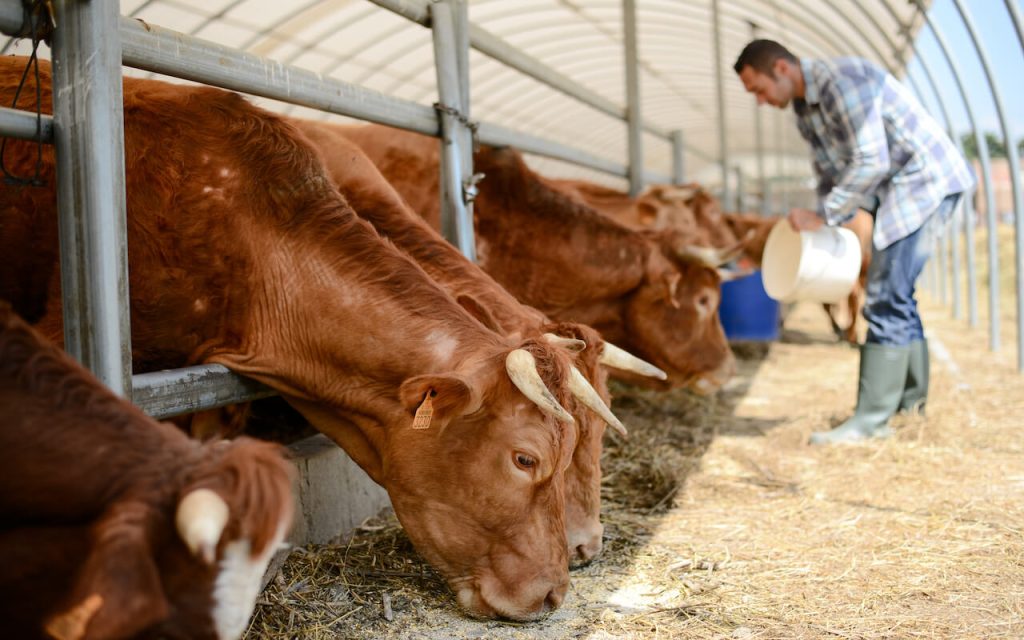
Agricultural markets are among the most highly concentrated in the United States. The markets for beef (opens in a new tab), pork (opens in a new tab), and poultry (opens in a new tab), grain (opens in a new tab), seeds, and pesticides (opens in a new tab) are dominated by four firms. Three firms (opens in a new tab) dominate the biotechnology industry. One or at best two (opens in a new tab) firms control large farm equipment manufacturing. And a small number of firms are increasingly dominating (opens in a new tab) agricultural data and information markets (opens in a new tab).
Yet former Iowa Gov. Tom Vilsack (D)—President Joe Biden’s nominee for secretary of the U.S. Department of Agriculture, the same position Gov. Vilsack held during the Obama administration—has come out against breaking up Big Ag firms. “There are a substantial number of people hired and employed by those businesses,” he said last year (opens in a new tab). “You’re essentially saying to those folks, ‘You might be out of a job.’ That to me is not a winning message.”
Gov. Vilsack couldn’t be more wrong on the economics. It is precisely Big Ag’s buyer power in agricultural markets—these firms’ “monopsony” power—that destroys jobs and suppresses small farmer and worker pay.
Economic theory describes monopsony (opens in a new tab) power as market power on the buy (opens in a new tab) side (opens in a new tab) of the market—it’s the analogue of monopoly power on the sell side of the market. Artificially acquiring or maintaining market power is unlawful under the U.S. antitrust laws, regardless of whether it derives from the buy or sell side. And that’s because buy-side power can be (opens in a new tab) just as (opens in a new tab) socially harmful (opens in a new tab) as sell-side power.
Firms insulated from competition in input markets can profitably suppress the pay to suppliers of goods, services (opens in a new tab), and labor (opens in a new tab) below the value that those suppliers provide. And lower pay has broader economic outcomes. It means suppliers have weaker incentives to provide the same quantity of inputs or invest in capacity, innovation, and quality. So, monopsony power can decrease input suppliers’ pay and the quantity of inputs buyers purchase.
Monopsony power can also harm downstream consumers. Less input means less output, and less output means more scarcity and higher prices to downstream consumers than would otherwise exist under competitive conditions.99
Taking steps to mitigate buyer power through aggressive antitrust enforcement and appropriate regulation can be a win-win for input suppliers and downstream consumers. Competition among buyers helps ensure that suppliers are paid according to their value. And competition increases output incentives and ultimately lowers downstream prices as well.
The buyer power of companies such as Tyson Foods Corporation, Cargill PLC, and Smithfield Foods Inc. Comes from high levels of market concentration in the agricultural industry. Simply put: Big Ag faces too little competition when they hire workers or procure inputs such as chicken (Tyson), hogs (Smithfield), or cattle (Cargill) from smaller suppliers.
Top Big Ag firms have merged with and acquired smaller firms in the industry over the past five decades, increasing consolidation (opens in a new tab) of livestock packers (opens in a new tab), beef processors, and poultry processors. According to a recent agricultural industry report by the Center for American Progress, between 1986 and 2008, “the four-firm share of animal slaughter nationwide increased from 55 percent to 79 percent for cattle, from 33 percent to 65 percent for hogs, and from 34 percent to 57 percent for poultry (opens in a new tab).” High market concentration increased Big Ag’s price- and wage-setting power over cattle producers, hog and poultry farmers, and meat processing plant workers, lowering their prices for hogs (opens in a new tab), beef (opens in a new tab), chickens (opens in a new tab), and (opens in a new tab) labor (opens in a new tab).
Big Ag’s concentration numbers at the local level are even more stark than at the national level. Most buying and processing of poultry, hogs, and beef happens locally to avoid high transportation and storage costs. Big Ag dominates local markets as the only buyers in town. More than 20 percent (opens in a new tab) of poultry growers have only one local upstream buyer for poultry and 30 percent (opens in a new tab) have only two.
Most hog growers (opens in a new tab) face packer monopsony at the local level, with just one or two (opens in a new tab) packers (opens in a new tab) offering them contracts. One telling case in point: After dominant meat processor JBS S.A. acquired Cargill’s pork processing operations in 2015, the American Antitrust Institute and a coalition of farmers’ unions projected that only two firms—Tyson and the merged JBS-Cargill pork processing unit—would buy and slaughter 82 percent of hogs (opens in a new tab) in Illinois, Indiana, and surrounding states. Similarly, local cash markets for cattle typically feature no more than three or four (opens in a new tab) packers.
Concentration at the local level means that Big Ag can artificially suppress pay to cattle producers, hog and poultry farmers, and processing plant workers below the value that their inputs provide to the industry.
Empirical evidence of the effects of Big Ag’s buyer power on rural communities and consumers nationally is mounting. Suppliers and processing workers suffer lower pay while downstream consumers are paying higher prices on essential food. Around “three-quarters of contract growers live below the poverty line (opens in a new tab),” and average-sized operators lose money (opens in a new tab) 2 out of 3 years.
Then, there is the evidence of rising farm bankruptcy rates. Farm bankruptcies have steadily increased (opens in a new tab) every year for the past decade, due, in part, to high U.S. farm debt. Small farmers are not the only ones being undercompensated—a 2000 U.S. Department of Labor survey found that 100 percent of poultry processing plants (opens in a new tab) failed to comply with federal wage-and-hour laws.
Buyer power also enables processors to impose abominable working conditions without workers quitting. Even before the coronavirus pandemic (opens in a new tab), poultry processing workers suffered occupational illnesses at five times (opens in a new tab) the rate of other U.S. workers. But their conditions plummeted during the pandemic, with immigrant (opens in a new tab) workers (opens in a new tab) and workers of color (opens in a new tab) suffering the most. A November 2020 study (opens in a new tab) estimated livestock processing plants suffered 236,000 to 310,000 cases of COVID-19, the disease caused by the new coronavirus, and 4,300 to 5,200 deaths—3 percent to 4 percent of all U.S. deaths—with the majority related to community spread. Consumers have also suffer nationally by having to pay higher (opens in a new tab) prices (opens in a new tab) for meat products while facing fewer choices and lower quality.
More evidence of Big Ag’s buyer power emerges from high-profile U.S. Department of Justice and private enforcement actions against dominant Big Ag buyers in the poultry and pork industries for colluding to fix prices, rig bids, and suppress pay to growers and processing workers. High concentration levels make it easier for Big Ag firms to collude, and in June 2020, the Department of Justice indicted (opens in a new tab) leading chicken industry defendants for price-fixing and bid-rigging in the broiler chicken market. Civil suits (opens in a new tab) were filed against Tyson, Pilgrim’s Pride Corp., and others for price-fixing, wage-fixing, and using no-poach agreements in the markets for broiler chicken products (opens in a new tab), contract farmer services (opens in a new tab) (contract farmers are farmers who grow chickens from chicks to market weight in long-term contracts with processors), and chicken-processing labor services (opens in a new tab).
The Department of Justice is currently investigating price-fixing and bid-rigging among dominant beef processors (opens in a new tab), too, and private plaintiffs have sued pork (opens in a new tab) and (opens in a new tab) beef (opens in a new tab) processors for allegedly colluding to lower prices paid to producers and raise prices for consumers. Current litigation against the poultry, pork, and meat cartels estimates that hundreds of thousands of workers (opens in a new tab) suffer poverty wages from wage-fixing conspiracies.
Big Ag is able to exercise its buyer power through its industry-transforming supply chain restructuring that allows lead firms to extract rents at each layer of their supply chain for their profit, and most especially, from (opens in a new tab) small farmers and workers (opens in a new tab) at the production level.100 Starting in the 1960s, poultry firms such as Tyson vertically integrated to own or control hatcheries, feed mills, veterinary care, slaughterhouses, processors, and sales contracts with poultry growers. The pork industry followed Tyson’s lead in the early 1980s, extending top-down ownership or control of hog production, packing, and processing in large-scale farms and processing facilities.
The only level of the supply chain not directly owned or operated by Big Ag chicken and pork producers is the growing stage, where Big Ag processors rely on small farmers to grow and raise the broilers and hogs provided by Big Ag-provided breeders, hatcheries, farrows, and weaners to slaughter weight. Still, Big Ag firms in these two meat sectors can squeeze these growers’ margins from above andbelow: Their inputs are supplied by Big Ag, and their product is sold to Big Ag.
Big Ag does this through contractual controls, forcing growers into one-sided production and marketing contracts while using their significant control over spot or cash markets to limit sales outside those contracts. Around 97 percent (opens in a new tab) of chicken broilers are raised by contract growers in “take it or leave it (opens in a new tab)” contractual arrangements; 63 percent (opens in a new tab) of hogs were contractually raised in 2017, nearly double that in 1997.
These arrangements are crippling. Chicken growers’ production contracts (opens in a new tab) require significant sunk investments—around $1 million (opens in a new tab) in mostly debt-financing—and growers are required to purchase nearly all inputs, veterinary care, and technical assistance from vertically integrated buyers. Buyers can change or terminate contracts for almost any reason. Farmers sell their chickens in a “tournament system (opens in a new tab),” where their chickens compete for rankings with others given the same feed amount, but the ranking process lacks transparency—buyers weigh chickens behind closed doors and provide no standards for knowing whether a farmer is “getting the same inputs as the other farmers against whom the company makes him compete (opens in a new tab),” according to Lina Khan, then-policy analyst at the New America Foundation and now an assistant professor of law at Columbia Law School.
Big Ag buyers can retaliate (opens in a new tab) against resistant farmers by refusing to renew contracts or sending bad feed or unhealthy chicks in future seasons—a system likened to “indentured servitude (opens in a new tab)” by former chicken farmers suing Big Ag poultry firms. Contracts for hog growers also require significant capital investments (opens in a new tab), place much of the liability and risk (opens in a new tab) for raising hogs on growers, and subject growers to unilateral buyer compensation-setting (opens in a new tab) with limited transparency, and similarly allow retaliation through threats (opens in a new tab) of contract termination or future substandard livestock or feed supply.
The beef industry is less vertically integrated than chicken and poultry. Beef packers find vertical supply chain ownership less profitable, yet these packers have achieved a degree of de facto control over the thousands of independent feedlots that supply them. Since the 1980s, and following meatpacker consolidation into the Big Four—Cargill, JBS, National Beef Inc., and Tyson Foods—the number of packing plants nationwide dropped 81 percent, and nearly a third (opens in a new tab) of all the feedlots that purchase cattle from ranchers for fattening and resale to meatpackers have left the industry.
Among the feedlots that remain, most sign long-term contracts with the Big Four. More than 75 percent (opens in a new tab) of packer cattle purchases come from long-term contracts with feedlots, up from 34 percent (opens in a new tab) in 2004. Because most contract prices are pegged to outcomes in a subsequent cash market, this weakens packers’ incentives to bid aggressively in that cash market—bidding aggressively would just increase their payments for cattle already under contract.
So, in addition to alleged collusion among the Big Four beef packers to lower feeder pay—estimated at an average of 7.9 percent below average pay (opens in a new tab) since 2015—feeders are also squeezed by the Big Four’s network of contracts and bidding schemes that the packers can profitably impose upstream.
The economic theory is clear, and mounting empirical evidence backs it up: Big Ag’s monopsony power leads to fewer jobs, lower wages, and worse conditions dominating our nation’s food supply. And local farming communities are hurting (opens in a new tab). If U.S. Agriculture Secretary-nominee Vilsack wants to help rural communities—and reduce food prices for consumers in the bargain—he must get the economics right.
President Biden committed to strengthening antitrust enforcement to “help family farms and other small- and medium-sized farms thrive (opens in a new tab).” Before confirming Gov. Vilsack, Democratic senators must secure his public commitment to aggressively enforcing the Packers and Stockyards Act of 1921 and partnering with the U.S. Department of Justice to take on Big Ag’s buyer power. If keeping good jobs and sustainable business in rural America is the incoming administration’s priority, they can’t leave small farmers and workers to face Big Ag alone.
—Hiba Hafiz is an assistant professor of law at Boston College Law School. Nathan Miller is the Saleh Romeih associate professor at the Georgetown University McDonough School of Business.
Essays SEP 8, 2026
By: Alexander Bick, Adam Blandin, David Deming, Tyler Schumacher
Working Papers SEP 8, 2026
By: Alexander Bick, Adam Blandin, David Deming, Tyler Schumacher

Essays SEP 2, 2026
By: Megan Rivera
Get updates on our latest research, event announcements, and policy insights delivered straight to your inbox. Stay connected with the leading voices on equitable growth.


