



Academic · Policy
In Conversation with R. Jisung Park
In Conversation JUL 25, 2022
By: Michael Garvey
AI, Tech & Energy
Taxation
 Browse All Resources
FEB 9, 2023
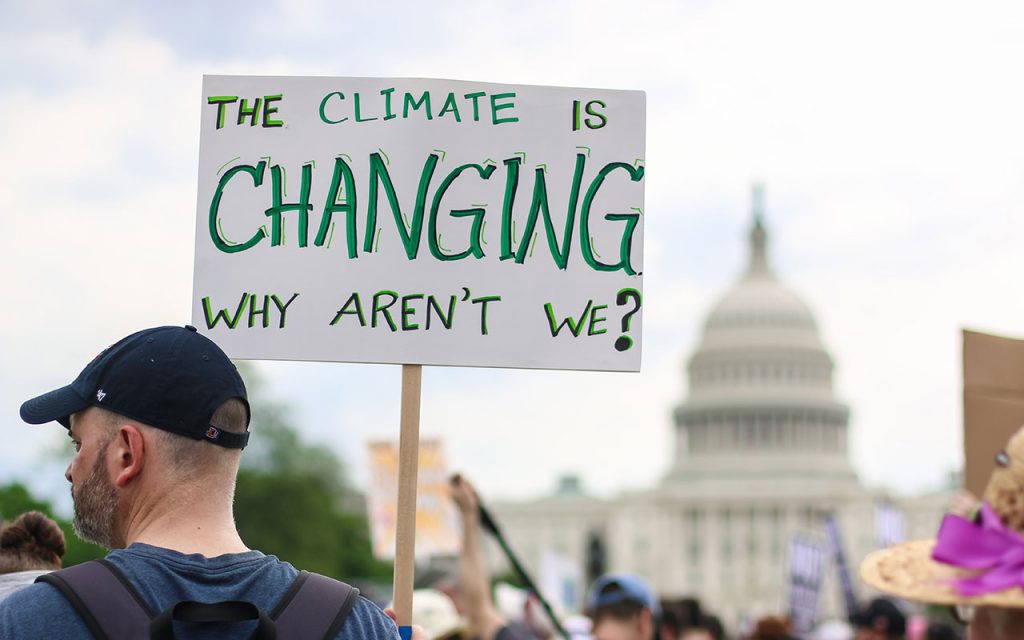
Addressing climate change is a crucial—and sizeable—economic task. Ensuring equity in every dimension of climate mitigation and adaptation is critical to redressing ongoing harms and environmental injustices. Tracking the implementation of signature climate legislation such as the Inflation Reduction Act and the Infrastructure Investment and Jobs Act, both of which include federal investments to bolster the U.S. clean energy economy, and studying how these laws affect local communities and industries differently is one essential way to ensure equitable outcomes.
U.S. climate policy must also ensure that green infrastructure and jobs are “just,” in that they support front-line communities both historically and currently exposed to the negative consequences of an inequitable system, as well as those workers transitioning from employment in extractive industries who are especially vulnerable to economic risk in the transition. Many of the incentives in the two aforementioned laws will serve to create hundreds of thousands of new green jobs in the U.S. economy—as many as 912,000 per year (opens in a new tab) over the next decade, according to some estimates. A recent study also shows that these jobs tend to be higher-paying than fossil-fuel jobs and tend to be plentiful in communities with fossil fuel extraction industries, two encouraging findings.
Similarly, we need more research and data to better understand the impacts of climate change on labor outcomes, such as employment, job quality, and workplace hazards, as well as on mortality, health, and well-being—and we need more and better data that looks at all of these outcomes across racial and ethnic groups, industries, and geographic regions. This multidisciplinary work can inform policy responses and debates across the environmental, energy, and climate justice movements, as well as within the economics and industrial policy fields.
Climate policy also has the potential to spur economic growth and ensure the U.S. economy remains competitive and resilient. That is why Equitable Growth is committed to fostering more research in this important area that will continue to dramatically shape the U.S. economy and labor market, as well as worker and family well-being, in the coming years and decades. Climate economics is a burgeoning area of interest for Equitable Growth, which has and will continue to fund research on the various economic impacts of climate change and also recently brought on a visiting scholar, environmental economist R. Jisung Park of the University of Pennsylvania, to help expand our work in this space.
As part of the effort to push this research and policy agenda forward, Equitable Growth organized and hosted a panel session on the economic impacts of climate change at the Allied Social Science Associations’ annual conference in early January. The session looked at the existing literature and areas for future research on variation in exposure to climate risk by geographic region, demographic group, and industrial sector, among others, as well as climate change’s potential role in exacerbating economic inequality or hampering economic growth. It also reviewed climate policy options that account for or can address inequality.
The panel was moderated by Park and featured presentations and discussion from Jonathan Colmer at the University of Virginia and the Environmental Inequality Lab (an Equitable Growth grantee), Gregory Casey of Williams College (also an Equitable Growth grantee), Tamma Carleton (opens in a new tab) of the University of California, Santa Barbara and the Climate Impact Lab, and Catherine Hausman (opens in a new tab) at the University of Michigan. Each panelist presented their research on a specific aspect of climate economics:
The presentations were followed by a question-and-answer discussion with the audience. Notably, the panelists discussed the limited opportunities for input from nongovernmental researchers in federal climate policy design and implementation—exacerbated by the challenge of working with existing public data amid important privacy restrictions. They also touched upon the importance of economists collaborating outside of the traditional economics space, such as with engineers, experts in racial inequality, and Indigenous scholars, when studying environmental economics and industrial policy.
The panel provided Equitable Growth an opportunity to elevate the need for an equitable response to the climate crisis—one which centers the distributional impacts of mitigation and adaptation policies, especially on groups already vulnerable to climate harms or already facing environmental injustice. We look forward to continuing to engage on this issue both in our grantmaking and academic conference engagement, as well as with policymakers seeking to address climate change and transition to a green economy.
Equitable Growth staff (opens in a new tab), grantee network (opens in a new tab), Steering Committee, and Research Advisory Board (opens in a new tab) and their research were well-represented throughout ASSAs, and were featured in more than 80 different sessions (check out our daily round-ups here, here, and here).
In Conversation JUL 25, 2022
By: Michael Garvey
Issue Briefs NOV 18, 2022
By: Michael Madowitz, Shaun Harrison
Get updates on our latest research, event announcements, and policy insights delivered straight to your inbox. Stay connected with the leading voices on equitable growth.


