


Resources
From peer-reviewed research to accessible policy briefs, explore the scholarship that’s shaping debates and driving change.

112 Results

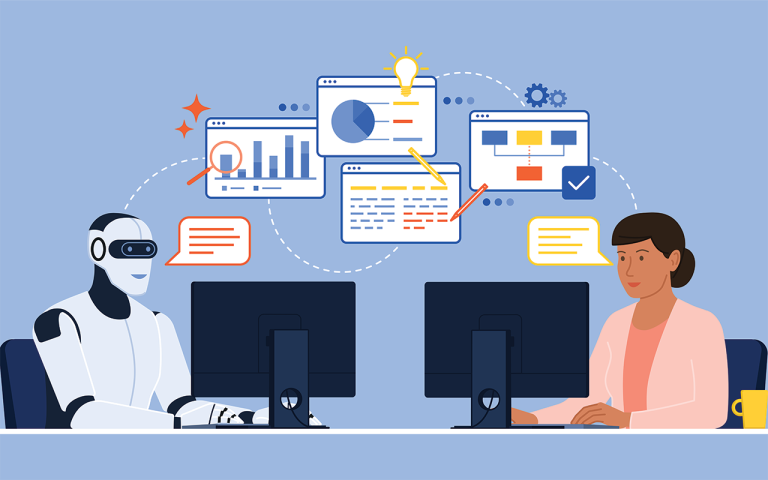
What Work Does Generative AI Do? (opens in a new tab)
Essays SEP 8, 2026
Since August 2024, our Real-Time Population Survey (RPS), a nationally representative survey of U.S. adults ages 18 to 64, has tracked how many Americans use generative artificial intelligence (AI). The adoption…
By: Alexander Bick (opens in a new tab), Adam Blandin (opens in a new tab), David Deming (opens in a new tab), Tyler Schumacher (opens in a new tab)
What Work Does Generative AI Do? (opens in a new tab)
Working Papers SEP 8, 2026
We measure how workers use genAI for their jobs in a nationally representative survey linking genAI adoption to detailed occupations and tasks. Our data provide the first task-level genAI adoption…
By: Alexander Bick (opens in a new tab), Adam Blandin (opens in a new tab), David Deming (opens in a new tab), Tyler Schumacher (opens in a new tab)

What happens to U.S. workers without access to Unemployment Insurance amid economic downturns or disruptions related to AI? (opens in a new tab)
Essays SEP 2, 2026
The adoption of artificial intelligence in the workplace has led to predictions of U.S. labor market disruptions. In response, policymakers have increased attention on the fitness of the nation’s social…
By: Megan Rivera (opens in a new tab)
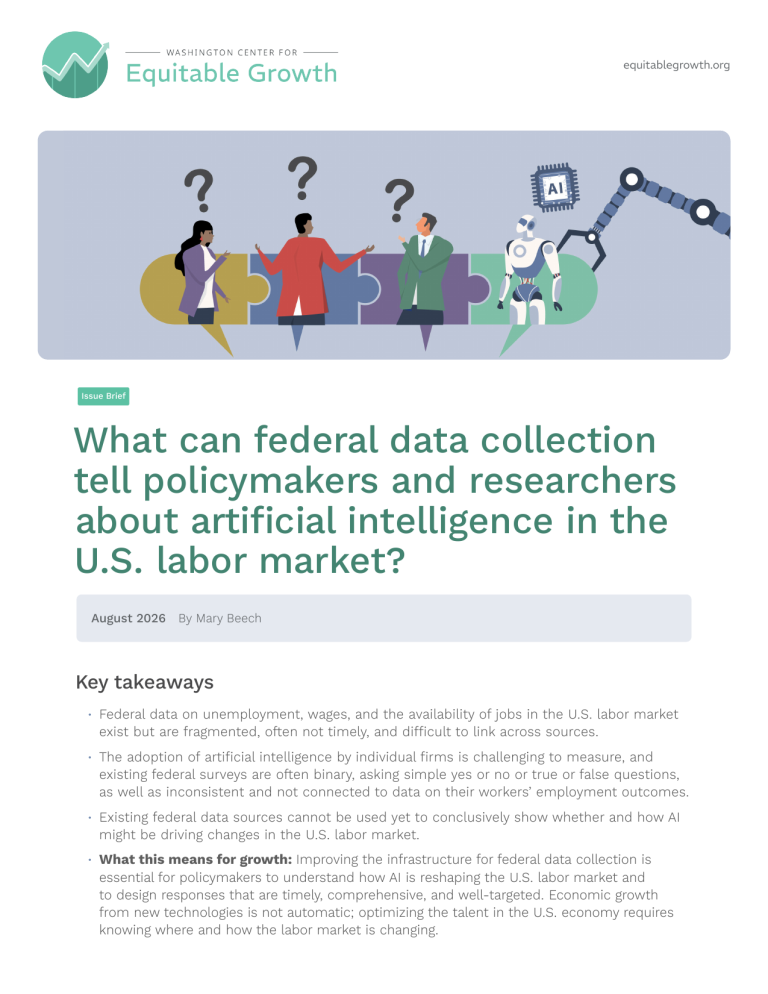
What can federal data collection tell policymakers and researchers about artificial intelligence in the U.S. labor market? (opens in a new tab)
Issue Briefs AUG 24, 2026
It is impossible to perfectly predict how artificial intelligence will affect the U.S. labor market. Policymakers and researchers are grappling with important questions around this topic, including what new opportunities…
By: Mary Beech (opens in a new tab)

Terms and conditions for generative AI users outline a new legal framework that puts U.S. consumers at risk (opens in a new tab)
Essays AUG 20, 2026
Generative AI, or genAI, is a form of artificial intelligence that produces content in response to prompts and includes large language model chatbots such as OpenAI’s ChatGPT or Anthropic’s Claude.…
By: Chiara Chanoi (opens in a new tab)
The Terms and Conditions of Generative AI (opens in a new tab)
Working Papers AUG 20, 2026
Generative AI raises pressing questions for myriad doctrinal areas. Policymakers and scholars have responded rapidly, devoting substantial attention to these difficult legal and policy questions. But, as a practical matter,…
By: John M. Newman, Andres Sawicki (opens in a new tab)
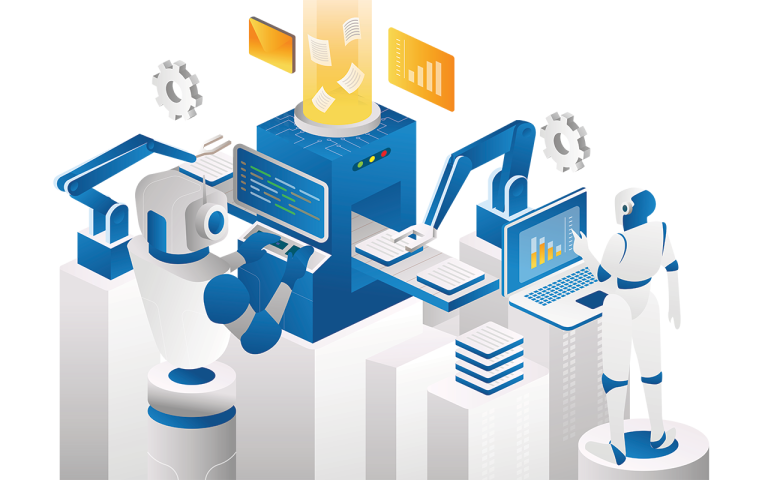
Estimating AI exposure is useful for research but cannot yet tell policymakers the whole story of AI’s impact on the labor market (opens in a new tab)
Essays AUG 7, 2026
Artificial intelligence has the potential to substantially change the nature and availability of work. To effectively manage the transitions this technology might bring to the U.S. economy, policymakers need information…
By: Chiara Chanoi (opens in a new tab)

Tracking new research on artificial intelligence and its impact on the U.S. labor market (opens in a new tab)
Essays AUG 5, 2026
Headlines often paint extreme and dissonant pictures of the future impact of AI on the U.S. economy and labor market, with workers themselves echoing the conflicting feelings of optimism and…
By: Equitable Growth (opens in a new tab)

Why Unemployment Insurance Alone Is Not Enough in the AI Era (opens in a new tab)
Essays JUL 8, 2026
Since the large language model ChatGPT was rolled out in November 2022, artificial intelligence has captured the public’s attention and generated myriad debates over the emerging technology’s potential impacts on…
By: Megan Rivera (opens in a new tab)
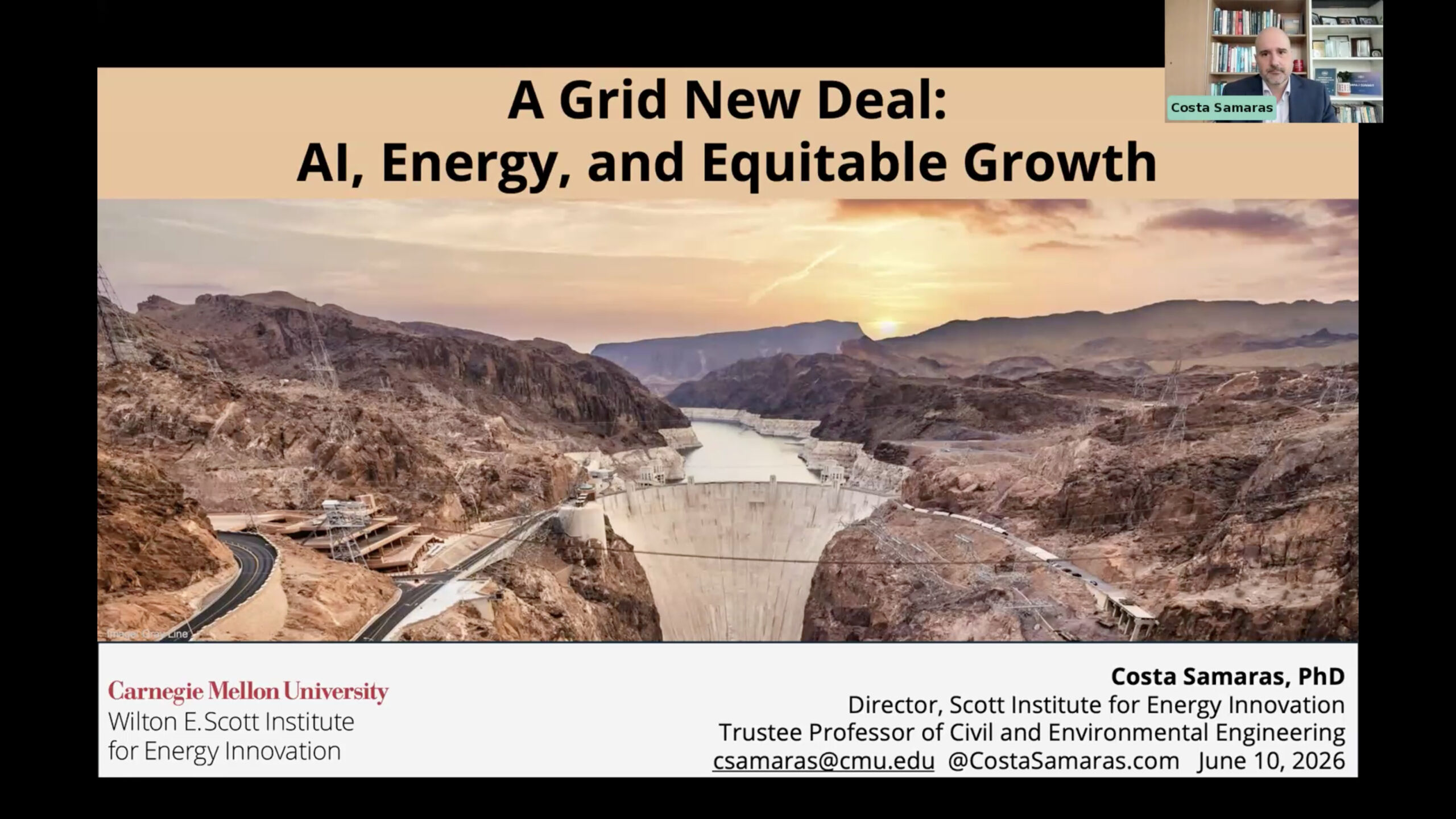
The United States can simultaneously foster an equitable AI boom and a clean energy economy (opens in a new tab)
Videos JUN 12, 2026
The Washington Center for Equitable Growth recently hosted a timely discussion exploring how the rapid expansion of artificial intelligence is colliding with—and reshaping—the clean energy transition. Bringing together researchers and…
By: Equitable Growth (opens in a new tab)

In Conversation with Costa Samaras (opens in a new tab)
In Conversation JUN 2, 2026
Equitable Growth in Conversation is a recurring series where we talk with economists and other academics to help us better understand whether and how economic inequality affects economic growth and…
By: Shayna Strom (opens in a new tab)
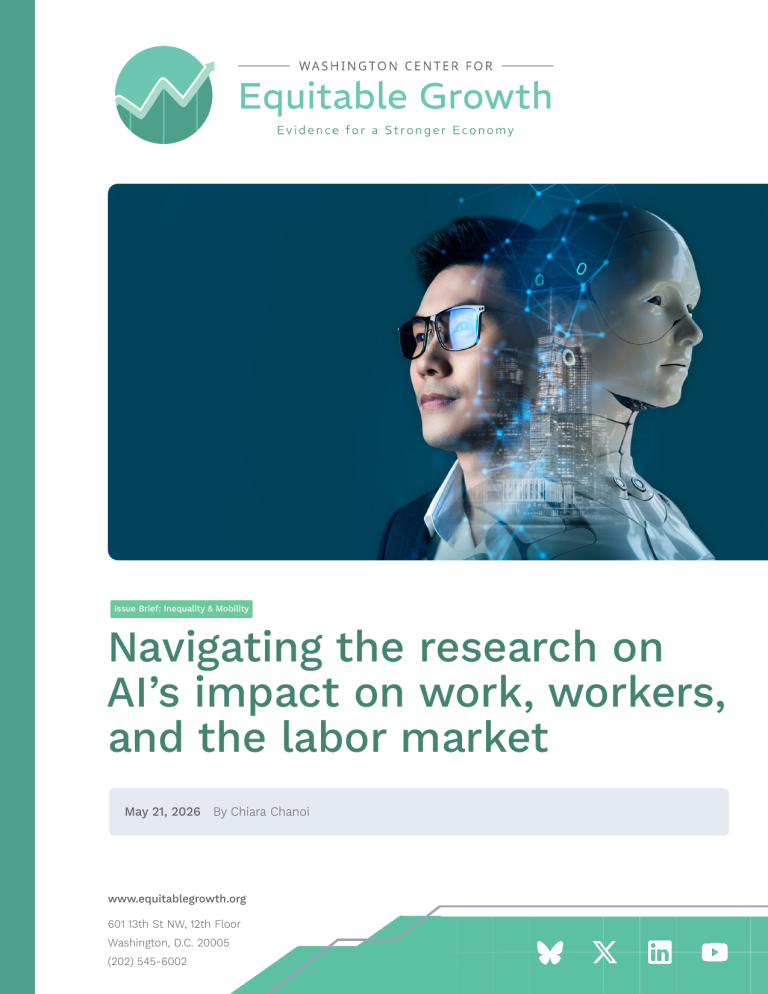
Navigating the research on the impacts of AI on work, workers, and the labor market (opens in a new tab)
Research Databases MAY 21, 2026
Artificial intelligence will have a largely unpredictable but potentially profound effect on the labor market. Individuals have speculated how AI will affect the workforce since its earliest developments. But public…
By: Chiara Chanoi (opens in a new tab)

What is the relationship between inflation, interest rates, and economic growth, and what does it mean for the new Federal Reserve chair? (opens in a new tab)
Issue Briefs MAY 18, 2026
Since regaining the Oval Office in early 2025, President Donald Trump has repeatedly called for lower interest rates and severely criticized former Federal Reserve Board Chair Jerome Powell’s cautious approach…
By: Jacob Robbins (opens in a new tab)

Research shows unions dampen support for right-wing populism and help workers navigate technological transitions (opens in a new tab)
Essays MAY 1, 2026
On May 1, much of the world—though not the United States—celebrates International Workers Day to honor the social and economic contributions of workers and labor unions. The May Day holiday began in large part to mark…
By: Christopher Bangert-Drowns (opens in a new tab)

Research on climate change’s impact on U.S. workers underscores the benefits of workplace heat standards (opens in a new tab)
Essays APR 22, 2026
This year’s Earth Day follows a record-breaking heat wave across much of the East Coast, which followed a record-breaking heat wave that took hold in much of the West and…
By: Equitable Growth (opens in a new tab)

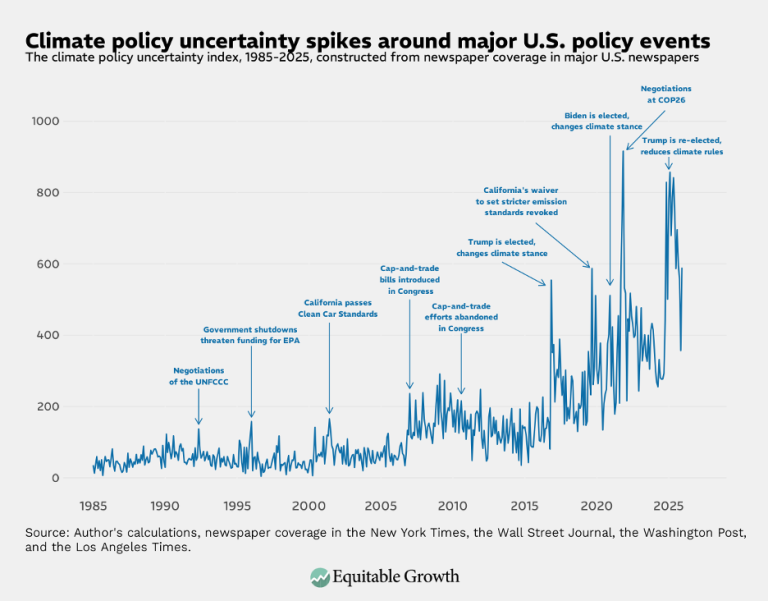
The unintended macroeconomic effects of U.S. climate policy uncertainty (opens in a new tab)
Essays MAR 17, 2026
Recent policy developments in the United States highlight just how quickly climate policies can change. In January 2026, the U.S. Environmental Protection Agency announced that it would stop considering lives…
By: Diego Känzig (opens in a new tab)
The Macroeconomic Effects of Climate Policy Uncertainty (opens in a new tab)
Working Papers MAR 17, 2026
We develop a novel measure of climate policy uncertainty based on newspaper coverage. Our index spikes during key U.S. climate policy events—including presidential announcements on international agreements, congressional debates, and…
By: Konstantinos Gavriilidis (opens in a new tab), Diego R. Känzig, Ramya Raghavan (opens in a new tab), James H. Stock (opens in a new tab)
 View Chart
(opens in a new tab)
View Chart
(opens in a new tab)
Climate policy uncertainty spikes around major U.S. policy events (opens in a new tab)
Visualizations MAR 17, 2026
 View Chart
(opens in a new tab)
View Chart
(opens in a new tab)
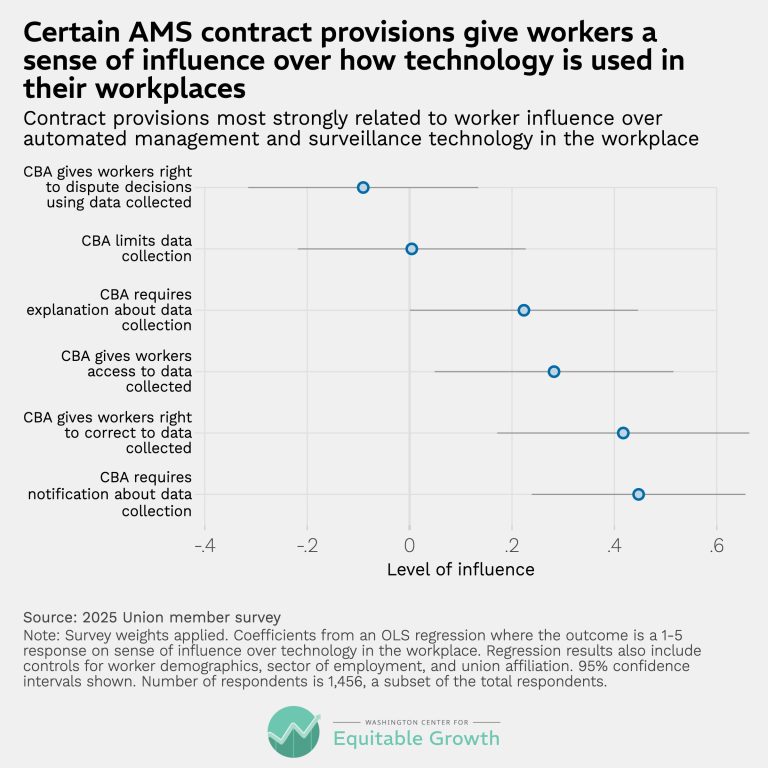
Certain AMS contract provisions give workers a sense of influence over how technology is used in their workplaces (opens in a new tab)
Visualizations MAR 12, 2026
How union contracts are protecting U.S. workers from automated management and surveillance in the workplace (opens in a new tab)
Reports MAR 12, 2026
Employers are increasingly using electronic and automated tools to collect data on their workers on and off the job and then using that data to inform decisions about workers’ pay,…
By: Alexander Hertel-Fernandez (opens in a new tab)
 View Chart
(opens in a new tab)
View Chart
(opens in a new tab)
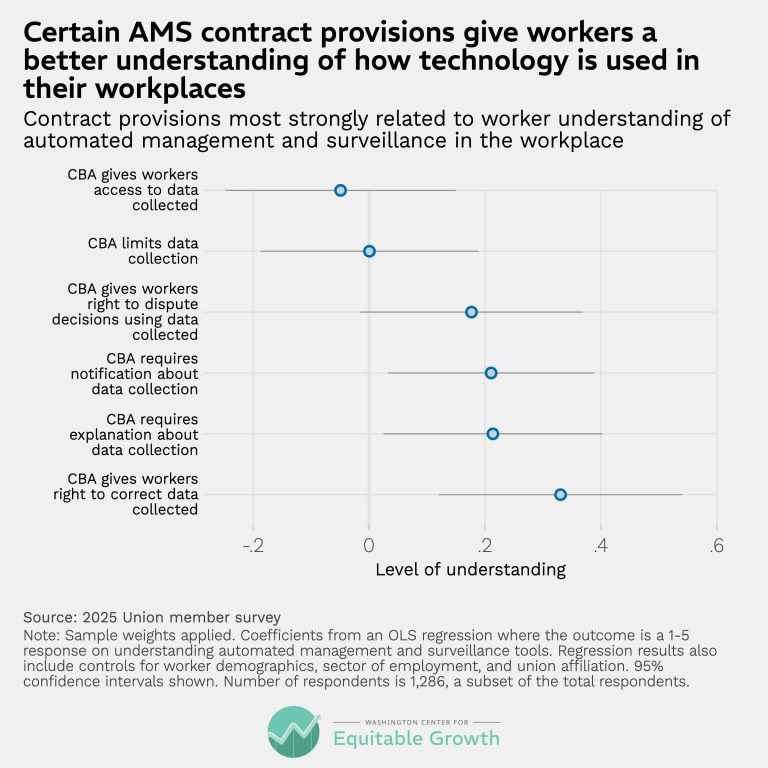
Certain AMS contract provisions give workers a better understanding of how technology is used in their workplaces (opens in a new tab)
Visualizations MAR 12, 2026
 View Chart
(opens in a new tab)
View Chart
(opens in a new tab)
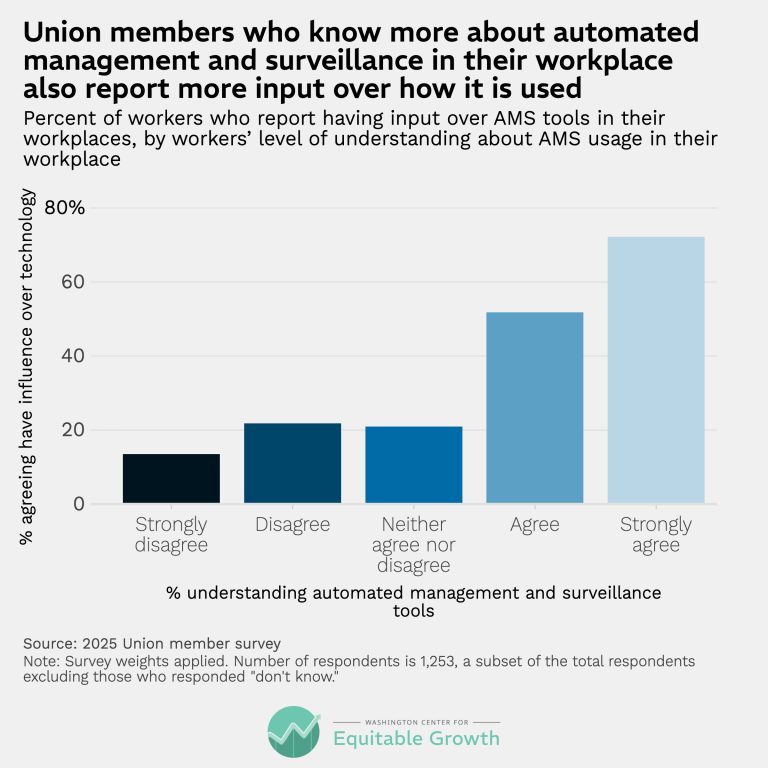
Union members who know more about automated management and surveillance in their workplace also report more input over how it is used (opens in a new tab)
Visualizations MAR 12, 2026
 View Chart
(opens in a new tab)
View Chart
(opens in a new tab)
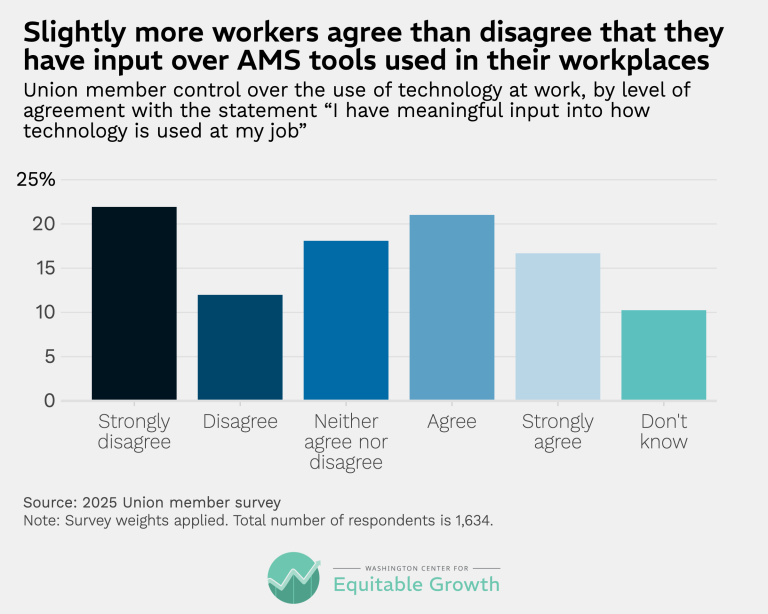
Slightly more workers agree than disagree that they have input over AMS tools used in their workplaces (opens in a new tab)
Visualizations MAR 12, 2026
 View Chart
(opens in a new tab)
View Chart
(opens in a new tab)
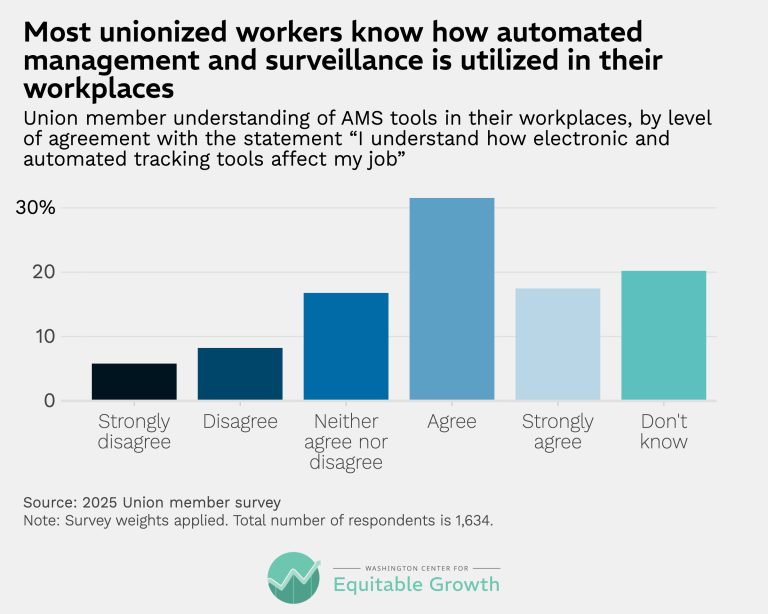
Most unionized workers know how automated management and surveillance are utilized in their workplaces (opens in a new tab)
Visualizations MAR 12, 2026
 View Chart
(opens in a new tab)
View Chart
(opens in a new tab)
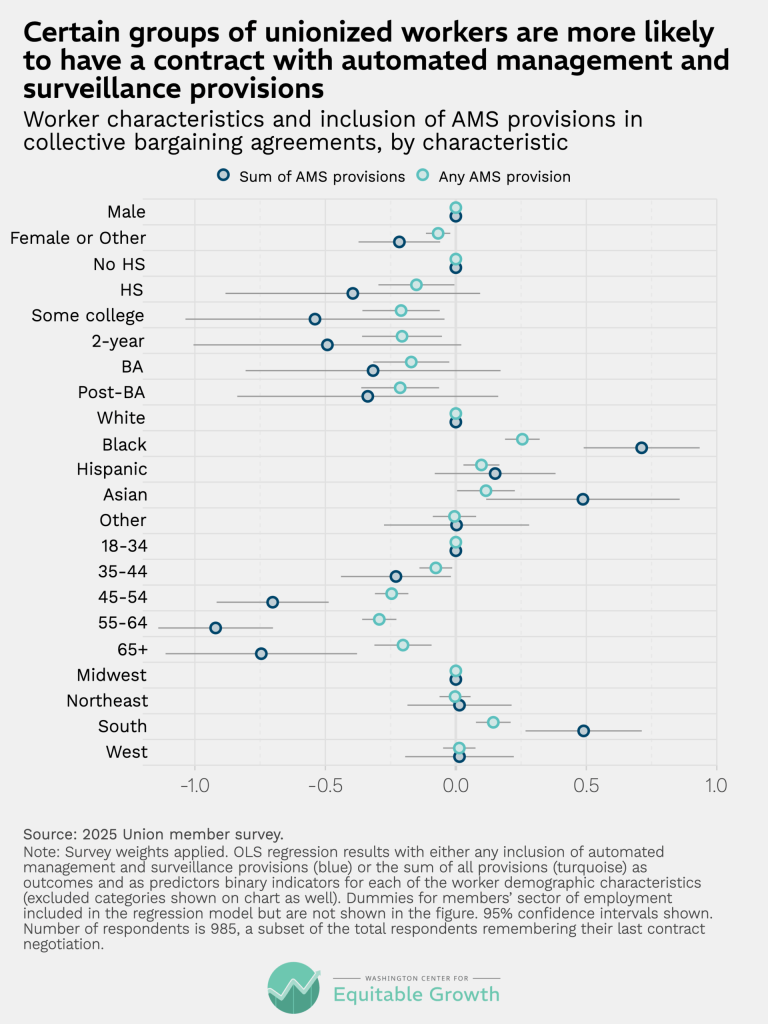
Certain groups of unionized workers are more likely to have a contract with automated management and surveillance provisions (opens in a new tab)
Visualizations MAR 12, 2026
 View Chart
(opens in a new tab)
View Chart
(opens in a new tab)
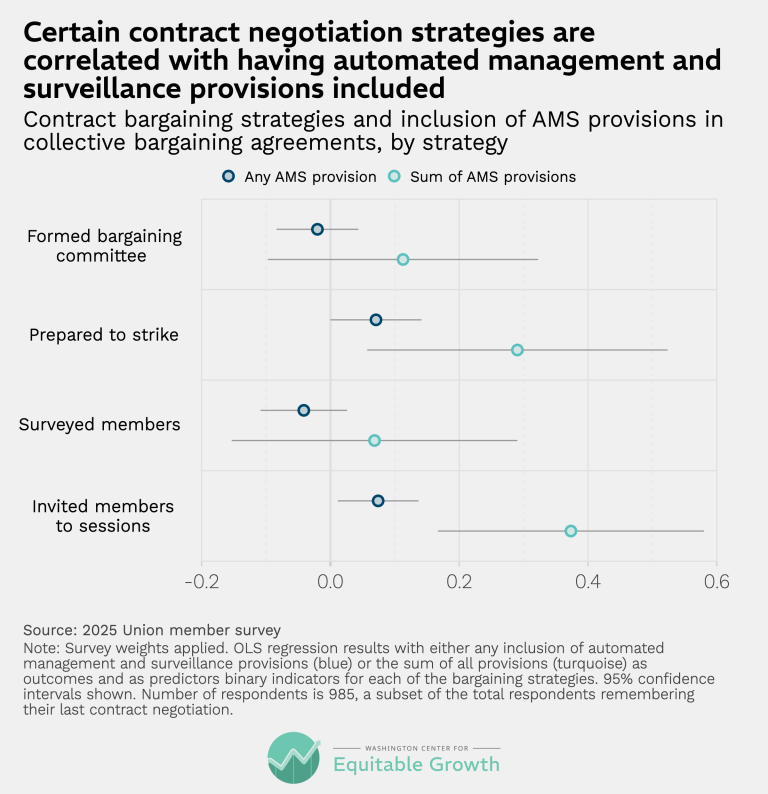
Certain contract negotiation strategies are correlated having automated management and surveillance provisions included (opens in a new tab)
Visualizations MAR 12, 2026
Lessons from past trade adjustment policies to support displaced workers in the era of artificial intelligence (opens in a new tab)
Reports MAR 11, 2026
More than 60 years ago, U.S. policymakers, economists, and labor leaders alike agreed that the potential for new economic forces to strengthen U.S. prosperity and security was just over the…
By: Jacob Leibenluft (opens in a new tab)
ASSA 2026 Round-up: Day 3 (opens in a new tab)
Blog JAN 6, 2026
Yesterday was the third and final day of the 2026 annual meeting of the Allied Social Science Associations, which is organized by the American Economic Association. The 3-day conference, held…
By: Equitable Growth (opens in a new tab)
ASSA 2026 Round-up: Day 2 (opens in a new tab)
Blog JAN 5, 2026
Yesterday was the second day of the 2026 annual meeting of the Allied Social Science Associations, which is organized by the American Economic Association. The 3-day conference, held in Philadelphia…
By: Equitable Growth (opens in a new tab)
ASSA 2026 Round-up: Day 1 (opens in a new tab)
Blog JAN 4, 2026
Yesterday was the first day of the 2026 annual meeting of the Allied Social Science Associations, which is organized by the American Economic Association. The 3-day conference, held in Philadelphia…
By: Equitable Growth (opens in a new tab)
What impact is artificial intelligence having on the U.S. labor market and the nation’s economy? (opens in a new tab)
Essays NOV 14, 2025
As new and groundbreaking technologies emerge, they can function as a blank canvas onto which people project both aspirations and anxieties. Artificial intelligence—despite its quick uptake in broader society and…
By: Megan Rivera (opens in a new tab)

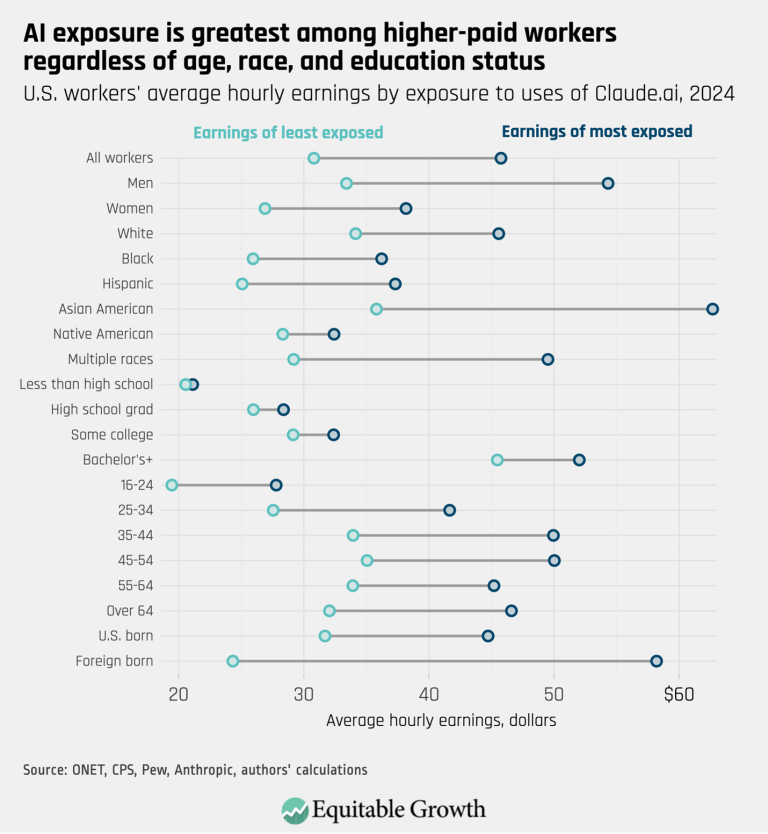
Workplace exposure to artificial intelligence is higher among U.S. workers with higher wages, depending on how AI is used (opens in a new tab)
Essays OCT 23, 2025
Recent advances using artificial intelligence in workplaces, particularly large language models such as Claude.ai and ChatGPT, are increasingly disrupting the U.S. labor market. The cognitive power of AI has the…
By: Chiara Chanoi (opens in a new tab), Christopher Bangert-Drowns (opens in a new tab)
AI exposure by U.S. occupations and work tasks and the effect on wages (opens in a new tab)
Working Papers OCT 23, 2025
This analysis of labor market AI exposure builds on previous work from the Pew Research Center and the AI firm Anthropic as well as Equitable Growth’s own job quality series,…
By: Chiara Chanoi (opens in a new tab), Chris Bangert-Drowns
 View Chart
(opens in a new tab)
View Chart
(opens in a new tab)
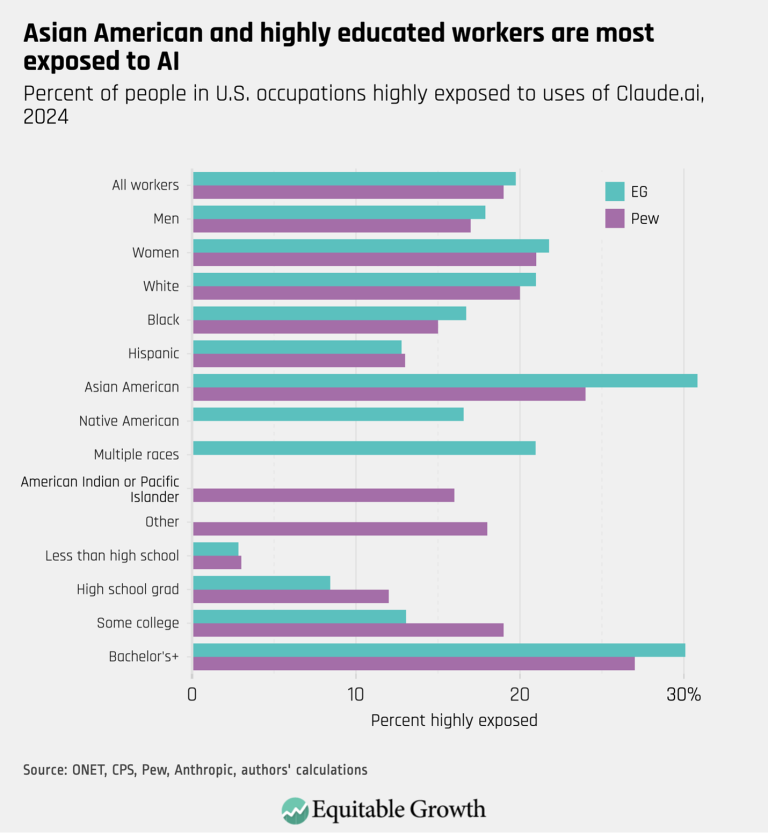
AI exposure is greatest among higher-paid workers regardless of age, race and education status (opens in a new tab)
Visualizations OCT 22, 2025
 View Chart
(opens in a new tab)
View Chart
(opens in a new tab)
Asian American and highly educated workers are most exposed to AI (opens in a new tab)
Visualizations OCT 22, 2025

Equitable Growth supports scholars studying the economics of the energy transition (opens in a new tab)
Essays OCT 22, 2025
The Washington Center for Equitable Growth today announced a new cohort of grantees. These nine scholars will study how the design and implementation of federal policy influences how businesses and…
By: Equitable Growth (opens in a new tab)

Equitable Growth announces funding for research on the impact of AI on U.S. workers and competition (opens in a new tab)
Essays SEP 18, 2025
The Washington Center for Equitable Growth today announced a new cohort of grantees studying how artificial intelligence and new technology can support workers and promote competition across the U.S. economy.…
By: Equitable Growth (opens in a new tab)
How artificial intelligence uncouples hard work from fair wages through ‘surveillance pay’ practices—and how to fix it (opens in a new tab)
Issue Briefs AUG 21, 2025
Correction: Freddie Mac and Udemy contacted the Washington Center for Equitable Growth on March 18, 2026 and April 2, 2026, respectively, to say they no longer had business relationships with…
By: Veena Dubal (opens in a new tab), Wilneida Negrón (opens in a new tab)

Adoption of generative AI will have different effects across jobs in the U.S. logistics workforce (opens in a new tab)
Essays JUL 10, 2025
Generative artificial intelligence promises to profoundly reshape labor markets, much like previous automation waves did, but with clear differences. Unlike earlier technologies, such as computerization, which primarily automated routine administrative…
By: Christophe Combemale (opens in a new tab), Dustin Ferrone (opens in a new tab), Andrew Barber (opens in a new tab), Laurence Ales (opens in a new tab)
 View Chart
(opens in a new tab)
View Chart
(opens in a new tab)
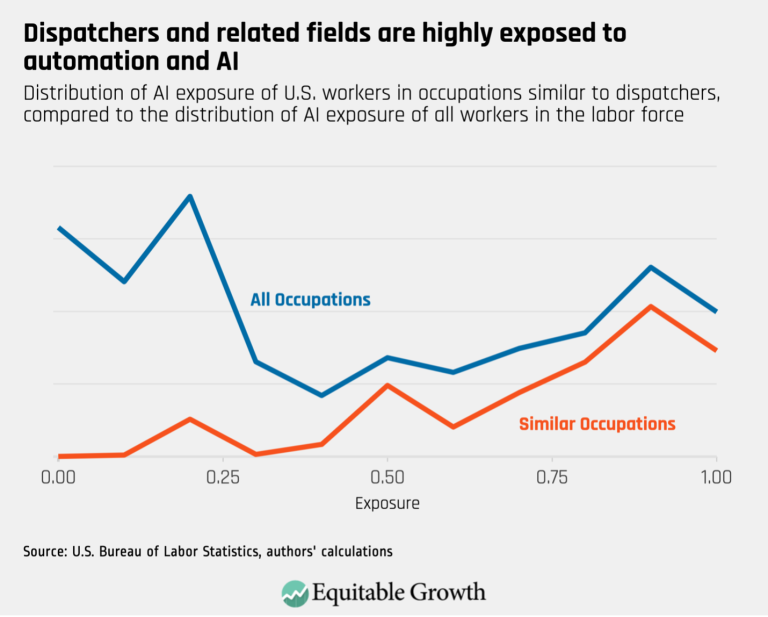
Dispatchers and related fields are highly exposed to automation and AI (opens in a new tab)
Visualizations JUL 10, 2025
 View Chart
(opens in a new tab)
View Chart
(opens in a new tab)
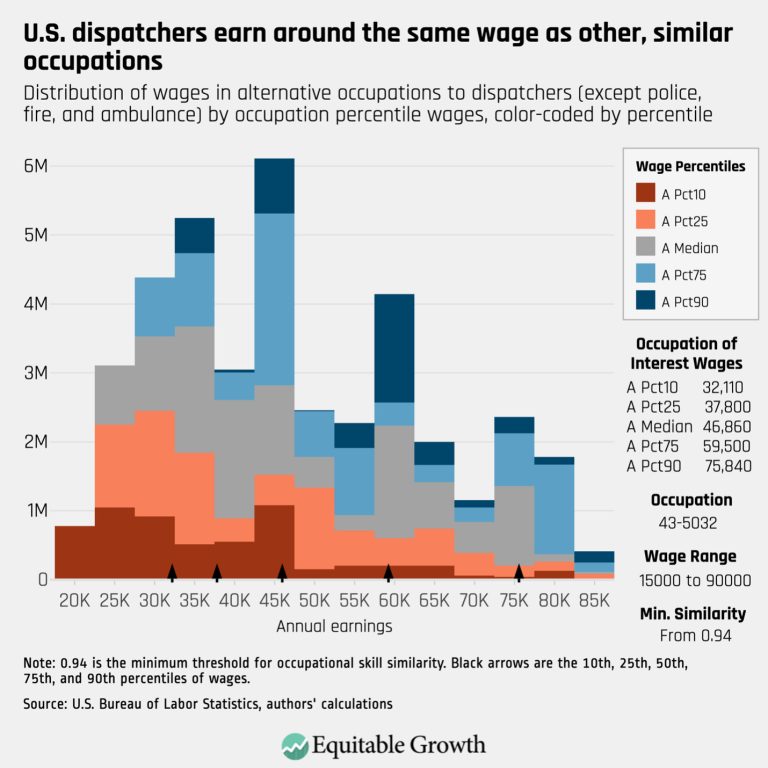
U.S. dispatchers earn around the same wage as other, similar occupations (opens in a new tab)
Visualizations JUL 10, 2025
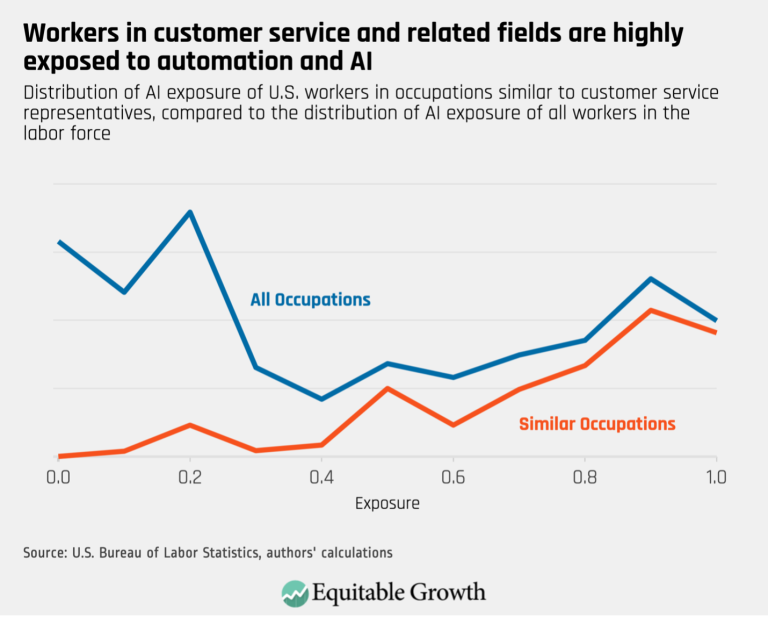 View Chart
(opens in a new tab)
View Chart
(opens in a new tab)
Workers in customer service and related fields are highly exposed to automation and AI (opens in a new tab)
Visualizations JUL 10, 2025
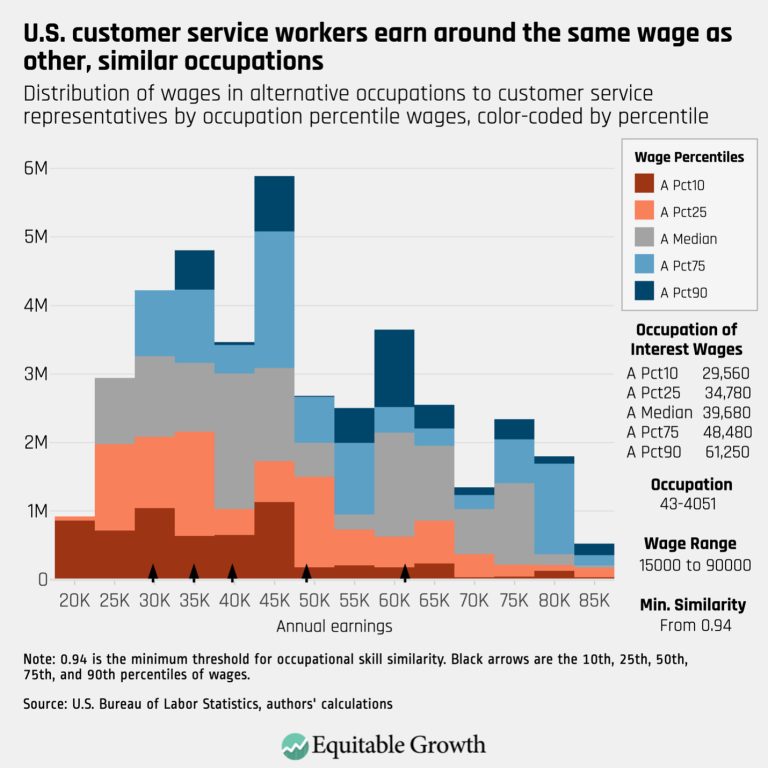 View Chart
(opens in a new tab)
View Chart
(opens in a new tab)
U.S. customer service workers earn around the same wage as other, similar occupations (opens in a new tab)
Visualizations JUL 10, 2025
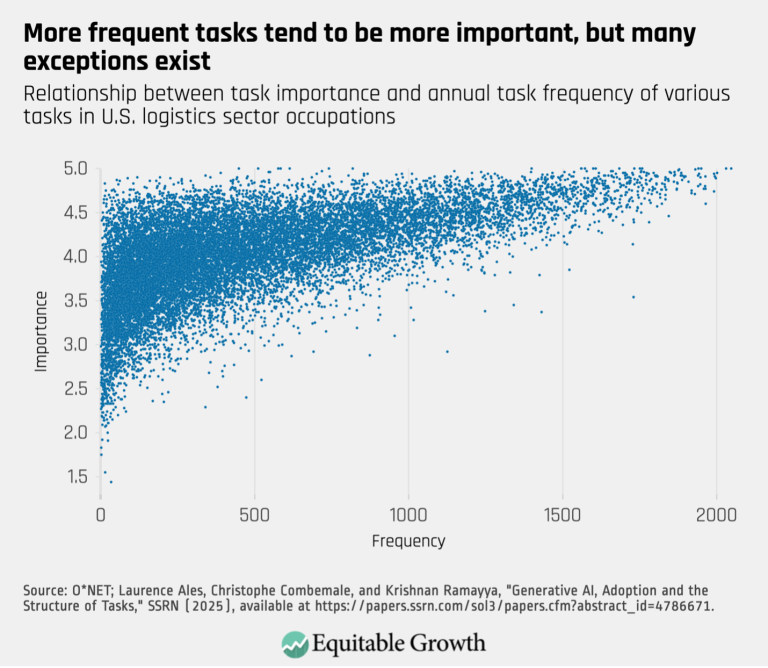 View Chart
(opens in a new tab)
View Chart
(opens in a new tab)
More frequent tasks tend to be more important, but many exceptions exist (opens in a new tab)
Visualizations JUL 9, 2025

Advancing economic research on the Inflation Reduction Act: Q&A with Susan Helper (opens in a new tab)
Blog MAY 1, 2025
The Inflation Reduction Act of 2022 is the most significant economic and clean energy jobs program the United States has ever initiated. To improve overall understanding of whether the new…
By: Susan Helper (opens in a new tab)

Advancing economic research on the Inflation Reduction Act: Q&A with Heather Boushey (opens in a new tab)
Issue Briefs APR 23, 2025
The Inflation Reduction Act of 2022 is the most significant economic and clean energy jobs program the United States has ever initiated. To improve overall understanding of whether the new…
By: Equitable Growth (opens in a new tab)

Evaluating the Inflation Reduction Act: Job quality, spillovers, and place-based policymaking (opens in a new tab)
Blog APR 16, 2025
The Inflation Reduction Act of 2022 is the most significant economic and clean energy jobs program the United States has ever initiated. To improve overall understanding of whether the new…
By: Equitable Growth (opens in a new tab)

Request for Proposals: The economic effects of the Inflation Reduction Act (opens in a new tab)
RFPs APR 2, 2025
By: Equitable Growth (opens in a new tab)

Analogies for AI policymaking (opens in a new tab)
Blog MAR 27, 2025
As a suite of technologies under the label of artificial intelligence increasingly take center stage, policymakers recognize the need to develop deep technical expertise about the deployment of evolving technologies…
By: Sorelle Friedler (opens in a new tab), Marc Aidinoff (opens in a new tab)

Tackling AI, taxation, and the fair distribution of AI’s benefits (opens in a new tab)
Blog MAR 5, 2025
Artificial intelligence poses significant challenges to income growth, inequality, and meaningful work. At the same time, AI has geopolitical significance, with many national and supranational governments shying away from intervening…
By: Mona Sloane (opens in a new tab), Ekkehard Ernst (opens in a new tab)
Boosting U.S. worker power and voice in the AI-enabled workplace (opens in a new tab)
Blog FEB 19, 2025
The deployment of Artificial Intelligence in the workplace has grown rapidly in the United States. Labor unions have been at the forefront of efforts to encourage more productive and sustainable…
By: Virginia Doellgast (opens in a new tab), Nell Geiser (opens in a new tab)

Understanding market concentration in the AI supply chain (opens in a new tab)
Blog JAN 28, 2025
Artificial intelligence is more than just the applications we use, such as chatbots and predictive algorithms. Beneath the surface of AI lies a technology stack that is increasingly concentrated at…
By: Tejas Narechania (opens in a new tab)
ASSA 2025 Round-up: Day 1 (opens in a new tab)
Blog JAN 4, 2025
Yesterday was the first day of the 2025 annual meeting of the Allied Social Science Associations, which is organized by the American Economic Association. The 3-day conference, held in San…
By: Equitable Growth (opens in a new tab)
Accelerating research can help fill the AI knowledge gaps for U.S. policymakers (opens in a new tab)
Issue Briefs DEC 17, 2024
It is hard for policymakers to ignore today’s “AI arms race” and the public debate on the economic and social significance of generative artificial intelligence. The discourse is fueled in…
By: Rohini Kosoglu (opens in a new tab), Christian Edlagan (opens in a new tab)
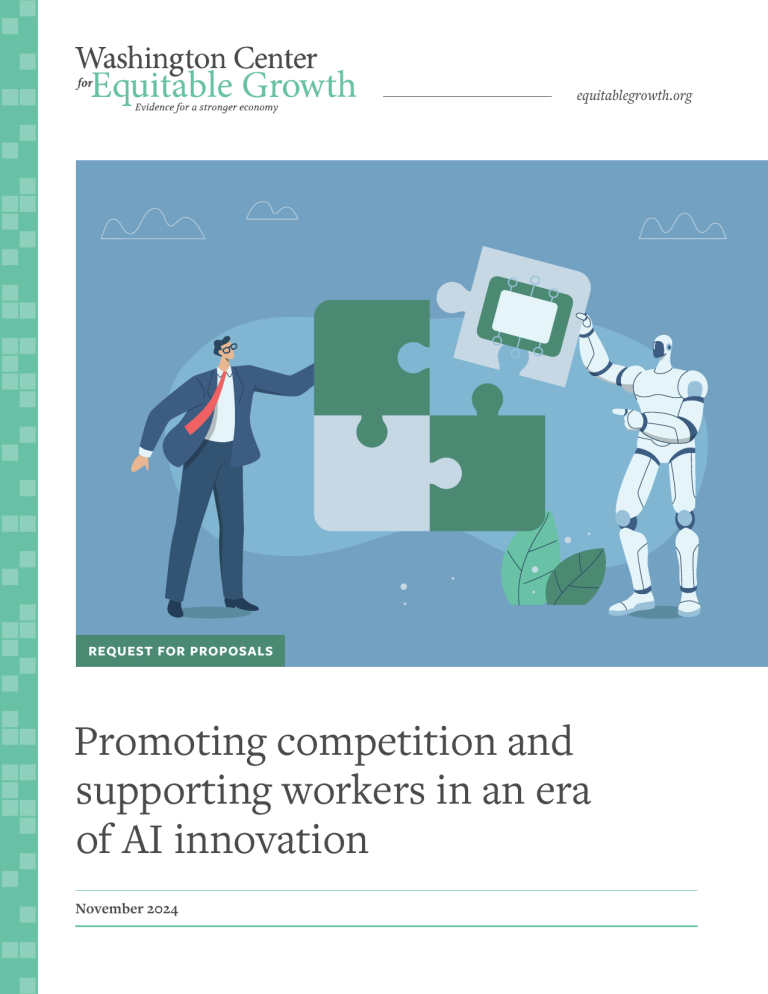
Request for Proposals: Promoting competition and supporting workers in an era of AI innovation (opens in a new tab)
RFPs NOV 20, 2024
By: Equitable Growth (opens in a new tab)
Request for proposals: Research grants for early career scholars (opens in a new tab)
RFPs OCT 30, 2024
By: Equitable Growth (opens in a new tab)
Estimating the prevalence of automated management and surveillance technologies at work and their impact on workers’ well-being (opens in a new tab)
Reports OCT 1, 2024
Evidence from a new national survey and implications for U.S. federal policy U.S. employers are deploying artificial-intelligence-powered and automated tools to monitor and manage workers, including tracking workers’ locations, activities,…
By: Alexander Hertel-Fernandez (opens in a new tab)
 View Chart
(opens in a new tab)
View Chart
(opens in a new tab)
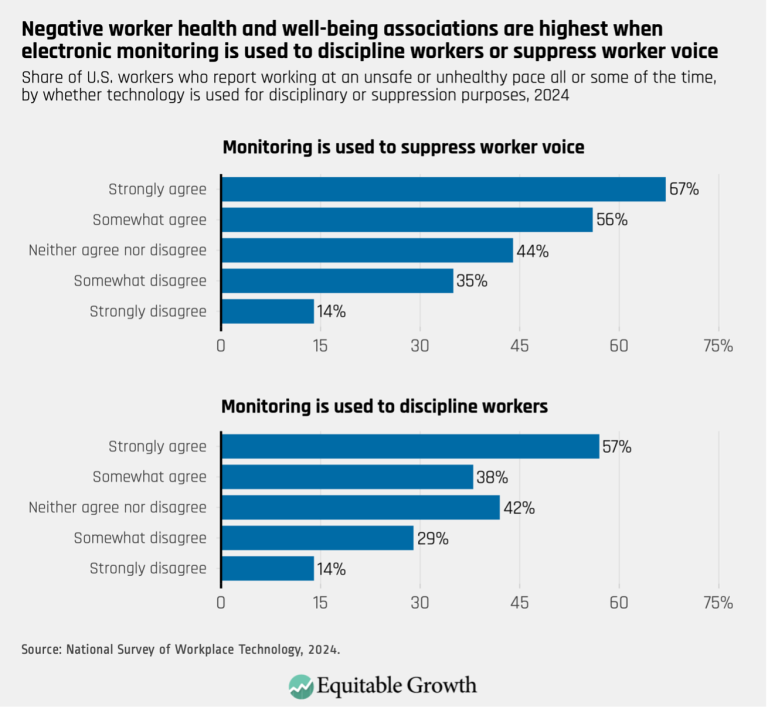
Negative worker health and well-being associations are highest when electronic monitoring is used to discipline workers or suppress worker voice (opens in a new tab)
Visualizations SEP 12, 2024
 View Chart
(opens in a new tab)
View Chart
(opens in a new tab)
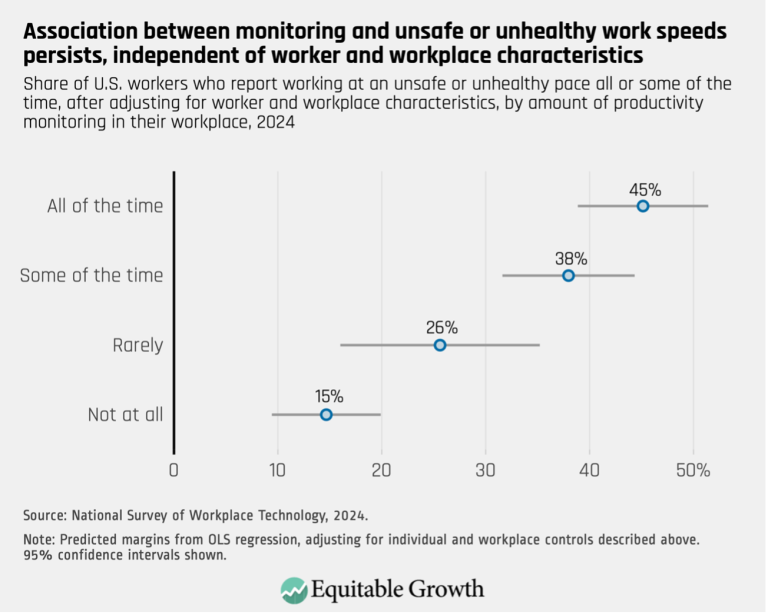
Association between monitoring and unsafe or unhealthy work speeds persists, independent of worker and workplace characteristics (opens in a new tab)
Visualizations SEP 12, 2024
 View Chart
(opens in a new tab)
View Chart
(opens in a new tab)
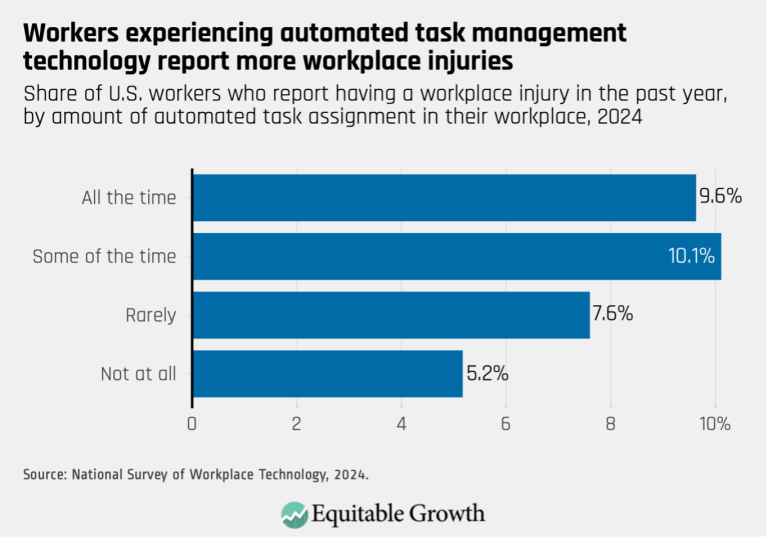
Workers experiencing automated task management technology report more workplace injuries (opens in a new tab)
Visualizations SEP 12, 2024
 View Chart
(opens in a new tab)
View Chart
(opens in a new tab)
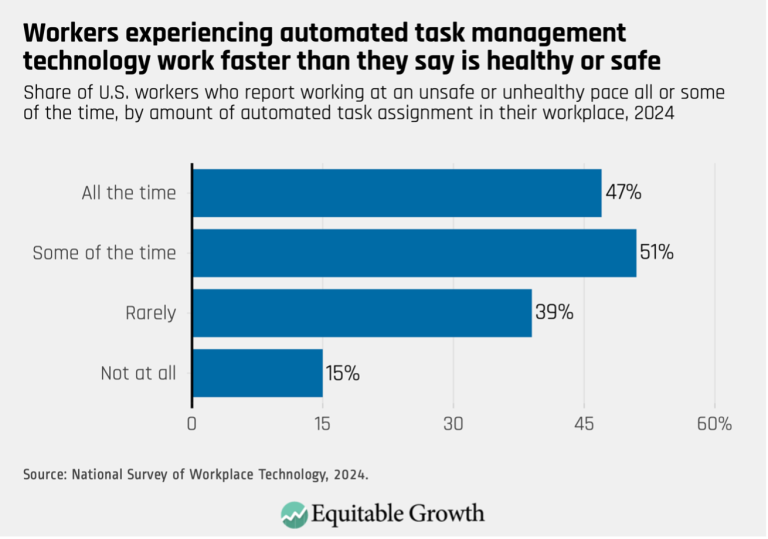
Workers experiencing automated task management technology work faster than they say is healthy or safe (opens in a new tab)
Visualizations SEP 12, 2024
 View Chart
(opens in a new tab)
View Chart
(opens in a new tab)
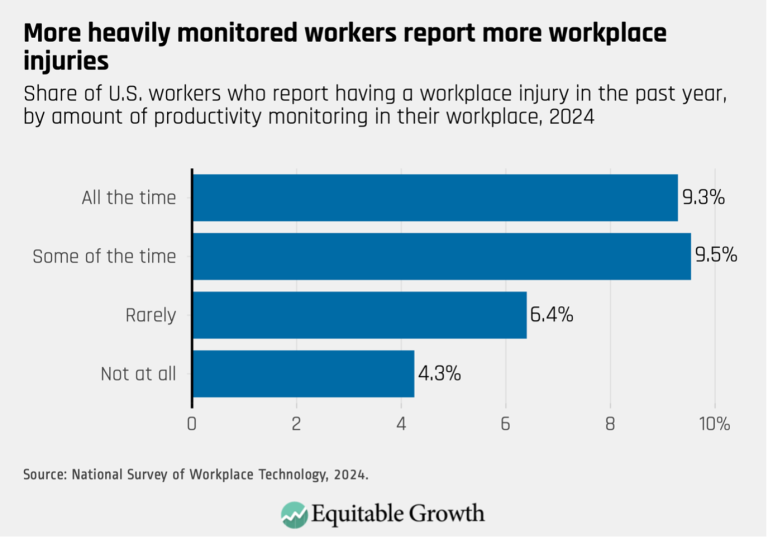
More heavily monitored workers report more workplace injuries (opens in a new tab)
Visualizations SEP 12, 2024
 View Chart
(opens in a new tab)
View Chart
(opens in a new tab)
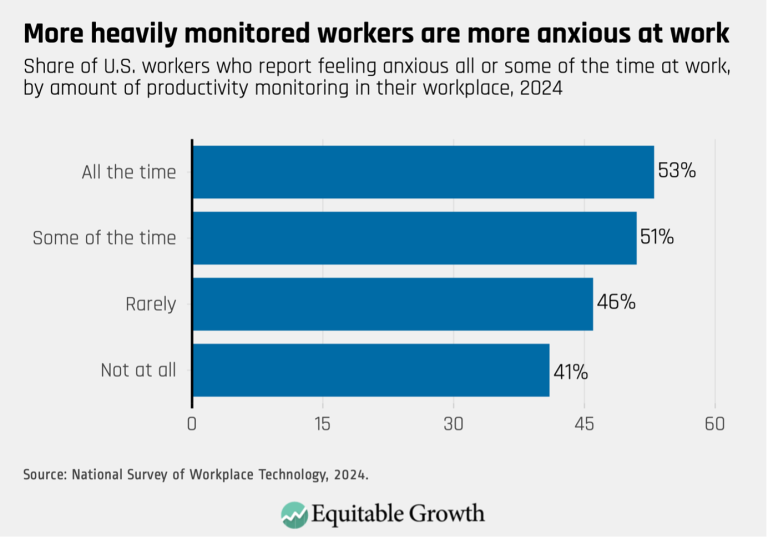
More heavily monitored workers are more anxious at work (opens in a new tab)
Visualizations SEP 12, 2024
 View Chart
(opens in a new tab)
View Chart
(opens in a new tab)
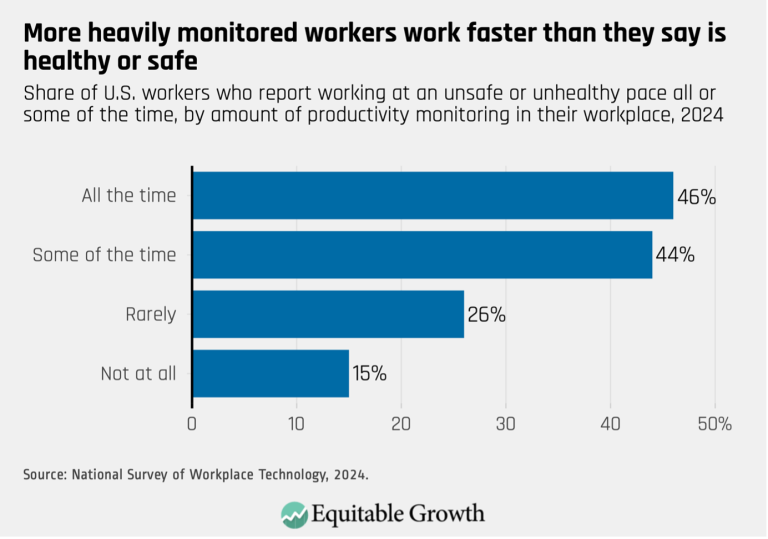
More heavily monitored workers works faster than they say is healthy or safe (opens in a new tab)
Visualizations SEP 12, 2024
 View Chart
(opens in a new tab)
View Chart
(opens in a new tab)
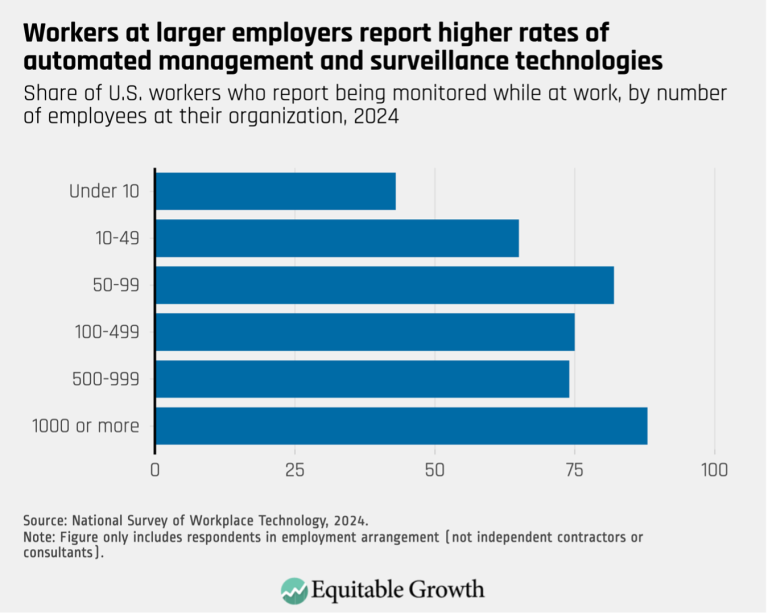
Workers at larger employers report higher rates of automated management and surveillance technologies (opens in a new tab)
Visualizations SEP 12, 2024
 View Chart
(opens in a new tab)
View Chart
(opens in a new tab)
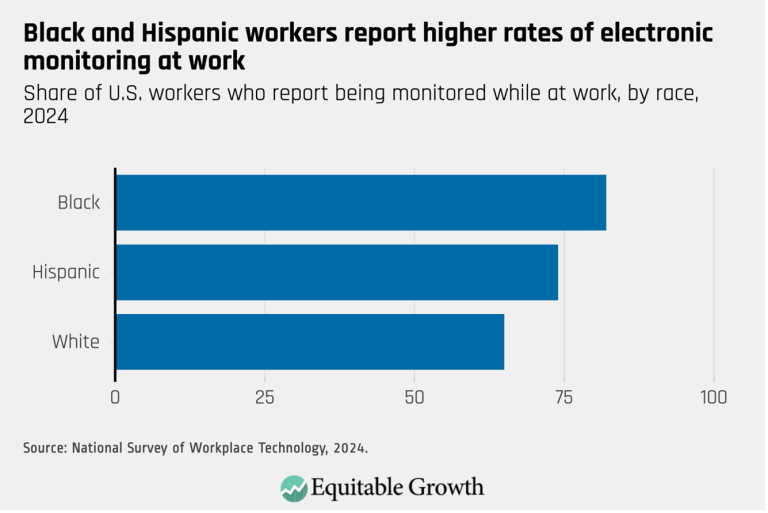
Black and Hispanic workers report higher rates of electronic monitoring at work (opens in a new tab)
Visualizations SEP 12, 2024
 View Chart
(opens in a new tab)
View Chart
(opens in a new tab)
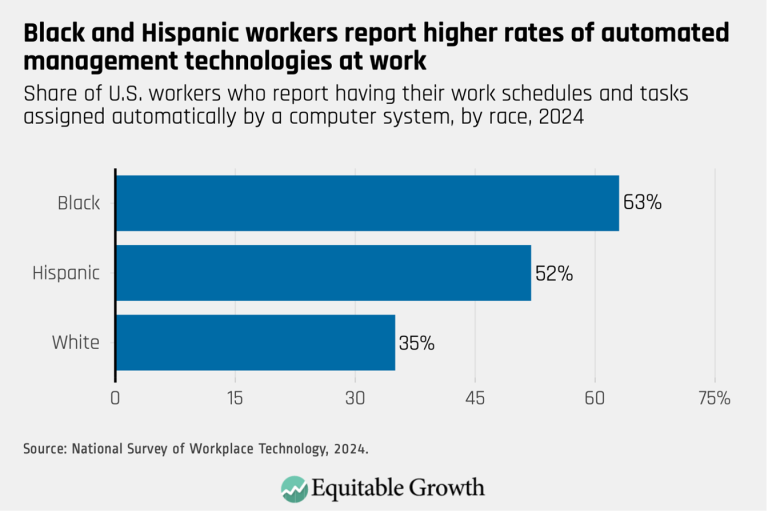
Black and Hispanic workers report higher rates of automated management technologies at work (opens in a new tab)
Visualizations SEP 12, 2024
 View Chart
(opens in a new tab)
View Chart
(opens in a new tab)
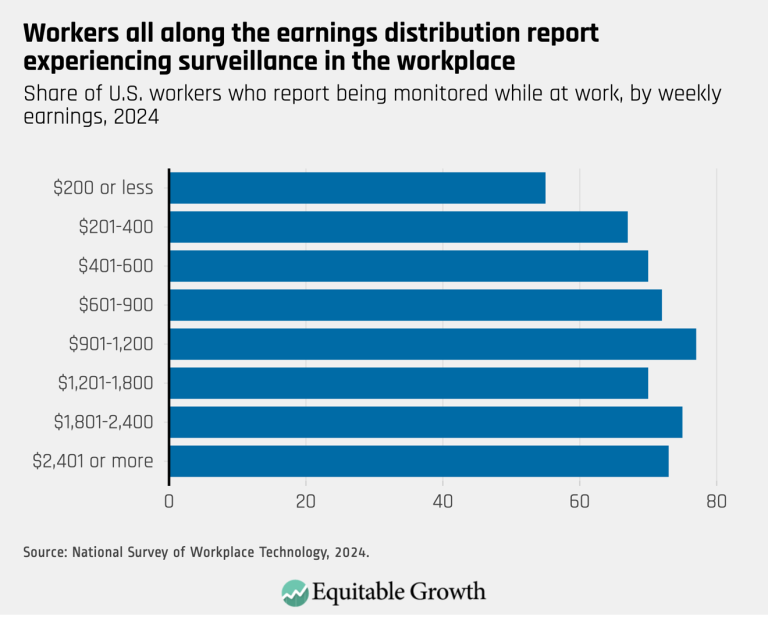
Workers all along the earnings distribution report experiencing surveillance in the workplace (opens in a new tab)
Visualizations SEP 12, 2024
 View Chart
(opens in a new tab)
View Chart
(opens in a new tab)
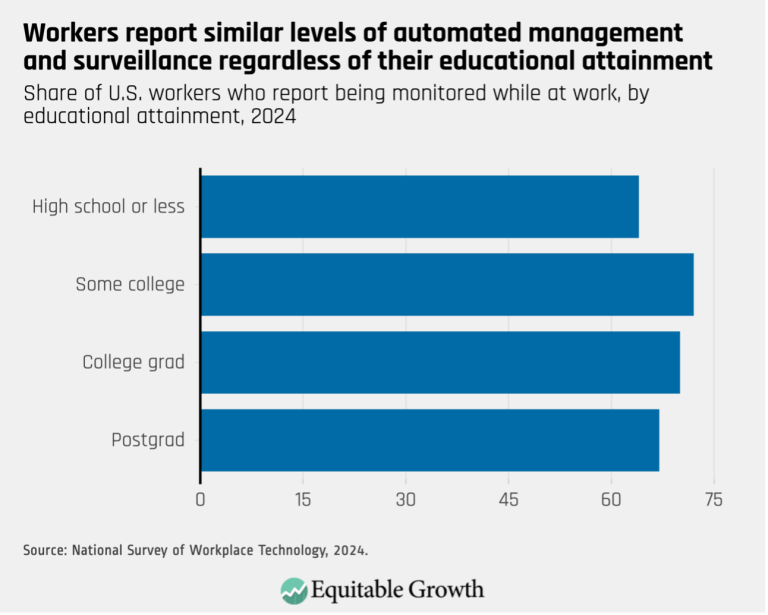
Workers report similar levels of automated management and surveillance regardless of their educational attainment (opens in a new tab)
Visualizations SEP 12, 2024

New federal heat standard will protect U.S. workers from the ill effects of high temperatures amid intensifying climate change (opens in a new tab)
Blog AUG 1, 2024
U.S. workers are more vulnerable than ever to the ill effects of high and rising temperatures as the world continues to shatter heat records this year. Climate-related deaths and injuries…
By: Equitable Growth (opens in a new tab)

New federal heat standard offers novel distributional analysis to determine which workers benefit and how (opens in a new tab)
Blog JUL 16, 2024
The U.S. Department of Labor recently released a much-anticipated proposed rule that promises to protect workers from on-the-job injuries and deaths that result from toiling in the heat. The timing…
By: David S. Mitchell (opens in a new tab)
U.S. workers, generative AI, and the future of work (opens in a new tab)
Blog MAY 9, 2024
The launch of ChatGPT in November 2022 captured the world’s attention and illustrated the potential of generative Artificial Intelligence to instantly perform tasks long considered quintessentially “human.” Already, the technology…
By: Molly Kinder (opens in a new tab)

New workplace surveillance bill would protect U.S. workers and address new technological risks (opens in a new tab)
Blog MAY 2, 2024
Across the U.S. economy, the risks posed by unchecked automated surveillance and management technologies are widespread—and growing. These technologies can sometimes be beneficial for workers, customers, and businesses alike. For…
By: Alexander Hertel-Fernandez (opens in a new tab)
Request for proposals: Research grants for early career scholars (opens in a new tab)
RFPs NOV 30, 2023
By: Equitable Growth (opens in a new tab)
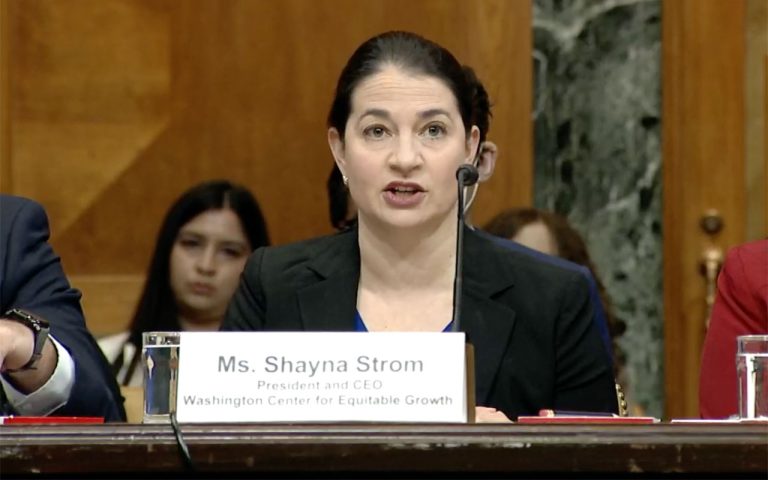
Testimony by Shayna Strom before the Senate Budget Committee (opens in a new tab)
Blog SEP 20, 2023
Chairman Whitehouse, Ranking Member Grassley, and members of the committee, thank you for the opportunity to testify today. I am the President and CEO of the Washington Center for Equitable…
By: Shayna Strom (opens in a new tab)
 View Chart
(opens in a new tab)
View Chart
(opens in a new tab)
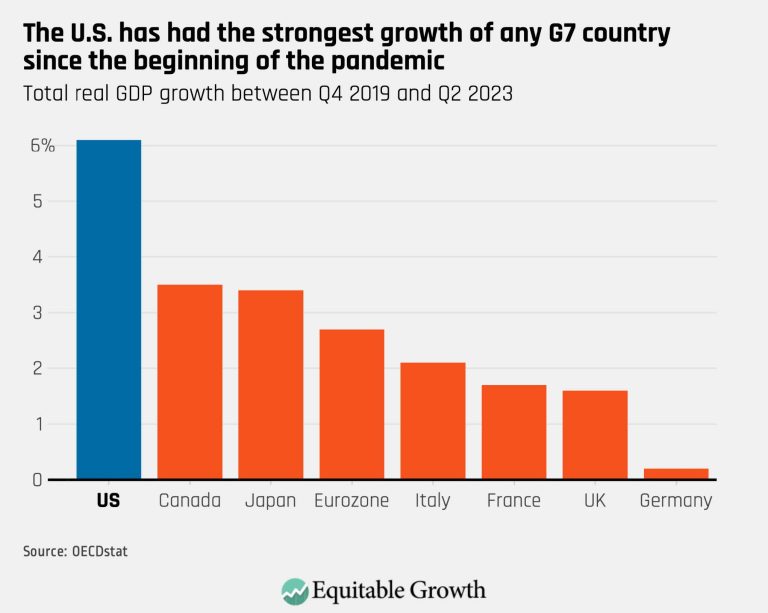
The U.S. has had the strongest growth of any G7 country since the beginning of the pandemic (opens in a new tab)
Visualizations SEP 20, 2023
 View Chart
(opens in a new tab)
View Chart
(opens in a new tab)
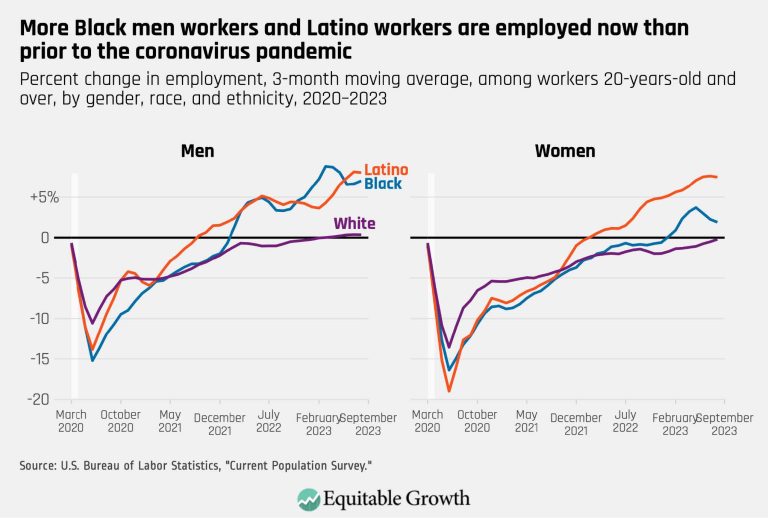
More Black men workers and Latino workers are employed now than prior to the coronavirus pandemic (opens in a new tab)
Visualizations SEP 20, 2023
 View Chart
(opens in a new tab)
View Chart
(opens in a new tab)
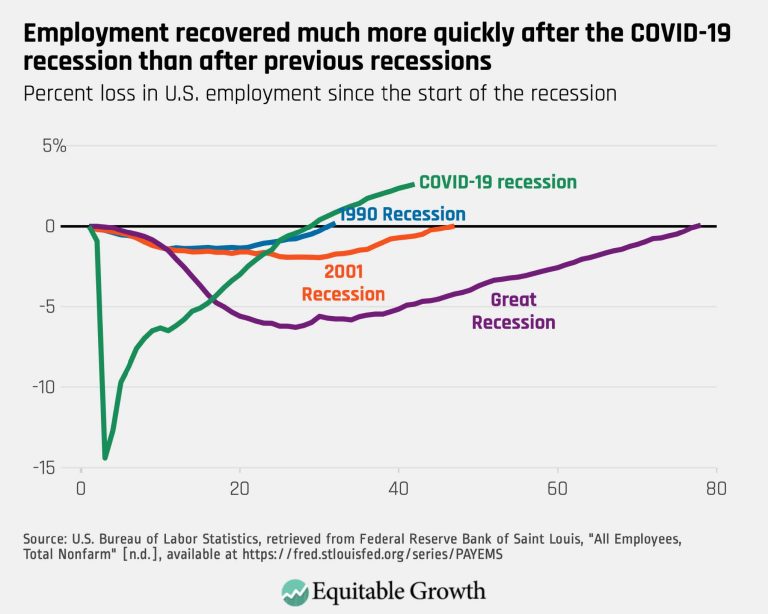
Employment recovered much more quickly after the COVID-19 recession than after previous recessions (opens in a new tab)
Visualizations SEP 20, 2023
 View Chart
(opens in a new tab)
View Chart
(opens in a new tab)
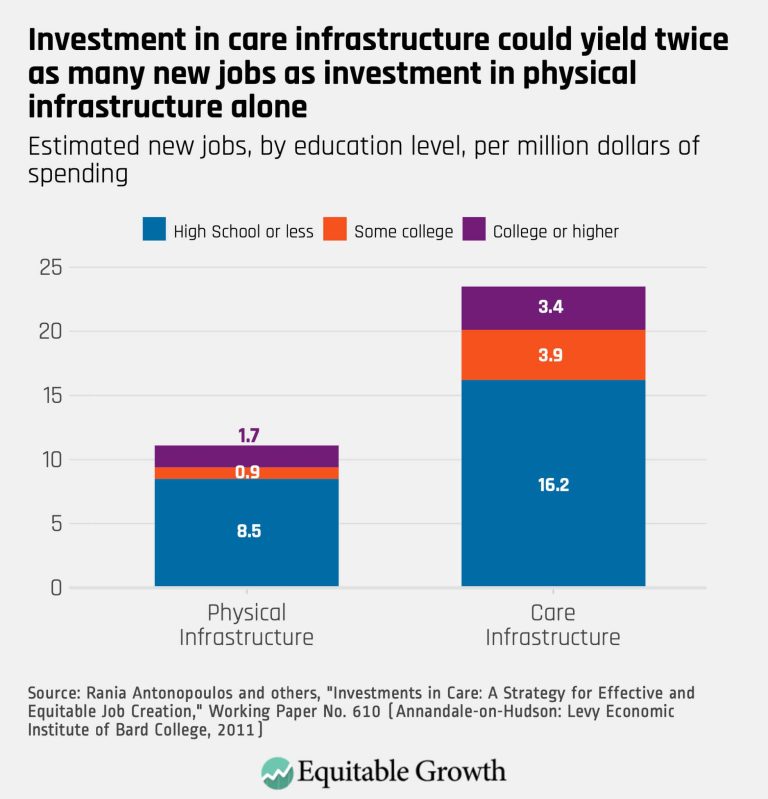
Investment in care infrastructure could yield twice as many new jobs as investment in physical infrastructure alone (opens in a new tab)
Visualizations SEP 19, 2023
The New Economics of Industrial Policy (opens in a new tab)
Working Papers SEP 19, 2023
We discuss the considerable literature that has developed in recent years providing rigorous evidence on how industrial policies work. This literature is a significant improvement over the earlier generation of…
By: Réka Juhász (opens in a new tab), Nathan Lane, Dani Rodrik (opens in a new tab)
Disparities in Pollution Capitalization Rates: The Role of Direct and Systemic Discrimination (opens in a new tab)
Working Papers JUL 20, 2023
We examine how exogenous changes in exposure to air pollution over the past two decades have altered the disparities in home values between Black and White homeowners. We find that…
By: Joshua S. Graff Zivin, Gregor Singer (opens in a new tab)

Algorithmic wage discrimination requires policy solutions that enforce predictability and the U.S. spirit of equal pay for equal work (opens in a new tab)
Blog JUL 12, 2023
U.S. consumers generally believe that gig workers who labor for companies such as Uber Technologies Inc. and Lyft Inc. are free to set their own hours and thus able to…
By: Veena Dubal (opens in a new tab)
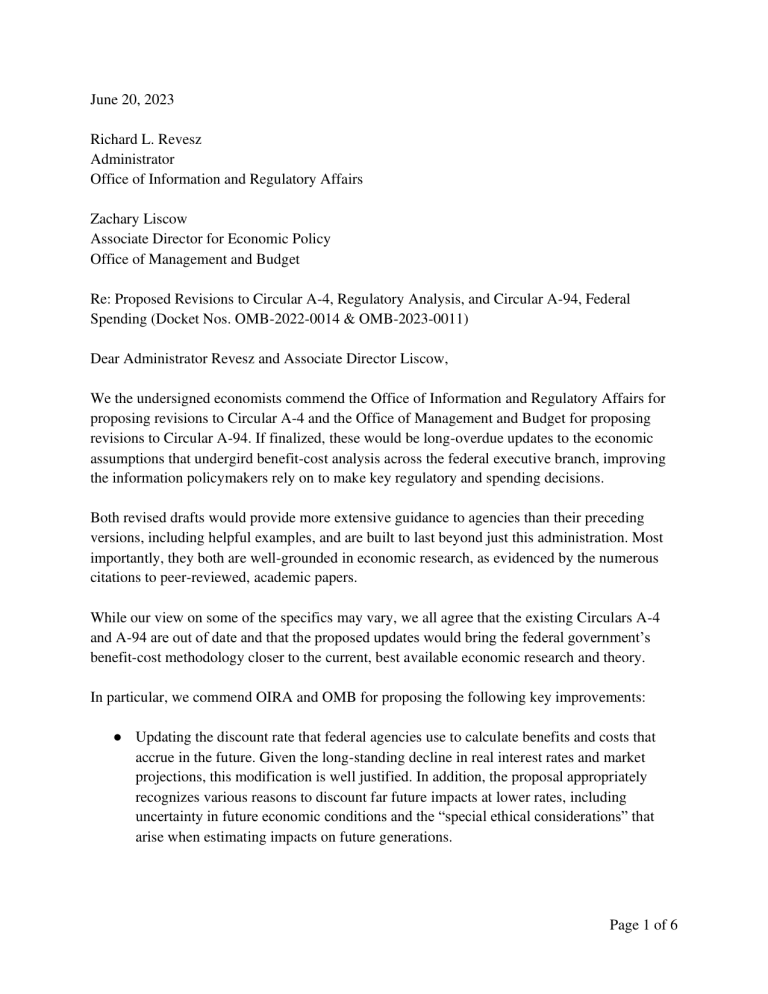
Equitable Growth delivers economist sign-on letter and comment letter to the White House Office of Information and Regulatory Affairs on its Proposed Revisions to Circular A-4, Regulatory Analysis (opens in a new tab)
Issue Briefs JUN 20, 2023
This post has been updated to reflect that Equitable Growth’s economist sign-on letter, not our comment letter, was submitted to regulations.gov due to an administrative submission error. The Washington Center…
By: Equitable Growth (opens in a new tab)

In Conversation with Daron Acemoglu (opens in a new tab)
In Conversation MAY 8, 2023
Equitable Growth in Conversation is a recurring series where we talk with economists and other academics to help us better understand whether and how economic inequality affects economic growth and…
By: Kathryn Zickuhr (opens in a new tab)

Maybe some Earth Day soon, we’ll know what nature is worth (opens in a new tab)
Issue Briefs APR 24, 2023
This past January, the Biden administration unveiled its “National Strategy to Develop Statistics for Environmental-Economic Decisions,” an effort to bring the health and sustainability of natural resources in the United…
By: Austin Clemens (opens in a new tab)

Executive actions to reduce inequality and improve job quality for U.S. workers (opens in a new tab)
Blog MAR 16, 2023
Relevant federal agencies: Federal Trade Commission Equal Employment Opportunity Commission Office of Personnel Management Relevant laws: Federal Trade Commission’s Trade Regulation Rule on Commercial Surveillance and Data Security, Commercial Surveillance…
By: Equitable Growth (opens in a new tab)
Equitable Growth delivers letter responding to the NTIA’s Privacy, Equity, and Civil Rights Request for Comment (opens in a new tab)
Blog MAR 6, 2023
The Washington Center for Equitable Growth this week delivered a comment letter responding to the National Telecommunications and Information Administration’s Privacy, Equity, and Civil Rights Request for Comment. Our comment…
By: Kathryn Zickuhr (opens in a new tab)

Automated and algorithmic management is already here, invisibly shaping job quality for U.S. workers (opens in a new tab)
Blog JAN 24, 2023
Predictions about which jobs may be “lost” in the United States as employers implement new automation and algorithmic technologies often consider management tasks and roles as the least vulnerable to…
By: Kathryn Zickuhr (opens in a new tab)

Equitable Growth delivers comment letter responding to FTC’s Advanced Notice of Proposing Rulemaking on Commercial Surveillance and Data Security (opens in a new tab)
Blog NOV 21, 2022
The Washington Center for Equitable Growth this week delivered a comment letter responding to the Federal Trade Commission’s Advanced Notice of Proposing Rulemaking on Commercial Surveillance and Data Security. The…
By: Equitable Growth (opens in a new tab)

How the Infrastructure Investment and Jobs Act of 2021 is promoting sustainable U.S. economic growth and mitigating climate change (opens in a new tab)
Issue Briefs NOV 18, 2022
In an issue brief earlier this year, Equitable Growth discussed how the Infrastructure Investment and Jobs Act of 2021 rests on sound economic principles and analyzed the ways that its…
By: Michael Madowitz (opens in a new tab), Shaun Harrison (opens in a new tab)

Green jobs are good for U.S. workers and the U.S. economy (opens in a new tab)
Blog NOV 8, 2022
Earlier this year, the U.S. Congress passed and President Joe Biden signed into law one of the most consequential climate bills in U.S. history. The Inflation Reduction Act allocates $369…
By: Equitable Growth (opens in a new tab)
Green Energy Jobs in the US: What Are They, and Where Are They? (opens in a new tab)
Working Papers NOV 8, 2022
Does the growth of renewable energy benefit US workers, and which workers stand to benefit the most? Until now, evidence on green energy jobs has been limited due to measurement…
By: E. Mark Curtis (opens in a new tab), Ioana Marinescu (opens in a new tab)
 View Chart
(opens in a new tab)
View Chart
(opens in a new tab)
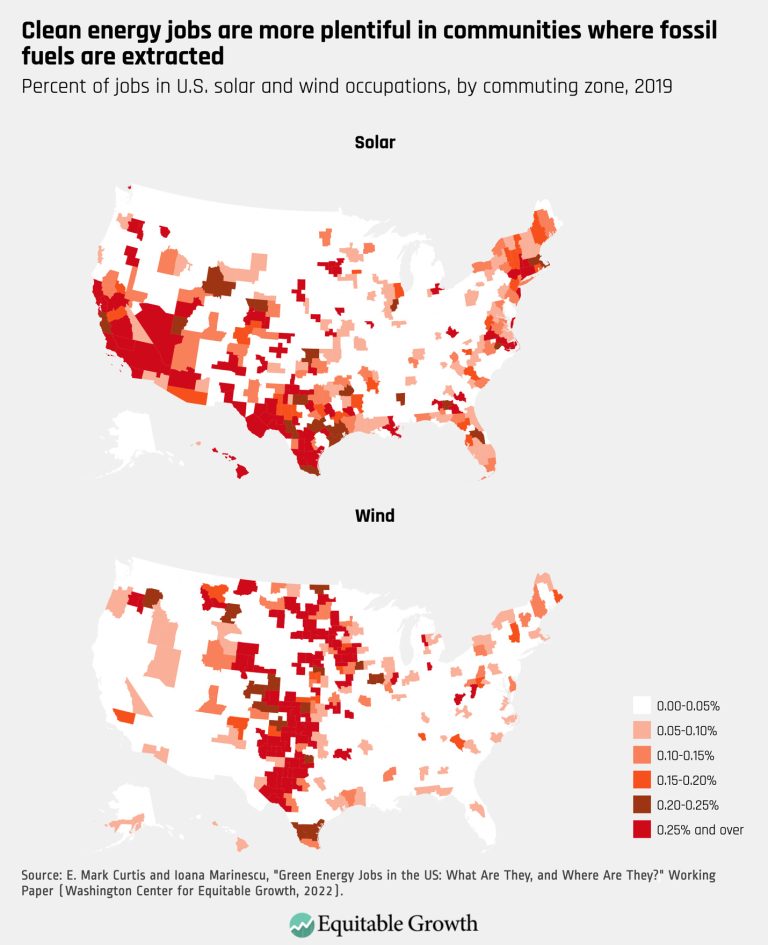
Clean energy jobs are more plentiful in communities where fossil fuels are extracted (opens in a new tab)
Visualizations NOV 7, 2022
 View Chart
(opens in a new tab)
View Chart
(opens in a new tab)
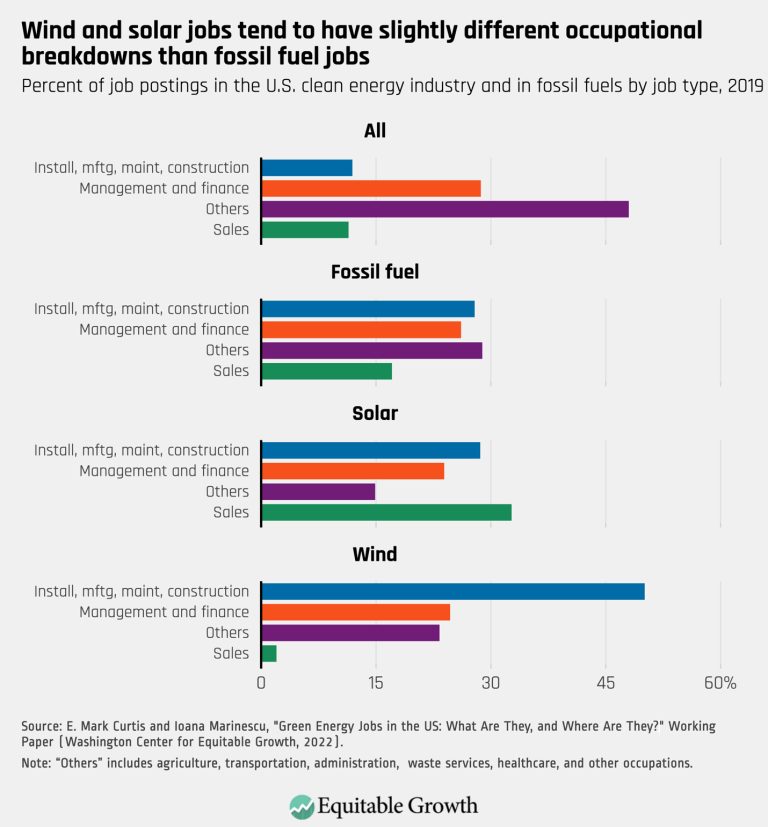
Wind and solar jobs tend to have slightly different occupational breakdowns than fossil fuel jobs (opens in a new tab)
Visualizations NOV 7, 2022
 View Chart
(opens in a new tab)
View Chart
(opens in a new tab)
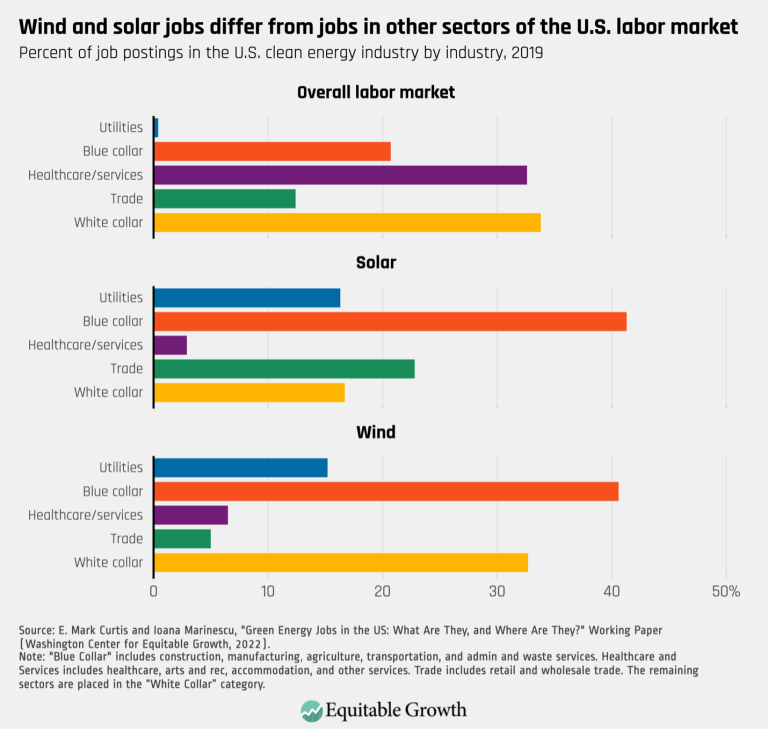
Wind and solar jobs differ from jobs in other sectors of the U.S. labor market (opens in a new tab)
Visualizations NOV 7, 2022
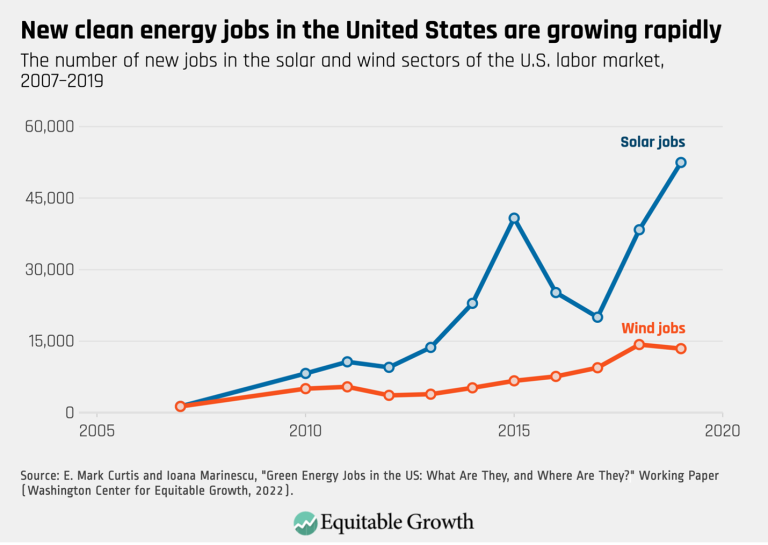 View Chart
(opens in a new tab)
View Chart
(opens in a new tab)
New clean energy jobs in the United States are growing rapidly (opens in a new tab)
Visualizations NOV 7, 2022

In Conversation with R. Jisung Park (opens in a new tab)
In Conversation JUL 25, 2022
Equitable Growth in Conversation is a recurring series where we talk with economists and other academics to help us better understand whether and how economic inequality affects economic growth and…
By: Michael Garvey (opens in a new tab)

New working paper examines the evolution of economic thought on the impact of technological change in the labor market (opens in a new tab)
Blog JUL 19, 2022
How have automation and digital technologies contributed to wage inequality in recent decades? It may seem like a straightforward question, but it is one that has been difficult for economists…
By: Kathryn Zickuhr (opens in a new tab)

Modeling future economic damages from climate change is an important and underdeveloped area of research (opens in a new tab)
Blog APR 22, 2022
This year’s Earth Day celebrations come on the heels of yet another devastating UN report detailing the consequences of climate change—and the global lack of action to mitigate its effects—for…
By: Michael Garvey (opens in a new tab)
Workplace surveillance is becoming the new normal for U.S. workers (opens in a new tab)
Reports AUG 18, 2021
In the first weeks of the pandemic back in the spring of 2020, as many as half of U.S. workers who remained employed were suddenly working from home. Managers scrambled…
By: Kathryn Zickuhr (opens in a new tab)

Excessive heat harms U.S. workers unequally as the safety risks from climate change soar (opens in a new tab)
Blog JUL 19, 2021
This summer’s West Coast heat waves come as no surprise. But headlines about the various negative effects of excessive heat, including fatal wildfires, often overlook the plight of everyday workers.…
By: Michael Garvey (opens in a new tab)
Temperature, workplace safety, and labor market inequality (opens in a new tab)
Working Papers JUL 19, 2021
Using data covering the universe of injury claims from the nation’s largest worker’s compensation system (2001-2018), we explore the relationship between temperature and workplace safety and its implications for labor…
By: R. Jisung Park (opens in a new tab), Nora Pankratz (opens in a new tab), A. Patrick Behrer (opens in a new tab)

Policy workshop addressed promises and challenges of using carbon pricing to combat climate change (opens in a new tab)
Blog APR 15, 2021
Climate change might be the world’s most complex public policy problem. It is more global, more long-term, more irreversible, and more uncertain than most other policy challenges and probably unique…
By: Gernot Wagner (opens in a new tab)

New evidence on the success of gig-worker pay standards for ride-hail drivers (opens in a new tab)
Blog MAR 10, 2021
The misclassification of work performed by ride-hailing drivers is rampant in the online platform-based gig economy. Companies such as Uber Technologies Inc. and Lyft Inc. claim their drivers are independent…
By: Kathryn Zickuhr (opens in a new tab)

Testimony by Michael Kades before the Subcommittee on Antitrust, Commercial, and Administrative Law on digital markets (opens in a new tab)
Blog OCT 1, 2020
Michael KadesDirector, Markets and Competition PolicyWashington Center for Equitable Growth“Proposals to Strengthen the Antitrust Laws and Restore Competition Online”Subcommittee on Antitrust, Commercial, and Administrative Law October 1, 2020 Thank you…
By: Michael Kades (opens in a new tab)

A plan for equitable climate policy in the United States (opens in a new tab)
Blog FEB 18, 2020
This essay is part of Vision 2020: Evidence for a stronger economy, a compilation of 21 essays presenting innovative, evidence-based, and concrete ideas to shape the 2020 policy debate. The…
By: Leah Stokes (opens in a new tab), Matto Mildenberger (opens in a new tab)

Competitive Edge: Jason Furman testifies on the role of data and privacy in online platforms’ market power (opens in a new tab)
Blog OCT 18, 2019
Antitrust and competition issues are receiving renewed interest, and for good reason. So far, the discussion has occurred at a high level of generality. To address important specific antitrust enforcement…
By: Jason Furman (opens in a new tab)
How U.S. companies harm workers by making them independent contractors (opens in a new tab)
Issue Briefs JUL 31, 2019
Being classified as either an employee or an independent contractor can determine whether workers in the United States have access to reliable pay, benefits, and protection from discrimination. Intense fights…
By: Corey Husak (opens in a new tab)
 View Chart
(opens in a new tab)
View Chart
(opens in a new tab)
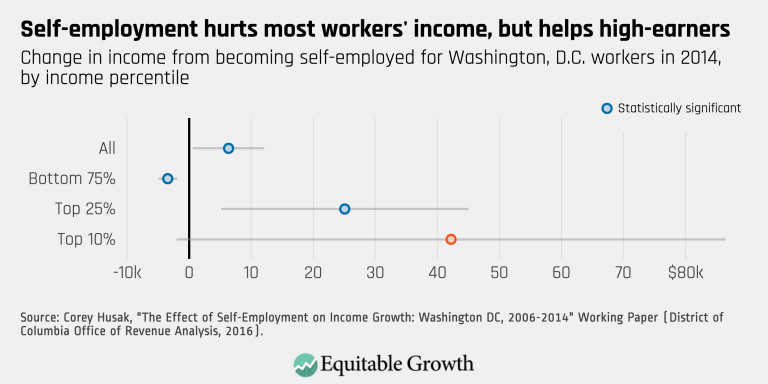
Self-employment hurts most workers’ income, but helps high earners (opens in a new tab)
Visualizations JUL 31, 2019
How job-matching technologies can build a fairer and more efficient U.S. labor market (opens in a new tab)
Blog NOV 15, 2018
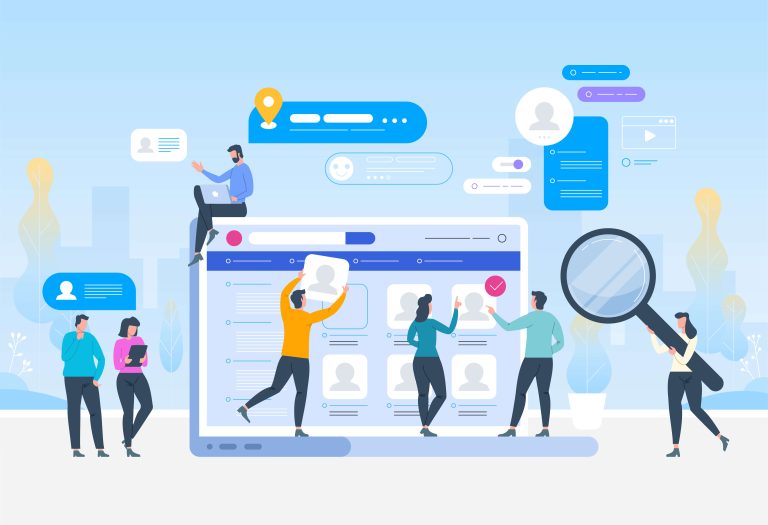
Economic theory tells us that there are benefits to a dynamic labor market in which workers are matched with jobs based on their skills, interests, and ambitions so they can…
By: Will McGrew (opens in a new tab)

Competitive Edge: Antitrust enforcers need reinforcements to keep pace with algorithms, machine learning, and artificial intelligence (opens in a new tab)
Blog NOV 13, 2018
Antitrust and competition issues are receiving renewed interest, and for good reason. So far, the discussion has occurred at a high level of generality. To address important specific antitrust enforcement…
By: Terrell McSweeny (opens in a new tab)

New data on contingent workers in the United States (opens in a new tab)
Blog JUN 5, 2018
On Thursday, June 7, the U.S. Bureau of Labor Statistics will release data from its freshly collected Contingent Worker Supplement. It’s important for policymakers and economists alike to know what…
By: Kate Bahn (opens in a new tab)


Your Direct Line to Cutting Edge Research
Be the first to know about our latest events, research releases, and expert insights. Get exclusive updates delivered right to your inbox and never miss an opportunity to engage with our community.