


Policy Resources
From in-depth analysis to practical policy insights, find research that helps explain how economic policy shapes outcomes for workers, families, and long-term growth.
Our Policy Areas of Focus
The Washington Center for Equitable Growth connects economic evidence and policy to promote shared prosperity and growth by funding policy-relevant research, elevating scholars and their work, and translating evidence for policymakers.

How Ideas Move Into Policy Decisions
AI, Tech & Energy
Equitable Growth supports research and policy analysis on how artificial intelligence, emerging technologies, and the energy transition affect workers, inequality, and broad-based economic growth.

To equip leaders to guide AI toward shared prosperity, our work examines:
- The impact of AI on employment levels, wages, and job content
- How AI drives macroeconomic impacts such as growth and productivity
- Market competition implications of AI use
- The use of algorithms in labor management
Macroeconomics & Economic Measurement
Equitable Growth supports research and policy analysis on how macroeconomic policies and better economic measurement can promote stable and broad-based economic growth.
To reduce volatility and strengthen individual and macroeconomic resilience for broad-based growth, we focus on:
- Automatic stabilizers that cushion downturns and promote more even recoveries
- Tools to respond to recessions that quickly stabilize households, boost the economy, and limit scarring
- Ways to encourage private investment and job growth
- Wealth inequality using novel data and analysis
- Policies to strengthen supply chains and support the energy transition
Political Economy & Democracy
Equitable Growth supports research and policy analysis on how economic inequality shapes political power and democratic institutions, and how that in turn affects broad-based economic growth.

Taxation
Equitable Growth supports research and policy analysis on how tax policies can promote stable and broad-based economic growth.

To provide evidence to policymakers on what effective reform entails, we focus on:
- Distributional analysis, including distributional weighting of benefit-cost analysis
- Pass-through and other business taxation
- Tax enforcement, especially related to large, complex partnerships
- Taxing wealth, including capital taxes on new forms of wealth such as artificial intelligence and cryptocurrency
Competition & Economic Dynamism
Equitable Growth supports research and policy analysis on how strong competition among U.S. businesses affects inequality and broad-based economic growth.

Household Economic Security
Equitable Growth supports research and policy analysis on how unequal access to care, 21st century work-life policies, and education undermines stable, broad-based economic growth.

We focus on:
- The efficacy of public benefit and social insurance programs
- Income security and access to wealth-building
- Policy effects on economic mobility
- The value of economic inclusion
- The impacts on workforce outcomes through policies such as schedule stability and childcare
Economic Equity & Opportunity
Equitable Growth supports research and policy analysis on how trends in economic inequality and mobility and changes in the economy have affected the concentration of wealth, income, and earnings, and how these distributional shifts have affected the promise of economic security and opportunity.

Labor, Wages & Worker Power
Equitable Growth supports research and policy analysis on how inequalities in wages, bargaining power, and the evolving labor market affect workers’ economic security and opportunity as well as broad-based economic growth.

We focus on:
- Unemployment and wage growth
- Bargaining power and union coverage
- Gender and race pay equity
- Nonwage amenities, job quality, and upward job mobility
How Ideas Move Into Policy Decisions

Disseminate research and policy guidance
Identify policy areas and issues
Conduct original research and identify spaces for effective policy interventions
Identify policy relevant and academically rigorous research questions


Progress depends on a continuous exchange between ideas and action.
Research helps define the questions that matter, while policy challenges shape the direction of inquiry. When these two stay connected, evidence becomes more than insight—it becomes a tool for better decisions.

That connection is powered by people.
At the center of this work is a network of more than 400 researchers focusing on real policy questions—helping explain economic trends, evaluate solutions, and inform decision-making.
7 Results

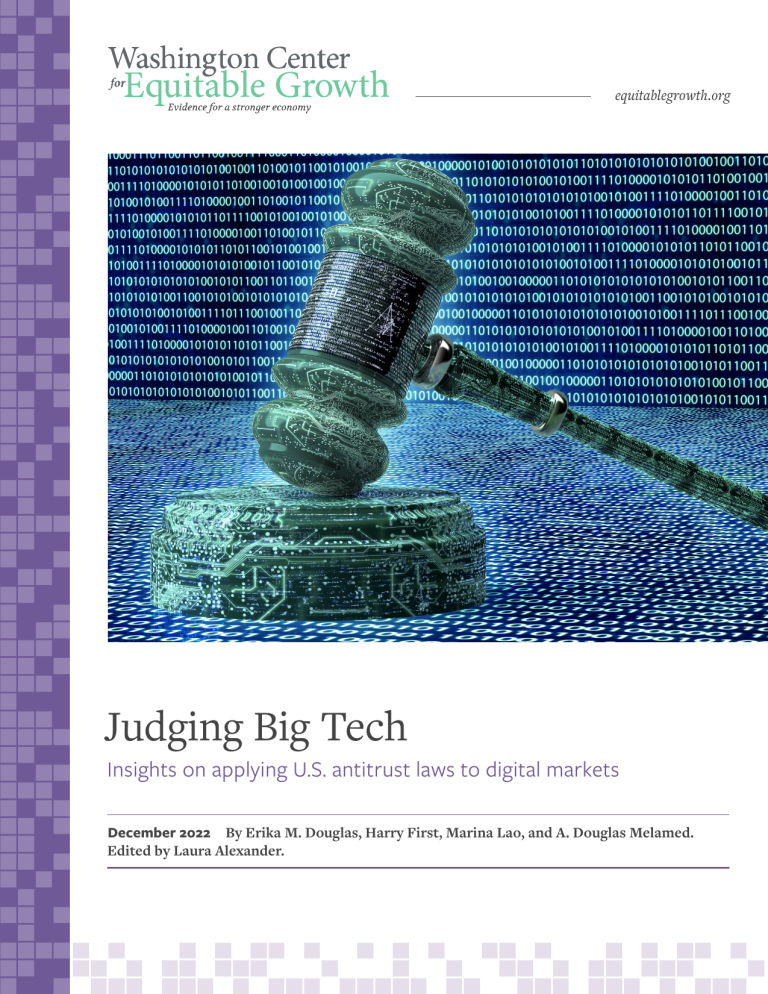
Judging Big Tech (opens in a new tab)
Books DEC 1, 2022
The importance of digital information technology and communications giants to the U.S. economy and society today is undeniable. The business strategies of these companies are increasingly capturing the attention of…
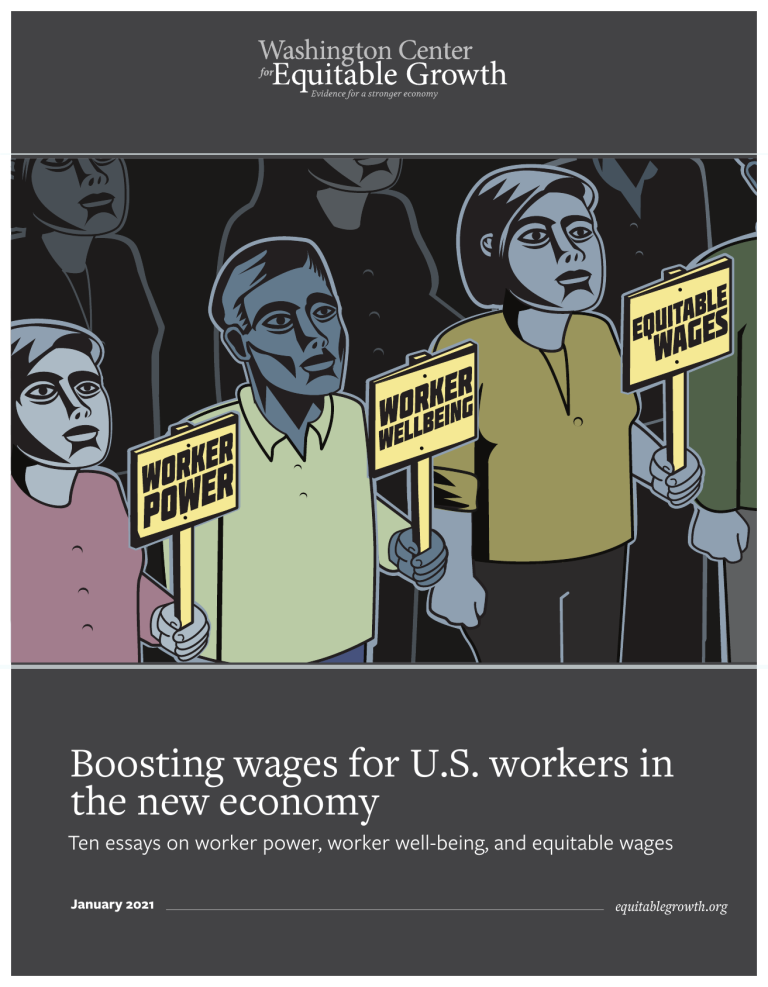
Boosting Wages for U.S. Workers in the New Economy (opens in a new tab)
Books JAN 1, 2021
The U.S. labor market is shackled by decades of wage stagnation for the majority of workers, persistent wage disparities by race, ethnicity, and gender, and sluggish economic growth. The steady…
Vision 2020: Evidence for a stronger economy (opens in a new tab)
Books FEB 1, 2020
To shape the 2020 policy debate and lead the charge for long-term structural change, the Washington Center for Equitable Growth has released Vision 2020: Evidence for a stronger economy. This…
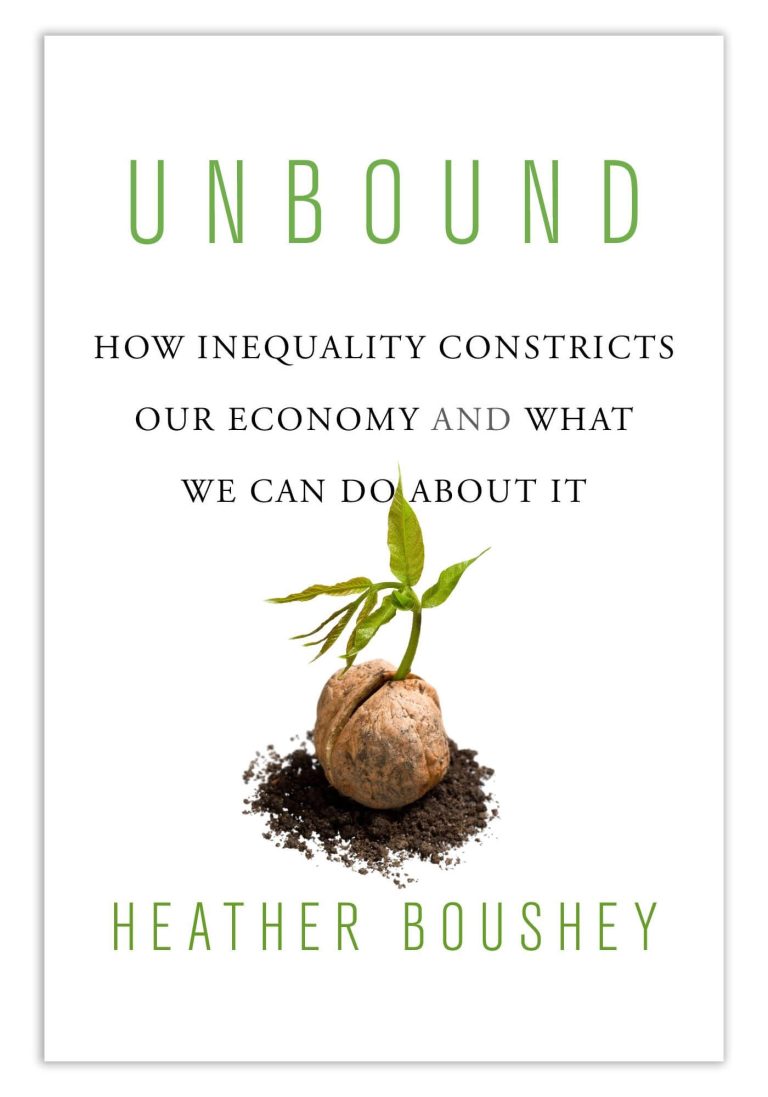
Unbound (opens in a new tab)
Books SEP 1, 2019
Do Americans really have to choose between equality and prosperity? Many economists argue that reducing economic inequality would require such heavy-handed interference with market forces that it would stifle economic…
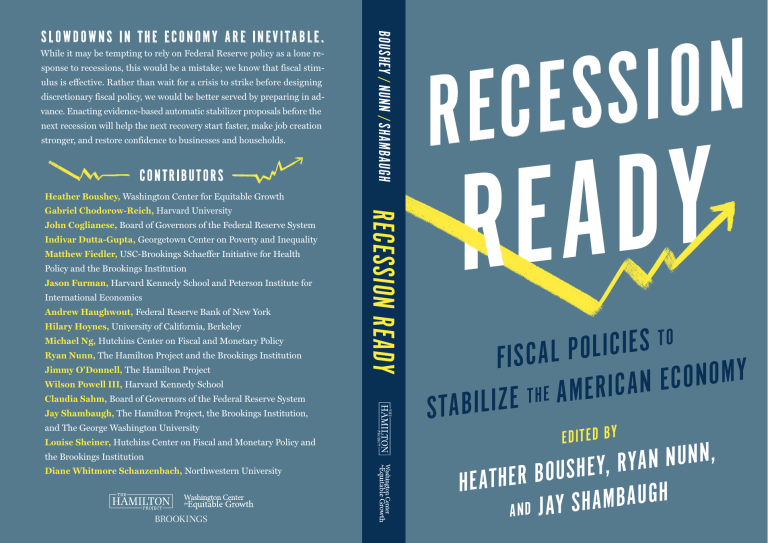
Recession Ready (opens in a new tab)
Books MAY 1, 2019
Economic recessions are inevitable and they are painful, with harsh short-term effects on families and businesses and potentially deep long-term impacts on the economy and society. But we can ameliorate…
By: Heather Boushey (opens in a new tab), Ryan Nunn, Jay Shambaugh
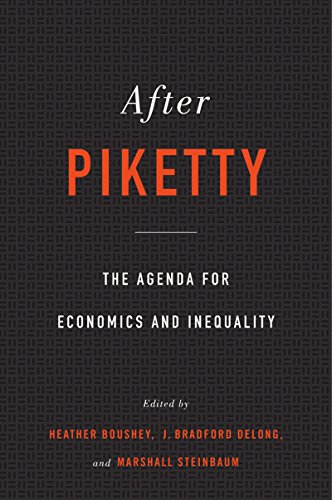
After Piketty (opens in a new tab)
Books MAY 1, 2017
Thomas Piketty’s Capital in the Twenty-First Century is the most widely discussed work of economics in recent history, selling millions of copies in dozens of languages. But are its analyses…
By: Heather Boushey (opens in a new tab), J. Bradford DeLong, Marshall Steinbaum (opens in a new tab)
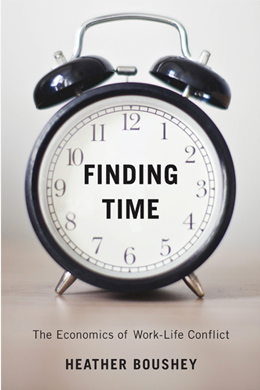
Finding Time (opens in a new tab)
Books MAR 1, 2016
In “Finding Time: The Economics of Work-Life Conflict,” author Heather Boushey argues that resolving work-life conflicts is as vital for individuals and families as it is essential for realizing the…