


Policy Resources
From in-depth analysis to practical policy insights, find research that helps explain how economic policy shapes outcomes for workers, families, and long-term growth.
Our Policy Areas of Focus
The Washington Center for Equitable Growth connects economic evidence and policy to promote shared prosperity and growth by funding policy-relevant research, elevating scholars and their work, and translating evidence for policymakers.

How Ideas Move Into Policy Decisions
AI, Tech & Energy
Equitable Growth supports research and policy analysis on how artificial intelligence, emerging technologies, and the energy transition affect workers, inequality, and broad-based economic growth.

To equip leaders to guide AI toward shared prosperity, our work examines:
- The impact of AI on employment levels, wages, and job content
- How AI drives macroeconomic impacts such as growth and productivity
- Market competition implications of AI use
- The use of algorithms in labor management
Macroeconomics & Economic Measurement
Equitable Growth supports research and policy analysis on how macroeconomic policies and better economic measurement can promote stable and broad-based economic growth.

To reduce volatility and strengthen individual and macroeconomic resilience for broad-based growth, we focus on:
- Automatic stabilizers that cushion downturns and promote more even recoveries
- Tools to respond to recessions that quickly stabilize households, boost the economy, and limit scarring
- Ways to encourage private investment and job growth
- Wealth inequality using novel data and analysis
- Policies to strengthen supply chains and support the energy transition
Political Economy & Democracy
Equitable Growth supports research and policy analysis on how economic inequality shapes political power and democratic institutions, and how that in turn affects broad-based economic growth.

Taxation
Equitable Growth supports research and policy analysis on how tax policies can promote stable and broad-based economic growth.

To provide evidence to policymakers on what effective reform entails, we focus on:
- Distributional analysis, including distributional weighting of benefit-cost analysis
- Pass-through and other business taxation
- Tax enforcement, especially related to large, complex partnerships
- Taxing wealth, including capital taxes on new forms of wealth such as artificial intelligence and cryptocurrency
Competition & Economic Dynamism
Equitable Growth supports research and policy analysis on how strong competition among U.S. businesses affects inequality and broad-based economic growth.

Household Economic Security
Equitable Growth supports research and policy analysis on how unequal access to care, 21st century work-life policies, and education undermines stable, broad-based economic growth.

We focus on:
- The efficacy of public benefit and social insurance programs
- Income security and access to wealth-building
- Policy effects on economic mobility
- The value of economic inclusion
- The impacts on workforce outcomes through policies such as schedule stability and childcare
Economic Equity & Opportunity
Equitable Growth supports research and policy analysis on how trends in economic inequality and mobility and changes in the economy have affected the concentration of wealth, income, and earnings, and how these distributional shifts have affected the promise of economic security and opportunity.

Labor, Wages & Worker Power
Equitable Growth supports research and policy analysis on how inequalities in wages, bargaining power, and the evolving labor market affect workers’ economic security and opportunity as well as broad-based economic growth.

We focus on:
- Unemployment and wage growth
- Bargaining power and union coverage
- Gender and race pay equity
- Nonwage amenities, job quality, and upward job mobility
How Ideas Move Into Policy Decisions

Disseminate research and policy guidance
Identify policy areas and issues
Conduct original research and identify spaces for effective policy interventions
Identify policy relevant and academically rigorous research questions


Progress depends on a continuous exchange between ideas and action.
Research helps define the questions that matter, while policy challenges shape the direction of inquiry. When these two stay connected, evidence becomes more than insight—it becomes a tool for better decisions.

That connection is powered by people.
At the center of this work is a network of more than 400 researchers focusing on real policy questions—helping explain economic trends, evaluate solutions, and inform decision-making.
745 Results


Economic research shows immigration is good for U.S. workers, the economy, and affordability (opens in a new tab)
Essays AUG 31, 2026
When President Donald Trump returned to the White House in 2025, mass deportations and immigration restrictions were renewed as one of the political priorities of his second administration. Since then,…
By: Christopher Bangert-Drowns (opens in a new tab)
 View Chart
(opens in a new tab)
View Chart
(opens in a new tab)
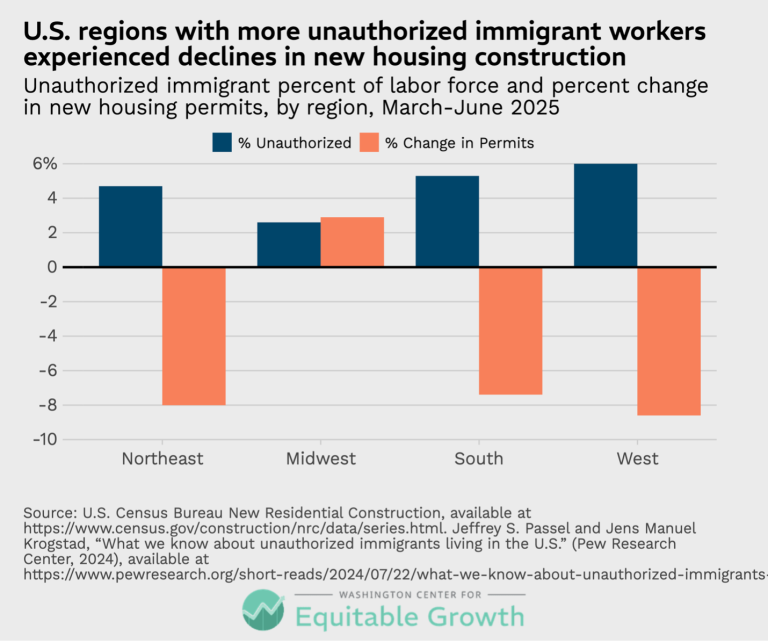
U.S. regions with more unauthorized immigrant workers experienced declines in new housing construction (opens in a new tab)
Visualizations AUG 31, 2026
 View Chart
(opens in a new tab)
View Chart
(opens in a new tab)
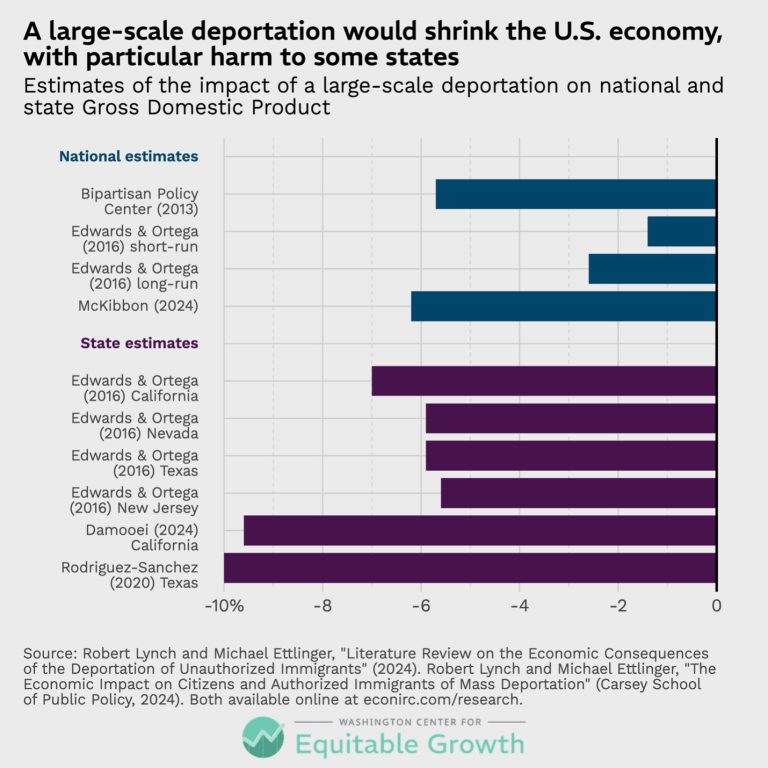
A large-scale deportation would shrink the U.S. economy, with particular harm to some states (opens in a new tab)
Visualizations AUG 31, 2026

Streamlining applications to social programs unlocks more support for the U.S. families who need it most (opens in a new tab)
Essays JUL 7, 2026
Millions of low-income families in the United States tap into multiple social programs to help them meet their needs. A single household, for example, might rely on the Supplemental Nutrition…
By: Neil Cholli (opens in a new tab), Derek Wu (opens in a new tab)

The One Big Beautiful Bill Act, one year later: Parsing the evidence on the law’s consequences so far (opens in a new tab)
Blog JUN 30, 2026
The One Big Beautiful Bill Act signed into law one year ago on July 4, 2025, shifted trillions of dollars in income from working-class families to corporations and very wealthy…
By: Lily Roberts (opens in a new tab)
Factsheet: What the research says about early care and education in the United States (opens in a new tab)
Factsheets APR 16, 2026
Research has long shown the importance and value of high-quality early childhood care and education. Child care offers working parents the ability to fully participate in the labor force and…
By: Equitable Growth (opens in a new tab)
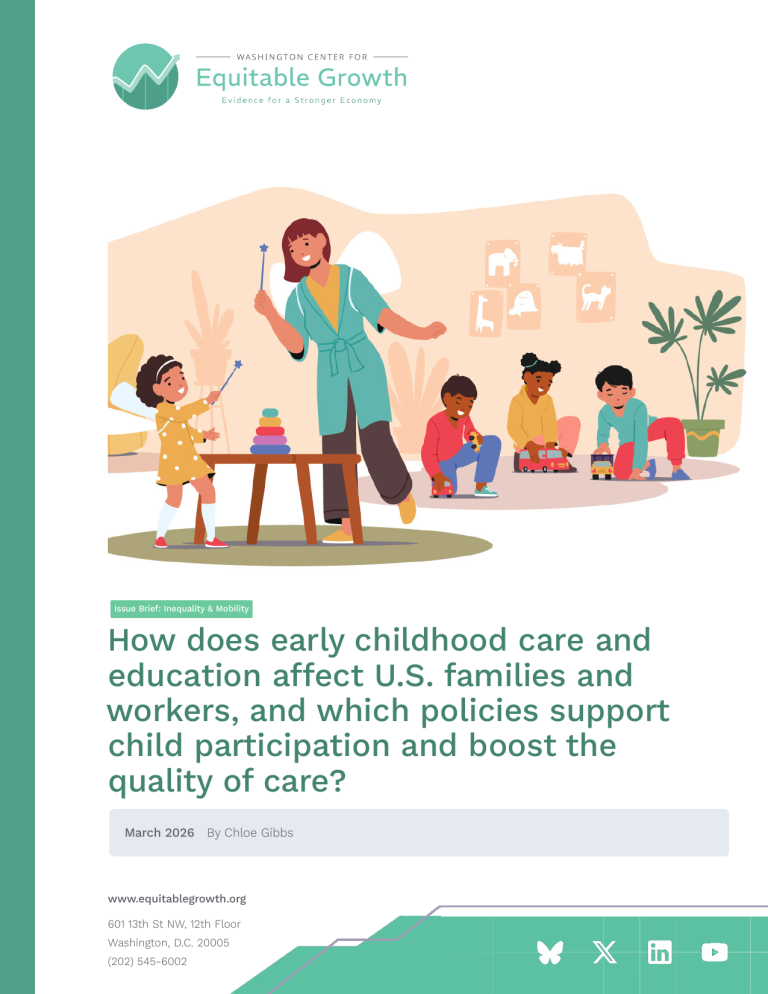
How does early childhood care and education affect U.S. families and workers, and which policies support child participation and boost the quality of care? (opens in a new tab)
Reports APR 16, 2026
As states consider policy action in early childhood care and education, there is an existing—and growing—evidence base from which to draw lessons. This report summarizes the rigorous evidence on program…
By: Chloe Gibbs (opens in a new tab)
 View Chart
(opens in a new tab)
View Chart
(opens in a new tab)
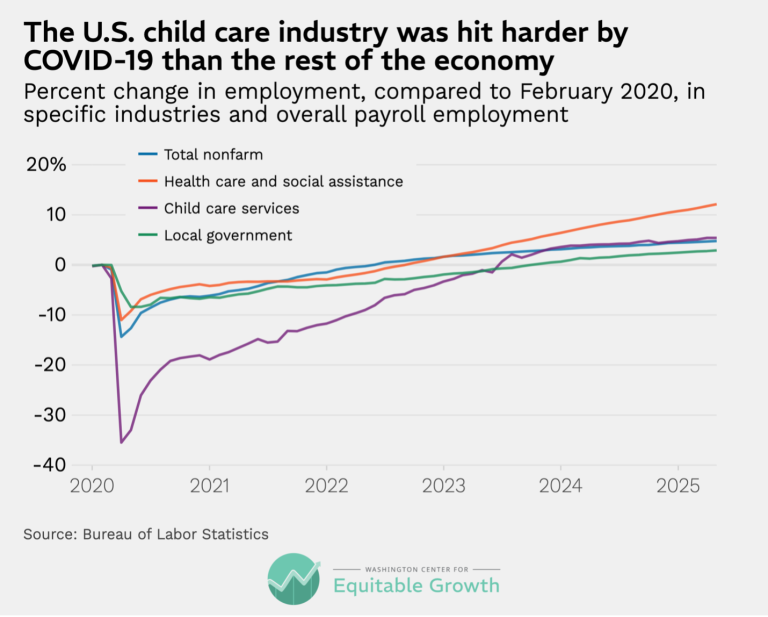
The U.S. child care industry was hit harder by COVID-19 than the rest of the economy (opens in a new tab)
Visualizations APR 15, 2026
 View Chart
(opens in a new tab)
View Chart
(opens in a new tab)
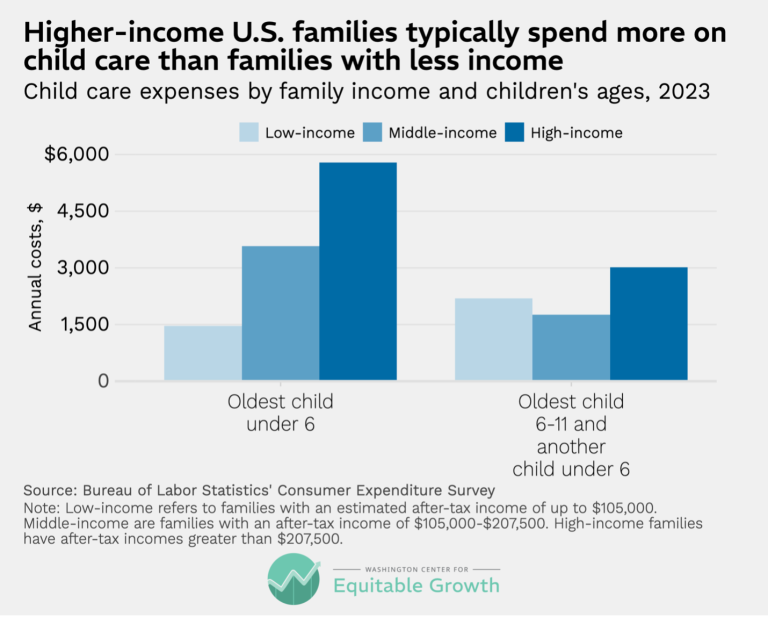
Higher-income U.S. families typically spend more on child care than families with less income (opens in a new tab)
Visualizations APR 15, 2026
 View Chart
(opens in a new tab)
View Chart
(opens in a new tab)
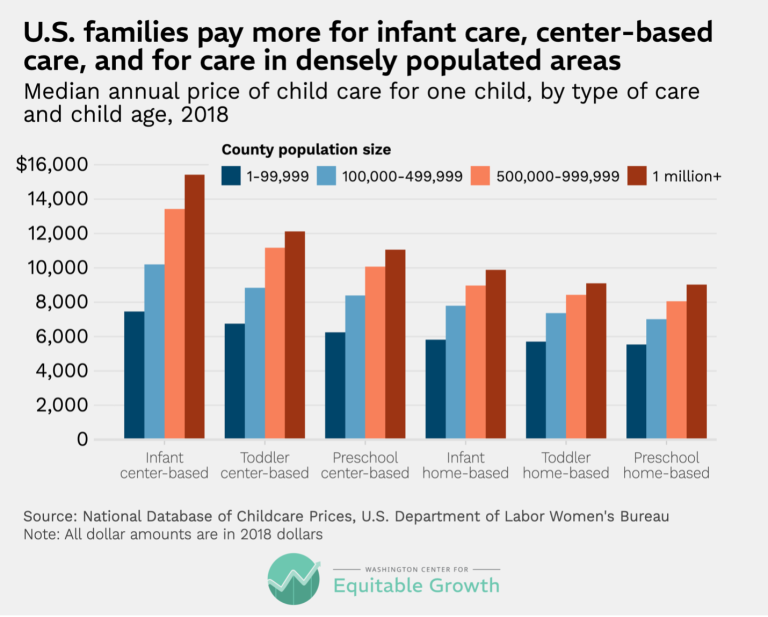
U.S. families pay more for infant care, center-based care, and for care in densely populated areas (opens in a new tab)
Visualizations APR 15, 2026
 View Chart
(opens in a new tab)
View Chart
(opens in a new tab)
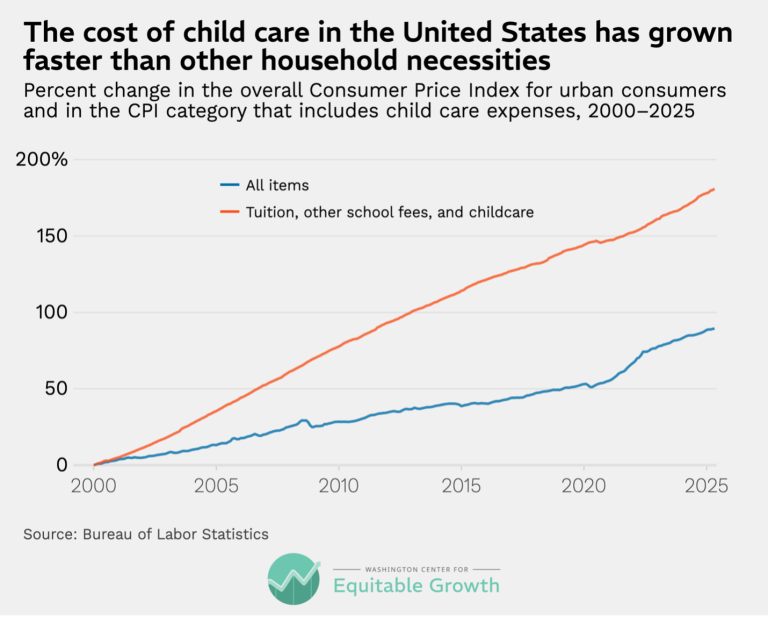
The cost of child care in the United States has grown faster than other household necessities (opens in a new tab)
Visualizations APR 15, 2026

Federal policymakers can ensure Trump accounts do not exacerbate inequality in the United States (opens in a new tab)
Issue Briefs APR 14, 2026
In July 2025, Congress passed a federal budget bill (Public Law 119-21, also commonly known as the One Big Beautiful Bill Act) that, among other things, established a new type…
By: Megan Rivera (opens in a new tab)