


Policy Resources
From in-depth analysis to practical policy insights, find research that helps explain how economic policy shapes outcomes for workers, families, and long-term growth.
Our Policy Areas of Focus
The Washington Center for Equitable Growth connects economic evidence and policy to promote shared prosperity and growth by funding policy-relevant research, elevating scholars and their work, and translating evidence for policymakers.

How Ideas Move Into Policy Decisions
AI, Tech & Energy
Equitable Growth supports research and policy analysis on how artificial intelligence, emerging technologies, and the energy transition affect workers, inequality, and broad-based economic growth.

To equip leaders to guide AI toward shared prosperity, our work examines:
- The impact of AI on employment levels, wages, and job content
- How AI drives macroeconomic impacts such as growth and productivity
- Market competition implications of AI use
- The use of algorithms in labor management
Macroeconomics & Economic Measurement
Equitable Growth supports research and policy analysis on how macroeconomic policies and better economic measurement can promote stable and broad-based economic growth.
To reduce volatility and strengthen individual and macroeconomic resilience for broad-based growth, we focus on:
- Automatic stabilizers that cushion downturns and promote more even recoveries
- Tools to respond to recessions that quickly stabilize households, boost the economy, and limit scarring
- Ways to encourage private investment and job growth
- Wealth inequality using novel data and analysis
- Policies to strengthen supply chains and support the energy transition
Political Economy & Democracy
Equitable Growth supports research and policy analysis on how economic inequality shapes political power and democratic institutions, and how that in turn affects broad-based economic growth.

Taxation
Equitable Growth supports research and policy analysis on how tax policies can promote stable and broad-based economic growth.

To provide evidence to policymakers on what effective reform entails, we focus on:
- Distributional analysis, including distributional weighting of benefit-cost analysis
- Pass-through and other business taxation
- Tax enforcement, especially related to large, complex partnerships
- Taxing wealth, including capital taxes on new forms of wealth such as artificial intelligence and cryptocurrency
Competition & Economic Dynamism
Equitable Growth supports research and policy analysis on how strong competition among U.S. businesses affects inequality and broad-based economic growth.

Household Economic Security
Equitable Growth supports research and policy analysis on how unequal access to care, 21st century work-life policies, and education undermines stable, broad-based economic growth.

We focus on:
- The efficacy of public benefit and social insurance programs
- Income security and access to wealth-building
- Policy effects on economic mobility
- The value of economic inclusion
- The impacts on workforce outcomes through policies such as schedule stability and childcare
Economic Equity & Opportunity
Equitable Growth supports research and policy analysis on how trends in economic inequality and mobility and changes in the economy have affected the concentration of wealth, income, and earnings, and how these distributional shifts have affected the promise of economic security and opportunity.

Labor, Wages & Worker Power
Equitable Growth supports research and policy analysis on how inequalities in wages, bargaining power, and the evolving labor market affect workers’ economic security and opportunity as well as broad-based economic growth.

We focus on:
- Unemployment and wage growth
- Bargaining power and union coverage
- Gender and race pay equity
- Nonwage amenities, job quality, and upward job mobility
How Ideas Move Into Policy Decisions

Disseminate research and policy guidance
Identify policy areas and issues
Conduct original research and identify spaces for effective policy interventions
Identify policy relevant and academically rigorous research questions


Progress depends on a continuous exchange between ideas and action.
Research helps define the questions that matter, while policy challenges shape the direction of inquiry. When these two stay connected, evidence becomes more than insight—it becomes a tool for better decisions.

That connection is powered by people.
At the center of this work is a network of more than 400 researchers focusing on real policy questions—helping explain economic trends, evaluate solutions, and inform decision-making.
745 Results


Economic research shows immigration is good for U.S. workers, the economy, and affordability (opens in a new tab)
Essays AUG 31, 2026
When President Donald Trump returned to the White House in 2025, mass deportations and immigration restrictions were renewed as one of the political priorities of his second administration. Since then,…
By: Christopher Bangert-Drowns (opens in a new tab)
 View Chart
(opens in a new tab)
View Chart
(opens in a new tab)
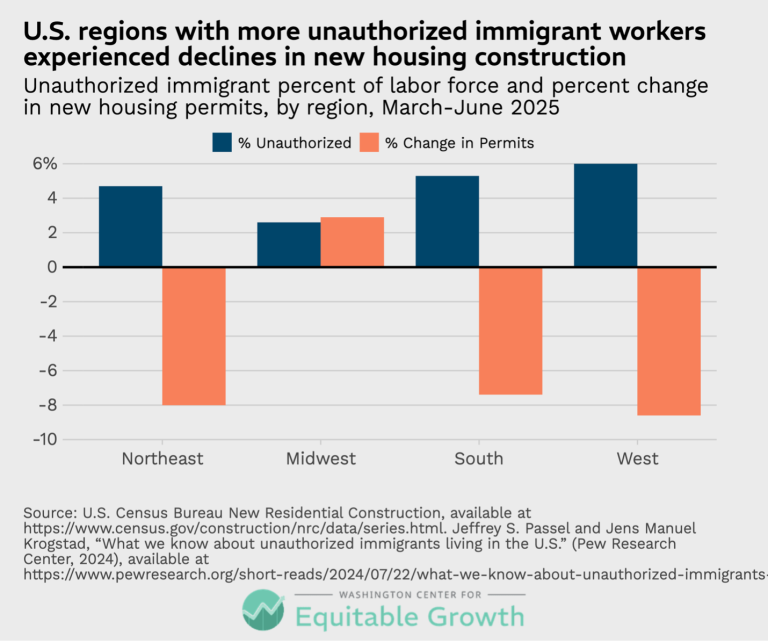
U.S. regions with more unauthorized immigrant workers experienced declines in new housing construction (opens in a new tab)
Visualizations AUG 31, 2026
 View Chart
(opens in a new tab)
View Chart
(opens in a new tab)
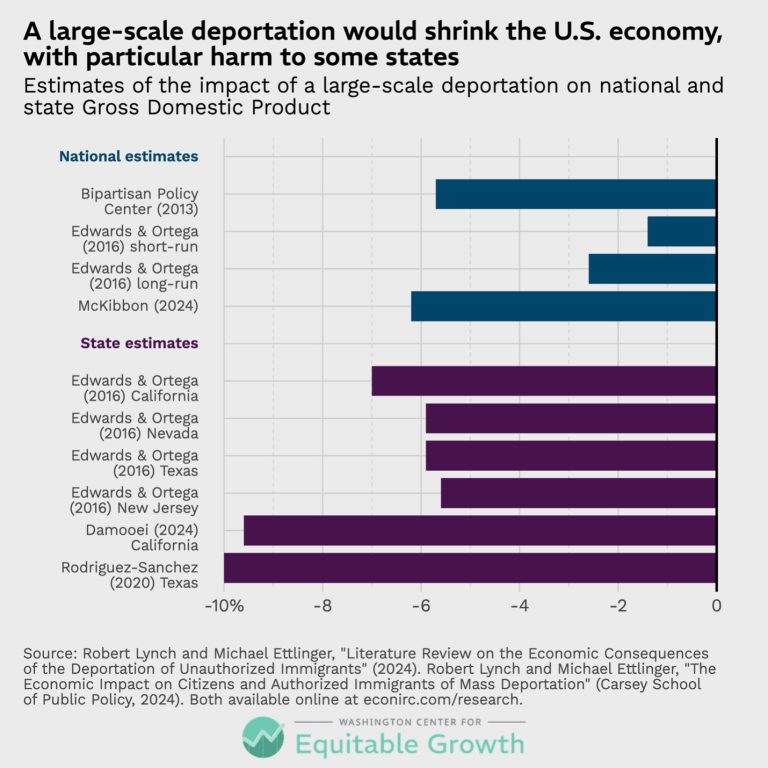
A large-scale deportation would shrink the U.S. economy, with particular harm to some states (opens in a new tab)
Visualizations AUG 31, 2026

Streamlining applications to social programs unlocks more support for the U.S. families who need it most (opens in a new tab)
Essays JUL 7, 2026
Millions of low-income families in the United States tap into multiple social programs to help them meet their needs. A single household, for example, might rely on the Supplemental Nutrition…
By: Neil Cholli (opens in a new tab), Derek Wu (opens in a new tab)

The One Big Beautiful Bill Act, one year later: Parsing the evidence on the law’s consequences so far (opens in a new tab)
Blog JUN 30, 2026
The One Big Beautiful Bill Act signed into law one year ago on July 4, 2025, shifted trillions of dollars in income from working-class families to corporations and very wealthy…
By: Lily Roberts (opens in a new tab)

Factsheet: What the research says about early care and education in the United States (opens in a new tab)
Factsheets APR 16, 2026
Research has long shown the importance and value of high-quality early childhood care and education. Child care offers working parents the ability to fully participate in the labor force and…
By: Equitable Growth (opens in a new tab)
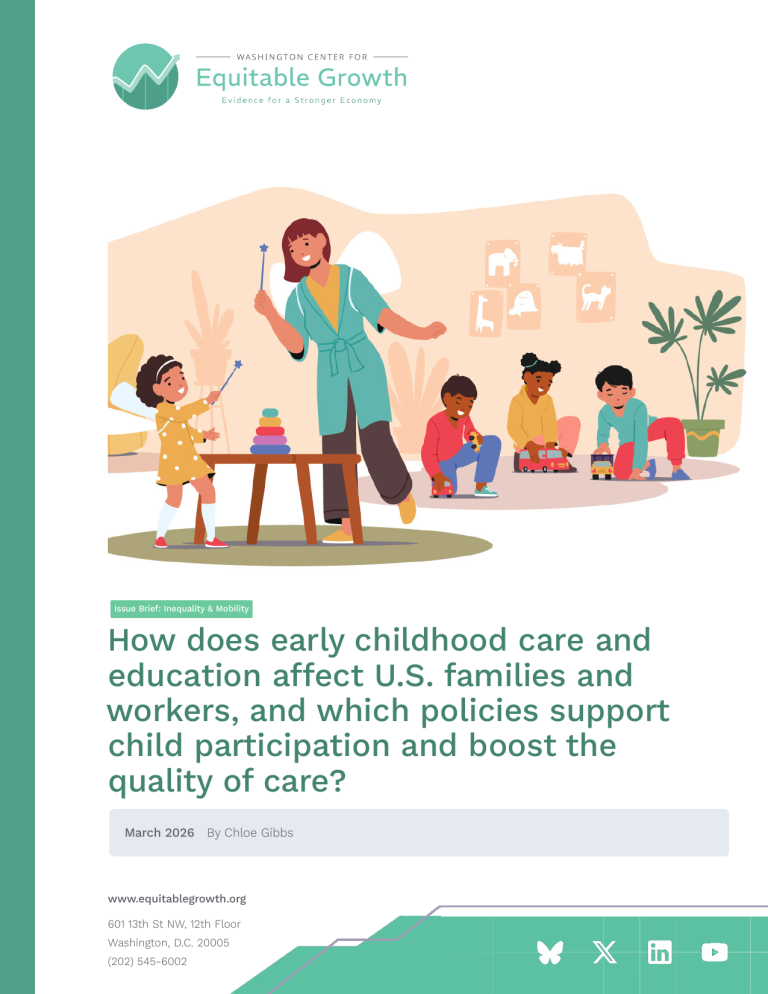
How does early childhood care and education affect U.S. families and workers, and which policies support child participation and boost the quality of care? (opens in a new tab)
Reports APR 16, 2026
As states consider policy action in early childhood care and education, there is an existing—and growing—evidence base from which to draw lessons. This report summarizes the rigorous evidence on program…
By: Chloe Gibbs (opens in a new tab)
 View Chart
(opens in a new tab)
View Chart
(opens in a new tab)
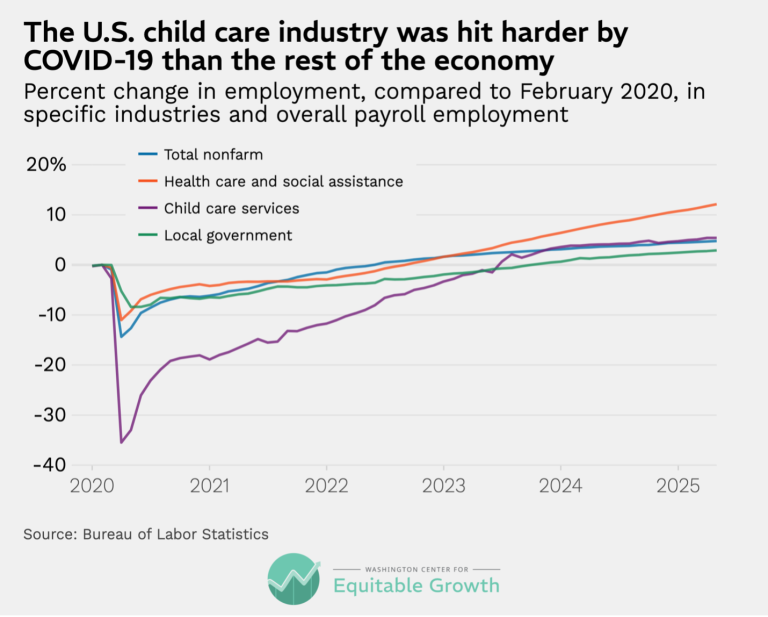
The U.S. child care industry was hit harder by COVID-19 than the rest of the economy (opens in a new tab)
Visualizations APR 15, 2026
 View Chart
(opens in a new tab)
View Chart
(opens in a new tab)
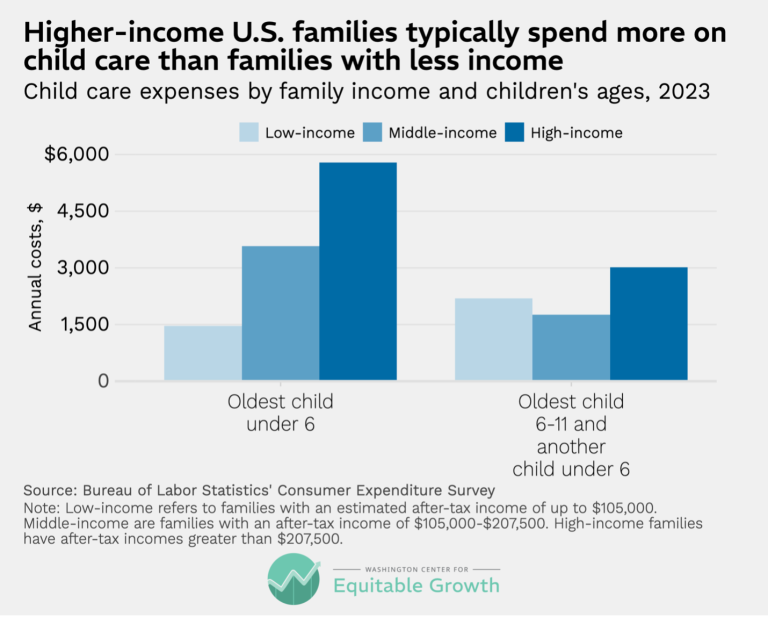
Higher-income U.S. families typically spend more on child care than families with less income (opens in a new tab)
Visualizations APR 15, 2026
 View Chart
(opens in a new tab)
View Chart
(opens in a new tab)
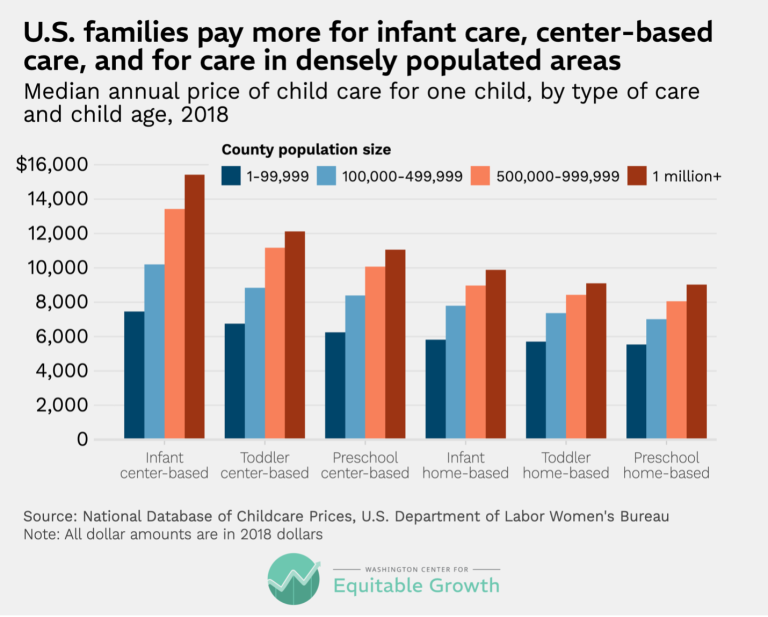
U.S. families pay more for infant care, center-based care, and for care in densely populated areas (opens in a new tab)
Visualizations APR 15, 2026
 View Chart
(opens in a new tab)
View Chart
(opens in a new tab)
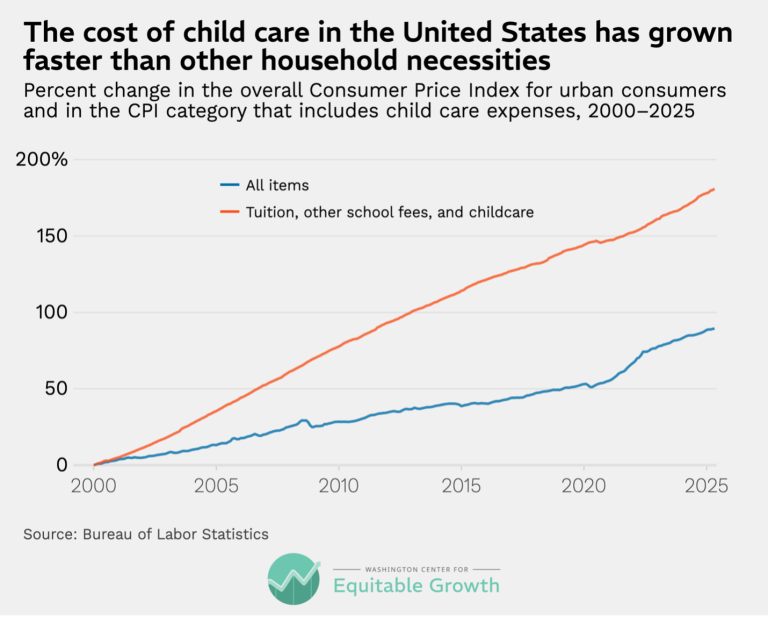
The cost of child care in the United States has grown faster than other household necessities (opens in a new tab)
Visualizations APR 15, 2026

Federal policymakers can ensure Trump accounts do not exacerbate inequality in the United States (opens in a new tab)
Issue Briefs APR 14, 2026
In July 2025, Congress passed a federal budget bill (Public Law 119-21, also commonly known as the One Big Beautiful Bill Act) that, among other things, established a new type…
By: Megan Rivera (opens in a new tab)
A review of the state of child care in the United States (opens in a new tab)
Reports APR 9, 2026
Affordable, available, high-quality child care is essential for sustained, broadly shared economic growth and equitable access to workforce opportunities. In most of the United States, however, child care fails this…
By: Sam Abbott (opens in a new tab), Shira Markoff (opens in a new tab)
 View Chart
(opens in a new tab)
View Chart
(opens in a new tab)
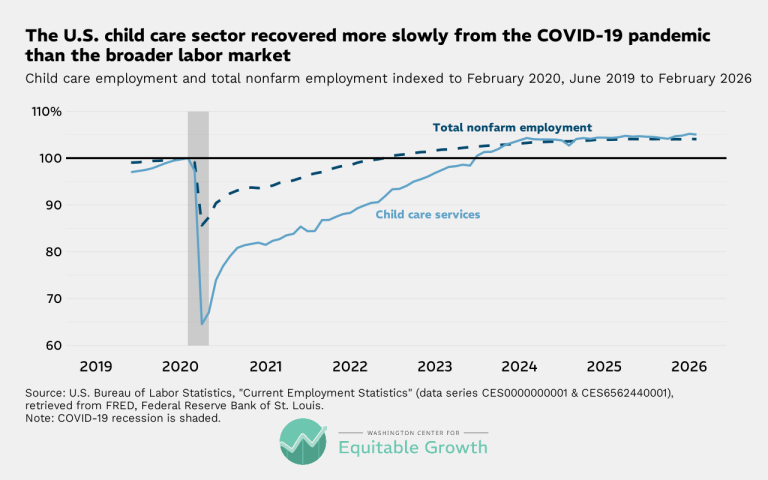
The U.S. child care sector recovered more slowly from the COVID-19 pandemic than the broader labor market (opens in a new tab)
Visualizations APR 8, 2026
 View Chart
(opens in a new tab)
View Chart
(opens in a new tab)
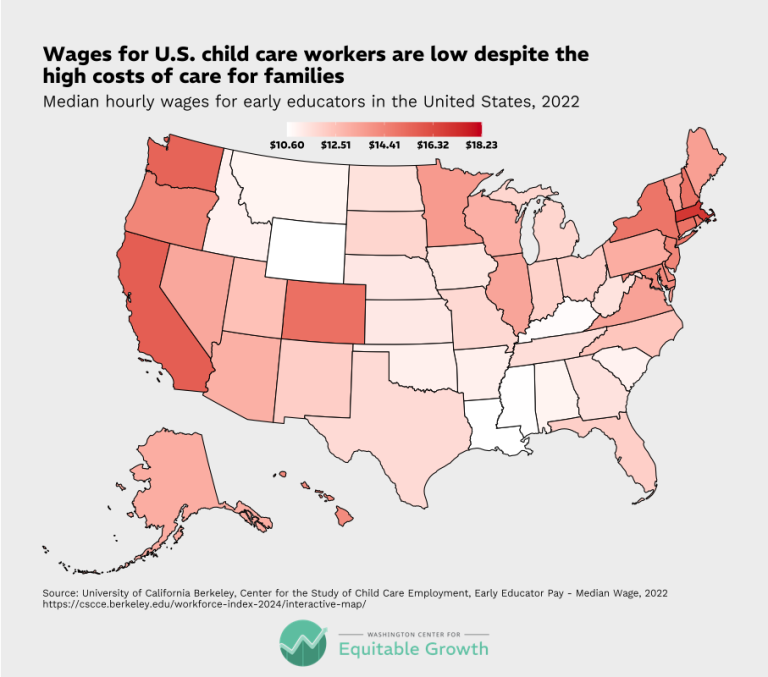
Wages for U.S. child care workers are low despite the high costs of care for families (opens in a new tab)
Visualizations APR 8, 2026

Factsheet: Using asset limits in public benefit programs (opens in a new tab)
Factsheets MAR 10, 2026
A household’s assets, or its overall wealth, are the resources required to ensure its family members can weather the financial disruption when unexpected expenses emerge. Yet many U.S. households do…
By: Megan Rivera (opens in a new tab)

Can remote work attenuate mothers’ mobility constraints in the U.S. labor force? (opens in a new tab)
Essays FEB 12, 2026
Women’s labor force participation increased dramatically over the course of the 20th century in the United States. Indeed, the labor force participation rate of women between the ages of 25…
By: Ilaria D’Angelis (opens in a new tab), Keren Horn (opens in a new tab)

Why federal food assistance became politically polarizing—and what to do about it (opens in a new tab)
Issue Briefs FEB 2, 2026
On January 31, 1964, President Lyndon B. Johnson requested that Congress pass federal legislation to make the Food Stamp Program permanent. Up to that point, the program had operated as…
By: Carlos Fernando Avenancio-Leon (opens in a new tab)
ASSA 2026 Round-up: Day 2 (opens in a new tab)
Blog JAN 5, 2026
Yesterday was the second day of the 2026 annual meeting of the Allied Social Science Associations, which is organized by the American Economic Association. The 3-day conference, held in Philadelphia…
By: Equitable Growth (opens in a new tab)
ASSA 2026 Round-up: Day 1 (opens in a new tab)
Blog JAN 4, 2026
Yesterday was the first day of the 2026 annual meeting of the Allied Social Science Associations, which is organized by the American Economic Association. The 3-day conference, held in Philadelphia…
By: Equitable Growth (opens in a new tab)

U.S. social insurance programs support workers and economic growth (opens in a new tab)
Essays DEC 2, 2025
Since coming to power in early 2025, Republican majorities in Congress have shifted resources away from the nation’s social insurance programs, most notably to offset the cost of H.R. 1,…
By: Megan Rivera (opens in a new tab)

Equitable Growth hosts Econ 101 virtual event on how U.S. social insurance programs boost economic mobility (opens in a new tab)
Essays DEC 1, 2025
Microsoft Copilot helped draft this event recap. The Washington Center for Equitable Growth recently hosted its latest Econ 101 briefing aimed at providing in-depth evidence for policymakers on how U.S.…
By: Equitable Growth (opens in a new tab)
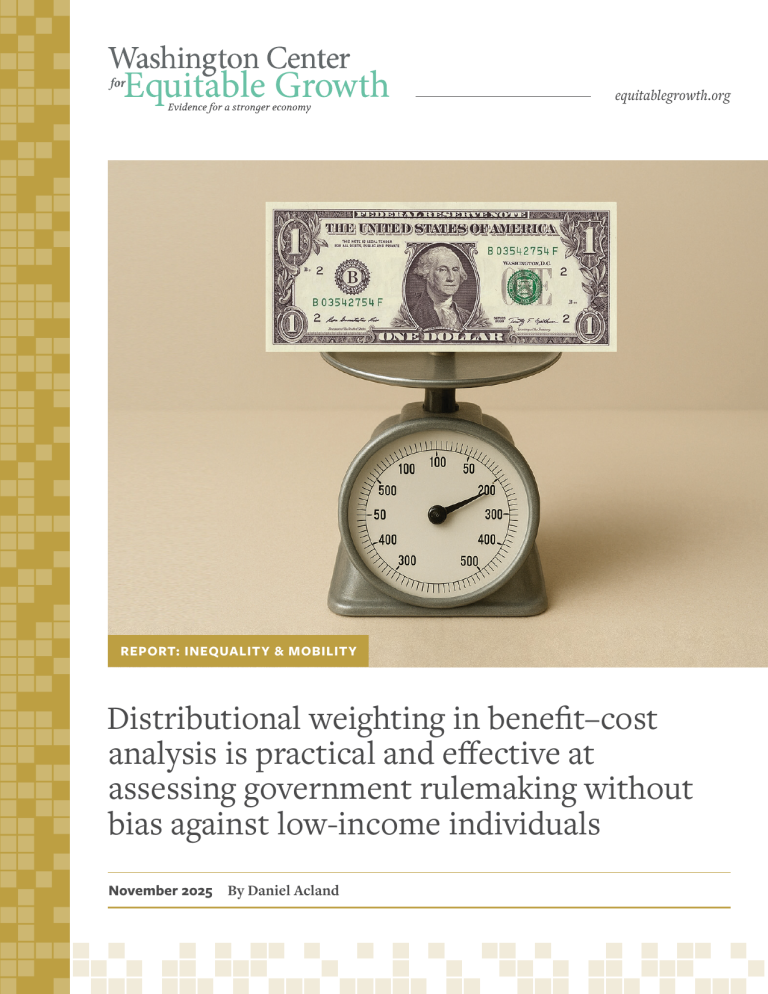
Distributional weighting in benefit-cost analysis is practical and effective at assessing government rulemaking without bias against low-income individuals (opens in a new tab)
Reports NOV 13, 2025
Distributional weighting in benefit-cost analysis is a tool for overcoming bias against lower-income individuals in economists’ measurements of the net benefit of government policies that affect populations at different levels…
By: Daniel Acland (opens in a new tab)
 View Chart
(opens in a new tab)
View Chart
(opens in a new tab)
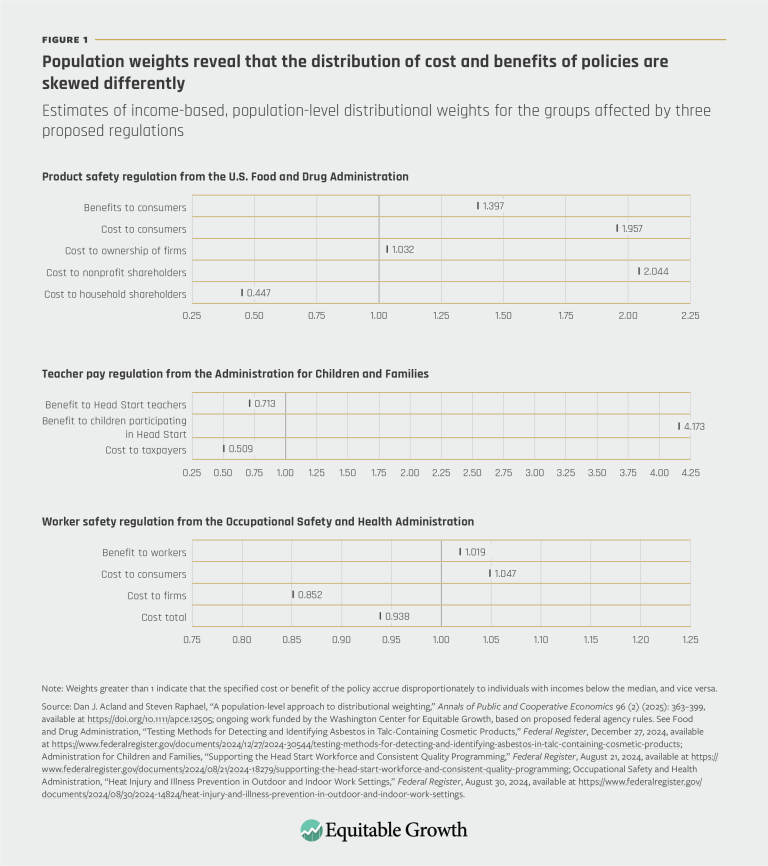
Population weights reveal that the distribution of cost and benefits of policies are skewed differently (opens in a new tab)
Visualizations NOV 13, 2025
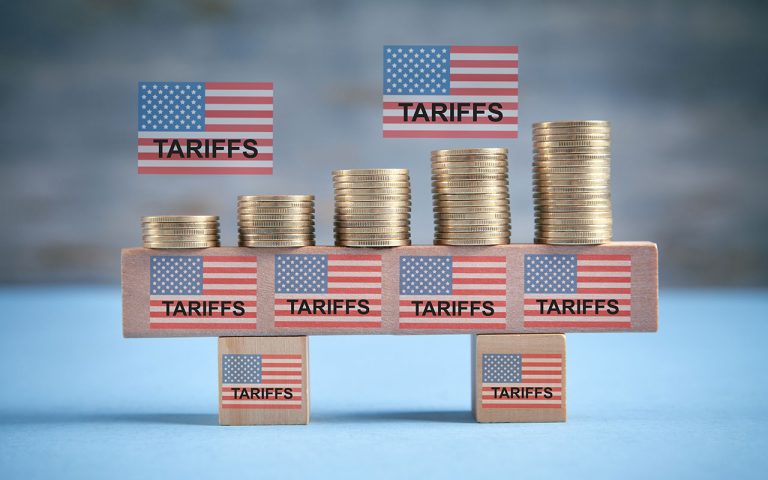
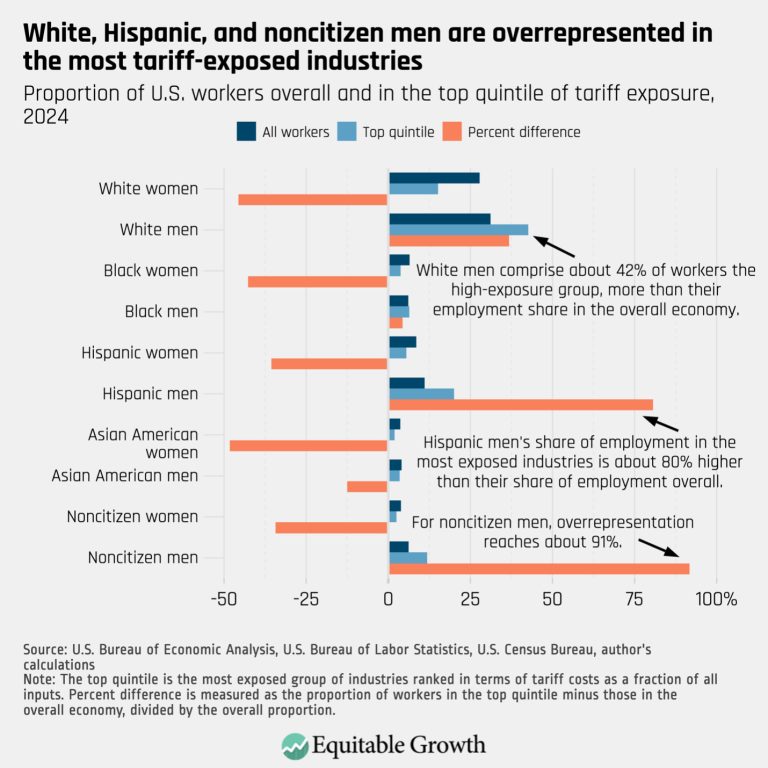
Tariff costs impact industries with mostly White, male, and noncitizen workers (opens in a new tab)
Essays NOV 4, 2025
The U.S. economy is flying blind, with most economic-data publications paused indefinitely due to the shutdown of the federal government amid a general U.S. labor market slowdown and just as…
By: Christopher Bangert-Drowns (opens in a new tab)
 View Chart
(opens in a new tab)
View Chart
(opens in a new tab)
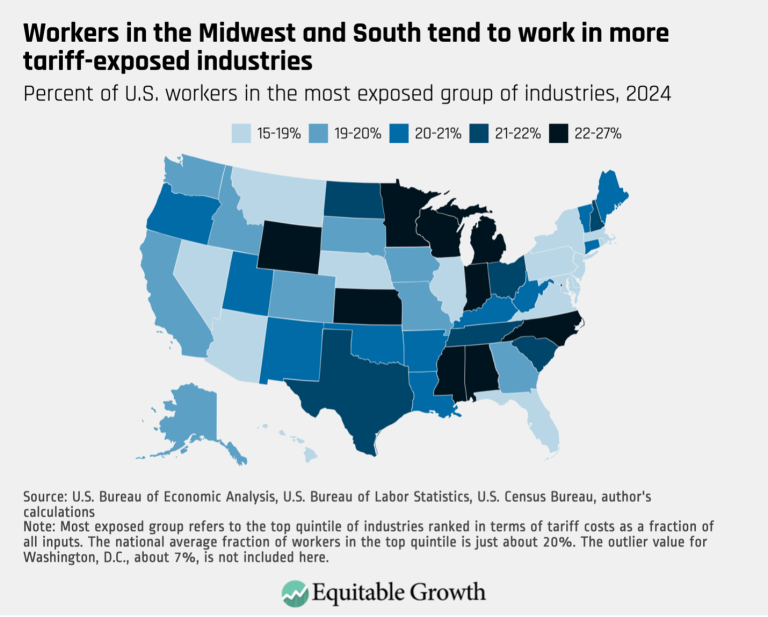
Workers in the Midwest and South tend to work in more tariff-exposed industries (opens in a new tab)
Visualizations NOV 3, 2025
 View Chart
(opens in a new tab)
View Chart
(opens in a new tab)
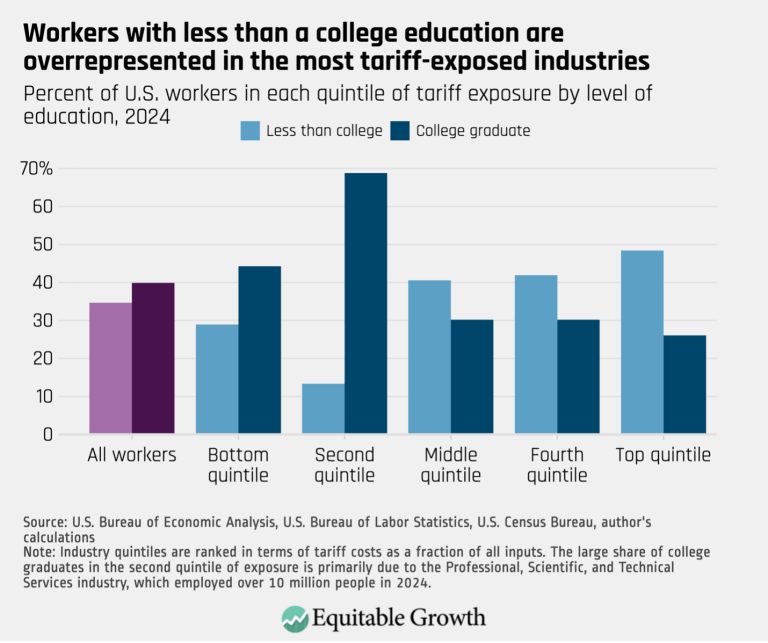
Workers with less than a college education are overrepresented in the most tariff-exposed industries (opens in a new tab)
Visualizations NOV 3, 2025
 View Chart
(opens in a new tab)
View Chart
(opens in a new tab)
White, Hispanic, and noncitizen men are overrepresented in the most tariff-exposed industries (opens in a new tab)
Visualizations NOV 3, 2025
 View Chart
(opens in a new tab)
View Chart
(opens in a new tab)
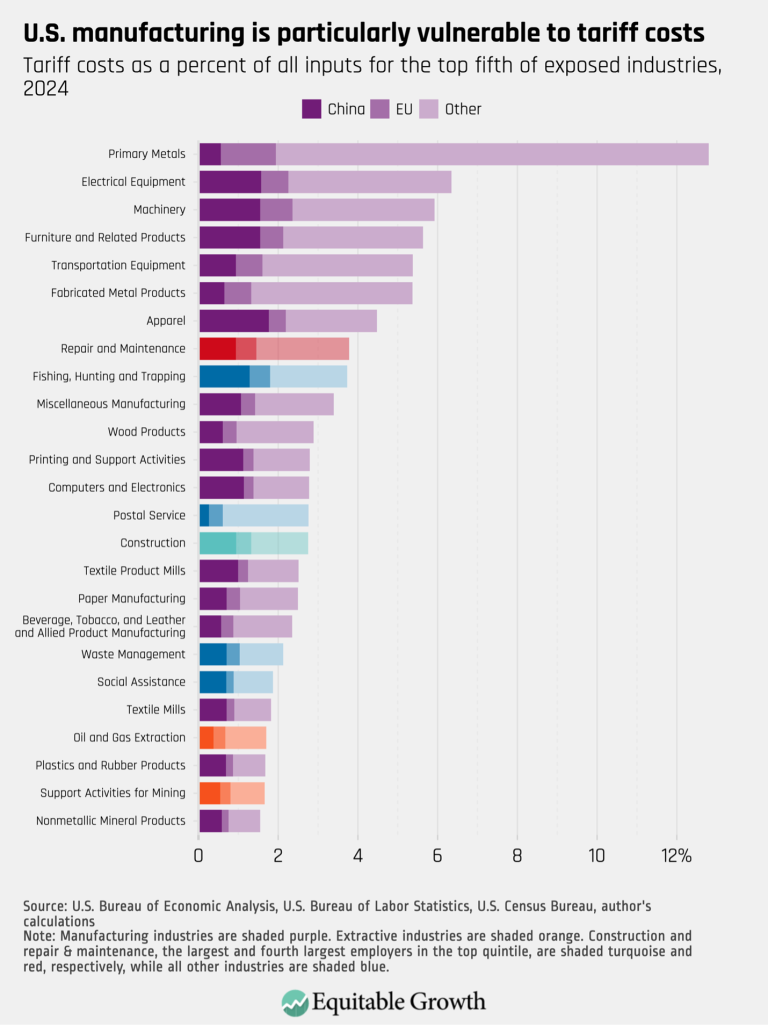
U.S. manufacturing is particularly vulnerable to tariff costs (opens in a new tab)
Visualizations NOV 3, 2025

In Conversation with Omari Swinton (opens in a new tab)
In Conversation SEP 24, 2025
Equitable Growth in Conversation is a recurring series where we talk with economists and other academics to help us better understand whether and how economic inequality affects economic growth and…
By: Sanjay Supan (opens in a new tab)

Even health care, the strongest sector of the U.S. jobs market, cannot deliver the wages its workers deserve without unionization (opens in a new tab)
Essays SEP 10, 2025
The growth of jobs in the U.S. health care industry is the linchpin to a strong U.S. labor market in 2025 and beyond. Health care is one of only a…
By: Adam Dean (opens in a new tab), Jamie McCallum (opens in a new tab)
States can support children and their economies using direct cash assistance from the Temporary Assistance for Needy Families block grant program (opens in a new tab)
Reports AUG 28, 2025
Efficient, effective, and responsive income support programs can reduce economic inequality and support economic mobility. If targeted effectively, these programs can help children, families, and workers meet their needs and…
By: Megan Rivera (opens in a new tab), Christopher Bangert-Drowns (opens in a new tab)
 View Chart
(opens in a new tab)
View Chart
(opens in a new tab)
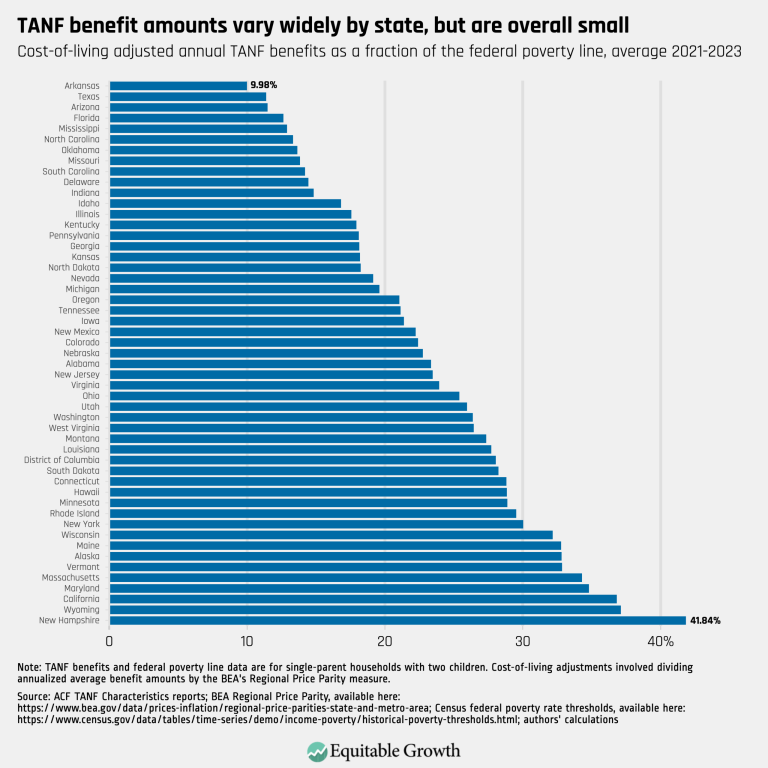
TANF benefit amounts vary widely by state, but are overall small – updated (opens in a new tab)
Visualizations AUG 26, 2025
 View Chart
(opens in a new tab)
View Chart
(opens in a new tab)
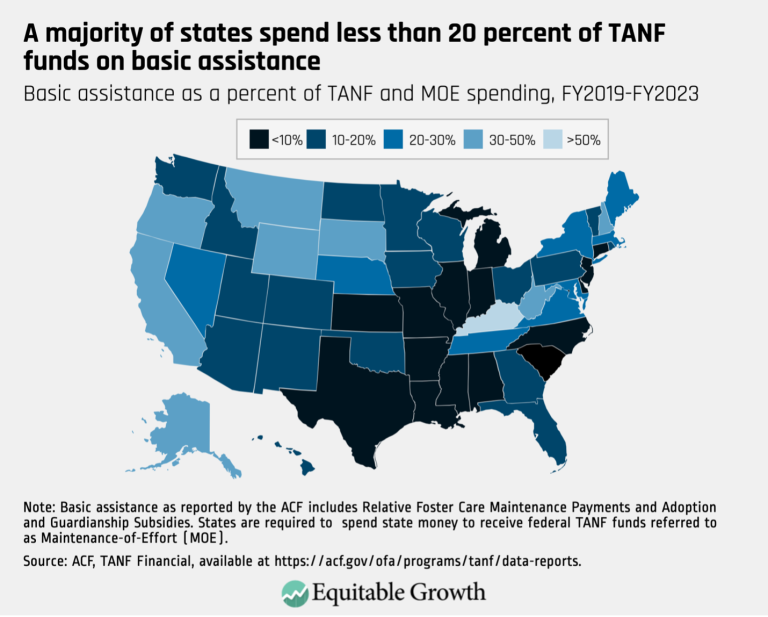
A majority of states spend less than 20 percent of TANF funds on basic assistance (opens in a new tab)
Visualizations AUG 26, 2025
 View Chart
(opens in a new tab)
View Chart
(opens in a new tab)
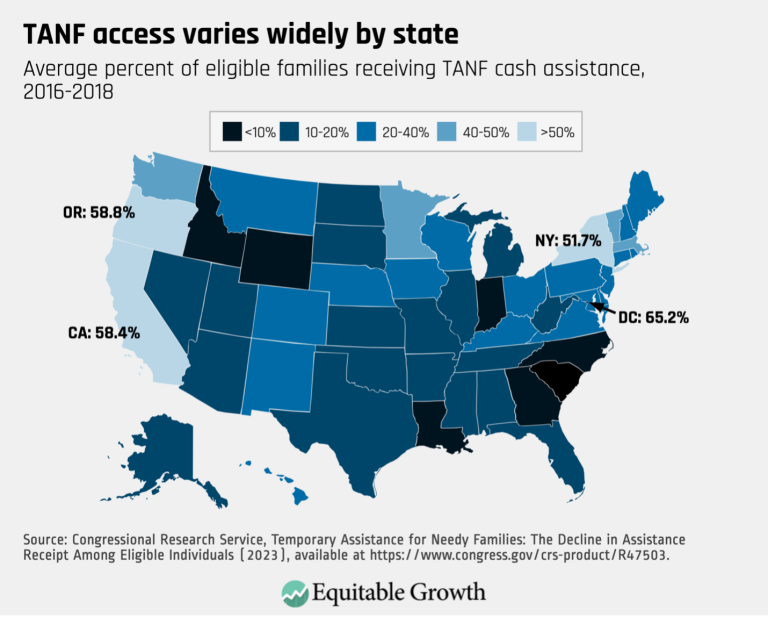
TANF access varies widely by state (opens in a new tab)
Visualizations AUG 26, 2025
 View Chart
(opens in a new tab)
View Chart
(opens in a new tab)
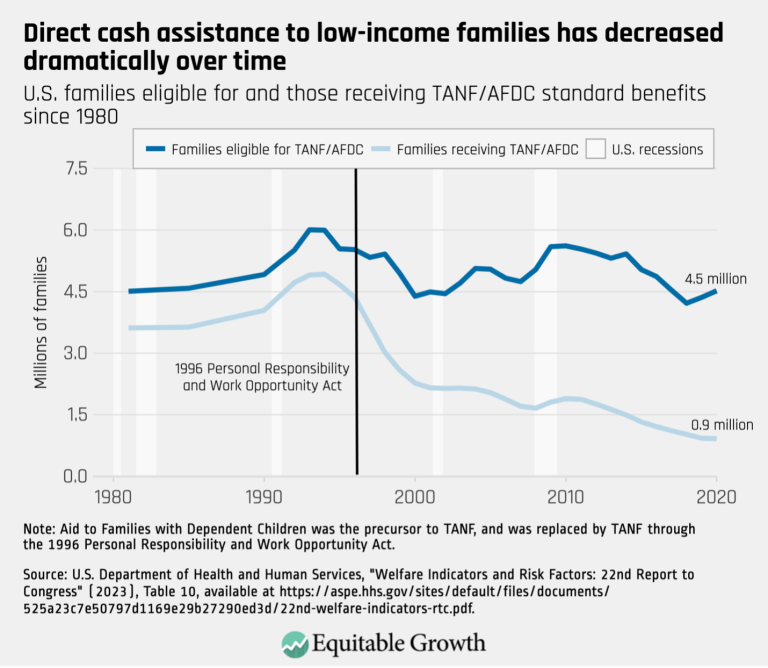
Direct cash assistance to low-income families has decreased dramatically over time (opens in a new tab)
Visualizations AUG 26, 2025

The 10 worst policies for equitable economic growth in the 2025 budget reconciliation law (opens in a new tab)
Essays JUL 14, 2025
The 2025 budget reconciliation law that was enacted earlier this month is a sprawling piece of legislation, touching almost every corner of the federal budget and the U.S. economy. It…
By: David S. Mitchell (opens in a new tab)

Republican reconciliation bill’s cuts to social programs will damage some congressional districts’ local economies (opens in a new tab)
Essays JUL 11, 2025
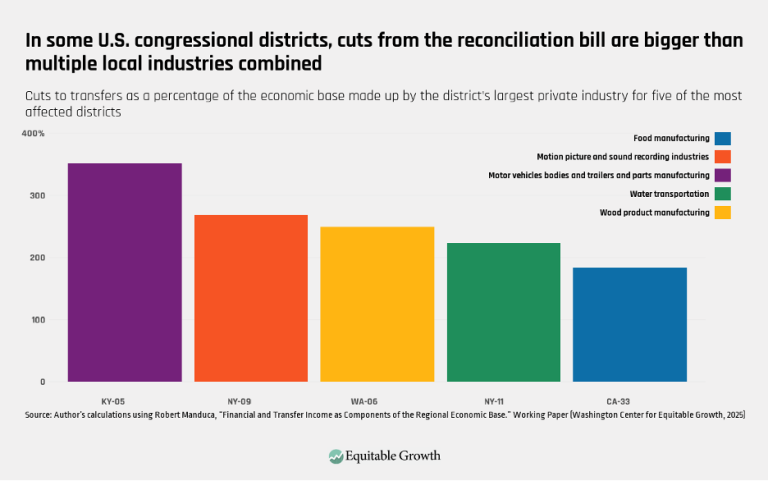
In a recent working paper, Equitable Growth grantee Robert Manduca of the University of Michigan, Ann Arbor demonstrates that government transfers make sizable contributions to local economies in much of…
By: Chiara Chanoi (opens in a new tab)
 View Chart
(opens in a new tab)
View Chart
(opens in a new tab)
In some U.S. congressional districts, cuts from the reconciliation bill are bigger than multiple local industries combined (opens in a new tab)
Visualizations JUL 10, 2025

Americans informed about the distributional effects of Republicans’ tax and budget bill overwhelmingly oppose it (opens in a new tab)
Essays JUL 3, 2025
Republicans in the U.S. Senate recently passed a version of the One Big Beautiful Bill Act, championed by President Donald Trump. The House of Representatives passed an earlier version of…
By: Jacob Hacker (opens in a new tab), Patrick Sullivan (opens in a new tab)
 View Chart
(opens in a new tab)
View Chart
(opens in a new tab)
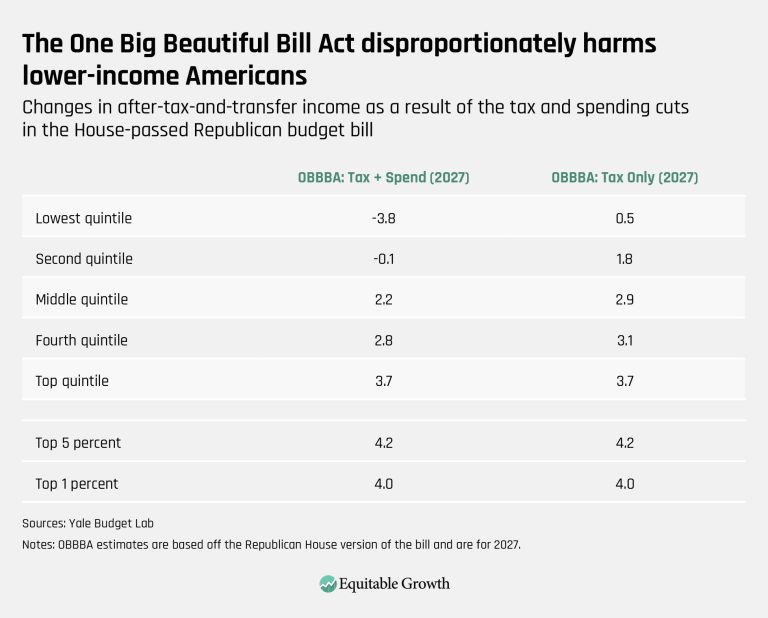
The One Big Beautiful Bill Act disproportionately harms lower-income Americans (opens in a new tab)
Visualizations JUL 3, 2025

Congressional Republicans’ budget bill is the most regressive in at least 40 years (opens in a new tab)
Essays JUN 25, 2025
The U.S. Congress is in the midst of debating a budget bill that would make massive changes to U.S. tax and spending policy over the course of the next decade…
By: Jacob Hacker (opens in a new tab), Patrick Sullivan (opens in a new tab)
 View Chart
(opens in a new tab)
View Chart
(opens in a new tab)
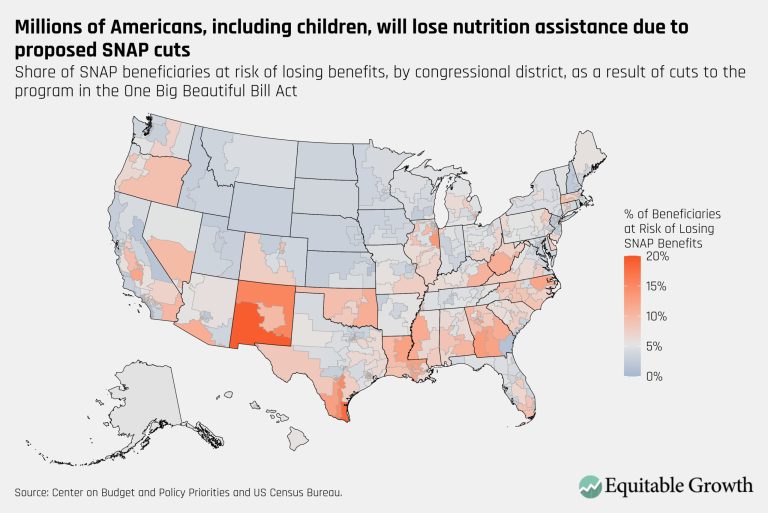
Millions of Americans, including children, will lose nutrition assistance due to proposed SNAP cuts – updated (opens in a new tab)
Visualizations JUN 24, 2025

Medicaid and SNAP cuts in congressional Republicans’ budget bill will negatively impact local economies (opens in a new tab)
Essays JUN 24, 2025
The budget reconciliation bill recently passed by the U.S. House of Representatives proposes to make large cuts to Medicaid, the Supplemental Nutrition Assistance Program, and other social programs to pay…
By: Robert Manduca (opens in a new tab)
 View Chart
(opens in a new tab)
View Chart
(opens in a new tab)
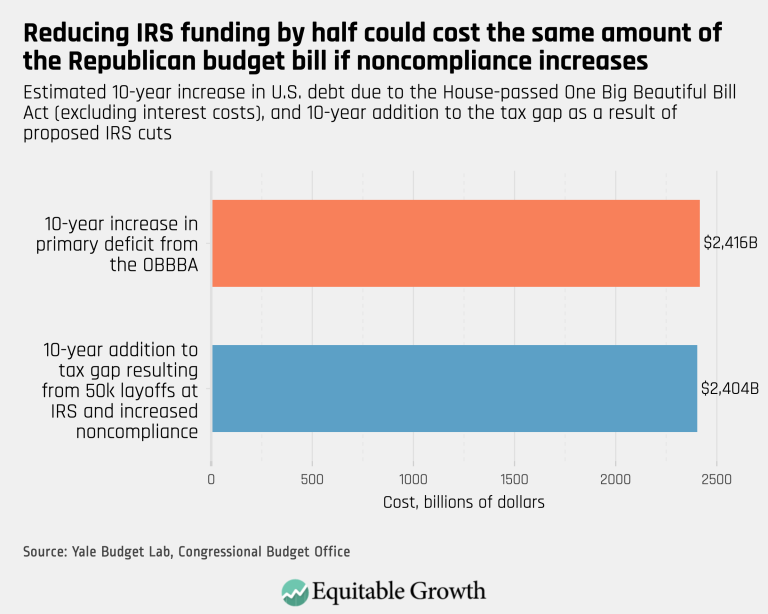
Reducing IRS funding by half could cost the same amount of the Republican budget bill in noncompliance increases (opens in a new tab)
Visualizations JUN 23, 2025
 View Chart
(opens in a new tab)
View Chart
(opens in a new tab)
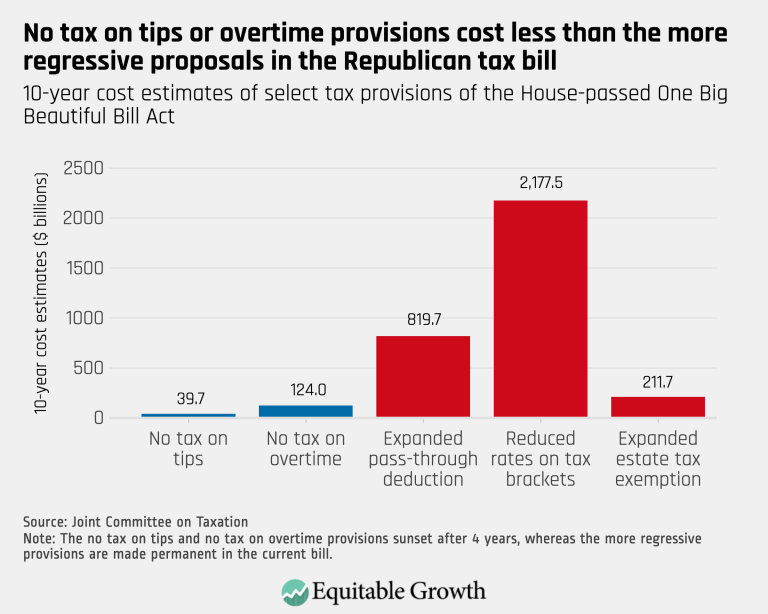
No tax on tips or overtime provisions cost less than the more regressive proposals in the Republican tax bill (opens in a new tab)
Visualizations JUN 23, 2025
 View Chart
(opens in a new tab)
View Chart
(opens in a new tab)
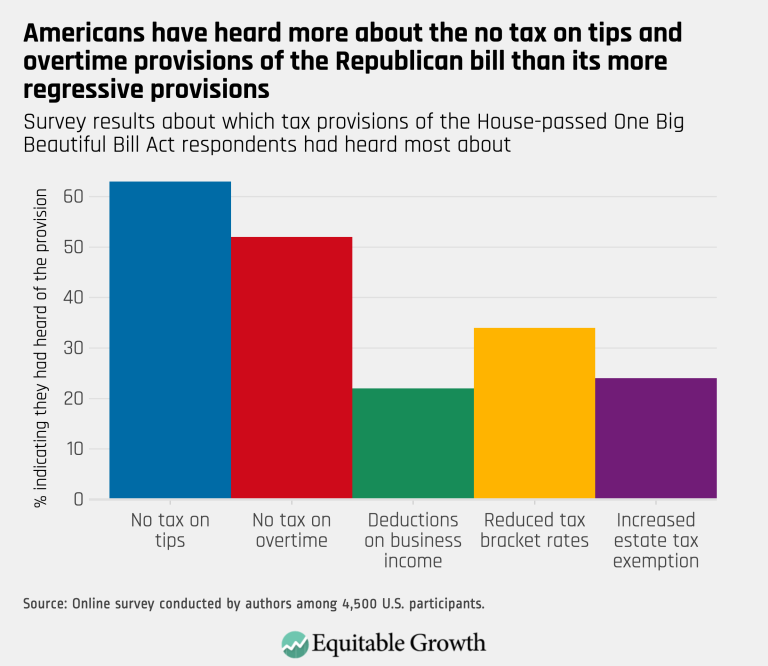
Americans have heard more about the no tax on tips and overtime provisions of the Republican bill than its more regressive provisions (opens in a new tab)
Visualizations JUN 23, 2025
 View Chart
(opens in a new tab)
View Chart
(opens in a new tab)
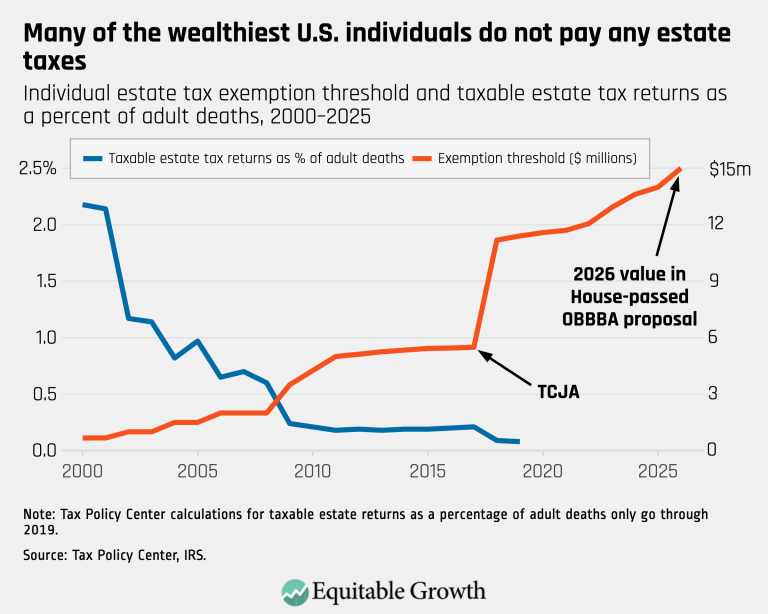
Many of the wealthiest U.S. individuals do not pay any estate taxes (opens in a new tab)
Visualizations JUN 23, 2025
 View Chart
(opens in a new tab)
View Chart
(opens in a new tab)
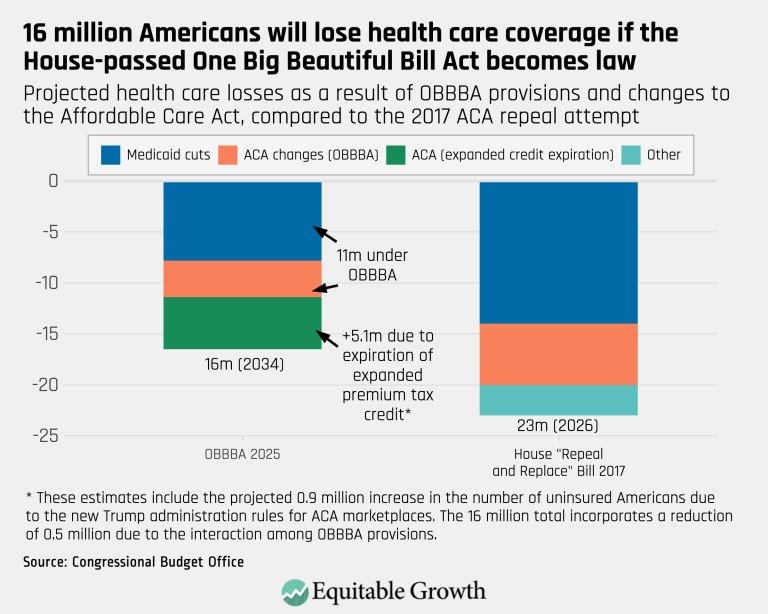
16 million Americans will lose health care coverage if the House-passed One Big Beautiful Bill Act becomes law (opens in a new tab)
Visualizations JUN 23, 2025

The hidden trade-offs of nonwage job amenities for U.S. workers (opens in a new tab)
Essays JUN 10, 2025
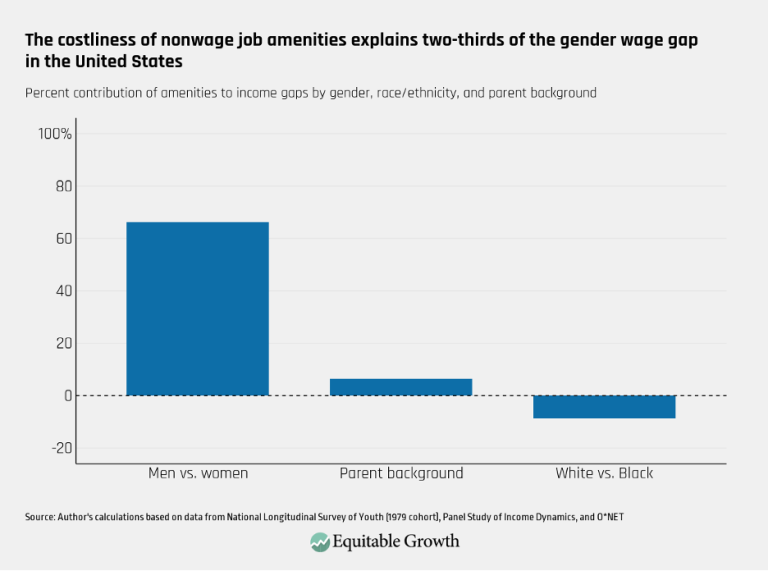
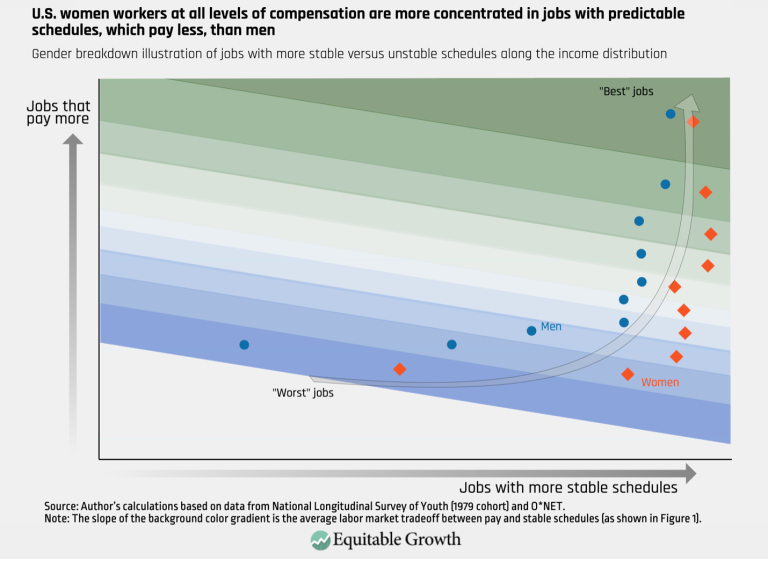
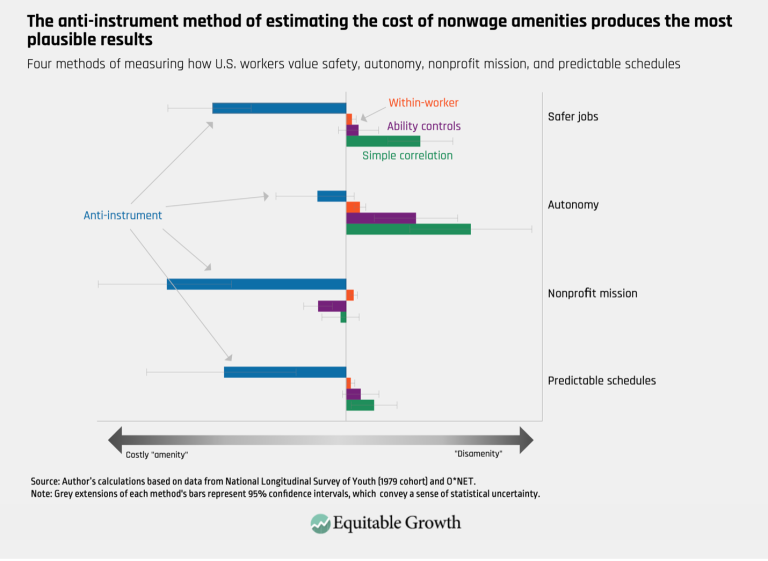
When workers choose jobs with predictable schedules, safer conditions, or greater autonomy, they are often paying a price: lower wages. In some cases, these hidden trade-offs are considerable. Indeed, my…
By: Alex Bell (opens in a new tab)
 View Chart
(opens in a new tab)
View Chart
(opens in a new tab)
The costliness of nonwage job amenities explains two-thirds of the gender wage gap in the United States (opens in a new tab)
Visualizations JUN 10, 2025
 View Chart
(opens in a new tab)
View Chart
(opens in a new tab)
U.S. women workers at all levels of compensation are more concentrated in jobs with predictable schedules, which pay less, than men (opens in a new tab)
Visualizations JUN 10, 2025
 View Chart
(opens in a new tab)
View Chart
(opens in a new tab)
The anti-instrument method of estimating the cost of nonwage amenities produces the most plausible results (opens in a new tab)
Visualizations JUN 10, 2025

The political implications of bad jobs and the decline of unions (opens in a new tab)
Blog MAY 13, 2025
Bad jobs have become a distinctive feature of the U.S. economy over the past few decades. Globally, a lack of adequate demand, or what economists call “secular stagnation,” has meant…
By: Adam Dean (opens in a new tab), Jamie McCallum (opens in a new tab)

More accurately measuring economic sentiment will help build a U.S. economy—and democracy—that works for all (opens in a new tab)
Blog MAY 13, 2025
When politicians and members of the media discuss the state of “the economy” in the United States, they often use a small handful of data points. Of all the indicators…
By: Jonathan Cohen (opens in a new tab), Katherine Cramer (opens in a new tab)

Housing insecurity and U.S. economic policies: Lessons from tenant organizing (opens in a new tab)
Blog MAY 13, 2025
The destructive force of authoritarian power has become a prominent feature of U.S. political life. In just the first few months of 2025, we’ve seen unprecedented moves to use the…
By: Jamila Michener (opens in a new tab)
Tariffs pose real risks to the U.S. labor market (opens in a new tab)
Blog MAY 12, 2025
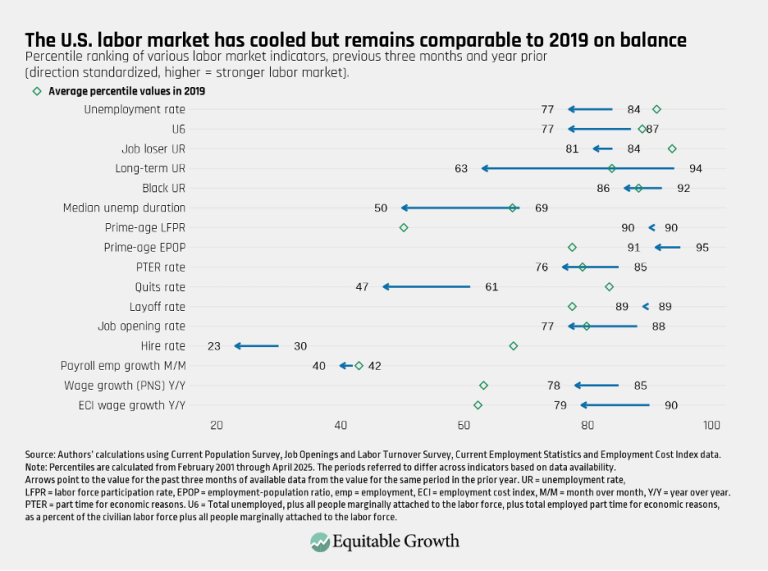
Uncertainty around trade policy makes it difficult to discuss the current state of the U.S. labor market. Businesses, workers, and policymakers at all levels make decisions based on both what…
By: Kevin Rinz (opens in a new tab)
 View Chart
(opens in a new tab)
View Chart
(opens in a new tab)
rinz fig 1 (opens in a new tab)
Visualizations MAY 9, 2025
 View Chart
(opens in a new tab)
View Chart
(opens in a new tab)
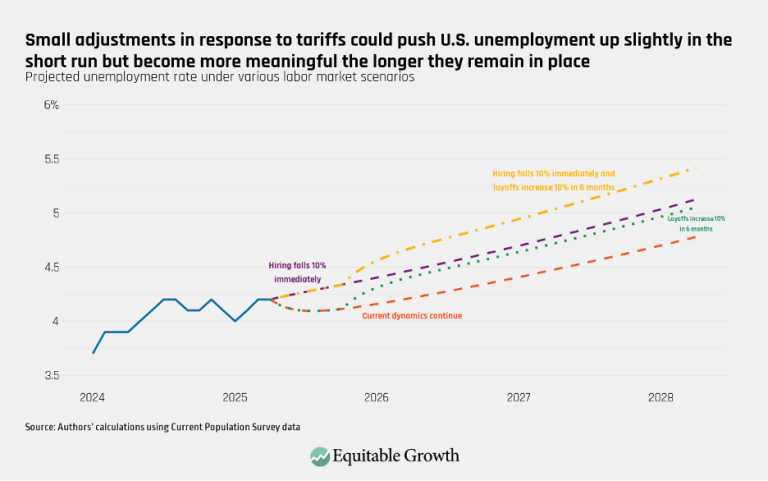
Small adjustments in response to tariffs could push U.S. unemployment up slightly in the short run but become more meaningful the longer they remain in place (opens in a new tab)
Visualizations MAY 9, 2025
 View Chart
(opens in a new tab)
View Chart
(opens in a new tab)
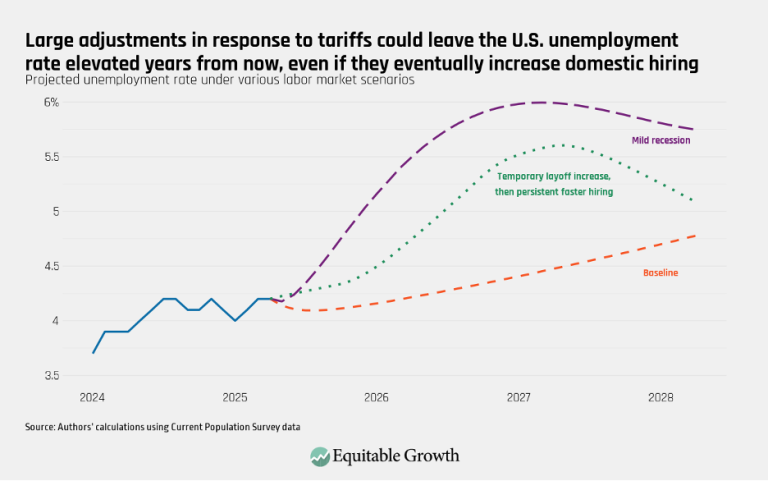
rinz fig 3 (opens in a new tab)
Visualizations MAY 9, 2025