


Issue Areas
The Washington Center for Equitable Growth is engaged in an array of issues to advance evidence-based ideas and policies that promote strong, stable, and broad-based economic growth.

0 Results
No results match your criteria. Try clearing the search or adjusting your filters.

AI, Tech & Energy
Equitable Growth supports research and policy analysis on how artificial intelligence, emerging technologies, and the energy transition affect workers, inequality, and broad-based economic growth.
Macroeconomics & Economic Measurement
Equitable Growth supports research and policy analysis on how macroeconomic policies and better economic measurement can promote stable and broad-based economic growth.

Political Economy & Democracy
Equitable Growth supports research and policy analysis on how economic inequality shapes political power and democratic institutions, and how that in turn affects broad-based economic growth.

Taxation
Equitable Growth supports research and policy analysis on how tax policies can promote stable and broad-based economic growth.

Competition & Economic Dynamism
Equitable Growth supports research and policy analysis on how strong competition among U.S. businesses affects inequality and broad-based economic growth.

Household Economic Security
Equitable Growth supports research and policy analysis on how unequal access to care, 21st century work-life policies, and education undermines stable, broad-based economic growth.

Economic Equity & Opportunity
Equitable Growth supports research and policy analysis on how trends in economic inequality and mobility and changes in the economy have affected the concentration of wealth, income, and earnings, and how these distributional shifts have affected the promise of economic security and opportunity.

Labor, Wages & Worker Power
Equitable Growth supports research and policy analysis on how inequalities in wages, bargaining power, and the evolving labor market affect workers’ economic security and opportunity as well as broad-based economic growth.
4,071 Results
 (opens in a new tab)

What Work Does Generative AI Do? (opens in a new tab)
Essays Sep 8, 2026
Since August 2024, our Real-Time Population Survey (RPS), a nationally representative survey of U.S. adults ages 18 to 64, has tracked how many Americans use generative artificial intelligence (AI). The adoption…
(opens in a new tab)
What Work Does Generative AI Do? (opens in a new tab)
Working Papers Sep 8, 2026
We measure how workers use genAI for their jobs in a nationally representative survey linking genAI adoption to detailed occupations and tasks. Our data provide the first task-level genAI adoption…
(opens in a new tab)

What happens to U.S. workers without access to Unemployment Insurance amid economic downturns or disruptions related to AI? (opens in a new tab)
Essays Sep 2, 2026
The adoption of artificial intelligence in the workplace has led to predictions of U.S. labor market disruptions. In response, policymakers have increased attention on the fitness of the nation’s social…
(opens in a new tab)

Economic research shows immigration is good for U.S. workers, the economy, and affordability (opens in a new tab)
Essays Aug 31, 2026
When President Donald Trump returned to the White House in 2025, mass deportations and immigration restrictions were renewed as one of the political priorities of his second administration. Since then,…
(opens in a new tab)
 View Chart
(opens in a new tab)
View Chart
(opens in a new tab)
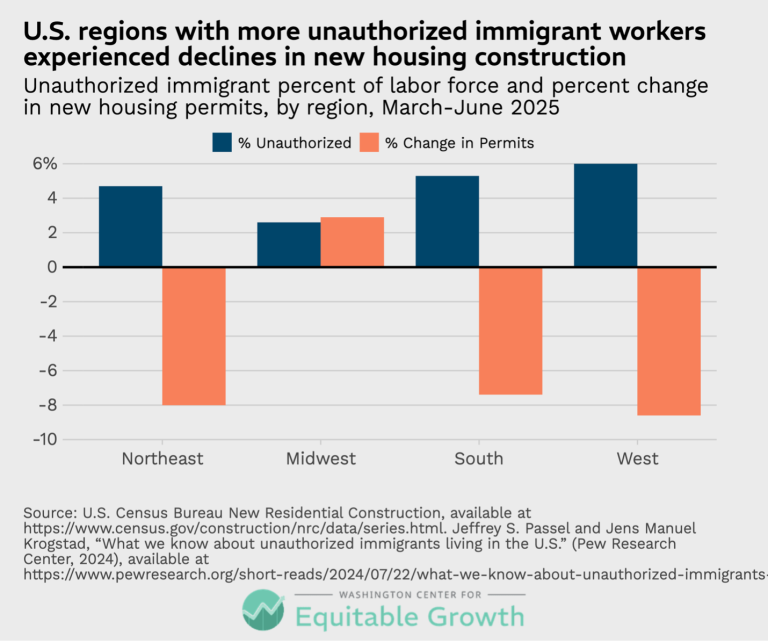
U.S. regions with more unauthorized immigrant workers experienced declines in new housing construction (opens in a new tab)
Visualizations Aug 31, 2026
(opens in a new tab)
 View Chart
(opens in a new tab)
View Chart
(opens in a new tab)
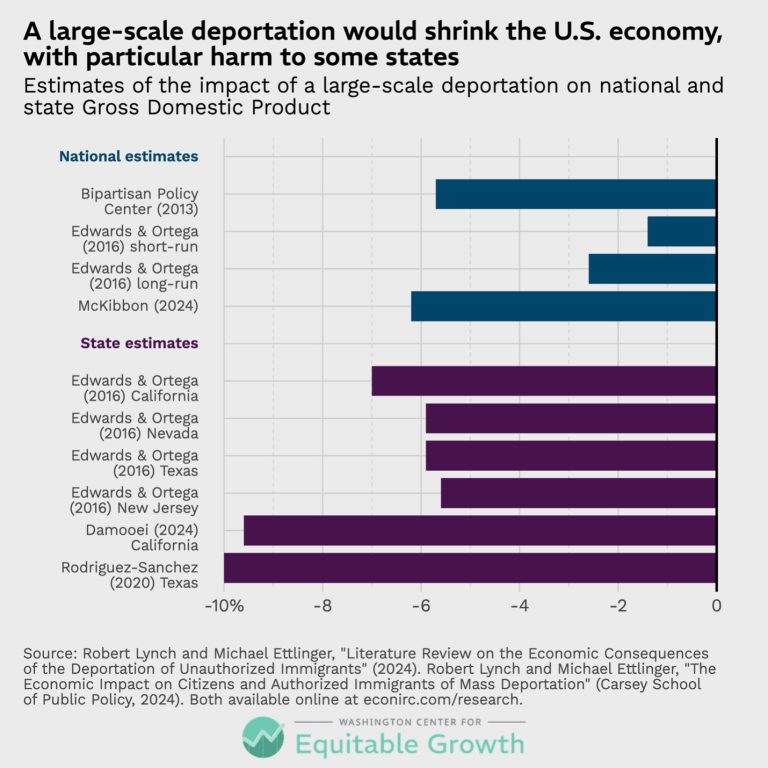
A large-scale deportation would shrink the U.S. economy, with particular harm to some states (opens in a new tab)
Visualizations Aug 31, 2026
955 Results
-
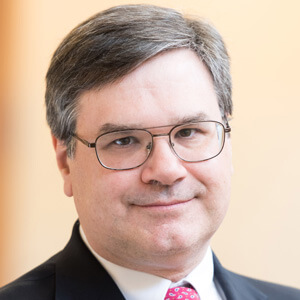 Christopher Bollinger (opens in a new tab)
Sturgill Endowed Professor of Economics
Christopher Bollinger (opens in a new tab)
Sturgill Endowed Professor of Economics
University of Kentucky
-
 Abhay Aneja (opens in a new tab)
Assistant Professor of Law
Abhay Aneja (opens in a new tab)
Assistant Professor of Law
University of California, Berkeley
-
 Daniel Reck (opens in a new tab)
Assistant Professor of Economics
Daniel Reck (opens in a new tab)
Assistant Professor of Economics
University of Maryland
-
 Candace Miller (opens in a new tab)
Assistant Professor of Sociology and Organizational Science
Candace Miller (opens in a new tab)
Assistant Professor of Sociology and Organizational Science
University of North Carolina, Charlotte
-
 Mark Paul (opens in a new tab)
Assistant Professor of Economics
Mark Paul (opens in a new tab)
Assistant Professor of Economics
New College of Florida
-
 Alix Gould-Werth (opens in a new tab)
Former Director of Family Economic Security Policy
Alix Gould-Werth (opens in a new tab)
Former Director of Family Economic Security Policy
Washington Center for Equitable Growth
-
 Ruth Milkman (opens in a new tab)
Distinguished Professor of Sociology
Ruth Milkman (opens in a new tab)
Distinguished Professor of Sociology
Graduate Center of the City University of New York
-
 Kyle Moore (opens in a new tab)
Economist
Kyle Moore (opens in a new tab)
Economist
Economic Policy Institute
-
Eric A. Posner (opens in a new tab)
University of Chicago
-
E. Glen Weyl (opens in a new tab)
Yale University
-
 Hilary Wething (opens in a new tab)
Assistant Professor of Public Policy
Hilary Wething (opens in a new tab)
Assistant Professor of Public Policy
Pennsylvania State University (Penn State)
-
 Carlos Fernando Avenancio-Leon (opens in a new tab)
Assistant Professor of Finance
Carlos Fernando Avenancio-Leon (opens in a new tab)
Assistant Professor of Finance
University of California San Diego
-
 Randy Albelda (opens in a new tab)
Professor Emerita of Economics and Senior Research Fellow
Randy Albelda (opens in a new tab)
Professor Emerita of Economics and Senior Research Fellow
University of Massachusetts, Boston
-
 Claire Montialoux (opens in a new tab)
Assistant Professor
Claire Montialoux (opens in a new tab)
Assistant Professor
University of California, Berkeley
-
 James Ziliak (opens in a new tab)
Carol Martin Gatton Endowed Chair in Microeconomics
James Ziliak (opens in a new tab)
Carol Martin Gatton Endowed Chair in Microeconomics
University of Kentucky
-
 Javier Cravino (opens in a new tab)
Associate Professor
Javier Cravino (opens in a new tab)
Associate Professor
University of Michigan, Ann Arbor
-
 Andrei Levchenko (opens in a new tab)
Professor of Economics
Andrei Levchenko (opens in a new tab)
Professor of Economics
University of Michigan, Ann Arbor
-
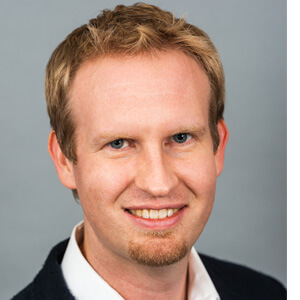 Max Risch (opens in a new tab)
Assistant Professor
Max Risch (opens in a new tab)
Assistant Professor
Carnegie Mellon University
-
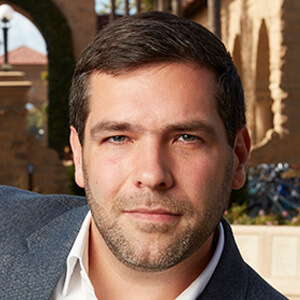 David S. Pedulla (opens in a new tab)
Professor of Sociology
David S. Pedulla (opens in a new tab)
Professor of Sociology
Harvard University
-
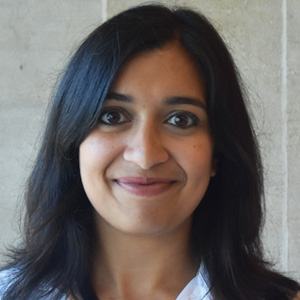 Manisha Padi (opens in a new tab)
Assistant Professor
Manisha Padi (opens in a new tab)
Assistant Professor
University of California, Berkeley
-
 Andreas Mueller (opens in a new tab)
Associate Professor
Andreas Mueller (opens in a new tab)
Associate Professor
University of Texas at Austin
-
 Miguel Acosta (opens in a new tab)
Economist
Miguel Acosta (opens in a new tab)
Economist
Board of Governors of the Federal Reserve System
-
 Antoine Arnoud (opens in a new tab)
Economist
Antoine Arnoud (opens in a new tab)
Economist
International Monetary Fund (IMF)
-
 Jeffrey Burnette (opens in a new tab)
Rochester Institute of Technology
-
Jonathan Sallet (opens in a new tab) Senior Fellow
Benton Institute for Broadband & Society




Your Source for the Latest Insights
Get updates on our latest research, event announcements, and policy insights delivered straight to your inbox. Stay connected with the leading voices on equitable growth.