



Policy
What Work Does Generative AI Do?
Essays SEP 8, 2026
By: Alexander Bick, Adam Blandin, David Deming, Tyler Schumacher
AI, Tech & Energy
Labor, Wages & Worker Power
 Browse All Resources
APR 15, 2021
The United States is emerging from the greatest health, economic, and caregiving crises in a century. Many policymakers are looking for ways to jumpstart the economy and, recognizing the tie between infrastructure and economic growth (opens in a new tab), have turned their sights on investments in U.S. physical and care infrastructure.
In March 2021, President Joe Biden proposed the American Jobs Plan and American Families Plan, a multipart proposal that would boost federal spending on the nation’s care and physical infrastructure. (See textbox for details.) Investments of this kind could help the U.S. economy recover from the coronavirus recession and lead toward sustainable, broad-based economic growth in the future.
Care infrastructure includes the policies, resources, and services necessary to help U.S. families meet their caregiving needs. Specifically, care infrastructure describes high-quality, accessible, and affordable child care; paid family and medical leave; and home- and community-based services and support.
This factsheet presents some of the research and evidence on America’s care infrastructure as it relates to families’ caregiving needs, the care workforce, and U.S. economic growth.
Caregiving is an important component of the economy. Research suggests that adequate care infrastructure can promote labor force participation, particularly among women; boost the human capital of care recipients; and support broad-based macroeconomic growth. Yet the evidence also suggests that U.S. care infrastructure is in need of greater investment, and current caregiving policies and resources may not be sufficient for the nation’s caregiving needs. For example:
The COVID-19 pandemic and recession exposed preexisting flaws in the nation’s care infrastructure and further weakened an already-fragile system. Employment in the child care and home-health sectors remains depressed, suggesting the care economy could struggle to meet demand as the nation reopens, blunting the economic recovery. (See Figure 1.)
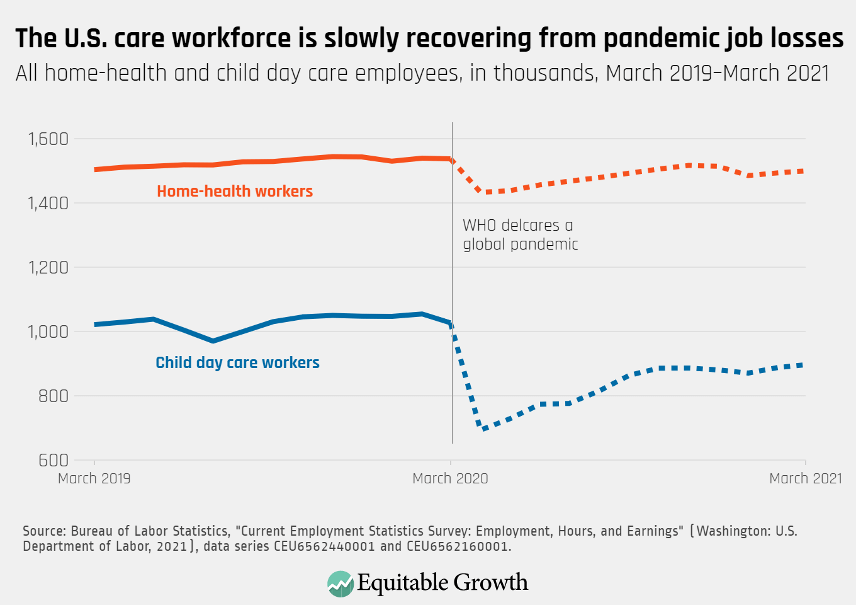
All home-health and child day care employees, in thousands, March 2019-March 2021
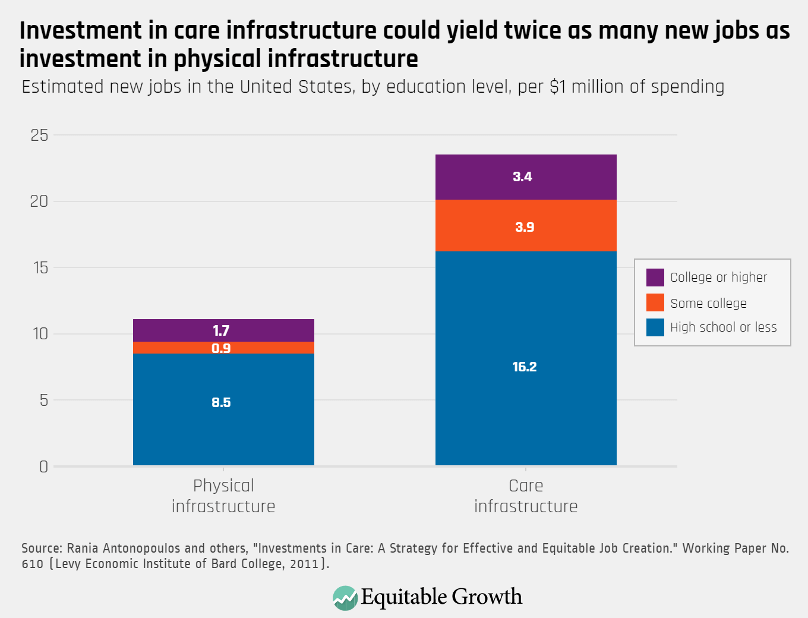
Estimated new jobs in the United States, by education level, per $1 million of spending
Inefficiencies in the nation’s current care infrastructure—paid family and medical leave, child care, and home-based services and supports—constrain economic growth, and leave families and businesses vulnerable to unexpected health and caregiving shocks. Caregiving work is undervalued, and many U.S. workers across the economy face a financial penalty for engaging in care work, which can lead to high turnover and caregiving instability. When care workers are not available or not affordable, family members take on new caregiving responsibilities, exacerbating work-life challenges. If family caregivers cannot resolve these challenges, then many are forced out of the workforce—costing the economy trillions of dollars in lost productivity and compensation.
Alternatively, research suggests that investments in care infrastructure could create significantly more new jobs than investments in physical infrastructure alone, boosting GDP growth and reducing the gender employment divide. Research on the individual components of the care economy likewise support further investment.
Accessible, affordable, and high-quality child care is associated with employment gains for parents in the short term and human capital improvements for children in the long term. Likewise, a preponderance of the evidence on paid leave indicates positive labor market outcomes for caregivers and health and well-being outcomes for care recipients. Finally, patients who transition out of institution-based long-term care report better quality of life, fewer unmet care needs, and lower healthcare costs.
Altogether, the bulk of the research and evidence suggests investments in care infrastructure are a promising tool to boost U.S. economic growth, productivity, and well-being. Policymakers looking to jumpstart the U.S. economic recovery from the coronavirus recession, ensure broad-based future economic growth, and provide much-needed support to U.S. workers and their families must prioritize investment in both physical and care infrastructure.
Essays SEP 8, 2026
By: Alexander Bick, Adam Blandin, David Deming, Tyler Schumacher
Working Papers SEP 8, 2026
By: Alexander Bick, Adam Blandin, David Deming, Tyler Schumacher

Essays SEP 2, 2026
By: Megan Rivera
Get updates on our latest research, event announcements, and policy insights delivered straight to your inbox. Stay connected with the leading voices on equitable growth.


