
What happens to U.S. workers without access to Unemployment Insurance amid economic downturns or disruptions related to AI?
Essays SEP 2, 2026
By: Megan Rivera
SEP 16, 2021
Sufficient income is one of the most important components of a stable and healthy household budget. Income support programs help ensure that U.S. households have the income they need to cover the basic expenses of daily life. Some income support is delivered through direct cash transfers, including in programs such as Temporary Assistance to Needy Families, Supplemental Security Income, Social Security Disability Income, and Unemployment Insurance, while others provide essential goods such as food or housing to families, thus freeing up existing household income to be used for other purposes.
Yet the COVID-19 crisis demonstrates that existing income support infrastructure in the United States is wholly insufficient in providing relief to those who needed it.85 Pandemic-specific income supports delivered through the Coronavirus Aid, Relief, and Economic Security, or CARES, Act and related programs successfully (opens in a new tab) blunted some of the worst pain of the coronavirus recession, but they failed to deliver for all who needed (opens in a new tab) income support due to sustained underinvestment in these vital programs over the past half-century.86
While both common sense and a robust body of literature (opens in a new tab) make clear that income support improves the economic well-being of the people who access it, it’s important not to overlook the effects these programs also have on the U.S. economy as a whole.87 This factsheet discusses the economic impacts of income support programs, who they reach, how racism prevents them from serving their economic function, and what policymakers can do about it, starting with the upcoming 2022 budget reconciliation negotiations.

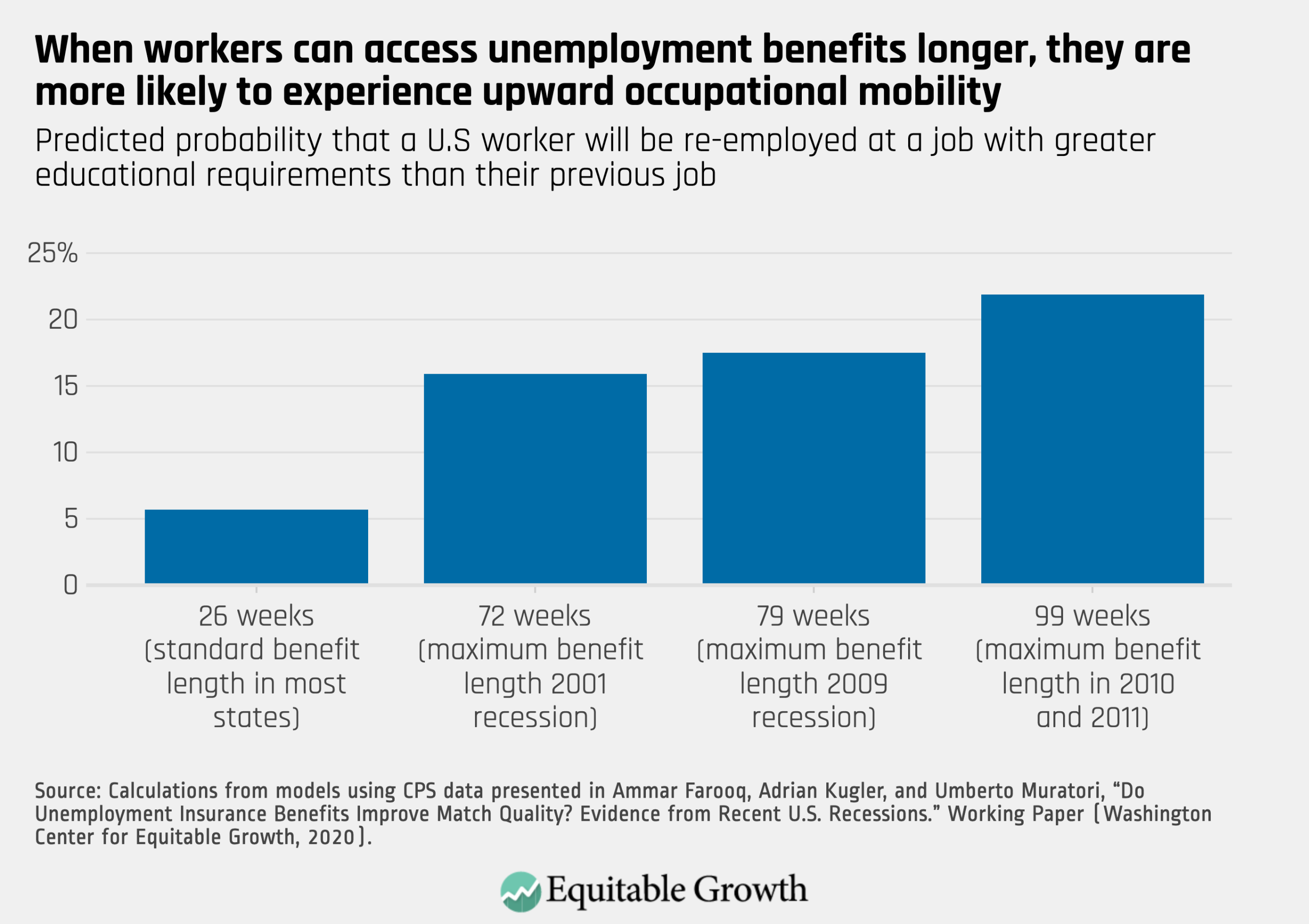
Predicted probability that a U.S. worker will be re-employed at a job with greater educational requirements than their previous job

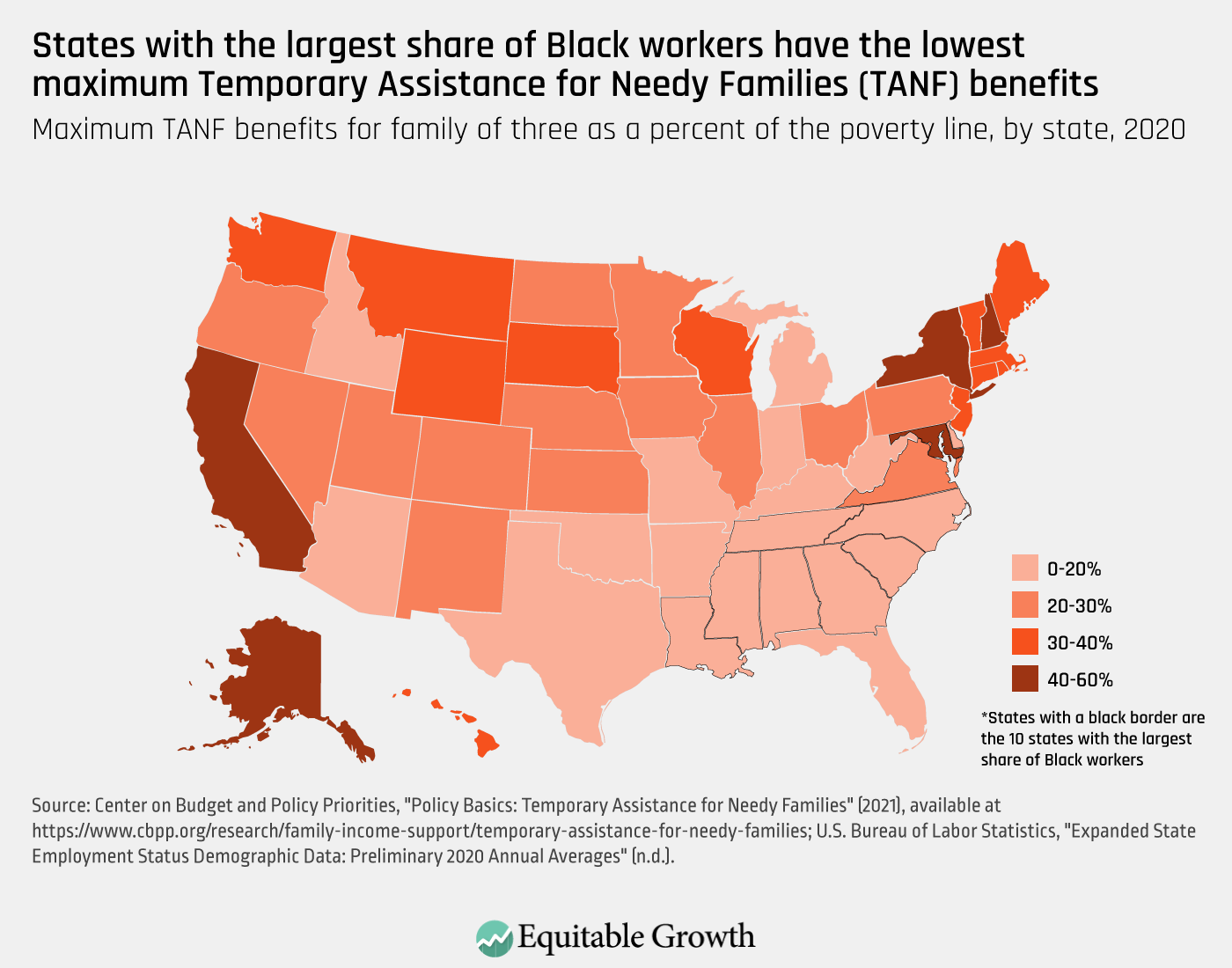
Maximum TANF benefits for family of three as a percent of the poverty line, by state, 2020
Weaknesses in the U.S. system of income supports constrain and limit the overall strength of the U.S. economy, unnecessarily deepening recessions, depressing labor force participation, and harming future growth potential by underinvesting in the human capital of the next generation of workers. The inability to access income support programs to weather unexpected storms has serious consequences, especially for many workers of color, women, and their families. Indeed, the coronavirus recession exposed already-deep inequalities (opens in a new tab) in access to income supports along lines of race and gender.107
There are several options for policymakers who want to remedy these weaknesses and build a system of income supports that will fulfill its potential to help the economy grow, including:
The upcoming budget reconciliation negotiations offer a promising opportunity to enact these and other reforms to U.S. social infrastructure, including income support programs. These actions would not only benefit those U.S. workers and their families who need help the most, but also bolster the overall U.S. economy as it continues to recover from the coronavirus recession.
For more information, see Equitable Growth’s issue brief, “Weak income support infrastructure harms U.S. workers and their families and constrains economic growth.”
Essays SEP 2, 2026
By: Megan Rivera
Essays AUG 31, 2026
By: Christopher Bangert-Drowns
Essays AUG 14, 2026
By: Carlos Fernando Avenancio-Leon
Get updates on our latest research, event announcements, and policy insights delivered straight to your inbox. Stay connected with the leading voices on equitable growth.