


Policy
The deeper argument at the heart of the federal budget debate
Reports OCT 5, 2026
By: Michael Linden
Macroeconomics & Economic Measurement
 Browse All Resources
JAN 30, 2015
By: Casey Schoeneberger

The big economic news from today’s release (opens in a new tab) of preliminary U.S. Gross Domestic Product figures measuring the growth of goods and services in the fourth quarter of 2014 is the steady strength of the U.S. economy despite a downturn in growth from 5 percent in the third quarter. Annualized GDP growth for the fourth quarter amounted to 2.6 percent, driven in large part by strong consumption and stable investment.
Many factors need to be examined regarding future GDP trends—particularly next Friday’s report on recent wage growth from the U.S. Bureau of Labor Statistics—but another big question about our current growth is the impact of plunging oil prices (opens in a new tab) on consumption and investment. As you can see in the figure below, the price for a barrel of oil is now at lows last seen during the last financial crisis. While the dip at the end of 2008 came in the midst of the economic crisis, the drop beginning in the Fall of 2014 has happened despite strength in the U.S. economy (opens in a new tab) though Europe (opens in a new tab) has continued to struggle and China (opens in a new tab) may be slowing. (See Figure 1.)
Figure 1
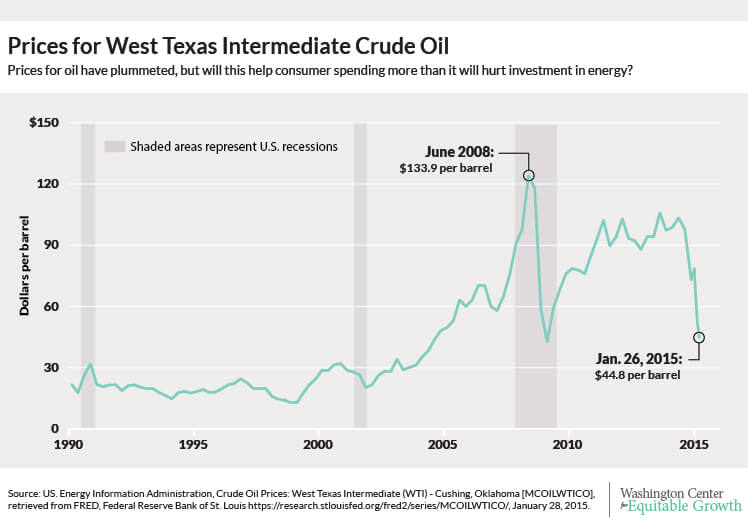
Definitive answers about the consequences of falling oil prices won’t emerge for a while, but today’s data provide some insight. On the one hand, the price drop should continue to spur consumption because high gas prices function as a tax on households. Now that gasoline has dipped below two dollars a barrel in many places, consumers may keep spending. Rising consumer spending should boost corporate profits, which might increase investment (or might not).
Alternatively, if the price decline for oil leads to large cuts in investment by energy companies that are not matched by increases in other parts of the economy then we could see a big decline. We have certainly heard of big layoffs (opens in a new tab) in the energy sector alongside a decline in investment in the sector in the fourth quarter of 2014. That said, the aggregate employment data (opens in a new tab) in oil and gas extraction have not quite shown that yet.
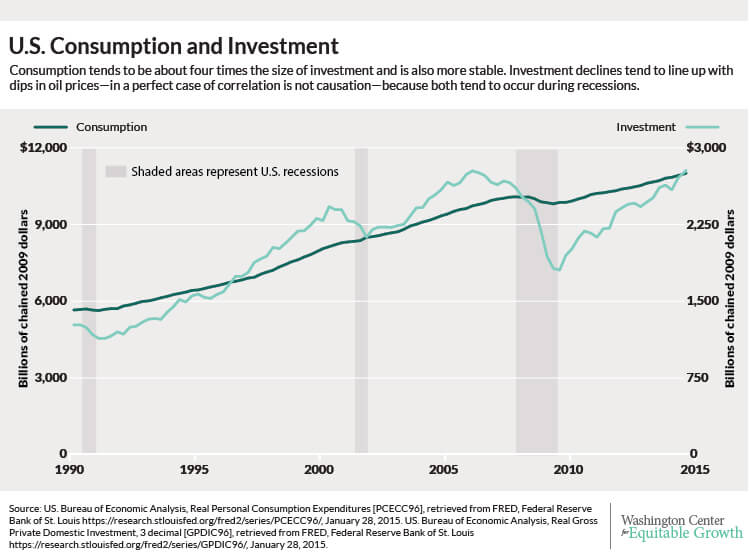
The U.S. investment and consumption components of GDP from 1990 up to today’s release seem to indicate that the consumer story had a stronger impact on the economy. There was a small drop in industrial and transportation equipment that was offset by business investment in other areas. (See Figure 2.)
Figure 2
Economists and policymakers alike should play close attention to both consumption and investment trends as Congress and the Obama administration decide upon the parameters of the next federal budget for fiscal year 2015 ending in October this year. And they should pay extra close attention to next Friday’s report on U.S. wage growth.
Reports OCT 5, 2026
By: Michael Linden
Essays SEP 22, 2026
By: Christopher Bangert-Drowns

Essays SEP 2, 2026
By: Megan Rivera
Get updates on our latest research, event announcements, and policy insights delivered straight to your inbox. Stay connected with the leading voices on equitable growth.


