



Policy
What Work Does Generative AI Do?
Essays SEP 8, 2026
By: Alexander Bick, Adam Blandin, David Deming, Tyler Schumacher
AI, Tech & Energy
Labor, Wages & Worker Power
 Browse All Resources
MAY 11, 2016
By: Nick Bunker
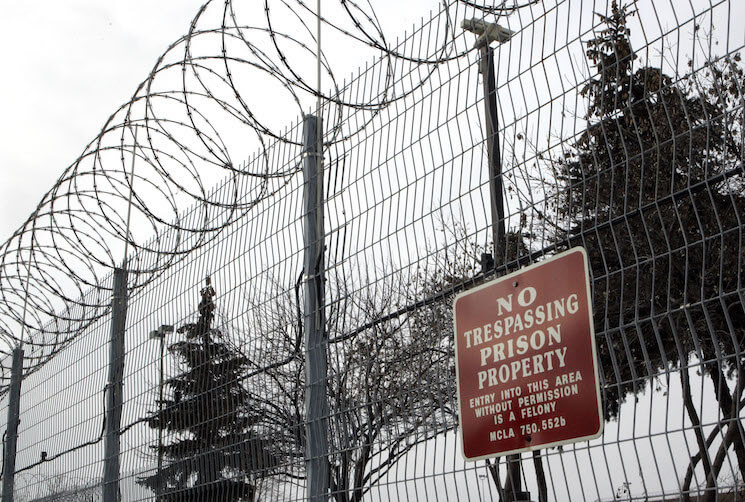
U.S. policymakers are increasingly scrutinizing the nation’s historically and internationally high incarceration rates. Over the past few decades, policy changes related to criminal sentencing, not an increase in crime, have put more people—especially young black men—behind bars. According to the President’s Council of Economic Advisers (opens in a new tab), from 1980 to 2014, the U.S. incarceration rate increased dramatically by 220 percent while violent crime rates actually declined by 39 percent.
This increased incarceration fails a cost-benefit analysis and may actually increase criminality. But it also distorts our economic data, which in several ways makes us underestimate the state of—and overestimate the improvement in—some forms of racial inequalities.
If you pay attention to the U.S. Bureau of Labor Statistics’ monthly Employment Situation report (opens in a new tab), you’ll notice that all the data that covers a share of the population will specify that it’s the “civilian population.” That means the population that’s the denominator of the employment-to-population ratio or the labor force participation rate is only comprised of “civilian” Americans. In other words, members of the U.S. Armed Services aren’t included.
But incarcerated people don’t get counted either. That means that for groups with higher rates of incarceration, their employment-to-population ratios and labor force participation rates will be higher than if we counted those in prisons and jails as not having a job. And if incarceration is increasing more among certain groups, gains in these rates will be higher than if these people were counted as not having jobs.
Consider a new report (opens in a new tab) from the Congressional Budget Office on trends in incarceration and joblessness among young men from 1980 to 2014. Over the 35-year period, young black men had higher rates of incarceration and joblessness than young men of other races and ethnicities. That means that not only are joblessness rates higher for young black men, but the measured decline in employment is understating the actual decline as more young men are incarcerated and therefore not included in the population used to calculate employment rates.
The increased incarceration of black men also shows up when economists calculate relative earnings, because the non-employed and incarcerated are not measured in earnings data. A paper (opens in a new tab) by economists Derek Neal and Armin Rick—which Rick summarized for Equitable Growth—shows that once the effects of incarceration and nonemployment are considered, the relative earnings gains of black men over the past 40 years disappear.
Policymakers and researchers are increasingly aware of the damage wrought by increased incarceration in the United States. But we should all be aware that incarceration may also make our calculations underestimate the costs of these policy changes. Ignoring that would be an absolute shame.
Essays SEP 8, 2026
By: Alexander Bick, Adam Blandin, David Deming, Tyler Schumacher
Working Papers SEP 8, 2026
By: Alexander Bick, Adam Blandin, David Deming, Tyler Schumacher

Essays SEP 2, 2026
By: Megan Rivera
Get updates on our latest research, event announcements, and policy insights delivered straight to your inbox. Stay connected with the leading voices on equitable growth.


