
What happens to U.S. workers without access to Unemployment Insurance amid economic downturns or disruptions related to AI?
Essays SEP 2, 2026
By: Megan Rivera
OCT 14, 2015
By: Nick Bunker
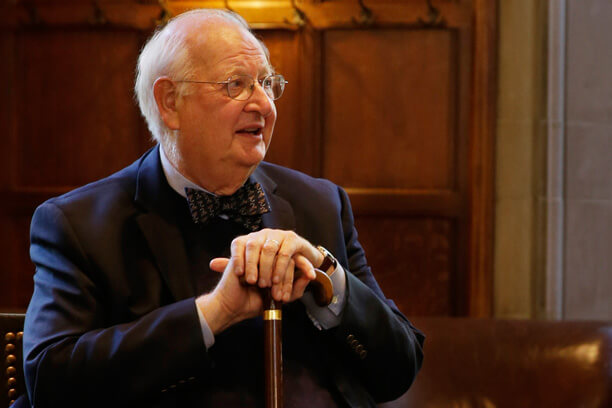
Many pixels have been spilled in recent days explaining and analyzing the research of Princeton University economist Angus Deaton, the news Nobel laureate in economics. In giving him the award, the Nobel prize committee cited Deaton for “his analysis of consumption, poverty, and welfare.” But many of the articles published over the past several days have missed out on how his research on consumption has deep and important lessons for how we understand economics. While Deaton’s work in the area of consumption (opens in a new tab) is fairly technical (opens in a new tab), he provides insight into how our assumption that consumers are all alike can cloud our judgment, for we fail to account for important trends such as high income and wealth inequality.
Prior to Deaton’s work on consumption, the economic theory of consumer behavior rested on very restrictive assumptions. Using models known as “demand systems,” economists tried to understand how demand for different consumer goods and services would change as their prices fluctuated and incomes changed. The problem with these models was that empirical tests seemed to reject their assumptions. Deaton, along with his co-author John Muellbauer, developed a more general model, called the Almost Ideal Demand System (opens in a new tab), that was easy to estimate with data and provided a platform for better understanding which assumptions about consumer behavior actually match with the data.
But Deaton’s work on understanding the relationship between income and demand didn’t stop there. The relationship between aggregate income and aggregate consumption still didn’t fit the models that economists such as Milton Friedman and Franco Modigliani (opens in a new tab) had built to understand consumption. These older models assumed a “representative agent,” or a single consumer in the economy that was essentially an average of all consumers. But it looked like this representative approach didn’t actually work when trying to move up to the aggregate. Deaton’s analysis showed that even when consumers were rational, as the models assumed, aggregate consumption may have different properties than individual consumption does. As Duke University economist Duncan Thomas said (opens in a new tab) to the New York Times’s Binyamin Appelbaum, “What [Deaton]’s shown is that you do learn a great deal more by looking at the behavior that underlies the aggregates.”
The issue, however, with paying attention to the micro level data on individuals instead of the aggregates is the need to focus on procuring better data on individuals and households. And Deaton has focused exactly on those issues. In particular he has looked at the usefulness of household surveys for understanding the state of poverty and consumption in developing economies. As the popular summary of his work by the Nobel committee notes (opens in a new tab), Deaton has shown ways of collecting household data that are less difficult to gather and just as good as more laborious methods.
In total, Deaton’s noted work looks at how understanding the micro data can help us better understand the larger macroeconomic phenomena of the world. Just assuming that individuals will act like the aggregate and ignoring inequality isn’t going to work to understand the larger issues that need more uncovering.
Essays SEP 2, 2026
By: Megan Rivera
Essays AUG 14, 2026
By: Carlos Fernando Avenancio-Leon
Working Papers AUG 14, 2026
By: Carlos F. Avenancio-León, Yutao He, Michael Reher
Get updates on our latest research, event announcements, and policy insights delivered straight to your inbox. Stay connected with the leading voices on equitable growth.