


Policy
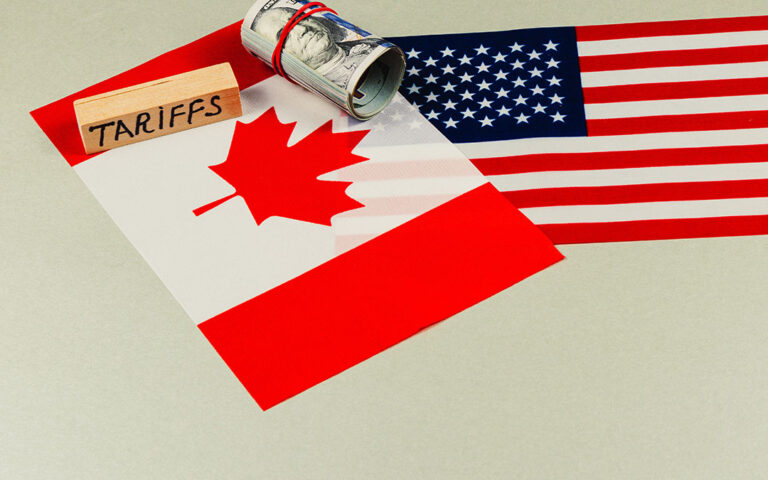
Trump’s trade war with Canada grows increasingly costly as Section 338 tariffs harm both economies
Essays SEP 22, 2026
By: Christopher Bangert-Drowns
Macroeconomics & Economic Measurement
Taxation
 Browse All Resources
JUN 17, 2014
By: Nick Bunker
Former Treasury secretary Larry Summers caused a stir among the econoliterati with his speech (opens in a new tab) laying out the argument for long-run economic pessimism at the International Monetary Fund in November 2013. He argued that long-term growth, in the absence of financial bubbles, would be far below the level advanced economies have come to expect. Then last week, in a New York Times article (opens in a new tab), economics columnist Binyamin Appelbaum summed up a number of arguments that feed into this fear of secular stagnation and low economic growth, among them lower productivity, hysteresis (high unemployment begetting ever higher unemployment) and lower population growth.
Economists may can argue about the future pace of growth and the appropriate policy response, but the conversation seems to be ignoring the other important aspect of Summers’s argument—financial stability. Five years after the Great Recession, the U.S. economic recovery may not be as a stable as we hope. Threats both domestic and foreign are looming.
U.S. consumption growth hasn’t been strong since the official end (opens in a new tab) of the Great Recession in June 2009. In fact, compared to previous recoveries, it’s been terrible. Yet this weak growth may be dependent upon a rising tide of debt. Economist Atif Mian of Princeton University and the University of Chicago’s Amir Sufi have (opens in a new tab) pointed out (opens in a new tab) that a large chunk of the recent consumption growth is from automobile sales, which are financed predominantly by debt. And the primary purchasers of those cars have been low-income households.
The subprime housing boom appears to have been replaced by a subprime car boom. Car loans are not as significant as mortgages, either to total household debt or as financial instruments. The same can be said about student debt (opens in a new tab). But this trend of increasing personal debt doesn’t portend well for the stability of personal consumption, which is responsible for about 70 percent of U.S. economic growth.
Concerns about economic stability don’t stop at the U.S. borders. The International Monetary Fund recently warned (opens in a new tab) that housing prices in many developed countries are approaching bubble levels. Housing prices in countries such as the United Kingdom, Australia, and, most of all, Canada are severely out of line with rents – a good sign of a bubble (opens in a new tab). While these collapses wouldn’t directly affect the U.S. economy, these countries are significant trading partners with the United States.
Leverage is also a looming threat in another major trading power: China. The strong economic growth in China has hidden a serious nonperforming loan problem among state-owned enterprises. The problem seems to have accelerated (opens in a new tab) recently despite reform efforts. The reforms may even make the problem worse as firms seek funding from abroad. The worst case scenario, as outlined (opens in a new tab) by financial analyst Michael Pettis, is a crisis similar to those in Latin America in the 1980s or South Korea in the late 1990s.
Could these specific issues cause major harm to the U.S. economy? Our GDP and employment levels may have recovered from the Great Recession, but we need to be vigilant about the next source or sources of future crises.
Essays SEP 22, 2026
By: Christopher Bangert-Drowns

Essays AUG 14, 2026
By: Carlos Fernando Avenancio-Leon
Working Papers AUG 14, 2026
By: Carlos F. Avenancio-León, Yutao He, Michael Reher
Get updates on our latest research, event announcements, and policy insights delivered straight to your inbox. Stay connected with the leading voices on equitable growth.


