



Policy
What Work Does Generative AI Do?
Essays SEP 8, 2026
By: Alexander Bick, Adam Blandin, David Deming, Tyler Schumacher
AI, Tech & Energy
Labor, Wages & Worker Power
 Browse All Resources
AUG 17, 2020
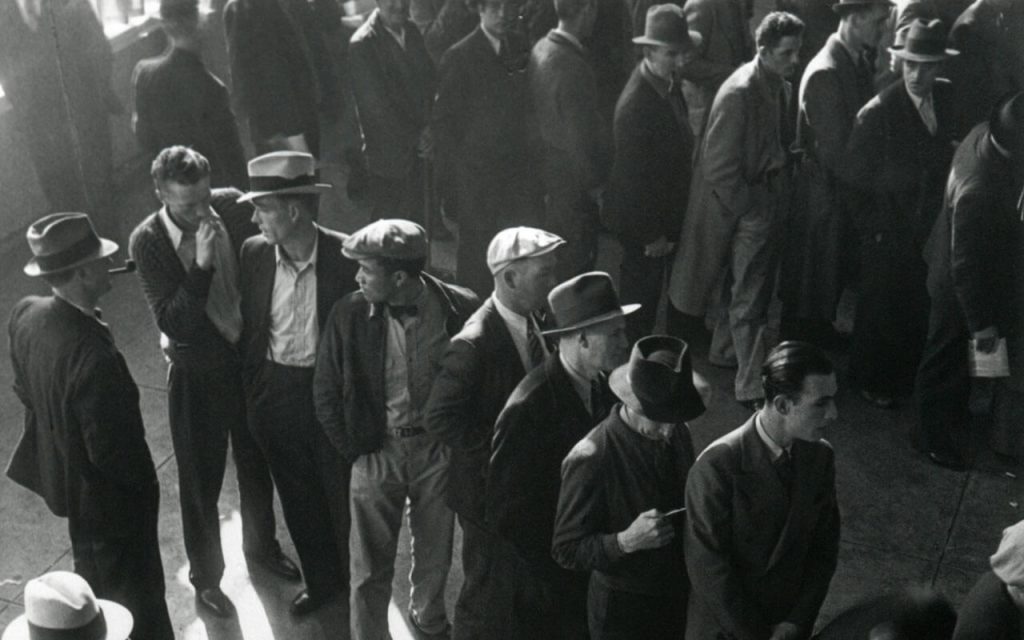
Longstanding problems with the Unemployment Insurance (opens in a new tab) system in the United States are immediately evident amid the coronavirus recession and echo the problems experienced during the Great Recession more than a decade ago. These include:
The current disarray in the Unemployment Insurance system is neither a surprise nor an accident. It is the result of decades of conscious choices made by policymakers at the state and federal levels: Over the past decade, many states limited Unemployment Insurance benefits, made accessing the program more difficult, and allocated insufficient funds for program administration. This results in chaos and uncertainty just when Unemployment Insurance is critical to prevent deterioration in the wider economy and save families from precarious financial situations.
As in the Great Recession, states’ trust funds are now being depleted, which sets the stage for the erosion of benefit levels while the crisis remains ongoing. And, as was the case in the Great Recession, in the first months of the coronavirus crisis, policymakers have yet to remedy the issues at the heart of these administrative failures.
But it’s not too late. Unemployment Insurance is a joint state-federal system. These programs are run at the state level but follow federal guidelines under the Social Security Act. Reforms to this system are important at both levels. The key resources below provide the details for enacting these reforms.
“Unemployment Insurance reform: A primer,” by Till von Wachter
This primer summarizes how the Unemployment Insurance system functions in the United States and four ways it falls short. First, the current UI system suffers from financial instability that risks compromising its major role as a stabilizer in recessions. Second, the coverage of unemployment benefits has eroded over time, with a declining fraction of workers receiving lower benefits amounts. Third, the UI system does little to avert the large, long-lasting earnings losses among re-employed workers. And fourth, there are persistent questions about the effectiveness of Unemployment Insurance and related programs to quickly re-employ job losers. This primer lays out easy-to-implement small changes to address these problems, as well as fundamental changes to modernize the program.
“Unemployment Insurance and macroeconomic stabilization (opens in a new tab),” by John Coglianese and Gabriel Chodorow-Reich
The authors lay out a plan for improving the Unemployment Insurance program’s function as an anti-recessionary automatic stabilizer. They propose measures that increase take-up of regular unemployment benefits, full federal financing for extended benefits alongside improvements in the formula and design of extended benefits triggers, and an increase in the unemployment benefit amount when extended benefits are triggered.
“Fool me once: Investing in Unemployment Insurance systems to avoid the mistakes of the Great Recession during COVID-19,” by Alix Gould-Werth
Gould-Werth presents a description of the problems in the Unemployment Insurance system exposed during the Great Recession and then repeated during the coronavirus crisis. She shows that policymakers have an opportunity to intervene and improve the functioning of the Unemployment Insurance system by increasing and indexing the federal taxable wage base, redesigning extensions to respond to economic changes quickly, and standardizing a minimum benefit level and duration that are sufficiently generous.
“Factsheet: Unemployment Insurance and why the effect of work disincentives is greatly overstated amid the coronavirus recession,” by Equitable Growth
One of the biggest political obstacles to fixing the UI system is the fear that increasing access and generosity of benefits will discourage people from working. This Equitable Growth factsheet breaks down the research on work disincentives, showing that the amount of attention given to work disincentives (quite large) is disproportionate to the magnitude of the disincentives themselves, which are substantively small. At the same time, relatively little attention is paid to the benefits of Unemployment Insurance.
To view the other policy sheets in this series, please click here.
Essays SEP 8, 2026
By: Alexander Bick, Adam Blandin, David Deming, Tyler Schumacher
Working Papers SEP 8, 2026
By: Alexander Bick, Adam Blandin, David Deming, Tyler Schumacher

Essays SEP 2, 2026
By: Megan Rivera
Get updates on our latest research, event announcements, and policy insights delivered straight to your inbox. Stay connected with the leading voices on equitable growth.


