Skip to content
Browse All Resources
Books

DEC 1, 2022

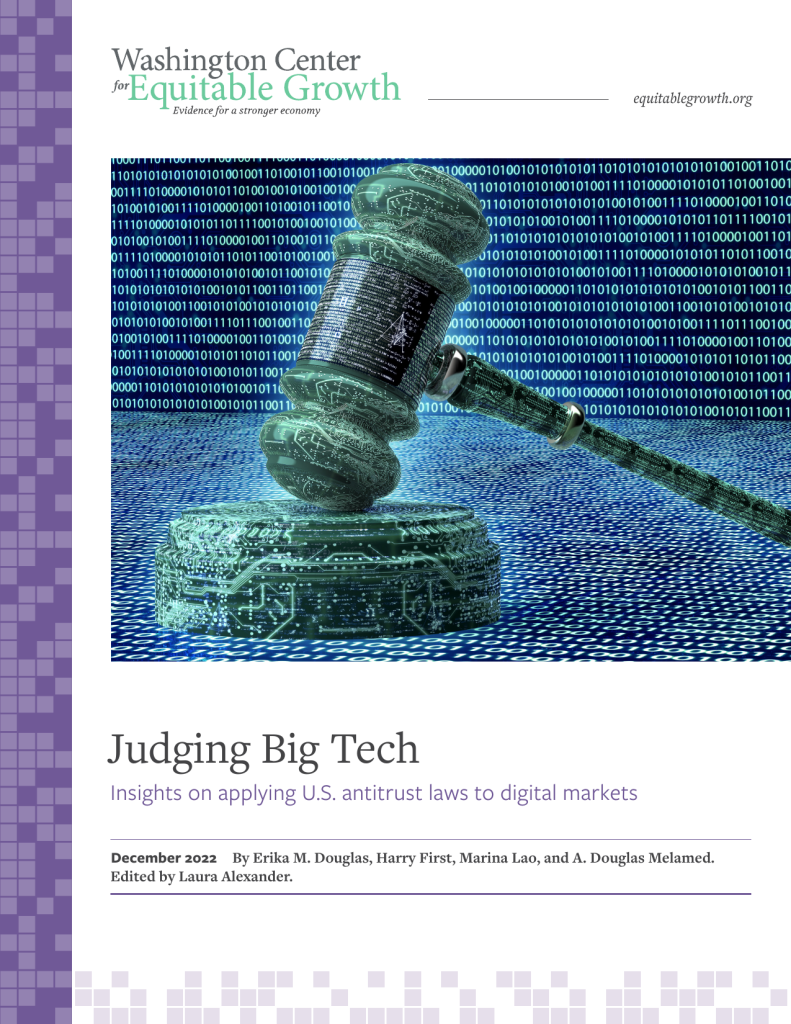
Judging Big Tech

How antitrust enforcers can judge Big Tech's business practices and their effects on U.S. consumers, competitors, and workers.

Abstract

The importance of digital information technology and communications giants to the U.S. economy and society today is undeniable. The business strategies of these companies are increasingly capturing the attention of the U.S. Congress, the White House, federal agencies, and governors and state legislatures across the nation. This increased focus is not surprising, given that these companies—including Amazon, Apple, Alphabet’s Google unit, and Meta Platform’s Facebook and Instagram units—are the main arteries for the U.S. public’s social and commercial engagement online.

These digital information technology and communications companies hold tremendous commercial and political power. That’s why antitrust enforcement agencies are particularly focused on how these firms are expanding and entrenching their businesses and how those decisions affect U.S. consumers, competitors, and workers. The problem from an antitrust enforcement perspective, however, is that the business practices and strategies playing out across the U.S. information technologies and communications sectors and beyond are not always easily connected to the historic applications of U.S. antitrust law, which consists of laws and precedents dating back to 1890 and draws on even earlier common law principles.

The four essays in this book seek to bridge this gap and provide objective insights, unfiltered through the lens of litigation or business strategy, on how courts and litigants can successfully navigate these relatively unchartered waters to apply our nation’s century-old antitrust statutes to today’s U.S. digital information technology and communications industries in a way that is consistent with the central goal of antitrust: to protect and promote competition. Rather than arguing which side should win, the authors of these essays seek to unpack the correct analytical framework and identify the dispositive facts that judges need to understand to rule fairly and effectively in antitrust cases involving modern technology markets.

Related

Cover of Unbound
Policy

Unbound

Books SEP 1, 2019

Do Americans really have to choose between equality and prosperity? Many economists argue that reducing economic inequality would require such heavy-handed interference with market forces that it would stifle economic…

By: Heather Boushey

Your Direct Line to Cutting-Edge Research

Get updates on our latest research, event announcements, and policy insights delivered straight to your inbox. Stay connected with the leading voices on equitable growth.