


Policy
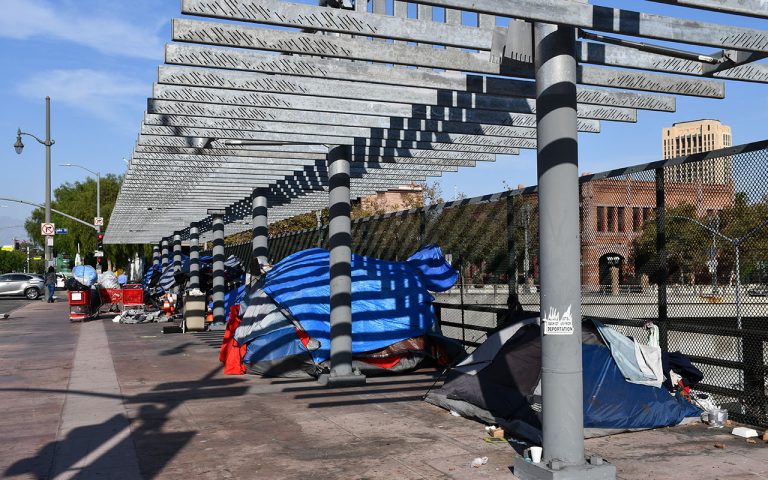
The economic impact of housing insecurity in the United States
Videos DEC 8, 2022
Economic Equity & Opportunity
Household Economic Security
 Browse All Resources
MAY 13, 2025

The destructive force of authoritarian power has become a prominent feature of U.S. political life. In just the first few months of 2025, we’ve seen unprecedented moves to use the levers of government to aggrandize the wealth and power of the few, while eluding constitutional checks and balances,92 defying legal dictates,93 dismantling core government operations,94 and repressing resistance.95 Though striking, such realities are hardly surprising. Intensifying right-wing populism has laid the foundation for this democratic attenuation.96
While the sources of this phenomena are various, a robust and nuanced body of scholarship points to economic insecurity and racism as a pernicious nexus driving the xenophobic, zero-sum, and anti-democratic impulses at the heart of right-wing populism.97
In this essay, I make the case that these forces converge particularly acutely in the domain of housing, a fulcrum around which populist sentiments pivot.98 I argue that tenant organizing—a growing and important political response to housing insecurity99—illuminates a path toward U.S. economic policies that are responsive to the needs of people and communities, nourishing to democracy, and an antidote to the worse excesses of populism.
Housing defines both economic and political life in the United States.100 Home prices have risen more than 420 percent over the past 40 years.101 At the same time, rent has been on an unsustainable upward trajectory.102 This has led to surging housing insecurity,103 increased evictions,104 and growing demand to alter the constellation of winners and losers in the housing market.105 Housing was a chief concern for U.S. voters heading into the 2024 election.106 More than three-quarters of Americans believe that housing affordability is a significant and growing problem, and they expect government to address it.107 Yet the politics necessary to achieve change are fraught.
The economic elites who extract the most profits from the commodification of housing are politically powerful. What’s more, socio-political cleavages, such as race, partisanship, and geography, are barriers to effective political coalitions among those who suffer the brunt of housing-related harm and predation. Wealthy elites leverage such cleavages to avert demands for affordable and humane housing.
The links between housing and right-wing populism reflect these political dynamics. Consider this: JP Morgan Chase & Co, an immensely wealthy multinational financial corporation with a history of predatory and discriminatory practices around housing,108 points to immigrants as one cause of increased housing demand.109 Elite political actors seeking to justify draconian immigration policies echo the same unfounded claims.110 With skyrocketing costs of living, scarce housing options, and high underlying levels of racial resentment,111 discourse such as this resonates with some denizens, shoring up support for far-right political parties.112
Similarly, false stereotypical depictions of “Section 8” and “public housing” as undeserved assistance to Black communities at the expense of other groups fuel the racialized economic grievances that stymie support for policies targeting the roots of U.S. housing problems.113 As Americans grow (understandably) disillusioned about their housing struggles,114 right-wing populist discourses pit groups with acute housing struggles against one another—low-income rural White people versus low-income urban people of color—undermining possibilities for transformative policy change.
Such divisions are not a political inevitability. To the contrary, there is widespread popular support for many of the economic policies that hold promise for making housing affordable and humane: higher wages,115 more robust income support programs,116 caps on rental inflation,117 deeper investment in affordable housing, regulatory limits on homeownership by hedge funds, and much more. Of course, none of these policies is a silver bullet. But taken together, they highlight that pervasive U.S. housing woes are a policy choice—not a market-induced necessity.118
Yet most of these policies remain off the table in most places. This chasm between the acute needs of communities and the (inadequate) solutions on offer propels the disaffection that gives rise to right-wing populism.119 So, are there political paths toward economic policies that can break this impasse and forge a housing market that serves the needs of ordinary people rather than the profits of wealthy elites?
At base, that path necessitates a fundamental shift in the distribution of power among those who rely on housing to survive and those who leverage it as a tool for amassing wealth. To achieve this shift, policy must be responsive to power from the margins and rooted in bottom-up processes, such as grassroots organizing.120
Admittedly, this is not within the purview of most discussions about economic policy and housing. But that is precisely the problem. Housing policy has remained too firmly within the ambit of policy analysts and technocrats while being insufficiently tethered to the agency, power, and dignity of people with the most at stake. Tenant organizing offers a vital reorientation away from this status quo and toward democracy-enhancing, economy-transforming policy.
Grassroots organizing is the “strategic development of political formations (groups, networks, coalitions) that equip people and communities to exercise collective power over the processes that affect their lives.”121 The main components of organizing entail:122
Too much of the handwringing over right-wing populism neglects the power and agency of regular people.123 But nonelites can exert influence over the political processes that affect them most acutely.124
This doesn’t happen as an automatic function of discontent or harm. Nor is it a knee-jerk reaction to policies that deliver material benefits.125 Instead, it happens when people organize into strategic political formations that can shape politics and policy. There are at least two mechanisms that account for the ways organizing can dampen right-wing populism:
These two mechanisms underscore why organizing to advance economic policies is precisely what this moment in U.S. history calls for. Let’s examine each of them in turn.
Overlapping and intersecting racial, economic, geographic, and partisan divides are core drivers of right-wing populism. Toothless pushes toward unity and bipartisan compromise are not adequate for addressing this multilayer dynamic. But political organizing in marginalized communities necessitates confronting and overcoming perennial divisions. Successful organizing builds this muscle among the very groups whose exercise of power will (and should) determine the direction of U.S. economic policy.
To better understand this, consider the circumstances of tenants in Crest Hill Apartments, a privately owned 80-unit building in a small Northeastern state. The qualitative information used in this essay is drawn from formal academic research, which is why I mask the names of some of the organizations and people involved to protect the anonymity of participants. Because Crest Hill has rent-stabilized apartments, it is one of the only affordable options for low-income tenants in the rural community where the building is located. For this reason, many Crest Hill tenants were elated by the opportunity to rent in an affordably priced modernized building.
But when a young child in the complex fell ill and a local pediatrician identified lead poisoning as the underlying problem, Crest Hill tenants discovered that they were living in conditions that were perilous for their health. Tenants were infuriated. Many of the children in the building had been experiencing respiratory and other health issues. When Melissa, a young mother with some political organizing experience, learned about the threat of lead toxicity, she jumped right into action:
It was such an egregious revelation that … I was like, we have to have a meeting—a tenants meeting. There’s just no option. We have to deal with this. And if we do it individually, there’s just too many units for it to get mishandled by management … it was … obvious … I literally have to do this. So, I put up fliers around the building.
Melissa spread the word, and before too long, the tenants in the building formed a tenants union to collectively confront the lead hazard that was sickening their families. Within a month, three-quarters of the units in the building signed a petition, but the building’s owner was indifferent to tenant demands. Crest Hill was one of many buildings they owned, and paltry state fines did not outweigh the significant cost of lead abatement.
Crest Hill tenants then pursued multiple strategies for holding the owner accountable. They initiated a civil case against the building’s owner, organized protests, engaged media, and began working with tenants unions across the state on policy campaigns aimed at expanding affordable housing, addressing habitability violations, and more. Even when some of the tenants were forced to move out of the building for health reasons, they remained involved in the organizing efforts and connected to the continuing political work locally, across the state, and eventually even in coalitions with other tenant organizations across the state and even the country.
Importantly, Crest Hill tenants are a very mixed group. All are rural residents. Some are White, others are people of color. Some are staunchly conservative Republicans, others moderate Democrats, and a few are progressive. Melissa (one of the progressives in the group) described the local area as “a county that has pockets of extreme conservatism … someone walking down the street could either be a fascist or just your run-of-the-mill Democrat.” These are not the sort of people who usually come together to make common cause politically.
Melissa herself was worried about this at first and had resolved to “steer clear of politics proper and just focus on the organizing for the housing.” Though that was how the group began, members ultimately ended up having deeper political conversations, and to Melissa’s surprise, it worked:
I didn’t want to turn someone off by being super explicitly political from the jump because … I don’t believe … that someone will magically change all their opinions … [but] class consciousness does alter your framework … honestly, I have to give people a lot of credit …We have only had a positive response from tenants.
Melissa found that hard conversations among the group about the limits and excesses of capitalism, the need to regulate landlords, the problem with treating housing as a commodity, and the need to begin a rent strike had been well-received, regardless of tenants’ partisan and ideological dispositions. Everyone in the building was fighting the same struggle, and organizing together clarified their shared interests in ways that would not have otherwise happened.
Indeed, Crest Hill tenants lived in a community where exercising economic power was an unfamiliar practice. Melissa described it this way:
I already feel like there’s been success in even introducing the concept of tenant organizing [and] a rent strike to this immediate area. It was like a foreign language. We are absolutely the first people [in this county] to do something like this. When we went to the housing court, [the court clerk] was like, “What are you talking about?” She didn’t even know … because we were trying to say that we wanted a joint escrow account for [the rent strike] and that more of us would be doing it. And she was like, “I don’t know what a rent strike is.”
When Crest Hill tenants decided to pursue a rent strike to force the owner’s hand, they had to protect themselves legally from eviction. So, they planned to deposit their monthly rent payments into a joint escrow account held by the court. This would stop the owner from having legal cause to evict based on nonpayment but allow them to withhold rent until the lead was abated. Though this is a common practice, it had never been done in a community like the one Crest Hill tenants inhabited.
The very idea of challenging power and capital in this way was foreign to Crest Hill tenants. It was also unifying in ways that have clear implications for right-wing authoritarianism. In a rural town with a poverty rate twice that of state poverty levels, and in a state with a growing foreign-born population and limited housing stock, Crest Hill tenants could easily blame immigrants for their woes. They could lament a government that doesn’t care about people like them, retreat to the excesses of populist sentiments, and focus their limited political energies on supporting right-wing candidates.
Instead, they built relationships, babysat one another’s children, had potlucks, and stood in support of one another as they fought for better living conditions. These struggles enabled them to generate distinctive lenses on economic policy. It pushed them to question why one property owner could buy up so much property in town, why luxury housing had been built in lieu of affordable units, why rental prices were so high, and how they could be compensated for the harms they suffered at the hands of their building’s owner. These questions pointed to a varied but distinct constellation of economic policies. Even more importantly, tenant organizing generated demand for such policies while short-circuiting right-wing populism.
What wherewithal can local organizations such as the Crest Hill Tenants Union really have when it comes to fighting the pervasive currents of right-wing populism? While scale may seem like a constraint, the local grounding of organizing enables connection in ways that can counter both the micro- and macro-foundations of rightward populist shifts.
On a micro level, loneliness and disconnection from community are associated with movement toward right-wing ideological stances.126 Social deprivation and economic insecurity make a powerful cocktail of political resentment. Yet getting people to bowl together is not a sufficient response.127 Political choices drive many of the economic processes that produce disconnection and alienation in people’s lives. Housing and local context are among a range of important factors in this regard. Where people live and the conditions in which they live are crucial mediators of social connections.128 Because tenant organizing requires forging community-rooted relationships, it addresses the socio-emotional foundations of right-wing populism.
On a macro level, organizing is a uniquely apt mechanism for attenuating populist tendencies both because it can deliver—allowing people to see real wins relevant to their material interests—and because it does so by generating shared narratives and coordinating collective action. Organizing ensures that the means of delivering foster a politics that will yield continued gains in the medium to long term.
To illustrate the micro- and macro-dynamics of material gains through community and to clarify the connections to right-wing populism, consider the work of the Louisville Tenants Union. I do not mask its name because their work is now well-known and readily identifiable.129 This tenants union operates in a southern red state (Kentucky), in a metropolitan area (Louisville/Jefferson) with a sizable rural population, a majority White population, a significant share of Black residents, and a growing immigrant population.130
The city and state are marked by significant geographic, racial, and economic inequalities.131 In some ways, the Louisville Tenants Union sits within a context that can readily incubate right-wing populism.132 Echoes of this were present in the subtext of my conversation with Josh, one of the founding organizers of the tenants union. Josh came from a rural working-class background where he, “didn’t see hillbillies win. Not on television, not in popular media. We didn’t win. We were not powerful ever, you know. We were the joke. We were the joke of the entire country.”133 These kinds of sentiments lend themselves to rightward populist shifts.
Going against that grain, however, the Louisville Tenants Union organizes tenants from the very communities that feel left behind, disdained, and neglected. Within just a few years, it built power that enabled tenants to shape economic policy in ways that had direct material consequences for local tenants. One of its big wins was a historic ordinance preventing local government subsidies from being invested into housing developments that would displace existing residents.134
This policy protected tenants in gentrifying Black and low-income communities from developers who sought to use local housing as a vehicle for generating profits. While anti-displacement campaigns might seem unrelated to right-wing populism, they are indeed pivotal antidotes to it. Josh’s logic clarifies why:
In [our state] … we’re really looking at serious fascism attaining power … and, you know, there’s nothing that we won’t do to stop that. And we believe that organizing working-class people is the key to that … we organize in public housing, we organize in a lot of low-income housing tax credit properties … and we also organize in trailer parks … we have some older White rednecks that join [plus we have] trans people in our base … we believe that bringing those groups together … that is how we’re gonna win … [we had this] … guy from the trailer park who had some deplorable politics at the first meeting he came to. Now, he’s speaking at a council meeting in favor of an anti-gentrification ordinance … We believe that through the struggle, those deplorable politics can be [addressed] by building deep, strong relationships with each other.
My systematic observation of the Louisville Tenants Union and many other tenant organizations paints a clear picture: Organizing around shared experiences of housing precarity is a pathway to achieving economic policy that is responsive to the needs of people and communities.
Organized groups and communities are crucial for building a just U.S. economy that strengthens democracy by balancing the dual prerogatives of economic growth and fairness. Recognizing the ways that organizing can defeat right-wing populism is an important first step. But going beyond recognition, policymakers must engage and respond to grassroots organizers. Even more importantly, they must design policy both with an eye toward securing material benefits for economically precarious communities and with an explicit aim of doing so in ways that strengthen community groups and institutions.
The anti-displacement ordinance that the Louisville Tenants Union championed is a striking example of how policy wins can build community power.135 The ordinance requires the development of an Anti-Displacement Commission tasked with defending Louisville communities from displacement driven by housing discrimination and gentrification. The commission is empowered “offer remedies to support individuals and their households to live in their communities for the long term” and “impose consequences on companies, organizations, and individuals with documented cases of discrimination in communities vulnerable to displacement.”136
Community-driven policies such as these constrain elites, grow the influence of people most vulnerable to precarity and predation, and confront important economic needs. Policy designs that meet these benchmarks are uncommon and difficult to achieve. But policymakers who are serious about defanging right-wing populism can learn from and work with grassroots organizers to fashion economic policy that delivers both resources and power. It will take at least this much to resuscitate democracy in the United States.
 Did you find this content informative and engaging?
Get Updates
Did you find this content informative and engaging?
Get Updates
Videos DEC 8, 2022

Blog MAY 13, 2025
By: Sirus H. Dehdari
Get updates on our latest research, event announcements, and policy insights delivered straight to your inbox. Stay connected with the leading voices on equitable growth.


