
Economic research shows immigration is good for U.S. workers, the economy, and affordability
Essays AUG 31, 2026
By: Christopher Bangert-Drowns
APR 16, 2026
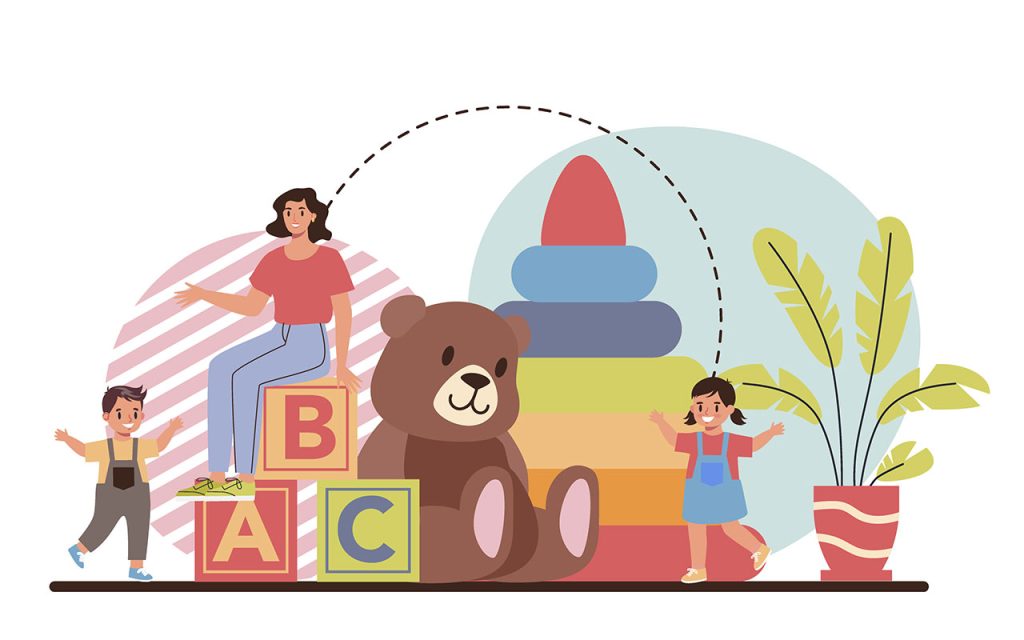
Research has long shown the importance and value of high-quality early childhood care and education. Child care offers working parents the ability to fully participate in the labor force and bolster their economic well-being. Child care also has positive impacts on their children’s short-term and future outcomes, further strengthening the overall economy.
Yet high-quality child care in the United States is often inaccessible (opens in a new tab) and unaffordable (opens in a new tab). And, despite its central role in ensuring that parents can work (and thus the economy can function at full capacity) and its high price tag for most families, workers in the child care industry are often paid very low wages (opens in a new tab). The care workforce also is largely made up of women of color, who face racial and gender wage inequality across the U.S. economy. These issues were exacerbated by the COVID-19 pandemic in 2020–2023, and the child care industry has struggled to recover from its significant challenges in the post-pandemic era.
Several U.S. states are considering policy actions on early childhood care and education to improve access to and availability of high-quality care programs for all families and to stabilize the supply of child care, including by better supporting child care workers. Research suggests that addressing both supply- and demand-side challenges of the care industry is the most effective way to improve the system. And understanding the efficacy of certain policy interventions is essential to designing and implementing policies that are targeted, efficient, and can achieve their stated goals.
To that end, the Washington Center for Equitable Growth recently released two reports that shed light on the economic state of early childhood care and on education programs and policies in the United States. The first report provides a birds-eye view of child care policies and programs across the country, looking at state trends and opportunities and their impacts on families and care providers. The second report gathers the research on both demand- and supply-side policies and programs that are shown to improve the access, affordability, and quality of early care and education.
This factsheet summarizes and consolidates the main findings of these two recent Equitable Growth reports.
Many states face budget shortfalls and uncertainty around federal funding for child care programs, which means that states may not be inclined or able to expand programs or pass policies that require additional funding. Yet ensuring access to affordable, high-quality early childhood care and education for all U.S. families requires public investment in both the demand and supply sides of the child care market. State policymakers need to equip families with resources to access and afford care, support a stable and qualified caregiving workforce, incentivize provision of care in underserved areas, and monitor the quality of care in settings operating with public dollars. While states can fill some of the gaps in accessibility and affordability of early care and education, federal investments remain necessary to ensure a high-quality care system that can support an equitable and robust economy.
Essays AUG 31, 2026
By: Christopher Bangert-Drowns
Essays JUL 7, 2026
By: Neil Cholli, Derek Wu
Working Papers JUL 7, 2026
By: Neil A. Cholli, Derek Wu
Get updates on our latest research, event announcements, and policy insights delivered straight to your inbox. Stay connected with the leading voices on equitable growth.