


Resources
From peer-reviewed research to accessible policy briefs, explore the scholarship that’s shaping debates and driving change.

22 Results


Factsheet: Defining top U.S. income and wealth thresholds for tax policy (opens in a new tab)
Factsheets MAY 27, 2026
Federal and state policymakers in the United States, responding to high levels of income and wealth inequality and shrinking tax revenues, are increasingly interested in proposals to tax households with…
By: Austin Clemens (opens in a new tab)

Factsheet: What the research says about early care and education in the United States (opens in a new tab)
Factsheets APR 16, 2026
Research has long shown the importance and value of high-quality early childhood care and education. Child care offers working parents the ability to fully participate in the labor force and…
By: Equitable Growth (opens in a new tab)

Factsheet: Using asset limits in public benefit programs (opens in a new tab)
Factsheets MAR 10, 2026
A household’s assets, or its overall wealth, are the resources required to ensure its family members can weather the financial disruption when unexpected expenses emerge. Yet many U.S. households do…
By: Megan Rivera (opens in a new tab)

Factsheet: U.S. economic mobility and policies to increase upward mobility (opens in a new tab)
Factsheets JUN 17, 2025
The United States often has been touted as a land of opportunity, where hard work leads to success and children do better than their parents. But increasingly, these notions of…
By: Shira Markoff (opens in a new tab), Melissa Grober-Morrow (opens in a new tab)

Factsheet: What we know about the federal employer-provided child care credit and how can it be better used by businesses (opens in a new tab)
Factsheets APR 22, 2025
The employer-provided child care credit, also referred to as Section 45F in the Internal Revenue Code, provides a limited subsidy to businesses in the United States that provide child care…
By: Megan Rivera (opens in a new tab)
Factsheet: What the research says about taxing pass-through businesses (opens in a new tab)
Factsheets APR 30, 2024
In recent years, so-called pass-through businesses have taken center stage in a number of crucial tax policy debates. This large and growing category of U.S. business—which includes sole proprietorships, partnerships…
By: David S. Mitchell (opens in a new tab)
Factsheet: What the research says about the economics of the 2021 enhanced Child Tax Credit (opens in a new tab)
Factsheets NOV 29, 2022
The Child Tax Credit has historically provided income support to middle- and high-income taxpayers with children. In 2021, however, the U.S. Congress enacted a temporary enhanced Child Tax Credit with…
By: Equitable Growth (opens in a new tab)
Factsheet: Is the U.S. economy in a recession, and how does recession dating work? (opens in a new tab)
Factsheets AUG 10, 2022
As inflationary pressure continues to cause higher prices for U.S. families, policymakers and economists alike continue to debate whether the United States is entering—or already entered, or will soon enter—a…
By: Equitable Growth (opens in a new tab)
Factsheet: What the research says about the economic impacts of reproductive care (opens in a new tab)
Factsheets JUN 27, 2022
Before the U.S. Supreme Court ruling on June 24 in Dobbs v. Jackson Women’s Health Organization, more than five decades of liberating access to contraception and abortion care had demonstrable…
By: Kate Bahn (opens in a new tab), Emilie Openchowski (opens in a new tab)
Factsheet: Six frequently asked questions about schedule quality and Fair Workweek laws across the United States (opens in a new tab)
Factsheets APR 15, 2022
Seven cities and one state have implemented Fair Workweek laws—legislation that aims to improve the quality of work schedules that employers offer to their workforce. If your jurisdiction is considering…
By: Equitable Growth (opens in a new tab)

Factsheet: What the research says about the economics of early care and education (opens in a new tab)
Factsheets SEP 15, 2021
Despite the important role that child care plays in the lives of many U.S. families, the private child care market is not meeting their needs. This is not just an…
By: Equitable Growth (opens in a new tab)
Factsheet: What does the research say about the economics of paid leave? (opens in a new tab)
Factsheets APR 22, 2021
The United States is the only advanced economy in the Organisation for Economic Co-operation and Development that does not guarantee any paid family and medical leave to its entire workforce.…
By: Equitable Growth (opens in a new tab)
Factsheet: What does the research say about care infrastructure? (opens in a new tab)
Factsheets APR 15, 2021
The United States is emerging from the greatest health, economic, and caregiving crises in a century. Many policymakers are looking for ways to jumpstart the economy and, recognizing the tie…
By: Equitable Growth (opens in a new tab)
Factsheet: New study shows that emergency paid sick leave reduced COVID-19 infections in the United States (opens in a new tab)
Factsheets OCT 26, 2020
The United States is one of three high-income nations that does not guarantee paid sick leave for workers.338 As of March 2020, 25 percent of private-sector workers had no access…
By: Equitable Growth (opens in a new tab)
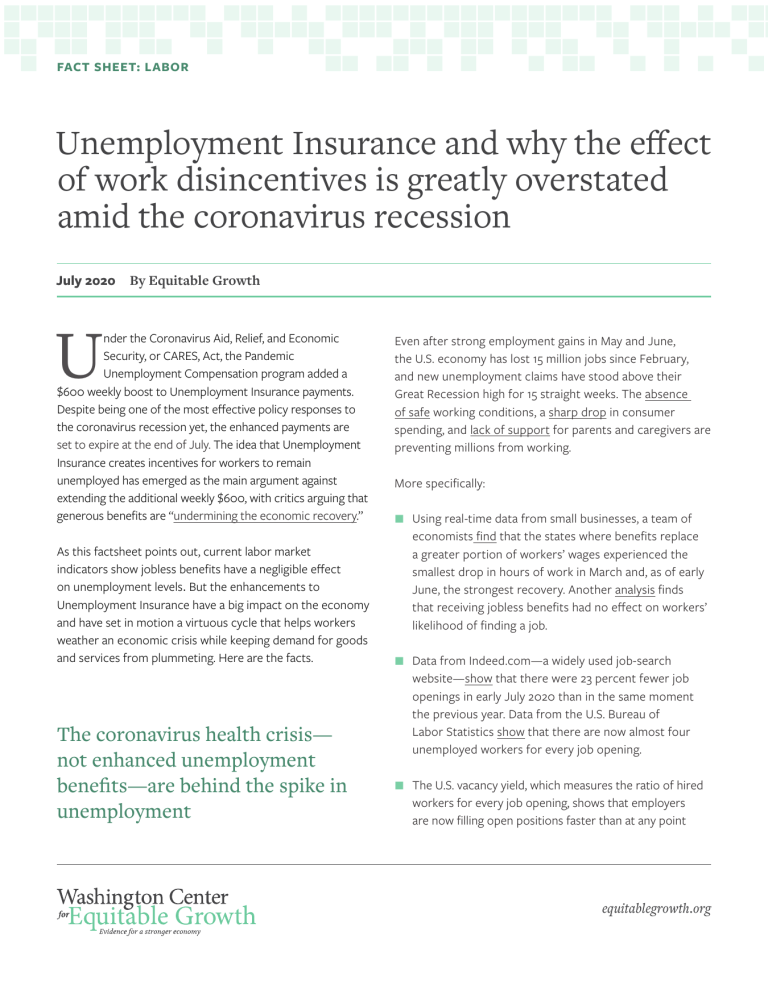
Factsheet: Unemployment Insurance and why the effect of work disincentives is greatly overstated amid the coronavirus recession (opens in a new tab)
Factsheets JUL 21, 2020
Under the Coronavirus Aid, Relief, and Economic Security, or CARES, Act,the Pandemic Unemployment Compensation program added a $600 weekly boost to Unemployment Insurance payments. Despite being one of the most…
By: Equitable Growth (opens in a new tab)
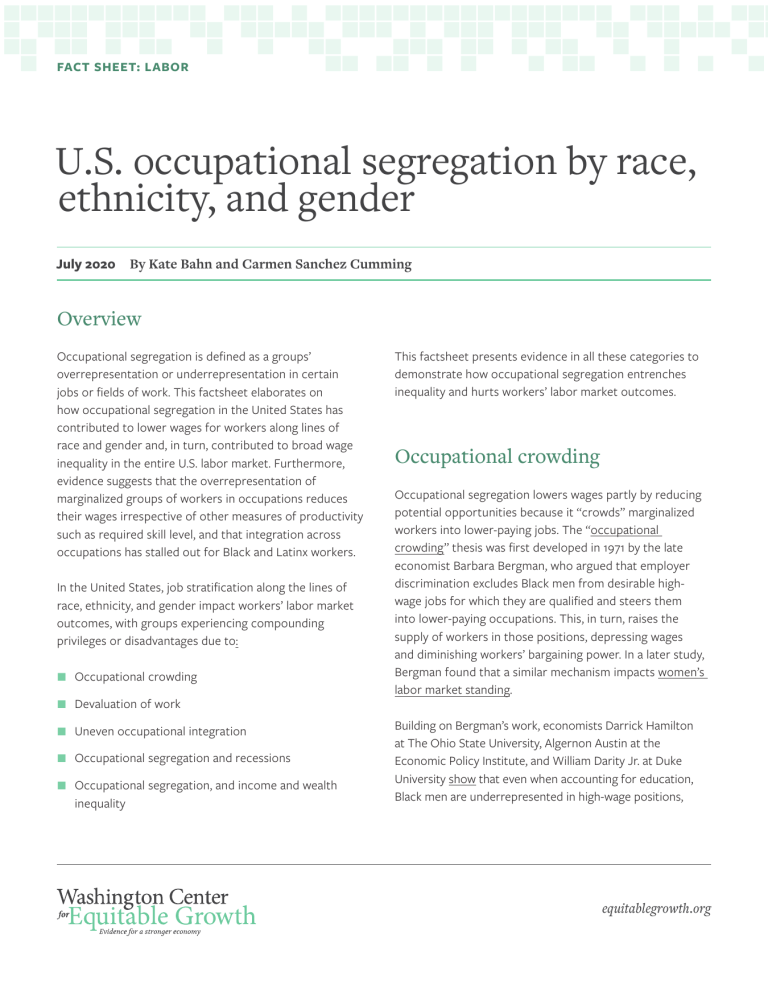
Factsheet: U.S. occupational segregation by race, ethnicity, and gender (opens in a new tab)
Factsheets JUL 1, 2020
Occupational segregation is defined as a group’s overrepresentation or underrepresentation in certain jobs or fields of work. This factsheet elaborates on how occupational segregation in the United States has contributed…
By: Kate Bahn (opens in a new tab), Carmen Sanchez Cumming (opens in a new tab)
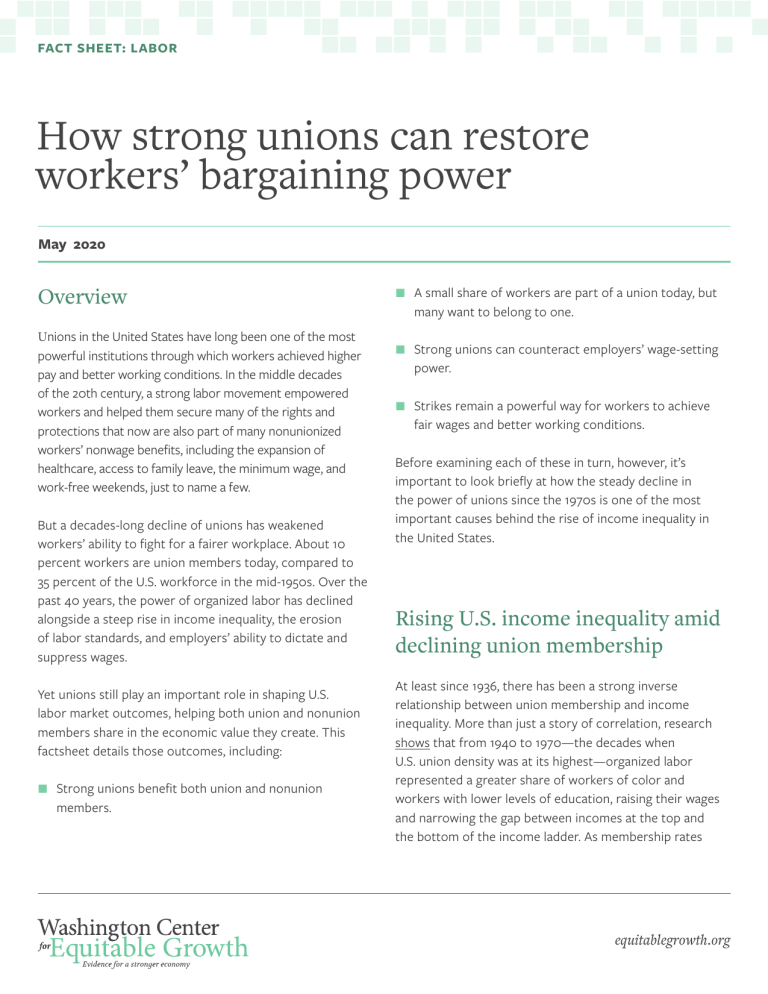
Factsheet: How strong unions can restore workers’ bargaining power (opens in a new tab)
Factsheets MAY 1, 2020
Unions in the United States have long been one of the most powerful institutions through which workers achieved higher pay and better working conditions. In the middle decades of the…
By: Equitable Growth (opens in a new tab)
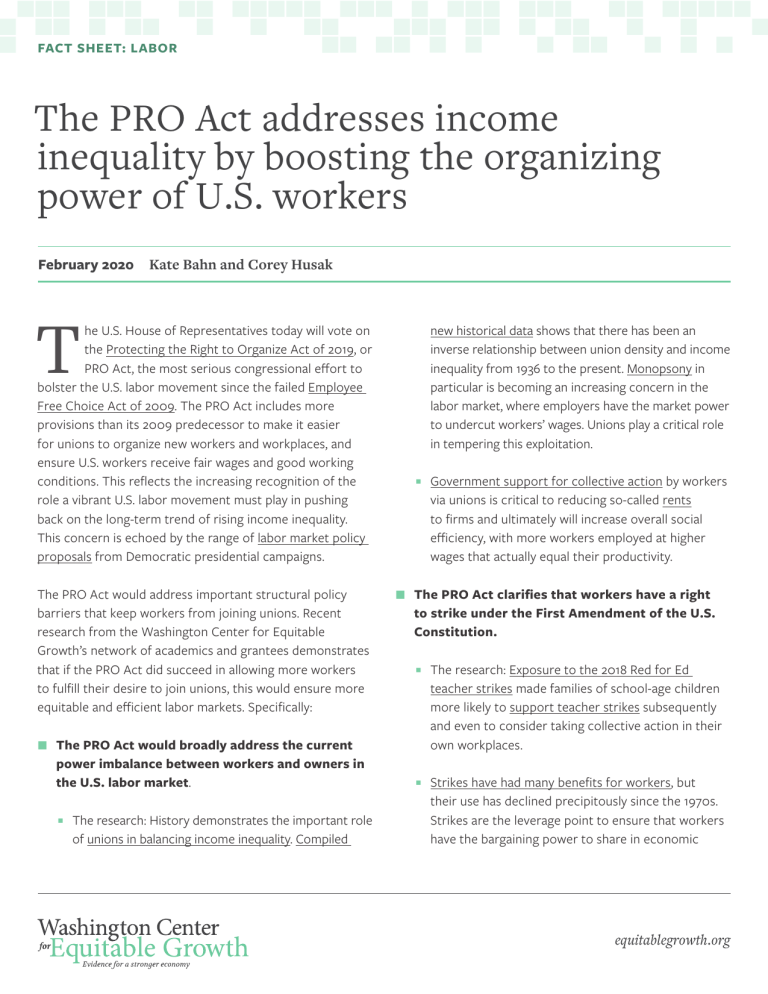
Factsheet: The PRO Act addresses income inequality by boosting the organizing power of U.S. workers (opens in a new tab)
Factsheets FEB 6, 2020
The U.S. House of Representatives today will vote on the Protecting the Right to Organize Act of 2019, or PRO Act, the most serious congressional effort to bolster the U.S.…
By: Kate Bahn (opens in a new tab), Corey Husak (opens in a new tab)
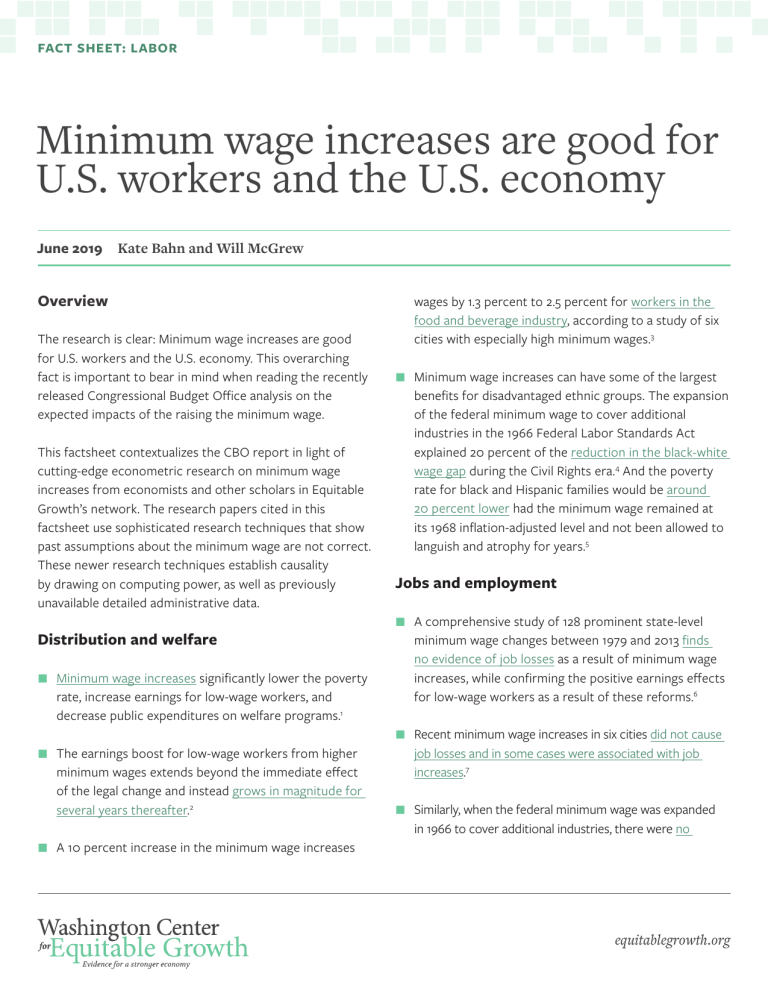
Factsheet: Minimum wage increases are good for U.S. workers and the U.S. economy (opens in a new tab)
Factsheets JUL 8, 2019
The research is clear: Minimum wage increases are good for U.S. workers and the U.S. economy. This overarching fact is important to bear in mind when reading the recently released…
By: Kate Bahn (opens in a new tab), Will McGrew (opens in a new tab)
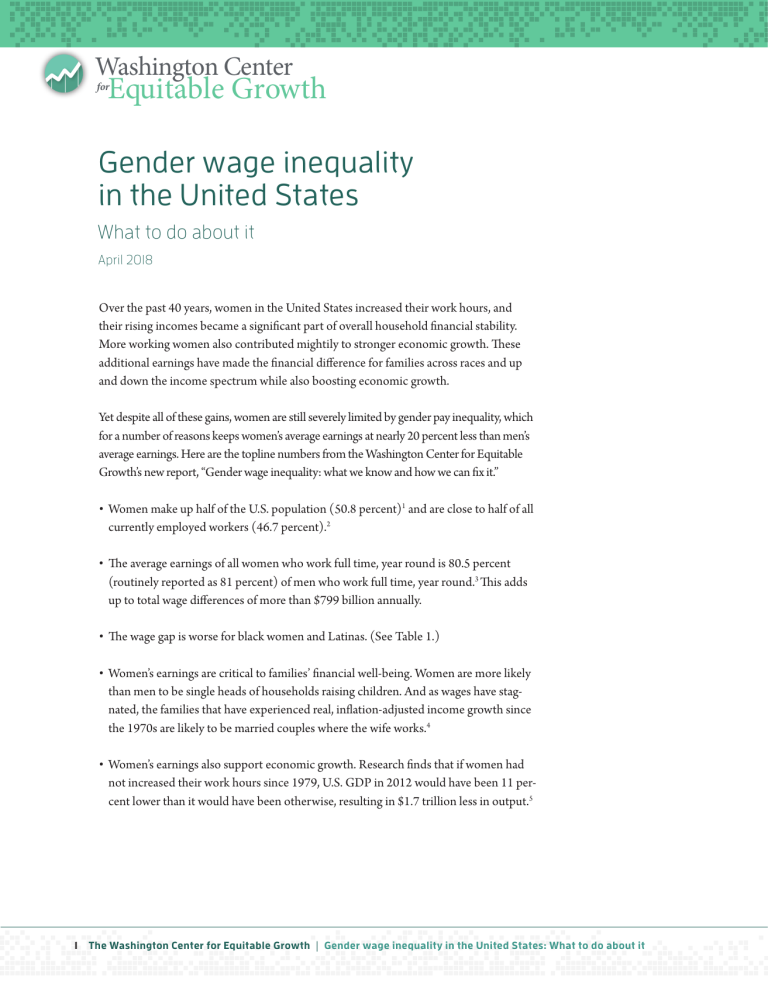
Factsheet: Gender wage inequality in the United States and what to do about it (opens in a new tab)
Factsheets APR 9, 2018
Over the past 40 years, women in the United States increased their work hours, and their rising incomes became a significant part of overall household financial stability. More working women…
By: Equitable Growth (opens in a new tab)
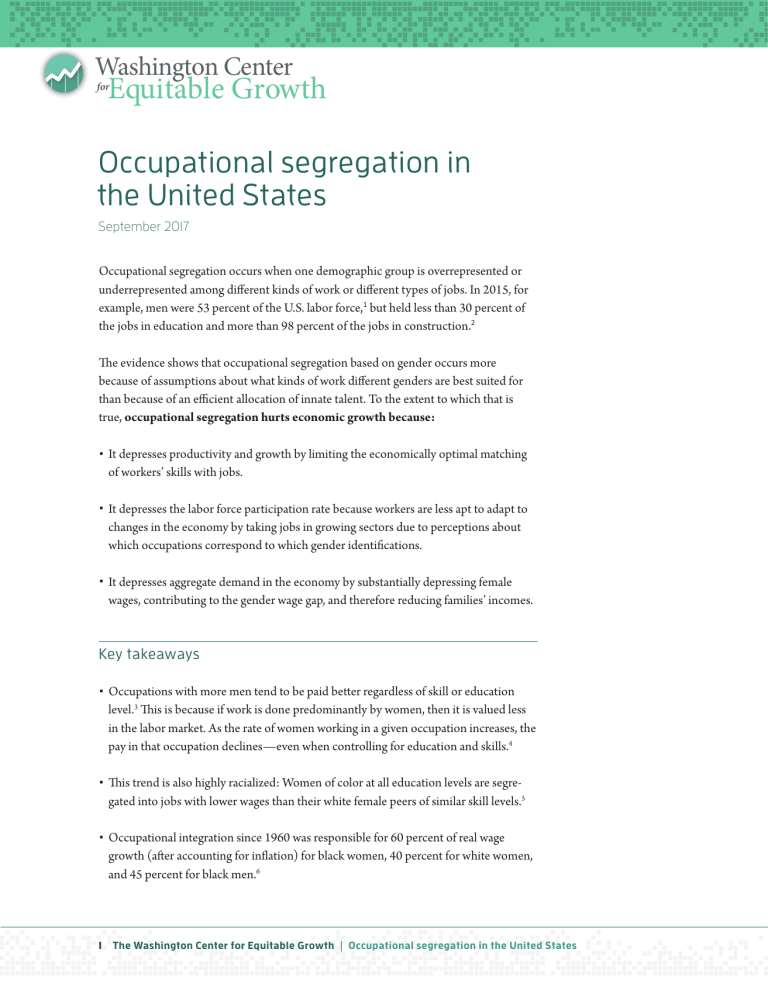
Fact sheet: Occupational segregation in the United States (opens in a new tab)
Factsheets OCT 3, 2017
Occupational segregation occurs when one demographic group is overrepresented or underrepresented among different kinds of work or different types of jobs. In 2015, for example, men were 53 percent of…
By: Equitable Growth (opens in a new tab)
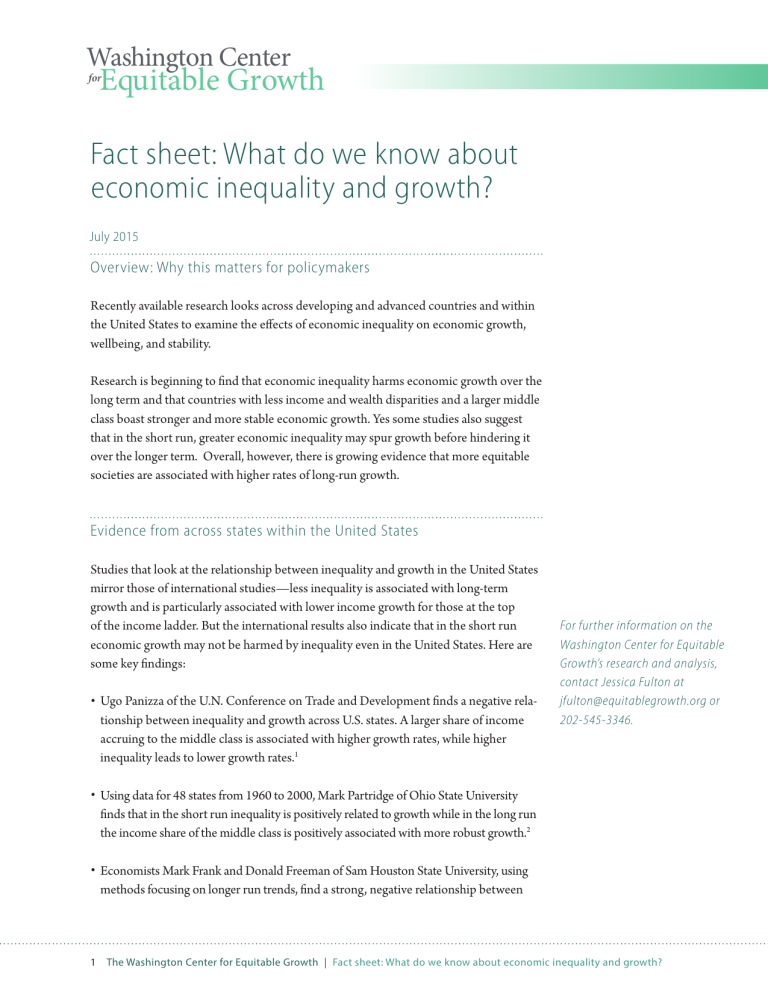
Fact sheet: What do we know about economic inequality and growth? (opens in a new tab)
Factsheets JUL 20, 2015
Recently available research looks across developing and advanced countries and within the United States to examine the effects of economic inequality on economic growth, well-being, and stability.
By: Equitable Growth (opens in a new tab)


Your Direct Line to Cutting Edge Research
Be the first to know about our latest events, research releases, and expert insights. Get exclusive updates delivered right to your inbox and never miss an opportunity to engage with our community.