
What happens to U.S. workers without access to Unemployment Insurance amid economic downturns or disruptions related to AI?
Essays SEP 2, 2026
By: Megan Rivera
AUG 31, 2023
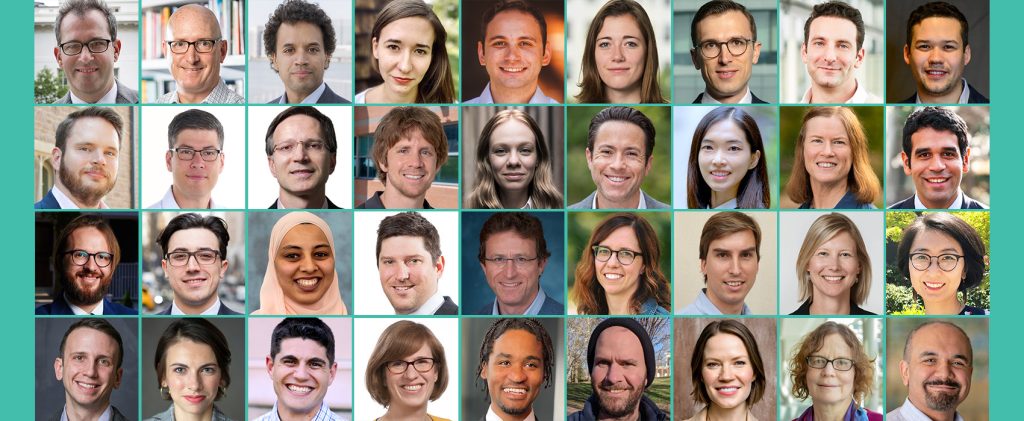
The Washington Center for Equitable Growth today announced its 2023 cohort of grantees, an impressive group of researchers from across academic disciplines who are studying how inequality affects economic growth and well-being in the United States. This year’s funding will be distributed across 16 grants to a total of 35 grantees, who range from Ph.D. candidates to well-established thought leaders in academia.
This is Equitable Growth’s 10th grant cycle since our founding in 2013. Over the past decade, we have been able to distribute roughly $10 million to nearly 400 grantees at various U.S. colleges and universities studying how inequality affects economic growth. Our grantees work to build a strong research base that provides evidence to decision-makers seeking to address pressing economic issues in the United States, informing the policy debate in Washington and in statehouses across the country.
Equitable Growth’s funding is guided by four channels through which economic growth is produced and distributed:
We also are excited to continue to collaborate with the Russell Sage Foundation, a leading funder of social science research, particularly on social, political, and economic inequality. Russell Sage is generously providing co-funding for one of this year’s research grants.
Two projects focus on the U.S. child care system—an area in which Equitable Growth has been eager to fund research and that will certainly have policy implications as costs continue to rise, care options remain inaccessible for many U.S. families, and workers’ wages remain low. A third project explores the long-run effects of investments in children:
Another area that Equitable Growth is excited to fund is worker power and labor organizing. Two grants this year will focus on unions in the United States:
Several funded projects also focus on policies that contributed to the long-standing racial wealth gap and what policies may be effective at reducing it:
Inflation is also a key research area in this year’s grants, with two projects looking at various aspects of inflationary pressure and its impact on U.S. families and workers:
The creation of new data that is broadly available to researchers has long been a priority for Equitable Growth, as has the creation of disaggregated data that allows for more granular analysis. As such, three projects this year focus on expanding access to different types of data and utilizing that data to produce evidence that informs potential policy solutions:
Two projects will look at the effect of government action—investments and regulation, respectively—on the labor market and on workers:
And finally, Equitable Growth is excited to fund research that examines climate change and the economic impacts of climate policy:
As in years past, Equitable Growth will also host a Dissertation Scholar (opens in a new tab) in the 2023–24 academic year. This program is open to Ph.D. candidates whose research aligns with our funding priorities and offers professional development, mentorship, and training opportunities, as well as exposure to how to make research relevant to policymakers. This year’s Dissertation Scholar is Nataliya Nedzhvetskaya of the University of California, Berkeley, who is studying the scale, scope, and spread of employee activism, workplace protests, and the impact on corporate stock prices.
Equitable Growth is excited to see the results of this research come to fruition, and we congratulate the grantees for their participation in this year’s competitive grant cycle.
Essays SEP 2, 2026
By: Megan Rivera
Essays AUG 31, 2026
By: Christopher Bangert-Drowns
Essays AUG 14, 2026
By: Carlos Fernando Avenancio-Leon
Get updates on our latest research, event announcements, and policy insights delivered straight to your inbox. Stay connected with the leading voices on equitable growth.