



Policy
What Work Does Generative AI Do?
Essays SEP 8, 2026
By: Alexander Bick, Adam Blandin, David Deming, Tyler Schumacher
AI, Tech & Energy
Labor, Wages & Worker Power
 Browse All Resources
OCT 12, 2021

Every month the U.S. Bureau of Labor Statistics releases data on hiring, firing, and other labor market flows from the Job Openings and Labor Turnover Survey, better known as JOLTS. Today, the BLS released the latest data for August 2021. This report doesn’t get as much attention as the monthly Employment Situation Report, but it contains useful information about the state of the U.S. labor market. Below are a few key graphs using data from the report.
The quits rate rose to 2.9 percent as nearly 4.3 million workers quit their jobs in August, while the job openings rate decreased to 6.6 percent.
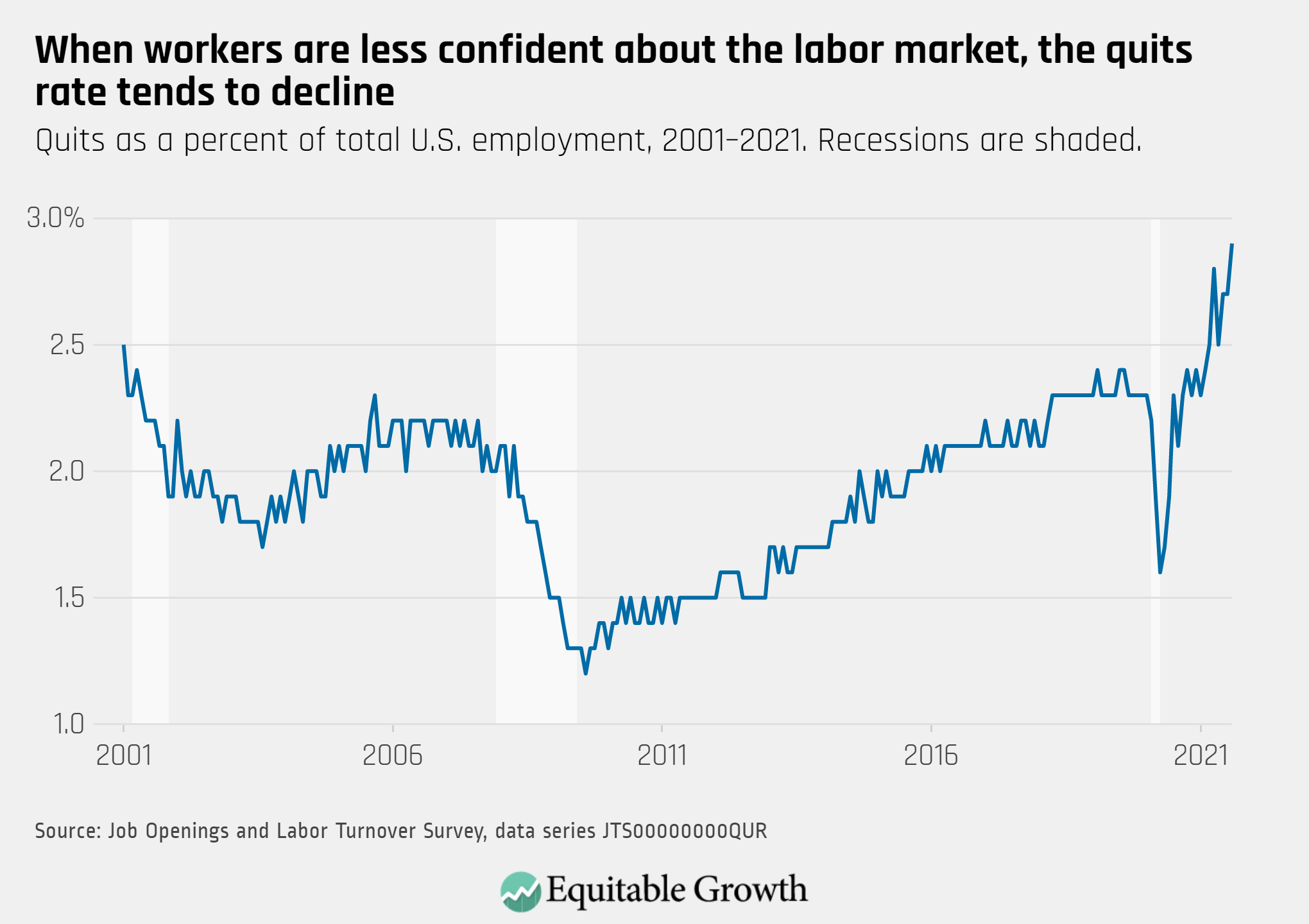
Quits as a percent of total U.S. employment, 2001-2021. Recessions are shaded.
The vacancy yield declined slightly in August, remaining very low with job openings at 10.4 million—down 659,000 after a series high in July.
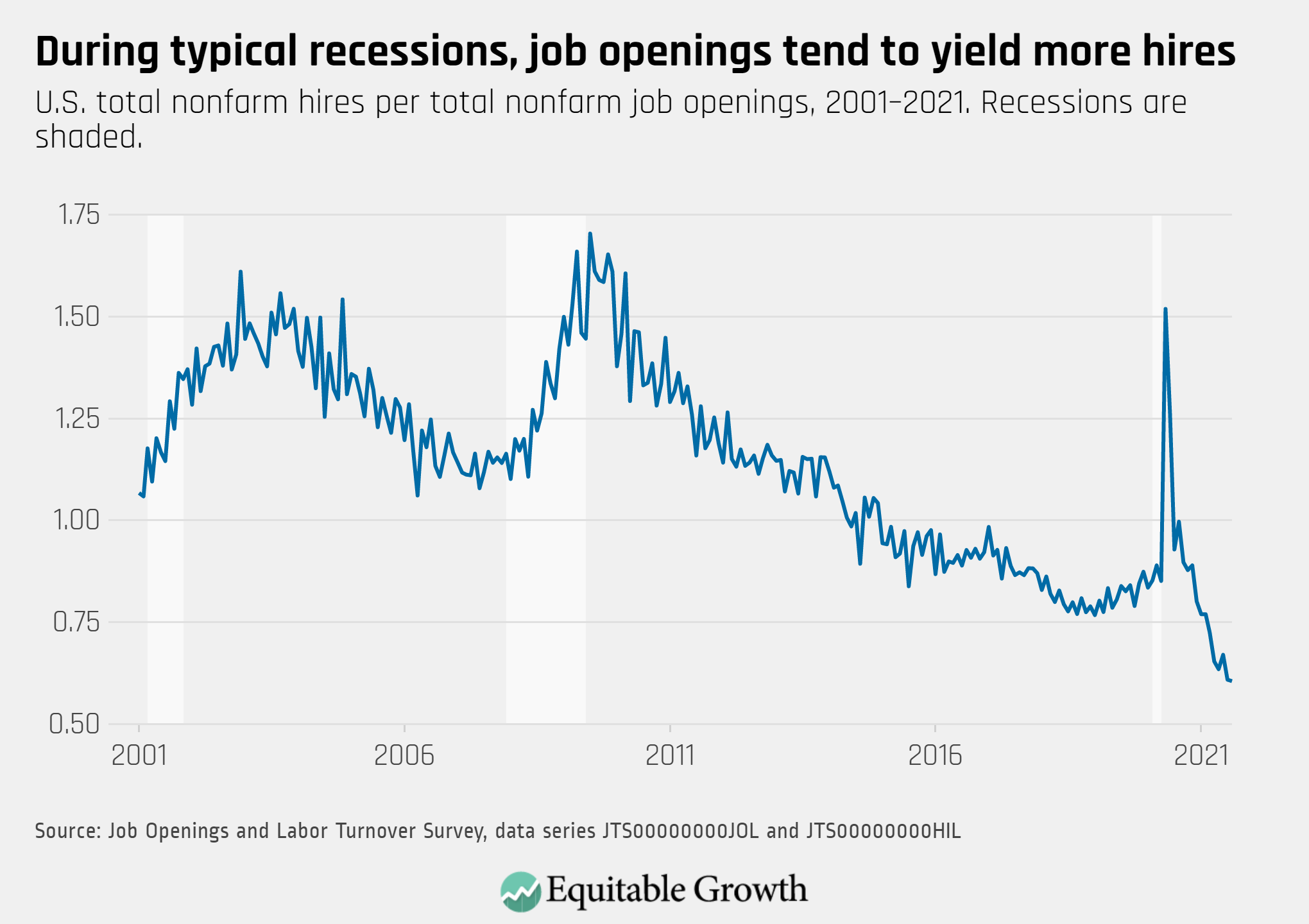
U.S. total nonfarm hires per total nonfarm job openings, 2001-2021. Recessions are shaded.
Job openings declined in August, including in sectors that had seen strong recent gains such as the education and health services, manufacturing, and leisure and hospitality.
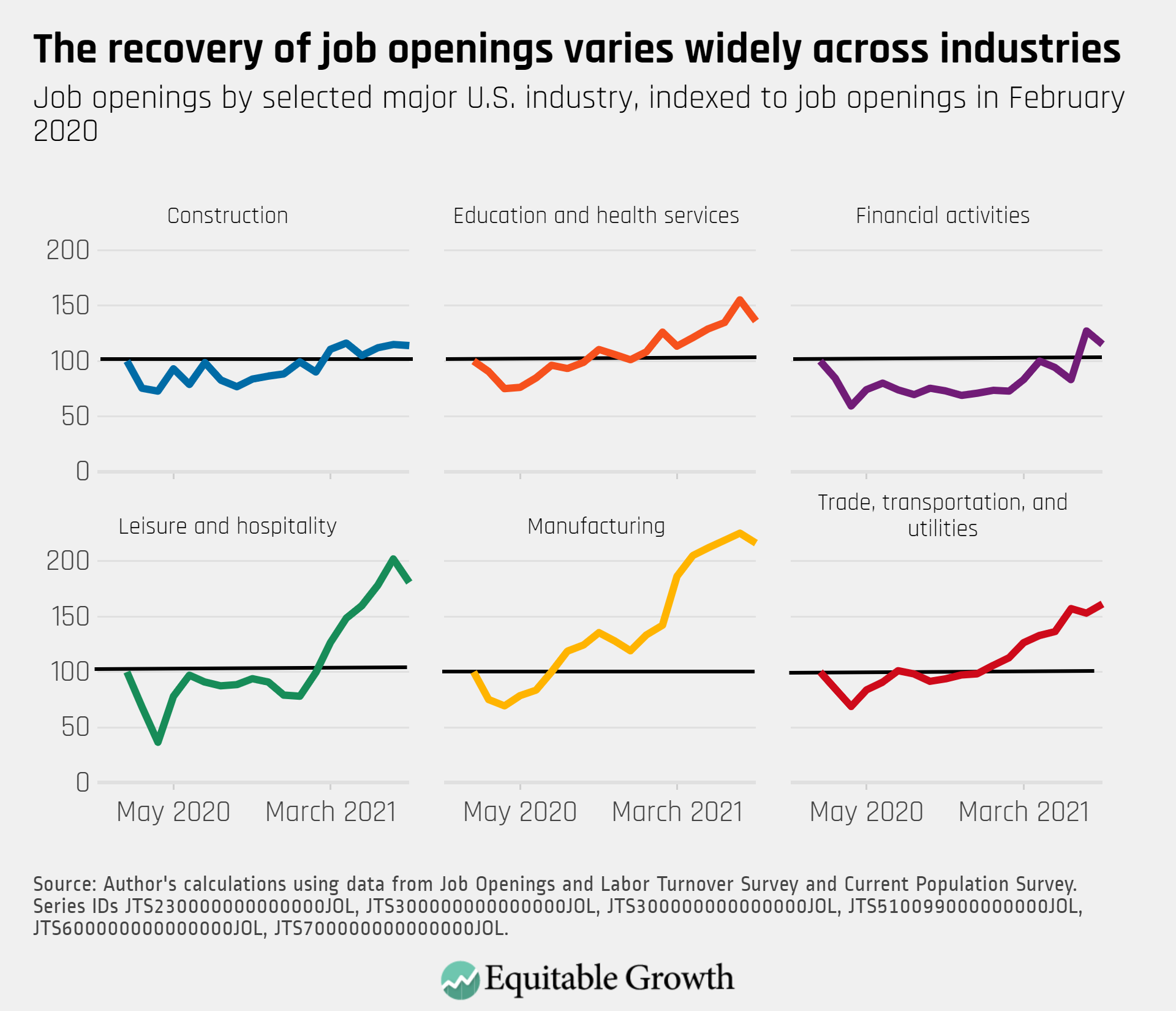
Job openings by selected major U.S. industry, indexed to job openings in February 2020
The ratio of unemployed-workers-per-job-opening increased from 0.78 in July to 0.80 in August, still similar to the low levels last seen immediately before the coronavirus recession.
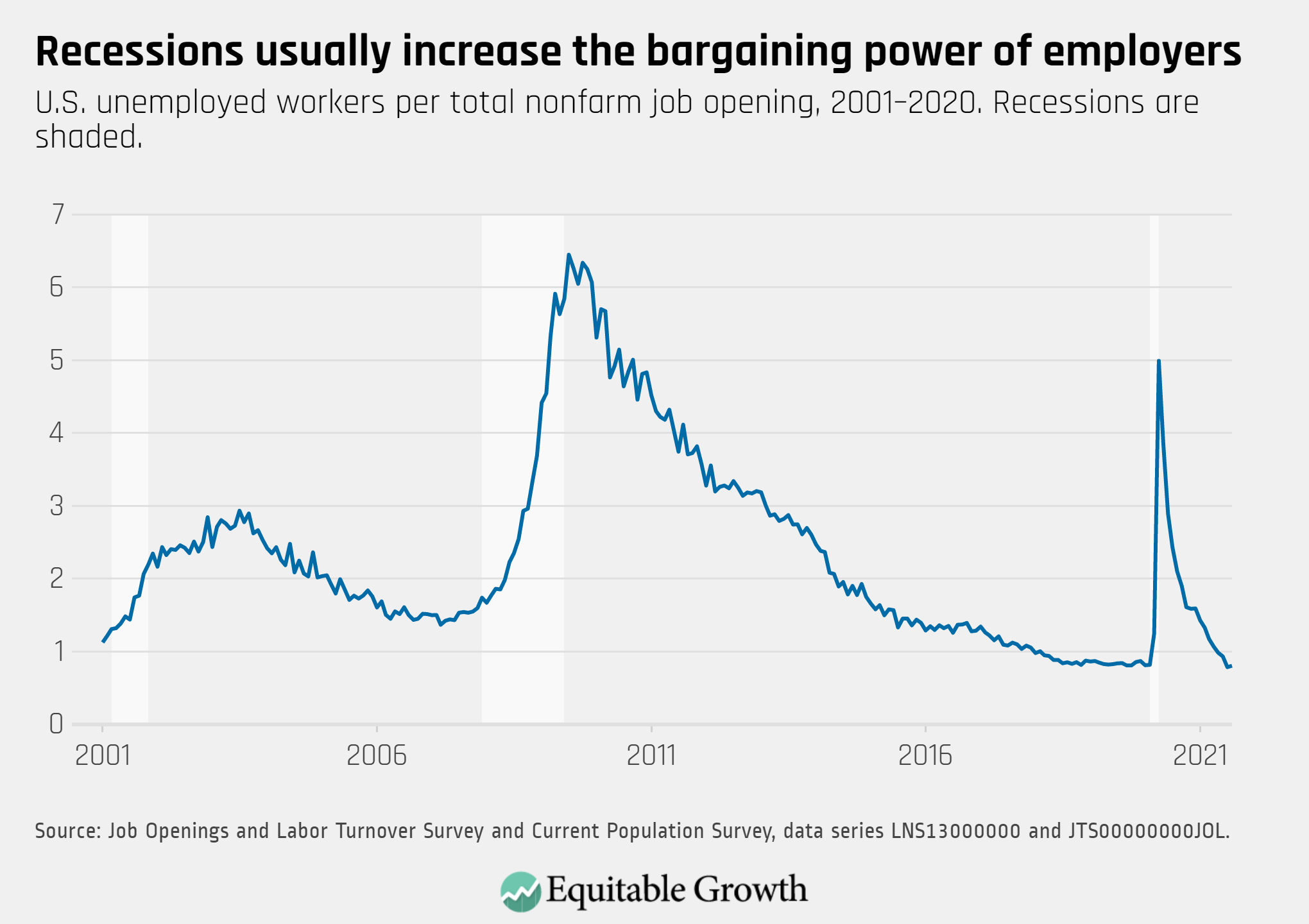
U.S. unemployed workers per total nonfarm job opening, 2001-2020. Recessions are shaded.
The Beveridge Curve remained in an atypical, elevated range in August, with declines in both the unemployment rate and the job openings rate.
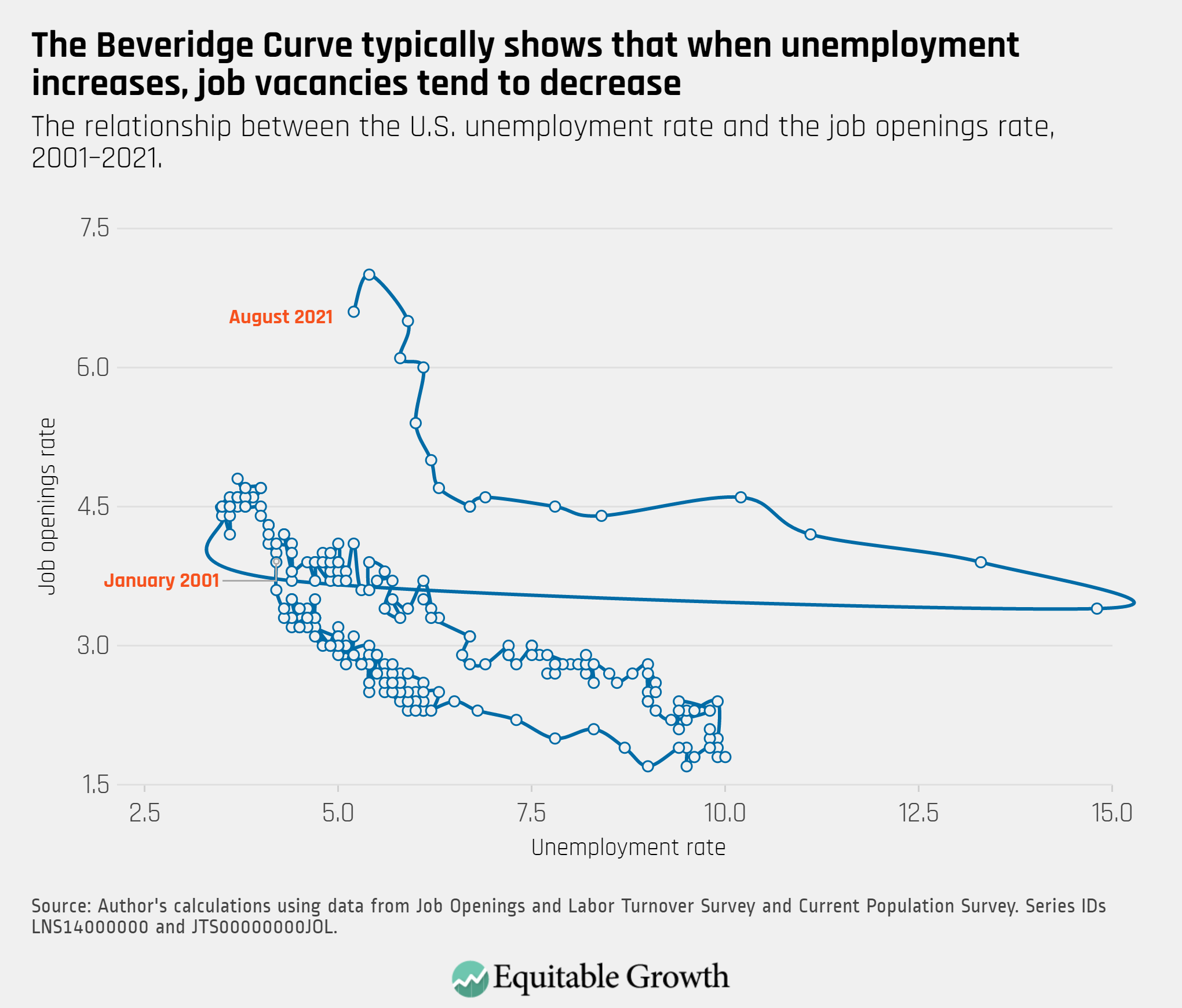
The relationship between the U.S. unemployment rate and the job openings rate, 2001-2021.
Essays SEP 8, 2026
By: Alexander Bick, Adam Blandin, David Deming, Tyler Schumacher
Working Papers SEP 8, 2026
By: Alexander Bick, Adam Blandin, David Deming, Tyler Schumacher

Essays SEP 2, 2026
By: Megan Rivera
Get updates on our latest research, event announcements, and policy insights delivered straight to your inbox. Stay connected with the leading voices on equitable growth.


