



Policy
What Work Does Generative AI Do?
Essays SEP 8, 2026
By: Alexander Bick, Adam Blandin, David Deming, Tyler Schumacher
AI, Tech & Energy
Labor, Wages & Worker Power
 Browse All Resources
MAY 6, 2020
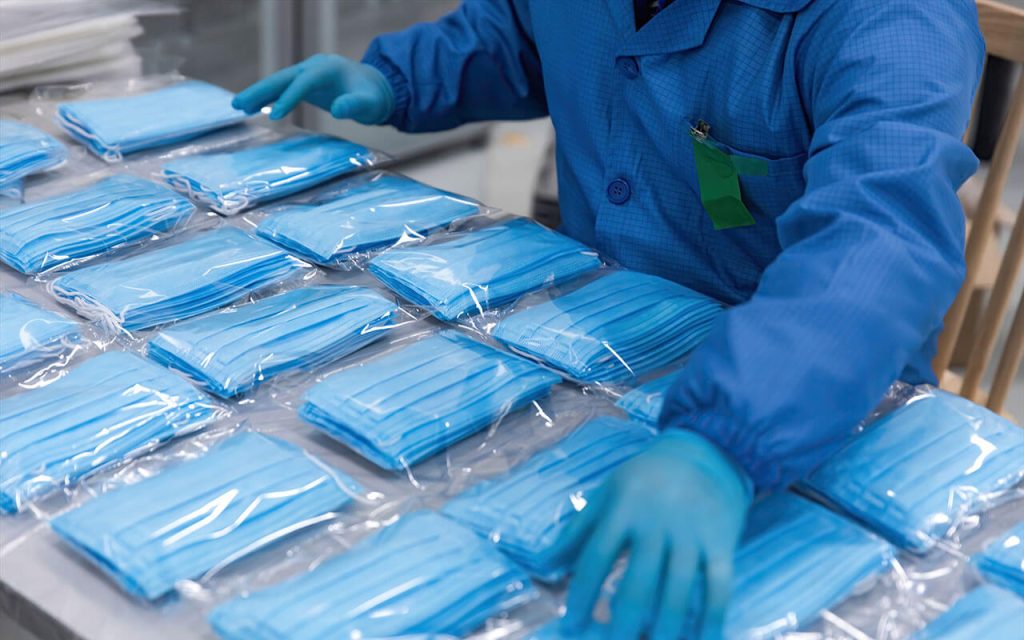
The coronavirus pandemic has placed the opportunities and challenges of our intensely integrated world economy in stark relief. The movement of people across borders generates fear of contagion. And the reliance on foreign countries for crucial medical supplies needed in the United States creates fears of dependence. Yet these fears can be managed without forsaking the substantial benefits that arise from global cooperation, trade, and the flows of knowledge and people across national boundaries.
The challenges of global pandemics require preparation, not isolationism.
It is unquestionable that the United States is dependent on medical supply chains that stretch across countries. We both import and export large quantities of pharmaceuticals, medical equipment, and medical supplies. Worldwide, the United States is the largest importer of medical products and the second-largest exporter (opens in a new tab) of medical products.
In general, trade in these goods is spread across many countries. Germany and China account for about 11 percent and 9 percent (opens in a new tab), respectively, of our imports of these goods, and many other countries play important roles. Still, there are some products, such as personal protective equipment, where trade is more concentrated. In 2019, China, Germany, and the United States together accounted for nearly half of the world supply (opens in a new tab) of protective face masks.
The coronavirus pandemic has brought forth impressive international collaborations. But it has also resurrected misguided policy instincts, exposing three important fallacies.
One fallacy is that export restrictions will keep important medical supplies in the United States. The problem is that the United States, alongside about 70 countries (opens in a new tab), all have sought to protect their own access to medical supplies by prohibiting exports of medical equipment and supplies. Just one case in point: The Trump administration threatened to cut off Canada and Latin America from mask supplies through the authority of the Defense Production Act before the administration and U.S. conglomerate 3M Company eventually negotiated (opens in a new tab) the ability of 3M to serve both U.S. and export markets.
Indeed, many countries have banned crucial medicine and personal protective equipment exports, disrupting the supply of key products that are needed everywhere and reducing lifesaving gains from trade that would otherwise be possible due to the variation across countries in peak need. Export restrictions during pandemics are a near perfect example of a prisoner’s dilemma. From one country’s perspective, it may be optimal to restrict your exports, regardless of what your trading partner does. Yet if every country restricts exports, then it reduces the gains from trade for everyone—and risks humanitarian disaster in the many countries without native medical supplies industries.
As we’ve learned through recent experience with the Trump administration’s trade wars, retaliation to protectionist trade measures is nearly inevitable. As the United States levied tariffs on our trading partners, other countries responded in kind, generating disruptive shocks that negatively impacted workers (opens in a new tab) throughout the U.S. economy. Further, the United States entered this crisis with large tariffs in place on medical equipment (opens in a new tab), including PPE (those tariffs were not removed until March 17), a severely weakened rules-based international trading system (opens in a new tab), and a sense of distrust and wariness among key allies. This was not a good starting point.
A second fallacy is that we need more self-sufficiency in medical and pharmaceutical products. The United States is already a large producer of medical equipment and supplies. U.S. imports are only 30 percent of our consumption (opens in a new tab) of these products. After Germany, we are the largest exporter of medical products, accounting for 25 percent of the world’s medical equipment exports, 29 percent of medical supplies exports, and 35 percent of medicine exports (opens in a new tab).
Undeniably, the United States is also an importer of important medical equipment and supplies, and like other countries, we are dependent on others. But the answer to dependency is not self-sufficiency, which risks cutting off the United States from the benefits of specialization and trade.
Instead, the United States should prepare for future pandemics and other disasters by identifying key medical products and stockpiling sufficient supplies to guard against supply interruptions or spikes in demand. This would also enable our nation to help other countries when disasters befall them—of course, replenishing the stockpile with an eye toward the future. Preparation is wise, yet responding with protectionism or “buy America laws,” such as those contemplated by the Trump administration (opens in a new tab), risks weakening the U.S. medical industry.
These measures are rightly protested by patient advocacy groups (opens in a new tab). The U.S. medical industry will best thrive by meeting the test of global competition, employing the cost effectiveness of global supply chains, diversifying supply chains as needed to ensure resilience, and benefitting from the ideas of the world’s scientific community. An open system best serves the health of the U.S. medical and pharmaceutical industries and the future of the world’s scientific progress.
Essays SEP 8, 2026
By: Alexander Bick, Adam Blandin, David Deming, Tyler Schumacher
Working Papers SEP 8, 2026
By: Alexander Bick, Adam Blandin, David Deming, Tyler Schumacher

Essays SEP 2, 2026
By: Megan Rivera
Get updates on our latest research, event announcements, and policy insights delivered straight to your inbox. Stay connected with the leading voices on equitable growth.


