




Policy
What Work Does Generative AI Do?
Essays SEP 8, 2026
By: Alexander Bick, Adam Blandin, David Deming, Tyler Schumacher
AI, Tech & Energy
Labor, Wages & Worker Power
 Browse All Resources
APR 22, 2021
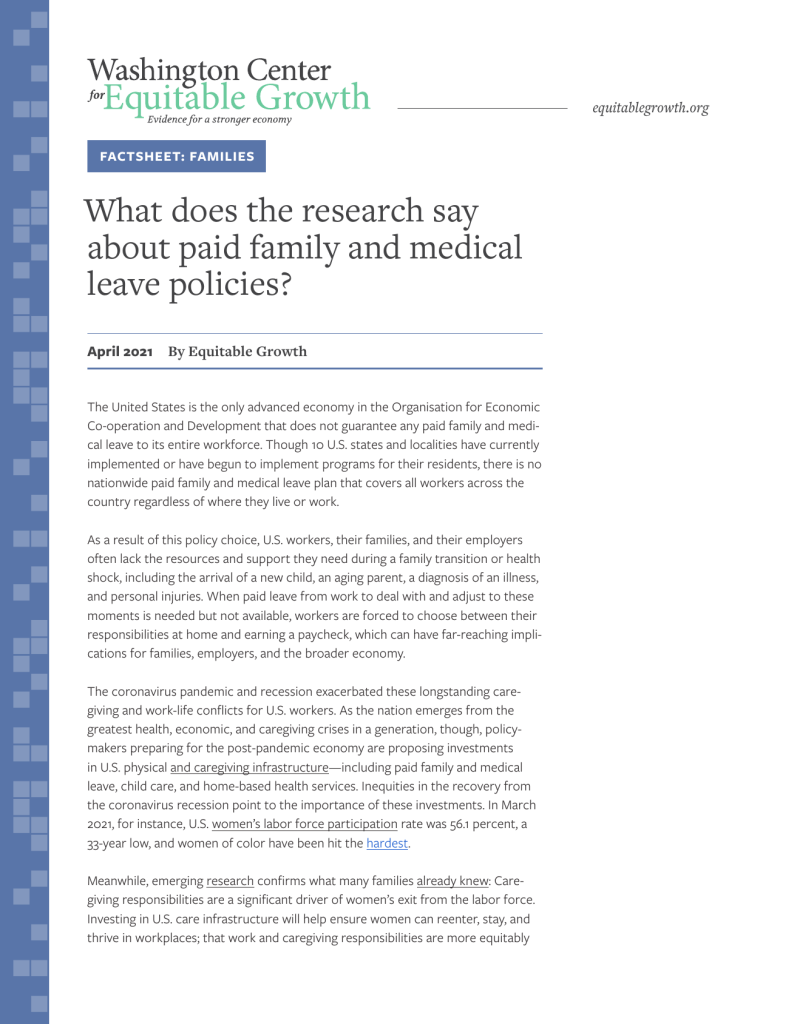
The United States is the only advanced economy in the Organisation for Economic Co-operation and Development that does not guarantee any paid family and medical leave to its entire workforce. Though 10 U.S. states and localities have currently implemented or have begun to implement programs for their residents, there is no nationwide paid family and medical leave plan that covers all workers across the country regardless of where they live or work.
As a result of this policy choice, U.S. workers, their families, and their employers often lack the resources and support they need during a family transition or health shock, including the arrival of a new child, an aging parent, a diagnosis of an illness, and personal injuries. When paid leave from work to deal with and adjust to these moments is needed but not available, workers are forced to choose between their responsibilities at home and earning a paycheck, which can have far-reaching implications for families, employers, and the broader economy.
The coronavirus pandemic and recession exacerbated these longstanding caregiving and work-life conflicts for U.S. workers. As the nation emerges from the greatest health, economic, and caregiving crises in a generation, though, policymakers preparing for the post-pandemic economy are proposing investments in U.S. physical and caregiving infrastructure—including paid family and medical leave, child care, and home-based health services. Inequities in the recovery from the coronavirus recession point to the importance of these investments. In March 2021, for instance, U.S. women’s labor force participation (opens in a new tab) rate was 56.1 percent, a 33-year low, and women of color have been hit the hardest.
Meanwhile, emerging research (opens in a new tab) confirms what many families already knew (opens in a new tab): Caregiving responsibilities are a significant driver of women’s exit from the labor force. Investing in U.S. care infrastructure will help ensure women can reenter, stay, and thrive in workplaces; that work and caregiving responsibilities are more equitably distributed; and that the country is equipped to handle both national crises, such as a new pandemic, and the personal crises that too often leave workers and their families in economic peril.
This factsheet looks at research on—and lessons learned from—state-provided paid family and medical leave programs in the United States. Building on this evidence and these lessons in establishing a national paid leave guarantee would address one of the most pressing deficiencies in the nation’s caregiving infrastructure.
This factsheet presents some of the research and evidence on paid family and medical leave as it relates to families’ economic security, human capital development, employer experiences, and U.S. economic growth. For more information on specific paid leave provisions or other aspects of the care economy, see Equitable Growth’s other factsheets on paid caregiving leave, paid medical leave, paid leave policy design, and our most recent factsheet on care infrastructure investments more broadly.
Essays SEP 8, 2026
By: Alexander Bick, Adam Blandin, David Deming, Tyler Schumacher
Working Papers SEP 8, 2026
By: Alexander Bick, Adam Blandin, David Deming, Tyler Schumacher

Essays SEP 2, 2026
By: Megan Rivera
Get updates on our latest research, event announcements, and policy insights delivered straight to your inbox. Stay connected with the leading voices on equitable growth.


