
What happens to U.S. workers without access to Unemployment Insurance amid economic downturns or disruptions related to AI?
Essays SEP 2, 2026
By: Megan Rivera
MAR 1, 2022
Today, President Joe Biden will give his State of the Union Address, approximately 1 year into his administration and 2 years after COVID-19 struck the United States.
The coronavirus recession was incredibly severe. As the pandemic hit, the U.S. unemployment rate skyrocketed (opens in a new tab) from a 50-year low of 3.5 percent in February 2020 to a post-Great Depression high of 14.7 percent in April of that same year. Over those same two months, the country’s employment collapsed. The U.S. labor market shrank by more than 20 million jobs (opens in a new tab). Industrial production plummeted. And the U.S. economy contracted by 3.4 percent (opens in a new tab) over 2020—the worst year for economic growth since 1946.
The coronavirus recession officially ended in April 2020, but the federal policy response extended well into 2021 to ensure a robust economic recovery. By the end of 2021, real U.S. Gross Domestic Product growth hit 5.7 percent (opens in a new tab). Below are 11 charts that showcase the trajectory of our economy over the past 2 years and the important policy decisions that are still up ahead:
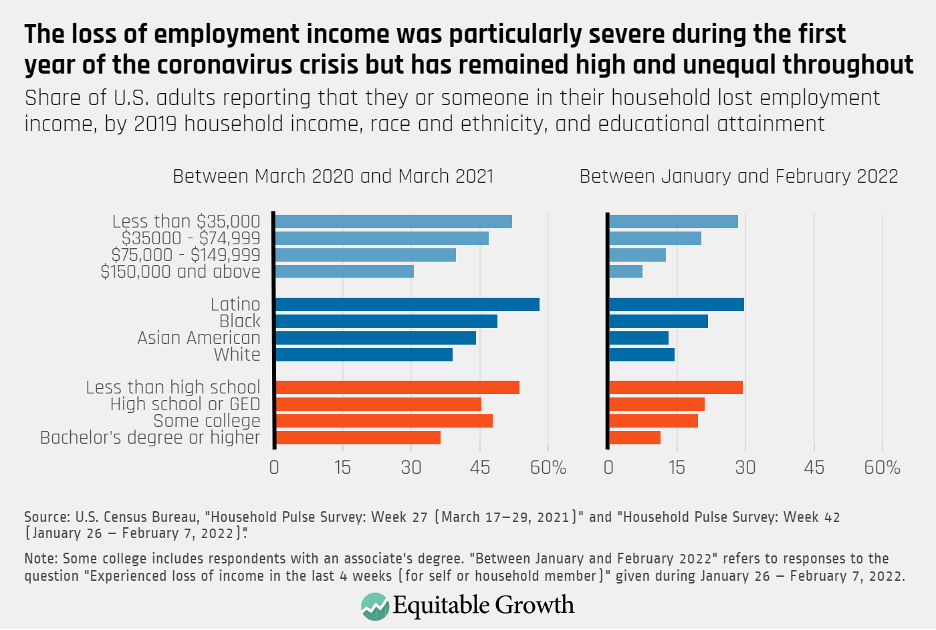
One of the most telling features of the coronavirus recession and continuing pandemic is that it hit already vulnerable groups especially hard. Both in the first year after the onset of the recession and in early 2022, lower-income households, Black and Latino households, and those with lower levels of formal education experienced especially large losses in employment income. (See Figure 1.)

Share of U.S. adults reporting that they or someone in their household lost employment income, by 2019 household income, race and ethnicity, and educational attainment
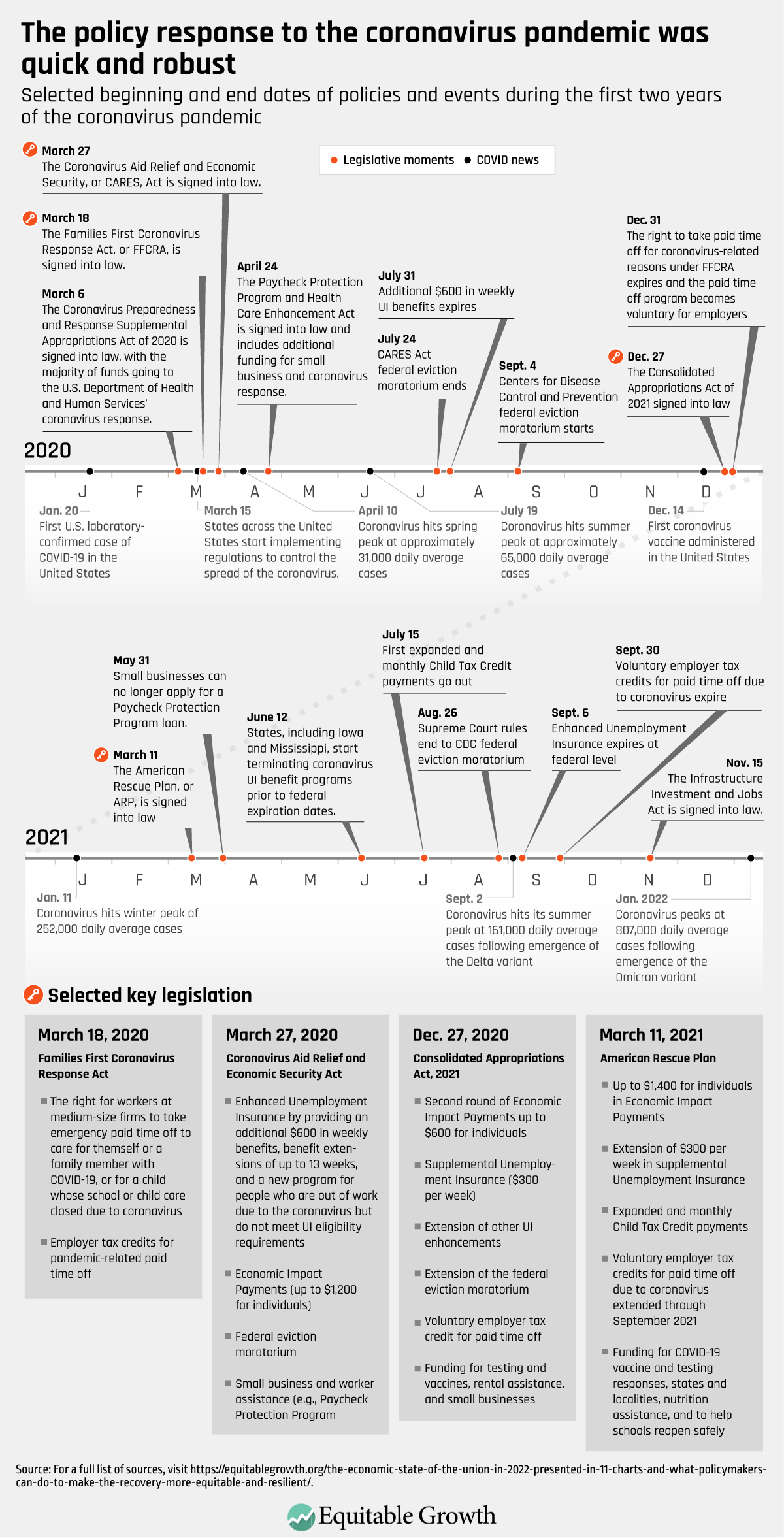
In response, the U.S. government enacted a series of measures shortly after the pandemic hit to mitigate the effects of the health and economic crises. Between March and April 2020, the U.S. Congress passed four major pieces of legislation (opens in a new tab), the most consequential being the Coronavirus Aid, Relief, and Economic Security Act. The CARES Act included provisions to expand eligibility and provide extra support (opens in a new tab) through the Unemployment Insurance system, additional funding for food assistance through the Supplemental Nutrition Assistance Program, loans and guarantees for small businesses through the Paycheck Protection Program (opens in a new tab), and Economic Impact Payments (opens in a new tab).
The next year followed with the American Rescue Plan, signed into law in March 2021. It included an extension of many CARES Act programs as well as new initiatives such as the expansion of the Child Tax Credit. Provisions included in these bills began to expire in the first year of the pandemic and through 2021. (See Figure 2.)
Figure 21

Selected beginning and end dates of policies and events the first two years of the coronavirus pandemic
The unprecedented speed and size of the policy response helped millions of workers and households withstand the economic pain brought on by the coronavirus pandemic. The bounce back in Gross Domestic Product, for example, was much quicker in the United States than in most other high-income countries; the aggregate unemployment rate is now close to its pre-pandemic level (opens in a new tab); and workers in the bottom of the wage distribution are experiencing real wage growth (opens in a new tab).
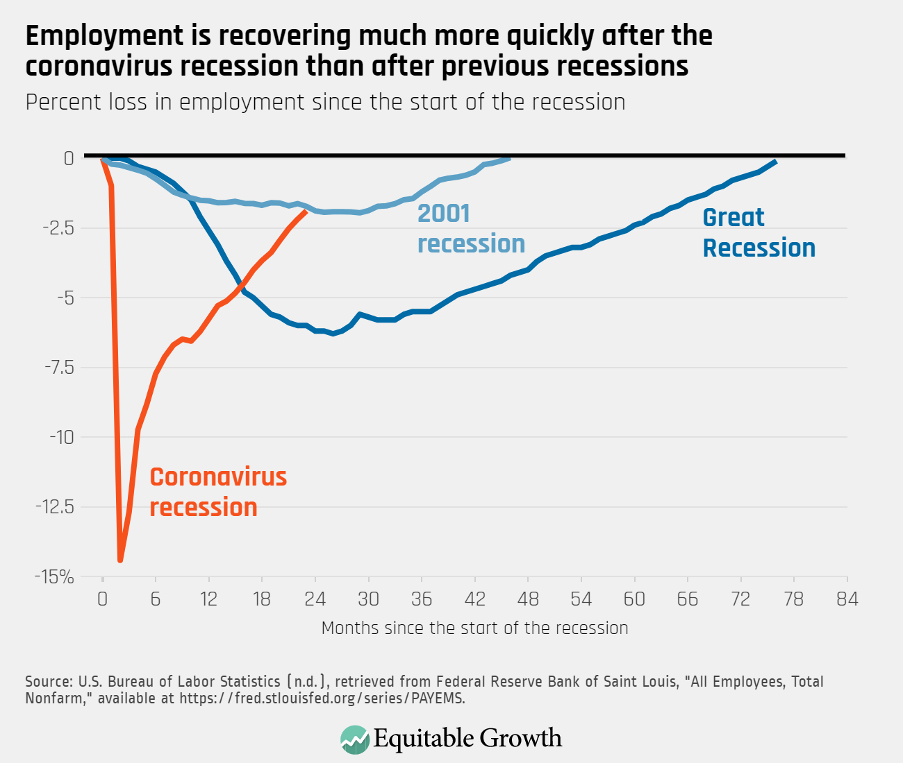
Indeed, the recovery in overall employment has been extraordinarily quick compared to previous U.S. economic downturns. (See Figure 3.)

Percent loss in employment since the start of the recession
Yet the crisis shed light on the systemic inequities embedded in the country’s economy. These inequities include racial and ethnic disparities in access to income supports, big burdens on mothers and other caregivers, and vulnerability to health risks (opens in a new tab) and worse conditions (opens in a new tab) on the job, particularly for workers in low-wage positions.
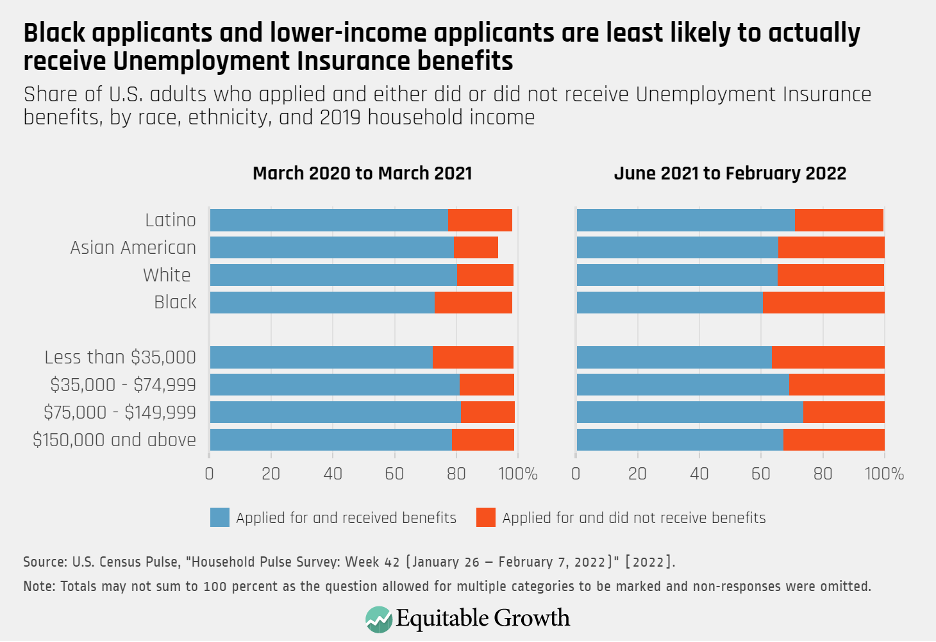
For instance, lower-income workers have been least likely to successfully apply and receive jobless benefits throughout the coronavirus crisis. Both in the coronavirus recession and the previous Great Recession of 2007–2009 and its aftermath, Black workers were among the least likely to access Unemployment Insurance benefits (opens in a new tab). Though differences in application behavior (opens in a new tab) play an important role in shaping these disparities, even conditional on application, regular Unemployment Insurance eligibility criteria systematically disadvantages (opens in a new tab) workers with shorter job tenures, unpredictable or insufficient hours, and lower wages (opens in a new tab)—workers who are also disproportionately workers of color. (See Figure 4.)

Share of U.S. adults who applied and either did or did not receive Unemployment Insurance benefits, by race, ethnicity, and 2019 household income
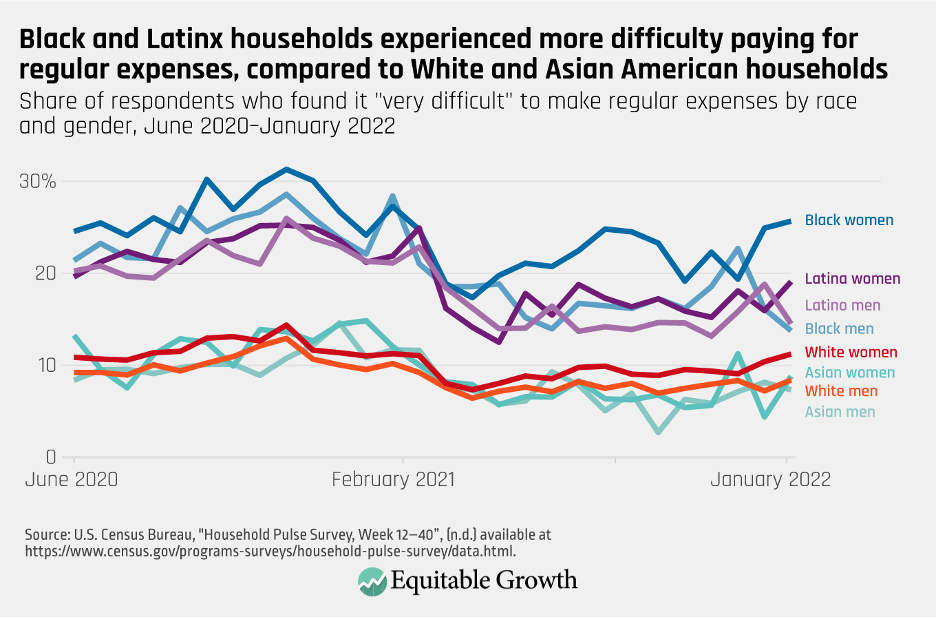
Two years after the onset of the coronavirus recession, disparities are stark and many workers, families, and communities are still hurting. Throughout the pandemic, Black and Latina women have faced the greatest difficulty paying for their regular expenses. Additionally, the interaction between gender and racial wage divides—or what Equitable Growth’s President and CEO Michelle Holder refers to as “the double gap”—have been exacerbated in the pandemic, as data shows Black women earn less (opens in a new tab) than White men within the same frontline essential occupations. (See Figure 5.)

Share of respondents who found it “very difficult” to make regular expenses by race and gender, June 2020-January 2022
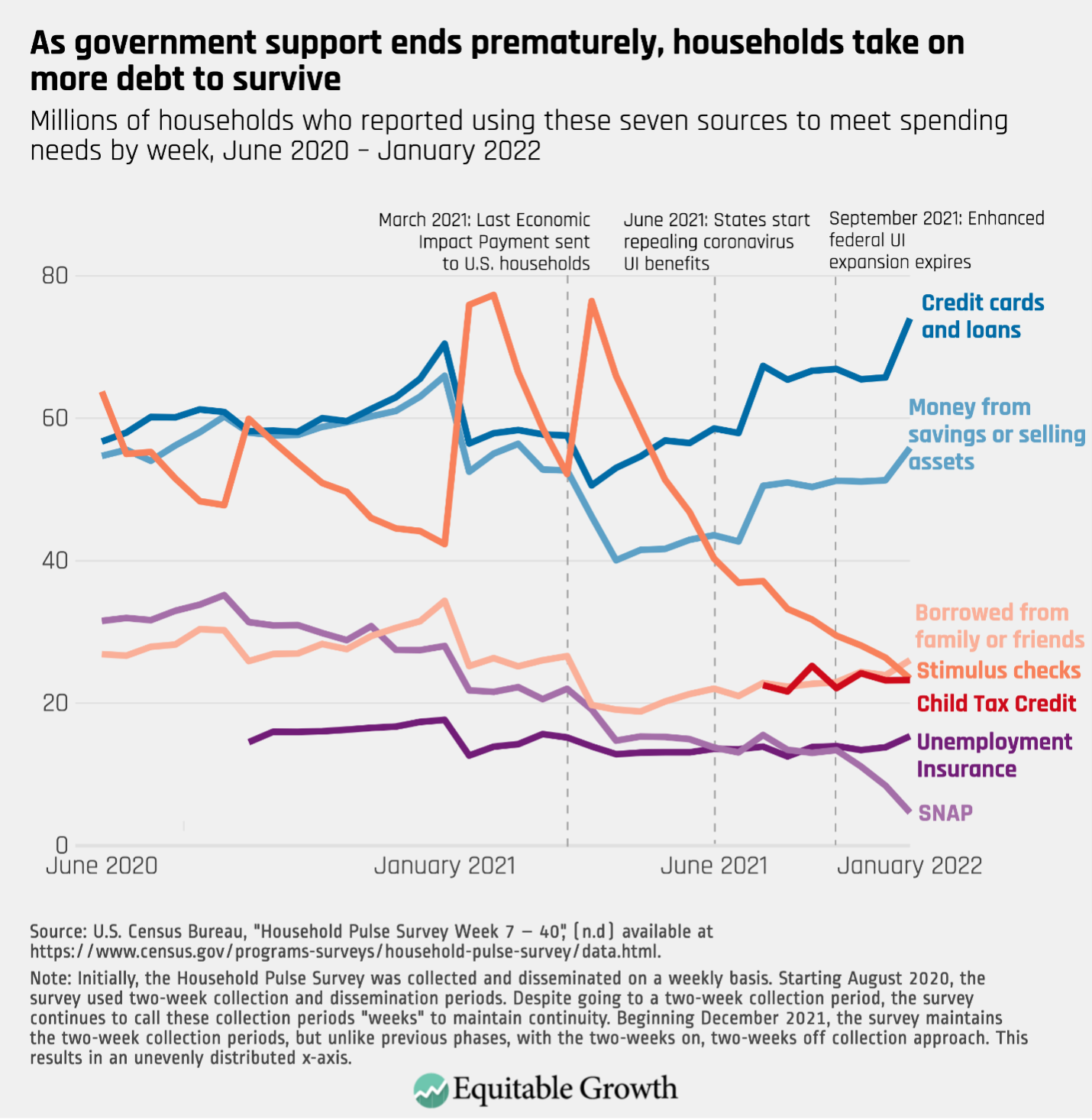
Moreover, many types of income supports were taken away prematurely, hurting many and especially those already disadvantaged. The result? Many workers, families, and communities are in serious danger of being left behind amid the current economic recovery. Data show that as households depleted their Economic Impact Payments, they began turning to credit card debt, loans, borrowing from friends or family, or selling off assets in order to meet regular expenses. (See Figure 6.)

Millions of households who reported using these seven sources to meet spending needs by week, June 2020-January 2022
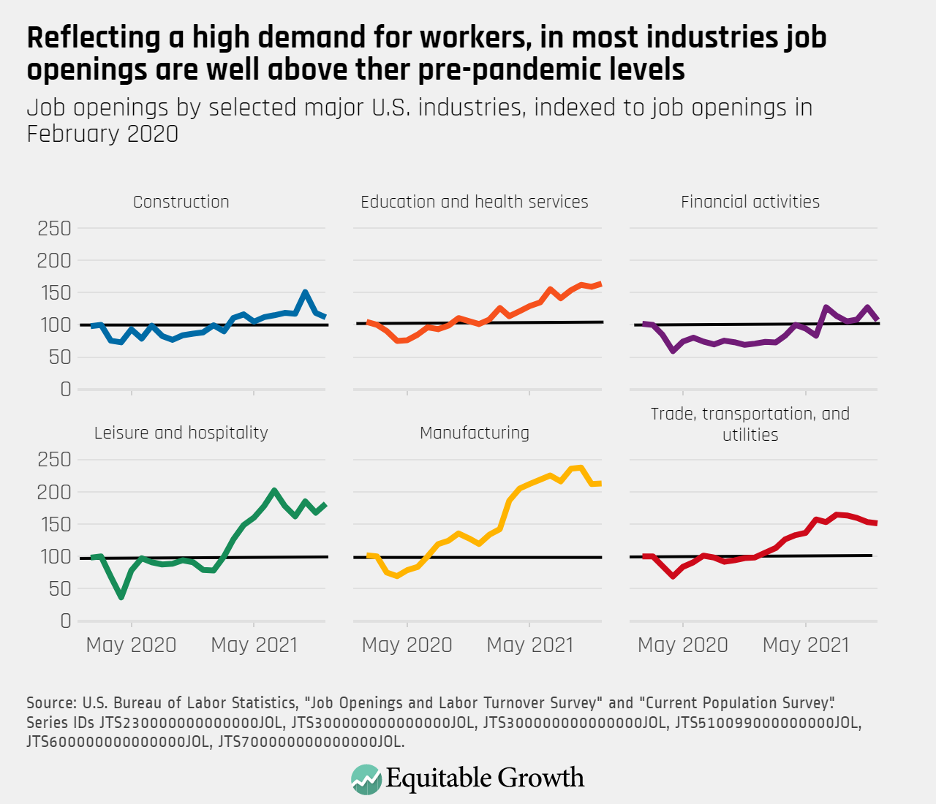
Fast-forward to today. A wide-range of indicators reveal a nuanced story about the health of the U.S. economy. On one hand, coronavirus cases are now well-below their early January 2022 peak (opens in a new tab), those at the bottom of the earnings distribution are seeing real wage gains (opens in a new tab). And labor demand has skyrocketed, giving workers more power to negotiate higher pay and better working conditions. As such, job openings in the U.S. reached a record high of 11.1 million (opens in a new tab) in July 2021—an almost 60 percent increase from February 2020—and have remained elevated since. The jump in open positions has been particularly stark in industries such as manufacturing and leisure and hospitality. (See Figure 7.)

Job openings by selected major U.S. industries, indexed to job openings in February 2020
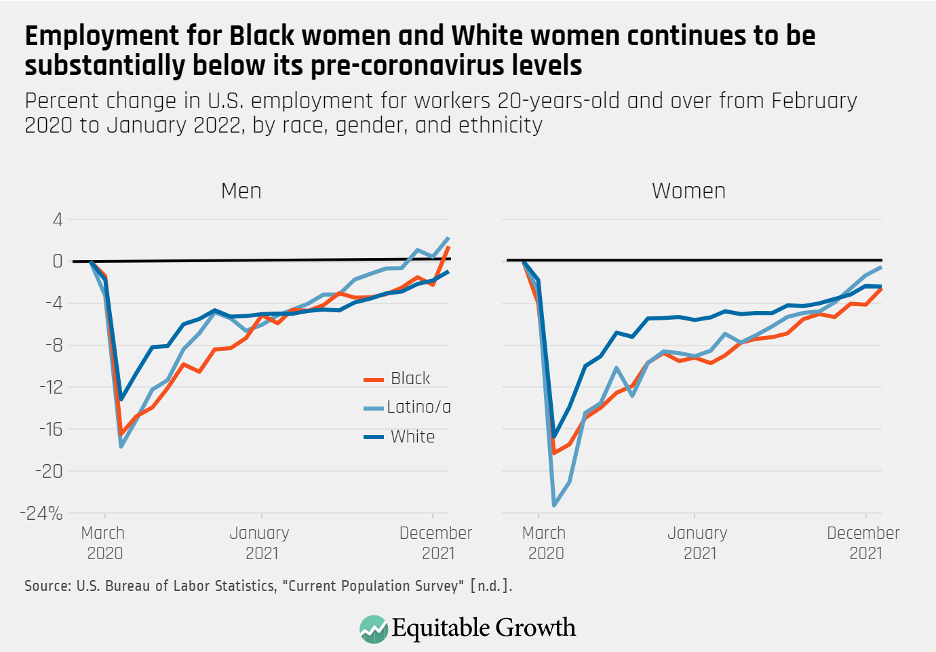
At the same time, the U.S. economy is still at a 2.9 million jobs deficit compared to February 2020. Both the effect of the health crisis (opens in a new tab) and the recovery in the U.S. labor market have been uneven. For instance, employment levels for Latino men and Black men have only just risen above their pre-coronavirus levels, and other groups still have not recovered. Black women have experienced some of the toughest labor market outcomes, seeing the largest drop in labor force participation (opens in a new tab) and the slowest jobs recovery. As of January 2022, 262,000 fewer Black women were employed than in February 2020—a 2.6 percent drop. (See Figure 8.)

Percent change in U.S. employment for workers 20-years-old and over from February 2020 to January 2022, by race, gender, and ethnicity
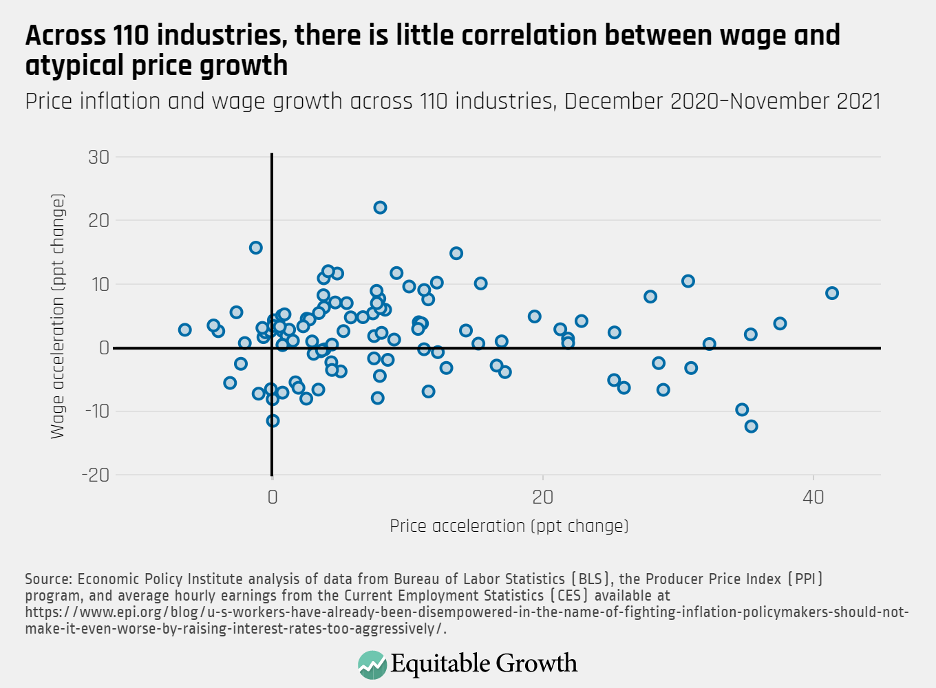
In the midst of it all, inflation has risen. Supply chain breakdowns due to the pandemic are a major reason. Yet some large firms continue to collect record profits (opens in a new tab), claiming that they need to raise prices for consumers to account for increasing costs of production, transportation, and labor. Many economists disagree. An analysis of price and wage growth across more than 100 industries by the Economic Policy Institute, for instance, shows that industries that increased wages to attract workers, such as hotels and other accommodations, have not seen an unusually large spike in prices. (opens in a new tab) (See Figure 9.)

Price inflation and wage growth across 110 industries, December 2020-November 2021
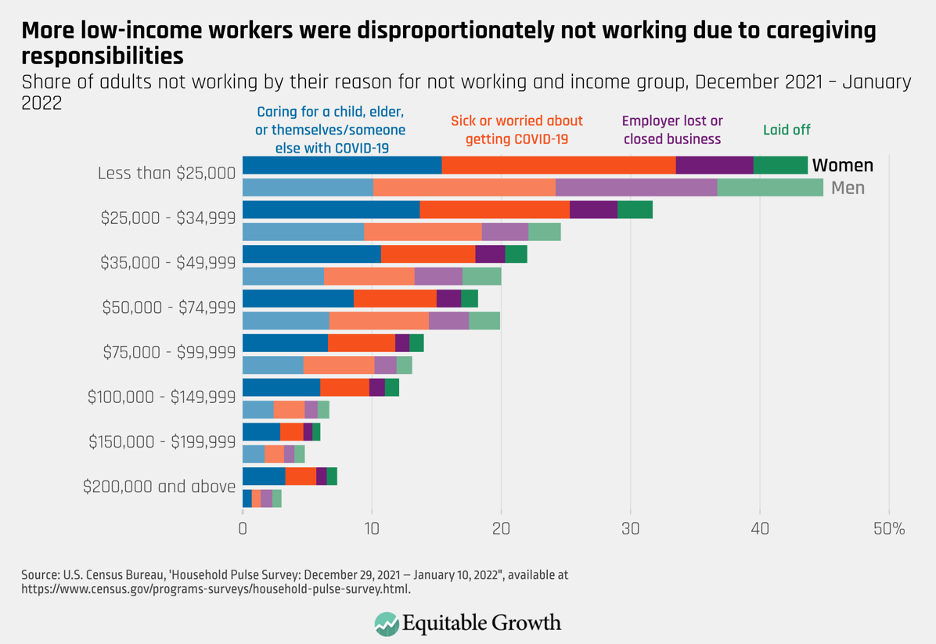
The notion that inflation warrants fiscal austerity is misplaced. Opposition to much needed government spending in social and physical infrastructure is holding back necessary reforms and investments. Under the weight of the coronavirus pandemic, the child care sector contracted dramatically, leaving parents scrambling to find the child care they need to return to work. Legislation such as the proposed Build Back Better Act would strengthen the labor market and allow parents to return to work knowing that their children are safe and well cared for. (See Figure 10.)

Share of adults not working by their reason for not working and income group, December 2021 – January 2022
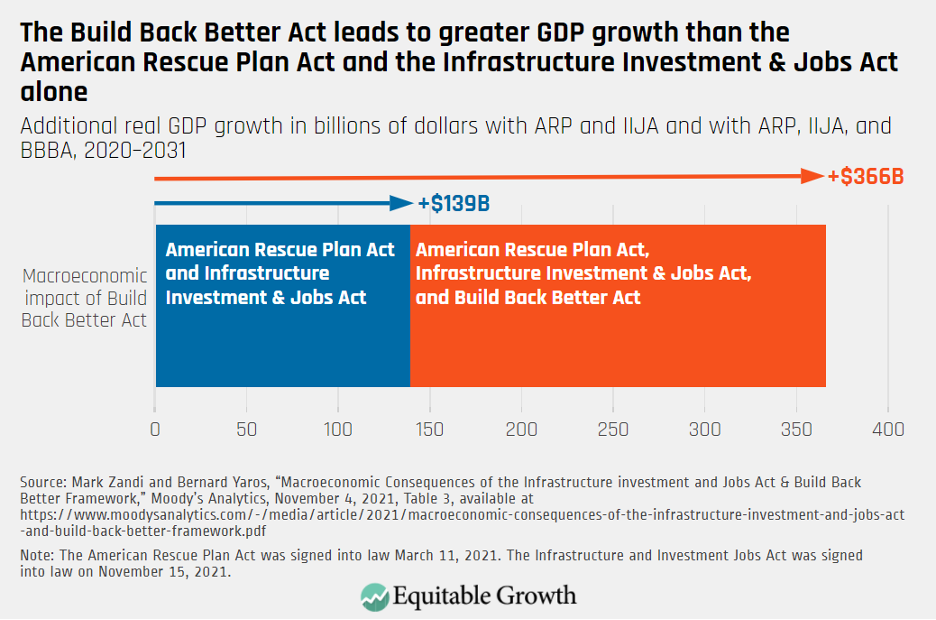
Swift and decisive government action caused the coronavirus recession to be much less severe than it could have been. Still, many households, particularly those headed by Black, Latino, women, or low-income individuals, are still reeling from the pandemic’s impacts on the economy. The Build Back Better Act contains many social and physical infrastructure proposals that are backed by economic evidence. One study finds that the full bill’s passage would increase Gross Domestic Product (opens in a new tab). By not passing the Build Back Better Act, policymakers would lose out on an opportunity to make the investments that could make the country’s economy more resilient and equitable. (See Figure 11.)

Additional real GDP growth in billions of dollars with ARP and IIJA and with ARP, IIJA, and BBBA, 2020-2031
President Biden today is expected to reaffirm his commitment to enacting key parts of his Build Back Better plan. As these 11 charts demonstrate, decisive government investments in our nation’s social infrastructure remain key to overcoming endemic economic divides across race, gender, and income. With U.S. economic growth still strong, now is the time to make these investments so that the recovery is not just strong but also equitable and thus more enduring.
Essays SEP 2, 2026
By: Megan Rivera
Essays AUG 31, 2026
By: Christopher Bangert-Drowns
Essays AUG 14, 2026
By: Carlos Fernando Avenancio-Leon
Get updates on our latest research, event announcements, and policy insights delivered straight to your inbox. Stay connected with the leading voices on equitable growth.