



Policy
What Work Does Generative AI Do?
Essays SEP 8, 2026
By: Alexander Bick, Adam Blandin, David Deming, Tyler Schumacher
AI, Tech & Energy
Labor, Wages & Worker Power
 Browse All Resources
NOV 4, 2022
By: Carmen Sanchez Cumming and Kate Bahn

On November 4, the U.S. Bureau of Labor Statistics released new data on the U.S. labor market during the month of October. Below are five graphs compiled by Equitable Growth staff highlighting important trends in the data.
Job growth declined in October, with the prime-age employment rate falling to 79.8 percent and below 80 percent for the first time since June.
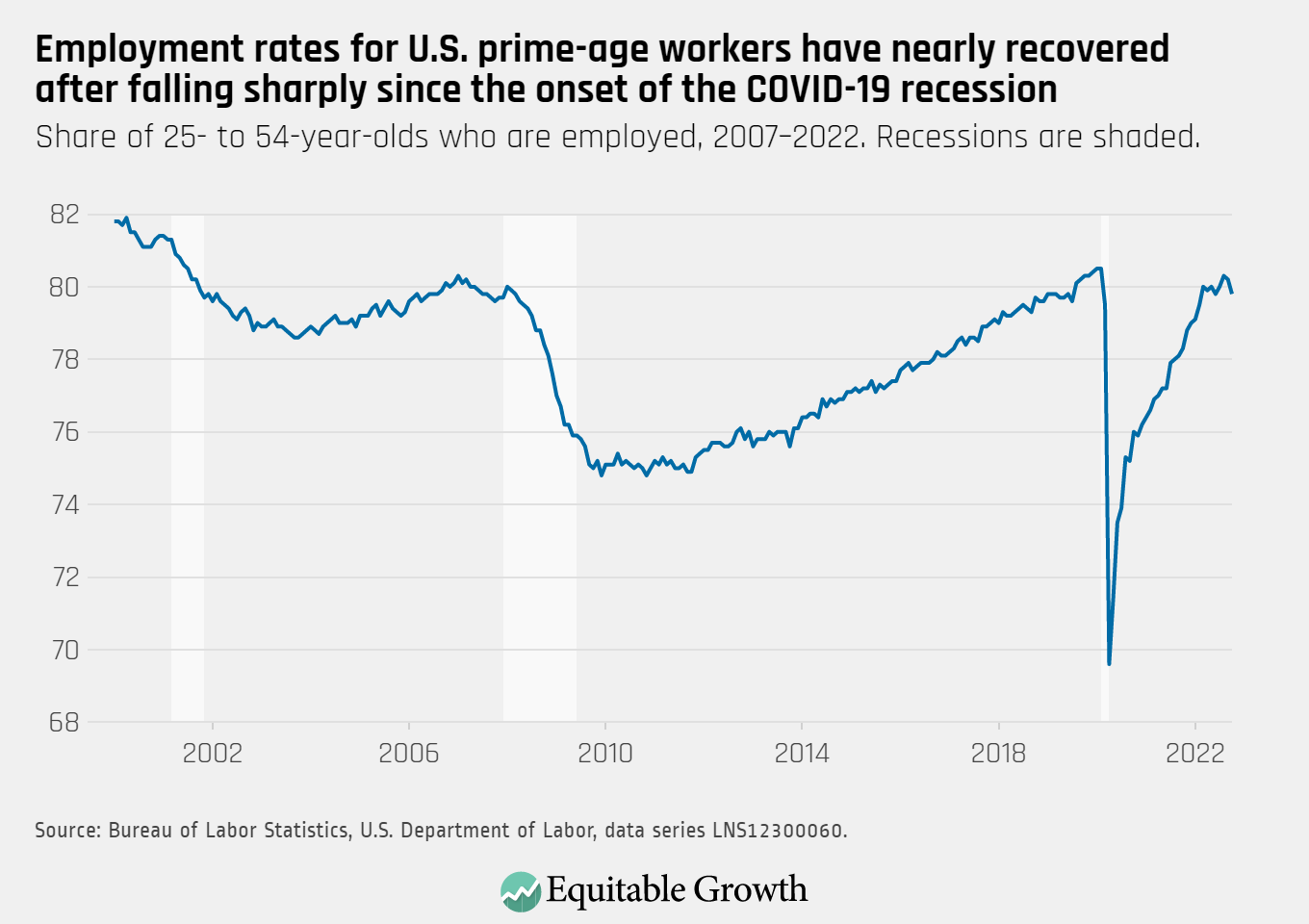
Share of 25- to 54-year-olds who are employed, 2007–2022. Recessions are shaded.
The unemployment rate increased for almost all major demographic groups, with the biggest increases for women and Hispanic workers.
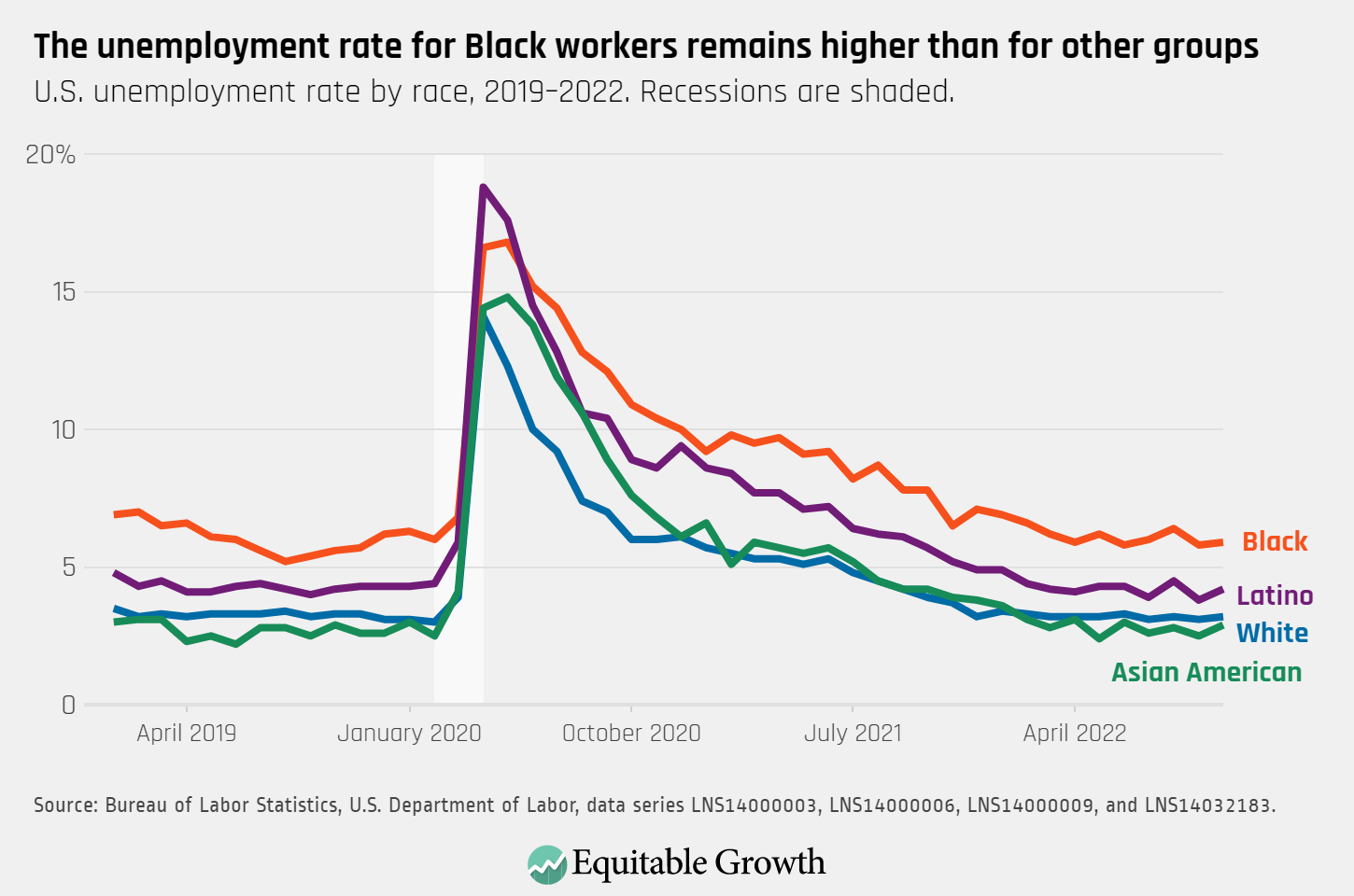
U.S. unemployment rate by race, 2019–2022. Recessions are shaded.
Public sector employment still lags in the recovery, with private sector employment above its pre-pandemic levels.
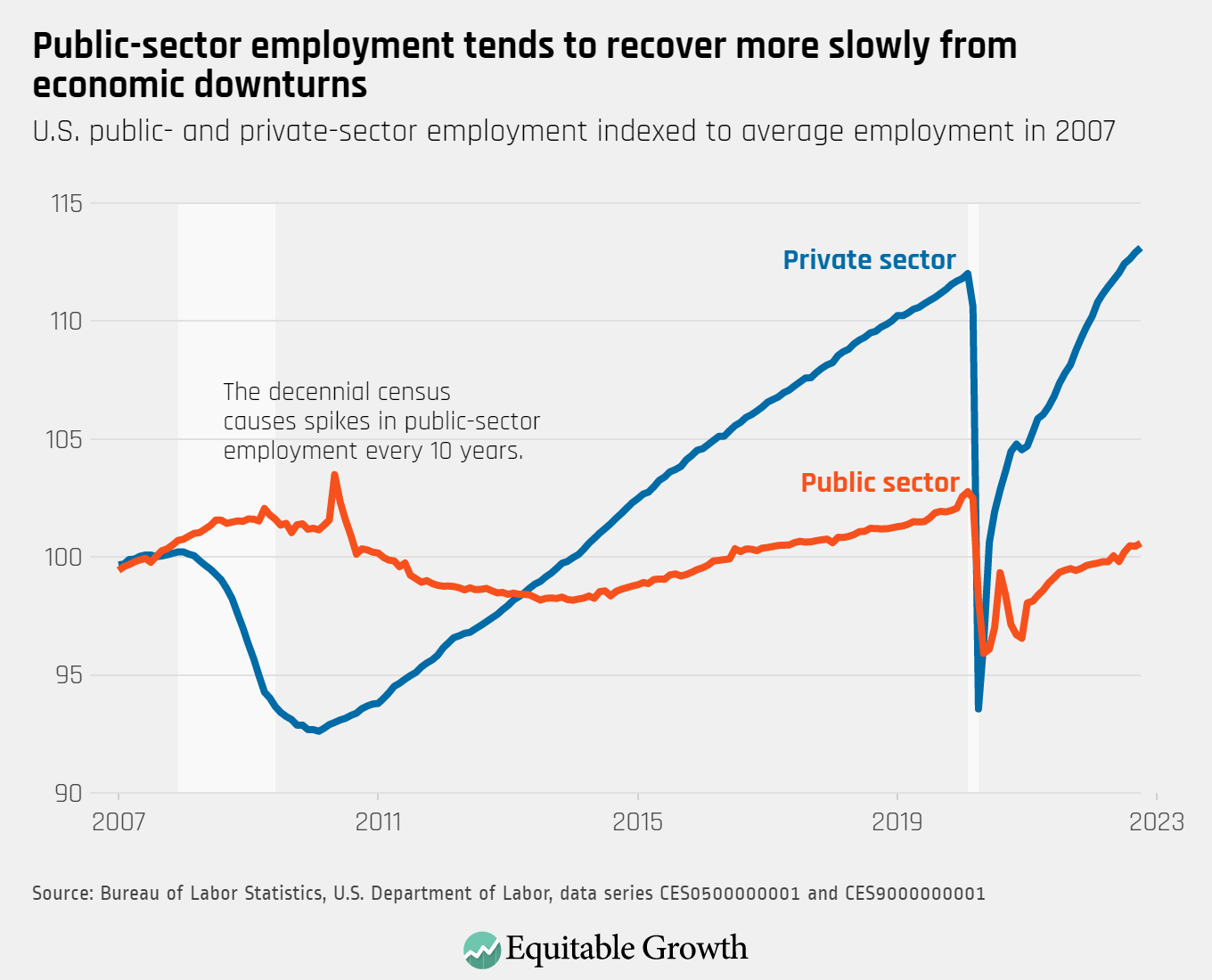
U.S. public- and private-sector employment indexed to average employment in 2007
Wage growth decelerated in October, further demonstrating a lack of evidence that wage pressure is a primary cause of continuing inflation
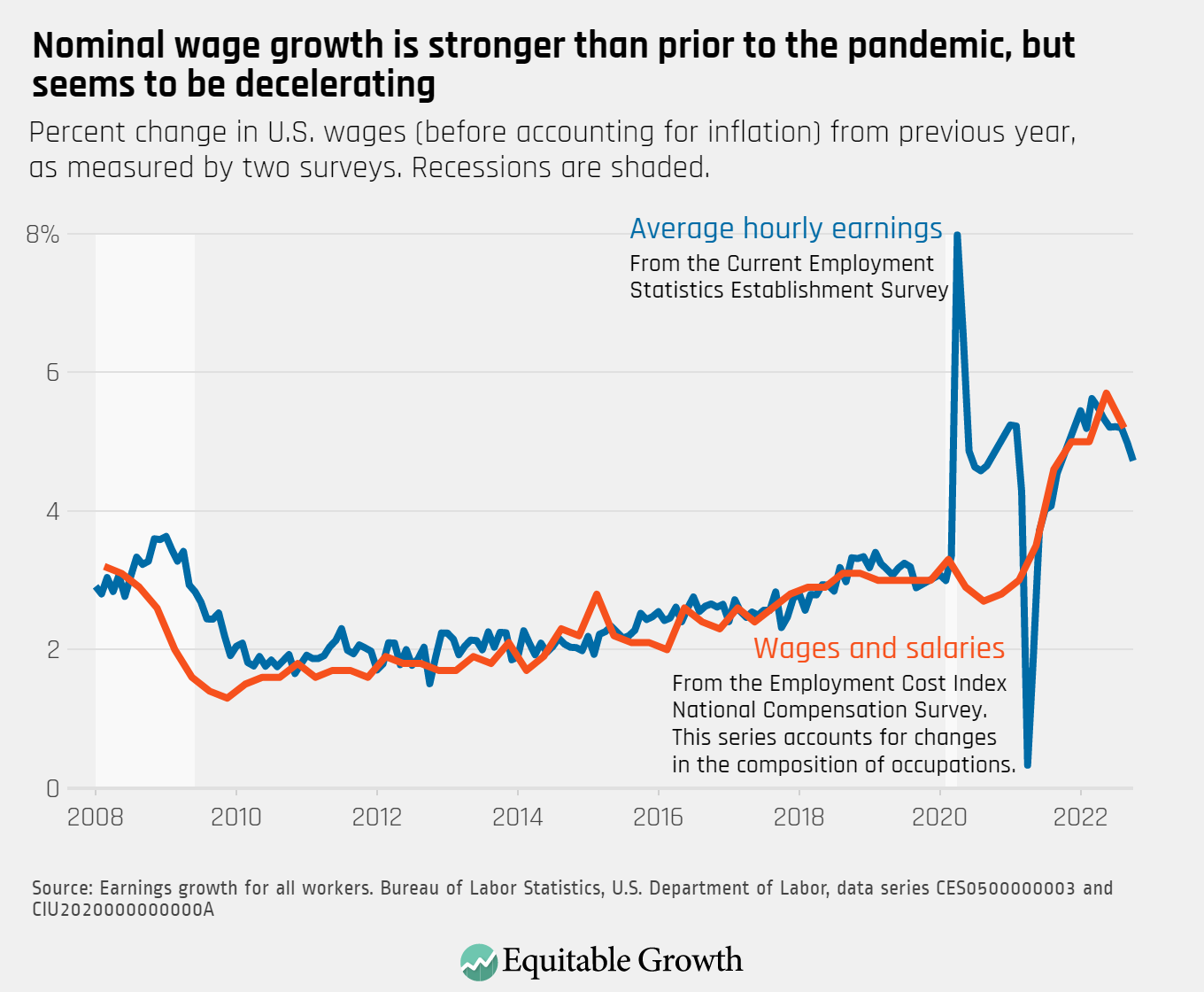
Percent change in U.S. wages from previous year, as measured by two surveys. Recessions are shaded.
Employment rates decreased for women and men in October, but slightly more so for women as unemployment levels increased and almost 200,000 dropped out of the labor force.
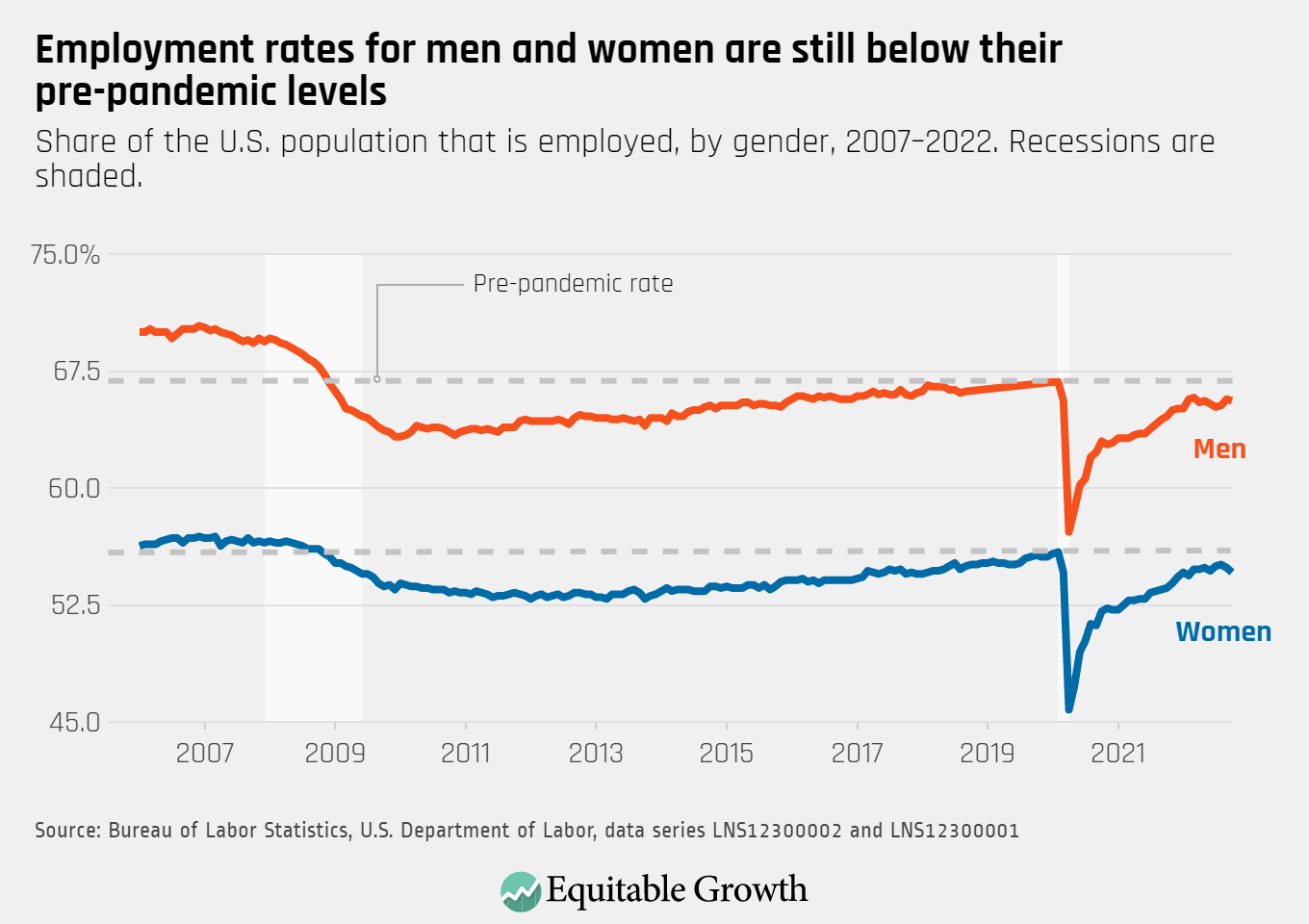
Share of the U.S. population that is employed, by gender, 2007–2022. Recessions are shaded.
Essays SEP 8, 2026
By: Alexander Bick, Adam Blandin, David Deming, Tyler Schumacher
Working Papers SEP 8, 2026
By: Alexander Bick, Adam Blandin, David Deming, Tyler Schumacher

Essays SEP 2, 2026
By: Megan Rivera
Get updates on our latest research, event announcements, and policy insights delivered straight to your inbox. Stay connected with the leading voices on equitable growth.


