


Skip to content
Browse All Resources
Essays

JAN 18, 2023

Expert Focus: Examining the implications of financial well-being and asset building

Expert Focus: Examining the implications of financial well-being and asset building

Abstract

Equitable Growth is committed to building a community of scholars working to understand how inequality affects broadly shared growth and stability. To that end, we have created the series “Expert Focus (opens in a new tab).” This series highlights scholars in the Equitable Growth network and beyond who are at the frontier of social science research. We encourage you to learn more about both the researchers featured below and our broader network of experts (opens in a new tab).

Individual and shared financial well-being has widespread implications for broader economic outcomes, from boosting local economies through consumption to ensuring worker productivity and bolstering future growth. The ability to build wealth is an important contributing factor to financial well-being as it offers asset-building opportunities that pay dividends long into the future, while also ensuring families have a financial cushion to tap into when facing large expenses (think investments in human capital such as attending university) or financial emergencies (such as a job loss).

Yet wealth inequality in the United States has grown exponentially in recent decades, with the share of U.S. wealth increasingly held by a small group of individuals and families. Indeed, many workers and their families are now excluded from wealth-building opportunities in the United States, such as homeownership or investing in the stock market, whether due to longstanding discrimination and systemic racism or other barriers—including lack of access to credit or financial institutions, healthcare, and high-quality education—that hamper intergenerational mobility (opens in a new tab) and macroeconomic growth, and fuel the racial wealth divide. More must be done to address these hurdles so that wealth distribution in the United States is more equitable.

This month’s installment of Expert Focus showcases scholars researching financial well-being, including asset-building and reducing the racial wealth gap in the United States. The research that these and other scholars are producing sheds light on the deep roots of racial, ethnic, and gender inequality, how these types of inequality are perpetuated through generations of U.S. households, and the impacts in terms of income and wealth inequality on children and families today and in the future—as well as on potential solutions and areas for further research.

The Washington Center for Equitable Growth is currently accepting applications for our 2023 Request for Proposals, which seeks to fund researchers examining various types of inequality and its impact on strong, stable, and broadly shared economic growth. Find more information on the 2023 Request for Proposals, funding channels, who is eligible, and how to apply. Additionally, watch our Doctoral/Postdoctoral & Dissertation (opens in a new tab) and Academic (opens in a new tab) webinars for more information.

Rachel M.B. Atkins

St. John’s University

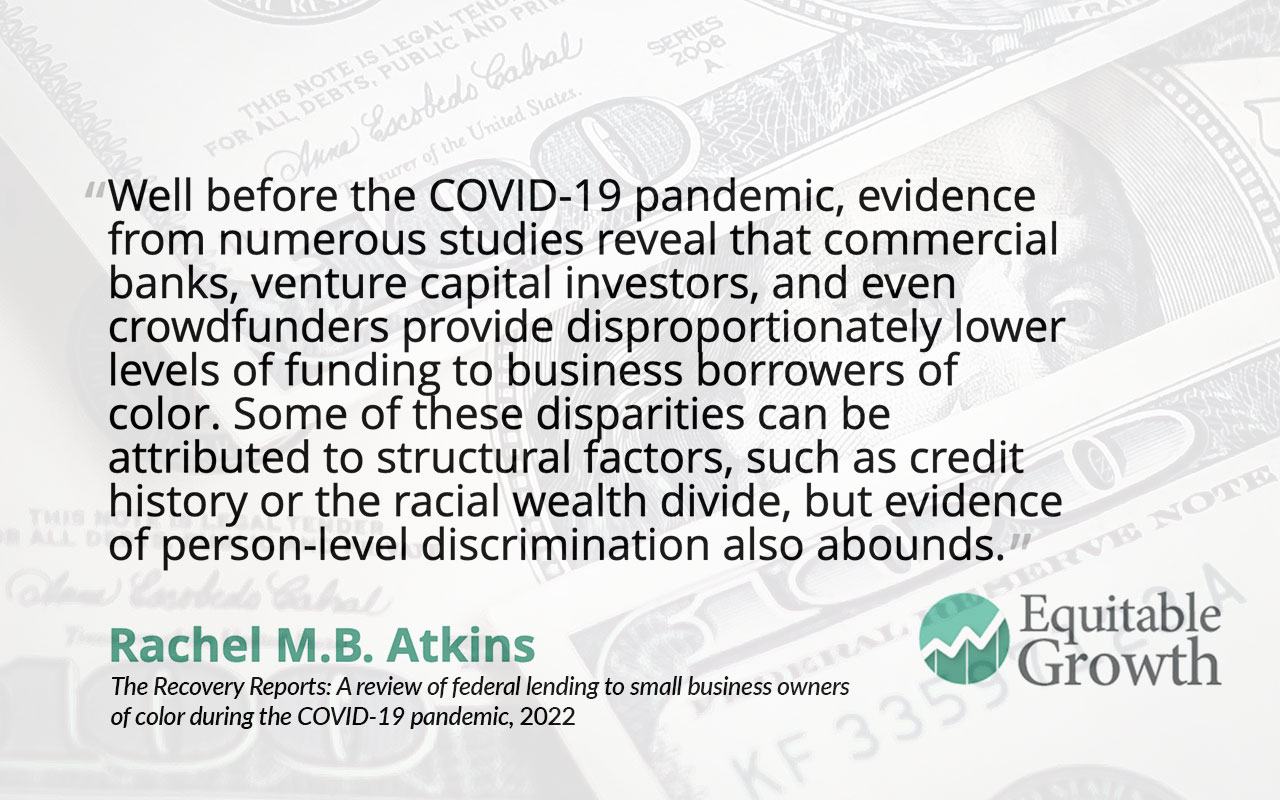
Rachel Atkins is an assistant professor of economics at St. John’s University’s Tobin College of Business. Her research interests are in racial equity and inequity in entrepreneurship, organizations, and high-tech industries, as well as the public policy impacts and implications of racial inequity in those contexts. In 2021, Atkins was the American Economic Association summer economics fellow (opens in a new tab) at Equitable Growth, a program that supports efforts to increase diversity in economics. Recently, she contributed to Equitable Growth’s Recovery Reports (opens in a new tab)—a series of essays evaluating pandemic-era policies—writing on the financial well-being of business owners of color amid the COVID-19 pandemic. She has similarly published peer-reviewed pieces examining the Paycheck Protection Program (opens in a new tab)’s impact on racial equity and discrimination (opens in a new tab), as well as on the Black-White entrepreneurship gap in start-up firms (opens in a new tab).

Quote from Rachel Atkins

Donn L. Feir

University of Victoria

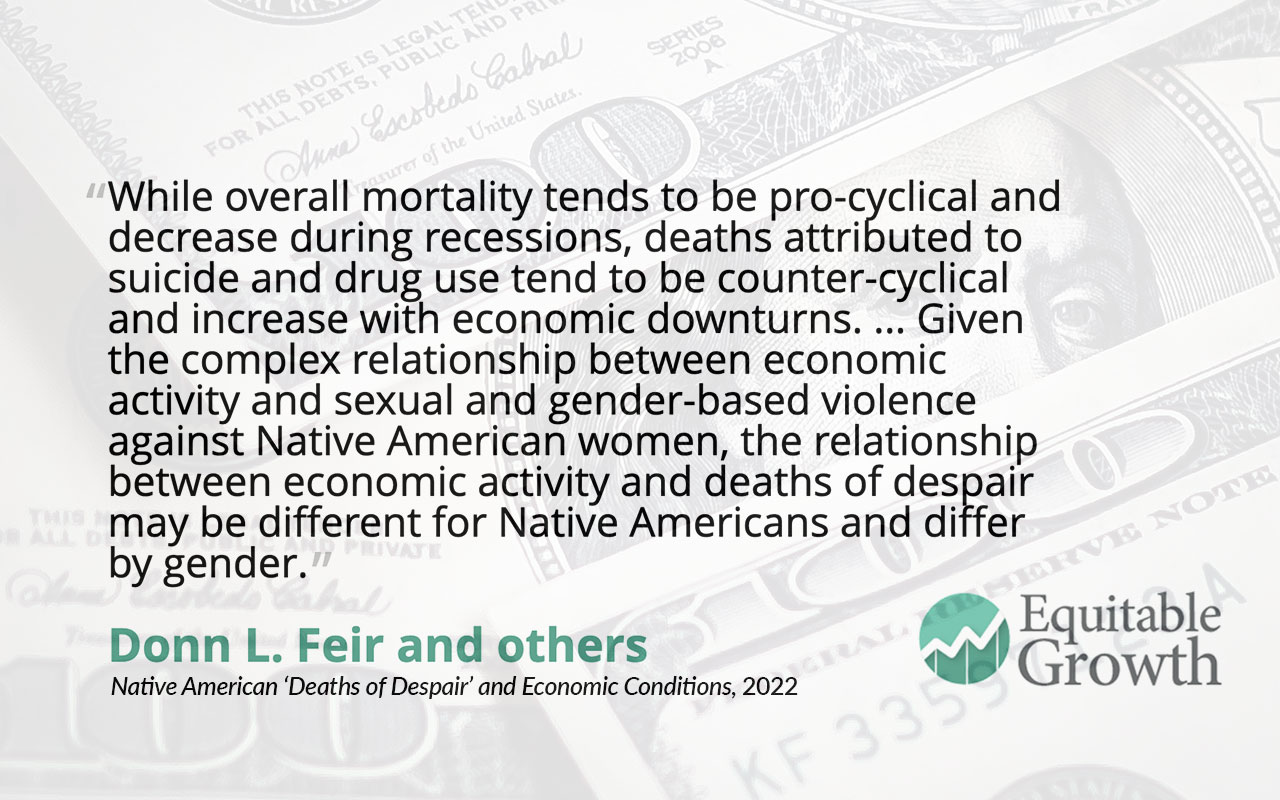
Donn Feir is an associate professor in the Department of Economics at the University of Victoria. They are an applied econometrician with expertise in contemporary and historical Indigenous policy, including Indigenous economic development and labor market experiences, economic history, labor economics, and race and the economy. Feir writes extensively on outcomes among Native Americans and First Nations peoples, from economic effects on health and well-being (opens in a new tab) to the impact of recessions on labor mobility (opens in a new tab) to disparities in mortgage financing rates (opens in a new tab). In 2022, they received an Equitable Growth grant to further study so-called deaths of despair—deaths by suicide and those caused by drug or alcohol use—among Native American women and girls in the context of fracking booms near Native American lands, which often lead to increases in human trafficking that disproportionately affects Native women and girls.

Quote from Donn Feir

Darrick Hamilton

The New School

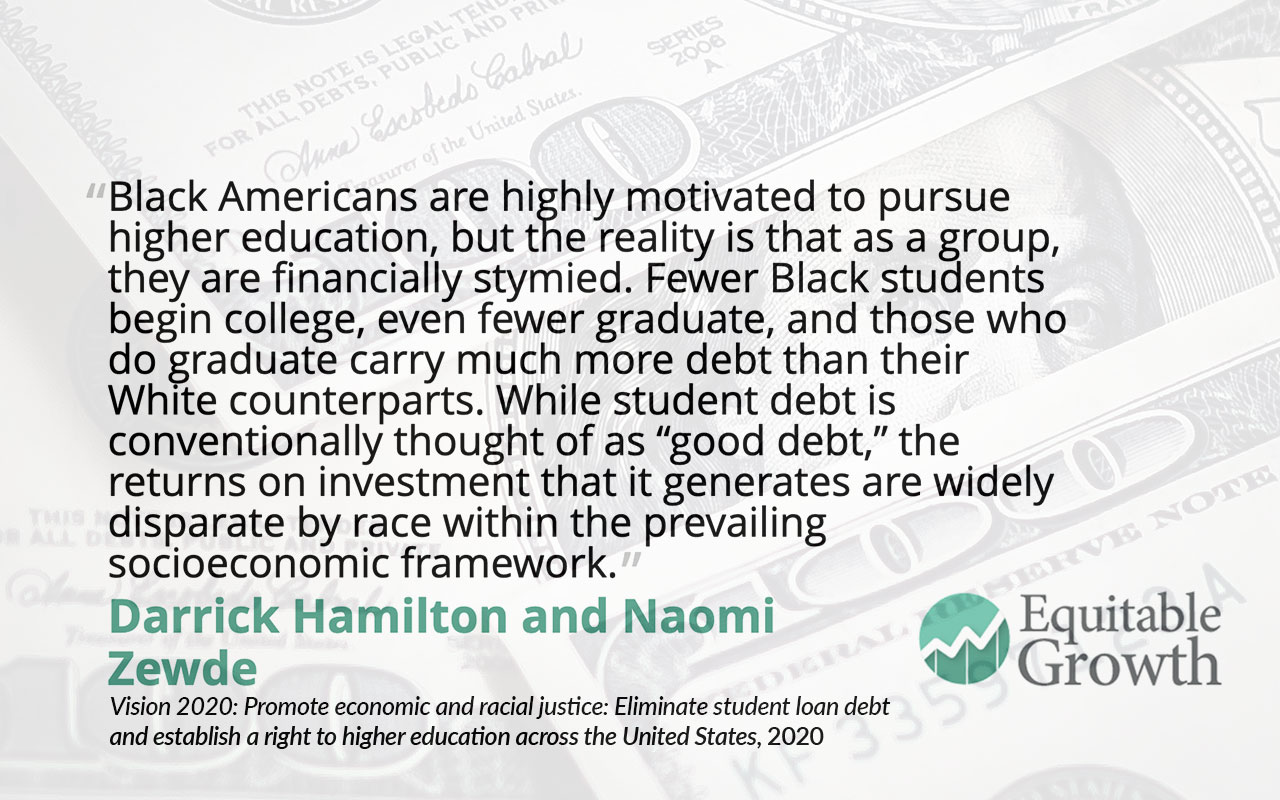
Darrick Hamilton (opens in a new tab) is the Henry Cohen Professor of Economics and Urban Policy at The New School and the founding director of the university’s Institute on Race, Power, and Political Economy (opens in a new tab). He is a leader in the study of racial and economic stratification, and is a pioneer in the field of racial wealth inequality (opens in a new tab). Hamilton’s work largely focuses on racial justice (opens in a new tab), intersectional discrimination, racial disparities in health, educational, and economic outcomes, and the racial wealth gap. Hamilton’s research on using baby bonds to reduce the racial wealth gap (opens in a new tab) has led to policy action in a handful of localities across the United States. He received an Equitable Growth grant in 2017 to study wealth inequality among racial and ethnic populations, and has written extensively for Equitable Growth’s website, including on the racial justice implications of cancelling student debt, labor market penalties at the intersection of race and gender, and continuing racial health disparities at various income levels in the United States.

Quote from Darrick Hamilton

Alexandra Killewald

Harvard University

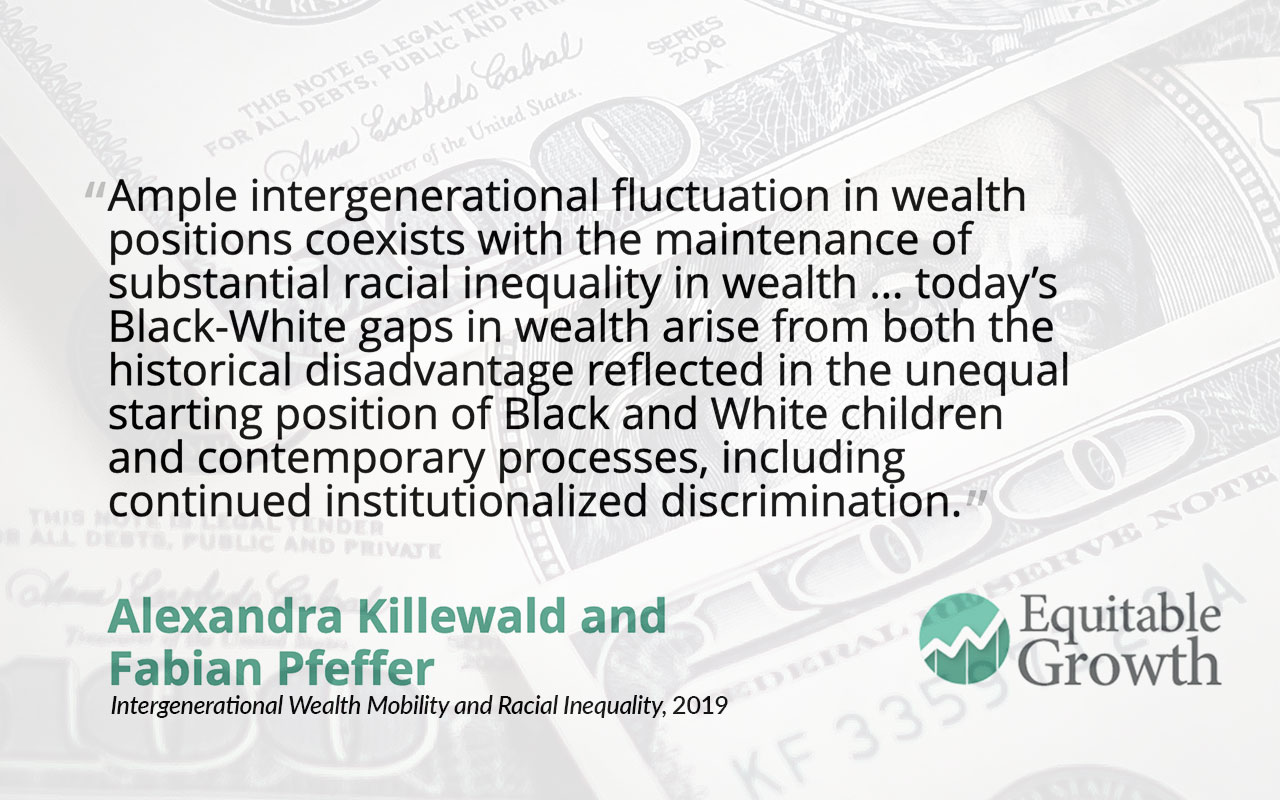
Alexandra Killewald (opens in a new tab) is a professor of sociology at Harvard University. Her research uses quantitative methods to study inequality in the United States, with two specific areas of focus: the gendered intersection of work and family, including how marriage and parenthood affect wages, mothers’ employment patterns (opens in a new tab), and other time-use and wage outcomes among couples (opens in a new tab); and intergenerational wealth inequality (opens in a new tab) and the racial wealth divide (opens in a new tab), including how children’s outcomes are closely linked to their parents’ and grandparents’ wealth positions and the impact of social origins on wealth disparities by race. Killewald finds that racial disparities in wealth persist even among those who are born to parents with similar levels of resources, suggesting that the racial wealth gap in the United States is not solely tied to socioeconomic status at birth.

Quote from Alexandra Killewald

Fabian Pfeffer

University of Michigan

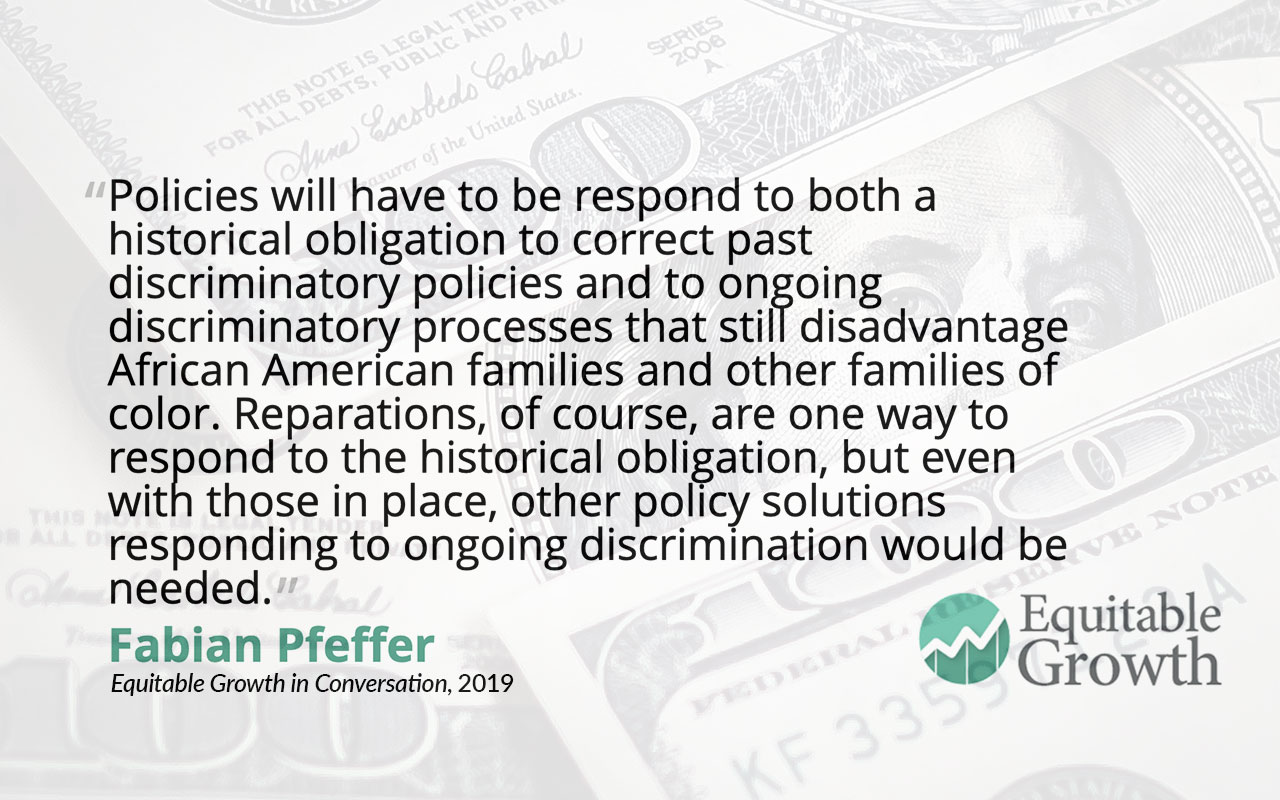
Fabian Pfeffer is an associate professor in the Department of Sociology at the University of Michigan, research associate professor at the Institute for Social Research, and he also serves as the director of the Stone Center for Inequality Dynamics. His research centers on inequality across time and generations, specifically focusing on wealth inequality (opens in a new tab) and its consequences for future generations, intergenerational transmission of inequality, and education’s role in maintaining inequality. He also studies the effects of experiencing social mobility (opens in a new tab). In 2020, Pfeffer received an Equitable Growth grant to build a new dataset linking tax data and housing equity data that will enable the examination of wealth inequality and mobility. He also spoke with Equitable Growth in 2019 about his research on wealth inequality, how wealth and income inequality differ, and policies that can make intergenerational wealth transfers more equitable.

Quote from Fabian Pfeffer

Trina Shanks

University of Michigan

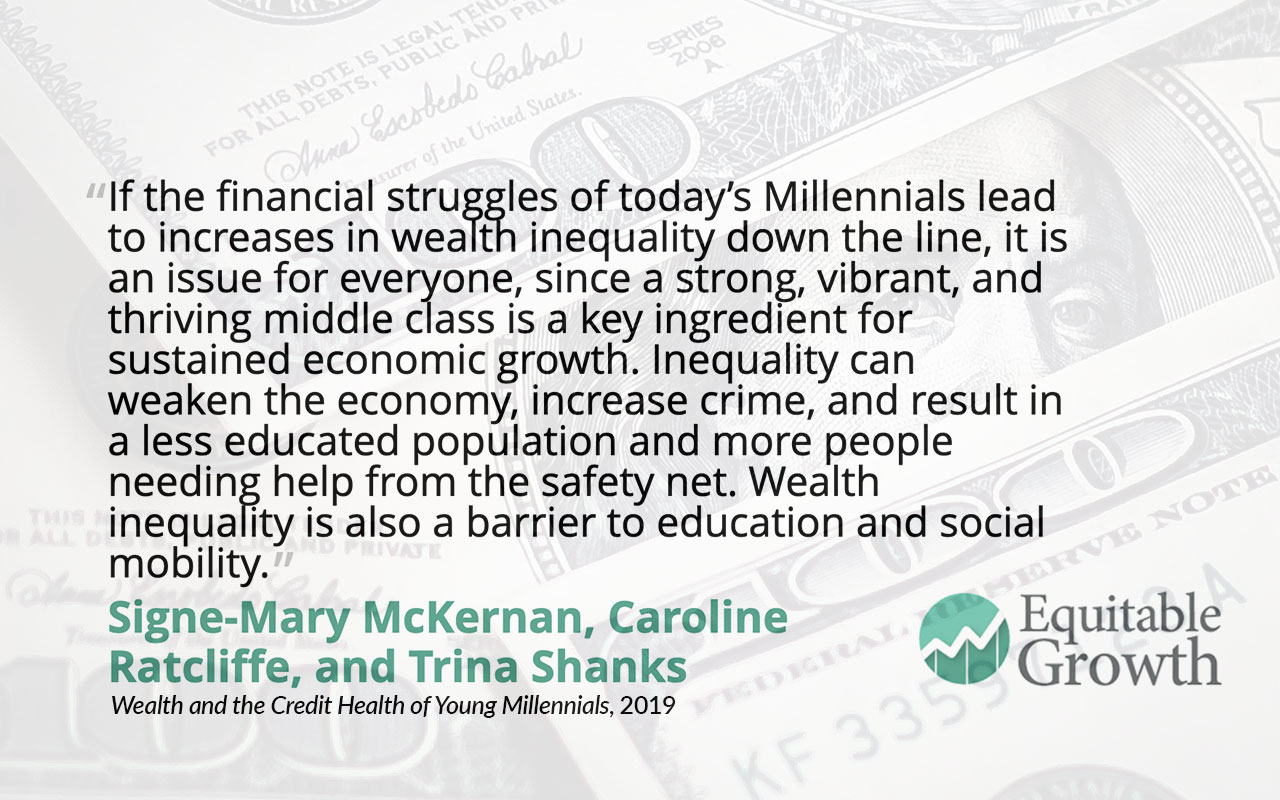
Trina Shanks (opens in a new tab) is the Harold R. Johnson Collegiate Professor of Social Work and the director of the Center for Equitable Family and Community Well-Being at the University of Michigan. Her research focuses on child well-being (opens in a new tab) and poverty (opens in a new tab), asset-building policy and practice, the legacy of slavery on racial wealth inequality (opens in a new tab), and community and economic development. She has also written on the financial health of millennial workers (opens in a new tab), which is of consequence to the broader U.S. economy as these workers age and make up a larger percentage of the U.S. labor force. Shanks recently co-authored a paper (opens in a new tab) on COVID-19’s impact on financial vulnerability in the United States, finding that changes in circumstances—from housing to health—as a result of the pandemic led to increased material hardship. Additionally, she is a co-lead for the Social Work Grand Challenge (opens in a new tab) to reduce extreme economic inequality.

Quote from Trina Shanks

Equitable Growth is building a network of experts across disciplines and at various stages in their career who can exchange ideas and ensure that research on inequality and broadly shared growth is relevant, accessible, and informative to both the policymaking process and future research agendas. Explore the ways you can connect with our network or take advantage of the support we offer here.

Related

Your Direct Line to Cutting-Edge Research

Get updates on our latest research, event announcements, and policy insights delivered straight to your inbox. Stay connected with the leading voices on equitable growth.